
In This Article
Imagine cutting your daily commute time in half whilst saving thousands on fuel and parking costs. That’s exactly what thousands of Canadians discovered in 2024 when urban ebike sales surged by 47% across major cities like Toronto, Vancouver, and Montreal.
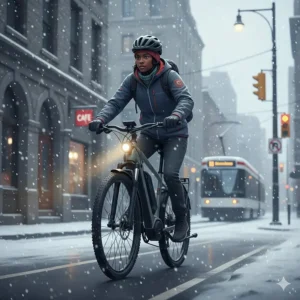
City commuter ebike reviews reveal a fascinating trend: Canadians aren’t just buying electric bikes—they’re completely reimagining their relationship with urban transport. With federal regulations capping motors at 500W and speeds at 32 km/h, these power-assisted bicycles offer the perfect sweet spot between traditional cycling and motorised transport.
Here’s something most buyers don’t realise until it’s too late: not all commuter ebikes handle Canadian winters equally well. Whilst researching for this comprehensive guide, I discovered that battery performance can drop by 20-30% in temperatures below -10°C, and cheap brake systems become downright dangerous on icy roads. The good news? The right model can tackle everything from summer heatwaves to spring slush without breaking a sweat.
This guide cuts through the marketing fluff to deliver honest city commuter ebike reviews based on real Canadian experiences. Whether you’re navigating Toronto’s bike lanes, conquering Vancouver’s hills, or braving Calgary’s unpredictable weather, you’ll find tested options that actually deliver on their promises—without requiring a second mortgage.
Quick Comparison Table
| Model | Motor Power | Battery | Range | Price (CAD) | Best For |
|---|---|---|---|---|---|
| HITWAY BK6M | 750W | 48V 14Ah | 55-120 km | $999-$1,299 | Budget-conscious riders |
| Jasion YC1 ST | 750W peak | 360Wh | Up to 64 km | $899-$1,099 | Lightweight commuting |
| ANCHEER Sunshine | 500W | 48V 374Wh | 64 km | $799-$949 | Legal compliance |
| GOSEN G5 | 750W | 48V 15Ah | 90 km | $999-$1,199 | Maximum range |
| ANCHEER Swan | 500W | 48V 500Wh | 72 km | $1,199-$1,399 | Mid-range value |
| Jasion EBX | 850W peak | 450Wh | 70-88 km | $1,299-$1,499 | Mountain commuting |
| HITWAY BK9M | 750W | 48V 15Ah | 55-120 km | $1,199-$1,599 | All-terrain versatility |
💬 Just one click – help others make better buying decisions too!😊
Top 7 City Commuter Ebike Reviews: Expert Analysis
1. HITWAY BK6M – Best Budget Folding Commuter
The HITWAY BK6M sits at an impressive sweet spot for value-conscious Canadian commuters. This folding fat-tire beast packs a 750W motor into a remarkably compact frame that collapses in seconds for storage in condos or transit.
Key Specifications:
- 750W brushless motor (500W continuous)
- 48V 14Ah removable battery
- 20″ x 3.0″ professional fat tyres
Price Range: $999-$1,299 CAD on Amazon.ca
Canadian Customer Feedback: Buyers consistently praise its hill-climbing ability on steep Vancouver streets and surprisingly smooth ride quality. One Calgary reviewer mentioned using it through November without significant battery degradation, though charging indoors is essential below freezing.
✅ Pros:
- Foldable design fits in car boots and small apartments
- Fat tyres handle snow and gravel surprisingly well
- UL2849 certified for Canadian safety standards
❌ Cons:
- Weighs 27.7 kg—not the lightest for carrying upstairs
- Throttle-only mode drains battery faster than pedal assist
2. Jasion YC1 ST – Best Step-Through City Cruiser
For riders who value easy mounting and dismounting, the Jasion YC1 ST delivers with its elegant step-through frame design. This 26″ commuter prioritises comfort and accessibility without sacrificing performance.
Key Specifications:
- 750W peak motor with torque sensor
- 360Wh UL2849 certified battery
- Professional 7-speed Shimano transmission
Price Range: $899-$1,099 CAD
Canadian Customer Feedback: Toronto commuters love the natural pedal-assist feel thanks to the torque sensor. Several Montreal riders noted the lockable front suspension effectively smooths out pothole-riddled streets whilst maintaining efficiency.
✅ Pros:
- Step-through frame perfect for business attire
- Charges fully in just 5-6 hours
- Lightweight at approximately 23 kg
❌ Cons:
- Smaller battery limits range for longer commutes
- Not ideal for steep mountain terrain
3. ANCHEER Sunshine – Best Legal-Compliant Commuter
The ANCHEER Sunshine takes a different approach by strictly adhering to Canadian federal regulations with its 500W motor—meaning you’re guaranteed legal compliance across all provinces without question.
Key Specifications:
- 500W brushless geared motor
- 48V 374Wh removable battery
- 21-speed professional transmission system
Price Range: $799-$949 CAD
Canadian Customer Feedback: Vancouver Island riders appreciate the lighter weight and nimble handling in urban environments. One Ottawa commuter reported 1,200 km over six months with only basic chain maintenance required.
✅ Pros:
- Fully legal in all Canadian provinces
- Aluminium alloy frame resists rust in coastal climates
- Excellent value under $1,000 CAD
❌ Cons:
- Lower power may struggle on steeper hills
- Basic LCD display lacks advanced features
4. GOSEN G5 – Best for Maximum Range
When your commute stretches beyond typical distances, the GOSEN G5 folding ebike delivers with its impressive 90 km range capability—perfect for suburban-to-downtown Canadian commuters.
Key Specifications:
- 750W motor with 40 km/h capability
- 48V 15Ah high-capacity battery
- 20″ x 4.0″ fat tyres for stability
Price Range: $999-$1,199 CAD
Canadian Customer Feedback: Edmonton riders praise its performance in -15°C weather when stored properly. The dual suspension system received special mention for handling Alberta’s frost-heaved roads.
✅ Pros:
- Exceptional 90 km range on single charge
- Folding mechanism for multi-modal commuting
- Shimano 7-speed gearing for varied terrain
❌ Cons:
- Customer service can be slow (timezone differences)
- Some quality control issues reported with brake alignment
5. ANCHEER Swan – Best Mid-Range Value Option
The ANCHEER Swan bridges the gap between budget and premium with its 500Wh battery and fast-charging capabilities—ideal for riders who need reliability without premium pricing.
Key Specifications:
- 500W peak motor (350W continuous)
- 48V 500Wh removable battery
- 3.5-hour fast charging
Price Range: $1,199-$1,399 CAD
Canadian Customer Feedback: Winnipeg commuters love the extended 72 km range and step-through frame. Several female riders specifically mentioned the comfortable ergonomic design for longer journeys.
✅ Pros:
- Fast 3.5-hour charging time
- 72 km range handles daily round-trips
- UL 2849 certified battery system
❌ Cons:
- Step-through frame may flex slightly under heavy loads
- Not suitable for aggressive off-road use
6. Jasion EBX – Best for Hilly Commutes
If your daily route includes serious elevation changes, the Jasion EBX mountain-style commuter tackles steep grades with its 850W peak motor whilst maintaining commuter-friendly features.
Key Specifications:
- 850W peak brushless motor
- 450Wh removable battery
- 21-speed professional transmission
Price Range: $1,299-$1,499 CAD
Canadian Customer Feedback: British Columbia riders conquering coastal mountains report excellent hill-climbing performance. The 21-speed system allows fine-tuning power delivery for maximum efficiency.
✅ Pros:
- Exceptional hill-climbing capability
- 70-88 km range depending on terrain
- High-intensity front fork suspension
❌ Cons:
- Heavier build at approximately 27 kg
- 21-speed system requires more maintenance
7. HITWAY BK9M – Best All-Terrain Versatility
The HITWAY BK9M takes city commuting seriously with its 26″ fat tyres and robust construction—perfect for Canadians who need one bike to handle urban streets, gravel paths, and weekend trail adventures.
Key Specifications:
- 750W powerful motor
- 48V 15Ah long-range battery
- 26″ x 4.0″ all-terrain fat tyres
Price Range: $1,199-$1,599 CAD
Canadian Customer Feedback: Saskatchewan riders appreciate its ability to transition from city streets to countryside gravel roads. The larger wheel size provides better stability at higher speeds compared to 20″ models.
✅ Pros:
- True all-terrain capability with fat tyres
- 55-120 km range flexibility
- More stable at speed than smaller-wheeled models
❌ Cons:
- Brake performance could be stronger for the weight
- Size may be challenging for shorter riders (under 160 cm)
✨ Don’t Miss These Exclusive Deals!
🔍 Take your urban commuting to the next level with these carefully selected products available in Canada. Click on any highlighted item to check current pricing and availability on Amazon.ca. These ebikes will help you create authentic freedom your family will love!
Understanding Canadian Ebike Regulations: What You Need to Know
Before investing in a city commuter ebike, understanding Canada’s federal and provincial regulations prevents costly mistakes. Transport Canada’s Motor Vehicle Safety Regulations define power-assisted bicycles with specific requirements that directly impact your purchasing decision.
Federal Requirements Apply Nationwide
According to Transport Canada regulations, all power-assisted bicycles must meet these non-negotiable standards: motor power cannot exceed 500W continuous output, maximum motor-assisted speed caps at 32 km/h on level ground, and fully operable pedals must function independently of the motor. These rules remain consistent whether you’re riding in Victoria or St. John’s.
Here’s where it gets tricky: many affordable city ebikes advertise 750W or even 1000W “peak” motors. The key word is peak—these bikes typically run at 500W continuous power, with short bursts to higher wattage for hills. This configuration generally satisfies legal requirements, but grey areas exist.
Provincial Variations Add Complexity
Whilst federal standards provide the foundation, provinces layer additional requirements. British Columbia introduced a two-tier system in 2024 with “light e-bikes” (250W, 25 km/h, age 14+) alongside standard power-assisted bicycles. Ontario’s ongoing cargo ebike pilot programme allows heavier configurations in participating municipalities.
Age restrictions vary significantly across Canada. Alberta permits riders as young as 12, whilst Ontario, British Columbia, and Quebec require minimum age 16 (14 in Quebec with proper licensing). Every province mandates helmet use, though enforcement levels differ.
What This Means for Your Purchase
Smart buyers verify their chosen model includes proper compliance labelling—a permanently affixed bilingual tag declaring power-assisted bicycle status. Without this label, even a perfectly spec’d bike could face legal challenges.
The 32 km/h speed limit deserves special attention. You can pedal faster manually, but motor assistance must cut off at this threshold. Unlocking or modifying speed limits transforms your ebike into a motor vehicle requiring licensing, registration, and insurance—plus potential fines.
Municipal bylaws add another layer. Vancouver conducts wattage checks on popular trails, whilst Montreal restricts throttle-only operation on certain paths. Always research local regulations before your first ride in unfamiliar territory.
How to Choose the Perfect City Commuter Ebike for Canadian Conditions
Selecting an affordable city ebike in Canada requires balancing multiple factors beyond just price tags. Your ideal commuter should handle your specific route whilst surviving Canadian weather extremes.
Calculate Your Real Range Requirements
Most manufacturers advertise optimistic range figures based on ideal conditions—flat terrain, light rider, minimal wind, and warm temperatures. Canadian reality differs dramatically. Start by measuring your actual commute distance, then triple it for safety margin.
Battery capacity directly impacts range, but motor efficiency matters equally. A 500Wh battery paired with an efficient 350W motor often outperforms a 450Wh battery driving a power-hungry 750W system. Look for models offering multiple pedal-assist levels—lower settings dramatically extend range whilst still providing meaningful assistance.
Temperature significantly affects lithium-ion batteries. Expect 20-30% range reduction when operating below 0°C, and up to 40% reduction in extreme cold. If you plan year-round commuting in Prairie winters, prioritise larger battery capacity and plan for indoor charging between rides.
Match Motor Power to Your Terrain
The perennial 500W versus 750W debate depends entirely on your route profile. Flat urban commutes through Toronto or Ottawa perform brilliantly with 350-500W motors, offering lighter weight and extended battery life. These motors easily maintain 25 km/h on level ground whilst sipping power.
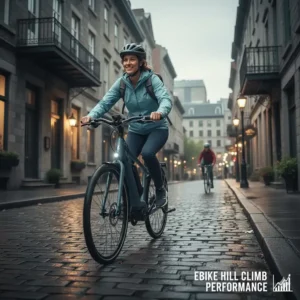
Hilly cities like Vancouver, Calgary, or Quebec City demand different considerations. Steep sustained climbs quickly reveal underpowered motors. A 750W peak motor (typically 500W continuous) provides noticeable benefits on 10%+ grades, maintaining speed and reducing rider fatigue. The weight penalty is minimal—usually 1-2 kg—and well worth it for mountainous terrain.
Throttle versus pedal-assist preference also matters. Throttle-only mode lets you rest completely but drains batteries faster and feels less natural. Quality pedal-assist systems with torque sensors (not just cadence sensors) deliver smooth, intuitive power that feels like you’ve gained superhuman leg strength.
Weather Protection and Build Quality
Canadian climates punish poorly constructed ebikes. Coastal riders face constant moisture and salt spray, whilst Prairie dwellers contend with temperature swings from -40°C to +35°C. Mountain regions combine both challenges with altitude variations.
Frame material significantly impacts longevity. Aluminium alloy frames resist corrosion better than steel in coastal environments, though quality steel with proper coating performs admirably. Check welding quality—cheap welds crack under stress, especially at temperature extremes.
IP ratings indicate water resistance levels. Whilst most commuter ebikes lack formal IP ratings, look for sealed battery compartments and protected electrical connections. After-market fenders aren’t just accessories in Canada—they’re essential for keeping road spray off electrical components and your clothing.
Brake systems deserve serious scrutiny. Mechanical disc brakes function adequately in dry conditions but fade dangerously when wet or icy. Hydraulic disc brakes provide vastly superior stopping power and modulation in Canadian weather, justifying their higher cost for safety-conscious commuters.
Essential Features for Canadian City Commuters
Beyond basic specifications, certain features dramatically improve the commuting experience whilst others prove mere marketing gimmicks. Understanding which features deliver real value versus inflated prices separates wise investments from expensive mistakes.
Folding Mechanisms: Convenience Versus Durability
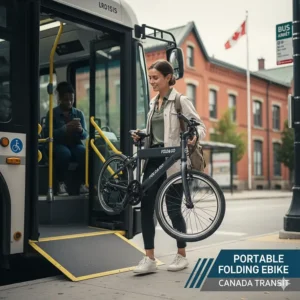
Folding ebikes solve legitimate problems for multi-modal commuters or apartment dwellers with limited storage. The best folding mechanisms collapse in under 30 seconds without tools and lock securely when extended. However, folding joints introduce potential failure points and slight frame flex compared to rigid designs.
Evaluate folding necessity honestly. If your commute never involves public transit and you have dedicated parking, a traditional rigid frame offers superior stiffness and longevity. Conversely, if you regularly combine cycling with GO Transit or SkyTrain, compact folding dimensions (under 90 cm x 50 cm x 80 cm when folded) become invaluable.
Weight distribution matters enormously for folded carrying. Some models balance awkwardly, making stairs exhausting. Test folding and lifting before purchasing—a poorly balanced 25 kg ebike feels heavier than a well-designed 30 kg model.
Display Technology and Smart Features
LCD displays range from basic three-function units showing speed, battery, and distance to full-colour touchscreens with GPS navigation. For daily commuting, mid-level colour displays offer the best value—clear readability in bright sunlight, essential metrics at a glance, and minimal battery drain.
Bluetooth connectivity and companion apps sound impressive but rarely prove essential. Most riders check battery percentage and adjust assist levels—features available on basic displays. GPS tracking helps theft recovery, but dedicated trackers work more reliably than integrated ebike systems.
USB charging ports integrated into displays or batteries add genuine utility. Keeping your smartphone charged during longer commutes eliminates range anxiety and ensures you can call for help if mechanical issues arise.
Cargo Capacity and Accessories
Canadian commuters often haul groceries, work equipment, or gym bags. Rear rack capacity varies from flimsy 10 kg limits to robust 25 kg+ systems. Verify actual weight ratings, not marketing claims—cheap racks bend or break under advertised loads.
Front baskets suit light items but affect steering handling. Rear panniers or trunk bags maintain better balance whilst offering weather protection. Ensure your chosen model either includes quality racks or accepts standard aftermarket options.
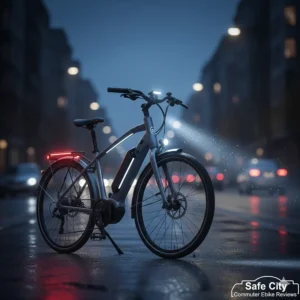
Integrated lights surpass bolt-on accessories for commuting safety. Built-in headlamps and taillights powered by the main battery eliminate dead-battery surprises and streamline the package. Daytime running lights significantly improve visibility to drivers—a critical safety feature in Canadian traffic.
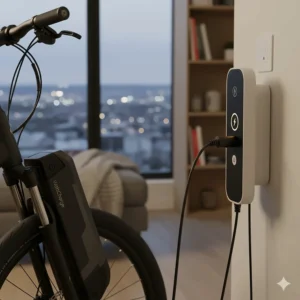
Battery Management for Canadian Winters
Lithium-ion batteries power every modern ebike, but cold Canadian winters challenge their chemistry in ways most manufacturers don’t advertise. Proper battery care extends lifespan and maintains performance year-round.
Cold Weather Performance Reality
Battery manufacturers typically spec operating ranges between -10°C and +45°C, but performance degrades progressively as temperatures drop. At 0°C, expect roughly 10-15% capacity loss. At -10°C, you’ll lose 20-30%. Below -20°C, batteries may refuse to charge or deliver severely reduced range.
The solution isn’t avoiding winter riding but managing battery temperature. Remove batteries and store them indoors overnight. Start rides with warm batteries, as internal resistance generates some heat during discharge. Insulated battery bags or neoprene covers help maintain operating temperature during rides.
Never charge frozen batteries—attempting to charge below 0°C can permanently damage cells. Bring cold batteries indoors and let them warm to room temperature for at least an hour before connecting chargers. This practice alone extends battery lifespan significantly.
Charging Best Practises
Contrary to popular belief, modern lithium-ion batteries don’t require full discharge cycles. In fact, shallow discharge cycles (using 20-80% capacity) maximise lifespan. Avoid depleting batteries to zero except when calibrating charge indicators every few months.
Charge times vary by capacity and charger output. Standard 2A chargers require 4-6 hours for typical 500-700Wh batteries, whilst fast chargers cut time to 2-3 hours. Faster charging generates more heat and accelerates degradation—use fast charging only when necessary.
Storage charge level matters for longevity. If you won’t ride for weeks, store batteries at 40-60% charge in cool, dry locations. Full storage charges accelerate capacity loss, whilst empty storage risks deep discharge damage. Check voltage monthly during long storage periods.
Lifespan Expectations
Quality lithium-ion batteries tolerate 500-800 full charge cycles before capacity drops to 80% of original. With proper care, this translates to 3-5 years of daily commuting. Cheap batteries fail sooner, making replacement costs a hidden expense in budget ebikes.
Watch for degradation signs: reduced range, longer charging times, or sudden voltage drops under load. These symptoms indicate aging cells requiring replacement. Factor replacement costs ($400-$800 CAD for quality batteries) into long-term ownership calculations.
Extended warranties covering battery degradation provide peace of mind but read terms carefully. Many warranties exclude normal wear or require maintaining detailed charging records—impractical for most riders.
Maintenance Essentials for Year-Round Commuting
City commuter ebikes demand more maintenance than traditional bicycles due to additional electrical components and higher speeds increasing wear rates. Establishing consistent maintenance routines prevents expensive failures.
Weekly Quick Checks
Before each week’s rides, perform visual inspections taking under five minutes. Check tyre pressure—underinflated tyres drain batteries faster and increase puncture risk. Most commuter ebikes run 30-50 PSI depending on tyre width and rider weight.
Test brake function by squeezing levers and checking pad clearance. Brakes should engage smoothly without rubbing. Listen for unusual noises indicating worn pads or contaminated rotors. Disc brakes require occasional adjustments as pads wear—simple five-minute jobs with proper tools.
Inspect chain condition and lubrication. Dry, rusty chains waste power and wear drivetrain components exponentially faster. Light oil every 100-200 km keeps chains running smoothly. Remove excess oil to avoid attracting road grime.
Monthly Deep Maintenance
Every month, thoroughly clean your ebike, paying special attention to electrical connections and moving parts. Use bike-specific cleaners—household detergents can damage seals and bearings. Avoid pressure washers near electrical components.
Check bolt torque on critical components: handlebar stem, seat post, and wheel axles. Vibration loosens fasteners over time, creating safety hazards. Invest in a proper torque wrench—over-tightening aluminium components causes irreversible damage.
Inspect drivetrain wear using chain checker tools. Chains stretch with use, and worn chains accelerate cassette and chainring wear. Replace chains every 2,000-3,000 km to protect expensive drivetrain components.
Seasonal Service Requirements
Spring maintenance after winter storage addresses salt corrosion and moisture damage. Thoroughly clean and dry all components, then apply fresh lubrication. Check brake pads—salt accelerates wear and can contaminate hydraulic systems.
Autumn preparation for winter includes swapping to studded tyres if you’ll ride on ice. Battery capacity checks verify healthy cells before demanding winter conditions. Consider professional service for hydraulic brake bleeding and bearing inspection.
Some repairs exceed DIY capabilities. Wheel truing, hydraulic brake bleeding, and motor diagnostics require specialised tools and expertise. Budget $100-$200 CAD annually for professional maintenance alongside DIY efforts.
Cost Analysis: True Ownership Expenses
Initial purchase prices tell incomplete stories. Savvy buyers calculate total cost of ownership including maintenance, electricity, accessories, and potential savings versus alternatives.
Initial Investment Breakdown
Budget-friendly options start around $599 CAD for basic folding models, whilst premium commuters reach $1,799 CAD. The sweet spot for quality Canadian city commuting sits between $999-$1,399 CAD—enough budget for reliable components without paying for unnecessary premium features.
Essential accessories add $150-$300 to upfront costs. Quality locks ($80-$150) protect investments from theft, especially in urban areas. Fenders ($40-$60) and lights ($30-$80) transition basic ebikes to practical year-round commuters. Panniers or trunk bags ($50-$100) enable cargo hauling.
Don’t forget safety gear. While helmets are mandatory across Canada, investing in quality protection ($80-$150) versus cheap options can literally save your life. Hi-visibility clothing ($30-$60) dramatically improves driver awareness during Canadian’s dark winter months.
Operating Costs Comparison
Electricity costs for charging remain negligible—roughly $0.15-$0.25 CAD per full charge depending on battery size and local rates. Even daily commuters spend under $60 annually on electricity, a fraction of public transit costs or vehicle fuel.
Maintenance expenses average $200-$400 annually depending on riding intensity and DIY capability. Budget $100-$150 for consumables (chains, brake pads, tyres), plus occasional professional service. This compares favourably against $1,200-$2,400 annual public transit passes in major Canadian cities.
Battery replacement represents the largest single expense. Quality batteries cost $400-$800 every 3-5 years. Amortised monthly, this adds $7-$20 to operating costs—still substantially cheaper than car ownership or even taxi/rideshare alternatives.
Savings Versus Alternatives
Average Canadian car ownership costs $9,000-$12,000 annually according to CAA calculations. Even partial replacement of car trips generates significant savings. Commuters driving 10 km daily save approximately $2,000-$3,000 yearly switching to ebikes (fuel, parking, insurance savings minus ebike costs).
Public transit cost varies by city. Toronto’s TTC monthly pass costs $156 CAD, Vancouver’s TransLink zones reach $204.60 CAD. Ebike ownership pays for itself within 8-15 months compared to transit passes, whilst offering superior schedule flexibility and avoiding crowded vehicles.
Health benefits provide harder-to-quantify but substantial value. Regular cycling improves cardiovascular fitness, reduces stress, and lowers healthcare costs long-term. Studies suggest active commuters save $500-$1,000 annually in healthcare expenses compared to sedentary alternatives.
Safety Considerations for Urban Cycling
Canadian cities are progressively improving cycling infrastructure, but sharing roads with vehicles demands heightened awareness and proper equipment. Understanding risks and mitigation strategies keeps commuters safe.
Visibility and Lighting Requirements
Provincial regulations mandate lights for night riding, but exceeding minimums significantly improves safety. Front lights should emit at least 500 lumens for urban riding, with higher output (800-1200 lumens) for unlit paths. Rear lights benefit from daytime flash modes increasing conspicuity.
Reflective elements multiply effectiveness of lights. Ankle reflectors catch driver attention at crucial sightlines. Reflective panniers or bags increase visibility from all angles. Even in daylight, hi-visibility colours (fluorescent yellow, orange) help distracted drivers notice cyclists sooner.
Canadian winter darkness extends commuting hours outside natural daylight. Investing in quality lighting systems isn’t optional—it’s essential safety equipment. USB-rechargeable lights with battery indicators prevent unexpected failures mid-commute.
Defensive Riding Techniques
Assume invisibility to drivers. Make eye contact before proceeding through intersections. Signal intentions clearly and early. Occupy full lanes when necessary rather than hugging curbs where drivers misjudge passing clearance.
Right hooks at intersections cause frequent cyclist injuries. When riding straight through intersections, stay ahead or well behind right-turning vehicles. Never ride beside vehicles that might turn across your path.
Door zones present constant urban hazards. Ride at least one metre from parked cars—enough distance to avoid doors swinging open unexpectedly. Slowing when passing parked cars with visible occupants provides additional reaction time.
Weather-Specific Challenges
Rain reduces visibility and traction dramatically. Slow down, increase following distances, and brake earlier than normal. Painted road markings become slippery when wet—avoid sudden movements over them.
Snow and ice demand either studded tyres or avoiding riding entirely. Black ice forms unpredictably below 0°C, often in shaded areas or on bridges. Conservative riding—low assist levels, gentle inputs—helps maintain traction on marginal surfaces.
Canadian spring brings unique hazards. Freeze-thaw cycles create potholes seemingly overnight. Gravel spreads across bike lanes during snow melt. Heightened vigilance during March-April prevents damage to bikes and riders.

Storage and Security Solutions
Urban bike theft remains distressingly common across Canadian cities. Proper storage and security measures protect investments and ensure convenient access.
Home Storage Options
Indoor storage protects ebikes from weather and theft but challenges apartment dwellers with limited space. Wall-mounted hooks or racks lift bikes vertically, minimising floor space requirements. Folding models simplify storage in compact living situations.
Balcony storage requires weatherproof covers protecting electronics from moisture. Even covered balconies expose bikes to temperature extremes accelerating component wear. If outdoor storage is unavoidable, remove batteries nightly for indoor storage—they’re expensive and vulnerable to theft.
Garage storage suits detached home owners but requires securing bikes even in locked garages. Thieves target garages knowing they contain valuable items. Wall anchors or floor-mounted stands with quality locks deter opportunistic theft.
Public Locking Strategies
Lock selection dramatically affects theft risk. U-locks with 13-16 mm shackles resist common hand tools, whilst cable locks yield to bolt cutters in seconds. Invest $100-$150 in quality locks—cheap locks invite theft of bikes worth hundreds or thousands.
Locking technique matters as much as lock quality. Secure frame and rear wheel to immovable objects with U-locks. Add secondary cables for front wheels if quick-release equipped. Position locks off ground making leverage attacks difficult.
High-theft urban areas demand extra precautions. Remove accessories, batteries, and displays when leaving bikes unattended. Register bikes with municipal programs and note serial numbers for recovery assistance if theft occurs.
Insurance Considerations
Homeowner’s or renter’s insurance often covers bike theft, but verify policy limits and deductibles. Many policies cap bicycle coverage at $500-$1,000—insufficient for quality ebikes. Dedicated bike insurance policies provide higher coverage limits and broader protection.
Insurance costs vary by location and bike value. Expect to pay 5-10% of bike value annually for comprehensive coverage including theft, damage, and liability. High-theft cities like Vancouver or Toronto face premium rates, whilst smaller communities enjoy lower costs.
Document purchases with receipts, photos, and serial numbers. Keep battery serial numbers separately—they’re frequently stolen independently. This documentation expedites claims and improves recovery chances.
Environmental Impact and Sustainability
Ebikes offer compelling environmental advantages over cars, but manufacturing and disposal create ecological footprints requiring thoughtful consideration.
Carbon Emissions Comparison
Lifecycle analysis comparing ebikes to cars shows dramatic emissions reductions. Manufacturing a typical ebike generates roughly 200-300 kg CO2 equivalent, whilst cars produce 6,000-17,000 kg depending on size. Over useful lifespans, ebikes emit 95-98% less CO2 than equivalent car trips.
Electricity source significantly affects emissions calculations. Canadian provinces vary widely—Quebec’s hydroelectric grid produces minimal emissions per charge, whilst Alberta’s coal-heavy grid generates more. Even worst-case scenarios, ebikes emit far less than fossil-fuel vehicles.
Battery production represents the largest manufacturing emissions component. Lithium extraction and processing consume significant energy, but improving recycling infrastructure reduces environmental impact progressively. Choosing manufacturers with recycling programmes minimises ecological footprint.
Urban Air Quality Benefits
Beyond carbon emissions, ebikes eliminate local air pollutants improving urban health. Cars emit nitrogen oxides, particulate matter, and volatile organic compounds directly into neighbourhoods. Replacing car trips with ebikes measurably improves air quality in dense cities.
Canadian studies estimate each kilometre cycled versus driven prevents 0.2-0.3 kg CO2 emissions. Daily 10 km commuters eliminate approximately 1,000-1,500 kg CO2 annually—equivalent to removing a car for 5,000-7,500 km. Multiplied across thousands of urban commuters, impacts become substantial.
Noise pollution receives less attention but significantly affects urban livability. Silent ebikes versus loud traffic reduce ambient noise levels, benefiting communities and wildlife. Quieter cities encourage outdoor activity and improve quality of life measurably.
Responsible End-of-Life Disposal
Lithium-ion batteries require proper recycling preventing toxic materials from entering landfills. Most Canadian provinces offer battery recycling programmes through retailers or municipal facilities. Never discard batteries in regular waste—fire risks from damaged cells pose serious hazards.
Aluminium frames recycle efficiently retaining material value. Steel components similarly enter recycling streams. Electronics prove more challenging but specialised e-waste facilities handle controllers and displays responsibly.
Extending ebike lifespans maximises environmental benefits. Repairing versus replacing conserves resources embedded in manufacturing. Quality components justify higher initial costs through extended service life reducing waste generation.
FAQ
❓ What is the maximum legal speed for ebikes in Canada?
❓ How much do city commuter ebikes cost in Canada?
❓ Do I need a licence to ride an ebike in Canada?
❓ What range can I expect from city commuter ebikes?
❓ Are 750W ebike motors legal in Canada?
Conclusion: Finding Your Perfect Canadian Commuter
Navigating city commuter ebike reviews ultimately leads to personal priorities—your specific commute, budget constraints, and riding preferences determine the ideal choice. No single model perfectly suits every Canadian rider, but understanding key factors empowers informed decisions.
For budget-conscious commuters prioritising value, the HITWAY BK6M delivers impressive capability under $1,000 CAD with folding convenience and fat-tyre versatility. Legal sticklers appreciate the ANCHEER Sunshine’s strict 500W compliance eliminating regulatory concerns across provinces.
Range-obsessed riders covering longer distances benefit from the GOSEN G5’s exceptional 90 km capability, whilst hill climbers tackling mountain cities find the Jasion EBX conquers steep grades effortlessly. Comfort-focused commuters prefer the Jasion YC1 ST’s step-through accessibility and natural torque-sensor assistance.
Remember that specifications alone don’t guarantee satisfaction—real-world Canadian conditions test ebikes beyond manufacturer claims. Prioritise quality components, proper sizing, and features matching your actual usage rather than marketing hype or unnecessary technology.
Canadian cities are rapidly improving cycling infrastructure with protected lanes, bike-sharing programmes, and municipal incentives for ebike adoption. This momentum creates increasingly favourable conditions for commuters choosing two wheels over four, benefiting personal finances, community health, and environmental sustainability simultaneously.
Your perfect city commuter ebike exists within this guide’s selections. Match your commute profile against each model’s strengths, verify Canadian availability and compliance, then confidently invest in cleaner, healthier, more economical urban transport. The roads await.
Recommended for You
🚴 Best Electric Bike Accessories for Canadian Winter Riding 2026 – Discover essential gear to extend your riding season through harsh Canadian winters.
🔋 Complete Guide to Ebike Battery Care and Maintenance – Maximise battery lifespan and performance with expert tips for Canadian climates.
🛠️ DIY Ebike Maintenance: Save Money on Professional Service – Learn simple maintenance tasks every Canadian ebike owner should master.
Disclaimer: This article contains affiliate links to Amazon.ca. If you purchase products through these links, we may earn a small commission at no additional cost to you.
✨ Found this helpful? Share it with your friends! 💬🤗
