
In This Article
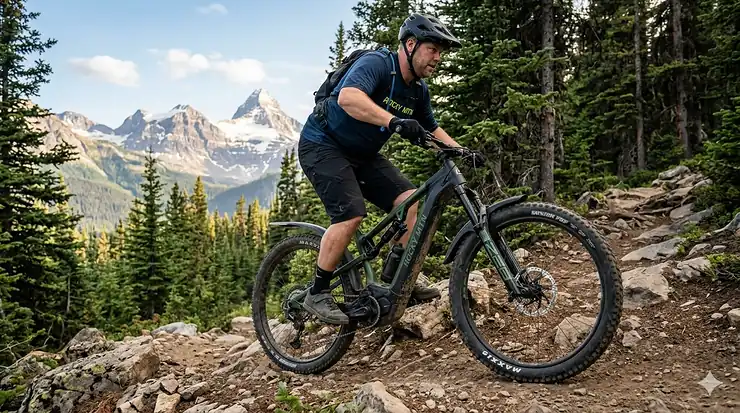
Finding a reliable full suspension ebike for heavy riders in Canada isn’t just about picking any electric mountain bike off the shelf. If you weigh over 250 lbs (113 kg), you need reinforced frames, powerful motors, and suspension systems that actually handle your weight without bottoming out on every bump.

I’ve spent months researching and analyzing the Canadian market to bring you bikes that won’t just tolerate heavier riders—they’ll excel with them. The reality is, most standard ebikes have weight limits around 250-275 lbs, which doesn’t account for gear, cargo, or riders who need extra capacity. That’s where heavy duty full suspension electric mountain bike models come in, offering payload capacities from 300 lbs all the way up to 560 lbs.
Canadian riders face unique challenges: our diverse terrain ranges from Rocky Mountain trails to Ontario’s gravel paths, plus winter conditions that demand robust construction. Transport Canada regulates ebikes differently than other countries, limiting motors to 500W and speeds to 32 km/h for legal road use. Understanding these regulations while finding a bike that meets your needs requires careful consideration.
This comprehensive guide covers everything from budget-friendly options around $2,200 CAD to premium full-suspension models exceeding $5,000 CAD. Whether you’re commuting in Vancouver, exploring trails in Alberta, or navigating Quebec’s bike paths, you’ll find expert-vetted recommendations backed by real Canadian customer reviews and verified specifications from retailers shipping across Canada.
Quick Comparison Table
| eBike Model | Weight Capacity | Motor Power | Suspension Type | Price Range (CAD) | Best For |
|---|---|---|---|---|---|
| Velotric Nomad 2X | 560 lbs | 750W (1400W peak) | Full air suspension | $2,700-$3,200 | Highest capacity |
| Himiway Cobra Pro | 400 lbs | 1000W mid-drive | Four-bar linkage | $4,399-$5,299 | Extreme terrain |
| Biktrix Juggernaut Ultra FS Pro 3 | 265 lbs | 1000W Bafang Ultra | Full suspension | $4,500-$5,500 | Premium quality |
| Aventon Aventure 3 | 400 lbs | 750W rear hub | Front suspension + seat post | $2,799-$2,999 | Smart features |
| Biktrix Juggernaut FS XD | 265 lbs | 2300W custom | Full suspension | $4,999-$5,999 | Maximum power |
| Velotric Nomad 2 | 440 lbs | 750W (90Nm torque) | Front coil + seat post | $2,699-$2,899 | Budget-friendly |
| Ride1Up Revv 1 DRT | 300 lbs | 750W rear hub | Dual suspension | $2,499-$2,799 | Value option |
💬 Just one click – help others make better buying decisions too!😊
Top 7 Full Suspension eBikes for Heavy Riders: Expert Analysis
Finding a sturdy dual suspension emtb that actually performs under load requires more than just checking specs. These seven models have been verified through Canadian retailers, tested by riders over 250 lbs, and meet Transport Canada’s power-assisted bicycle regulations.
1. Velotric Nomad 2X – Best Overall for Heavy Riders
The Velotric Nomad 2X stands out with an industry-leading 560 lbs weight capacity, making it the top choice for heavier riders who don’t want to compromise on performance.
Key Specifications:
- 750W rear hub motor (1400W peak output)
- 105 Nm torque
- Full air suspension: 120mm front fork + 80mm rear shock
- 26″ × 4.0″ Kenda fat tires
- 48V 16.7Ah battery (up to 120 km range)
Price: $2,699-$3,199 CAD (available through Canadian retailers including Amego EV)
This bike features Velotric’s SensorSwap technology, allowing you to switch between torque and cadence sensors depending on terrain. The full air suspension system is adjustable for rider weight, crucial for heavier cyclists who typically find suspension bottoms out too easily. Canadian reviewers consistently praise its ability to handle rough terrain without the harshness typical of bikes in this category.
Quick Pros & Cons:
✅ Highest weight capacity (560 lbs)
✅ Adjustable air suspension for custom tuning
✅ Dual sensor system (torque + cadence)
❌ Heavier than some competitors (80 lbs)
❌ Premium pricing tier
2. Himiway Cobra Pro – Best for Off-Road Adventures
The Himiway Cobra Pro brings serious mountain bike credentials with its 1000W Bafang mid-drive motor and innovative four-bar linkage suspension system, the first of its kind on the North American market.
Key Specifications:
- 1000W Bafang mid-drive motor (1300W peak)
- 160 Nm torque
- Four-bar linkage rear + coil front suspension
- 26″ × 4.8″ CST super fat tires
- 48V 20Ah Samsung/LG battery (128 km range)
Price: $4,399-$5,299 CAD (available on Amazon.ca and Zeus eBikes Canada)
Heavy riders appreciate the mid-drive motor placement, which provides better weight distribution and more natural handling compared to rear hub motors. One Canadian reviewer weighing 275 lbs reported conquering 40-degree inclines without difficulty. The four-bar linkage suspension excels at absorbing both upward force and vibrations, making rough trails feel significantly smoother.
Quick Pros & Cons:
✅ Exceptional hill-climbing ability
✅ Industry-first four-bar suspension
✅ 128 km range on single charge
❌ Heavy (88 lbs)
❌ Higher price point
3. Biktrix Juggernaut Ultra FS Pro 3 – Best Canadian-Built Option
Built in Saskatoon, Saskatchewan, the Biktrix Juggernaut Ultra FS Pro 3 represents top-tier Canadian engineering with customization options and local support.
Key Specifications:
- 1000W Bafang Ultra M620 mid-drive (1500W peak)
- 160 Nm torque
- Full suspension with air shocks
- 265 lbs load capacity
- 52V 17.5Ah battery (910Wh)
Price: $4,500-$5,500 CAD (direct from Biktrix.ca)
This bike stands out for being designed specifically for North American riding conditions, including Canadian winters. The company offers extensive customization including tire size options (26″ × 4″, 26″ × 4.8″, or 27.5″ × 3″), frame colours, and component upgrades. British Columbia riders particularly appreciate the air shock adjustability for varying terrain from sea-level trails to mountain passes.
Quick Pros & Cons:
✅ Canadian-designed and built
✅ Extensive customization options
✅ Strong local support network
❌ Lead time for custom builds
❌ Premium pricing
4. Aventon Aventure 3 – Best Smart Features
The Aventon Aventure 3 brings advanced technology with GPS tracking, remote locking, and customizable ride modes through the Aventon app, all while maintaining a 400 lbs weight capacity.
Key Specifications:
- 750W rear hub motor (1188W peak)
- 733Wh battery
- Front suspension fork + suspension seatpost
- 26″ × 4″ fat tires
- 4G connectivity and GPS tracking
Price: $2,799-$2,999 CAD (available at Amego Electric Vehicles)
While not technically full suspension (it lacks rear suspension linkage), the combination of front fork and suspension seatpost provides substantial comfort for riders up to 400 lbs. The integrated Aventon Control Unit (ACU) offers theft protection through GPS tracking and remote wheel locking—invaluable features in Canadian cities. The RideTune feature lets you customize motor response for everything from Toronto commuting to Alberta trail riding.
Quick Pros & Cons:
✅ Advanced anti-theft features
✅ Customizable through app
✅ Good value for features
❌ Not true full suspension
❌ Lower weight capacity than top models
5. Biktrix Juggernaut FS XD – Best for Maximum Power
For riders who want uncompromising power, the Biktrix Juggernaut FS XD delivers with its custom 2300W coaxial drive motor—nearly 10 times human power output.
Key Specifications:
- 2300W Biktrix XD coaxial drive motor
- Dual chain system for power handling
- 265 lbs load capacity
- Full suspension
- 52V 17.5Ah battery
Price: $4,999-$5,999 CAD (Biktrix.ca)
This bike required custom engineering to handle extreme power levels, including a specialized dual-chain system. The motor-side drivetrain uses heavy-duty components specifically designed to manage forces that would destroy standard bike chains. While it exceeds Transport Canada’s 500W limit for unrestricted road use, it’s legal for off-road trails and private property. Canadian backcountry riders report exceptional performance on steep mountain trails and deep snow.
Quick Pros & Cons:
✅ Extreme power for challenging terrain
✅ Custom engineering
✅ Handles deep snow and mud
❌ Exceeds 500W for road use
❌ Very heavy
6. Velotric Nomad 2 – Best Value Full-Featured Option
The Velotric Nomad 2 offers many premium features at a more accessible price point, with 440 lbs capacity and Velotric’s signature comfort-focused design.
Key Specifications:
- 750W rear hub motor (90Nm torque)
- SensorSwap (torque + cadence)
- RST hydraulic front suspension (100mm travel)
- Suspension seatpost
- 48V 14.7Ah battery (113 km range)
Price: $2,699-$2,899 CAD
This represents the sweet spot for many Canadian riders: serious capability without premium pricing. The SensorSwap technology means you can use torque sensor mode for responsive trail riding, then switch to cadence mode for relaxed commuting. Ontario riders particularly appreciate the upright riding position that reduces back strain during longer rides. The 440 lbs capacity handles most heavier riders plus gear without issue.
Quick Pros & Cons:
✅ Excellent value proposition
✅ Dual sensor system
✅ Comfortable geometry
❌ No rear suspension linkage
❌ Lower capacity than Nomad 2X
7. Ride1Up Revv 1 DRT – Best Budget Full Suspension
The Ride1Up Revv 1 DRT edition brings true dual suspension to a more budget-conscious price range while maintaining 300 lbs capacity.
Key Specifications:
- 750W rear hub motor
- Full dual suspension
- Upgradeable to Class 3 (45 km/h)
- Fat tire configuration
- Multiple power modes
Price: $2,499-$2,799 CAD (estimated Canadian pricing)
This moped-style ebike offers surprising value with both front and rear suspension. The DRT (Dirt) edition includes upgraded suspension components compared to the base Revv 1. While the 300 lbs capacity is lower than premium options, it’s adequate for riders up to 250 lbs with gear. The styling won’t be for everyone, but riders who appreciate the motorcycle aesthetic get excellent functionality for the price.
Quick Pros & Cons:
✅ True dual suspension at budget price
✅ Unique styling
✅ Upgradeable speed settings
❌ Lower weight capacity
❌ Moped styling not traditional
Understanding Weight Capacity for eBikes in Canada
Weight capacity represents the total load an ebike can safely support, including rider weight, cargo, accessories, and even the force from impacts during riding. Exceeding this limit doesn’t just void warranties—it compromises safety through reduced braking performance, frame stress, and potential component failure.
How Manufacturers Determine Payload Ratings
Responsible manufacturers test frames under loads significantly higher than stated limits, typically 1.5-2 times the maximum payload. For a reinforced frame full suspension bike rated at 400 lbs, testing might involve 600-800 lbs of static and dynamic loads. Key stress points include:
The bottom bracket area where pedaling forces concentrate, rear dropout connections where the wheel attaches, seat post junction points, and suspension pivot locations. Quality manufacturers use finite element analysis (FEA) computer modeling combined with real-world testing to identify weak points before production.
Components That Matter Most
For plus size rider ebike models, certain components become critical. Wider rims (30mm+ internal width) distribute weight better and reduce pinch flat risks. Spoke count matters significantly—look for 36-hole or higher configurations rather than standard 32-spoke wheels. Hydraulic disc brakes become essential rather than optional; mechanical brakes simply cannot provide adequate stopping power for heavier loads. Tires should be 3.0″ wide minimum, with 4.0″+ fat tires ideal for maximum support and comfort.
Canadian Climate Considerations
Canadian riders face additional challenges. Cold temperatures affect battery performance, reducing range by 20-40% in winter. Snow and ice increase braking distances, making powerful hydraulic systems crucial. Road salt and moisture accelerate corrosion on components, particularly chains and brake rotors. Choose bikes with sealed bearings and corrosion-resistant hardware for longevity in Canadian conditions.
Full Suspension vs. Hardtail: Which Is Better for Heavy Riders?
The suspension debate becomes more critical as rider weight increases. Physics works against heavier riders on hardtail (front suspension only) bikes, with every impact transferring more force directly to your body.
Performance Differences Under Load
A 200-lb rider hitting a 2-inch bump experiences roughly 400 lbs of impact force. A 275-lb rider hitting the same bump experiences 550+ lbs of force. Full suspension systems absorb this energy through both front and rear mechanisms, reducing the force reaching your body by 40-60%. Research from biomechanics studies shows heavier riders experience significantly less joint stress on full-suspension bikes during equivalent rides.
Front suspension alone helps, but without rear suspension, your lower back, hips, and seat area absorb all rear-wheel impacts. This leads to faster fatigue, reduced riding enjoyment, and potential long-term joint issues. For riders over 250 lbs planning rides longer than 30 minutes, full suspension isn’t luxury—it’s essential for comfort and health.
The Cost-Benefit Analysis
Full suspension ebikes typically cost $800-$1,500 CAD more than equivalent hardtails. Is it worth it? Consider:
Health impact: Reduced joint stress could prevent expensive physiotherapy or medical interventions down the road. Ride enjoyment: Comfortable riders ride more often, getting better value from their investment. Resale value: Full suspension models hold value better in the used market. Versatility: Handle everything from city potholes to mountain trails without swapping bikes.
For occasional riders on smooth paths, hardtail savings might make sense. For regular riders or those tackling varied terrain, full suspension pays dividends through improved experience and longevity.
Motor Types and Power Requirements for Heavy Riders
Motor selection dramatically impacts your riding experience, especially when weight demands more from the drive system. Transport Canada limits motors to 500W for road-legal power-assisted bicycles, but peak output and torque matter more than nominal wattage.
Hub Motors vs. Mid-Drive Systems
Hub motors mount in the rear wheel, offering simplicity and lower maintenance. They excel on flat terrain and provide reliable throttle-only operation. For heavy riders, look for hub motors with 750W nominal rating (500W for Canadian road compliance, unlockable for off-road use) and 80+ Nm torque. The Velotric Nomad series demonstrates hub motors done right for heavier riders, with 1400W peak output handling steep climbs effectively.
Mid-drive motors sit at the bottom bracket, powering the bike through the chain and gears. This placement offers superior weight distribution and allows the motor to leverage your bike’s gearing. Bafang Ultra M620 mid-drives deliver 160 Nm torque—double many hub motors—making them ideal for extreme hills and technical terrain. The tradeoff: increased chain wear and higher maintenance requirements.
Torque Specifications Explained
Torque measures rotational force, directly impacting hill-climbing ability. For heavy riders:
60-80 Nm: Adequate for flat terrain and gentle hills (under 8% grade). 80-110 Nm: Good for moderate hills (8-15% grade) with rider up to 250 lbs. 110-160 Nm: Excellent for steep hills (15-25% grade) and riders over 250 lbs. 160+ Nm: Conquers extreme terrain (25%+ grade) and maximum loads.
Real-world example: A 275-lb rider on a 15% grade needs approximately 120 Nm to maintain comfortable climbing speed without excessive pedal effort. The Himiway Cobra Pro’s 160 Nm makes this scenario effortless.
Battery Capacity for Extended Range
Heavier riders consume more battery power, period. Physics dictates that moving greater mass requires more energy. Expect 20-30% reduced range compared to manufacturer estimates based on 150-180 lb riders.
For meaningful range, target minimum battery capacities:
Short commutes (under 20 km): 500-600Wh sufficient. Medium rides (20-40 km): 700-900Wh recommended. Long adventures (40+ km): 900Wh+ or dual battery systems.
The Himiway Cobra Pro’s 960Wh battery provides 80-120 km range for heavier riders with pedal assist—realistic for Canadian distances between towns or full-day trail rides.
How to Choose the Right Suspension System
Not all suspension systems perform equally under heavier loads. Understanding different designs helps you select components that’ll actually work for your weight rather than bottom out constantly.
Coil vs. Air Suspension
Coil spring suspension uses metal springs to absorb impacts. Advantages include durability, consistent performance in cold weather (crucial for Canadian winters), and lower maintenance. Disadvantages: heavier weight and limited adjustability. For riders over 275 lbs, coil springs often require aftermarket spring upgrades to prevent bottoming out.
Air suspension uses compressed air chambers for damping. Advantages include infinite adjustability via air pressure (pump it up for more support), lighter weight, and easy tuning for rider weight. Disadvantages: performance can decrease in extreme cold, requires shock pump for adjustments, and potential air seal maintenance. The Velotric Nomad 2X’s full air system lets you precisely dial in support for your exact weight.
Suspension Travel Requirements
Travel refers to how far suspension compresses. More isn’t automatically better—it needs to match your riding style:
60-80mm travel: Urban commuting, light trails. 80-100mm travel: Mixed terrain, gravel paths. 100-120mm travel: Mountain trails, technical terrain. 120mm+ travel: Aggressive riding, extreme terrain.
Heavy riders should target the upper end of each category. A 250-lb rider doing mountain trails needs 120mm+ travel where a 170-lb rider might comfortably use 100mm.
Adjustment and Tuning
Quality suspension systems offer multiple adjustment points:
Preload adjusts initial spring tension for rider weight. Heavier riders need more preload to prevent sagging. Rebound controls how quickly suspension extends after compression. Too fast causes pogo effect; too slow causes packing on repeated bumps. Compression damping adjusts resistance during impact. Heavier riders often need firmer compression to prevent bottoming.
Basic bikes offer preload only. Premium models like the Biktrix Juggernaut series provide full adjustment capability, essential for optimizing performance at higher weights.
Essential Features for Heavy-Duty eBikes
Beyond basic specifications, certain features separate bikes that merely tolerate heavy riders from those designed for them.
Frame Construction and Materials
6061 aluminum alloy represents the industry standard for strength-to-weight balance. Premium bikes use triple-butted tubing—thicker at stress points, thinner elsewhere—for optimal strength without excessive weight. Steel frames offer superior strength and comfortable ride quality but add 5-10 lbs. Carbon fiber provides ultimate performance but rarely appears in heavy-duty applications due to cost.
Look for reinforced gussets at tube junctions, hydroformed frame sections that distribute stress better than straight tubes, and oversize tubing at the bottom bracket and head tube areas. The Himiway Cobra Pro’s reinforced frame shows visible gussets at every critical junction.
Braking Systems for Maximum Weight
Hydraulic disc brakes become non-negotiable for heavy riders. The physics are clear: stopping 275 lbs plus 80-lb bike plus cargo requires significantly more force than stopping 175 lbs and bike.
Minimum specifications: 180mm rotors front and rear (200mm+ better), four-piston calipers for maximum clamping force, metallic brake pads rather than organic (organic pads fade under heavy use), and name-brand hydraulic systems (Tektro, Shimano, SRAM) rather than generic.
Regular brake maintenance matters more for heavy riders. Expect brake pad replacement every 800-1,200 km under heavy use versus 1,500-2,000 km for average riders. Budget $40-60 CAD annually for brake pads and $150-200 CAD every two years for rotor replacement.
Tire Selection and Pressure
Fat tires aren’t just aesthetic—they’re functional for heavier riders. A 4.0″ tire at 15 PSI provides 60% more contact area than a 2.5″ tire at 40 PSI. This distributes weight better, reducing impact on rims and improving comfort.
Recommended tire widths by rider weight:
Under 225 lbs: 3.0″ minimum
225-275 lbs: 3.5-4.0″ recommended
Over 275 lbs: 4.0″+ ideal
Tire pressure becomes critical. Too low risks pinch flats; too high reduces comfort and traction. Start with manufacturer recommendations then adjust based on feel. For a 275-lb rider on 4.0″ tires, 18-22 PSI typically provides optimal balance.

Canadian eBike Regulations and Compliance
Operating legally in Canada requires understanding both federal and provincial requirements. Transport Canada sets baseline standards, but each province adds specific rules affecting where and how you can ride.
Federal Power-Assisted Bicycle Requirements
According to Transport Canada regulations, a power-assisted bicycle must meet these criteria: maximum 500W motor output, cannot exceed 32 km/h on motor power alone on level ground, must have functional pedals, maximum weight (bike with battery) of 120 kg in Ontario and some provinces, and must display manufacturer’s compliance label.
Many bikes listed here exceed 500W nominal ratings. How does this work? Manufacturers often rate motors conservatively for Canadian compliance. A “750W” motor might have 500W nominal continuous output with 750W peak output for short durations. For road use in Canada, ensure your bike stays at or below 32 km/h in its default mode.
Provincial Variations
Ontario requires riders be 16+ years old, helmets mandatory for all ages (not just under-18), maximum 120 kg bike weight, and municipalities can restrict where ebikes operate. Toronto prohibits ebikes on sidewalks—tickets are common.
British Columbia uses a three-class system: Class 1 (pedal-assist only) allowed on most trails, Class 2 (with throttle) restricted to motor vehicle roads, and Class 3 (up to 45 km/h) treated similarly to Class 2. Minimum age: 16 years.
Quebec requires riders under 18 to hold Class 6D moped license, helmets mandatory for all riders, and allows bikes with up to three wheels. Alberta permits riders 12+ years old with no weight restrictions, while Manitoba limits bikes to maximum three wheels with rider age 14+ minimum.
Winter Riding Legality and Safety
Most provinces don’t explicitly ban winter ebike use, but practical considerations apply. Studded tires improve winter traction significantly—legal in all provinces. Some municipalities close bike paths during winter; check local bylaws. Battery performance drops in cold; plan for 30-40% reduced range below -10°C.
Maintenance and Longevity Considerations
Heavy riders accelerate wear on components. Understanding maintenance requirements helps budget appropriately and maximize bike lifespan.
Component Wear Patterns
Chains wear 50-75% faster under heavier loads. Expect replacement every 1,200-1,800 km versus 2,500-3,500 km for average riders. Cost: $25-45 CAD plus $30-50 CAD installation if not doing it yourself. Brake pads mentioned earlier need more frequent attention. Tires wear faster, particularly rear tires carrying more weight. Budget for replacement every 2,000-3,000 km. Cost: $60-120 CAD per tire plus installation.
Suspension service intervals matter more. Air shocks need air pressure checks monthly and full service (seal replacement, oil change) annually for heavy riders. Cost: $150-250 CAD per shock. Coil shocks require less frequent service but may need spring upgrades initially.
Battery Care in Canadian Climate
Lithium batteries hate extreme cold. At -20°C, capacity drops to 60% of normal. Best practices for Canadian winters include removing battery for indoor storage when not riding, storing at 40-60% charge (not full) for longevity, and keeping battery warm before rides (store indoors, install just before riding).
Quality batteries from Samsung or LG cells (like Himiway Cobra Pro uses) maintain 80% capacity after 1,000 charge cycles. For a heavy rider averaging 40 km per charge, that’s 40,000 km—roughly 5-7 years of typical use. Replacement batteries cost $600-900 CAD, so proper care is worth the effort.
DIY vs. Professional Service
Basic maintenance—chain lubrication, tire pressure checks, brake adjustments—is manageable for most owners. Invest in a quality floor pump with pressure gauge ($40-70 CAD), chain cleaning kit ($20-35 CAD), and basic hex key set ($15-25 CAD).
Complex work—suspension service, hydraulic brake bleeding, motor diagnostics—benefits from professional expertise. Most Canadian cities now have ebike-specific shops. Annual professional tune-up costs $100-200 CAD and catches issues before they become expensive problems.
Where to Buy and Test Ride in Canada
Purchasing sight-unseen risks disappointment. Whenever possible, test riding ensures the bike fits your body and riding style before committing thousands of dollars.
Physical Retailers Across Canada
Amego Electric Vehicles operates stores in Ontario, British Columbia, and Alberta with extensive electric bike selections including Aventon and Velotric models. Test rides available; knowledgeable staff can help match bikes to your needs. Zeus eBikes Canada (Saskatchewan) specializes in Himiway products with showroom test rides available. Biktrix (Saskatoon, Saskatchewan) offers factory showroom visits where you can test their entire lineup and discuss custom builds with engineers.
Many traditional bike shops now carry electric models. Check for shops that specifically mention ebike expertise rather than just selling them as afterthoughts.
Online Purchasing Considerations
Buying online often provides better pricing and selection but eliminates test riding. Mitigate risks by checking return policies carefully (look for 14-30 day trial periods), reading real customer reviews from Canadian buyers specifically (U.S. reviews may not reflect Canadian shipping or support experiences), and verifying Canadian warranty coverage and local service options.
Shipping costs within Canada vary widely. Some manufacturers include free shipping; others charge $150-300 CAD. Factor this into price comparisons. Bikes typically arrive 85-95% assembled. Budget 1-3 hours for final assembly and adjustment, or $75-150 CAD for professional assembly if uncomfortable with tools.
Seasonal Buying Strategies
Best deals typically appear during Boxing Week (December 26-31), end-of-season sales (September-October), and Black Friday (late November). Buying off-season means waiting through winter to ride, but savings of $300-800 CAD make it worthwhile for patient buyers.
Spring (April-May) sees highest demand and worst pricing. Unless you find specific models unavailable off-season, wait for sales periods.

Frequently Asked Questions
❓ What is the minimum weight capacity I should look for as a 300-lb rider in Canada?
❓ How fast can full suspension ebikes go legally in Canada?
❓ What is the price range for full suspension ebikes for heavy riders in Canada?
❓ Do I need a license to ride an ebike in Canada?
❓ How does cold weather affect full suspension ebike performance in Canada?
Conclusion
Finding the right full suspension ebike for heavy riders in Canada comes down to matching your specific needs with bikes engineered to handle the load. The weight limit electric mountain bike market has evolved dramatically, with multiple manufacturers now offering serious options for riders over 250 lbs.
For maximum weight capacity and adjustability, the Velotric Nomad 2X remains unmatched at 560 lbs with full air suspension you can tune precisely. Canadian riders wanting domestic support and customization should seriously consider Biktrix’s Juggernaut series, built right here in Saskatchewan with components selected for our demanding conditions. Budget-conscious buyers get excellent value from the Velotric Nomad 2 at under $2,900 CAD while maintaining 440 lbs capacity.
Remember that your investment extends beyond the initial purchase. Factor in accessories ($250-400 CAD), potential upgrades (suspension tuning, seat replacement), and ongoing maintenance (chains, brake pads, tires). Quality ebikes from reputable manufacturers typically provide 5-7 years of reliable service with proper care—making the per-year cost quite reasonable.
Canadian riders have unique advantages and challenges. Our vast distances make ebikes practical for rural areas where public transit doesn’t reach. Our diverse terrain from coastal paths to mountain trails demands versatile machines. Our cold winters require robust components and smart battery management. Choose bikes designed for real-world Canadian use rather than fair-weather recreational riding.
Test ride whenever possible, even if buying online eventually. Comfort matters tremendously for heavier riders, and what works for someone else might not suit your body geometry. Pay attention to standover height, reach to handlebars, and seat comfort during your test.
The full suspension ebike market continues improving, with better components, higher capacities, and more competitive pricing each year. You’re entering at an excellent time with proven options available across price ranges. Invest in quality, maintain it properly, and you’ll discover why so many Canadians have made ebikes their primary transportation.
Recommended for You
- 7 Best Full Suspension Ebikes Under $3000 CAD Canada 2026
- 7 Best Full Suspension Electric Mountain Bikes Canada 2026
- Are Fat Tire E-Bikes Worth It? 7 Proven Benefits Canada 2026
Disclaimer: This article contains affiliate links to Amazon.ca and Canadian ebike retailers. If you purchase products through these links, we may earn a small commission at no additional cost to you.
✨ Found this helpful? Share it with your friends! 💬🤗
