
In This Article
Picture this: it’s a crisp February morning in Vancouver or Winnipeg, the ground is blanketed in fresh snow, and instead of sitting inside waiting for spring, you’re gliding through the white streets on a powerful electric bike — completely unbothered by the cold. That’s the kind of freedom winter e-bikes Canada can give you.
Canada’s winters are no joke. We’re talking about temperatures that regularly dip below −15°C in the prairies, icy sidewalks in Toronto, and windsw
ept trails across the maritimes. Not every e-bike can handle that. The truth is, most standard electric bicycles were never designed to perform in sub-zero conditions. Battery range shrinks, tires lose grip, and components freeze up faster than your coffee on a January commute.
But the good news? A whole new generation of cold weather electric bikes is built specifically to tackle the brutal Canadian winter. These machines come loaded with fat tires for traction on snow and ice, high-capacity lithium-ion batteries that hold up better in the cold, and waterproof ratings that laugh in the face of Canadian precipitation. Whether you’re looking for an e-bike for Canadian winters that handles your daily commute or one built for weekend trail adventures through packed snow, we’ve done the heavy lifting so you don’t have to.
In this guide, I’ve researched and vetted 7 real products available on Amazon.ca — ranging from budget-friendly options under $1,000 CAD all the way up to premium machines hitting $3,000 CAD. I’ve checked specs, dug into Canadian buyer reviews, and cross-referenced cold weather performance data. So grab a hot chocolate ☕ and let’s dive in.
Quick Comparison Table
Before we get into the deep stuff, here’s a snapshot of all 7 winter e-bikes at a glance. All prices are in Canadian dollars.
| # | E-Bike Model | Motor | Battery | Tire Size | Price (CAD) | Best For |
|---|---|---|---|---|---|---|
| 1 | Lectric XP4 500W | 500W (1092W peak) | 48V 10.4Ah | 20″ × 4″ | ~$1,399 | Best overall value |
| 2 | Aventon Aventure 3 | 750W | 36V 20Ah | 26″ × 4″ | ~$2,799 | Premium all-rounder |
| 3 | ECOTRIC 26″ Fat Tire | 750W | 48V 12.5Ah | 26″ × 4″ | ~$799 | Budget pick |
| 4 | Himiway Cruiser D3 | 750W | 48V 17.5Ah | 26″ × 4″ | ~$1,649 | Longest range |
| 5 | Windone E2 Fat Tire | 500W (750W peak) | 48V 13Ah | 20″ × 4″ | ~$1,099 | Urban winter commute |
| 6 | Rad Power RadRover 6 Plus | 750W | 48V 14Ah | 26″ × 4″ | ~$2,499 | Trail & off-road |
| 7 | Mokwheel Obsidian ST | 750W | 48V 15Ah | 26″ × 4″ | ~$1,799 | Full suspension rides |
💬 Just one click – help others make better buying decisions too! 😊
✨ Don’t Miss These Exclusive Deals!
🔍 Click on any highlighted product name below to check current pricing and stock on Amazon.ca. Winter doesn’t wait — and neither should you! 😊
Top 7 Winter E-Bikes in Canada: Expert Analysis 🚴♂️⚡
1. Lectric XP4 500W — Best Overall Value 🏆
The Lectric XP4 is hands down one of the most popular folding fat tire e-bikes in North America, and for good reason. With over 400,000 riders putting it through its paces, this bike has earned serious trust. The 500W rear hub motor delivers a peak output of 1,092W — more than enough to push through slushy trails or packed snow without breaking a sweat.
Key Specs:
- 48V, 10.4Ah (500Wh) UL-certified lithium-ion battery
- 20″ × 4″ fat tires for excellent snow traction
- 602 hydraulic disc brakes with upgraded rotor thickness
- Foldable frame — easy to store in your Toronto condo or Calgary townhouse
Canadian riders have praised the XP4 for its surprisingly solid build quality at this price point. One reviewer noted they put 300+ km on theirs without a single issue. The folding design is a nice bonus for those who use public transit as part of their winter commute.
✅ Incredibly affordable for the features you get
✅ Foldable — perfect for smaller Canadian homes
✅ Solid hydraulic brakes for icy stopping
❌ No suspension fork (fat tires help compensate)
❌ Slightly narrow handlebars can feel twitchy in loose snow
2. Aventon Aventure 3 — The Premium All-Rounder ⭐
If budget isn’t your main concern, the Aventon Aventure 3 is the gold standard for fat tire e-bikes in 2026. This bike has consistently topped “best fat tire electric bike” lists across North America, and its winter capabilities are genuinely impressive. True 4-inch fat tires, a torque sensor for smooth and intuitive pedal assist, and an IPX6 water-resistance rating make it a beast in Canadian conditions.
Key Specs:
- 750W brushless rear hub motor
- 36V, 20Ah (733Wh) battery — up to 105 km range
- IPX6 water-resistant rating (serious weather protection)
- Available in step-over and step-through frames, two sizes each
The Aventure 3 also comes with smart security features like GPS tracking, geofencing, and even remote wheel lockout — handy if you’re parking at a ski resort. Canadian buyers have noted that the torque sensor keeps rides feeling natural, even on slippery surfaces where you need precise control.
✅ IPX6 water resistance is top-tier for Canadian winters
✅ Torque sensor = smoother, more controlled rides on snow
✅ Smart features (GPS, geofencing) add peace of mind
❌ Heavy at 77 lbs — carrying it up apartment stairs isn’t fun
❌ Premium price tag puts it out of reach for some budgets
3. ECOTRIC 26″ Fat Tire Electric Bike — Best Budget Pick 💰
For Canadians who want to get into winter e-biking without emptying the bank account, the ECOTRIC 26″ Fat Tire is a seriously capable option. It punches well above its weight class with a 750W motor, shock-absorbing suspension fork, and those chunky 26″ × 4″ fat tires that eat snow for breakfast.
Key Specs:
- 750W motor with 48V 12.5Ah removable lithium battery
- 26″ × 4″ fat tires with deep tread pattern
- Front suspension fork for trail comfort
- 90% pre-assembled — minimal setup right out of the box
ECOTRIC has built a loyal following among budget-conscious Canadian riders. One reviewer based in Alberta mentioned taking theirs out on frozen trails with zero complaints. The removable battery is a huge plus in winter — you can bring it inside to charge while the bike stays in the garage.
✅ Hard to beat at under $1,000 CAD
✅ Removable battery makes indoor charging a breeze
✅ Deep tread tires grip well on snow and ice
❌ Build quality isn’t quite at the level of pricier options
❌ Limited range compared to higher-end models
4. Himiway Cruiser D3 — Longest Range in the Cold 🔋
Range anxiety in winter is real. Cold weather can slash your battery range by 20–50%, which makes the Himiway Cruiser D3 a smart choice. Its massive 840Wh Samsung battery is one of the largest in this price bracket, meaning you’ll still have plenty of juice left after a long Canadian winter ride.
Key Specs:
- 750W brushless motor with Samsung battery cells
- 48V, 17.5Ah (840Wh) battery — up to 113 km on pedal assist
- 26″ × 4″ anti-puncture fat tires
- Full-colour LCD display with real-time stats
Canadian buyers have consistently praised the Himiway for its raw power. Riders over 300 lbs have reported no issues whatsoever, which speaks to the sturdy frame. The anti-puncture tires are a thoughtful touch — the last thing you need in a Canadian winter is a flat tire on a frozen trail.
✅ Massive battery = best range in cold weather
✅ Anti-puncture tires are winter-smart
✅ Handles heavier riders with no problem
❌ On the heavier side at around 35 kg
❌ The LCD can be hard to read in bright snow glare
5. Windone E2 Fat Tire — Best for Urban Winter Commuters 🏙️
If you’re navigating the streets of Ottawa or Halifax on your daily commute through snow and slush, the Windone E2 is worth a serious look. A Canadian reviewer from Winnipeg shared that they rode theirs at −30°C with impressive durability — the battery lost a bit of charge faster, but nothing that ruined the experience.
Key Specs:
- 500W continuous / 750W peak motor
- 48V, 13Ah (624Wh) removable battery
- Dual hydraulic disc brakes
- Front and rear shock absorption system
The E2’s full-colour display is one of the brightest in its class, which helps when visibility is limited during a Canadian winter sunrise commute. The dual suspension setup keeps rides smooth over the uneven, potholed roads that are common after a thaw-freeze cycle.
✅ Proven to work at extreme Canadian cold (−30°C!)
✅ Dual suspension = smooth ride on rough winter roads
✅ Bright display for low-light winter mornings
❌ Slightly shorter range than competitors
❌ 20″ wheels feel less stable than 26″ at higher speeds
6. Rad Power Bikes RadRover 6 Plus — Best for Trail Adventures 🌲
Rad Power Bikes is one of the most well-known e-bike brands in Canada, with dealers and service centres across the country. The RadRover 6 Plus is their flagship fat tire e-bike, and it’s built like a tank. If you’re planning weekend rides on packed snow trails outside of Edmonton or Quebec City, this is a machine that won’t let you down.
Key Specs:
- 750W Brose mid-drive motor
- 48V, 14Ah (672Wh) integrated battery
- 26″ × 4.0″ Maxxis fat tires
- 7-speed Shimano drivetrain
The RadRover’s nationwide Canadian service network is a big advantage — if something goes wrong in the middle of a Manitoba winter, you’re not stuck. Buyers consistently highlight the bike’s stability and confidence-inspiring handling on loose, snowy terrain.
✅ Excellent Canadian dealer and service network
✅ Maxxis tires are premium and grip exceptionally well
✅ Mid-drive motor is more efficient in cold weather
❌ Pricier than most options on this list
❌ Heavier frame can be tough to manoeuvre off the trail
7. Mokwheel Obsidian ST — Best Full-Suspension Option 🏔️
For riders who want the smoothest possible experience on rocky, frozen trails, the Mokwheel Obsidian ST delivers with its full-suspension setup. The adjustable 38RC rear shock absorber and front suspension fork work together to absorb the kind of brutal vibrations you get riding over frozen ruts and icy patches.
Key Specs:
- 750W brushless motor
- 48V, 15Ah (720Wh) removable battery
- Full suspension: adjustable fork + rear shock
- Step-through frame for easy mounting in bulky winter gear
The step-through frame is a genuinely underrated feature for winter riding. When you’re wearing a puffy jacket, heavy boots, and thermal pants, swinging your leg over a top tube is an unnecessary hassle. Mokwheel also offers studded winter tires as an accessory — a smart upgrade for icy Canadian trails.
✅ Full suspension = best comfort on frozen terrain
✅ Step-through frame is perfect for heavy winter clothing
✅ Optional studded tires available for maximum grip
❌ Heavier due to the dual suspension setup
❌ Slightly more complex maintenance than single-suspension bikes
What Makes an E-Bike “Winter-Ready”? ❄️🔍
Not every e-bike can handle the Canadian winter. So what separates a frost-resistant ebike from one that’ll leave you stranded on a frozen road? There are a few key features to watch for.
Fat tires are the single most important factor. Tires 3″ or wider distribute your weight over a larger surface area, which dramatically improves traction on snow, ice, and slush. Think of it like snowshoes for bicycles. The wider the tyre, the less likely you are to sink or slip.
Water resistance is another critical spec. Look for an IPX4 rating at minimum — that means the bike can handle splashing water from any direction. Better yet, aim for IPX5 or IPX6 if you’re riding in heavy sleet or freezing rain. This protects not just the motor and battery, but the electronics and wiring that keep everything running smoothly.
A high-capacity battery matters more in winter than any other season. Cold weather causes lithium-ion batteries to lose efficiency — sometimes dramatically. A bigger battery gives you a buffer, so even if you lose 30% of your range to the cold, you still have enough juice to get home safely.
Finally, look for hydraulic disc brakes over mechanical ones. Hydraulic brakes maintain consistent stopping power in wet, muddy, and icy conditions. On a frozen Canadian road, your ability to stop quickly and reliably could genuinely save your life.
Battery Care in Canadian Winters: The Golden Rules 🔋🍁
Your e-bike’s lithium-ion battery is the most vulnerable component in the cold. According to battery researchers, cold weather can reduce your battery’s usable capacity by 20–50%. Even worse, charging a battery below 0°C can cause permanent damage through a process called lithium plating. So let’s talk about how to keep your battery healthy all winter long.
Rule #1: Never charge your battery below 0°C. This is the single most important rule. If you’ve just finished a cold ride, bring the battery inside and let it warm to room temperature for at least 2 hours before plugging in the charger. As Shimano’s battery care guidelines explain, charging from cold can chemically damage the battery over time.
Rule #2: Store the battery indoors. Leave the bike in the garage if you need to, but always bring the battery inside. Even temperatures slightly below 5°C start to reduce performance noticeably.
Rule #3: Start your ride with a warm battery. A battery that’s been sitting at room temperature will perform significantly better than one that’s been sitting in a cold garage overnight. The difference can be 20–30% more range.
Rule #4: Use lower assist levels when possible. In cold weather, every watt counts. Switching to Eco mode conserves battery power and extends your range, which is especially smart when the mercury is dropping fast.
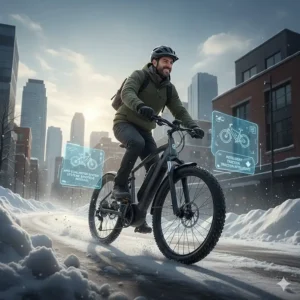
Rule #5: Keep a close eye on tire pressure. Cold air contracts, which means your tire pressure drops in winter. Lower pressure means more rolling resistance, which makes your motor work harder and drains the battery faster. Check your tyres before every ride.
Choosing the Right Tires for Snow & Ice 🛞
Tires can make or break your winter riding experience. The good news is that most of the bikes on this list come equipped with fat tires that already handle snow reasonably well out of the box. But if you want maximum grip on ice, you might want to consider upgrading to studded tires.
Studded tires have small metal pins embedded in the tread that bite into ice and packed snow, giving you dramatically better traction on slippery surfaces. They’re especially useful in urban environments where roads get treated with salt and then refreeze into unpredictable surfaces. Mokwheel and several other brands sell compatible studded tire options as aftermarket accessories.
On the other hand, studded tires are noisier and roll with more resistance on dry or wet pavement. If your winter rides are a mix of road and trail, consider having two sets of tires and swapping them depending on conditions — a common practice among year-round Canadian cyclists.
How to Choose Winter E-Bikes Canada in 2026
Picking the right winterized electric bike comes down to understanding your own needs. Here’s a simple step-by-step process to guide your decision:
- Define your use case. Are you commuting to work through city streets, or exploring trails in the backcountry? Urban commuters can get away with 20″ wheels and a folding frame. Trail riders need 26″ fat tires and better suspension.
- Set your budget. Winter e-bikes in Canada range from about $750 CAD to $3,000+ CAD. Budget options like the ECOTRIC are perfectly capable; premium bikes like the Aventon Aventure 3 just offer more bells and whistles.
- Check the battery capacity. Remember that cold weather eats into your range. A 500Wh battery might give you 60 km in summer but only 35 km in a Canadian winter. Go bigger if you have a longer commute or plan to ride in truly sub-zero electric bicycle territory.
- Look at the water resistance rating. An IPX4 rating is the bare minimum. IPX5 or higher is ideal for Canadian winters where rain, sleet, and freezing mist are all possibilities.
- Consider your gear situation. If you’re riding in a heavy parka and snow boots, a step-through frame makes getting on and off the bike way easier and safer.
- Think about maintenance access. Brands like Rad Power Bikes have service centres across Canada. If you’re in a remote area, having local support matters — especially in winter when being stranded is genuinely dangerous.
- Test before you commit. Many Canadian e-bike dealers offer test rides. If there’s one near you, take advantage of it before spending $1,500+.
Safety Tips for Riding E-Bikes in Snow 🛡️
Winter riding adds a layer of risk that fair-weather cyclists never think about. Here are some essential safety tips for Canadian riders heading out in the snow:
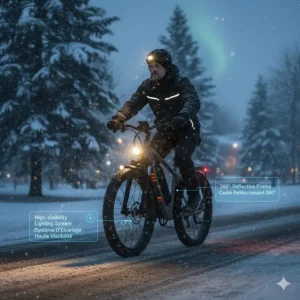
Always wear a proper helmet — this is non-negotiable. Most provinces require it by law, and it’s your first line of defence if you hit a patch of black ice and go down. Dress in layers, and make sure your outer layer is visible. High-visibility gear isn’t just fashionable; it genuinely saves lives on dark, snowy mornings.
Ride slower than you normally would. Snow and ice reduce your stopping distance significantly. Give yourself at least double the following distance you’d use in dry conditions. Keep your weight centred over the bike, and avoid sudden movements — gentle inputs to the handlebars and brakes are the way to go.
Stay off controlled-access highways. As Transport Canada’s vehicle import guidelines clarify, e-bikes in Canada are classified as power-assisted bicycles when they stay under 500W and 32 km/h. This means they follow bicycle traffic rules — which typically prohibit use on major highways and expressways.
Carry a phone and let someone know your route. In a true emergency on a frozen trail, your phone could be the difference between a minor inconvenience and a serious situation.
E-Bike Regulations You Need to Know in Canada ⚖️
Before you hit the snowy roads, it’s worth knowing the rules. As Wikipedia’s article on electric bicycle laws notes, Canada classifies e-bikes under the term “power-assisted bicycles,” and the rules are set at both the federal and provincial level.
Federally, an e-bike must meet these criteria to be classified as a bicycle (and not a moped or motorcycle): the electric motor must have a maximum output of 500W, the top speed on motor power alone must not exceed 32 km/h on level ground, and the bike must have fully operable pedals. Meet these rules, and you don’t need a driver’s licence, vehicle registration, or insurance to ride.
That said, provincial rules add their own wrinkles. Ontario requires riders to be at least 16 years old and bans e-bikes from 400-series highways. British Columbia classifies them as “motor-assisted cycles” and also caps the motor at 500W. Alberta is notably more relaxed, allowing riders as young as 12 and even permitting passengers if the bike has a designated seat.
Quebec has a unique requirement: riders under 18 need a Class 6D moped licence. And Prince Edward Island stands out as the only province that classifies e-bikes as limited-speed motorcycles, meaning registration and a licence are required there.
The bottom line? Always check your province’s specific rules before riding, especially if you’re planning to use your best e-bike for snow and ice on public roads.
Maintaining Your E-Bike Through the Canadian Winter 🔧
A little maintenance goes a long way when it comes to keeping your e-bike running smoothly through the cold months. Here’s what to focus on:
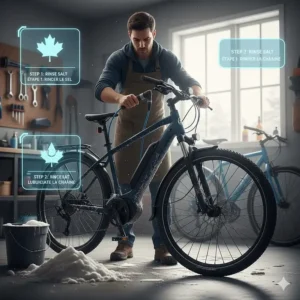
Keep the chain lubricated. Cold weather causes chain oil to thicken and eventually dry out. Use a wet-lube formula designed for cold conditions, and wipe off any excess after application to prevent it from attracting grit and salt.
Clean your bike after every ride in wet or salty conditions. Road salt is incredibly corrosive and will attack your chain, cassette, and frame over time. A quick rinse with warm water and a cloth after each ride can add months to your components’ lifespan.
Check your brakes regularly. Hydraulic brake fluid can thicken in extreme cold, which reduces responsiveness. If you notice your brakes feeling spongy or sluggish on a cold morning, it might be time for a fluid check.
Keep the battery and electronics dry. Even if your bike has an IPX4 or higher rating, avoid pointing a power washer at it. Gentle cleaning with a damp cloth is plenty. And as we mentioned earlier, always store the battery indoors during the winter months.
Winter E-Bikes vs Traditional Bikes: A Quick Comparison 🚲❄️
Wondering if a winter e-bike is really worth it compared to just riding a regular fat bike in the snow? Here’s a quick breakdown:
| Feature | Winter E-Bike | Traditional Fat Bike |
|---|---|---|
| Effort required | Low — motor does the heavy lifting | High — especially uphill |
| Range in cold | 40–100+ km per charge | Unlimited (you’re the battery) |
| Traction on snow | Excellent (fat tires + motor torque) | Good (fat tires only) |
| Cost | $750–$3,000+ CAD | $800–$2,500+ CAD |
| Maintenance | Slightly more (battery, motor, electronics) | Simpler mechanical system |
| Fun factor | 🔥🔥🔥🔥🔥 | 🔥🔥🔥🔥 |
The verdict? If you want to ride longer distances in the winter without arriving at work drenched in sweat and completely exhausted, an e-bike wins hands down. Traditional fat bikes are incredible machines, but the motor assist makes a world of difference when you’re fighting a headwind at −10°C.
Price Range & Value Analysis 💎
Let’s talk money, because when it comes to winter e-bikes in Canada, you don’t always need to spend the most to get the best ride.
The budget tier (under $1,000 CAD) includes bikes like the ECOTRIC 26″ Fat Tire. You’re not getting premium components or top-tier water resistance, but you are getting a functional, capable e-bike that can genuinely handle Canadian snow. Perfect for casual riders or anyone just dipping their toes into winter e-biking.
The mid-range tier ($1,000–$2,000 CAD) is where the sweet spot lives. The Lectric XP4, Windone E2, Himiway Cruiser D3, and Mokwheel Obsidian ST all fall here. These bikes offer a meaningful upgrade in battery capacity, build quality, and features without breaking the bank. This is where I’d point most Canadian riders.
The premium tier ($2,000+ CAD) is for those who want the absolute best. The Aventon Aventure 3 and Rad Power RadRover 6 Plus deliver top-tier performance, premium components, and advanced features like GPS tracking and mid-drive motors. If you’re a serious year-round rider or someone who plans to put serious kilometres on their bike through a Canadian winter, these are worth every penny.
✨ Don’t Miss These Exclusive Deals!
🛒 All 7 bikes listed above are available on Amazon.ca. Click any bold product name to check real-time pricing, current promotions, and shipping options to your door across Canada. Happy winter riding! 🎉
FAQ ❓
❓ How fast can an e-bike go in Canada?
❓ What is the price range for winter e-bikes in Canada?
❓ How much does cold weather reduce e-bike battery range?
❓ Do I need a licence to ride an e-bike in winter in Canada?
❓ Are fat tire e-bikes safe to ride on ice in Canada?
Conclusion 🎯
Winter in Canada doesn’t have to mean the end of your cycling season. The right winter e-bike can transform those cold, snowy months into an exciting new chapter of outdoor adventure. From the budget-friendly ECOTRIC to the premium Aventon Aventure 3, there’s a machine on this list for every Canadian rider and every budget.
The key takeaways? Go fat on the tires — at least 3″ wide. Protect your battery from the cold like it’s made of gold (because in a way, it is). Respect your province’s e-bike laws, and never, ever charge your battery in freezing temperatures. Follow these rules, and you’ll be gliding through Canadian winters with confidence and a big grin on your face.
Whether you’re commuting through downtown Toronto, carving trails outside of Vancouver, or exploring the frozen beauty of the prairies, winter e-bikes Canada have never been better, more affordable, or more accessible than they are in 2026. Now get out there. 🍁⚡
Recommended for You 📚
- 7 Best Fat Tire E-Bikes Canada 2026
- 7 Electric Bike Brands Canada Riders Trust in 2026
- Electric Bike Canada 2026: 7 Best Premium Models You Need
Disclaimer: This article contains affiliate links to Amazon.ca. If you purchase products through these links, we may earn a small commission at no additional cost to you.
✨ Found this helpful? Share it with your friends! 💬🤗
