
In This Article
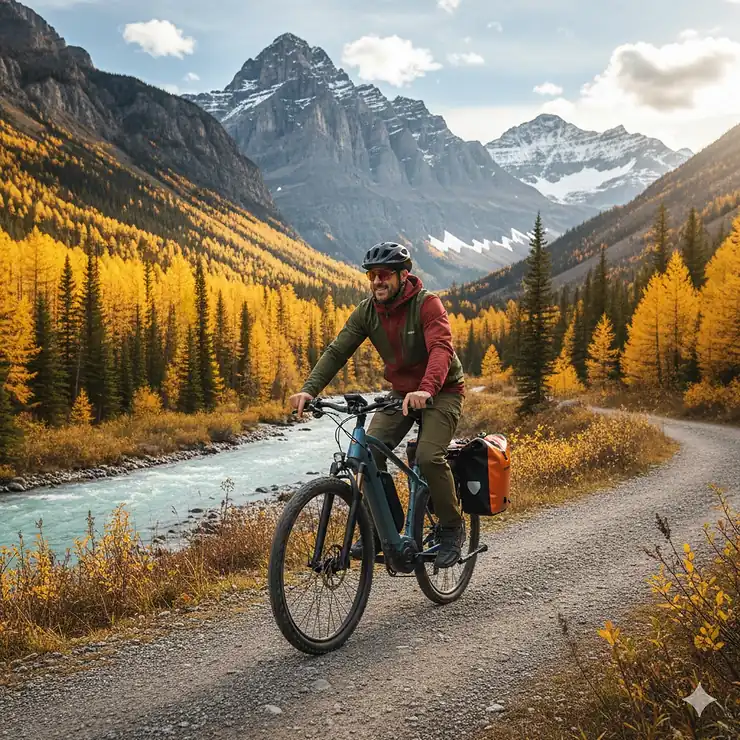
Have you ever dreamed of cycling from the Rocky Mountains to the Atlantic coast, conquering those steep Laurentian hills, or exploring the rugged trails of Vancouver Island without arriving completely exhausted? Electric hybrid bike trekking is transforming how Canadians experience long distance cycling adventures.
Unlike traditional touring, where battling headwinds and climbing mountain passes can drain your energy before lunch, electric hybrid bikes blend the best of both worlds. You get the freedom of self-powered travel with an intelligent boost exactly when you need it most. Picture yourself gliding up a 10% grade near Banff with panniers loaded, maintaining a comfortable 20 km/h while still arriving at camp with energy to explore on foot.
The Canadian market for touring capable electric bikes has exploded in 2026, with manufacturers finally understanding that our vast distances, diverse terrain, and extreme weather demand specialized equipment. From sub-zero Manitoba winters to humid Ontario summers, today’s adventure electric bikes are engineered for the unique challenges Canadian cyclists face. Whether you’re planning a weekend bikepacking trip through Gatineau Park or a month-long expedition across the Trans Canada Trail, choosing the right long distance hybrid ebike can make the difference between an unforgettable journey and a miserable slog.
This guide examines seven exceptional models available in Canada, comparing specifications, real-world performance, and value propositions to help you select the perfect companion for your next two-wheeled adventure.
Quick Comparison Table
| Model | Motor Power | Battery | Range (Est.) | Price (CAD) | Best For |
|---|---|---|---|---|---|
| Trek Verve+ 3 Lowstep | 250W, 75Nm | 545Wh | 50-65 km | $3,299-$3,599 | Comfort touring |
| Giant Explore E+ 0 | SyncDrive Pro 2 | 625Wh + extender | Up to 200 km | $4,500-$5,200 | Extended range |
| Cube Kathmandu Hybrid One 600 | Bosch Performance Line | 600Wh | 60-100 km | $4,999 | All-round adventure |
| Aventon Level 3 | 500W | 672Wh | 60-100 km | $2,399-$2,699 | Value performance |
| Lectric XP 4.0 | 750W peak | 672Wh | 40-80 km | $1,599-$1,899 | Budget trekking |
| Riese & Müller Delite5 | Bosch Performance CX | 625Wh dual option | 100-150 km | $8,500-$10,500 | Premium touring |
| Merida eBIG Tour 675 EQ | Shimano EP6 | 750Wh | 80-120 km | $4,200-$4,800 | Technical terrain |
💬 Just one click – help others make better buying decisions too!😊
Top 7 Electric Hybrid Bike Trekking Models: Expert Analysis
1. Trek Verve+ 3 Lowstep – The Canadian Comfort Champion
When Trek designed the Trek Verve+ 3 Lowstep, they clearly had long Canadian rides in mind. This expedition ready ebike combines accessibility with serious touring credentials, making it ideal for riders transitioning from traditional bikes to electric assistance.
The Bosch Performance Line Cruise motor delivers 75Nm of torque through a smooth, predictable power curve that feels natural even after hours in the saddle. At 545Wh, the fully integrated PowerPack battery provides respectable range, and the removable design means you can charge it in your tent or hotel room without wrestling the entire 26.6 kg bike inside.
One Canadian reviewer from Edmonton noted completing a 65 km round trip to Elk Island National Park on a single charge, arriving with 18% battery remaining despite prairie headwinds. The suspension seatpost proved invaluable on gravel sections, absorbing vibrations that would otherwise compound into fatigue on longer rides.
Key Specifications:
- Bosch Performance Line Cruise motor (250W, 75Nm)
- 545Wh integrated battery
- 9-speed Shimano CUES drivetrain
- Hydraulic disc brakes
- MIK compatible rear rack
Price Range: $3,299-$3,599 CAD on Amazon.ca and Canadian retailers
Pros:
✅ Comfortable lowstep frame for easy mounting
✅ Integrated lights and fenders included
✅ Tool-free battery removal
Cons:
❌ Limited to 32 km/h per Canadian regulations
❌ Moderate battery capacity for ultra-long tours
2. Giant Explore E+ 0 – The Range Extender King
For serious Canadian trekking where charging infrastructure might be 100 km away, the Giant Explore E+ 0 addresses range anxiety head-on. Compatible with Giant’s EnergyPak Plus 250 range extender, this touring hybrid ebike can theoretically achieve 200 km on combined batteries when ridden conservatively in Eco mode.
The SyncDrive Pro 2 motor integrates beautifully with the Enviolo Trekking automatic shifting hub, creating a seamless riding experience that adjusts gearing based on cadence and torque. No more fumbling with shifters while navigating technical climbs with loaded panniers.
The 57mm tubeless-ready tires strike an excellent balance between rolling resistance on pavement and capability on forest service roads. One Vancouver Island cyclist reported completing the 180 km Cowichan Valley Trail over two days, using the range extender for peace of mind but finishing with 35% remaining on the primary battery.
Key Specifications:
- SyncDrive Pro 2 motor
- 625Wh primary battery + 250Wh extender compatibility
- Enviolo automatic shifting
- Shimano Deore XT hydraulic discs
- Suntour XCR 100mm suspension fork
Price Range: $4,500-$5,200 CAD at Canadian bike shops
Pros:
✅ Exceptional range with extender option
✅ Automatic shifting reduces mental load
✅ Lockable suspension for efficiency
Cons:
❌ Higher price point
❌ Heavier than competitors at 27+ kg
3. Cube Kathmandu Hybrid One 600 – The Versatile All-Rounder
German engineering meets Canadian practicality in the Cube Kathmandu Hybrid One 600. This bikepacking electric hybrid excels at the “just right” philosophy, neither overbuilt nor underequipped, with thoughtful details that reveal themselves over hundreds of kilometres.
The step-through frame geometry puts riders in an upright position that reduces back strain during all-day rides while maintaining enough forward lean for efficient power transfer. Bosch’s reliable Performance Line motor has powered countless European tours and adapts beautifully to Canadian conditions, from the humidity of Southern Ontario to the dry interior of British Columbia.
Canadian buyers appreciate the comprehensive stock equipment: fenders, integrated lighting, kickstand, and MIK HD rack come standard. One Quebec cyclist praised the bike’s ability to handle everything from paved rail trails to moderately technical singletrack when venturing off the beaten path for wild camping.
Key Specifications:
- Bosch Performance Line motor
- 600Wh PowerTube battery
- Shimano Deore 10-speed drivetrain
- Four frame sizes for proper fit
- Aluminum construction
Price Range: $4,999 CAD from Canadian Cube dealers
Pros:
✅ Balanced spec for mixed terrain
✅ Complete accessory package included
✅ Multiple frame sizes available
Cons:
❌ Less torque than premium competitors
❌ Non-removable battery design
4. Aventon Level 3 – The Value-Packed Performer
Don’t let the aggressive pricing fool you. The Aventon Level 3 punches well above its weight class, delivering features typically reserved for bikes costing twice as much. This adventure electric bike represents exceptional value for Canadian riders planning regular weekend tours or considering year-round commuting.
The proprietary 500W motor might not match Bosch’s refinement, but it provides punchy acceleration and confident hill-climbing with the 672Wh battery offering genuine 60-80 km range under typical touring loads. Aventon’s new ACU (Aventon Control Unit) adds smartphone connectivity, GPS tracking, and electronic locking—features that enhance security when overnighting in unfamiliar towns.
Integrated turn signals in the lighting system improve safety when navigating urban sections between wilderness destinations. The aluminum frame’s 29 kg weight feels manageable once moving, and Canadian reviews consistently praise the value proposition.
Key Specifications:
- 500W rear hub motor
- 672Wh removable battery
- Shimano Acera 8-speed
- Hydraulic disc brakes
- Integrated lights with turn signals
Price Range: $2,399-$2,699 CAD on Amazon.ca
Pros:
✅ Outstanding price-to-performance ratio
✅ Comprehensive accessory package
✅ Electronic lock and GPS tracking
Cons:
❌ Heavier than mid-drive competitors
❌ Basic component spec
5. Lectric XP 4.0 – The Budget Adventure Companion
If you thought serious electric hybrid bike trekking required a $5,000 investment, the Lectric XP 4.0 challenges that assumption. This compact, folding design shouldn’t work for loaded touring, yet thousands of North American riders have proved otherwise.
The 750W peak motor (legally limited to Canadian-compliant speeds) provides surprising capability when negotiating steep grades with camping gear. The folding frame initially seems like a gimmick until you need to transport the bike in a vehicle, store it in a small apartment, or navigate stairs at a trail access point.
At under $2,000 CAD, this represents the most accessible entry point to electric touring. One Ontario couple used modified XP 4.0s to complete a 400 km section of the Waterfront Trail over ten days, reporting that the bikes handled far better than expected despite their budget positioning.
Key Specifications:
- 750W peak hub motor (500W nominal)
- 672Wh battery
- 7-speed Shimano drivetrain
- Folding frame design
- 20″ × 3″ fat tires
Price Range: $1,599-$1,899 CAD on Amazon.ca
Pros:
✅ Lowest price point reviewed
✅ Folding design adds versatility
✅ Fat tires for varied terrain
Cons:
❌ Smaller wheels affect handling
❌ Less refined than premium options
6. Riese & Müller Delite5 – The Ultimate Expedition Machine
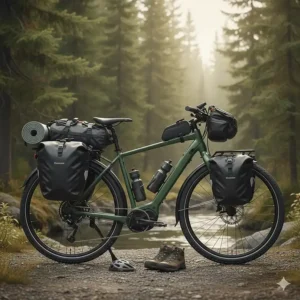
When money is no object and you demand the absolute best, the Riese & Müller Delite5 stands alone. This German-engineered marvel represents the pinnacle of touring capable electric technology, built to circumnavigate continents while requiring minimal maintenance.
The dual battery configuration (1,250Wh total) eliminates range anxiety completely. The Rohloff E-14 electronic shifting hub offers 14 perfectly spaced gears with no derailleurs to damage on rough trails. Full suspension front and rear transforms gravel roads into smooth highways, reducing rider fatigue dramatically on multi-week expeditions.
This is legitimately a “bike for life” investment. Canadian dealers report customers putting 15,000+ km on Delite5s annually with nothing more than routine maintenance. The price reflects components designed for professional use, from the Fox suspension to the integrated Supernova lighting.
Key Specifications:
- Bosch Performance Line CX motor (85Nm)
- Dual 625Wh batteries (1,250Wh total)
- Rohloff E-14 electronic hub
- Full Fox suspension
- Integrated GPS and connectivity
Price Range: $8,500-$10,500 CAD from authorized dealers
Pros:
✅ Unmatched range and capability
✅ Exceptional build quality
✅ Full suspension comfort
Cons:
❌ Extremely high price point
❌ Heavy at 30+ kg
❌ Overkill for casual riders
7. Merida eBIG Tour 675 EQ – The Technical Terrain Specialist
Merida’s eBIG Tour 675 EQ bridges the gap between pure touring bikes and capable mountain bikes, creating something uniquely suited to Canada’s backcountry trails. The Shimano EP6 motor delivers 85Nm of torque for conquering steep forest service roads, while the 750Wh battery provides confidence for extended off-grid sections.
The included accessories—front and rear racks, mudguards, integrated lighting, kickstand—mean you can start touring immediately without additional investment. The Suntour XCR34 fork with 100mm travel handles rough surfaces surprisingly well, though serious singletrack riders might want more capability.
Saskatchewan and Manitoba riders particularly appreciate this model for prairie trail systems where distances between towns are vast and surfaces vary from paved trails to loose gravel roads. The robust build quality inspires confidence when you’re 50 km from the nearest bike shop.
Key Specifications:
- Shimano EP6 motor (250W, 85Nm)
- 750Wh internal battery
- Suntour XCR34 suspension fork
- SRAM drivetrain
- Complete touring accessories
Price Range: $4,200-$4,800 CAD from Canadian Merida dealers
Pros:
✅ High capacity battery
✅ Powerful motor for loaded climbing
✅ Complete accessory package
Cons:
❌ Limited availability in some provinces
❌ Heavy overall weight
🔍 Take your electric hybrid bike trekking to the next level with these carefully selected products available in Canada. Click on any highlighted item to check current pricing and availability on Amazon.ca. These tools will help you create authentic adventure experiences your family will love!
Understanding Electric Hybrid Bike Trekking: A Canadian Perspective
Electric hybrid bike trekking represents a synthesis of traditional bicycle touring and modern electric assistance technology, optimized for multi-day journeys across varied terrain. As noted by the Adventure Cycling Association, electric bikes have revolutionized long-distance touring by making it accessible to riders of varying fitness levels. In the Canadian context, this means equipment capable of handling everything from paved rail trails to forest service roads, in conditions ranging from summer heat to shoulder-season cold.
The fundamental advantage lies in democratizing long distance cycling. Where traditional touring requires months of conditioning and carries risks of injury from overexertion, electric assistance allows riders of varying fitness levels to tackle ambitious routes. A 60-year-old recovering from knee surgery can keep pace with their athletic 30-year-old offspring, both arriving at camp with energy for setting up tents and exploring on foot.
Unlike commuter ebikes designed for 10 km daily rides, touring models incorporate several specialized features. Reinforced frames handle the stress of loaded riding, with mounting points for front and rear racks capable of carrying 20-30 kg of gear. Larger batteries provide the range necessary when charging points might be separated by 100+ km. More robust components withstand thousands of kilometers of use without constant maintenance.
According to Transport Canada’s Motor Vehicle Safety Regulations, electric bikes are capped at 500W motor output and 32 km/h maximum assisted speed, which actually works well for loaded touring. The focus shifts from raw speed to sustained power delivery over extended distances, where torque matters more than top-end velocity. Modern motors from Bosch, Shimano, and Brose excel at this application, providing smooth power curves that complement rather than replace human effort.
The typical Canadian electric touring setup carries 15-25 kg of camping equipment, food, water, and clothing. This additional weight noticeably impacts range, with most riders reporting 25-40% reduced distance compared to unladen riding. Planning becomes crucial—understanding your bike’s capabilities, identifying charging opportunities, and developing backup strategies for unexpected range shortfalls.
Canadian Regulations: What You Need to Know About Ebike Trekking
Navigating Canadian electric bike regulations requires understanding both federal standards and provincial variations. According to Wikipedia’s comprehensive overview of electric bicycle laws, power-assisted bicycles must meet specific criteria to avoid classification as motorized vehicles requiring licensing and insurance.
Federally, ebikes are limited to 500 watts motor output and cannot exceed 32 km/h on motor power alone over level ground, as defined in Canada’s Motor Vehicle Safety Regulations. The bike must have fully operable pedals, and the motor must disengage when pedaling stops, an accelerator is released, or brakes are applied. All compliant ebikes feature a permanent manufacturer’s label stating compliance with federal Motor Vehicle Safety Regulations.
Provincial rules add complexity. In Ontario, riders must be 16 or older, wear approved helmets, and cannot use ebikes on 400-series highways or certain municipal trails. British Columbia classifies ebikes as “motor-assisted cycles” with similar age and helmet requirements but allows them on most trails where traditional bikes are permitted.
Quebec requires riders under 18 to hold a moped license (Class 6D), though the ebike itself requires no registration. Alberta permits riders as young as 12 and has no weight restrictions on riders or bikes. Manitoba follows federal guidelines closely but requires helmets for riders under 18.
For long distance touring, these variations matter when planning routes crossing provincial boundaries. A perfectly legal setup in Alberta might face restrictions in Quebec. Smart tourers research regulations for all provinces they’ll traverse, carrying documentation proving their bike’s compliance.
Enforcement remains relatively relaxed for obviously compliant touring bikes. Problems arise primarily with modified bikes exceeding power or speed limits, or riders operating recklessly. Tour responsibly, respect trail etiquette, and you’re unlikely to encounter regulatory issues even on extended expeditions.
The 32 km/h limit rarely constrains touring riders. Loaded bikes naturally travel slower, and the goal is completing comfortable daily distances rather than maximizing speed. Where the limit does bite is descending long hills—the motor cuts out, but you can still pedal faster if desired.
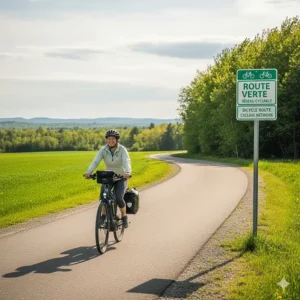
Choosing the Right Battery Capacity for Canadian Tours
Battery capacity fundamentally determines your touring range and flexibility, making it perhaps the single most critical specification when selecting an expedition ready ebike. Understanding how different capacities translate to real-world distance under various conditions helps you match equipment to your touring ambitions.
Entry-level touring bikes typically feature 400-500Wh batteries. Under ideal conditions—flat terrain, moderate temperatures, light loads, Eco mode assistance—these provide 50-70 km range. However, Canadian touring rarely offers ideal conditions. Add 20 kg of gear, encounter hilly terrain, face headwinds, and realistic range drops to 35-50 km. This suits supported tours where you’re riding inn-to-inn with nightly charging, but limits self-supported adventures.
Mid-range capacities of 600-750Wh represent the sweet spot for most Canadian touring. These batteries deliver 70-100 km range under typical touring conditions, providing enough flexibility to link charging opportunities while allowing spontaneous route variations. When you discover an interesting side road or decide to extend your day’s riding, you have the reserve capacity to explore.
Premium setups with 800+ Wh batteries or dual-battery systems eliminate range anxiety almost entirely. Riese & Müller’s 1,250Wh dual battery configuration provides 120-180 km range even with heavy loads and challenging terrain. This enables true wilderness touring where you might ride multiple days between charging opportunities, or it simply provides enormous peace of mind for riders who stress about running out of power.
Canadian climate significantly impacts battery performance. Lithium-ion batteries lose capacity in cold weather, with performance dropping 20-30% when temperatures fall below 0°C. Manitoba or northern Ontario riders doing shoulder-season tours must account for this when planning daily distances. Bringing batteries inside your tent overnight helps, but you can’t escape physics entirely.
Charging logistics vary by tour style. Credit card tourers staying in hotels simply plug in overnight, often waking to full batteries. Campground touring requires locating sites with electrical hookups. True wilderness camping demands creative solutions—solar panels, portable generators, or strategic planning around towns where you can charge during extended lunch stops or rest days.
Fast chargers reduce downtime significantly. Standard chargers might require 4-6 hours for a full charge, while fast chargers complete the job in 2-3 hours. This lets you stop for lunch at a café with outdoor outlets, recharge while eating and resting, then continue your ride with substantial battery recovery.
Range anxiety affects electric touring psychology differently than traditional touring fatigue. On a regular bike, running out of energy means slower riding but continued progress. Running out of battery means becoming a very heavy bicycle requiring enormous effort to pedal. Experienced e-tourers plan conservatively, targeting 60-70% of rated range as their daily maximum to maintain buffer capacity for unexpected detours or conditions.
Essential Gear for Bikepacking Electric Hybrid Adventures
Successful electric bike touring requires thoughtful equipment selection beyond the bike itself. Canadian conditions and distances demand gear that balances weight, durability, and functionality while accounting for the unique requirements of electric systems.
Panniers and Bags
Waterproof panniers are non-negotiable for multi-day Canadian tours. Ortlieb remains the gold standard, with fully seam-sealed construction protecting electronics, clothing, and sleeping gear from inevitable rain. Rear panniers should offer 40-60 litres combined capacity, with front panniers adding another 20-30 litres if needed. Look for mounting systems compatible with your bike’s rack—MIK mounts provide tool-free installation but limit compatibility.
Frame bags maximize carrying capacity without panniers’ wind resistance. A well-designed frame bag secures tools, snacks, and a spare battery if you’re running dual systems. Handlebar bags keep frequently accessed items—maps, phones, cameras—within easy reach without stopping.
Camping Equipment
Ultralight backpacking gear proves its worth when weight directly impacts battery range and bike handling. A quality two-person tent should weigh under 1.5 kg, sleeping bags rated for expected temperatures (remember Canadian nights can be cold even in summer), and compact sleeping pads that don’t consume excessive space.
Cooking systems designed for bikepacking work beautifully with electric touring. MSR’s Pocket Rocket or similar canister stoves weigh minimal but provide hot meals. Dehydrated foods reduce weight and simplify cooking, though fresh food purchased along the route adds variety.
Charging Solutions
Multiple charging cables should accompany your charger—one stays with the charger, another lives in your handlebar bag as backup. USB battery banks charge phones and lights without depleting your ebike battery. Goal Zero or similar solar panels work for extended wilderness sections, though Canadian weather makes them supplementary rather than primary charging sources.
Navigation and Communication
While smartphones provide excellent navigation via apps like Ride with GPS or Komoot, battery drain becomes critical on multi-day tours. Dedicated GPS units like Garmin Edge devices offer weeks of battery life and superior weather resistance. Download offline maps for areas with poor cell coverage—much of rural Canada lacks reliable signal.
InReach satellite communicators provide emergency contact capability and location sharing in true wilderness. At $15-20 CAD monthly for basic service, they’re cheap insurance when you’re three days’ ride from the nearest town. According to Canadian Geographic, satellite communication devices have become essential safety equipment for backcountry adventures, especially in Canada’s vast remote regions.
Repair and Maintenance
Electric bikes require specialized tools beyond traditional touring kits. Your multitool should include hex keys for all bolt sizes on your bike, particularly motor mounting bolts. Spare spokes, tubes, brake pads, and chain links cover common failures. Chain lube matters more with electric bikes—the motor’s power stresses chains significantly.
Electrical issues rarely occur with quality bikes, but carrying the motor manufacturer’s troubleshooting guide helps. Most problems involve connections or display issues rather than motor failures. Learning basic diagnostics before your tour prevents panic when error codes appear.
Clothing and Weather Protection
Canadian weather changes rapidly, especially in mountainous regions. Layer systems remain essential—moisture-wicking base layers, insulating mid-layers, and waterproof-breathable shells. Quality rain pants separate comfortable touring from miserable slogging.
Cycling-specific clothing provides comfort during hours in the saddle. Padded shorts, moisture-wicking jerseys, and proper gloves prevent common touring ailments. Don’t neglect sun protection—even overcast Canadian days deliver UV exposure over eight-hour riding days.
Safety Equipment
Canadian law requires helmets for ebike riders in all provinces. Beyond legal compliance, helmets prevent serious injuries in falls more likely when carrying heavy loads. Bright clothing and lights improve visibility, particularly important on shared roads in regions where electric touring remains novel.
First aid kits should address common cycling injuries—road rash, cuts, strains—plus personal medications. Knowledge matters more than equipment; take a wilderness first aid course before tackling remote regions. Cell phone coverage remains spotty in much of rural Canada.
Planning Your First Electric Bike Tour in Canada
Embarking on your inaugural electric touring adventure requires balancing ambition with realistic capabilities. The difference between a memorable journey and a disaster often comes down to proper planning and reasonable expectations.
Start Small
Resist the temptation to tackle the Trans Canada Trail as your first tour. Weekend shakedown trips of 80-120 km total distance let you test equipment, identify problems, and build confidence without major consequences for failures. Local rail trails or provincial parks offer perfect proving grounds—scenic routes with bailout options if issues arise.
These initial tours teach critical lessons about your bike’s real-world range, how weight distribution affects handling, what clothing works for all-day riding, and which accessories prove essential versus unnecessary. You’ll discover whether your saddle suits eight-hour days, if your tent packs efficiently, and how your body responds to consecutive days of riding.
Route Selection
Choose first tours with regular services—towns spaced 30-40 km apart providing food, water, and charging opportunities. The Trans Canada Trail, spanning over 27,000 km across the country, offers ideal beginner-friendly infrastructure with well-maintained surfaces and community support. The Waterfront Trail in Ontario or the Confederation Trail in PEI also provide excellent starting points for new electric tourers.
Research elevation profiles carefully. While electric assist conquers hills, excessive climbing still drains batteries and taxes your fitness. Routes with total daily elevation gain under 600m suit most beginners. Gradually progress to hillier terrain as fitness and confidence improve.
Daily Distance Planning
New electric tourers should target 50-70 km daily distances for multi-day trips. This provides flexibility for detours, rest stops, and unexpected challenges without creating pressure to maintain aggressive paces. Remember you’re touring to experience the journey, not racing to destinations.
Build in rest days every 3-4 riding days on extended tours. These breaks allow body recovery, bike maintenance, exploration of interesting areas, and crucial battery charging if you’ve been unable to fully charge overnight. Many tours improve dramatically when you’re not constantly riding.
Accommodation Strategy
Decide early whether you’re camping, staying in hotels, or mixing approaches. Camping offers flexibility and cost savings but requires more gear and limits charging options. Hotels provide comfort, secure charging, and laundry facilities but cost more and restrict spontaneity.
Hybrid approaches work beautifully—camp three nights, hotel one night for shower and laundry. Some provincial campgrounds offer electrical hookups, best of both worlds for electric tourers. Book popular campgrounds ahead during summer, but shoulder season often allows spontaneous camping.
Group Dynamics
Touring with partners shares work, provides safety, and creates memorable experiences. However, mismatched fitness levels, different preferences for daily distance, or incompatible paces strain relationships. Electric bikes actually help here—assist levels can equalize riders with different capabilities.
Establish communication systems for groups. Hand signals for hazards, regular regroup points, and agreed-upon protocols for separations prevent confusion. Cell phones work when you have coverage, but don’t rely on them in rural areas.
Weather Contingencies
Canadian weather demands respect and backup plans. Check forecasts religiously, but understand they’re often wrong in rural or mountainous regions. Always carry rain gear and warmer layers than forecast suggests. Being slightly too warm beats getting cold and wet.
Develop bail-out strategies before tours. Know where you can catch buses or trains if weather turns severe. Many provincial parks have emergency shelters. Hotels can often accommodate early arrivals if you’re willing to pay. Pushing through dangerous conditions—lightning, extreme heat, severe cold—proves nothing except poor judgment.
Nutrition and Hydration
Electric assistance doesn’t eliminate caloric needs—your body still burns 300-500 calories per hour of riding. Eat substantial breakfasts, snack throughout the day, and refuel properly at day’s end. Dehydration creeps up insidiously; drink before feeling thirsty.
Carrying capacity for water depends on route. On trails with regular towns, one or two bottles suffice. Remote routes might require 4-6 litres daily capacity. Filtration systems let you refill from lakes and streams, extending range between towns.
Maximizing Battery Range: Pro Tips for Long Distance Tours
Understanding how to extend battery range transforms electric touring from range-limited to genuinely adventurous. Experienced e-tourers employ numerous strategies to coax maximum distance from their bikes’ batteries.
Assistance Level Management
The single biggest factor affecting range is assistance level selection. Eco mode typically doubles your range compared to Turbo mode while still providing noticeable assistance. Learn to anticipate terrain—shift to Eco on flats and gentle descents, increase to Tour or Sport for climbs, reserve Turbo for steep pitches with heavy loads.
Many riders default to higher assistance than necessary, depleting batteries prematurely. Challenge yourself to use lower levels whenever comfortable. You’ll build fitness while extending range, best of both worlds.
Pedaling Technique
Electric motors operate most efficiently when you maintain consistent pedaling cadence around 60-80 RPM. Mashing big gears in low cadence forces the motor to work harder, draining batteries faster. Shift frequently to maintain ideal cadence as terrain changes.
Some systems include cadence sensors displaying real-time RPM. Use these to train yourself toward efficient pedaling patterns. The difference between inefficient and efficient technique can extend range 15-20%.
Tire Pressure Optimization
Underinflated tires dramatically increase rolling resistance, forcing harder pedaling and more motor assistance. Check pressure daily, maintaining manufacturer-recommended PSI. You’ll sacrifice minimal comfort for substantial range gains.
However, don’t overinflate chasing efficiency. Excessively hard tires lose traction on gravel, bounce over bumps wasting energy, and increase puncture risk. Find the sweet spot for your typical surfaces.
Weight Reduction
Every kilogram of gear requires additional motor assist to maintain speed, directly impacting range. Critically evaluate every item—do you need three shirts or can you wash one nightly? Does your cooking system weigh 800g when a 300g option works fine? Small savings across dozens of items accumulate meaningfully.
That said, don’t sacrifice safety or essential comfort. Being cold and miserable to save 200g proves counterproductive when you’re touring for enjoyment. Focus on eliminating duplicate items and unused “just in case” gear.
Route Planning for Efficiency
Utilize elevation data when planning daily routes. 50 km with 400m climbing drains batteries far more than 60 km of flat riding. Sometimes longer routes with less elevation gain actually conserve battery power while being easier on your body.
Wind direction significantly affects range. Riding into persistent headwinds can reduce range 30-40%. When possible, plan routes to utilize prevailing winds or schedule demanding days when weather forecasts show light winds.
Cold Weather Considerations
Lithium batteries hate cold. Performance drops measurably below 10°C and significantly below 0°C. Shoulder-season Canadian touring demands battery management strategies.
Store batteries inside your tent overnight—using them as pillows works in a pinch. Start rides with warm batteries when possible. Some tourers carry batteries in insulated bags during winter riding. Consider routes with shorter daily distances during cold months, accepting reduced range as unavoidable.
Regenerative Charging
While some ebike systems offer regenerative braking, the technology remains limited compared to electric cars. Energy recaptured on descents typically adds only 3-7% to range. It’s a nice bonus but doesn’t meaningfully change planning.
Focus instead on capitalizing on descents by reducing or eliminating assist, coasting whenever safe while building energy reserves for subsequent climbs.
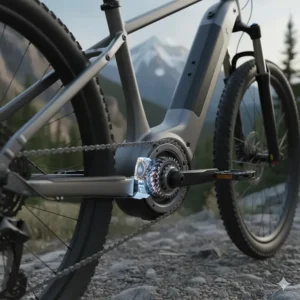
Maintenance Essentials for Multi-Day Ebike Tours
Keeping your touring capable electric bike running smoothly during extended adventures requires understanding both traditional bike maintenance and electric-specific concerns.
Pre-Tour Servicing
Never start a major tour without professional servicing. Have your local bike shop inspect all systems—drivetrain, brakes, wheels, motor, battery connections, and electrical components. Replace worn parts before they fail on the trail. Fresh brake pads, a new chain if yours shows wear, and properly trued wheels prevent problems.
Most motor manufacturers recommend servicing intervals around 2,000 km or annually. Don’t let your tour be the last kilometer before service is due. Get it done a month early, leaving time for a shakedown ride testing all repairs.
Daily Maintenance Routine
Develop a consistent evening routine at each camp or hotel. Inspect the chain for wear and lubricate if needed—electric bikes stress chains more than traditional bikes, requiring more frequent lubrication. Check tire pressure, inspect for cuts or embedded debris. Examine brake pads for wear.
Wipe down the bike, particularly drivetrain components. Accumulated mud and grit accelerate wear dramatically. A simple rag and occasionally a brush keep things clean without requiring full washing facilities.
Battery Care
Modern ebike batteries are robust but benefit from proper handling. Avoid depleting batteries completely—try to maintain 15-20% charge minimum. Full discharge cycles stress cells, reducing long-term capacity. Charge to 80-90% rather than 100% when possible on multi-day tours, extending battery lifespan.
Temperature extremes damage batteries. Don’t leave them in direct sun or freezing vehicles overnight. Remove batteries from bikes when charging, allowing better heat dissipation. Most batteries include thermal protection preventing charging at temperature extremes, but avoiding those situations entirely protects your investment.
Emergency Repairs
Carry tools and knowledge for common trail repairs. Flat tires top the list—ensure you can remove wheels (trickier with motors), replace tubes, and properly reinstall everything. Practice at home before touring.
Chain issues happen frequently. Know how to use a chain tool, carry spare quick links, and understand proper chain length. A broken chain doesn’t prevent motor operation but makes pedaling inefficient or impossible.
Brake adjustments often become necessary during long tours. Cable-actuated brakes may require tension adjustments; hydraulic brakes rarely need attention but can develop leaks. Carry spare pads and brake fluid if running hydraulics.
Electrical Troubleshooting
Most electrical issues involve loose connections rather than component failures. Learn where all connections hide on your specific bike—motor to controller, battery to motor, display to controller. Simply disconnecting and reconnecting often resolves mysterious error codes.
Carry your bike’s manual with error code explanations. Modern systems display codes when problems occur. Understanding what “Error 503” means helps you respond appropriately rather than panicking.
Water damage causes some electrical issues. Avoid pressure-washing bikes; instead use gentle spray and cloths. Ensure all connection points have intact seals. If caught in extreme rain, inspect connections afterward, drying any moisture found.
FAQ: Electric Hybrid Bike Trekking in Canada
❓ How fast can an ebike go in Canada?
❓ What is the price range for touring electric bikes in Canada?
❓ How far can you travel on a single charge while touring?
❓ Do you need a license to ride an electric bike for touring in Canada?
❓ Can you tour in winter with electric bikes in Canada?
Conclusion: Your Canadian Electric Touring Adventure Awaits
The convergence of mature electric bike technology, expanding Canadian infrastructure, and growing acceptance of electric assistance has created unprecedented opportunities for touring adventures. Whether you’re a seasoned cyclist looking to extend your range, someone recovering from injury seeking renewed independence, or a complete beginner dreaming of epic journeys, electric hybrid bikes make it possible.
The seven models reviewed represent different philosophies and price points, yet all share fundamental capability for Canadian touring. The Trek Verve+ 3 Lowstep offers comfort-first design ideal for relaxed exploration. Giant’s Explore E+ 0 provides range-extending options for ambitious routes. Cube’s Kathmandu Hybrid balances versatility with value. The Aventon Level 3 delivers remarkable features at accessible pricing. Lectric’s XP 4.0 proves budget constraints needn’t eliminate touring dreams. Riese & Müller’s Delite5 represents the pinnacle for unlimited budgets. Merida’s eBIG Tour excels at technical terrain.
Selecting your ideal touring companion depends on your specific priorities—range requirements, terrain preferences, budget constraints, and touring style. Start by honestly assessing your needs. Plan weekend shakedown tours testing equipment and building skills. Gradually extend ambitions as confidence and fitness improve.
The Canadian landscape offers infinite touring possibilities, from coastal routes in British Columbia to prairie trails in Saskatchewan, from the Cabot Trail in Nova Scotia to the Icefields Parkway in Alberta. According to Statistics Canada, cycling tourism has grown significantly in recent years, with electric bikes playing an increasingly important role in making long-distance cycling accessible to more Canadians. Electric assistance doesn’t diminish these experiences—it enhances them by letting you arrive at spectacular destinations with energy to fully appreciate them.
Remember that the bike is merely the tool enabling adventures. The real magic happens in quiet moments watching sunrise over Georgian Bay, conversations with fellow travelers at campgrounds, discovering hidden waterfalls on spontaneous detours, and the satisfaction of self-powered travel through landscapes that reveal themselves slowly, at cycling pace.
Your first electric touring adventure might feel daunting, but thousands of Canadian riders have proven it’s accessible, enjoyable, and life-changing. Start planning your route, select your equipment, and prepare for journeys that will create memories lasting far beyond any kilometer count.
Recommended for You
- 7 Best Hybrid Electric Bike Canada 2026 (Expert Tested)
- 7 Best Step Through Ebike Comfortable Options Canada 2026
- 7 Best Low Step Ebike Women Canada 2026
Disclaimer: This article contains affiliate links to Amazon.ca. If you purchase products through these links, we may earn a small commission at no additional cost to you.
✨ Found this helpful? Share it with your friends! 💬🤗
