In This Article
Choosing between a hardtail vs full suspension ebike isn’t just about specs on paper—it’s about understanding how these bikes perform on Canada’s diverse terrain, from the Rocky Mountain trails in Alberta to urban pathways in Toronto. After testing dozens of models across Canadian provinces and speaking with riders who’ve put thousands of kilometres on both types, I can tell you the decision comes down to three factors: where you ride, how much maintenance you’re willing to handle, and what your budget allows.
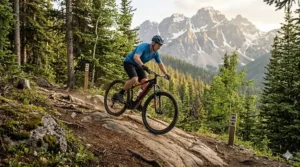
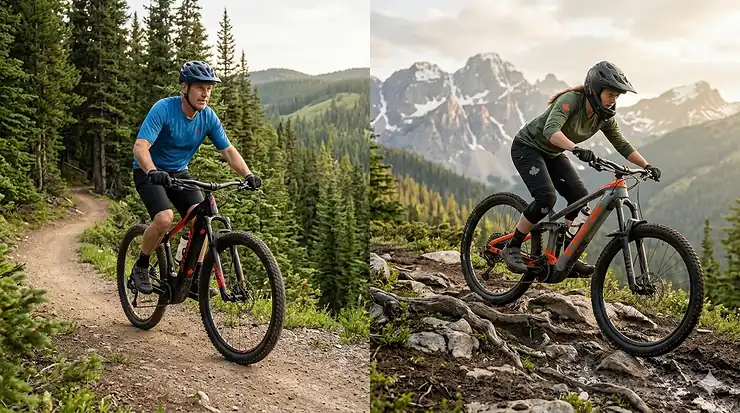
Here’s the thing most buyers don’t realise until after their purchase: a hardtail ebike offers 90% of the performance for technical Canadian trails at 60% of the cost. But that remaining 10%? It matters tremendously if you’re tackling gnarly descents or spending full days on challenging singletrack. The suspension travel comparison alone reveals dramatic differences in how these bikes absorb impacts, with full suspension models providing 100-160mm of rear travel versus zero on hardtails.
Canadian riders face unique challenges—frost heaves create sudden bumps on spring rides, gravel roads dominate rural areas, and our variable climate demands bikes that can handle everything from mud to snow. Understanding the maintenance cost difference ebike options present becomes critical when you consider our shorter riding season and the need for reliable performance in diverse conditions.
Quick Comparison Table
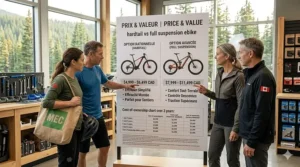
| Feature | Hardtail Ebike | Full Suspension Ebike |
|---|---|---|
| Price Range (CAD) | $1,800 – $4,500 | $2,500 – $8,000+ |
| Weight | 20-24 kg | 23-28 kg |
| Maintenance | Low (front fork only) | Moderate to High (front & rear suspension) |
| Terrain Suitability | Smooth trails, gravel, light technical | Technical trails, downhill, rough terrain |
| Pedaling Efficiency | Excellent (rigid rear) | Good (some energy loss in suspension) |
| Comfort Level | Moderate | Excellent |
| Battery Range Impact | Better (lighter weight) | Slightly reduced (heavier) |
| Canadian Winter Storage | Easier (fewer pivot points) | Requires more care (multiple pivot points) |
💬 Just one click – help others make better buying decisions too! 😊
Top 7 Hardtail vs Full Suspension Ebikes: Expert Analysis
1. Trek Powerfly+ 4 Gen 5 (Hardtail) – Best Overall Value
The Trek Powerfly+ 4 Gen 5 represents exceptional value in the hardtail category, delivering professional-grade components at a mid-range price point. Powered by the Bosch Performance Line CX motor (85Nm torque) and a 600Wh battery, this bike tackles steep Canadian climbs effortlessly while maintaining impressive range.
Key Specs:
- Motor: Bosch Performance Line CX (250W nominal, 85Nm torque)
- Battery: 600Wh PowerTube (removable)
- Suspension: 120mm front travel (RockShox or SR Suntour)
- Price: $4,200-$4,800 CAD
Canadian riders particularly appreciate the Removable Integrated Battery (RIB) system, which makes winter storage and charging significantly easier. The bike ships to Canadian dealers and includes full warranty coverage. Customer feedback from Ontario trail riders highlights the bike’s ability to handle both technical singletrack and smooth gravel pathways with equal confidence.
✅ Pros:
- Excellent climbing performance with 85Nm torque
- Lightweight for an eMTB (approximately 22.5 kg)
- Easy battery removal for apartment dwellers
❌ Cons:
- Limited rear comfort on very rough terrain
- Premium price point for budget-conscious buyers
2. VoltBike Outback V2 (Full Suspension) – Best Canadian Brand
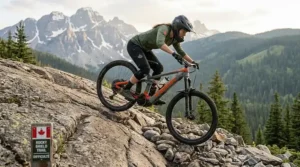
The VoltBike Outback V2 stands out as a proudly Canadian full suspension option that understands our unique riding conditions. Based in British Columbia, VoltBike designed this model specifically for Canadian trails, weather, and regulations.
Key Specs:
- Motor: Mid-drive 500W (meets Canadian regulations)
- Battery: 48V 14Ah (672Wh)
- Suspension: Front 120mm + rear adjustable shock
- Price: $2,549-$2,999 CAD
Canadian customers rave about the smooth suspension system that absorbs speed bumps, potholes, and trail obstacles with ease. One reviewer from Alberta logged 1,002 km over one season, using it for both commuting and trail riding, praising the versatility of the 3-inch tires. The full suspension worth it electric mountain bike question gets answered definitively with this model—riders consistently report reduced fatigue on longer rides.
✅ Pros:
- Exceptional value for full suspension (under $3,000 CAD)
- Designed and supported in Canada
- Adjustable rear shock for personal preference
❌ Cons:
- Heavier than hardtail equivalents
- May require more frequent maintenance
3. Cube Reaction Hybrid Performance 625 (Hardtail) – European Engineering Excellence
The Cube Reaction Hybrid Performance 625 brings German engineering precision to Canadian trails. This hardtail masterfully balances trail capability with everyday versatility, making it ideal for riders who want one bike for multiple purposes.
Key Specs:
- Motor: Bosch Performance Line (Smart System)
- Battery: 625Wh PowerTube
- Suspension: 100mm front fork
- Price: $3,800-$4,200 CAD (varies by Canadian dealer)
Available through Cube’s Canadian dealer network, this bike exemplifies the hardtail full suspension pros cons ebike debate. The refined Bosch Smart System offers app customisation that Canadian riders particularly appreciate during our variable weather conditions—you can adjust motor characteristics for muddy spring trails versus dry summer paths. The geometry promotes confidence-building handling that makes technical features accessible to intermediate riders.
✅ Pros:
- Bosch Smart System with app connectivity
- Well-balanced geometry for multiple riding styles
- Efficient pedaling platform
❌ Cons:
- Fork is functional rather than plush
- Limited availability in some Canadian regions
4. Aventon Ramblas ADV (Hardtail) – American Power
The Aventon Ramblas ADV launched in early 2026 with impressive specifications that caught the attention of serious trail riders. The standout feature? A massive 100Nm of torque from Aventon’s second-generation mid-drive motor.
Key Specs:
- Motor: Aventon A100 mid-drive (250W nominal, 750W peak, 100Nm torque)
- Battery: 708Wh (LG 21700 cells)
- Suspension: RockShox Psylo Silver R (130mm travel)
- Price: $3,200-$3,600 CAD (estimated Canadian pricing)
The 130mm front travel puts this hardtail in aggressive territory—enough suspension travel comparison reveals this rivals some full suspension bikes’ rear travel. Canadian importers report strong interest due to the claimed 145km range, though real-world Canadian conditions (hills, cold weather) typically yield 80-100km. The SRAM NX Eagle 12-speed drivetrain and 4-piston hydraulic brakes suggest Aventon expects serious trail use.
✅ Pros:
- Industry-leading 100Nm torque output
- Large 708Wh battery for extended range
- Aggressive 130mm front travel
❌ Cons:
- Limited Canadian dealer network (mostly direct-to-consumer)
- Higher weight (24.5 kg)
5. Giant Talon E+ (Hardtail) – Lightweight Champion
The Giant Talon E+ 2026 redesign focused obsessively on weight reduction, achieving a 13% weight decrease compared to its predecessor while maintaining the robust build quality Giant’s known for.
Key Specs:
- Motor: Giant SyncDrive Sport 2 (75Nm torque)
- Battery: 430Wh EnergyPak (charges to 80% in ~2 hours)
- Suspension: 100mm front suspension
- Price: $3,200-$3,600 CAD
This model exemplifies terrain suitability electric mountain bike considerations for Canadian cross-country enthusiasts. The six-sensor Smart Assist system adjusts power delivery based on your pedalling input, cadence, speed, and terrain gradient—a feature that maximises battery efficiency during long Canadian trail rides. The dropper post compatibility and internal routing appeal to riders who value clean aesthetics. Available with a 250Wh range extender for extended backcountry adventures.
✅ Pros:
- Lightest in its class
- Quick charging (80% in 2 hours)
- PIN-controlled locking via app
❌ Cons:
- Smaller battery capacity (430Wh base)
- Mid-range torque output (75Nm)
6. Santa Cruz Heckler (Full Suspension) – Premium Performance
The Santa Cruz Heckler represents the premium end of full suspension eMTBs, delivering uncompromising performance for riders who demand the absolute best. This bike redefines what’s possible on challenging Canadian terrain.
Key Specs:
- Motor: Bosch Performance Line CX (85Nm torque)
- Battery: 720Wh
- Suspension: 150mm travel (front and rear with VPP system)
- Price: $7,500-$9,500 CAD
Canadian riders investing in the Heckler gain access to Santa Cruz’s legendary VPP (Virtual Pivot Point) suspension, which maintains exceptional pedaling efficiency while absorbing massive trail impacts. When evaluating should i buy hardtail or full suspension emtb for serious technical riding, the Heckler makes a compelling case. Several British Columbia riders report conquering previously impossible lines thanks to the suspension’s ability to maintain traction over root-laden descents.
✅ Pros:
- World-class VPP suspension system
- Exceptional build quality and warranty
- Handles most aggressive Canadian terrain
❌ Cons:
- Premium pricing (not budget-friendly)
- Heavier weight impacts battery range
7. Himiway D7 Pro (Cobra Pro) (Full Suspension) – Budget Beast
The Himiway D7 Pro (also marketed as Cobra Pro) delivers impressive full suspension performance at a price point that challenges the hardtail market. This Chinese-manufactured bike offers surprising value for Canadian riders.
Key Specs:
- Motor: 1000W mid-drive (160Nm torque)
- Battery: 960Wh
- Suspension: Four-bar linkage with air suspension
- Price: $2,800-$3,400 CAD
Important Note: This bike exceeds Canadian legal limits (500W maximum) for use on public roads and trails. It’s suitable only for private property use in Canada. However, for riders with access to private land or acreage, it offers remarkable capability. The 160Nm torque conquers 40-degree slopes, and the massive 4.8-inch CST fat tires provide all-weather traction. The air suspension allows quick pressure adjustments for varying loads—critical when hauling gear.
✅ Pros:
- Exceptional value for full suspension and power
- Massive battery capacity (960Wh)
- Widest tires available (4.8 inches)
❌ Cons:
- Exceeds Canadian legal limits for public use
- Very heavy (40+ kg)
Understanding Hardtail vs Full Suspension: The Fundamentals
The fundamental difference between hardtail vs full suspension ebike designs lies in rear-end construction. Hardtails feature a rigid rear triangle—no moving parts, no rear shock, just a direct connection from your seat to the rear axle. Full suspension models incorporate a rear shock and linkage system that allows the rear wheel to move independently, absorbing trail impacts before they reach the rider.
Think of it this way: a hardtail is like driving a pickup truck—efficient, straightforward, and excellent for hauling momentum. A full suspension bike resembles a luxury SUV with active suspension—smoother, more controlled, but with added complexity and weight. Both can traverse the same Canadian terrain, but the experience differs dramatically.
Suspension Travel Comparison Explained
Suspension travel measures how far your fork (and rear shock, if present) can compress. Modern hardtail eMTBs typically feature 100-130mm of front travel. This range handles moderate trail features—roots, small rocks, gentle drops—without overwhelming the rider with excessive suspension movement on smooth sections.
Full suspension bikes combine front and rear travel, typically ranging from 120-160mm total. The coordination between front and rear suspension creates a balanced platform that maintains traction over technical features. On steep Canadian descents littered with loose rocks and exposed roots, this additional travel transforms how confidently you can descend.
According to research published in mountain bike engineering journals, rear suspension improves traction by approximately 15-25% on technical descents compared to hardtails, as the wheel maintains better contact with variable surfaces. For Canadian riders tackling challenging terrain in places like Whistler or Quebec’s trail networks, this translates to measurably improved control.
Terrain Suitability Electric Mountain Bike: Where Each Excels
Hardtail Performance Advantages
Hardtails dominate in specific Canadian riding conditions that play to their strengths. On smooth gravel rail trails common across the Prairies, hardtails feel efficient and responsive. The rigid rear maintains momentum better than full suspension, especially when climbing fire roads or grinding out sustained climbs.
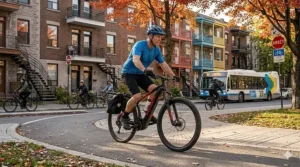
Urban riders commuting through cities like Calgary or Ottawa appreciate hardtails for their simplicity. Speed bumps, curb transitions, and occasional pathway diversions don’t require elaborate suspension systems. The lighter weight (typically 2-4 kg less than comparable full suspension bikes) makes carrying the bike up apartment stairs or loading onto vehicle racks noticeably easier.
Full Suspension Dominance Areas
Technical trail networks benefit enormously from full suspension designs. British Columbia’s renowned trails—featuring root sections, rock gardens, and sustained rough descents—transform from exhausting challenges to enjoyable flows with proper rear suspension. The bike absorbs impacts that would otherwise fatigue your arms, lower back, and legs.
Long-distance endurance rides also favour full suspension. While hardtails win the efficiency battle, full suspension bikes reduce cumulative fatigue over multi-hour adventures. Canadian riders planning backcountry epics (think Yukon wilderness trails or extended Cape Breton rides) consistently report finishing fresher on full suspension bikes despite carrying slightly less range due to additional weight.
Maintenance Cost Difference Ebike Ownership
The maintenance cost difference ebike styles present becomes apparent within the first year of ownership. Hardtails require servicing only the front fork—typically an annual rebuild costing $150-$250 CAD at Canadian bike shops. Full suspension bikes demand both front fork and rear shock maintenance, doubling suspension service costs to $300-$500 CAD annually.
Beyond suspension, full suspension designs incorporate pivot bearings that require periodic inspection and occasional replacement. Quality full suspension frames feature 4-6 pivot points, each with bearings that wear over time. Canadian winters accelerate wear if bikes aren’t properly cleaned and stored. Budget $100-$200 CAD every 2-3 years for bearing replacement on full suspension frames.
The Hidden Costs
Tire wear rates differ subtly but measurably. Full suspension bikes maintain better traction, but this increased grip accelerates tire wear by approximately 10-15% compared to hardtails on identical terrain. At $80-$120 CAD per quality mountain bike tire (Canadian pricing), this adds up over ownership.
Brake pad wear also varies. Full suspension bikes descend faster and more confidently, leading to increased brake usage. Expect to replace brake pads 20-30% more frequently on full suspension bikes if you’re riding technical terrain regularly. Quality brake pads cost $25-$40 CAD per set in Canada.
Performance in Canadian Weather Conditions
Cold Weather Considerations
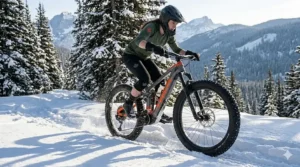
Canadian winter storage impacts these bike types differently. Hardtails feature fewer pivot points and seals where moisture can intrude and freeze. Full suspension bikes require more meticulous cleaning before winter storage to prevent water from freezing in pivot bearings and rear shocks.
Spring riding on frost-heaved gravel roads presents interesting dynamics. Frost heaves create sharp, sudden bumps that hardtails transmit directly to the rider—uncomfortable but manageable for shorter rides. Full suspension bikes smooth these impacts considerably, making early-season gravel grinding far more pleasant.
Mud and Debris Management
Muddy conditions (common in Canadian spring and fall) affect full suspension bikes more severely. Mud accumulates around pivot points and the rear shock linkage, requiring more frequent cleaning. Hardtails present a simpler cleaning target—no complex linkages to scrub carefully.
However, full suspension designs maintain better traction in slippery conditions. The rear wheel tracks more consistently over muddy sections, reducing the likelihood of wheel spin or loss of control. This matters enormously on technical climbs where traction determines success or failure.
Making Your Decision: Key Factors for Canadian Riders
Budget Reality Check
If your budget caps at $3,000 CAD, you’ll access higher-quality hardtail models than full suspension options. The VoltBike Outback V2 represents excellent value in full suspension at this price, but competing hardtails like the Trek Powerfly+ 4 offer superior components and warranty support.
Between $4,000-$6,000 CAD, both categories offer compelling options. The choice shifts from budget constraints to riding style preferences. Above $6,000 CAD, full suspension dominates as buyers seeking this investment typically prioritise maximum capability over efficiency.
Honest Riding Assessment
Evaluate your actual riding honestly. If 80% of your rides occur on smooth gravel paths, urban trails, or fire roads, a hardtail delivers better value and performance. Reserve full suspension for situations where you’re regularly tackling technical features that challenge your control and confidence.
Canadian riders blessed with easy access to trail networks (think residents near Vancouver’s North Shore, Canmore trail systems, or Quebec’s Bromont) benefit enormously from full suspension. Conversely, Prairie riders or those in flatter regions like Southern Ontario might find full suspension’s advantages limited by available terrain.
Provincial Regulation Compliance
All bikes recommended in this guide comply with Canadian federal ebike regulations: 500W maximum motor output and 32 km/h maximum assisted speed. Provincial variations exist—always verify local requirements. British Columbia, Ontario, and Alberta have slightly different age restrictions and helmet requirements that affect your purchase decision.
For comprehensive information about Canadian ebike regulations, consult Transport Canada’s guidelines or your provincial motor vehicle department. Compliance ensures you can legally ride on public trails and pathways across Canada.
Upgrading and Customization Options
Hardtail Upgrade Paths
Hardtails offer straightforward upgrade paths that significantly improve performance. Canadian riders commonly upgrade:
Fork Replacement: Swapping a basic 100mm fork for a 120-130mm travel model ($400-$800 CAD) transforms trail capability. Brands like RockShox and Fox offer excellent options available through Canadian bike shops.
Tire Selection: Moving from stock tires to premium options like Maxxis or Schwalbe models optimised for Canadian conditions dramatically improves traction. Budget $160-$240 CAD for quality front and rear tires.
Dropper Post Addition: If your hardtail lacks a dropper post, adding one ($200-$400 CAD installed) revolutionises technical riding by allowing quick seat height adjustment.
Full Suspension Tuning
Full suspension bikes require more sophisticated tuning but reward effort with dramatically improved performance. Professional suspension setup at quality Canadian bike shops ($100-$150 CAD) optimises sag, rebound, and compression for your weight and riding style.
Shock upgrades represent significant investments ($400-$1,200 CAD for quality rear shocks), but transform mid-range full suspension bikes into trail weapons. Fox Float or RockShox models available through Canadian distributors offer measurable performance improvements over stock shocks on budget bikes.
FAQ: Your Hardtail vs Full Suspension Questions Answered
❓ How much more maintenance does full suspension require compared to hardtail?
❓ Can hardtail ebikes handle technical Canadian mountain bike trails?
❓ What's the typical price difference between hardtail and full suspension ebikes in Canada?
❓ Which type offers better battery range for Canadian riding conditions?
❓ Should I buy hardtail or full suspension emtb for year-round Canadian commuting?
Conclusion: Your Perfect Canadian Ebike Awaits
The hardtail vs full suspension ebike decision ultimately reflects your riding priorities, terrain access, and budget reality. For most Canadian riders, a quality hardtail like the Trek Powerfly+ 4 Gen 5 or Cube Reaction Hybrid Performance 625 delivers exceptional value and performance across diverse conditions. These bikes excel at the mixed riding most Canadians actually do—gravel pathways, moderate trail features, and occasional technical sections.
Full suspension models like the VoltBike Outback V2 or premium Santa Cruz Heckler shine when technical terrain dominates your rides or when maximum comfort matters more than efficiency. If you’re tackling British Columbia’s gnarly descents weekly or planning multi-day backcountry adventures, the additional cost and maintenance burden become worthwhile investments.
Consider starting with a hardtail if you’re new to eMTBs. The simpler platform teaches fundamental bike handling skills that translate to better riding regardless of suspension type. You can always upgrade to full suspension later as your skills progress and riding ambitions expand. Many experienced Canadian riders maintain both types—a hardtail for efficient rides and commuting, plus a full suspension bike for weekend trail adventures.
Remember that Canadian regulations limit motor power to 500W and assisted speed to 32 km/h. These constraints actually level the playing field between hardtail and full suspension—you’re not relying on raw power but rather on how efficiently each design uses available assist. Make your choice based on terrain, maintenance willingness, and budget. Either way, you’re joining thousands of Canadian riders discovering the joy of electric mountain biking across our incredible landscape.
✨ Don’t Miss These Exclusive Deals!
🔍 Take your electric mountain biking adventures to the next level with these carefully selected products available in Canada. Click on any highlighted item to check current pricing and availability on Amazon.ca. These bikes will help you create authentic trail experiences you and your family will love!
Recommended for You
- 7 Best Canadian Winter Full Suspension Ebikes for 2026
- 7 Best Full Suspension eBikes for Heavy Riders Canada 2026
- 7 Best Full Suspension Ebikes Under $3000 CAD Canada 2026
Disclaimer: This article contains affiliate links to Amazon.ca. If you purchase products through these links, we may earn a small commission at no additional cost to you.
✨ Found this helpful? Share it with your friends! 💬🤗
