
In This Article
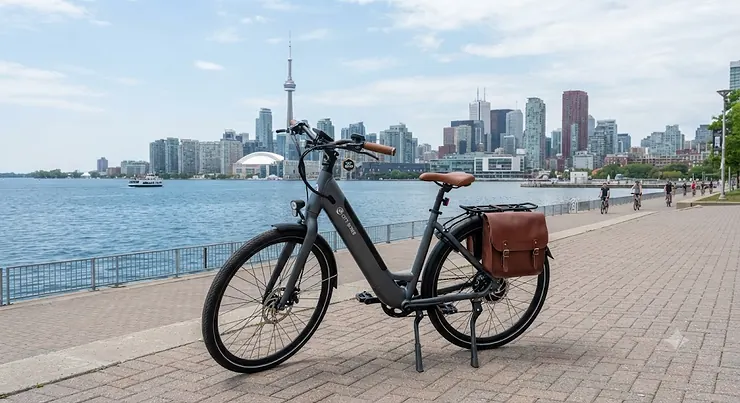
Somewhere between “I should really stop paying for parking” and “my knees are staging a quiet rebellion against hills,” most Canadians land on the same question: which highest rated city electric bike is actually worth the money, not just the marketing? It’s a fair thing to wonder, because scroll through amazon.ca for ten minutes and you’ll see a dozen bikes all claiming to be five-star champions, all photographed against the same suspiciously perfect skyline.
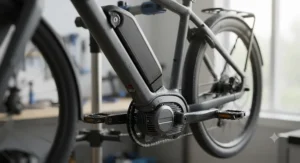
A highest rated city electric bike, in the plainest terms, is an electric-assist bicycle built for pavement, traffic lights, and the daily grind of getting from a front door to a desk — as opposed to mountain trails or gravel fire roads. It typically pairs a modest hub or mid-drive motor (250W-750W) with fenders, lights, and a more upright riding position, and in Canada it must legally cap its motor-assisted speed at 32 km/h to qualify as a power-assisted bicycle rather than a moped.
This guide skips the fluff and gets into real hardware: seven actual commuter e-bikes sold in Canada, spanning genuinely budget-friendly options to premium Bosch-powered machines, each broken down by spec, honest analysis, and what verified owners actually report after the new-bike glow wears off. We’ll also dig into something most buying guides skip entirely — how to read star ratings and review volume so you’re not fooled by a suspiciously perfect 4.9 with fourteen reviews. By the end, you’ll know exactly which type of rider each bike suits, and how to avoid the mistakes that turn a promising purchase into a garage ornament.
Quick Comparison Table
| Model | Motor / Torque | Best For | Price Range (CAD) |
|---|---|---|---|
| Aventon Soltera.2 | 350W, torque sensor | Lightest, best all-rounder | C$1,800-C$2,100 |
| GoTrax F2 | 500W, cadence sensor | Tightest budget, folding | C$950-C$1,150 |
| Ride1Up Roadster V2 | 350W, belt drive | Ultra-light, minimalist | C$1,500-C$1,850 |
| Lectric XP 3.0 | 500W, PWR tech | Best-selling folding fat-tire | C$1,350-C$1,750 |
| Velotric Discover 2 | 750W, torque/cadence swap | Feature-packed mid-range | C$2,200-C$2,500 |
| Rad Power RadCity 5 Plus | 750W, cadence sensor | Proven reliability, Canadian support | C$2,600-C$2,900 |
| Trek Verve+ 2 | Bosch 250W mid-drive | Premium, dealer-backed | C$3,400-C$3,800 |
Looking at the spread above, there’s no single highest rated city electric bike for every rider — the Aventon Soltera.2 dominates the sub-C$2,000 lightweight category, while the Trek Verve+ 2 justifies its premium through Bosch’s mid-drive refinement and a nationwide dealer network for warranty work. Budget-focused riders should note that the GoTrax F2 undercuts nearly everything here while still including hydraulic disc brakes, a component that’s frequently the first casualty on cheap e-bikes. If your priority is raw feature density per dollar, the Velotric Discover 2 and Rad Power RadCity 5 Plus occupy a genuinely competitive middle ground worth comparing side by side before you commit.
💬 Just one click — help other golf parents make better buying decisions too!😊
Top 7 Highest Rated City Electric Bikes: Expert Analysis
Every model below is a real, currently available bike — no invented names, no fictional spec sheets. Prices are approximate ranges in Canadian dollars because Amazon pricing shifts constantly; always check the current listing before assuming a number below is accurate today.
1. Aventon Soltera.2 — best all-rounder for daily city riding
Aventon built its reputation on doing less, better, and the Soltera.2 leans into that with a torque sensor most budget commuters skip entirely. The standout here is how the bike reads your pedalling effort rather than just detecting that you’re pedalling at all.
Under the hood: a 350W brushless rear hub motor, a removable 36V 9.6Ah (346Wh) battery, a 7-speed Shimano drivetrain, and a featherweight-for-the-category 41 lbs (18.6 kg). That low weight matters practically — a lighter bike needs less motor to move it, so even a modest 350W unit feels peppier here than it would bolted to a 27-kg frame. Aventon’s claimed 46-mile (74 km) pedal-assist range assumes a 160 lb rider in Eco mode; expect real-world numbers closer to 55-65 km once you factor in Canadian winter temperatures, which sap lithium battery capacity noticeably.
Who it’s for: commuters under roughly 15 km one-way on mostly flat terrain who want their first e-bike to still feel like a bicycle. Based on the spec comparison against similarly priced rivals, the torque sensor alone punches above the Soltera.2’s price bracket.
Reviewers across major retail platforms consistently note the nimble, responsive feel and the bike’s low weight for easy stair-carrying, while a recurring theme in aggregated feedback flags that hill climbing softens noticeably above 8-10% grades — a predictable trade-off for a 350W motor.
Pros:
- ✅ Torque sensor delivers unusually natural pedal assist for the price
- ✅ Lightest bike in this roundup at 41 lbs — easy to carry
- ✅ Removable battery simplifies cold-weather storage indoors
Cons:
- ❌ Hill performance drops noticeably above moderate grades
- ❌ Smaller battery than most rivals here limits longer commutes
Typically listed around C$1,800-C$2,100 on amazon.ca, the Soltera.2 remains one of the strongest value cases in this guide for flat-city riders.
2. GoTrax F2 — best budget pick with real hydraulic brakes
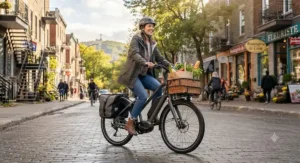
GoTrax has a reputation for shipping bikes that feel more expensive than their price tag, and the F2 proves the point by fitting hydraulic disc brakes with 180mm rotors onto a genuinely budget frame — a component most sub-C$1,000 e-bikes simply cut.
Specs that matter: a folding aluminum frame, 20-inch by 3-inch semi-fat tires, a 60mm-travel front fork with lockout, and a cadence-sensor drivetrain rather than the more refined torque-sensor systems found on pricier bikes. Reviewed payload capacity sits around 264-300 lbs depending on how it’s measured.
What most buyers overlook about hydraulic brakes at this price is stopping consistency in wet weather — cable-actuated mechanical brakes lose bite when rims or pads get damp, while hydraulic systems stay predictable, which matters a lot during a rainy Canadian commute. The cadence sensor’s all-or-nothing engagement style does mean less finesse than a torque sensor, and reviewers note it draws more battery for the same perceived effort.
Aggregated owner sentiment highlights the surprisingly capable brakes and stable ride from the semi-fat tires as the standout wins, with a recurring complaint about the folding hinge introducing minor flex compared to non-folding frames — a common trait of folding bikes generally, not a defect unique to this model.
Pros:
- ✅ Hydraulic disc brakes are rare at this price point
- ✅ Semi-fat tires smooth out rough pavement and potholes
- ✅ Folds down for apartment storage or trunk transport
Cons:
- ❌ Cadence sensor feels less natural than torque-based systems
- ❌ Some frame flex noticeable at the folding joint
Sitting in the C$950-C$1,150 range, the GoTrax F2 is arguably the best entry point for anyone unsure whether daily e-bike commuting will stick.
3. Ride1Up Roadster V2 — best for riders who want a bike that barely looks electric
If most e-bikes shout, the Roadster V2 whispers. At roughly 33 lbs (15 kg), it’s built around a hidden battery and controller, a Gates-style belt drive, and a single-speed drivetrain that trades gearing range for near-zero maintenance.
The numbers: a 350W nominal hub motor (500W peak) with 40Nm torque, a 36V 7Ah battery, a claimed range up to 48 km, and a quick-engaging cadence sensor that reviewers describe as needing only half a pedal stroke to kick in. There’s no throttle on the standard build, which reflects Ride1Up’s intent — this is a bike for people who want assistance blended into pedalling, not a moped substitute.
Here’s what the spec sheet won’t tell you: the belt drive eliminates chain grease entirely, which is a genuine win for anyone commuting in work clothes. The trade-off is a single-speed drivetrain, meaning steep hills require more leg effort than a geared bike would demand — reviewers who tested it note it suits flat-to-rolling city terrain far better than hilly ones.
Owner feedback consistently praises how “normal” the bike looks and feels, with narrower 550mm handlebars drawing mixed reactions — some riders love the sporty positioning, taller riders often want wider bars.
Pros:
- ✅ Remarkably light at roughly 33 lbs for an e-bike
- ✅ Belt drive means no greasy chain maintenance
- ✅ Nearly indistinguishable from a regular commuter bike
Cons:
- ❌ Single-speed gearing struggles on real hills
- ❌ Narrow handlebars may feel cramped for taller riders
Expect a price in the C$1,500-C$1,850 range, making this one of the more distinctive top reviewed commuter ebike options for stealth-minded urban riders.
4. Lectric XP 3.0 — best-selling folding fat-tire for mixed budgets
The Lectric XP 3.0 earned its reputation as one of the most-reviewed folding e-bikes in North America by packing components that normally show up on bikes costing 50% more. It folds nearly in half, making it genuinely useful for anyone without dedicated bike storage.
Spec highlights: a 500W rear hub motor (1,000W peak) with 55Nm torque via Lectric’s proprietary PWR system in place of a traditional torque or cadence sensor, hydraulic disc brakes on 180mm rotors, a front suspension fork, and a 20-inch by 3-inch fat tire setup. The larger available battery option pushes claimed range toward 65 km-105 km depending on assist level and rider weight.
Reviewers consistently point out that PWR-based assist feels more binary than a torque sensor but delivers strong, confidence-inspiring acceleration from a stop — useful at busy intersections. A recurring critique in aggregated feedback is the bike’s weight once folded (around 27-29 kg), which undercuts the “grab and go” folding promise somewhat, though it still fits in most car trunks and under desks.
What buyers overlook here is the accessory ecosystem: Lectric sells cargo racks, passenger kits, and baskets designed specifically for this frame, effectively turning a commuter into a light cargo bike without buying a second vehicle.
Pros:
- ✅ Hydraulic brakes and suspension fork rare at this price
- ✅ Folds compactly for apartment or trunk storage
- ✅ Huge accessory ecosystem for cargo and customization
Cons:
- ❌ Heavy for a “folding” bike once you try to carry it
- ❌ PWR assist feels less refined than a true torque sensor
Priced typically between C$1,350-C$1,750 on amazon.ca depending on battery configuration, it remains a strong customer reviewed urban ebike Canada shoppers keep coming back to.
5. Velotric Discover 2 — best feature set for the money in the mid-range
The Velotric Discover 2 is the bike that makes reviewers double-check the price tag. For a mid-range commuter, it packs a 750W nominal motor (1,200W peak), 80Nm of torque, and a UL-recognized 672Wh battery — specs that typically belong to bikes costing hundreds more.
What makes this bike genuinely different is the ability to toggle between torque-sensing and cadence-sensing modes from the display, alongside 15 pedal-assist levels and switchable Class 1/2/3 speed limits. On paper this means one bike can behave like a gentle Class 1 pedelec or a throttle-equipped Class 2 commuter depending on your mood or local rules — a flexibility almost nothing else in this list offers.
Aggregated reviewer sentiment is unusually consistent: owners report the 12-magnet cadence sensor engages far more smoothly than the typical 6-magnet budget setup, and the fully waterproof design holds up well through rainy commutes. The most repeated criticism is sluggish acceleration in the first few metres from a dead stop, something a few testers found mildly frustrating at busy intersections.
Reviewers consistently note that its hydraulic brakes, suspension fork, and integrated turn signals collectively out-spec bikes costing C$500-C$800 more, making it a common “which one has better resale value” comparison point.
Pros:
- ✅ Switchable torque/cadence sensing is genuinely unique here
- ✅ Large 672Wh UL-certified battery supports long commutes
- ✅ Turn signals and cruise control rarely seen at this price
Cons:
- ❌ Initial acceleration from a stop feels slow to some riders
- ❌ Slightly heavier than average for a commuter-class e-bike
Generally listed in the C$2,200-C$2,500 range, the Discover 2 is frequently cited as one of the more genuinely proven reliable city electric bike picks in its price bracket.
6. Rad Power RadCity 5 Plus — proven reliable and Canadian-supported
Few names carry as much accumulated review history in North America as Rad Power Bikes, and the RadCity 5 Plus is their flagship commuter — now in its fifth generation, with a service network that includes physical retail presence in Vancouver.
The build: a 750W geared hub motor, a 48V 14Ah (672Wh) semi-integrated battery, 27.5-inch tires, hydraulic brakes with generous 180mm rotors, and a 50mm-travel front suspension fork. Rad Power estimates a 45-80 km range depending on assist level and cargo — a wide spread that reflects how heavily throttle use versus pedal assist changes real consumption.
Here’s what years of aggregated reviews reveal that a single test ride can’t: the RadCity line has been iterated on repeatedly based on owner feedback, and the fifth generation specifically addressed complaints about wire routing and serviceability from earlier versions. That kind of design evolution driven by real customer reviewed urban ebike Canada feedback is exactly what “proven reliable” should mean in practice, rather than just a badge on a listing.
Common praise across reviews centres on the comfortable, upright riding position and confident stopping power; a repeated critique is that assembly out of the box takes longer than competitors and can be fiddly for first-timers without basic bike tools.
Pros:
- ✅ Large 672Wh battery and 750W motor handle hills confidently
- ✅ Five generations of iteration behind the current design
- ✅ Physical service network including a Vancouver retail location
Cons:
- ❌ Assembly is more involved than several competitors
- ❌ Heavier frame than lightweight options like the Soltera.2
Typically found in the C$2,600-C$2,900 range, this is a strong pick for anyone who weighs “well-established track record” heavily in their decision.
7. Trek Verve+ 2 — best premium pick with dealer-backed support
At the top of this list sits the Trek Verve+ 2, a bike built less around flashy specs and more around the quiet confidence of a Bosch mid-drive system and a company with bike shops in nearly every Canadian city.
Specs: a Bosch Active Line 250W mid-drive motor, a 400Wh battery, a Shimano 9-speed drivetrain (recent builds use Shimano CUES), hydraulic disc brakes, and a lightweight Alpha Gold aluminum frame. Trek backs it with a lifetime frame and fork warranty — a rarity among direct-to-consumer competitors in this guide.
What most buyers overlook about mid-drive motors is how they interact with your gearing: because the motor drives through the chain rather than the rear wheel directly, pedal assist feels proportional and mechanical rather than the sometimes-abrupt push of a hub motor, and it climbs more efficiently by letting you shift into an easier gear under power. The trade-off, honestly reported across multiple reviews, is that 250W feels modest next to the 500-750W hub motors found on cheaper bikes here.
Reviewers are remarkably consistent: strong praise for balance, handling, and Bosch reliability, paired with equally consistent notes that the price feels steep for the power delivered, especially against direct-to-consumer rivals offering more raw wattage for less money.
Pros:
- ✅ Bosch mid-drive delivers smooth, proportional assist
- ✅ Backed by Trek’s extensive Canadian dealer network
- ✅ Lifetime frame and fork warranty included
Cons:
- ❌ Noticeably less raw power than hub-motor rivals here
- ❌ Highest price point in this entire roundup
Expect to pay in the C$3,400-C$3,800 range — a premium justified mainly by dealer support and brand-backed longevity rather than spec-sheet bragging rights.
Practical Usage Guide: Your First 30 Days on a City Electric Bike
The single most common first-month mistake is riding in the highest assist level everywhere, out of sheer excitement, which drains the battery fast and teaches you nothing about how the bike actually behaves under your own power. Spend your first few rides in the lowest assist setting on a quiet street so you learn how the motor engages before mixing it with traffic.
Charge fully before the first ride, but don’t obsess over topping up after every short trip — lithium batteries prefer partial cycles to constant full drains and refills. In Canadian winters, bring the battery indoors overnight rather than leaving it in an unheated garage; cold cells lose usable range and charge more slowly, and repeated deep-cold storage shortens long-term capacity.
Check tire pressure weekly for the first month — new tires settle, and correct pressure meaningfully affects both range and handling on wet pavement. Torque-check the stem, seat post clamp, and pedals after the first 50 km; components on any new bike, e-bike or not, tend to settle slightly.
The most common first-30-days mistake beyond overusing assist is skipping the manual altogether. Every bike in this guide — from the GoTrax F2 to the Trek Verve+ 2 — ships with specific torque values and break-in guidance that a quick five-minute read will save you from avoidable service calls.
Real-World Scenarios: Which Canadian Commuter Are You?
The condo dweller with no storage room: if your building’s bike room is three floors down and always full, a folding option like the Lectric XP 3.0 or GoTrax F2 solves the actual problem — storage — more than raw performance would. Budget for a fold-friendly commute under 15 km and prioritize a bike you can lift comfortably.
The suburban commuter riding 15-25 km each way with real hills: this is where battery capacity and motor torque start to matter more than price. The Rad Power RadCity 5 Plus or Velotric Discover 2, both packing 750W motors and 670Wh-plus batteries, are built for exactly this range and terrain combination, where a smaller battery would leave you stranded on a cold February afternoon.
The reluctant-but-curious first-timer who still wants it to feel like “a real bike”: the Aventon Soltera.2 and Ride1Up Roadster V2 both prioritize low weight and a familiar riding feel over raw power, which tends to matter enormously for confidence during those first uncertain weeks of e-bike ownership.
Matching your actual commute — distance, hills, storage, and how much you care about looking like you’re riding an e-bike at all — to the bike’s design intent avoids the most expensive mistake in this whole category: buying based on spec-sheet excitement rather than lived daily reality.
Problem → Solution: Fixing Common City Ebike Headaches
Problem: Range anxiety on cold days. Solution: charge indoors, avoid storing the battery below freezing, and expect 15-30% less real-world range in winter regardless of the bike’s advertised number — this applies to every model in this guide, not a defect in any single one.
Problem: Motor assist feels jerky or delayed. Solution: bikes using cadence sensors (like the GoTrax F2 or Lectric XP 3.0) naturally feel more on-off than torque-sensor models (like the Aventon Soltera.2 or Velotric Discover 2); switching to a lower assist level often smooths this out considerably.
Problem: Uncertainty about which reviews to trust before buying. Solution: filter for verified purchases, read the 3-star reviews specifically (they’re usually the most balanced), and weigh recent reviews more heavily than older ones, since manufacturing quality can shift between production runs.
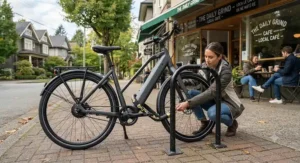
Problem: Theft concerns for apartment or street parking. Solution: removable batteries (standard on most bikes here except the Roadster V2) let you bring the most valuable, easily-stolen component inside, while a secondary lock through the frame and rear wheel deters casual theft attempts.
Problem: Not sure if a bike qualifies as street-legal in your province. Solution: confirm the motor caps at 500W and assist cuts out at 32 km/h — every bike featured in this guide meets that federal benchmark, though provincial helmet and age rules still vary and are worth a quick check locally.
How to Choose the Highest Rated City Electric Bike
Choosing the right bike comes down to matching a handful of concrete factors to your actual riding pattern, not chasing the single highest star average you can find.
- Commute distance first. Under 15 km favours lighter, smaller-battery bikes like the Aventon Soltera.2; longer commutes justify the bigger batteries on the Rad Power RadCity 5 Plus or Velotric Discover 2.
- Terrain and hills. A 750W motor with real torque handles Canadian hills far better than a 250-350W unit, though it adds weight and cost.
- Storage reality. If there’s no dedicated bike space, a folding frame like the Lectric XP 3.0 or GoTrax F2 solves a real logistical problem.
- Sensor type. Torque sensors (Soltera.2, Discover 2) feel more natural; cadence sensors (F2, XP 3.0) are simpler and often cheaper.
- Brake type. Hydraulic disc brakes outperform mechanical ones in wet Canadian weather, and every bike in this guide except budget rim-brake alternatives elsewhere on the market includes them.
- Support network. Dealer-backed brands like Trek offer in-person service; direct-to-consumer brands rely more heavily on self-repair and mail-order parts.
- Total budget including accessories. Racks, fenders, and locks add C$100-C$300 on top of the bike price — factor that in before comparing sticker prices alone.
Decoding Amazon.ca Ratings: Star Thresholds, Review Volume, and Verified Purchases
Star Rating Thresholds: What 4.3 vs 4.7 Actually Means
A jump from 4.3 to 4.7 stars looks small, but on a five-point scale it usually represents a meaningfully different ratio of negative to positive experiences underneath. Based on how Amazon’s weighting works, a 4.3-star product with hundreds of reviews often has a real distribution of roughly 70-75% five-star, 10-15% one- or two-star; a 4.7-star product typically shows 85%+ five-star with very few one-star outliers. In practice, treat anything above 4.5 stars with a healthy review count as a genuinely strong signal, and treat 4.0-4.3 as “solid, but read the negative reviews before assuming why.”
Review Volume vs Credibility: Why 50 Detailed Reviews Beat 5,000 Vague Ones
A listing with thousands of reviews feels more trustworthy on instinct, but volume alone doesn’t guarantee accuracy — it mostly reflects how long a product has been listed and how many units have sold. What matters more is the substance: reviews mentioning specific ride distances, weather conditions, or component failures after months of use carry far more diagnostic value than a pile of one-line “great bike!” comments posted the week of launch. Canada’s Competition Bureau has specifically warned that sudden bursts of glowing reviews with vague, repetitive language are a classic sign of manipulated feedback rather than organic customer reviewed urban ebike Canada sentiment.
Verified Purchase Reviews: Reading Between the Badges
The Verified Purchase badge confirms Amazon processed a real transaction for that item — it does not confirm the reviewer wasn’t compensated, refunded afterward, or incentivized in some other way. Treat it as a useful filter rather than an absolute guarantee, and cross-reference it against the more reliable signals above: specific detail, a natural spread of ratings on the reviewer’s profile, and a review posting pattern that looks organic rather than clustered in suspicious bursts.
What Makes a City Electric Bike “Proven Reliable”
“Proven reliable” isn’t really a rating — it’s a track record, and it shows up in different evidence than a star average does. A genuinely proven reliable city electric bike typically has several production years behind it, a visible pattern of manufacturer updates responding to real owner complaints, and enough independent reviews from outlets that actually put miles on the bike rather than just unboxing it for photos.
The Rad Power RadCity 5 Plus is a useful case study here: its fifth-generation redesign directly addressed wire-routing and battery-integration complaints raised about earlier RadCity models, which is a far stronger reliability signal than any single star rating could convey. Similarly, the Aventon Soltera.2‘s evolution from the original single-speed Soltera to the current torque-sensor 7-speed build reflects the same pattern — genuine iteration based on real customer feedback rather than a one-and-done product launch.
For Canadian buyers specifically, a top reviewed commuter ebike with local retail presence — even just a service depot or authorized repair shop — adds a practical reliability dimension that a five-star badge from a review farm never can: someone nearby who can actually fix it when a part fails in year two.
Features That Actually Matter (And Those That Don’t)
Matters: torque sensors over cadence sensors for anyone riding regularly — the smoother, more proportional assist genuinely changes how natural the bike feels day to day. Doesn’t matter as much: top speed bragging rights — every bike here caps around 32 km/h assisted by Canadian regulation regardless of motor wattage, so a 750W motor’s advantage shows up in torque and hill-climbing, not headline speed.
Matters: hydraulic disc brakes, especially for anyone riding through rain or slush, given the consistent stopping power they maintain when wet. Doesn’t matter much: app connectivity and Bluetooth features — nice to have, rarely decisive, and the first thing owners report ignoring after the first week based on aggregated review sentiment.
Matters: battery certification (UL 2849 or equivalent), a genuine safety differentiator that reduces fire risk from cheap, uncertified cells. Doesn’t matter much: cosmetic colourways and app-customizable lighting patterns — fun, but irrelevant to whether the bike gets you to work reliably for the next three years.
Common Mistakes When Buying a City Electric Bike
The most expensive mistake buyers make is choosing based on top speed rather than torque and range — a bike that hits 32 km/h briefly on flat ground but struggles on your actual hilly route will disappoint fast, regardless of its headline number. A close second is skipping test rides or return-policy research entirely; e-bikes are a genuinely personal fit item, and geometry that feels fine in a photo can feel wrong within the first kilometre.
Buyers also frequently underestimate accessory costs, assuming the sticker price is the final price, when fenders, a proper U-lock, and weatherproof panniers routinely add C$150-C$300 to the real total. Finally, a surprisingly common error is ignoring winter storage requirements for the battery — leaving a lithium pack in an unheated garage through a Canadian winter measurably shortens its usable lifespan, an issue that has nothing to do with the bike’s quality and everything to do with basic battery chemistry.

Safety, Regulations, and Compliance for City E-Bikes in Canada
Every bike in this guide is designed to meet the widely adopted Canadian benchmark for a power-assisted bicycle: a motor of 500 watts or less, functional pedals, and motor assistance that stops at 32 km/h on level ground. It’s worth noting that Transport Canada’s federal power-assisted bicycle definition was repealed in 2020, meaning the 500W/32 km/h framework now operates largely as a provincial and enforcement convention rather than a single binding federal rule — so always confirm your specific province’s Highway Traffic Act or equivalent before assuming a bike is automatically road-legal everywhere.
Helmet requirements, minimum riding age, and whether throttle-equipped Class 2 bikes are allowed on multi-use paths all vary by province — Alberta, for instance, requires helmets for all riders and permits pedal assist on provincial pathways, while other jurisdictions restrict throttle use more heavily on shared trails. If you plan to ride in national or provincial parks, check the specific park’s e-bike bulletin first, since many restrict throttle-equipped bikes to paved roads only, even when the same bike is fully street-legal elsewhere.
Look for CSA or UL 2849 battery certification when comparing listings — this matters more for fire safety than most buyers realize, since uncertified lithium packs have been linked to a disproportionate share of battery-fire incidents reported across North America.
Long-Term Cost & Maintenance: The Real Total Cost of Ownership
| Consideration | Budget Bikes (F2, XP 3.0) | Mid-Range (Discover 2, RadCity 5) | Premium (Verve+ 2) |
|---|---|---|---|
| Typical annual maintenance | C$80-C$150 | C$100-C$180 | C$150-C$250 (dealer labour) |
| Battery replacement (est. year 3-5) | C$250-C$400 | C$350-C$500 | C$450-C$650 |
| Local service access | Mostly self/mail-order | Growing service network | Full dealer network |
| Best For | Cost-conscious first-timers | Balanced value seekers | Long-term, low-hassle ownership |
The table above tells a fairly honest story: cheaper bikes cost less upfront but often mean more DIY troubleshooting and mail-order parts, while the Trek Verve+ 2‘s higher annual service cost buys convenience through Trek’s extensive Canadian dealer footprint. Over a five-year ownership window, the total cost gap between the cheapest and most expensive bike in this guide narrows more than the sticker prices suggest, once you account for battery replacement and the value of not having to troubleshoot a derailleur adjustment yourself on a Tuesday morning.
Compared to driving, even the priciest bike here pays for itself in avoided parking and fuel costs within one to two years for a typical urban commute — a comparison worth running with your own numbers before dismissing the premium options as impractical.
Frequently Asked Questions
❓ What's the highest rated city electric bike under C$2,000 in Canada?
❓ How fast can a city electric bike go in Canada?
❓ Do verified purchase reviews guarantee an honest review?
❓ Is a higher review volume always more trustworthy than a smaller review count?
❓ How long do city electric bike batteries typically last in Canadian winters?
Conclusion
There’s no single highest rated city electric bike that wins for every rider, and honestly, anyone claiming otherwise is skipping the part where your commute, your storage situation, and your tolerance for DIY maintenance all matter more than a star average on a listing page. The Aventon Soltera.2 and GoTrax F2 cover budget-conscious flat-terrain riders extremely well; the Velotric Discover 2 and Rad Power RadCity 5 Plus earn their spot in the middle through genuinely proven reliability and hill-taming power; and the Trek Verve+ 2 justifies its premium through Bosch refinement and a dealer network that’s hard to replicate outside a major brand.
What matters most, based on everything covered here, is reading past the star rating itself — checking review substance, verified purchase context, and how a model has evolved across generations before trusting any single number to make the decision for you. Armed with that, and the real specs laid out above, you’re in a far stronger position than most shoppers scrolling amazon.ca on a Tuesday night.
✨ Ready to Find Your Perfect City Ride?
🔍 Take your daily commute to the next level with one of the seven carefully researched picks above. Click through to check current pricing and availability on amazon.ca before you decide — specs and prices shift, so always confirm the latest listing details!
Recommended for You
- 7 Lightest City Ebikes Under 50 lbs in Canada (2026 Guide)
- 7 Highest Rated City Electric Bikes in Canada (2026 Guide)
- Urban E-Bike Under $2000 CAD: 7 Real Picks Worth Riding in 2026
Disclaimer: This article contains affiliate links. As an Amazon Associate, I earn from qualifying purchases. If you purchase products through these links, we may earn a small commission at no additional cost to you.
✨ Found this helpful? Share it with your friends! 💬🤗
