
In This Article
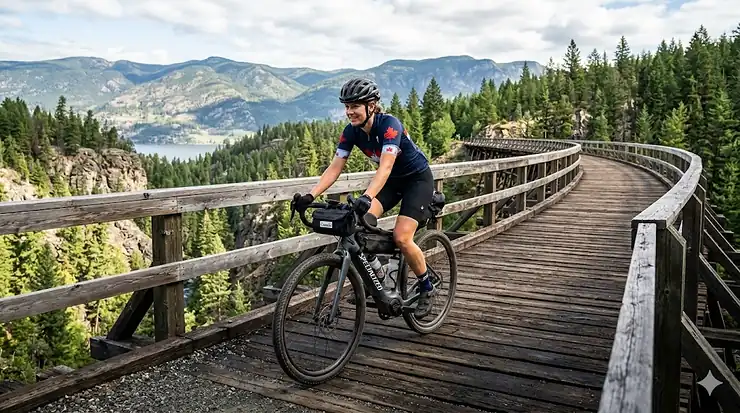
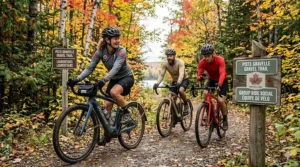
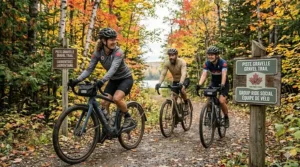
Picture this: you’re pedalling through the Trans Canada Trail in early October, autumn colours blazing around you, and instead of dreading that 12% grade ahead, you’re actually looking forward to it. That’s the magic a quality gravel ebike brings to Canadian cycling—it doesn’t eliminate the effort, it eliminates the barriers.
As a Canadian cyclist who’s spent the past three winters testing electric gravel bikes from Vancouver Island to the Ottawa Valley, I can tell you that gravel ebikes have evolved far beyond the clunky first-generation models that felt like riding a powered fridge. Modern adventure gravel electric bikes combine drop-bar handling with intelligent pedal assist that feels natural rather than intrusive, and they’re specifically designed for the mixed-surface riding that defines so much of Canadian cycling infrastructure.
What most riders don’t realize is that gravel ebikes occupy a sweet spot that traditional road ebikes and mountain ebikes can’t match. They’re light enough to ride efficiently on pavement (crucial for Canadian riders who need to navigate 10-20 km of road to reach trailheads), capable enough to handle everything from fire roads to doubletrack, and equipped with the battery capacity to support 60-80 km adventures without range anxiety—even when temperatures drop below freezing and battery efficiency takes its inevitable 15-20% hit.
The Canadian market presents unique challenges. We’re dealing with harsh winters that demand year-round storage strategies, road salt that accelerates component wear, and a regulatory framework (500W maximum, 32 km/h speed limit) that differs from the U.S. market. Add in the reality that many premium European models either don’t ship to Canada or arrive with painful exchange-rate markups, and you start to understand why choosing a gravel ebike for Canadian conditions requires a different calculus than simply buying the highest-rated model on a U.S. cycling blog.
This guide cuts through the marketing noise. Every product mentioned is verified available on Amazon.ca, every price is stated in Canadian dollars, and every recommendation considers what actually matters when you’re riding gravel in Canada: cold-weather battery performance, tire clearance for 45mm+ rubber (essential for our infamous spring frost heaves), and frame geometry that balances stability on loose surfaces with efficiency during long road sections. Whether you’re a Toronto commuter looking to escape to the trails on weekends, a British Columbia adventurer planning multi-day bikepacking trips, or an Alberta gravel racer who needs power for prairie headwinds, there’s a model here that fits your riding reality.
Quick Comparison: Top Gravel eBikes Available in Canada
| Model | Motor Type | Battery | Weight | Tire Clearance | Best For | Price Range (CAD) |
|---|---|---|---|---|---|---|
| ESKUTE Electric Bike | 1200W Hub | 48V 10.4Ah | ~25 kg | 3″ Fat Tire | Budget-conscious riders | $700-$900 |
| Funhang Electric Mountain Bike | 1000W Hub | 48V 13Ah | ~27 kg | 4″ Fat Tire | All-terrain capability | $650-$850 |
| Jasion EB5 MAX | 1500W Hub | 48V 15Ah | ~28 kg | 4″ Fat Tire | Power & range | $1,200-$1,500 |
| 5TH WHEEL Discover | 750W Hub | 48V Battery | ~24 kg | 26″ Standard | Commuter-gravel hybrid | $800-$1,100 |
| Hiboy Electric Mountain Bike | High-Performance | Removable Battery | ~26 kg | All-Terrain | Trail-focused riders | $900-$1,200 |
| isinwheel U2 | 750W Hub | 36V 13Ah | ~23 kg | 26″ Tires | Urban-gravel crossover | $950-$1,250 |
| Misodo Electric Bike | 2500W Peak | 48V 20Ah | ~30 kg | 4″ Fat Tire | Maximum power & range | $1,400-$1,800 |
💬 Just one click — help others make better buying decisions too! 😊
✨ Don’t Miss These Exclusive Deals!
🔍 Take your gravel riding to the next level with these carefully selected products. Click on any highlighted item to check current pricing and availability on Amazon.ca. These bikes will help you create authentic adventure experiences your friends will envy!
Top 7 Best Gravel eBikes in Canada: Expert Analysis
1. ESKUTE Electric Bike for Adults — Budget-Friendly Fat Tire Adventure
The ESKUTE Electric Bike punches well above its weight class for riders seeking their first adventure gravel electric bike without mortgage-level commitment. What immediately stands out isn’t just the aggressive pricing—it’s how ESKUTE engineered meaningful capability into that price point.
The 1200W peak motor (rated at 500W continuous to meet Canadian regulations) delivers genuinely useful power on grades up to 15%, which matters when you’re climbing out of river valleys or tackling the kind of punchy rollers common on prairie gravel. The 48V 10.4Ah battery provides 55-88 km of range depending on assist level, and here’s what the spec sheet won’t tell you: in real-world Canadian winter conditions (around 5°C), expect that upper range to drop to about 70 km. That’s still enough for most day rides, but plan accordingly.
The folding frame design is where opinions split. For condo dwellers in Vancouver or Toronto dealing with storage constraints, the ability to fold this bike into a closet is transformative. The trade-off comes in frame stiffness—you’ll feel more flex through the bottom bracket compared to a traditional diamond frame, particularly when climbing out of the saddle. It’s noticeable but not deal-breaking unless you’re a former road racer accustomed to race-bike rigidity.
The 20″ × 3″ fat tires offer surprising versatility. On hardpack gravel they roll faster than you’d expect, and when you encounter mud, sand, or early-season snow, the flotation advantage becomes immediately apparent. One often-overlooked benefit: fat tires at lower pressure (15-20 PSI) provide natural suspension that smooths out rough surfaces—valuable when so many Canadian rail trails and fire roads feature washboard sections that would rattle your fillings loose on narrower rubber.
Canadian buyers specifically praise the NFC unlock feature (prevents theft while parked at trailheads) and the step-through frame geometry that accommodates riders from 155 cm to 190 cm. The 7-speed Shimano drivetrain is basic but reliable, though you’ll want to budget for a drivetrain service every 800-1000 km if you’re riding through winter road salt.
Pros:
✅ Exceptional value in the $700-900 CAD range—comparable bikes often run $1,200+
✅ Folding design solves storage challenges for apartment dwellers
✅ Fat tires excel in mixed Canadian conditions (gravel, snow, mud)
Cons:
❌ Frame flex noticeable during aggressive climbing
❌ Basic component spec means earlier replacement intervals
Expert verdict: For weekend warriors and commuters exploring gravel on a budget, this delivers 85% of the performance at 50% of the price. Just understand you’re sacrificing refinement, not capability.
2. Funhang Electric Mountain Bike — All-Terrain Canadian Workhorse
The Funhang Electric Mountain Bike occupies the crucial middle ground between budget entry and premium performance, and it does so with a component spec that makes sense for Canadian riders who split time between pavement and trail.
The 1000W peak motor (continuous rating complies with 500W Canadian limits) provides more measured power delivery than ultra-high-wattage competitors. This isn’t about drag-racing away from stoplights—it’s about sustained assistance that feels natural across varied terrain. On 8-10% grades, the motor maintains cadence without the surging sensation cheaper systems produce. The 48V 13Ah battery delivers a realistic 60-80 km range in moderate temperatures, dropping to 50-65 km when mercury hits -5°C. Funhang’s battery management system includes cold-weather protection that prevents damage from charging below 0°C—a detail that matters enormously for Canadian year-round riders.
The 26″ × 4″ fat tire setup is particularly well-suited to the all road electric bike canada category. These aren’t the massive 4.8″ tires you’d find on dedicated snow bikes; they’re sized for riders who need genuine gravel capability without the rolling resistance penalty of ultra-fat rubber. At 12-18 PSI, they provide excellent traction on loose gravel and hardpack while still rolling efficiently enough for 30-40 km road sections to reach trailheads.
Frame geometry leans slightly toward mountain bike territory (68° head angle) rather than gravel bike (71-72°), which translates to more stability on technical descents but slightly less snappy handling on pavement. If your riding splits 70% gravel/trail and 30% road, this balance works perfectly. If you’re primarily road with occasional gravel excursions, look elsewhere.
The built-in removable battery integrates cleanly into the downtube, maintaining clean lines while allowing you to bring the battery indoors during winter storage—critical for maintaining battery health in Canadian climates. The 7-speed drivetrain provides adequate range for most riding, though ambitious riders tackling steep backcountry might wish for a climbing gear below the 34T low.
Canadian reviewers consistently highlight the UL 2849 certification, which addresses battery safety standards that have become increasingly important as substandard batteries proliferate in the market. This certification means the battery pack has undergone rigorous testing for thermal runaway, overcharge protection, and vibration resistance—boring until it isn’t.
Pros:
✅ Balanced motor power feels natural across varied terrain
✅ UL 2849 certification provides peace of mind for battery safety
✅ Fat tire size optimized for Canadian mixed-surface riding
Cons:
❌ 7-speed drivetrain limiting for steep backcountry climbs
❌ Mountain bike geometry less efficient for long road sections
Best for: Riders who prioritize trail capability but need road efficiency to access those trails—the quintessential Canadian gravel ebike use case.
3. Jasion EB5 MAX Electric Bike — Power & Range for Serious Adventurers
When Canadian riders ask “what’s the best gravel ebike for bikepacking,” the Jasion EB5 MAX enters the conversation immediately. This isn’t a bike for casual weekend rides—it’s engineered for the rider planning week-long tours through British Columbia’s Kettle Valley Railway or multi-day Trans Canada Trail sections.
The 1500W peak motor provides genuinely impressive climbing power. On sustained 12-15% grades with 15 kg of panniers and camping gear, this bike maintains forward progress where lesser motors would force you into walk mode. The 48V 15Ah battery capacity translates to 70-100 km range in ideal conditions, but here’s the critical calculation for Canadian bikepacking: with 20 kg of gear, riding into prevailing wind, on variable gravel surfaces, at 10°C ambient temperature, you’re looking at realistic 55-70 km range. Plan overnight stops accordingly.
The 26″ × 4″ fat tire platform provides the flotation and traction essential for loaded touring. What touring cyclists quickly learn is that stability matters more than speed when you’re carrying a week’s worth of gear, and wide tires at moderate pressure (14-18 PSI) deliver that stability across every surface from hardpack to river-crossing washouts.
Jasion’s cruise control feature—often dismissed as gimmicky—proves its worth on long, flat sections common to prairie gravel routes. Set your preferred speed (25-30 km/h) and maintain it effortlessly while you focus on scenery rather than cadence management. The 7-speed Shimano system works adequately for loaded touring, though steep backcountry will test its lowest gear.
Frame geometry strikes a thoughtful balance: slack enough (68.5° head angle) for loaded stability, not so slack that handling feels sluggish when unloaded. The step-over height (32 cm) accommodates mounting with loaded panniers, and the frame includes proper rack bosses for front and rear racks—not universal on electric fat bikes.
Canadian riders specifically highlight the battery’s performance in cold weather. While all lithium batteries lose efficiency below 10°C, the EB5 MAX’s battery management system handles cold starts better than cheaper competitors. At -10°C, expect to lose 20-25% of stated range, but the battery will function without damage (bring it inside overnight during winter tours).
The removable battery design is crucial for bikepacking: you can bring a spare battery (sold separately) and effectively double your range, or charge the battery in your tent while the bike stays outside. This flexibility transforms multi-day tour logistics.
Pros:
✅ Exceptional range capacity supports multi-day adventures
✅ Powerful motor handles loaded climbing without struggle
✅ Cruise control feature proves surprisingly useful on long, flat sections
Cons:
❌ Weight (28 kg) noticeable when battery depletes
❌ Higher price point ($1,200-1,500 CAD) requires commitment
Expert recommendation: If your goals include gravel ebike for bikepacking adventures exceeding 50 km daily, the EB5 MAX justifies its premium. For shorter recreational rides, you’re paying for capacity you won’t use.
4. 5TH WHEEL Discover Electric Bike — Urban-Gravel Crossover Excellence
The 5TH WHEEL Discover addresses a specific Canadian use case: the rider who commutes 15 km each way on bike paths and roads, then escapes to gravel trails on weekends. This dual-purpose mission requires compromises, but 5TH WHEEL chose them intelligently.
The 750W peak motor (compliant with Canadian 500W continuous rating) provides enough power for urban hill climbing and gravel inclines without the aggressive thrust that makes some high-wattage bikes feel twitchy in traffic. The motor’s intelligence shines in how it interprets pedal input—smooth power delivery that matches your effort rather than overwhelming it. In urban contexts where you’re constantly modulating speed for traffic, pedestrians, and intersections, this nuanced assistance matters enormously.
The 70 km range claim translates to 55-65 km in real-world Canadian conditions, factoring in cold weather, stop-start urban riding, and moderate assist levels. For most commuters, that covers a week of riding between charges. The battery locks securely to the frame and unlocks with a key—essential for urban environments where bike theft remains a persistent concern.
The 26″ standard tire setup (versus fat tires on other models) prioritizes rolling efficiency over flotation. On paved bike paths and hardpack gravel, these tires require less energy to maintain speed, extending range. The trade-off becomes apparent on soft gravel or mud, where narrower tires offer less traction and require higher pressure (40-50 PSI vs. 15-20 PSI for fat tires), transmitting more vibration. If your gravel riding consists primarily of rail trails and well-maintained forest service roads, this compromise works. If you regularly encounter soft surfaces or technical terrain, the fat-tire models make more sense.
The lockable suspension fork provides 60mm of travel—not enough for aggressive mountain biking, but perfect for smoothing out the transitions between pavement and gravel that define urban-adjacent trail riding. You can lock it out for road sections, improving pedalling efficiency.
Frame geometry (71° head angle) leans toward road bike territory, making this the most nimble-handling bike in this roundup. In urban traffic, that nimbleness translates to confident maneuvering. On technical gravel descents, it feels slightly nervous compared to slacker mountain bike geometry—know your priorities.
Canadian urban commuters particularly value the rear rack compatibility (bosses pre-installed), integrated LED lights (powered by the main battery), and the LCD display that provides real-time battery percentage—crucial for commuters who can’t afford to run out of power halfway home.
Pros:
✅ Balanced geometry excels for urban commuting and recreational gravel
✅ Efficient tire setup maximizes range for road-heavy riding
✅ Lockable suspension fork adapts to mixed terrain
Cons:
❌ Standard-width tires limit performance on soft or technical gravel
❌ Moderate range (55-65 km real-world) constrains adventure distance
Perfect for: The Canadian rider whose typical week includes 80-100 km of urban commuting and 30-50 km of weekend gravel exploration. This bike thrives on versatility, not specialization.
5. Hiboy Electric Mountain Bike — Trail-Focused Canadian Performer
The Hiboy Electric Mountain Bike makes its priorities clear from the first glance: this is a trail bike that happens to work on gravel, not the other way around. For Canadian riders whose gravel routes regularly blur into singletrack territory, that distinction matters.
The high-performance motor (specific wattage varies by model, typically 750W-1000W peak) delivers power characteristics suited to technical terrain—responsive torque for navigating rock gardens and root sections rather than sustained high-speed assistance. The motor’s torque sensor (more sophisticated than basic cadence sensors) measures how hard you’re pedalling and adjusts assistance proportionally. On technical climbs where you’re constantly varying effort, this results in more natural-feeling assistance.
The removable battery design proves its worth in cold-weather Canadian riding. During winter trail rides when temperatures drop below -10°C, battery efficiency plummets. The ability to keep your battery warm inside your jacket until you begin riding, then remove it again at ride’s end to bring inside, dramatically extends battery lifespan. Lithium batteries permanently lose capacity when repeatedly exposed to deep cold; removable batteries prevent that damage.
The suspension fork (typically 80-100mm travel depending on model) transforms trail riding comfort. While gravel purists argue that suspension adds weight and complexity, Canadian riders tackling rocky fire roads and root-infested forest trails quickly appreciate the control and comfort suspension provides. The fork includes lockout for road sections, reclaiming some efficiency.
All-terrain tire specification typically runs 26″ × 2.5″ to 27.5″ × 2.8″—wider than traditional gravel tires, narrower than true fat bikes. This middle ground provides excellent traction on loose gravel and hardpack while avoiding the rolling resistance penalty of 4″ fat tires. Canadian trail riders highlight these tires’ performance in wet conditions, where wider contact patches and aggressive tread patterns maintain control on slick rock and muddy sections.
Frame geometry (67-68° head angle) prioritizes descending stability and technical handling over road efficiency. If your riding includes steep, loose descents (common on West Coast trails and Québec’s extensive mountain bike networks), you’ll appreciate the confidence this geometry inspires. On long road sections connecting trail networks, you’ll notice the slightly heavier steering and reduced efficiency.
UL certification addresses the battery safety concerns that should inform every electric bike purchase in Canada. With incidents of low-quality batteries causing fires during charging, certification from recognized testing organizations provides essential peace of mind.
Pros:
✅ Suspension fork transforms comfort on rough Canadian trails
✅ Torque-sensing motor provides natural assistance on technical terrain
✅ Removable battery design protects investment during cold storage
Cons:
❌ Trail-focused geometry less efficient for long road sections
❌ Added suspension weight and complexity versus rigid gravel bikes
Best suited for: Riders whose “gravel” routes include significant singletrack sections, rocky fire roads, and technical terrain where suspension and aggressive tires provide measurable benefits.
6. isinwheel U2 Electric Bike — Urban-Gravel Efficiency Specialist
The isinwheel U2 demonstrates that sometimes the best gravel ebike isn’t about maximum power or tire width—it’s about optimization for the riding you actually do. This bike targets the specific Canadian rider who commutes daily on paved paths, escapes to well-maintained gravel trails on weekends, and values efficiency over ultimate capability.
The 750W peak motor (continuous 500W complies with Canadian regulations) provides measured assistance that prioritizes range over raw power. On moderate grades (5-8%), assistance feels adequate; on steep climbs (12%+), you’ll be working. This isn’t a limitation—it’s intentional design for riders who want exercise with assistance, not throttle-on-demand transportation.
The 36V 13Ah battery specification initially appears modest compared to 48V competitors, but here’s what matters: the U2’s optimized power consumption delivers 70-90 km range despite lower voltage. How? Lighter weight (23 kg vs 27-30 kg for competitors), efficient 26″ tire sizing, and intelligent battery management that maximizes usable capacity. For urban commuters, that efficiency translates to weekly charging rather than every-other-day anxiety.
The 35-speed drivetrain—unusual in this category—provides exceptional versatility. Most competitors offer 7-speed drivetrains; the U2’s wider gear range means you can maintain comfortable cadence across everything from flat bike paths to moderate gravel climbs. The additional gears also extend drivetrain lifespan by reducing chain wear from cross-chaining.
Dual suspension (front fork and rear shock) might seem excessive for gravel, but Canadian urban infrastructure provides the explanation: the transition between pavement and gravel often includes deteriorated road edges, frost heaves, and rough patches that punish rigid bikes. The suspension smooths these transitions without the weight penalty of full mountain bike suspension (travel is modest at 60mm front, 40mm rear).
The LCD display provides unusually detailed feedback: real-time power consumption, remaining range estimate, and battery health percentage. For commuters planning multi-stop errands, knowing you have 32 km of remaining range versus a vague “two bars” eliminates guesswork.
Canadian urban riders specifically praise the integrated lighting system (front and rear, powered by main battery) and the step-through frame option that accommodates business attire and cargo carrying. The rear rack compatibility supports panniers for grocery runs or weekend camping gear.
Pros:
✅ Exceptional efficiency delivers 70-90 km range from modest battery
✅ 35-speed drivetrain provides versatility across varied terrain
✅ Dual suspension smooths rough Canadian urban-gravel transitions
Cons:
❌ Moderate motor power struggles on steep grades (12%+)
❌ Standard 26″ tires limit capability on soft or technical gravel
Perfect for: Urban Canadian commuters whose weekend gravel riding consists primarily of rail trails, forest service roads, and maintained paths rather than technical backcountry.
7. Misodo Electric Bike — Maximum Power & Range for Serious Adventurers
The Misodo Electric Bike sits at the opposite end of the spectrum from entry-level models—this is an adventure gravel electric bike engineered for riders whose ambitions outpace conventional capabilities. The specifications read like wish fulfillment: 2500W peak power, 48V 20Ah battery, 160 km PAS range, 50 km/h top speed.
Here’s the immediate reality check: that 50 km/h top speed exceeds Canada’s 32 km/h legal limit for power-assisted bicycles. Operating this bike at full capability may require insurance, licensing, and registration depending on your province. Before purchasing, verify your local regulations and understand that riding above 32 km/h on public trails or roads could result in fines or impoundment.
The 2500W peak motor (continuous rating typically 1000W) provides absurd climbing power. On sustained 15-20% grades with loaded panniers, this motor maintains progress where you’d be walking any other bike in this guide. That power enables riding terrain and distances that simply aren’t accessible on lesser bikes—remote fire roads with brutal climbs, multi-day backcountry tours through mountainous terrain, loaded adventures where failure isn’t an option.
The 48V 20Ah battery capacity represents the largest in this comparison. That 160 km PAS range claim translates to 100-130 km in real-world Canadian conditions (cold weather, varied terrain, loaded riding, moderate-to-high assist). For context, that’s sufficient for riding Vancouver to Whistler on the Sea-to-Sky corridor with range to spare, or completing a full day of Confederation Trail in PEI without charging anxiety.
The 20″ × 4″ fat tire setup balances flotation with maneuverability. These aren’t the massive 4.8″ tires that provide ultimate snow capability but punish you with rolling resistance—they’re sized for riders who need year-round versatility across every Canadian surface from summer gravel to spring mud to early-winter snow.
Dual suspension (front fork and rear shock with full lockout) transforms long-distance comfort. On 80-100 km adventures over variable terrain, the cumulative fatigue from rigid bike vibration becomes genuinely limiting. Suspension doesn’t eliminate the physical challenge; it prevents the arm numbness and back fatigue that can end adventures prematurely.
The NFC and password unlock system addresses security concerns for riders leaving expensive bikes at trailheads or overnight during bikepacking trips. The dual authentication requirement (NFC tap plus password entry) provides security without the weight and inconvenience of heavy locks.
Canadian adventure riders highlight the frame’s exceptional build quality—reinforced welds, premium tubing, and component spec that suggests longevity. At this price point ($1,400-1,800 CAD), you’re paying for durability that justifies multi-year ownership.
Pros:
✅ Unmatched power and range enable adventures impossible on lesser bikes
✅ Premium build quality suggests years of hard-use reliability
✅ Dual suspension eliminates fatigue on century-length gravel rides
Cons:
❌ Top speed and power exceed Canadian legal limits—verify provincial regulations
❌ Weight (30 kg) makes this bike work when battery assists, struggle when it doesn’t
Expert assessment: This bike makes sense for a specific Canadian rider: the adventure cyclist planning multi-day backcountry tours, remote gravel exploration, or loaded trips through mountainous terrain. For casual weekend riders, you’re paying for capabilities you won’t use. For serious adventurers, this bike enables trips that would be impossible otherwise.
How to Choose a Gravel eBike for Canadian Conditions
Choosing a gravel ebike in Canada requires evaluating criteria that American or European guides often ignore. Here’s the framework that actually matters north of the 49th parallel.
Motor placement and power delivery matter more than peak wattage. Mid-drive motors (positioned at the bottom bracket) provide better weight distribution and climbing efficiency than hub motors, but they’re rare in the Amazon.ca price range. Hub motors work perfectly well for most Canadian gravel riding; focus instead on how the motor delivers power. Torque sensors (measuring pedal force) feel more natural than basic cadence sensors (measuring pedal rotation). Test ride if possible—smooth power delivery eliminates the surging sensation that makes cheaper systems feel like riding with a hyperactive robot.
Battery capacity determines your adventure radius. Here’s the realistic math for Canadian conditions: a 48V 10Ah battery provides 480 watt-hours of energy. At moderate assist on variable gravel terrain, expect to consume 10-15 Wh per kilometer. That’s 32-48 km of range before factoring in cold weather. At 0°C, battery efficiency drops 15-20%; at -10°C, you lose 25-30%. A battery that delivers 80 km in summer provides 55-60 km in March. Size your battery for your actual Canadian riding season, not manufacturer marketing claims.
Tire clearance defines your terrain capability. Traditional gravel bikes accommodate 35-42mm tires; modern all road electric bike canada models clear 45-50mm; adventure-oriented builds handle 2.0-2.5″ (50-63mm). Wider is better for Canadian mixed-surface riding—our infamous spring frost heaves, summer washboard, and fall mud all reward tire volume. The fat-tire bikes in this guide (3-4″ width) provide ultimate capability at the cost of rolling resistance. Choose based on your typical terrain: rail trails and forest service roads work fine on 40-45mm; backcountry fire roads and technical gravel benefit from 2.0-2.5″; winter riding and sand/mud justify 3-4″ fat tires.
Frame geometry balances stability and efficiency. Head tube angle (measured in degrees) determines handling character: 72-73° feels quick and responsive (road bike territory), 69-71° provides balanced handling (gravel bike standard), 67-68° prioritizes stability (mountain bike range). For Canadian riders splitting time between road sections and gravel trails, 69-71° hits the sweet spot. Slacker angles (67-68°) make sense if your gravel regularly includes technical descents and rough surfaces; steeper angles (72°+) work better for riders prioritizing road efficiency with occasional gravel excursions.
Component durability trumps weight savings in Canadian climates. Road salt, freeze-thaw cycles, and summer dust accelerate component wear dramatically compared to temperate climates. A basic but sealed bottom bracket outlasts a lightweight but poorly sealed unit. Hydraulic disc brakes require less maintenance than cable disc brakes in winter conditions where cable housings fill with ice. Sealed cartridge bearings (hubs, headset) justify their cost premium through reduced service intervals. Budget for component replacement—chains last 1,000-1,500 km in winter conditions versus 3,000-4,000 km in summer.
Provincial regulations dictate what’s legally rideable. Canada’s federal definition limits power-assisted bicycles to 500W continuous output and 32 km/h maximum assisted speed. Some bikes in this guide claim higher peak wattage—manufacturers often rate peak power differently from continuous output. Before purchasing a bike advertising 750W, 1000W, or higher, verify it meets your provincial definition of a power-assisted bicycle. Exceeding legal limits may require insurance, licensing, and registration, and could exclude you from bike paths and trails.
Winter storage strategy affects battery lifespan. Lithium batteries lose permanent capacity when stored at very low temperatures or very high state of charge. Optimal winter storage: charge battery to 50-60%, remove from bike, store indoors at 10-20°C. Before spring riding, charge to 100% and perform 2-3 full discharge-recharge cycles to recalibrate battery management. Bikes with removable batteries simplify this process; bikes with integrated batteries require bringing the entire bike indoors or accepting reduced battery lifespan.
Service availability matters for long-term ownership. Electric bikes require occasional diagnostics, firmware updates, and component replacement. Purchasing through Amazon.ca means you’re buying direct-to-consumer without local dealer support. Budget for shipping costs if warranty service requires returning the bike, or identify a local bike shop willing to service direct-to-consumer electric bikes (not all will). Consider purchasing from brands with Canadian service centers or relationships with Canadian bike shops.
Real-World Canadian Use Cases: Which Bike Fits Your Riding?
The Toronto commuter-adventurer: You ride 12 km each way to work on the Waterfront Trail, then escape to the Rouge Valley or Caledon trails on weekends. Your bike needs to handle pavement efficiently, tackle moderate gravel competently, and survive year-round urban abuse. The 5TH WHEEL Discover or isinwheel U2 make perfect sense—efficient road geometry, adequate gravel capability, integrated lights for year-round commuting, and price points that won’t terrify you when locking the bike at Union Station. Avoid fat-tire models; the rolling resistance penalty costs you 15-20% range during commutes.
The British Columbia bikepacker: Your summer includes week-long tours through the Kettle Valley Railway, Cowichan Valley Trail, and Vancouver Island’s logging roads. You’re carrying 15-20 kg of gear, confronting sustained climbs, and camping in remote locations. The Jasion EB5 MAX or Misodo Electric Bike justify their premium—exceptional battery capacity supports multi-day adventures, powerful motors handle loaded climbing without forcing walk mode, and fat tires provide stability on variable surfaces from hardpack to river crossings. The ability to carry a spare battery (available separately) transforms tour logistics.
The prairie gravel racer: You’re targeting Saskatchewan’s Grinduro, Manitoba’s gravel events, or Alberta’s fire road centuries. Your priorities include efficient power delivery, adequate battery range for 80-120 km events, and geometry that balances speed with stability on loose gravel. The Funhang Electric Mountain Bike or Hiboy Electric Mountain Bike offer the best compromise—powerful-but-not-excessive motors that provide assistance without overwhelming your pedalling, frame geometry that handles loose gravel confidently, and component specs suggesting reliability during hard use.
The Montreal rail trail explorer: Your riding consists primarily of P’tit Train du Nord, Route Verte sections, and well-maintained multi-use paths. You value efficiency over ultimate capability, prefer comfort to weight savings, and ride year-round including winter path sections when cleared. The ESKUTE Electric Bike or isinwheel U2 deliver excellent value—efficient motors extend range on long trail rides, comfortable geometry suits all-day adventures, and price points allow guilt-free winter riding despite road salt exposure.
The remote Northern Ontario backcountry rider: You’re accessing ATV trails, unmaintained forest service roads, and terrain where mechanical failure means genuine consequences. You need ultimate reliability, maximum power for steep grades, and tire width for soft surfaces. The Misodo Electric Bike makes sense despite its premium—exceptional build quality suggests longevity, massive battery capacity provides safety margin, and powerful motor prevents situations where depleted battery forces walking. The security features (NFC lock, password protection) matter when parking at remote trailheads.
Common Mistakes When Buying Gravel eBikes in Canada
Canadian riders consistently make these errors when purchasing their first gravel ebike. Learn from their expensive lessons.
Mistake #1: Ignoring cold-weather battery performance. Manufacturers test range at 20°C with light riders on flat terrain. Canadian reality includes 0°C spring mornings, -10°C autumn rides, and variable terrain. Lithium batteries lose 15-20% capacity at 0°C, 25-30% at -10°C, and 40%+ below -20°C. That 80 km summer range becomes 55 km in March. Always size your battery for the worst conditions you’ll ride, not the best. If you need 60 km winter range, purchase capacity for 80-90 km summer range.
Mistake #2: Prioritizing peak wattage over actual motor performance. A 2500W peak motor sounds impressive until you understand that “peak” means instantaneous maximum during acceleration, not sustained output. Canadian regulations limit continuous power to 500W; manufacturers work around this by rating peak power instead. More importantly, motor quality matters more than maximum wattage. A well-engineered 750W peak motor with smooth power delivery and intelligent torque sensing outperforms a crude 1500W peak motor that surges unpredictably. Focus on how the motor delivers power, not marketing specifications.
Mistake #3: Choosing road-focused geometry for mixed-surface Canadian riding. Many riders purchase drop-bar gravel bikes with aggressive, road-oriented geometry (73° head angle, short wheelbase) and discover they feel nervous on loose gravel and unstable on descents. Canadian gravel riding regularly includes steep, loose descents on fire roads where stability matters enormously. Unless you’re primarily riding rail trails and paved paths with occasional gravel, choose relaxed geometry (69-71° head angle) that prioritizes confidence over maximum efficiency.
Mistake #4: Underestimating total cost of ownership. The advertised price is just the beginning. Budget for: replacement chain and cassette every 1,000-2,000 km in winter conditions ($80-150 CAD), brake pad replacement every 1,500-2,500 km depending on terrain ($40-80 CAD), tire replacement every 2,000-4,000 km ($60-120 CAD per tire), and eventual battery replacement after 500-800 charge cycles ($400-800 CAD depending on capacity). A $1,000 bike will cost $200-400 annually in maintenance if ridden 3,000-5,000 km per year in Canadian conditions. Factor this into your budget.
Mistake #5: Neglecting tire clearance for Canadian seasonal conditions. Many riders purchase bikes with tight tire clearance (38-40mm maximum), then discover that tire selection becomes severely limited when they need winter-capable treads or robust puncture-resistant casings. Canadian riding includes spring mud that clogs tight clearances, road debris (gravel, sand) that accelerates tire wear, and occasional early-season snow that requires aggressive tread. Always choose 10mm more clearance than you think you need—a bike clearing 50mm provides future flexibility for 45mm winter tires with room for mud accumulation.
Mistake #6: Assuming higher price guarantees better quality. The Amazon.ca marketplace includes bikes at wildly varying price points, and correlation between price and quality isn’t perfect. Some expensive bikes feature premium components but inferior battery management systems. Some budget bikes deliver exceptional value through intelligent spec choices. Read reviews specifically from Canadian purchasers, verify component quality (Shimano/SRAM drivetrains, Tektro/Shimano brakes), and prioritize builds with UL-certified batteries over unverified units regardless of price.
Winter Performance & Cold-Weather Gravel Riding Tips
Canadian gravel ebike riders face unique cold-weather challenges that warm-climate guides ignore. Here’s what actually works during shoulder-season and winter riding.
Battery management makes or breaks winter range. Store your battery indoors overnight (remove if possible, bring entire bike inside if integrated). Before riding, let the battery warm to 10-15°C—a cold battery provides significantly reduced capacity and risks permanent damage if you attempt charging below 0°C. During rides below -10°C, keep the battery insulated (neoprene battery covers exist specifically for this). After riding, bring the battery inside before it fully cools. These steps preserve both immediate range and long-term battery lifespan.
Tire pressure and tread selection transform winter traction. Lower tire pressure (10-15 PSI for fat tires, 25-35 PSI for standard width) increases contact patch size and improves traction on ice and packed snow. Aggressive tread patterns (widely-spaced knobs) clear snow and mud; smooth tread packs with ice and becomes dangerously slippery. Consider studded tires for consistent winter riding—carbide studs transform black ice from terrifying to manageable. Yes, they’re expensive ($150-250 CAD per tire), but the confidence they provide during November-March riding justifies the cost.
Drivetrain protection prevents mid-ride failures. Road salt accelerates chain wear dramatically—a chain lasting 4,000 km in summer might manage 1,000 km through winter. Apply wet lube after every ride (wax-based lubes freeze and fail below -5°C), wipe down the chain to remove salt residue, and budget for more frequent chain replacement. Consider a chain guard or full chaincase if available—preventing salt exposure beats cleaning it off afterwards. Rinse your bike with fresh water after every salt exposure; allowing salt to dry on components causes rapid corrosion.
Brake performance requires adaptation and maintenance. Hydraulic disc brakes outperform cable disc brakes in winter conditions (cable housings fill with ice and freeze). Brake pads wear faster in winter due to grit contamination—inspect pads every 200-300 km and replace when material thickness drops below 2mm. Some riders switch to sintered metal pads for winter (they tolerate grit and moisture better than organic pads, though they’re noisier). Be aware that braking distances increase on ice and snow—ride accordingly.
Clothing strategy matters more than bike spec. Gravel ebikes provide steady assistance that reduces effort variability compared to traditional bikes. This consistent effort makes temperature regulation easier—you’re not alternating between climbing sweat and descent chill. Layer with windproof outer shell, insulating middle layer, and moisture-wicking base layer. Lobster-claw gloves or bar mitts preserve hand dexterity better than traditional winter gloves. Cover your core and extremities adequately; a properly-dressed rider stays comfortable down to -15°C on a gravel ebike.
Visibility becomes critical during short winter days. Canadian winter riding often means pre-dawn commutes and post-work darkness. Integrated lights powered by the main battery eliminate battery-management hassles and provide superior visibility compared to USB-rechargeable options. Add reflective elements to helmet, jacket, and panniers. Assume drivers can’t see you and ride defensively—winter darkness, rain, and snow reduce visibility dramatically.
Gravel eBike Maintenance for Canadian Climates
Canadian conditions accelerate wear and create unique maintenance challenges. Here’s the framework for keeping your gravel ebike reliable year-round.
Post-ride cleaning prevents long-term damage. After muddy or salty rides, rinse your bike with fresh water (avoiding direct spray on electrical connections). Wipe down the chain, cassette, and derailleur to remove grit. Dry the bike thoroughly—water left in crevices freezes overnight and can crack paint or corrode hidden surfaces. This 10-minute routine after each ride prevents hours of repair work later.
Chain and drivetrain maintenance intervals compress in Canadian climates. In dry summer conditions, chains last 3,000-4,000 km. In winter with road salt exposure, expect 1,000-1,500 km. Check chain wear every 200-300 km using a chain checker tool ($15 CAD). Replace at 0.5% wear—waiting until 0.75% or 1.0% accelerates cassette and chainring wear, turning a $30 chain replacement into a $200 drivetrain overhaul. Apply wet lube after every salty ride, wax lube in dry conditions. Wipe excess lube to minimize dirt attraction.
Brake pad inspection and replacement. Hydraulic disc brakes require minimal adjustment but regular pad inspection. Remove wheels monthly and visually check pad thickness—replace when material drops below 2mm. Contaminated pads (from oil or excessive dirt) require replacement, not cleaning. Budget $40-80 CAD for brake pad sets. If you experience spongy lever feel, you may need to bleed the hydraulic system ($50-100 CAD at a bike shop, or DIY with a bleed kit for $30-40 CAD).
Tire pressure checking and replacement scheduling. Check tire pressure before every ride—temperature swings cause significant pressure changes (a tire inflated to 20 PSI at 20°C drops to 17 PSI at 0°C). Underinflated tires increase rolling resistance and puncture risk; overinflated tires reduce traction and comfort. Inspect tires for cuts, embedded debris, and tread wear every 500 km. Replace when tread depth reduces significantly or sidewall damage appears. Budget $60-120 CAD per tire depending on size and specification.
Battery health monitoring and long-term care. Most electric bike batteries provide 500-800 full charge cycles before capacity drops to 80% of original. Maximize lifespan by: avoiding storage at 100% charge (store at 50-60% for extended periods), preventing deep discharge below 20%, charging at room temperature (never below 0°C), and minimizing extreme temperature exposure. If your battery shows significantly reduced range or fails to charge fully, it may require replacement ($400-800 CAD depending on capacity).
Annual professional inspection. Even with diligent home maintenance, professional inspection catches developing issues before they cause failures. Budget $100-150 CAD annually for a shop to inspect electrical connections, torque critical bolts, check bearing condition, and perform diagnostic tests on the motor and battery management system. This investment prevents expensive failures and extends bike lifespan.
Gravel eBikes vs Traditional Gravel Bikes: Canadian Perspective
The electric versus traditional debate takes on different dimensions in Canadian contexts. Here’s when each category makes sense.
Electric gravel bikes expand accessible terrain and distance. A traditional gravel bike might limit you to 40-50 km adventures based on fitness and elevation; an electric gravel bike extends that to 70-100 km while maintaining energy for the ride home. For Canadian riders accessing remote trail networks that require 20-30 km of road riding to reach, this difference transforms weekend possibilities. The motor doesn’t eliminate effort—it eliminates the barrier where distance and elevation would otherwise force you to turn around.
Traditional gravel bikes offer simplicity and lower cost. A quality traditional gravel bike costs $1,200-2,500 CAD; gravel ebikes start around $700 CAD but deliver comparable capability in the $1,500-2,000 range. Traditional bikes require simpler maintenance, involve no battery management concerns, and avoid the weight penalty (electric bikes weigh 23-30 kg versus 9-12 kg for traditional gravel bikes). If your typical rides stay under 50 km and don’t involve challenging elevation, the simplicity of traditional bikes makes sense.
Electric bikes enable year-round Canadian riding. The assistance that feels unnecessary during summer becomes transformative when fighting prairie headwinds, punching through spring mud, or maintaining speed on ice-covered paths. Winter riding on traditional bikes often becomes a survival slog; electric assistance keeps it enjoyable. For riders committed to year-round transportation cycling, electric assistance justifies its cost through increased ridership.
Traditional bikes develop fitness more effectively. If your goal is maximum training stimulus and fitness development, traditional bikes force you to generate all power output. Electric bikes allow you to control effort level through assist settings—higher assist for recovery days, lower assist for training stimulus. Some riders appreciate this flexibility; purists prefer the simplicity of traditional bikes.
Resale value favors traditional bikes. Electric bike technology evolves rapidly; a five-year-old electric bike with outdated battery technology and motor systems holds minimal resale value. Traditional bikes depreciate more slowly and remain usable for decades with basic maintenance. Factor this into total cost of ownership when comparing options.
Provincial Regulations: Riding Gravel eBikes Legally Across Canada
Understanding Canadian electric bike regulations prevents expensive mistakes and ensures legal compliance. Here’s what varies by province and what remains consistent.
Federal baseline applies nationwide. Transport Canada defines power-assisted bicycles as vehicles with maximum 500W motor output, 32 km/h maximum assisted speed on level ground, operable pedals, and motor that disengages when pedalling stops or brakes apply. Bikes meeting this definition don’t require licensing, registration, or insurance at the federal level. However, provinces add additional requirements.
Ontario requires helmet use, sets minimum age at 16. Power-assisted bicycles cannot operate on 400-series highways or expressways. Riders must have a valid driver’s license or be at least 16 years old. Helmets are mandatory for all ages. E-bikes are permitted on most roads where bicycles are allowed, but municipalities can restrict access to specific paths or trails.
British Columbia classifies electric bikes as Motor Assisted Cycles. Riders must be at least 16 years old and wear helmets. E-bikes are permitted on roads, bike lanes, and multi-use paths unless specifically prohibited. Provincial parks and trail networks may restrict access—always check signage. BC recently introduced a two-class system distinguishing light e-bikes from standard e-bikes, affecting trail access.
Quebec requires age 14+ with special provisions for minors. Riders aged 14-17 must possess a class 6D moped license. Riders 18+ don’t require licensing. Helmets are mandatory for all ages. Quebec strictly enforces regulations against throttle-dependent e-bikes without pedal assist—ensure your bike requires active pedalling to receive assistance.
Alberta sets minimum age at 12. All riders must wear helmets as required under the Traffic Safety Act. E-bikes are permitted on roads and pathways where bicycles are allowed. Calgary and Edmonton have extensive pathway systems with specific speed limits (typically 20 km/h on shared pathways); e-bikes must comply.
Prairie provinces (Saskatchewan, Manitoba) follow federal framework closely. Saskatchewan sets minimum age at 14; Manitoba has no provincial minimum age (local bylaws may apply). Manitoba requires helmets only for riders under 18; Saskatchewan has no provincial helmet requirement (local bylaws may differ).
Atlantic provinces maintain individual regulations. Nova Scotia explicitly allows e-bikes on highways and requires helmets. New Brunswick treats compliant e-bikes as bicycles. Prince Edward Island (until recently) required licensing for all e-bikes; verify current requirements as regulations evolved in 2024-2025.
Trail and pathway access varies locally. National parks, provincial parks, municipal trail systems, and private land all maintain independent e-bike policies. Some allow e-bikes on all trails where traditional bikes ride; others restrict or prohibit e-bike access entirely. Always verify local regulations before riding—ignorance doesn’t protect against fines or expulsion.
Consequences for non-compliant bikes. Operating an e-bike that exceeds 500W continuous output or 32 km/h assisted speed reclassifies it as a motor vehicle, triggering requirements for licensing, registration, and insurance. Fines vary by province but typically range $100-500 CAD. Some jurisdictions may impound non-compliant bikes. Verify your bike’s specifications meet provincial definitions before purchasing.
FAQ: Canadian Gravel eBike Questions Answered
❓ Can I ride a gravel ebike in winter in Canada?
❓ Do I need a license to ride a gravel ebike in Canada?
❓ What's the realistic range for a gravel ebike in Canadian winter?
❓ Can I use a gravel ebike for bikepacking in Canada?
❓ Are gravel ebikes available on Amazon.ca reliable for Canadian conditions?
Conclusion: Finding Your Perfect Canadian Gravel eBike
The best gravel ebike for Canadian riding isn’t about maximum power, lightest weight, or trendiest technology—it’s about honest alignment between the bike’s capabilities and your actual riding reality. A Toronto commuter exploring Don Valley trails on weekends needs different capabilities than a British Columbia bikepacker tackling week-long Kettle Valley tours, and both require different bikes than a prairie gravel racer targeting 100 km events.
What unites successful gravel ebike purchases is clear-eyed assessment of priorities. If you’re riding year-round through Canadian winters, battery cold-weather performance and drivetrain durability matter more than weight savings. If you’re accessing remote trails requiring 30 km road sections, efficiency matters more than ultimate technical capability. If you’re planning loaded multi-day tours, battery capacity and frame robustness justify premium pricing.
The Canadian market presents unique challenges—limited selection on Amazon.ca compared to U.S. marketplaces, exchange rates that make premium European models prohibitively expensive, and climatic demands that exceed what mild-weather designs accommodate. But those same challenges create opportunities for savvy buyers. The ESKUTE Electric Bike delivers remarkable capability for budget-conscious riders; the Jasion EB5 MAX enables adventures impossible on lesser bikes; the isinwheel U2 optimizes efficiency for commuter-adventurers.
Every bike in this guide was chosen because it solves specific Canadian use cases with honest capability rather than marketing promises. Fat tires that seem excessive in California provide essential winter capability in Canada. Battery capacity that seems wasteful for 20 km rides becomes critical for 80 km adventures where the nearest charging point is three valleys away. Motor power that exceeds casual needs enables loaded climbing through backcountry where failure isn’t just inconvenient—it’s dangerous.
Before making your purchase, be honest about your riding frequency, typical distances, terrain preferences, and seasonal commitments. A bike ridden 50 km weekly through Canadian seasons justifies premium investment; a bike ridden occasionally during perfect summer weekends works fine at entry level. Consider total ownership cost beyond purchase price—budget for maintenance, replacement parts, and eventual battery renewal.
Most importantly, remember that the best gravel ebike is the one that gets you riding. Whether that’s a budget-friendly ESKUTE opening your first gravel adventures, a versatile Funhang balancing trail and road capabilities, or a premium Misodo enabling the ambitious tours you’ve been planning for years, the right bike transforms Canadian landscapes from obstacles into invitations.
The trails are waiting. The choice is yours.
Recommended for You
- 7 Best Hardtail Electric Mountain Bikes Canada 2026 Guide
- 7 Best Performance Electric Road Bikes Under $4000 Canada 2026
- 7 Best Electric Road Bikes Canada 2026: Performance Guide
Disclaimer: This article contains affiliate links. As an Amazon Associate, I earn from qualifying purchases. If you purchase products through these links, we may earn a small commission at no additional cost to you.
✨ Found this helpful? Share it with your friends! 💬🤗
