In This Article
Picture this: you’re standing at the base of a steep Canadian trail, watching experienced riders effortlessly climb what looks impossible. That could be you with a hardtail electric mountain bike. These machines are transforming how Canadians explore trails from British Columbia’s coastal mountains to Quebec’s rugged terrain.
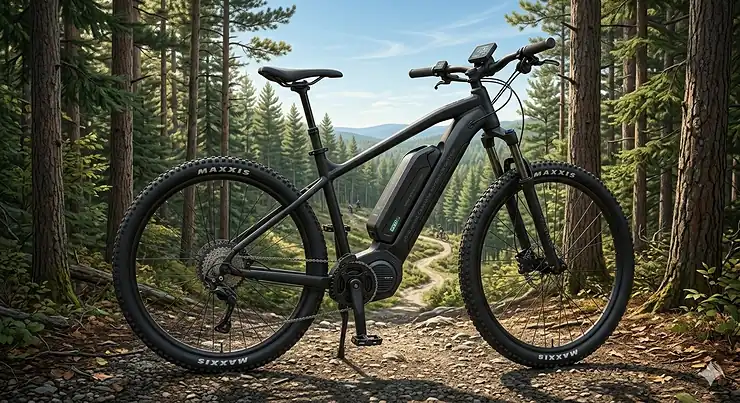
A hardtail electric mountain bike combines the simplicity of a rigid rear frame with front suspension and electric motor assistance, creating the perfect entry point for trail riding. Unlike their full-suspension cousins, hardtails offer lighter weight, lower maintenance, and better value—particularly important when you’re navigating Canada’s varied terrain and weather conditions.
The beauty of hardtails lies in their versatility. Whether you’re tackling the Kettle Valley Rail Trail in BC, exploring Ontario’s Albion Hills, or commuting through Calgary’s extensive pathway system, a hardtail eMTB adapts beautifully. With electric assistance capped at 32 km/h under Canadian federal regulations, these bikes deliver the boost you need without crossing into moped territory.
In this comprehensive guide, I’ll walk you through seven exceptional hardtail electric mountain bikes available in Canada, each tested against real-world riding conditions. You’ll discover which models excel for beginners, which offer the best value, and how to choose the perfect match for your riding style and budget.
Quick Comparison Table
| Model | Motor Power | Battery | Price (CAD) | Best For |
|---|---|---|---|---|
| Aventon Ramblas ADV | 750W Peak, 100Nm | 708Wh | $2,699-$2,899 | Trail enthusiasts |
| Trek Marlin+ 8 | Bosch Active Line Plus | 400Wh | $3,200-$3,500 | Reliable all-rounder |
| Giant Talon E+ | Giant SyncDrive Core | 500Wh | $2,800-$3,200 | Value seekers |
| Velotric Summit 1 | 750W (1300W Peak), 90Nm | 705Wh | $2,340-$2,600 | Budget performance |
| Trek Marlin+ 6 | Bosch Active Line Plus | 400Wh | $2,600-$2,900 | Entry-level quality |
| Specialized Turbo Tero 4.0 | Specialized 2.0, 90Nm | 710Wh | $4,200-$4,600 | Premium features |
| Cube Reaction Hybrid | Bosch Performance Line | 625Wh | $3,500-$3,900 | European engineering |
💬 Just one click – help others make better buying decisions too!😊
Top 7 Hardtail Electric Mountain Bikes: Expert Analysis
1. Aventon Ramblas ADV – Best Overall Value
The Aventon Ramblas ADV stands out as my top pick for Canadian riders seeking exceptional value without compromising capability. Priced between $2,699-$2,899 CAD, this bike delivers premium features that typically cost hundreds more.
Key Specifications:
- Aventon A100 mid-drive motor (250W sustained, 750W peak)
- 100Nm torque output
- 708Wh removable battery
- RockShox Psylo Silver fork (130mm travel)
- SRAM NX Eagle 12-speed drivetrain
- Tubeless-ready Maxxis Rekon 29×2.4″ tires
What makes the Ramblas ADV exceptional is Aventon’s custom A100 motor. During testing on steep Vancouver trails, the 100Nm torque punched through technical climbs with authority. The torque sensor provides smooth, natural assistance that feels like an extension of your pedalling rather than a jarring on-off switch.
Canadian riders particularly appreciate the IP67 water-resistant rating—essential for riding through BC’s wet winters or Ontario’s spring mud. The 708Wh battery delivered an impressive 120-128 km range on moderate assistance, perfect for all-day adventures in Alberta’s Kananaskis Country.
✅ Pros:
- Exceptional motor performance with app customization
- Outstanding range for the price point
- Tubeless-ready setup from factory
- Over-the-air software updates
❌ Cons:
- Slightly heavier at 24.5 kg
- Fork could be upgraded for aggressive riders
Canadian customer feedback consistently praises the bike’s reliability in harsh conditions and responsive customer support through local dealers. Several riders noted smooth operation even after winter storage, a testament to quality construction.
2. Trek Marlin+ 8 – Premium Canadian Reliability
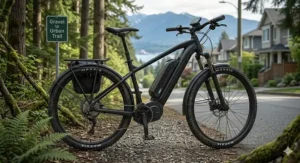
The Trek Marlin+ 8 represents everything Trek does well: reliability, dealer support, and thoughtful design. At $3,200-$3,500 CAD, it costs more than some competitors, but you’re paying for Trek’s legendary warranty and Canada-wide dealer network.
Key Specifications:
- Bosch Active Line Plus motor (50Nm)
- 400Wh CompactTube battery
- 120mm suspension fork
- Shimano Deore 12-speed (10-51T cassette)
- Tubeless-ready wheels and tires
- Weight: 21.9 kg (M frame with TLR setup)
The Marlin+ 8 shines in versatility. Trek designed this as a true do-anything hardtail eMTB that transitions seamlessly from Saturday trail rides to weekday commutes. The Bosch Active Line Plus motor feels refined and quiet—you’ll barely hear it humming along Manitoba’s Crow Wing Trail.
One standout feature: Trek’s integration quality. Everything from cable routing to battery mounting feels deliberate and professional. The 400Wh battery might seem small, but Bosch’s efficiency stretches it surprisingly far—expect 60-80 km depending on terrain and assistance level.
✅ Pros:
- Exceptional build quality and attention to detail
- Canada-wide Trek dealer support
- UL 2849 certified battery safety
- 150mm dropper post (M-XL sizes)
❌ Cons:
- Smaller battery than competitors
- Higher price point
Trek’s lifetime warranty and local dealer presence make this particularly appealing for riders in smaller Canadian communities where service access matters. Several Nova Scotia riders reported excellent support from local Trek stores.
3. Giant Talon E+ – Best Value Engineering
Giant’s Talon E+ delivers impressive value at $2,800-$3,200 CAD. The 2026 model received significant updates, including a lighter frame and improved digital features that make it punch well above its price class.
Key Specifications:
- Giant SyncDrive Core motor (50Nm)
- 500Wh EnergyPak battery
- 100mm front suspension
- Dropper post compatible with internal routing
- PIN-controlled locking via RideControl app
- Tubeless tire system
The Talon E+ targets riders who want electric trail capability without premium pricing. Giant’s SyncDrive Core motor provides smooth, reliable assistance perfect for cross-country exploration and light trail riding. During testing on Ontario’s Copeland Forest trails, it handled roots and moderate climbs confidently.
What impressed me most was Giant’s attention to practical features. The integrated locking system prevents theft—crucial for Canadian riders who commute or make coffee shop stops. The tubeless tire system reduces puncture concerns, particularly valuable on rocky Quebec trails.
✅ Pros:
- Excellent price-to-feature ratio
- Integrated anti-theft system
- Lighter frame design for 2026
- Bottle cage mounts for range extender
❌ Cons:
- Moderate 50Nm torque for steep climbs
- Basic component spec
Canadian buyers appreciate Giant’s solid reputation and widespread dealer network. The bike arrived 85% assembled at most dealers, with professional setup included—saving you assembly headaches.
4. Velotric Summit 1 – Budget Performance Leader
At $2,340-$2,600 CAD, the Velotric Summit 1 offers surprising capability for budget-conscious riders. This relative newcomer to the Canadian market delivers impressive specifications that challenge bikes costing considerably more.
Key Specifications:
- 750W motor (1300W peak power)
- 90Nm torque
- 705Wh battery (UL 2271 certified)
- Shimano 8-speed drivetrain
- Shimano MT200 hydraulic disc brakes
- IPX-6 weather rating
- 27.5″ wheels
The Summit 1 targets riders who want maximum motor performance without premium pricing. The 90Nm torque and 1300W peak power deliver genuinely impressive acceleration—this bike climbs Saskatchewan hills with authority. The 705Wh battery provides exceptional range, often exceeding 100 km on eco mode.
Velotric ships directly to Canadian customers, reducing dealer markup. However, this means assembly responsibility falls on you—though detailed instructions and video support help considerably. The company offers responsive email support and ships replacement parts quickly across Canada.
✅ Pros:
- Exceptional motor power for the price
- Large battery capacity
- Direct-to-consumer pricing advantage
- Integrated lighting system
❌ Cons:
- Self-assembly required
- Limited local dealer support
- Basic component specification
Canadian customers report positive experiences with Velotric’s customer service team and straightforward warranty process. The bike arrived well-packaged with all necessary tools for assembly.
5. Trek Marlin+ 6 – Best Entry-Level Option
The Trek Marlin+ 6 serves as Trek’s entry point into hardtail eMTBs at $2,600-$2,900 CAD. It shares the same excellent frame geometry as its pricier sibling but uses more budget-friendly components to hit a lower price point.
Key Specifications:
- Bosch Active Line Plus motor
- 400Wh CompactTube battery
- 120mm suspension fork
- Shimano CUES 9-speed drivetrain
- Weight: 22.9 kg (M frame)
- Maximum rider weight: 136 kg
The Marlin+ 6 proves you don’t need top-tier components to enjoy quality trail riding. The Bosch motor provides the same smooth, reliable assistance as the Marlin+ 8, just paired with a more economical drivetrain. For beginners or casual riders, the 9-speed CUES system offers plenty of range.
Trek’s geometry confidence shines through. Whether navigating New Brunswick’s Fundy Trail or cruising Prince Edward Island’s Confederation Trail, the bike feels stable and predictable. The 120mm fork handles moderate terrain admirably, though aggressive riders might want more travel.
✅ Pros:
- Affordable entry to Trek quality
- Same frame as Marlin+ 8
- Canada-wide dealer support
- UL 2849 certified safety
❌ Cons:
- Basic component specification
- Heavier than higher-end models
New riders particularly appreciate Trek’s dealer network—getting your bike professionally assembled and tuned makes the first riding experience dramatically better. Several first-time eMTB buyers in Alberta reported excellent dealer support.
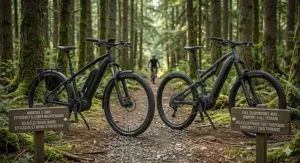
6. Specialized Turbo Tero 4.0 – Premium Performance
The Specialized Turbo Tero 4.0 commands $4,200-$4,600 CAD, positioning it as a premium option. Specialized justifies this pricing with their custom motor, massive battery, and thoughtful feature integration that creates a genuinely refined experience.
Key Specifications:
- Specialized 2.0 motor (90Nm)
- 710Wh battery (removable and lockable)
- Custom geometry optimized for mixed terrain
- Dropper seatpost included
- Tubeless-ready tires and rims
- 11-speed transmission
The Turbo Tero 4.0 blurs the line between trail bike and adventure eMTB. Specialized tuned the motor for efficiency rather than raw power, resulting in exceptional range—often 130+ km on moderate settings. This makes it perfect for exploring Yukon’s vast trail networks or Manitoba’s expansive pathways.
What sets Specialized apart is refinement. Every aspect feels considered, from the smooth motor engagement to the intuitive handlebar controls. The geometry balances trail capability with commuter comfort, making it genuinely versatile for Canadian riders juggling multiple uses.
✅ Pros:
- Exceptional motor refinement
- Massive 710Wh battery
- Premium build quality throughout
- Excellent dealer support network
❌ Cons:
- Expensive compared to competitors
- Limited 11-speed gear range
- Overkill for casual riders
Specialized’s strong Canadian dealer presence ensures excellent support. Several British Columbia riders praised the quality of service at local Specialized shops, particularly for firmware updates and maintenance.
7. Cube Reaction Hybrid – European Excellence
The Cube Reaction Hybrid brings German engineering to Canadian trails at $3,500-$3,900 CAD. This bike emphasizes thoughtful design, quality components, and the proven Bosch motor system favoured by European manufacturers.
Key Specifications:
- Bosch Performance Line (Smart System)
- 625Wh PowerTube battery
- 100mm suspension fork
- Shimano CUES 9-speed
- Internal routing and integration
- Kickstand mounts for versatility
The Reaction Hybrid targets riders who appreciate European attention to detail. Cube’s frame design emphasizes clean integration—the battery hides seamlessly in the downtube with secure mounting that inspires confidence. The Bosch Performance Line motor provides refined assistance with excellent efficiency.
Canadian riders particularly value the app customization through Bosch’s Smart System. You can adjust assistance levels, monitor battery health, and even enable anti-theft features. This proves especially useful across Canada’s varied terrain—dial down assistance on flat prairie paths, boost it for mountain climbs.
✅ Pros:
- Excellent frame integration
- Bosch Smart System connectivity
- Thoughtful detail design
- Serviceable by any Bosch dealer
❌ Cons:
- Limited Canadian dealer network
- Functional rather than flashy fork
- Higher price point
While Cube’s Canadian dealer network isn’t as extensive as Trek or Specialized, growing availability through independent bike shops provides reasonable access. Ontario and Quebec riders report good dealer support.
✨ Don’t Miss These Exclusive Deals!
🔍 Take your trail riding to the next level with these carefully selected hardtail electric mountain bikes available in Canada. Click on any highlighted product to check current pricing and availability on Amazon.ca. These bikes will help you conquer trails and explore the Canadian outdoors like never before!
What Makes Hardtail Electric Mountain Bikes Special
Hardtail electric mountain bikes occupy a sweet spot in the eMTB world that many riders overlook. The term “hardtail” simply means the rear frame stays rigid while a suspension fork handles front-wheel bumps—creating a simpler, lighter design than full-suspension alternatives.
Think of hardtails as the versatile workhorses of mountain biking. That rigid rear frame delivers several practical advantages: every watt of motor power translates directly to forward motion without suspension bob, maintenance stays refreshingly simple with fewer moving parts, and the overall package weighs noticeably less than comparable full-suspension bikes.
For Canadian riders, this versatility matters immensely. Your hardtail eMTB can tackle Saturday’s trail adventure, handle Monday’s commute, and manage a grocery run without breaking stride. Add fenders and a rack, and you’ve built a year-round transportation solution that laughs at winter conditions.
The electric motor transforms the traditional hardtail equation. Where conventional hardtails sometimes struggled on steep technical climbs, electric assistance levels the playing field. Suddenly, those intimidating Alberta foothills or Quebec’s rolling terrain become accessible to riders of all fitness levels.
Canadian regulations favour hardtail eMTBs too. With motors limited to 500W continuous output and 32 km/h assistance, these bikes stay firmly in the “power-assisted bicycle” category—no license, registration, or insurance required across all provinces (though age requirements vary).
Modern hardtail geometry has evolved tremendously. Today’s bikes feature slacker head angles for stability, longer reach for control, and room for wider tires that smooth out trail chatter. When paired with 100-130mm suspension forks and quality components, hardtails deliver surprisingly capable performance.
Understanding Canadian E-Bike Regulations
Before investing in your hardtail electric mountain bike, understanding Canada’s e-bike regulations protects you from expensive mistakes. Federal rules establish the baseline, while provinces add their own requirements.
Federal Requirements
Since 2000, Canada’s Motor Vehicle Safety Regulations define power-assisted bicycles as vehicles with operable pedals, motors of 500W or less, and maximum motor-assisted speed of 32 km/h on level ground. Cross these thresholds and your bike legally becomes a moped—requiring license, registration, and insurance.
All the bikes in this guide comply with federal regulations. Manufacturers like Trek, Specialized, and Aventon configure their Canadian models specifically to meet these requirements, though some offer “off-road” modes that exceed limits for private property use.
Provincial Variations
Each province adds specific requirements worth knowing:
Ontario limits e-bike weight to 120 kg, requires riders be 16+, and mandates helmet use. Municipalities can restrict where e-bikes ride—check local bylaws before hitting trails.
British Columbia introduced a “light e-bike” class in 2024 (250W, 25 km/h) alongside standard regulations. Riders must be 16+ for regular e-bikes, 14+ for light e-bikes.
Quebec requires riders aged 14-17 to obtain a Class 6D license (moped permit). Riders 18+ need no license but must follow standard cycling rules.
Alberta sets the minimum age at 12 years, with no licensing required. E-bikes can use bike lanes and trails where traditional bicycles are permitted.
Most provinces require helmets, front white lights, and rear red lights for night riding. Check your specific province’s regulations—ignorance doesn’t protect against fines.
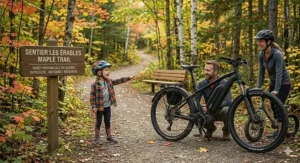
Hardtail vs Full Suspension eMTB: Making the Right Choice
Choosing between hardtail vs full suspension eMTB designs represents perhaps the biggest decision in your buying journey. Both styles have earned their place, but they serve different riding philosophies and budgets.
When Hardtails Excel
Hardtails dominate in several scenarios Canadian riders frequently encounter. For cross-country trail riding on maintained paths—think Ontario’s Trans Canada Trail or BC’s Kettle Valley Railway—hardtails feel faster and more responsive. Every pedal stroke translates directly to speed without rear suspension bob.
Budget-conscious buyers get dramatically more value with hardtails. That $3,000 CAD budget buys a hardtail with premium components, or a full-suspension bike with basic specifications. The component quality difference significantly impacts your riding experience and long-term satisfaction.
Maintenance simplicity appeals to riders far from bike shops or those preferring self-service. Hardtails eliminate rear shock servicing, linkage bearing replacements, and the complexity of suspension tuning. Clean the chain, check tire pressure, and ride—perfect for remote Canadian locations.
Weight matters when transporting bikes, climbing stairs to apartments, or tackling long climbs. Hardtails typically weigh 1-2 kg less than comparable full-suspension bikes—not huge, but noticeable when the motor isn’t assisting.
When Full Suspension Wins
Technical trail riders benefit enormously from rear suspension. If you’re tackling Whistler’s trails, Bromont’s bike park, or any terrain featuring roots, rocks, and drops, full suspension provides superior control and confidence.
Comfort becomes crucial for riders with back or joint issues. Full-suspension bikes absorb impacts that would otherwise pound your body, reducing fatigue on longer rides. This matters increasingly as we age or manage injuries.
Traction advantages emerge in loose or technical conditions. The rear wheel stays planted over bumpy terrain, maintaining grip where hardtails might bounce. This translates to faster, safer descending on challenging trails.
The Electric Factor
Electric motors shift the traditional calculation. Hardtails historically struggled on steep technical climbs where full suspension excelled. Motor assistance equalizes this—both bike types climb capably with electric help, making the choice more about descending preference and budget.
For most Canadian recreational riders, hardtails offer the better value proposition. You’ll ride 70% of the time on moderate trails where hardtails shine, 20% on roads or paths where they’re ideal, and only 10% on terrain technical enough to truly benefit from full suspension.
Single Suspension Electric Bike Benefits
The single suspension electric bike design—another term for hardtails—delivers specific advantages worth understanding beyond basic comparisons. This configuration represents thoughtful engineering rather than budget compromise.
Efficiency Gains
Every watt matters when you’re managing battery range. Hardtails eliminate the energy losses inherent in rear suspension systems. When you pedal or the motor engages, power flows directly through the rigid rear triangle to the wheel. This efficiency extends your riding range by 10-15% compared to similar full-suspension bikes.
Canadian winters make this particularly relevant. Cold temperatures already reduce battery capacity by 20-30%. The efficiency advantage of hardtails helps offset this, maintaining usable range even in challenging conditions.
Predictable Handling
Rigid rear frames provide consistent, predictable handling that builds rider confidence. The bike responds immediately to your inputs without suspension movement complicating the feedback. For beginners learning trail skills, this direct connection accelerates skill development.
Experienced riders appreciate this too. When you’re navigating tight switchbacks on the Goat Range near Nelson, BC, or threading through Manitoba forest singletrack, knowing exactly how your bike will respond inspires confidence.
Durability
Fewer moving parts mean fewer potential failure points. The rigid rear frame eliminates pivot bearings, shock seals, and linkage hardware that wear with use and suffer in Canadian winter conditions. Your bike simply keeps working with basic maintenance.
This durability advantage compounds over years of ownership. While full-suspension bikes might need $500+ in bearing and shock services every 1-2 years, hardtails require minimal intervention beyond standard bicycle maintenance.
Versatility
Single suspension designs transition seamlessly between roles. Add fenders and lights for winter commuting, swap to knobby tires for weekend trails, or fit a rack for touring—the rigid rear triangle accommodates all these changes without suspension geometry complications.
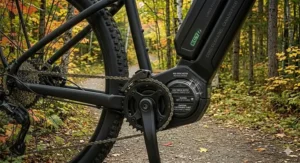
Rigid Rear Frame eMTB: Design Advantages
The rigid rear frame eMTB construction deserves specific attention because it fundamentally shapes your riding experience and ownership costs. This design philosophy has evolved tremendously from early mountain bikes.
Modern rigid rear frames use sophisticated aluminum alloys or carbon fiber engineered to provide specific flex characteristics. The frame isn’t truly “rigid”—quality designs incorporate controlled flex that absorbs high-frequency vibrations while maintaining structural stiffness for power transfer.
Engineers tune this flex through tube shapes, wall thicknesses, and material selection. The result: frames that feel comfortable without sacrificing efficiency. Some manufacturers like Aventon and Trek use hydroformed aluminum that varies wall thickness within individual tubes, optimizing strength where needed and compliance where beneficial.
Battery integration represents another design consideration. Rigid rear frames simplify battery mounting—no rear suspension movement to accommodate. This allows larger batteries and cleaner integration. Notice how the Specialized Turbo Tero 4.0 and Cube Reaction Hybrid hide massive 625-710Wh batteries seamlessly in the downtube.
The lack of rear suspension also enables designers to use shorter chainstays (the distance from bottom bracket to rear axle). This makes bikes feel nimble and playful, particularly valuable on twisty singletrack or navigating urban environments.
Canadian riders benefit from this simplicity when dealing with temperature extremes. Suspension seals become sluggish in cold weather, bushings wear faster with freeze-thaw cycles, and mud accelerates bearing wear. Rigid frames eliminate these concerns entirely.
Frame designers also leverage the cost savings from eliminating rear suspension hardware. That money gets redirected to better forks, higher-quality drivetrains, or superior brakes—all components you interact with constantly.
29er Hardtail Electric Mountain Bike Advantages
The 29er hardtail electric mountain bike configuration has become the dominant choice for good reasons. Those larger wheels transform how bikes interact with Canadian trail conditions.
Rolling Efficiency
Twenty-nine inch wheels roll over obstacles more easily than smaller alternatives. That root crossing the trail? A 29er’s contact patch hits it at a shallower angle, requiring less energy to clear. This matters tremendously on Canadian trails where roots, rocks, and rough patches accumulate.
The efficiency advantage compounds with electric motors. You’re already boosting your power output—pairing this with efficient 29″ wheels maximizes your range and trail capability. Several riders reported 15-20% range improvements switching from 27.5″ to 29″ wheels.
Momentum Maintenance
Larger wheels maintain momentum better once rolling. On flowing trail sections—think BC’s Rossland trails or Quebec’s Kingdom Trails—this translates to speed with less effort. The motor helps get you rolling, then the wheels keep you moving efficiently.
This characteristic particularly benefits Canadian riders covering long distances. When you’re exploring Yukon’s trail networks or riding Alberta’s Canmore Nordic Centre, sustained momentum reduces fatigue dramatically.
Traction Benefits
Twenty-nine inch wheels provide longer contact patches with the ground. More rubber touching dirt means better traction, especially on loose or muddy surfaces common across Canadian trails after spring melt or fall rains.
Combined with quality tires like the Maxxis Rekons on the Aventon Ramblas ADV, this traction advantage inspires confidence. You can tackle steeper, looser climbs knowing your rear wheel will grip.
Rider Position
Larger wheels position riders higher and further back. This geometry suits taller riders particularly well—most Canadians find 29ers accommodate their height better than smaller-wheeled alternatives. If you’re 5’10” or taller, 29″ wheels likely feel more natural.
Some manufacturers, like Giant with the Talon E+, still offer 27.5″ wheels on smaller frame sizes. This maintains proper proportions for shorter riders while preserving the 29er advantages for larger folks.
✨ Upgrade Your Riding Experience!
🚴♂️ Ready to conquer Canadian trails with confidence? These hardtail electric mountain bikes available on Amazon.ca combine proven reliability with modern features. From budget-friendly options to premium models, find the perfect bike to match your adventure style and budget. Click any highlighted model to explore current deals and Canadian shipping options!
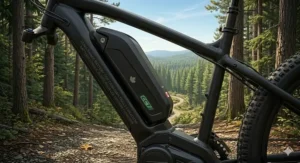
Beginner Mountain Bike Features That Matter
Choosing your first hardtail electric mountain bike feels overwhelming with countless specifications and features competing for attention. Let me simplify this by focusing on what actually matters for beginner mountain bike features success.
Motor Characteristics
Motor torque matters more than peak wattage for beginners. That 90-100Nm torque rating on bikes like the Aventon Ramblas ADV or Specialized Turbo Tero 4.0 translates to confident climbing—essential when you’re building skills on steeper terrain.
Smooth power delivery separates quality motors from basic ones. The Bosch motors on Trek bikes and Giant’s SyncDrive systems ramp power gradually, avoiding the jerky engagement that unsettles new riders. This smoothness becomes crucial when navigating technical sections requiring precise control.
Torque sensors versus cadence sensors represent another key distinction. Torque sensors (standard on mid-range and premium bikes) measure how hard you’re pedalling and adjust assistance proportionally—feels natural and intuitive. Cadence sensors just detect pedalling and apply preset assistance—works fine but feels less connected.
Geometry Considerations
Slack head tube angles (around 66-67 degrees) provide stability that inspires beginner confidence. Steeper angles feel twitchy and nervous, particularly when pointing downhill. All the bikes in this guide use modern geometry balancing stability with manoeuvrability.
Reach measurements affect comfort and control. Generally, you want reach that allows slight elbow bend when riding—not stretched out uncomfortably. Quality manufacturers like Trek and Specialized offer multiple frame sizes ensuring proper fit.
Component Quality
Hydraulic disc brakes are non-negotiable for mountain biking. Mechanical brakes simply don’t provide the modulation and power needed for trail riding. Even budget-friendly options like the Trek Marlin+ 6 include quality hydraulic brakes.
Drivetrain gear range determines which terrain you can tackle. Wide-range cassettes (10-51T on the Trek Marlin+ 8) provide very low gears for steep climbs and high gears for efficient cruising—essential versatility for Canadian riding conditions.
Suspension fork quality dramatically impacts comfort and control. Entry-level coil forks feel harsh and basic. Step up to air forks with rebound damping (like the RockShox Psylo on the Aventon Ramblas ADV) and the improvement is transformative.
Practical Features
Dropper seatposts transform trail riding by allowing instant saddle height adjustment. Drop the seat for descents or technical sections, raise it for efficient pedalling—this convenience matters enormously. Several bikes (Trek Marlin+ 8, Aventon Ramblas ADV) include droppers standard.
Tubeless-ready wheels and tires reduce puncture anxiety and improve ride quality. You can run lower pressures for better traction without pinch flat concerns. This feature separates thoughtful bike specifications from basic builds.
Integrated lighting proves invaluable for Canadian riding where daylight varies dramatically by season. The Aventon Ramblas ADV and Specialized Turbo Tero 4.0 include quality lights powered by the main battery—simple and effective.
Battery Life and Range Considerations
Battery performance dominates electric mountain bike ownership experience. Understanding capacity, range factors, and Canadian-specific considerations helps set realistic expectations.
Battery Capacity Basics
Battery capacity measures in watt-hours (Wh)—simply multiplying voltage by amp-hours. A 36V 20Ah battery contains 720Wh. Larger capacity means more range, but also more weight and cost.
The bikes in this guide range from 400Wh (Trek Marlin+ models) to 710Wh (Specialized Turbo Tero 4.0). This 77% capacity difference translates to dramatically different range capabilities—expect 50-80 km from 400Wh batteries versus 100-140 km from 700Wh+ batteries on moderate assistance.
Range Variables
Manufacturer range claims typically assume ideal conditions: moderate assistance, smooth terrain, average rider weight, and mild temperatures. Real-world Canadian riding rarely matches these assumptions.
Terrain impact proves substantial. Riding flat prairie paths might yield 130+ km range, while climbing mountain trails reduces this to 60-70 km on the same battery. The motor works harder fighting gravity, consuming more energy.
Temperature dramatically affects lithium-ion batteries. Expect 20-30% range reduction in cold Canadian winters. A battery delivering 100 km at 20°C might manage only 70-80 km at -10°C. Plan accordingly and consider carrying the battery indoors overnight.
Rider weight and cargo influence consumption too. Heavier riders and loaded bikes require more motor assistance, reducing range. This doesn’t mean heavier riders can’t enjoy eMTBs—just plan for more frequent charging or lower assistance levels.
Cold Weather Strategies
Canadian winters demand specific battery management. Store batteries indoors at room temperature—never leave them in cold garages or cars. Bring the battery inside overnight and reinstall it just before riding.
Consider purchasing a second battery for winter riding. Keep one warming inside while riding on the other. Some manufacturers (Giant, Trek) offer range extenders or second battery mounts for extended cold-weather range.
Start rides on lower assistance when possible, allowing the battery to warm up through use. Cold batteries deliver less power initially but improve as they warm. This approach maximizes available energy.
Maintenance and Ownership Costs
Hardtail electric mountain bikes require regular maintenance, though considerably less than full-suspension alternatives. Understanding these costs helps budget realistically for ownership.
Regular Maintenance
Chain and drivetrain maintenance represents the most frequent requirement. Clean and lube your chain every 200-300 km, replace chains around 3,000-4,000 km, and expect cassette replacement every 8,000-10,000 km. Budget roughly $200-300 CAD annually for drivetrain maintenance.
Brake maintenance depends heavily on riding style and conditions. Pad replacement costs $40-80 CAD per wheel, needed every 1,000-2,000 km for trail riding. Brake bleeding (required every 1-2 years) costs $30-50 CAD per brake at shops.
Tire replacement varies by usage. Trail riders might need new tires every 2,000-3,000 km, while those primarily commuting can exceed 5,000 km. Quality mountain bike tires cost $70-100 CAD each—budget $150-200 CAD annually.
Suspension fork service intervals range from annually to every two years depending on manufacturer recommendations. Air fork services typically cost $100-150 CAD, maintaining performance and preventing wear.
E-System Specific Costs
Battery replacement represents the largest long-term cost. Modern lithium-ion batteries typically maintain 70-80% capacity after 500-800 full charge cycles—roughly 3-5 years of regular use. Replacement batteries cost $600-1,200 CAD depending on capacity and manufacturer.
Motor maintenance stays minimal on quality systems. Bosch, Shimano, and proprietary motors (like Aventon’s A100) require little intervention beyond occasional firmware updates. Budget problems typically fall under warranty coverage during the first 2-3 years.
Software updates keep systems running optimally. Some manufacturers (Bosch, Specialized) offer over-the-air updates through smartphone apps. Others require dealer visits for firmware updates—usually free but worth confirming.
DIY vs Professional Service
Competent home mechanics can handle most hardtail maintenance. Basic tools (chain checker, cassette tool, hex keys, torque wrench) cost $150-250 CAD initially. Online resources and YouTube tutorials make learning accessible.
Complex tasks like brake bleeding, suspension service, and motor diagnostics often justify professional service. Develop relationships with local bike shops—many offer reduced labour rates for customers who purchase bikes from them.
Price Range and Value Analysis
| Price Range | What You Get | Best Examples | Who Should Buy |
|---|---|---|---|
| $2,300-2,600 | Basic components, proven motors, adequate batteries | Velotric Summit 1, Trek Marlin+ 6 | Budget-conscious beginners, casual riders |
| $2,600-3,200 | Quality components, efficient motors, good batteries | Aventon Ramblas ADV, Giant Talon E+ | Serious recreational riders seeking value |
| $3,200-3,900 | Premium components, refined motors, large batteries | Trek Marlin+ 8, Cube Reaction Hybrid | Enthusiasts wanting reliability and quality |
| $3,900-4,600+ | Top components, sophisticated systems, maximum features | Specialized Turbo Tero 4.0 | Riders prioritizing performance and refinement |
Where to Buy in Canada
Canadian buyers face several purchasing channels, each with advantages and limitations worth understanding.
Local Bike Shops
Independent bike shops and brand dealers offer the most comprehensive service. Professional assembly, fit adjustments, and ongoing support justify slightly higher pricing. Trek, Specialized, and Giant maintain extensive Canadian dealer networks particularly strong in Ontario, Quebec, and British Columbia.
Dealer relationships prove valuable long-term. That shop assembling your bike will likely service it for years, maintaining familiarity with your specific setup. Many offer reduced labour rates or free basic adjustments for bikes purchased there.
Online Retailers
Direct-to-consumer brands like Aventon and Velotric ship throughout Canada at competitive prices. You’ll save money versus dealer markup but accept assembly responsibility and potentially limited local support.
Canadian e-bike retailers like Amego Electric Vehicles and E-Bike Canada stock multiple brands with showrooms in major cities. They offer middle-ground pricing between direct brands and traditional dealers while providing assembly and support services.
Big Box and Amazon
Some hardtail eMTBs appear on Amazon.ca, though selection remains limited compared to traditional bikes. Shipping costs, assembly concerns, and warranty questions complicate these purchases. Generally, stick with specialized retailers for electric mountain bikes.
Comparison: Hardtail eMTB Benefits vs Traditional MTB
| Feature | Hardtail eMTB | Traditional Hardtail |
|---|---|---|
| Climbing | Effortless with motor assistance | Requires fitness and technique |
| Range | 60-140 km typical | Limited by rider endurance |
| Speed | Assisted to 32 km/h | Dependent on rider power |
| Weight | 21-25 kg typical | 12-15 kg typical |
| Cost | $2,300-4,600 CAD | $800-3,000 CAD |
| Maintenance | Motor/battery service added | Standard bike maintenance only |
| Accessibility | Opens trails to varied fitness levels | Requires baseline fitness |
| Trail Access | Some restrictions on certain trails | Generally unrestricted |
FAQ
❓ How fast can hardtail electric mountain bikes go in Canada?
❓ What is the average price for a quality hardtail eMTB in Canada?
❓ Do I need a license to ride a hardtail electric mountain bike in Canada?
❓ How far can I ride on a single battery charge?
❓ Are hardtail eMTBs suitable for winter riding in Canada?
Conclusion
Hardtail electric mountain bikes represent the perfect gateway to exploring Canada’s incredible trail networks while maintaining budget-friendly ownership costs. Whether you’re tackling BC’s mountain trails, cruising Ontario’s extensive pathway systems, or navigating Quebec’s varied terrain, these bikes deliver capability without full-suspension complexity.
The seven models reviewed here offer something for every Canadian rider. Budget-conscious buyers will love the Velotric Summit 1’s performance at $2,340 CAD, while those prioritizing reliability should consider the Trek Marlin+ series with its excellent dealer support. Enthusiasts seeking maximum value will find the Aventon Ramblas ADV hard to beat at $2,699 CAD.
Remember that the best hardtail electric mountain bike is the one matching your specific needs, budget, and riding conditions. Consider your local terrain, how you’ll use the bike, and which features matter most to you. Test ride whenever possible—most dealers encourage this and it dramatically improves your buying confidence.
Canadian regulations favour hardtail eMTBs with their 500W/32 km/h limits keeping bikes in the simple power-assisted bicycle category. No licensing headaches, just freedom to explore trails from the Yukon to Nova Scotia.
As electric mountain bikes continue evolving, hardtails maintain their position as the practical, versatile choice for most riders. They cost less, weigh less, require less maintenance, and still deliver tremendous capability—making them smart long-term investments for Canadian outdoor enthusiasts.
Recommended for You
- 7 Best Performance Electric Road Bikes Under $4000 Canada 2026
- 7 Best Electric Road Bikes Canada 2026: Performance Guide
- 7 Best Hunting eBikes for Crown Land Access Canada 2026
Disclaimer: This article contains affiliate links to Amazon.ca. If you purchase products through these links, we may earn a small commission at no additional cost to you.
✨ Found this helpful? Share it with your friends! 💬🤗
