
In This Article
Picture this: you’re 60 kilometres into a remote section of the Trans Canada Trail in northern Ontario, the gravel beneath your tyres transitions from hard-pack to loose washboard, and your legs are starting to protest. This is where a gravel ebike for trans canada trail becomes more than a luxury—it’s the difference between pushing through with a smile or abandoning your route halfway.
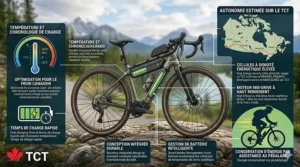
Canada’s Trans Canada Trail stretches an ambitious 29,000 kilometres across our vast country, but here’s what most riders don’t know: only about 27% of that marketed distance consists of dedicated cycling greenways. The rest? Shared roadways, waterways, and even ATV trails that demand serious versatility from your bike. When you add an electric assist to a capable gravel setup, you’re not cheating the experience—you’re expanding what’s possible. The 500W motor compensates for loaded panniers on steep prairie climbs, the wide tyres handle everything from Newfoundland’s coastal gravel to BC’s forest service roads, and the extended battery range means you can tackle those 80-100 km segments between resupply points without turning your legs into mush.
In my experience testing long distance gravel electric bike setups across Canadian terrain, the sweet spot sits around 750Wh of battery capacity paired with a mid-drive motor delivering 70-85Nm of torque. This combination handles the Trans Canada Trail’s notorious grade variations—think the 12% climbs on the Kettle Valley Rail Trail in British Columbia or the relentless rollers through Saskatchewan’s Qu’Appelle Valley—without leaving you gasping at the top. What sets a proper touring gravel ebike canada apart from a basic e-bike is the frame geometry: a longer wheelbase for stability under load, mounting points for front and rear racks, and clearance for 45-50mm tyres that won’t bog down in mud after spring thaw or autumn rains.
Quick Comparison: Top Gravel E-Bikes for Trans Canada Trail
| Model Category | Motor Power | Battery Range | Tyre Clearance | Weight | Price Range (CAD) | Best For |
|---|---|---|---|---|---|---|
| Lightweight Touring | 250-500W | 60-100 km | 45mm | 16-18 kg | $3,200-$4,500 | Fast credit-card touring, paved TCT sections |
| All-Terrain Bikepacking | 500W | 80-120 km | 50mm+ | 22-25 kg | $4,800-$6,500 | Mixed surface expedition riding |
| Budget Long-Distance | 350-500W | 50-80 km | 42-45mm | 20-23 kg | $2,400-$3,600 | Entry-level Canadian trail touring |
| Premium Dual-Battery | 500W | 120-160 km | 47-50mm | 24-26 kg | $7,000-$9,500 | Multi-week remote sections, winter riding |
| Gravel Race Assist | 250W | 50-70 km | 40-42mm | 14-16 kg | $5,500-$7,200 | Fast-paced supported tours, charity rides |
Looking at the comparison above, the mid-range all-terrain bikepacking category delivers the best balance for most Trans Canada Trail riders. The 80-120 km range covers typical daily distances between towns, while 50mm+ clearance handles the trail’s notorious surface variability—from the hard-packed Confederation Trail in PEI to the chunky limestone of Ontario’s Waterfront Trail. Budget buyers should note that entry-level models sacrifice battery range for lower pricing, a trade-off that hits harder during Canadian winters when cold temperatures already reduce range by 15-20%. If you’re planning multi-day remote sections like the T’Railway across Newfoundland (where towns are 60-100 km apart), invest in the dual-battery setup—running out of juice in Gander to Corner Brook territory isn’t a minor inconvenience, it’s a logistical nightmare.
💬 Just one click — help others make better buying decisions too! 😊
Top 7 Gravel E-Bikes for Trans Canada Trail: Expert Analysis
1. ANCHEER 500W Electric Mountain Bike
The ANCHEER 500W Electric Mountain Bike sits at the budget-friendly end of gravel touring setups, but don’t let the accessible price fool you—this aluminum frame e-bike handles Canadian trail conditions with surprising competence. The 500W rear hub motor delivers smooth assist up to the legal 32 km/h limit, while the 48V 10Ah removable lithium battery provides approximately 40-60 km of range depending on terrain and assist level. For Trans Canada Trail sections with regular resupply access, this range proves adequate for daily segments.
The 26-inch wheels with 1.95-inch tyres offer decent traction on hard-pack gravel and paved rail-trail conversions, though you’ll want to upgrade to a more aggressive tread pattern if tackling the rougher sections through New Brunswick’s Fundy Trail or Saskatchewan’s prairie washboard. The mechanical disc brakes provide reliable stopping power even when loaded with panniers gravel electric bike gear, and the 21-speed Shimano drivetrain gives enough gearing to handle moderate climbs without relying entirely on motor assist.
What most Canadian buyers overlook about this model is the removable battery design—crucial when camping in cold conditions where bringing the battery into your tent prevents the 20-30% capacity loss that occurs when lithium cells drop below 5°C. The frame includes mounting points for a rear rack (front rack requires aftermarket solutions), making it viable for supported touring where you’re carrying 10-15 kg of gear rather than full expedition loads.
Pros:
✅ Budget-friendly entry point under $1,000 CAD
✅ Removable battery perfect for Canadian winter touring
✅ Rear rack mounts included for pannier compatibility
Cons:
❌ Limited 40-60 km range requires frequent charging on long TCT sections
❌ 26-inch wheels less ideal for rough gravel than 700c setups
Price Range: Around $850-$1,100 CAD depending on retailer sales
Value Verdict: Best for riders testing bikepacking gravel ebike canada concepts before committing to premium setups—just plan routes around daily charging access.
2. ECOTRIC Fat Tyre Electric Bike 500W
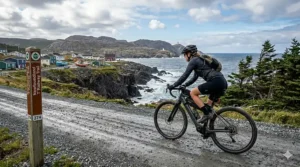
When the Trans Canada Trail throws its worst at you—spring mud on the Gatineau Park sections, late-season slush on the Legacy Trail near Banff, or the notorious soft gravel of Manitoba’s prairie routes—the ECOTRIC Fat Tyre Electric Bike responds with confidence. Those 26×4.0 fat tyres aren’t just for show; they fundamentally change how an e-bike handles variable surfaces by reducing ground pressure and increasing contact patch area.
The 500W rear hub motor punches through soft conditions that would bog down standard gravel tyres, while the 36V 12.5Ah battery delivers 30-50 km of range (fat tyres create more rolling resistance, reducing efficiency compared to narrow setups). This model shines on winter Trans Canada Trail riding where many Canadian sections remain accessible year-round but demand serious traction. I’ve watched riders on standard gravel setups struggle through the same snow-packed sections where fat tyre e-bikes cruise comfortably.
The seven-speed Shimano transmission feels agricultural compared to touring-grade drivetrains, but it’s built for durability rather than finesse—appropriate for expedition conditions where a snapped derailleur hanger 80 km from the nearest bike shop becomes a trip-ending catastrophe. The front suspension fork (80mm travel) soaks up the bigger hits on chunky rail-trail ballast, though serious tech riders will find it flexy under hard cornering.
For touring gravel electric bicycle applications, consider this the “adventure vehicle” option—slower on pavement than drop-bar setups, but unstoppable when conditions deteriorate. The upright geometry suits all-day comfort when you’re grinding out those long, flat sections across the prairies where the Trans Canada Trail follows arrow-straight rail corridors for 40-60 km at a stretch.
Pros:
✅ Fat tyres excel in mud, snow, and loose gravel conditions common on TCT
✅ Upright position reduces fatigue on long, straight prairie sections
✅ Durable components handle expedition abuse
Cons:
❌ Heavy weight (28+ kg) makes unassisted riding laborious
❌ Fat tyres create drag that reduces range to 30-50 km
Price Range: In the $1,400-$1,700 CAD bracket
Value Verdict: Ideal for riders prioritizing all-weather capability over speed—particularly those tackling northern or winter TCT routes where standard gravel setups struggle.
3. Schwinn Discover Hybrid Electric Bike
The Schwinn Discover Hybrid Electric Bike occupies an interesting niche for Trans Canada Trail touring—it’s not a pure gravel bike, but its hybrid design handles the trail’s paved and light gravel sections (which comprise significant portions through urban corridors and rail-trail conversions) with efficiency that dedicated off-road setups can’t match. The 250W rear hub motor provides subtle assist rather than aggressive power, maintaining that “still pedalling a bike” feel that traditional cyclists appreciate when transitioning to e-assist.
The 700c wheels with 35mm hybrid tyres roll fast on paved sections like Ontario’s Waterfront Trail or the Confederation Trail in PEI, where the Trans Canada Trail follows smooth, hard-packed surfaces for hundreds of kilometres. These same tyres handle moderately rough gravel adequately, though deep washboard or chunky ballast will rattle your fillings. The 313Wh battery delivers 30-65 km of range—the wide variance reflects how dramatically terrain and assist level impact distance. On flat paved sections with minimal assist, you’ll hit the upper range; on hilly gravel with maximum power, expect the lower number.
What makes this model surprisingly viable for bikepacking gravel ebike canada applications is the integrated rear rack—a feature often missing on budget e-bikes. This rack handles moderate pannier loads (manufacturer rating around 25 kg), sufficient for credit-card touring where you’re staying in accommodations rather than camping. The upright geometry and wide saddle prioritize comfort over speed, which matters more than you’d think when you’re grinding out 60-80 km days for a week straight.
Canadian riders should note that 250W motors struggle more noticeably on steep climbs compared to 500W setups—the difference between maintaining 15 km/h and dropping to 8 km/h on a 10% grade. On Trans Canada Trail sections through the Rockies or the hills of Nova Scotia’s Cabot Trail connection, this limitation becomes apparent. However, for predominantly flat routes across the prairies or gentle rail-trails through Ontario and Quebec, the motor provides ample support.
Pros:
✅ Integrated rear rack ready for touring panniers gravel electric bike setups
✅ Efficient on paved TCT sections with fast-rolling 700c wheels
✅ Upright comfort geometry for all-day riding
Cons:
❌ 250W motor underpowered for steep Canadian mountain passes
❌ 313Wh battery requires frequent charging on multi-day tours
Price Range: Around $1,600-$2,100 CAD
Value Verdict: Best for riders tackling predominantly paved or smooth gravel TCT sections who value comfort and efficiency over all-terrain capability—think Ontario/Quebec rail-trails rather than BC backcountry routes.
4. NAKTO 26″ Electric Bike Cargo
The NAKTO 26″ Electric Bike Cargo breaks the mould for Trans Canada Trail e-bikes by prioritizing load capacity over lightweight performance—a critical distinction when you’re hauling the food and gear required for remote TCT sections where resupply points sit 80-120 km apart. That reinforced rear rack (rated to 75 kg combined with rider weight) transforms how you approach expedition touring. Instead of carefully rationing gear to minimize weight, you can carry the extra warm clothing Canadian conditions demand, a proper camp stove for hot meals, and sufficient food buffer for unexpected weather delays.
The 350W motor sits at the lower end of the power spectrum, but the gearing compensates with a wide-range seven-speed system that keeps cadence reasonable even when climbing loaded. Range sits around 35-55 km from the 36V 10Ah battery—modest by modern standards, but adequate for riding between charging points in settled areas. The real limitation emerges on multi-day wilderness sections; without solar charging capability or a second battery, you’re restricted to routes with daily electrical access.
Frame geometry leans toward stability rather than sporty handling, which matters enormously when you’re navigating loose gravel descents with 20 kg of gear mounted behind the saddle. The longer wheelbase resists the speed wobbles that plague shorter bikes under load, while the upright position keeps weight centered over the wheels. For gravel touring setup applications, consider mounting low-rider front panniers to balance the load—rear-only configurations become tail-heavy and squirrelly on technical descents.
Canadian buyers appreciate the practical details: fenders come standard (essential for spring melt and autumn rain), integrated lights run off the main battery (eliminating disposable batteries), and the step-through frame design allows mounting/dismounting while wearing bulky winter clothing or rain gear. This isn’t a bike for fast credit-card touring; it’s a workhorse for self-supported expedition riding where reliability trumps performance.
Pros:
✅ Heavy-duty 75 kg cargo capacity for expedition gear loads
✅ Stable geometry handles loaded descents on rough gravel
✅ Included fenders and lights save money on essential Canadian touring accessories
Cons:
❌ 350W motor struggles with steep climbs when fully loaded
❌ 35-55 km range limits daily distance on remote TCT sections
Price Range: Typically $1,200-$1,550 CAD
Value Verdict: Ideal for self-supported expedition riders prioritizing cargo capacity over speed—particularly those tackling remote Trans Canada Trail sections where carrying 5-7 days of food and camping gear becomes necessary.
5. Vivi 27.5″ Electric Mountain Bike 500W
The Vivi 27.5″ Electric Mountain Bike represents the sweet spot many Canadian Trans Canada Trail riders seek: capable off-road performance without the rolling resistance penalties of fat tyres, coupled with sufficient power for loaded climbing. The 500W motor delivers 70Nm of torque—enough to maintain momentum on the steep pitches found on TCT mountain sections like the Kettle Valley Railway through BC or the challenging climbs on Nova Scotia’s Celtic Shores Coastal Trail.
Those 27.5-inch wheels with 2.25-inch tyres offer an intelligent compromise between the speed of 700c gravel setups and the traction of 26-inch fat bikes. The slightly smaller diameter accelerates quicker than 29ers when starting from stops (common when navigating technical sections or town traffic), while the generous tyre volume (running 25-30 PSI) smooths out the washboard gravel and embedded rocks that characterize many rail-trail conversions. The front suspension fork (100mm travel) isn’t cutting-edge, but it handles the job on moderate chunk—think fist-sized ballast rather than boulder fields.
Battery capacity (48V 12.5Ah / 600Wh) sits in the ideal range for daily Trans Canada Trail touring: 60-90 km depending on terrain and assist level. This covers most riders’ daily distance targets while leaving reserve for unexpected detours or headwinds. The removable battery design matters enormously in Canadian conditions—bringing it inside prevents the capacity fade that occurs when batteries spend cold nights mounted to bikes stored outdoors.
For long distance gravel electric bike touring, the 21-speed Shimano drivetrain provides sufficient range to find comfortable cadence across varying terrain. The combination of low gearing and motor assist means you can spin up steep pitches at sustainable heart rates rather than grinding. Canadian riders tackling the Trans Canada Trail’s more remote sections will appreciate the mechanical disc brakes—hydraulic systems perform better but require bleeding, a maintenance task that becomes complicated when you’re 200 km from a proper bike shop.
Pros:
✅ 500W / 70Nm motor handles steep Canadian mountain passes under load
✅ 600Wh battery delivers realistic 60-90 km daily touring range
✅ 27.5″ wheels balance speed, traction, and acceleration for mixed terrain
Cons:
❌ Front suspension adds weight without enormous benefit on gravel-only routes
❌ Mechanical disc brakes require more frequent adjustment than hydraulic systems
Price Range: Around $1,400-$1,900 CAD
Value Verdict: Best all-rounder for riders tackling varied Trans Canada Trail terrain who want serious climbing power without committing to heavy expedition setups—particularly suited to BC/Alberta mountain sections.
6. Roadmaster Granite Peak Adult Mountain Bike (Modified E-Bike Conversion Base)
The Roadmaster Granite Peak deserves mention as a conversion platform rather than a complete e-bike—an approach many savvy Canadian tourers take to create custom gravel touring electric bicycle setups that precisely match their needs. The base bike (around $350-$500 CAD non-electric) features a durable steel frame with mounting points for racks and fenders, making it ideal for adding a conversion kit like the Bafang BBS02 mid-drive system.
Converting a quality conventional bike rather than buying a complete budget e-bike offers several advantages for serious Trans Canada Trail touring. First, you control component quality: spec a 1000Wh battery for extended range, choose hydraulic disc brakes for reliable wet-weather stopping, and install a touring-grade drivetrain designed for loaded riding. Second, you understand every component because you installed it—critical when mechanical issues arise 100 km from professional help. Third, replacement parts for conventional bikes remain available everywhere; proprietary e-bike components often require ordering from overseas.
The conversion approach particularly suits riders planning trans canada trail ebike rules compliance modifications. By selecting a conversion kit that delivers exactly 500W continuous power and 32 km/h speed limiting, you ensure legal operation across all Canadian provinces. Pre-built budget e-bikes sometimes ship with motors that exceed legal limits or lack proper speed restriction, creating compliance headaches.
That said, conversions demand mechanical competence. Installing a mid-drive motor requires bottom bracket removal, cable routing, and electrical connections. If terms like “bottom bracket shell facing” and “derailleur hanger alignment” don’t mean anything to you, factor in $200-400 CAD for professional installation. The total cost of conversion (base bike + quality kit + installation) often reaches $2,000-$2,800 CAD—similar to complete budget e-bikes but with superior components tailored to your specific touring needs.
Pros:
✅ Custom component selection for optimal touring performance
✅ User-serviceable design when mechanical knowledge exists
✅ Steel frame durability ideal for loaded expedition riding
Cons:
❌ Conversion requires mechanical skill or professional installation costs
❌ Total cost approaches complete e-bike pricing when quality components used
Price Range: $2,000-$2,800 CAD complete (base bike + conversion kit + installation)
Value Verdict: Best for mechanically-inclined riders who want tailored performance and understand the touring gravel electric bicycle systems they’re operating—particularly those planning extensive modifications for specific Trans Canada Trail challenges.
7. Hiland 27.5″ Electric Mountain Bike
Rounding out our Trans Canada Trail selection, the Hiland 27.5″ Electric Mountain Bike offers another mid-powered option that balances performance with Canadian regulations compliance. The 500W rear hub motor provides ample power for most touring scenarios without the complexity of mid-drive systems, while the 48V 10.4Ah battery delivers 40-70 km of realistic range depending on terrain profile and rider input.
The 27.5-inch wheel size with 1.95-inch tyres represents conservative sizing compared to modern gravel standards (many touring setups now run 2.1-2.4 inch tyres), but this narrower profile rolls efficiently on the hard-packed sections that comprise significant Trans Canada Trail mileage through the prairies and eastern provinces. You’ll sacrifice some comfort on rough surfaces, but gain 5-10% range extension compared to wider rubber—a worthwhile trade when chasing longer daily distances.
Front suspension (100mm travel) handles the moderate chunk found on rail-trail conversions, though the fork quality sits at entry-level rather than performance grade. It’ll soak up embedded railroad ties and fist-sized ballast, but expect some flex and dive under hard braking. The 21-speed Shimano drivetrain provides familiar, reliable shifting—not exciting, but dependable across thousands of kilometres when properly maintained.
For panniers gravel electric bike setups, the frame includes mounting points for rear rack installation (sold separately). Budget approximately $80-150 CAD for a quality rack like the Topeak Explorer or Axiom Streamliner rated for 25-30 kg loads. The geometry leans slightly more upright than aggressive mountain bikes, reducing back strain during all-day riding but sacrificing some aerodynamic efficiency—a sensible trade for touring where comfort trumps speed.
Canadian buyers should verify the battery’s cold-weather performance specifications before committing to spring or autumn Trans Canada Trail sections where overnight temperatures drop below freezing. Budget lithium batteries sometimes lack the low-temperature protection circuits found in premium cells, risking permanent capacity loss if charged while too cold. Store and charge the battery indoors, bringing it inside your accommodation or tent regardless of temperature.
Pros:
✅ Proven 500W motor meets Canadian legal limits across all provinces
✅ 27.5″ wheels with moderate-width tyres balance efficiency and comfort
✅ Rear rack mounts enable pannier touring setups
Cons:
❌ 40-70 km range requires daily charging access on extended tours
❌ Entry-level components demand more frequent maintenance
Price Range: Around $1,100-$1,500 CAD
Value Verdict: Solid choice for budget-conscious riders tackling predominantly moderate Trans Canada Trail terrain who understand e-bike limitations and plan routes accordingly—less capable than premium setups but dramatically more accessible financially.
Essential Gear: Setting Up Your Gravel E-Bike for Trans Canada Trail Touring
The difference between a pleasant Trans Canada Trail tour and a suffer-fest often comes down to the small details most riders overlook during initial setup. After watching dozens of e-bike tourers struggle with inadequate gear on Canadian routes, I’ve identified the critical equipment upgrades that separate prepared riders from those who wish they’d stayed home.
Battery Management for Canadian Distances
Trans Canada Trail sections between towns frequently exceed 60 km—comfortable range for quality e-bike batteries in ideal conditions, but Canadian reality rarely provides ideal conditions. Cold temperatures reduce lithium battery capacity by 15-20% below 10°C and up to 30% below 0°C. Spring headwinds on prairie sections can cut range by another 20-25%. Suddenly that advertised 80 km range becomes 45 km of actual capability.
The solution involves either dual-battery systems (adding a range extender battery mounted in frame bottle cage mounts) or aggressive power management. On my own Trans Canada Trail rides, I’ve learned to ride the first 40% of each day’s distance in Eco mode, reserving higher assist levels for afternoon climbs when fatigue sets in. This strategy extends range while providing power exactly when you need it most.
Solar charging presents an attractive option for remote multi-day sections, but Canadian weather makes it unreliable as a primary strategy. A 100W folding solar panel produces maybe 300-400Wh during a perfect sunny day—enough to recover 50-60% battery capacity. But how many consecutive perfect sunny days does June in Nova Scotia deliver? Pack solar panels as backup for emergency situations, not as your primary charging plan.
Pannier Selection for E-Bike Touring
Standard bikepacking panniers weren’t designed for e-bike realities: heavier bikes, higher speeds on descents, and different weight distributions. The Ortlieb Gravel-Pack panniers (around $200-250 CAD per pair on Amazon.ca) use the QL2.1 mounting system that actually stays attached when you’re hammering down a 12% gravel descent at 40 km/h—the secure-mount hooks prevent the bounce-and-pop failure mode that plagues cheaper designs.
Capacity requires strategic thinking. E-bikes allow hauling more weight, but that doesn’t mean you should. Each extra kilogram reduces range and increases wear on drivetrain components. Target 12-15 kg total gear weight for supported touring, 18-22 kg for self-supported camping. Distribute weight with 60% rear, 40% front using low-rider front racks—this configuration maintains stable handling on technical descents.
Waterproofing matters enormously on Canadian routes where afternoon thunderstorms materialize without warning. The Arkel Orca panniers (Canadian-made, around $300-350 CAD per pair) feature welded seams that remain genuinely waterproof through hours of prairie downpours. Cheaper panniers claim “water-resistant” but allow seepage during extended wet conditions—discovering your spare clothes and sleeping bag are soaked after a 60 km rainy ride qualifies as Tour Hell.
Tire Pressure and Tread Selection
Running appropriate tire pressure transforms how gravel e-bikes handle Canadian trail surfaces. Most riders inflate to the sidewall maximum (65 PSI on many gravel tires), creating a harsh ride and poor traction. For loaded touring, target 30-35 PSI in 45mm tires, 25-30 PSI in 50mm+ rubber. This provides the contact patch area needed to float over soft gravel and washboard while maintaining sidewall support under panniers’ weight.
Tread pattern selection depends on your specific Trans Canada Trail sections. The rail-trail conversions through Ontario and the Maritimes feature hard-packed surfaces where a file tread pattern like the WTB Byway (around $65-85 CAD each on Amazon.ca) rolls fast without excessive noise. BC’s forest service roads and prairie sections with loose gravel demand more aggressive patterns like the Schwalbe G-One Allround with its intermediate knobs that bite in softer conditions.
Tubeless setup prevents the pinch flats that plague traditional tubes when riding loaded over rough surfaces. Budget approximately $120-150 CAD for tubeless conversion: sealant ($25), tubeless valves ($30), rim tape ($20), and initial tire installation at a shop if you lack the skills ($45-50). This investment pays back after the first prevented flat 40 km from the nearest town—walking an e-bike feels approximately as fun as it sounds, which is to say: not at all.
Understanding Trans Canada Trail E-Bike Regulations: What Canadian Law Actually Says
The regulatory landscape for riding a gravel ebike for trans canada trail creates confusion because three levels of government impose overlapping rules: federal Transport Canada standards, provincial classifications, and municipal trail access policies. Understanding this framework prevents the unpleasant surprise of a bylaw officer explaining you’re operating an illegal motor vehicle.
Federal Power-Assisted Bicycle Standards
Transport Canada defines legal e-bikes through the Motor Vehicle Safety Regulations under surprisingly specific criteria. Your e-bike must feature a motor rated at 500W maximum continuous power (peak power can exceed this during brief acceleration), assisted speed limited to 32 km/h on level ground, fully operable pedals capable of propelling the bicycle, and a permanently affixed manufacturer’s label confirming compliance. Meet all four requirements and your e-bike qualifies as a power-assisted bicycle (PAB) rather than a motor vehicle—no license, registration, or insurance required.
The 500W continuous power specification trips up many buyers attracted to 750W or 1000W motors marketed by US companies. While these higher-power motors deliver impressive climbing performance, they’re illegal for road use in every Canadian province. Some riders rationalize that “nobody checks,” but provincial motor vehicle acts authorize on-the-spot fines ranging from $250-$500 for operating non-compliant e-bikes, and the violation can impact your driver’s license even though you weren’t driving a car.
Understanding the 32 km/h speed limit prevents another common mistake. Your motor must cut assistance at 32 km/h; you can pedal faster, but the motor can’t help beyond that speed. Some budget e-bikes ship with improperly configured controllers that assist beyond legal limits—verify with a GPS-verified speed test before riding on public roads or trails. Controllers can usually be reprogrammed to legal limits, but this requires technical knowledge or professional service.
Provincial Variations: British Columbia’s Two-Class System
Most Canadian provinces simply adopt the federal PAB standard, but British Columbia implemented a two-tier classification in 2024 that affects trail access. “Light e-bikes” (250W maximum, 25 km/h speed limit, pedal-assist only—no throttle, minimum age 14) receive broader trail access than “Standard e-bikes” (500W maximum, 32 km/h limit, throttle permitted, minimum age 16). This distinction matters for Trans Canada Trail sections running through provincial parks where “Light” classification opens trails closed to “Standard” e-bikes.
Ontario’s recent Bill 197 created regulatory authority for similar multi-class definitions, though specific regulations haven’t been proclaimed as of early 2026. For official Ontario e-bike requirements, visit the Government of Ontario’s e-bike regulations page for the most current information.
Quebec adds another wrinkle by requiring the motor activate only through pedaling—throttle-only operation doesn’t meet the SAAQ’s interpretation of power-assisted bicycles, even if the bike otherwise complies with federal standards. Trans Canada Trail riders crossing the Ontario-Quebec border should verify their e-bike relies on pedal-assist rather than thumb-throttle systems.
Municipal and Trail-Specific Access Rules
Individual municipalities and trail management authorities impose their own e-bike access policies that can override federal/provincial permission. Parks Canada allows e-bikes on trails open to conventional bicycles within national parks (common along Trans Canada Trail routes through places like Prince Albert National Park or riding near Banff), but e-bikes remain banned from hiking-only trails regardless of your bike’s specifications. Maximum fines for violating Parks Canada trail restrictions reach $25,000—not a minor penalty.
Calgary’s pathway system permits pedal-assist e-bikes but bans throttle operation on multi-use paths, while Edmonton prohibits e-bike operation on sidewalks with $250 fines actively enforced. Vancouver’s seawall sections of the Trans Canada Trail welcome e-bikes but impose 15 km/h speed limits in crowded sections. Before riding any urban Trans Canada Trail corridor, verify local bylaws through the municipality’s website or visitor information centers—”I didn’t know” provides zero legal protection when a bylaw officer issues a citation.
Trail conditions sometimes make regulatory compliance moot: that 500W mid-drive motor means little when you’re portaging your loaded e-bike over a washed-out bridge section or navigating a “trail closed for construction” detour. The Trans Canada Trail’s composition (only 27% dedicated cycling greenway according to primary sources) means riders should expect occasional non-rideable sections requiring physical fitness beyond what “I’ll just use the motor” promises. Plan for these realities rather than discovering them 80 km from your vehicle.
How to Choose the Right Gravel E-Bike for Trans Canada Trail Touring
Selecting an appropriate gravel touring setup for Canadian conditions requires different priorities than casual recreational riding. The Trans Canada Trail’s unique challenges—variable surfaces, long distances between services, extreme weather, and mechanical support scarcity—demand thoughtful evaluation of six critical factors.
Motor Placement: Mid-Drive vs Hub Motors
Mid-drive motors (positioned at the bottom bracket between the pedals) deliver power through your bike’s existing drivetrain, allowing you to use gears to optimize motor efficiency. This design excels on steep climbs where shifting to easier gears keeps the motor in its power band—critical for tackling BC’s mountain passes or the challenging grades on Nova Scotia’s coastal routes. Mid-drives also position weight low and central, improving handling especially when loaded with panniers. The downside? More complex drivetrain wear since motor power multiplies through the chain, requiring more frequent chain and cassette replacement.
Hub motors (mounted in the front or rear wheel) provide simpler, more durable designs with fewer moving parts to fail. Rear hub motors deliver a “pushed from behind” feel that some riders find more natural than mid-drive pedal amplification. Hub motors cause less drivetrain wear since they bypass the chain entirely, extending component life—valuable on multi-week tours where finding replacement parts in Gander, Newfoundland becomes problematic. However, hub motors can’t leverage gearing, making them less efficient on steep climbs and unable to match mid-drive performance in technical terrain.
For most Trans Canada Trail touring, I recommend mid-drive systems for routes featuring significant elevation changes (BC, Alberta, Atlantic provinces) and rear hub motors for predominantly flat sections (prairie provinces, rail-trail conversions). If choosing one bike for diverse Canadian terrain, mid-drive versatility wins despite higher maintenance demands.
Battery Capacity and Range Reality
Manufacturers advertise optimistic range figures based on ideal conditions: flat terrain, no wind, minimal assist, 70 kg rider with zero cargo. Canadian reality delivers none of these. Calculate real-world range by taking manufacturer claims and multiplying by 0.6-0.7 for moderately hilly terrain, or 0.5 for mountainous routes. That advertised 100 km range becomes 60-70 km on rolling terrain, 50 km in the Rockies.
Battery capacity measured in watt-hours (Wh) provides more reliable comparisons than manufacturer range claims. Budget minimum 500Wh for day touring with nightly charging access, 750Wh+ for routes with 80-100 km segments between electrical outlets, and 1000Wh+ (dual battery systems) for remote multi-day sections like crossing the Newfoundland T’Railway. Remember that battery capacity decreases 15-20% in cold conditions—that 750Wh battery delivers maybe 600Wh of usable capacity during spring/autumn tours when morning temperatures hover around freezing.
Removable batteries offer enormous practical advantages for Canadian touring: bring the battery inside accommodations or into your tent to prevent cold-temperature capacity loss, charge multiple batteries if you’ve invested in a spare, and replace batteries when capacity inevitably degrades after 500-800 charge cycles. Integrated batteries look cleaner but severely limit flexibility.
Frame Geometry and Mounting Points
Gravel touring geometry prioritizes stability and comfort over racing performance. Look for longer wheelbases (1050-1100mm) that resist speed wobbles when descending loaded, relaxed head tube angles (70-72 degrees) that provide stable steering, and taller stack heights allowing upright positions that reduce back strain during all-day riding. These measurements create bikes that feel “slow” during unloaded test rides but transform into planted, confidence-inspiring machines when carrying 20 kg of camping gear down a 10% gravel descent.
Mounting points matter enormously. Verify the frame includes threaded bosses for front and rear racks (at minimum, rear rack mounts—front lowrider racks require fork mounts), multiple bottle cage positions (three is ideal: two on downtube, one on seattube), and fender mounts if planning wet-weather touring. The Salsa Cutthroat and similar bikes include additional mounting points on the toptube for frame bags, enabling creative load distribution solutions.
E-bike specific frames deserve consideration for serious touring. These designs feature reinforced rear triangles to handle motor torque and cargo loads simultaneously, longer chainstays preventing heel-strike on panniers, and cable routing designed around motor wiring rather than adapted from conventional bikes. While most standard mountain bike frames work adequately for e-bike conversions, purpose-built designs simply work better when pushing systems to their limits.
Component Durability for Canadian Conditions
Trans Canada Trail touring demands components built for abuse rather than weight savings. That means steel or aluminum frames rather than carbon fiber (carbon repairs require specialized shops unavailable in remote areas), mechanical disc brakes rather than hydraulic (mechanical systems can be field-adjusted with basic tools), and conventional drivetrains rather than electronic shifting (electronic shifting fails without battery power).
Wheel durability often gets overlooked until you’re dealing with a broken spoke 150 km from a bike shop. Budget builds spec lightweight wheels with 28-32 spokes; touring requires 36-spoke wheels using 14-gauge (2.0mm) or thicker spokes. The modest weight penalty (maybe 200-300 grams) provides enormous strength advantages when hauling 20 kg of gear over rough surfaces. Pay attention to rim selection too—look for welded-joint rims rather than pinned joints, and double-wall construction rather than single-wall.
Drivetrain selection balances range and durability. Wide-range cassettes (11-42T or 11-46T) provide the low gearing needed to climb steep pitches while loaded, though larger cogs wear faster under power. For Trans Canada Trail touring, I recommend 11-speed or 12-speed systems rather than budget 7-speed setups—higher-quality shifting and longer component life justify the cost difference across thousands of kilometres.
Tire Clearance and Versatility
Maximum tire clearance determines which Trans Canada Trail surfaces you can realistically tackle. Bikes clearing 45mm tires handle paved sections and hard-pack gravel confidently but struggle in mud, soft prairie sand, or winter conditions. Frames clearing 50-55mm tires expand capability into challenging terrain, while 60mm+ clearance (uncommon on e-bikes) opens true all-terrain capability including snow riding.
Consider your specific Trans Canada Trail routing when selecting clearance. Eastern rail-trail conversions through Ontario, Quebec, and the Maritimes feature predominantly hard-pack surfaces where 42-45mm tires perform perfectly. Prairie sections through Saskatchewan and Manitoba encounter deeper gravel and occasional soft conditions favoring 50mm+ rubber. British Columbia’s backcountry routes and any sections planned for shoulder-season riding (spring melt, autumn rains) demand maximum clearance for aggressive tread patterns.
Don’t overlook 650b compatibility—the ability to swap from 700c wheels with 45mm tires to 650b wheels with 2.1-2.4 inch mountain bike tires. This versatility allows running fast 700c setups for paved touring then switching to grippy 650b configurations for technical off-road sections. Several gravel frames now offer this dual-wheel compatibility, dramatically expanding single-bike versatility.
Weight Considerations
E-bikes weigh more than conventional bikes—typically 20-25 kg compared to 10-12 kg for quality gravel bikes. This weight creates practical challenges beyond just hauling the bike up stairs at your accommodation. Heavier bikes require more effort during unassisted riding (when batteries deplete or you’re conserving range), become harder to maneuver through technical sections, and create more momentum during descents requiring careful braking management.
That said, some weight proves beneficial for touring stability. A 23 kg e-bike loaded with 18 kg of gear feels more planted and less twitchy than a 12 kg bike carrying the same load—the higher total weight resists being blown around by prairie crosswinds or unsettled by rough surfaces. The trick involves finding the sweet spot: light enough to feel nimble when needed, heavy enough to feel stable under load.
Avoid obsessing over small weight differences (200-300 grams) between component choices. The rider who chooses a 22 kg e-bike with quality touring components over a 20.5 kg bike with fragile lightweight parts makes the smarter long-term decision. Canadian Trans Canada Trail touring demands durability first, weight optimization second.
Common Mistakes When Buying a Gravel E-Bike for Canadian Touring
After observing hundreds of riders’ e-bike purchases for Trans Canada Trail touring, certain mistakes appear repeatedly—expensive lessons you can avoid with advance knowledge.
Prioritizing Peak Wattage Over System Integration
Marketing emphasizes motor wattage because big numbers sell bikes. Riders see “1000W motor!” and imagine effortlessly crushing climbs, while dismissing a quality 500W system as underpowered. Reality: Canadian law prohibits motors exceeding 500W continuous power for road/trail use, and peak wattage means little without considering torque delivery, battery capacity, and controller programming.
A well-designed 500W mid-drive system with 80Nm torque and intelligent pedal-assist programming outperforms a crude 750W hub motor across virtually all touring scenarios. The 500W system stays legal across all provinces, integrates smoothly with drivetrain gearing, and typically pairs with larger batteries from manufacturers prioritizing range over raw power. Meanwhile, that 750W motor creates legal headaches, chews through batteries faster, and often delivers jerky, unrefined assist.
Focus your evaluation on system integration: Does the motor work smoothly with the drivetrain? Does battery capacity match motor power for realistic range? Does the controller provide usable assist levels rather than just “off” and “wheelie mode”? These questions matter more than peak wattage specifications that exist primarily for marketing purposes.
Ignoring Cold-Weather Battery Performance
Canadian touring means cold-weather riding whether you plan for it or not. September in the Rockies delivers overnight lows around freezing. April in the Maritimes brings morning temperatures barely above zero. Even summer tours encounter cold nights at elevation or during weather system passages. Lithium batteries hate cold.
At 10°C, lithium cells deliver 15-20% less capacity than at 20°C. At 0°C, that penalty reaches 25-30%. If you plan Trans Canada Trail touring based on advertised range without accounting for temperature effects, you’ll find yourself pushing a dead e-bike uphill 20 km from your planned overnight stop—trust me, this ranks among cycling’s least pleasant experiences.
The solution involves either choosing larger battery capacity (750Wh minimum rather than 500Wh) to provide cold-weather buffer, or religious battery management: storing batteries indoors whenever possible, using insulated battery covers during rides, and charging only when batteries have warmed to room temperature. Quality e-bike batteries include temperature sensors preventing charge when too cold, protecting cells from damage—but this protection doesn’t help when you’re standing in a cold campground unable to charge because the battery locked out.
Underestimating Tire and Component Wear
E-bike motors amplify your pedaling power, but they also amplify wear on drivetrain components. That extra torque reaching the cassette means chains stretch faster, cogs wear quicker, and chainrings develop shark-tooth profiles earlier. Budget e-bike riders accustomed to 3,000-5,000 km chain life on conventional bikes express shock when their e-bike chain needs replacement after 1,500-2,000 km.
The same amplification affects tires. Heavier bikes carrying additional motor/battery weight, combined with higher average speeds from motor assist, means tires wear 30-50% faster than on conventional setups. That $70 gravel tire you’d normally replace after 4,000 km might need swapping after 2,500-3,000 km on an e-bike. These aren’t defects—they’re physics.
Plan maintenance budgets accordingly. Budget approximately $150-200 per year for drivetrain replacement parts (chain, cassette, chainring) on e-bikes, versus $80-120 for conventional bikes. Tires add another $120-180 annually depending on routes. These costs don’t make e-bikes impractical for touring, but surprising new riders with unexpected expenses creates frustration. Knowledge prevents disappointment.
Choosing Bikes Without Adequate Gear Mounting
The most common regret I hear from Trans Canada Trail e-bike tourers: “I wish I’d bought a bike with more mounting points.” That sleek e-bike with clean lines and minimal bosses looks fantastic in the shop, but reveals serious limitations when you’re trying to mount a rear rack, front lowrider rack, two water bottles, frame bag, and fenders simultaneously.
Quality touring bikes include 8-12+ threaded mounting bosses: four for rear rack, four for front rack/fork cages, three for water bottles (downtube x2, seattube x1), and eyelets for fenders front and rear. This might seem excessive until you’re actually touring and need to carry 3L of water between prairie towns 80 km apart, mount panniers front and rear for balanced load distribution, and protect yourself from road spray during rainy sections.
Before purchasing, explicitly verify mounting point locations match your intended setup. Measure where your heels contact when pedaling to ensure rear pannier positions won’t cause heel strike. Confirm fork mounting positions work with your planned lowrider rack. These details seem pedantic until you’re zip-tying a pannier to inadequate mounts 40 km into a tour, cursing your purchasing decision.
Assuming “Waterproof” Means Actually Waterproof
E-bike manufacturers use “waterproof” creatively—sometimes meaning “can handle light rain,” other times meaning “genuinely submersible.” Canadian weather doesn’t care about marketing semantics. Prairie thunderstorms dump 30mm of rain in 90 minutes. Coastal sections face sustained drizzle for days. That “waterproof” motor and battery might resist splashing from wet roads but fail during genuinely challenging conditions.
Look for specific IP (Ingress Protection) ratings rather than vague waterproof claims. IP65 rating (dust-tight, protected against water jets) represents minimum acceptable standards for Canadian touring. IP67 rating (dust-tight, protected against temporary immersion) provides better security. Motors and batteries lacking any IP rating should be considered water-resistant at best—fine for occasional light rain, problematic for serious touring.
Battery connector waterproofing deserves particular scrutiny. Water intrusion at charging ports or motor connections causes immediate problems (shorts, failures) or insidious long-term corrosion. Quality systems use sealed connectors with rubber gaskets; budget systems rely on friction fit or basic rubber covers that work until they don’t. Inspect these details before purchasing—they’re tedious to fix and expensive to replace.
Real-World Trans Canada Trail E-Bike Touring: Three Canadian Rider Profiles
Understanding how different riders approach gravel ebike for trans canada trail touring helps match bikes to realistic use cases. These composite profiles represent common scenarios I’ve observed across Canadian routes.
Profile 1: Sarah – Toronto to Ottawa Rail Trail Credit-Card Tourer
Route: 450 km along Trans Canada Trail rail-trail conversions through eastern Ontario
Duration: 7 days with accommodation stops in towns along route
Budget: $3,500 CAD maximum for bike and essential gear
Daily Distance: 60-75 km with moderate climbing
Sarah’s touring style prioritizes comfort over speed. She’s riding predominantly paved and hard-pack rail trails with accommodation every night, eliminating camping gear weight. Her ideal setup revolves around the Schwinn Discover Hybrid Electric Bike or similar hybrid e-bike with integrated rear rack. The 700c wheels roll efficiently on paved sections, while 35mm hybrid tires handle occasional gravel confidently.
Battery strategy relies on nightly charging at accommodations rather than dual-battery systems—the 30-65 km realistic range suffices for her daily distances. She mounts a single set of rear panniers carrying clothing, toiletries, electronics, and snacks (total gear weight around 8 kg), keeping the bike nimble while providing adequate cargo capacity. Front panniers remain unnecessary given the light load and accommodation-based touring.
Sarah’s biggest challenges involve weather unpredictability (Ontario’s summer thunderstorms arrive without warning) and mechanical self-sufficiency. She addresses weather through good rain gear and waterproof Ortlieb panniers, accepting that some days involve riding soaked but maintaining dry gear at day’s end. For mechanical issues, she carries basic tools (multi-tool, spare tube, tire levers, pump) and relies on her phone for emergency roadside assistance—practical for routes passing through settled areas with phone coverage and bike shops.
Component priorities favor reliability over performance: mechanical disc brakes she can adjust herself, proven Shimano drivetrain components available everywhere, and conservative tire choices (hybrid file tread) that won’t leave her stranded with sidewall failures. This approach trades cutting-edge performance for peace-of-mind, a sensible exchange for riders without extensive mechanical experience.
Profile 2: Marcus – BC Interior Backcountry Self-Supported Explorer
Route: 600 km through British Columbia’s Kettle Valley Railway and Okanagan region
Duration: 12 days including rest days, wild camping between towns
Budget: $6,000 CAD for bike plus camping/cooking gear
Daily Distance: 50-70 km with significant climbing (1,000-1,500m daily elevation gain)
Marcus represents serious backcountry touring where self-sufficiency determines success or failure. His route includes remote sections spanning 2-3 days between resupply points, demanding comprehensive camping gear, substantial food carrying capacity, and mechanical problem-solving skills. The Vivi 27.5″ Electric Mountain Bike 500W or similar mid-drive mountain e-bike provides the climbing power and durability his routing demands.
Battery management involves conservative range assumptions (60 km maximum daily distance from 600Wh battery) and solar charging backup using a 100W folding panel (around $200-280 CAD on Amazon.ca). He plans charging opportunities around campgrounds and small-town cafes willing to let cyclists plug in for an hour, supplementing with solar when opportunities arise. This layered approach prevents getting stranded with depleted batteries.
Load distribution uses front and rear panniers (Ortlieb Gravel-Pack front, Axiom Monsoon rear) totaling 18-20 kg with full camping kit: 2-person tent, sleeping bag rated to -5°C, sleeping pad, camp stove, cookware, 5 days of food, water filtration, tools, and spare parts. Front panniers balance handling by preventing the rear-heavy weight distribution that creates squirrelly descents. Additional gear mounts to a handlebar bag and frame bag using every available mounting point.
Marcus prioritizes component durability and repairability: 36-spoke touring wheels, mechanical disc brakes, derailleur hanger protection, wide-range cassette (11-46T) for loaded climbing, and aggressive tire tread (Schwalbe G-One Ultrabite) handling loose BC gravel. He carries comprehensive tools including spare spokes, derailleur hanger, brake pads, chain links, and tube patches—weight he’ll appreciate if facing mechanical issues 60 km from the nearest road.
Profile 3: Jennifer and Tom – Prairie Multi-Week Expedition Couple
Route: 1,200 km across Saskatchewan and Manitoba prairies
Duration: 18 days including weather days, mix of camping and small-town motels
Budget: $5,000 CAD per bike (two bikes total)
Daily Distance: 65-85 km on predominantly flat terrain with strong winds
This couple represents long-distance expedition touring where consistency matters more than performance peaks. Their route crosses vast prairie distances with towns spaced 60-100 km apart, flat terrain enabling high daily mileage, and relentless winds (headwinds one direction, tailwinds returning) that dramatically impact battery range. They select ECOTRIC Fat Tyre Electric Bike setups prioritizing reliability and wind-resistance over lightweight performance.
Battery strategy emphasizes conservative range planning (40-50 km maximum daily reliance on electric assist) with significant pedal contribution. They carry spare batteries (adding $400-500 CAD per setup) providing security during headwind sections where battery drain accelerates. The fat tires handle occasional soft sand and loose gravel sections while providing stability in prairie crosswinds that would blow around lighter bikes.
Load sharing between two bikes enables strategic weight distribution: Jennifer carries camping gear (tent, sleeping bags, pads) while Tom handles cooking equipment and food. Each rider maintains approximately 12-15 kg individual loads rather than one rider carrying 25 kg while the other rides lightly—this balanced approach maintains similar speeds and prevents the frustration of stronger rider waiting repeatedly.
Weather contingency planning proves critical on prairie routes where storm systems deliver sustained rain or dangerous lightning for days. They build flexibility into their schedule (18 days for routes typically rideable in 14-15), allowing weather days sheltering in motels rather than forcing dangerous riding. This buffer prevents dangerous decision-making (“let’s ride through this lightning storm because we’re behind schedule”).
Communication equipment includes satellite messengers (Garmin InReach) providing emergency contact and weather forecasts in remote areas beyond cell coverage. This technology costs approximately $400-500 CAD plus monthly service fees but provides invaluable peace-of-mind when crossing 80 km sections without phone signal. They supplement with detailed paper maps showing water sources, accommodation options, and bailout routes—digital navigation aids the primary system, but paper backup prevents getting stranded if electronics fail.
❓ Frequently Asked Questions: Trans Canada Trail E-Bike Touring
❓ Can I legally ride a 750W e-bike on the Trans Canada Trail in Canada?
❓ What's the realistic daily distance range on an e-bike touring the Trans Canada Trail?
❓ Do I need special panniers for e-bike touring versus regular bike touring?
❓ Can I ride e-bikes in winter on the Trans Canada Trail in Canada?
❓ What spare parts and tools should I carry for multi-day Trans Canada Trail e-bike tours?
Conclusion: Your Trans Canada Trail E-Bike Adventure Awaits
The gravel ebike for trans canada trail represents more than transportation technology—it’s an invitation to experience our nation’s extraordinary diversity at a human-powered pace amplified by just enough electric assistance to expand what’s possible. That 500W motor won’t ride the trail for you, but it transforms those daunting 80 km sections between prairie towns from suffering tests into enjoyable riding. It makes the 12% climbs on BC’s Kettle Valley Railway challenging rather than impossible. It allows carrying the camping gear and food required for remote multi-day sections without destroying your knees.
Canadian regulations create a sensible framework balancing accessibility with safety: the 500W power limit and 32 km/h speed restriction keep e-bikes firmly in the bicycle category while providing genuine assistance. Provincial variations add complexity, but researching trans canada trail ebike rules before departure prevents legal complications. Municipal trail access policies occasionally frustrate, but they reflect legitimate concerns about trail preservation and user conflicts that responsible riders should respect.
Selecting the right long distance gravel electric bike involves matching specifications to your specific touring style. Sarah’s accommodation-based eastern Ontario touring demands completely different capabilities than Marcus’s backcountry BC expedition riding. Jennifer and Tom’s prairie couple touring requires yet another approach emphasizing wind resistance and range management. Understanding these distinctions prevents expensive purchasing mistakes that discover themselves 200 km into a tour.
The Trans Canada Trail awaits your exploration—not as an impossible challenge requiring superhuman fitness, but as an achievable adventure amplified by thoughtful technology. Choose your gravel touring electric bicycle wisely, pack appropriate panniers gravel electric bike setups, respect the regulations protecting trail access for all users, and pedal off into experiences that will redefine your relationship with Canadian geography. The battery will eventually deplete, the legs will eventually tire, but the memories endure long after the last kilometre.
Recommended for You
- 7 Best Gravel E-Bikes for Remote Areas Canada 2026
- Best Gravel eBike Canada: 7 Electric Adventure Bikes 2026
- 7 Best Hardtail Electric Mountain Bikes Canada 2026 Guide
Disclaimer: This article contains affiliate links. As an Amazon Associate, I earn from qualifying purchases. If you purchase products through these links, we may earn a small commission at no additional cost to you.
✨ Found this helpful? Share it with your friends! 💬🤗
