

In This Article
An e-bike rated for sub-zero temperatures is an electric bicycle whose manufacturer specifies safe battery discharge and charging limits for below-freezing use, usually down to about -20°C (-4°F). It also pairs those limits with sealed electronics, winter-ready tires and cold-tolerant lubricants. No bike is immune to winter. The right one simply fails far less often.
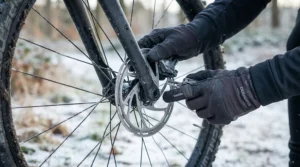
Here’s the awkward truth the spec sheets skip. I couldn’t find a single, universal “sub-zero certified” badge. What exists is a patchwork: battery limits here, an IP rating there, a vague “all-weather” line in the marketing. Lithium-ion cells generally work between -20°C and 60°C, but that’s the chemistry talking, not a promise about your brake cables or hub grease.
So this guide does the translating. You’ll get seven real models, the component cold-rating specs worth checking, and the physics of lubricant viscosity in cold. You’ll also get a field guide to frozen component failure points, plus the Canadian rules that decide where you can legally ride.
One honest note: I haven’t ridden these bikes. Everything here is built from published spec sheets and aggregated reviewer findings, and I flag where the evidence runs thin. Think of me as the friend who reads the manual so you don’t have to, then tells you which pages matter.
Quick Comparison: 7 Picks for an E-Bike Rated for Sub-Zero Temperatures
| Model | Motor / Torque | Battery | Tires | Approx. Price (CAD) | Best For |
|---|---|---|---|---|---|
| Aventon Aventure 3 | 750W hub, 80 Nm | 733Wh | 26″×4″ | C$2,500–C$3,000 | Smart-feature all-rounder |
| Velotric Nomad 2 | 750W hub, 90 Nm | 706Wh | 26″×4″ | C$2,500–C$3,000 | Slush and wet-salt commutes |
| Lectric XPeak 2.0 | 750W hub, 85 Nm | 720Wh (960Wh option) | 26″×4″ | C$1,900–C$2,300 | Budget buyers wanting capacity |
| Heybike Mars 2.0 | 750W hub, 80 Nm | 600Wh | 20″×4″ | C$1,500–C$2,100 | Apartment dwellers |
| Himiway Cobra Pro | 1,000W mid-drive | 960Wh | 26″×4.8″ | Mid-C$5,000s | Deep snow, private land |
| Gazelle Ultimate C380 | Bosch mid-drive, 75–90 Nm | 500–800Wh (by version) | 700c | C$6,500–C$7,500 | Plowed-road commuters |
| Movin’ Pulse Fat Tire | 85 Nm (brand-stated) | 1,680Wh dual (brand-stated) | Fat tire | Check current price | Long rural distances |
Prices are rough conversions from US list prices, so check current price before deciding. Looking at the table, the Lectric XPeak 2.0 is the capacity bargain, while the Gazelle Ultimate C380 costs more than twice as much because you’re paying for a lighter, belt-driven, Bosch-powered platform. The Himiway Cobra Pro and Movin’ Pulse Fat Tire only make sense if you need serious range or deep-snow flotation. Availability on amazon.ca shifts, and some brands sell mainly through their own stores, so confirm stock before you fall in love.
💬 Just one click — help others make better buying decisions too!😊
Top 7 E-Bikes Rated for Sub-Zero Temperatures: Expert Analysis
Fair warning: “rated” means different things on each spec sheet. I’ve ranked these on battery buffer, sealing, drivetrain strategy and how much real-world evidence exists.
1. Aventon Aventure 3 — best all-rounder for mixed winter commutes
The Aventon Aventure 3 pairs a smooth torque sensor with a battery big enough to absorb winter’s tax.
Its 750W hub motor (1,188W peak) makes 80 Nm, and the 733Wh pack uses LG 21700 cells. That torque gets you rolling on packed snow without wheelspin theatrics. Cold shaves capacity, but a 30% haircut still leaves roughly 510Wh. By my arithmetic, expect 25–35 km on snowy paths and more on cleared pavement, far below the claimed 105 km (65 miles).
Who’s it for? Riders who want app-based GPS tracking, a rear-wheel lock and an ejectable battery they can carry indoors. Reviewers consistently praise the power and ride quality, while noting that high assist levels drain the pack quickly. At around 35 kg (77 lb), it’s no featherweight. Like most 750W bikes it also exceeds Canada’s 500W power-assisted bicycle definition, so read the rules section below.
Pros:
- ✅ Torque sensor gives controlled starts on slick surfaces
- ✅ 733Wh pack buffers winter range loss
- ✅ App-based GPS, wheel lock, ejectable battery
Cons:
- ❌ Heavy at about 35 kg
- ❌ Hub motor feels less natural than mid-drive
Expect roughly C$2,500–C$3,000 (check current price). Verdict: strong value for a feature-rich winter workhorse.
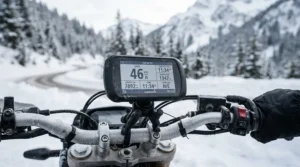
2. Velotric Nomad 2 — IPX7 battery for slush and salt
The Velotric Nomad 2 earns its spot with sealing: an IPX7-rated, UL 2271-certified battery with Samsung cells.
The motor is a 750W hub with about 1,300W peak and 90 Nm, backed by a 705.6Wh pack. IPX7 means temporary immersion survival, which matters when slush turns to meltwater. Owner-forum reports list the frame at IPX6, so verify on the current spec sheet. The 4-inch puncture-resistant Kenda tires and 100 mm fork round out a sensible winter kit, and you can choose between torque and cadence sensing.
An aggregator of four expert reviews averages 93/100. Common complaints: heft (about 33 kg), average real-world battery life and no rear suspension. One reviewer’s 12-week winter test reports snow flotation at 8–10 psi, but treat that as a single data point.
Pros:
- ✅ IPX7 battery shrugs off slush and meltwater
- ✅ Selectable torque or cadence sensor
- ✅ Certified pack with Samsung cells
Cons:
- ❌ Reviewers call real-world range merely average
- ❌ Weight makes stairs a chore
Roughly C$2,500–C$3,000 (check current price). Verdict: best sealing in its class for salty city riding.
3. Lectric XPeak 2.0 — best value with an optional 960Wh pack
The Lectric XPeak 2.0 is the budget route to battery buffer, which is exactly what cold weather demands.
Specs: 750W motor (1,310W peak), 85 Nm, a UL 2271-certified 720Wh pack, 26″×4″ tires with a 3 mm Kevlar lining, and about 34 kg. A 960Wh Long-Range option exists, and for a Canadian winter I’d take it. One reviewer measured an apparent 15–20% range loss at -2°C (28°F), which is typical lithium behaviour, not a bike flaw.
Reviewers praise the surprisingly quiet motor and the value. They also report struggles on steep climbs and noise over bumps. One more thing: reviews disagree on whether the battery is removable, and that matters if you charge indoors. Verify your variant before buying.
Pros:
- ✅ Large battery capacity for the price
- ✅ Quiet torque-sensor motor
- ✅ Kevlar-lined tires resist punctures
Cons:
- ❌ Battery removability varies by review
- ❌ Reviewers report weaker steep-hill climbing
Roughly C$1,900–C$2,300 (check current price). Verdict: the best capacity-per-dollar in this lineup.
4. Heybike Mars 2.0 — folding fat-tire for small apartments
The Heybike Mars 2.0 folds, so both bike and battery can live indoors, which is a real cold-weather advantage.
Specs: 750W hub (about 1,200W peak), 80 Nm, a 600Wh removable pack rated for 600 cycles to 80% capacity, 20″×4″ tires and a 150 kg (330 lb) rider limit. It weighs about 34 kg, so “portable” is relative. The catch is mechanical disc brakes, whose exposed cables need more winter attention than sealed hydraulics.
Tom’s Guide rode it after a snowfall on lowered tire pressure and found strong grip. Reviewers also note the motor engages after two or three pedal strokes, which can feel abrupt on ice, plus basic components and a thin app.
Pros:
- ✅ Folds to fit condos and car trunks
- ✅ Removable battery with USB charging port
- ✅ Lowest entry price on this list
Cons:
- ❌ Cable-actuated brakes need extra winter care
- ❌ Smallest battery here at 600Wh
Roughly C$1,500–C$2,100 (check current price). Verdict: great for tight spaces, but plan shorter winter trips.
5. Himiway Cobra Pro — full-suspension powerhouse for deep snow
The Himiway Cobra Pro brings a Bafang M620 mid-drive (1,000W), full suspension and a 960Wh battery.
Those 26″×4.8″ tires float on soft snow, and the mid-drive uses the bike’s gears, so it climbs without breaking a sweat. The claimed 96–130 km (60–80 miles) range is, in Electrek’s words, possible but not probable. In cold, assume a fraction. At 40 kg (88 lb) it’s also not nimble, and I’d treat it as a trail and rural machine.
Legal heads-up: 1,000W is double Canada’s 500W power-assisted bicycle limit, so think private land and off-road use. Electric Bike Report praised its climbing and stability but felt the 180 mm brake rotors underwhelmed at this mass.
Pros:
- ✅ Largest single battery in this lineup
- ✅ 4.8-inch tires float on soft snow
- ✅ Torque sensor keeps pedalling natural
Cons:
- ❌ 40 kg makes loading a two-person job
- ❌ 180 mm rotors feel marginal for the weight
Roughly the mid-C$5,000s (check current price). Verdict: a specialist tool, brilliant where legal and overkill elsewhere.
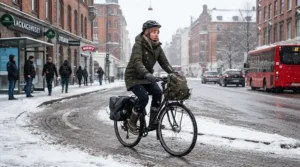
6. Gazelle Ultimate C380 — belt drive sidesteps chain lube
The Gazelle Ultimate C380 removes the chain, so no lube to thicken and no links to ice up.
It uses a Bosch Smart System Performance Line mid-drive (75–90 Nm depending on version), an Enviolo stepless hub and a belt, with integrated batteries from roughly 500Wh to 800Wh. It’s far lighter than the fat-tire crowd, at about 25 kg on earlier versions.
Here’s the cold-rating reality check. Bosch’s guidance, as relayed by Upway, puts ideal operation at 20–100°F (about -7°C to 38°C), and one owner quoting a Bosch manual lists battery operation from -5°C. That makes this a plowed-road, mildly-below-zero bike, not a -25°C expedition rig. I couldn’t find enough winter-specific owner reviews to summarize with confidence.
Pros:
- ✅ Belt drive means no chain lubricant needed
- ✅ Sealed stepless hub shifts under load
- ✅ Far lighter than fat-tire rivals
Cons:
- ❌ Published Bosch limits stop near -7°C
- ❌ Premium price, narrow tires need studs
Roughly C$6,500–C$7,500 (check current price). Verdict: elegant, low-maintenance, but not for extreme cold.
7. Movin’ Pulse Fat Tire — dual-battery range built for Canadian winters
The Movin’ Pulse Fat Tire attacks cold with brute capacity: a dual-battery system totalling 1,680Wh, per the brand.
The brand also lists 85 Nm of torque, a claimed 180–200 km in ideal conditions and a “real-world winter” figure of 110–120 km. Those are manufacturer numbers, and I found no independent winter test, so discount accordingly. Even at a 40% haircut, 1,000Wh-plus still goes a long way.
If the two packs are removable (confirm on the spec sheet), you can keep one warm indoors and rotate. Dual packs usually add serious weight, so check the scale before committing.
Pros:
- ✅ Brand-stated 1,680Wh of total capacity
- ✅ 85 Nm torque for loaded winter climbs
- ✅ Marketed specifically to Canadian riders
Cons:
- ❌ No independent winter testing I could verify
- ❌ Dual packs likely add significant weight
I couldn’t verify a current Canadian price, so treat it as premium-tier until you check current price. Verdict: promising on paper, unproven in third-party testing.
What Makes an E-Bike Rated for Sub-Zero Temperatures?
Three different “limits” hide inside the phrase.
First, the discharge window: roughly -20°C to 60°C for typical lithium-ion cells. Second, the charging window, usually 0°C to 40°C, which the battery management system enforces. Third, whatever the brand claims about operation. Hovsco, for example, says its bikes operate down to -20°C but warns never to charge below 0°C.
That gap between discharging and charging is the whole game. Charging a frozen pack risks lithium plating, where metallic lithium builds up on the anode and permanently damages the cell.
Then there’s the range tax. One battery vendor’s chart shows about 80–85% of capacity at 0°C, 60–70% at -10°C and 40–50% at -20°C. Other sources suggest 20–30% losses below freezing. The truth depends on your pack, pace and wind.
The industry is still working on this. Natural Resources Canada is co-funding electrolyte research with a B.C. cell maker to improve low-temperature performance for the Canadian climate. Translation: today’s e-bike cells are good, not magic.
Winter Setup and First 30 Days: A Practical Usage Guide
You can boost any e-bike rated for sub-zero temperatures with habits, and the first month decides everything.
- Warm the pack first. Keep the battery indoors until you roll out, then mount it.
- Start gently. Use low assist for the first 5–10 minutes, then step up once the pack warms. Launching in the highest mode stresses cold cells.
- Charge at room temperature. Let the battery warm after a ride before plugging in, and never charge near freezing.
- Drop tire pressure. Fat tires reportedly float best around 8–10 psi on snow. Don’t go lower on pavement.
- Insulate. A neoprene battery cover is cheap insurance.
- Plan the trip. Avoid short hops followed by long outdoor standstills.
The common first-month mistakes? Leaving the bike outside overnight, charging a cold pack, and skipping the post-ride wipe-down after salty roads.
Frozen Component Failure Points: A Problem-and-Solution Guide
Knowing the frozen component failure points saves you from a long, cold walk home.
- Problem: sudden battery cutoff. Cold cells sag under load and the BMS shuts down. Solution: ride at lower assist, keep the pack insulated and don’t let it drop below about 30% charge.
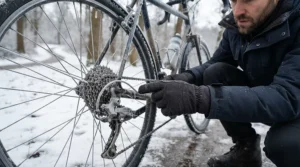
- Problem: seized freehub. Thick grease can stop pawls engaging. One cyclist reported slipping at around -29°C. Solution: regrease with low-temperature grease before winter.
- Problem: condensation. Cold bikes brought into warm rooms sweat inside connectors. Solution: let everything warm gradually and wipe the contacts.
- Problem: frozen cables. Moisture in housings freezes. This is why the Heybike Mars 2.0‘s mechanical brakes need attention. Solution: keep the cables lubricated and dry.
- Problem: stiff tires and brittle plastics. Solution: lower pressure for grip, and don’t wrench on fenders at -25°C.
Real-World Scenarios: Three Canadian Winter Riders
The Winnipeg commuter. A 12 km daily ride on plowed paths at -25°C. Batteries struggle here, so buy capacity and insulation. The Lectric XPeak 2.0 with the 960Wh pack or the Aventon Aventure 3, kept indoors until departure, fits a modest budget. Expect heavy range loss on the coldest mornings.
The Halifax student. An 8 km trip through slush and road salt, living in a small apartment. The Velotric Nomad 2 with its IPX7 battery is the sturdy choice, while the Heybike Mars 2.0 wins if you need to fold it into a closet.
The northern Ontario trail rider. Deep snow, long loops, frequent weekend use on private land. The Himiway Cobra Pro or Movin’ Pulse Fat Tire have the battery and flotation, provided the local rules allow their power levels.
✨ Don’t Miss These Exclusive Deals!
🔍 Take your winter riding to the next level with these carefully selected bikes. Click on any highlighted product to check current pricing and availability. These picks will help you create safe, confident cold-weather commutes your whole family will love! ❄️
Component Cold-Rating Specs: What the Numbers Really Mean
Reading component cold-rating specs is half detective work, half translation.
| Component | Typical published spec | What it means for you | Best For |
|---|---|---|---|
| Lithium-ion cells | Discharge roughly -20°C to 60°C | Works cold, but with reduced capacity | All 7, including the Gazelle Ultimate C380 |
| Charging window | About 0°C to 40°C | Warm the pack before charging | Anyone charging in a garage |
| Bosch battery | Ideal about -7°C to 38°C | Best for mild-cold commuting | The Gazelle Ultimate C380 |
| Brand claim (Hovsco) | Operation to -20°C, no charging below 0°C | Marketing claim, verify in the manual | Cold-climate shoppers |
| IPX7 battery | Temporary immersion | Moisture protection, not a cold rating | The Velotric Nomad 2 |
Carleton University researchers found that low temperatures reduce both voltage and extractable capacity, and flagged lithium plating during cold charging as a safety-critical limit. In plain English, the cold-charging warning on your manual isn’t legal boilerplate.
Looking at the table, the lesson is that an IP rating or a brand claim doesn’t equal a verified cold rating. Only the charge window is non-negotiable. For the Gazelle Ultimate C380 and any Bosch bike, the published ideal range tells you not to expect miracles below -7°C.
Lubricant Viscosity in Cold: Greases, Chain Lube and Belt Drive
Lubricant viscosity in cold is simple physics with annoying consequences. Oil thickens as temperatures fall, and greases also have a yield stress that resists the first movement at startup, so the first pedal stroke fights the stiffest grease it will meet all ride. That’s why low-temperature greases lean on synthetic base oils.
Your options:
- Squirt Low Temperature Chain Lube uses a wax-in-water formula with a modified congealing point, rated to hold its consistency down to about -20°C. Apply it indoors and let it cure for at least four hours.
- Muc-Off -50°C Winter Chain Lubricant is marketed as a wet lube functioning at -50°C. That’s a manufacturer claim, and it recommends applying three to four hours before riding.
- Motorex White Grease is a bearing grease the maker says stays malleable in cold.
Forum riders report a Canadian Tire low-temperature grease holding to roughly -30°C. That’s anecdote, not lab data.
The cleanest answer is no chain at all. The Gazelle Ultimate C380‘s belt drive skips chain lube entirely, though its hub still contains grease. And inside geared hub motors, cold-thickened grease is one reason the first few minutes feel sluggish.
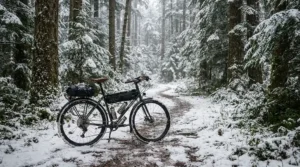
How to Choose an E-Bike Rated for Sub-Zero Temperatures
Choose an e-bike rated for sub-zero temperatures by checking the manual’s charge and discharge limits first, then buying more battery than you think you need. Here’s the order I’d follow:
- Read the temperature limits. Find both operation and charging ranges in the manual, not the marketing page.
- Prioritize capacity. Aim for 700Wh or more so a 30% winter loss still leaves a usable pack.
- Demand a removable battery. You need to carry it indoors to warm and charge.
- Check certifications. Look for UL 2271 or UL 2849 compliance and a sensible IP rating.
- Match the tires to your surface. Fat tires float on snow, but they’re not studded tires, and black ice still bites.
- Pick a drivetrain strategy. Belt drive, sealed hub, or a cold-rated lube routine.
- Confirm legality. Check your province’s power and speed limits.
Follow those seven and you’ll skip most expensive winter regrets.
E-Bikes vs Traditional Winter Commuting: A Written Comparison
| Option | Cold-weather reliability | Upkeep | Best For |
|---|---|---|---|
| Sub-zero e-bike | Good to about -15°C with care | Battery and lube routine | Commuters wanting flexibility, like the Velotric Nomad 2 |
| Studded-tire pedal bike | Excellent, no battery | Low | Fit riders on flat routes |
| Transit | Dependent on schedules | None | Dense cities |
| Car | High, with heater | Fuel, insurance, parking | Long distances |
The e-bike wins on door-to-door flexibility, not outright toughness. A studded pedal bike will happily outlast an e-bike’s battery at -30°C, so honesty matters here. Some transit systems have even paused lithium-ion devices in winter. Toronto’s TTC enacted a winter ban on them in December 2024 after a fire-related incident, so check local rules.
As for fat tires versus mid-drive, fat-tire hubs like the Aventon Aventure 3 win in snow, while a mid-drive like the Gazelle Ultimate C380 wins on weight and sealed efficiency on plowed roads.
Cost and Maintenance of an E-Bike Rated for Sub-Zero Temperatures
Winter costs less in dollars than in discipline. Normal winter riding is unlikely to cause serious long-term battery damage, though repeated exposure to extreme cold can contribute to degradation.
Run the cycle arithmetic. A battery rated for 600 cycles to 80%, like the Heybike Mars 2.0‘s, has a long life if you commute short distances. A 15 km ride at roughly 18 Wh/km uses about 270Wh, close to half that 600Wh pack per day. Bigger packs, like the Lectric XPeak 2.0‘s 960Wh option, are discharged less deeply per trip.
Budget for:
- Cold-rated chain lube and low-temperature grease
- Studded or winter tires if you ride ice
- Frequent salt rinses
- A battery cover
Store the pack partially charged (40–60%) in a dry, above-freezing spot when you aren’t riding. Cheap habits, expensive consequences if skipped.
Safety, Regulations and Battery Compliance in Canada
Federally, a power-assisted bicycle is defined as having a motor of 500W or less and a maximum assisted speed of 32 km/h. Provincial summaries note that since 2021 much of the enforcement sits with provinces, so check yours for helmets, age rules and where you can ride. Many 750W throttle fat-tire bikes, including the Aventon Aventure 3 and Velotric Nomad 2, exceed that definition, and the Himiway Cobra Pro‘s 1,000W certainly does.
Battery safety matters more in winter, when you’re tempted to charge in the garage. Health Canada’s advisory on lithium-ion battery misuse tells owners to always use the original battery, never modify or build packs, and stop charging once full. It also points to UL 2272 and UL 2849 compliance.
Fire officials add: charge on a hard, flat surface, never on a bed or couch, and never leave a pack charging unattended overnight.

FAQ
❓ Can I ride an e-bike at -20°C?
❓ How long should I wait before charging after a cold ride?
❓ Are fat tires as good as studded tires on ice?
❓ Can I leave my e-bike outside overnight in winter?
❓ Will cold weather permanently damage my e-bike battery?
Conclusion
Winter doesn’t have to end your riding season, but it does demand honesty about the gear. A true e-bike rated for sub-zero temperatures is really a system: generous battery capacity, a charging routine that respects the 0°C line, sealing that survives slush, and lubricants that stay fluid when the mercury plunges.
If I had to simplify: the Lectric XPeak 2.0 (with the bigger pack) is the value play, the Aventon Aventure 3 is the polished all-rounder, and the Velotric Nomad 2 is the sealed commuter’s pick. The Heybike Mars 2.0 suits tight spaces, the Himiway Cobra Pro and Movin’ Pulse Fat Tire serve rural and off-road riders, and the Gazelle Ultimate C380 rewards milder, plowed-road winters with minimal maintenance.
Whatever you choose, scrutinize the component cold-rating specs, respect lubricant viscosity in cold, and know your frozen component failure points before the first snowfall. Your battery, your knees and your future self will thank you. ❄️
Recommended for You
- Cold-Weather E-Bike Under $2500 CAD: 7 Proven Picks (2026)
- Winter Outdoor Fat Tire Electric Bike: 7 Proven Picks 2026
- Studded Vs Non-Studded Fat Tire E-Bike: 7 Best Picks (2026)
Disclaimer: This article contains affiliate links. As an Amazon Associate, I earn from qualifying purchases. If you purchase products through these links, we may earn a small commission at no additional cost to you.
✨ Found this helpful? Share it with your friends! 💬🤗
