
In This Article
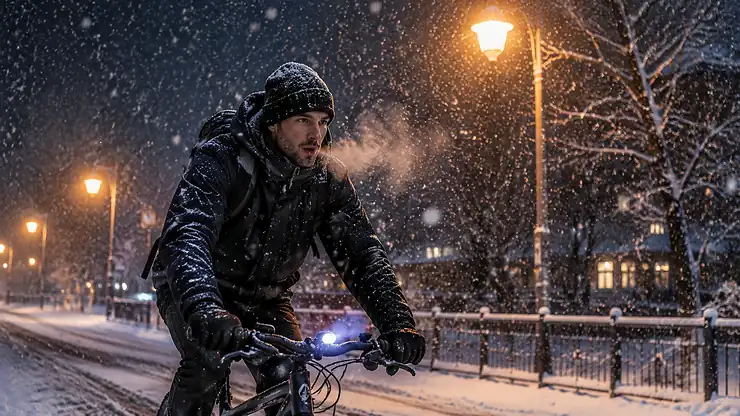
It’s 7:40 a.m. and the thermometer reads -20°C. Your neighbour is scraping a windshield with a loyalty card and muttering creatively. You clip a battery into a fat-tire bike, wake the display, and roll past in a cloud of your own breath. That is the promise of an e-bike for extreme cold and -20°C riding. Like most promises, it comes with fine print about batteries, chain lube and frostbite.
This guide reads that fine print for you. Everything below comes from manufacturer spec sheets, published reviews, aggregated owner feedback and plain arithmetic. I haven’t ridden any of these bikes, and I won’t pretend I have. What I can do is show you what the numbers mean when the mercury sulks at -20°C.
What Is an E-Bike for Extreme Cold and -20°C Riding?
An e-bike for extreme cold and -20°C riding is a power-assisted bicycle that stays useful when the air hits -20°C. It has a large removable battery (ideally 700 Wh or more), 4-inch fat tires for snow and slush, sealed electronics, and brakes and a drivetrain that tolerate freezing. In Canada it must also stay inside the federal limits of 500 W and 32 km/h to remain a bicycle rather than a moped.
Here is the twist most listicles skip: the motor isn’t the hero, the battery is. Cold turns a lithium pack into a sulky teenager, so the bike that wins in February is the one that carries enough energy to stay useful once the chemistry slows down. We’ll cover seven bikes, the physics of range loss at extreme cold, lubrication for freezing temps, and a layering plan for -20°C.
Quick Comparison: 7 Bikes at a Glance
| Model | Motor (rated) | Battery | Tires | Best For |
|---|---|---|---|---|
| Hiboy EX6 | 500 W | 48 V, ~14.5-15 Ah (~700 Wh) | 20″ × 4″ | Budget step-through commuters |
| Hiboy EX6F | 500 W | 48 V, 14.5 Ah (~696 Wh) | 20″ × 4″ | Apartment dwellers who need to fold and store indoors |
| Hiboy P6 | 500 W (750 W peak) | 48 V, 13 Ah (624 Wh) | 26″ × 4″ | Deeper snow on a modest budget |
| Heybike Ranger | 500 W | 48 V, 15 Ah (720 Wh) | 20″ × 4″ | Folding commuters who want a rack |
| EM-Cruiser | 500 W, 80 Nm | 48 V, 21 Ah (1,008 Wh) | 20″ × 4″ | The longest winter commutes |
| Himiway Cruiser | 750 W | 48 V, 17.5 Ah (840 Wh) | 26″ × 4″ | Torque and a big pack (verify legality) |
| Aventon Aventure.3 | 750 W (1,188 W peak) | 36 V, 20 Ah (733 Wh) | 26″ × 4″ | Premium control and anti-theft tech (verify legality) |
Read the table through the battery column first. The EM-Cruiser carries roughly half again as much energy as the Hiboy P6, and at -20°C that gap matters more than any motor badge. The Hiboy EX6, Hiboy EX6F and Heybike Ranger form a tight budget cluster, while the Himiway Cruiser and Aventon Aventure.3 trade legal simplicity for power.
💬 Just one click — help others make better buying decisions too!😊
Top 7 E-Bikes for Extreme Cold and -20°C Riding: Expert Analysis
1. Hiboy EX6 — step-through ease at an entry-level price
The step-through frame is the unsung winter feature. In a parka, snow pants and bar mitts, swinging a leg over a high top tube becomes a small act of gymnastics. The Hiboy EX6 pairs a 500 W rated hub motor (the brand quotes about 960 W peak) with a 48 V pack of roughly 14.5-15 Ah, around 700 Wh. Its 20″ × 4″ tires and IPX4 rating mean slush spray is fine but a pressure washer is not.
On paper, the rated 500 W sits inside Canada’s federal cap, which keeps the legal picture simple. The smaller 20-inch wheels also keep the centre of gravity low, though they roll over deep ruts less gracefully than 26-inch hoops. Reviewers broadly praise its value and comfort. One buyer comment on a retailer listing says the battery isn’t amazing and that about 30 miles (48 km) at full assist in good weather is realistic. Treat that as the ceiling before the cold takes its cut.
Pros:
- ✅ Step-through frame suits bulky winter clothing
- ✅ Rated 500 W fits Canadian power-assisted limits
- ✅ Low price leaves budget for gear and lube
Cons:
- ❌ Mid-sized pack shrinks fast below -15°C
- ❌ 20-inch wheels struggle in deep, rutted snow
Expect roughly C$1,000-C$1,200 at the time of research (check current price). That is strong value if your commute is short.
2. Hiboy EX6F — folds away to live in the warm
A folding bike solves winter’s quietest problem: where the battery sleeps. The Hiboy EX6F folds low and small enough to live in a condo hallway or under an office desk, which keeps the pack at room temperature before and after the ride. That habit protects range better than any insulating sock.
Specs track its sibling: 500 W, a 48 V 14.5 Ah pack (about 696 Wh), 20″ × 4″ tires, a 32 km/h assist cap and a 120 kg (264 lb) weight limit. The maker’s 120 km claim is a best-case lab figure. Plan on a fraction of it at -20°C. Folding hinges also add a joint that road salt loves, so they deserve a dab of grease each month (more on that below).
I couldn’t find independent winter reviews specific to this model, so there is no review sentiment to report. Reviewers of Hiboy’s other fat-tire models are generally positive on value.
Pros:
- ✅ Folds for warm indoor storage
- ✅ Rated 500 W and 32 km/h cap stay legal
- ✅ Low step-through entry
Cons:
- ❌ Lower weight limit than bigger fat bikes
- ❌ Hinge is an extra corrosion and wear point
Expect low-to-mid C$1,000s (check current price). It is a smart value pick if indoor storage is your reality.
3. Hiboy P6 — 26-inch float for deeper snow
Bigger wheels mean more tire patch rolling over snow rather than plowing into it. The Hiboy P6 uses 26″ × 4″ tires, a Bafang rear-hub motor rated 500 W (the brand quotes up to 750 W peak) and a 48 V 13 Ah, 624 Wh battery mounted on the down tube with a key lock. A reviewer at Active Gear Review called that pack in line with the fat-tire class: nothing to complain about, nothing meritorious either.
That verdict is the cold-weather catch. A 624 Wh pack is the smallest in this roundup, and at -20°C it leaves a thin margin on commutes beyond roughly 10 km each way. Reviewers describe the Hiboy P6 as surprisingly agile for a roughly 65 lb (29 kg) fat bike. One reviewer wished for hydraulic brakes, which implies mechanical discs. Bulky mitts make strong brake-lever feel worth caring about.
Pros:
- ✅ 26-inch tires float better over soft snow
- ✅ Bafang motor with a strong reputation
- ✅ Agile handling for its weight
Cons:
- ❌ Smallest battery in this lineup
- ❌ Mechanical brakes need more lever force
Expect around C$1,100-C$1,400 (prices vary). It’s good value for short, snowy routes where the tires matter more than the pack.
4. Heybike Ranger — foldable, with a rack and a 720 Wh pack
The standout is a practical one: the rack. In winter you carry more, including a spare layer, a thermos, and lock and lube. The Heybike Ranger pairs a 500 W brushless gear hub motor with a 48 V 15 Ah (720 Wh) removable battery, 20″ × 4″ tires and a front suspension fork. Charging takes about 5-6 hours, which suits an overnight indoor top-up.
One caution is that the Ranger name now covers several generations. The Ranger S and 3.0 Pro variants carry bigger motors (up to 750 W or more), so confirm you’re buying the 500 W configuration with the compliance label. An independent reviewer of the Ranger S noted its range fell toward the low end of folders because the bigger motor drains faster, a reminder that bigger isn’t better in the cold. Most budget forks also use damping oil that stiffens in frost, so expect a firmer ride at -20°C.
Pros:
- ✅ Rear rack included for winter cargo
- ✅ 720 Wh pack beats several rivals
- ✅ Folds for warm indoor storage
Cons:
- ❌ Multiple generations make spec-checking essential
- ❌ Suspension fork likely stiffens in deep cold
Expect roughly C$1,300-C$2,000 depending on generation (check current price). Solid value if you verify the 500 W version.
5. EM-Cruiser — the biggest battery here, at 1,008 Wh
If range anxiety had a patron saint, it would carry a 21 Ah pack. The EM-Cruiser lists a Bafang 500 W rear hub motor with 80 Nm of torque, a 1,008 Wh long-range battery, 20″ × 4″ Kenda fat tires, integrated lights and a rear carrier. The listing states plainly that it falls under the power-assisted bicycle definition for most provinces.
That 1,008 Wh is the point. When cold costs you a third to a half of your usable energy, a pack this size is the buffer that turns a nervous 20 km round trip into a relaxed one. Eighty newton-metres of torque also helps from a stop on a packed-snow incline. I couldn’t verify independent owner reviews beyond the seller’s own ratings. Availability can also vary by retailer, so confirm the listing, warranty and Canadian support before buying.
Pros:
- ✅ Largest battery in this roundup
- ✅ 500 W motor with 80 Nm torque
- ✅ Lights and carrier included
Cons:
- ❌ Heavy pack to carry indoors
- ❌ Few independent reviews to lean on
Expect roughly C$1,800-C$2,500 (verify, as marketplace pricing moves). It is the best pack-for-the-money here if you can confirm the seller’s support.
6. Himiway Cruiser — torque and an 840 Wh Samsung/LG pack
The headline is brute traction and endurance. The Himiway Cruiser pairs a 750 W geared hub motor with an 80 Nm-class feel and a 48 V 17.5 Ah (840 Wh) Samsung or LG pack, 26″ × 4″ Kenda tires and a roughly 72 lb (32.6 kg) aluminum frame. Electric Bike Report’s testers described stable handling and traction on nearly every surface.
Here is the legal flag. The widely reviewed version is 750 W, which exceeds the federal 500 W definition, so confirm the labelled Canadian configuration or accept that provincial rules might treat it as something other than a bicycle. Brakes are Tektro Aires mechanical discs on 180 mm rotors. Reviewers disagree on whether the tires are puncture-resistant, so budget for tire liners. Electrek called the design a near-copy of the RadRover formula with a bigger battery, which is a fair summary of the value proposition.
Pros:
- ✅ 840 Wh pack gives real winter buffer
- ✅ Strong, stable traction in reviews
- ✅ High torque for hills and ruts
Cons:
- ❌ 750 W exceeds the federal 500 W definition
- ❌ Mechanical brakes and a heavy 72 lb frame
Expect around C$2,000-C$2,600 (check current price). It offers excellent capacity per dollar if the legal side checks out for you.
7. Aventon Aventure.3 — hydraulic brakes and a torque sensor
The gem here is control. The Aventon Aventure.3 has Tektro hydraulic discs, so your brake lever feels light even through thick mitts, plus a torque sensor that matches motor output to your pedalling. On ice that smoothness is the difference between a graceful start and a slide.
Specs: a 750 W hub (1,188 W peak, 80 Nm) and a 36 V 20 Ah, 733 Wh battery with LG 21700 cells. It also has 26″ × 4″ tires, an 80 mm fork, a suspension seatpost and a weight around 77 lb (35 kg), plus app-based GPS tracking and locking. OutdoorGearLab scored it 85 overall, and Electric Bike Review noted strong traction and off-road capability. One gripe is that only one profile can be paired per bike.
Canadian listings advertise 750 W and 32 km/h, which exceeds the federal 500 W power-assisted bicycle definition, so check your province before buying.
Pros:
- ✅ Hydraulic brakes work well with mitts
- ✅ Torque sensor gives smooth, ice-friendly power
- ✅ GPS tracking and locking deter theft
Cons:
- ❌ 750 W exceeds the federal 500 W definition
- ❌ Heavy at roughly 77 lb (35 kg)
Expect roughly C$2,700-C$3,300 (prices vary). It is premium value for the rider who wants control and security more than the biggest battery.
Specs Side by Side: What the Numbers Mean at -20°C
| Model | Pack (Wh) | Planning range at -20°C* | Price range (CAD) | Best For |
|---|---|---|---|---|
| Hiboy EX6 | ~700 | ~24 km | C$1,000-C$1,200 | Short budget commutes |
| Hiboy EX6F | ~696 | ~24 km | C$1,000-C$1,400 | Folding and indoor storage |
| Hiboy P6 | 624 | ~22 km | C$1,100-C$1,400 | Snowy short hops |
| Heybike Ranger | 720 | ~25 km | C$1,300-C$2,000 | Rack and cargo |
| EM-Cruiser | 1,008 | ~35 km | C$1,800-C$2,500 | Long commutes |
| Himiway Cruiser | 840 | ~29 km | C$2,000-C$2,600 | Torque and capacity |
| Aventon Aventure.3 | 733 | ~26 km | C$2,700-C$3,300 | Control and security |
*My illustrative planning estimate, not a test result: pack Wh × 70% usable in the cold ÷ 20 Wh/km on snowy surfaces. Prices are estimates at the time of research and vary by seller.
The EM-Cruiser is the clear winner on usable energy, which is exactly what you want when everything else about the day is working against you. The Aventon Aventure.3 costs far more than the Hiboy EX6 yet carries a similar pack, so you’re paying for control, tech and build rather than range. If your round trip exceeds about 20 km, only the Himiway Cruiser and EM-Cruiser leave a comfortable margin without a spare battery.
Range Loss at Extreme Cold: What Really Happens to Your Battery
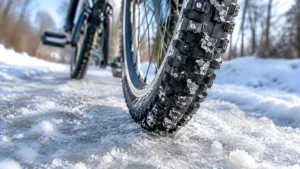
Cold slows the chemistry inside lithium cells, raising internal resistance and making voltage sag under load. A good battery management system may cut power early to protect the cells, which feels like a sudden range drop. BikeRadar quotes a battery-systems engineer saying a pack loses at least 20% of its capacity near 0°C and holds about half its capacity at -20°C.
| Temperature | Typical reported capacity | What riders notice | Best For |
|---|---|---|---|
| 20°C | ~100% | Normal range | Baseline planning |
| 0°C | ~80-85% | Slight sag on hills | Start with a warm pack |
| -10°C | ~60-70% | Noticeable power loss | Shorten trips, add spare |
| -20°C | ~40-50% | Heavy lag, possible cutoff | Pack of 700+ Wh, eco mode |
Retailer and tester guides put typical winter losses at 20-40%, with worse numbers on hilly routes. The honest takeaway is that range loss at extreme cold is mostly temporary. Capacity returns when the pack warms. Snow makes it worse because tire rolling resistance rises sharply, so the surface can hurt range as much as the temperature.
What helps: install the battery just before leaving, because riding generates internal heat. Use an insulating cover. Pick eco or low-assist modes. Never charge a frozen pack. Warm it to room temperature first.
How to Choose an E-Bike for Extreme Cold and -20°C Riding
- Prioritize pack size. Aim for roughly 700 Wh or more, because the cold will quietly claim a third to a half of it.
- Confirm legal status. Look for a 500 W rating, a 32 km/h cut-off, working pedals and a manufacturer label.
- Choose 4-inch tires. Wide tires add float on snow, and studded options exist for fat tires.
- Prefer hydraulic brakes. They need less lever force through thick mitts.
- Demand a removable battery. You want to carry it into the warm every night.
- Check sealing and fender clearance. Look for at least an IPX4 rating and room for fenders against slush and salt.
- Verify Canadian support. Warranty and parts matter when winter is your daily proving ground.
Features That Actually Matter (And Those That Don’t)
What matters: battery watt-hours, a removable pack, tire width and traction, brake feel in mitts, fenders and lights. A torque sensor also matters because it makes power delivery smoother on slick surfaces, which is the real-world difference between a controlled start and a slide.
What doesn’t: peak wattage. Canadian rules cap continuous output at 500 W and assisted speed at 32 km/h, so a bike advertising 1,400 W peak is mostly advertising a number you can’t legally use. Claimed ranges of 100 km or more assume mild weather and light riders, so ignore them. App gimmicks are fun, but they’ll never outweigh a bigger battery. When shopping for an e-bike for extreme cold and -20°C riding, ask one question of every feature: does it help me finish the ride, or only help the brochure?
Lubrication for Freezing Temps: Keep the Chain Moving
Wax-based dry lubes can turn brittle and noisy when it’s well below freezing, which adds drag right when you need efficiency. Wet, oil-based lubes generally cope better in snow, and a few are formulated for deep cold.
- Muc-Off -50°C Winter Chain Lubricant is a wet lube rated to function at -50°C. The maker suggests applying it 3-4 hours before riding. A 50 ml bottle runs around C$15.
- Squirt Low Temperature Chain Lube is a water-based wax tuned for sub-zero use. Apply it to a dry chain indoors and let it cure for at least four hours. Cycling Weekly cautioned that it washes off quickly in wet conditions and judged a more tenacious wet lube better suited to winter.
- DirtCare -56 Winter claims to hold viscosity to -56°C. A 120 ml bottle sells for roughly C$23.
A simple winter routine for lubrication for freezing temps: wipe the chain dry, apply a thin coat the night before indoors, wipe off excess so it doesn’t collect salt grit, and repeat after slushy or salty rides. Lube folding hinges and cable ends too, and keep lube off brake rotors. Many shops also suggest a light dielectric grease on battery contacts to resist moisture, but check your manual first.
Riding Gear for -20°C Commutes: A Layering System That Works
Start with the wind. Using Canada’s wind-chill formula, riding at 25-32 km/h in -20°C air works out to a wind chill of about -32 to -33. That is close to the -35 level where Environment Canada’s extreme cold guidance warns frostbite can develop within minutes. Your speed is a wind you generate yourself.
For riding gear for -20°C commutes, think in layers:
- Core: merino base layer, insulating mid layer, windproof shell. Cut the sweat, because wet is cold.
- Hands: lobster-style gloves or handlebar mitts (pogies) with thin liners. Dropping chemical warmers inside pogies, rather than inside gloves, is a well-liked trick.
- Feet: merino socks that aren’t too thick, plus neoprene overshoes or winter boots. Bike Magazin suggests flat pedals and warm hiking-style boots, since cleats create a cold bridge.
- Head and face: a fleece-lined helmet over a balaclava, with ski goggles to stop tearing eyes.
- Extras: heated gloves or socks if budget allows, and a spare pair of mitts in your bag.
Dress slightly cool at the door. You’ll warm up within five minutes, and sweat is the enemy of riding gear for -20°C commutes.

Real-World Scenarios: Matching the Bike to Your Winter
These are hypothetical profiles, not reviews, built to show the reasoning.
The apartment commuter (8 km each way, about C$1,200). The Hiboy EX6F folds into the hallway, keeps its pack warm, and its ~24 km planning range covers a 16 km round trip with margin.
The long-haul commuter (15 km each way, no indoor charging at work). A 30 km round trip is beyond most packs in this guide. The EM-Cruiser (~35 km planning range) is the one that fits, ideally with a charger or a spare battery at the office.
The slush-and-hills rider (11 km each way, budget up to about C$3,000). The Aventon Aventure.3 brings hydraulic brakes and smooth torque-sensor power, so long as you’ve confirmed its 750 W rating works under your province’s rules. If that is a problem, the Hiboy P6 is the legal-simpler fallback for shorter hops.
✨ Don’t Miss These Exclusive Deals!
🔍 Take your winter commute to the next level with these carefully selected e-bikes. Click on any highlighted item to check current pricing and availability. These picks will help you create authentic cold-weather confidence your whole commute will thank you for!
E-Bike vs Alternatives: How It Stacks Up When It’s -20°C
| Option | Cold-weather strengths | Weak spots | Best For |
|---|---|---|---|
| Fat-tire e-bike | Traction, motor assist, low running costs | Battery range loss, dressing for wind chill | Commutes under ~25 km, e.g. Hiboy EX6 or EM-Cruiser |
| Standard bicycle | Simple, no battery to freeze | Slow in snow, hard on hills | Short, flat routes |
| Public transit | No dressing for the wind | Schedules, waiting in the cold | Long cross-city trips |
| Car | Heated cabin | Parking, warm-up, cost | Cargo and family trips |
A fat-tire e-bike wins when your trip is short to medium and your path is plowed or packed. Transit and cars win when the distance beats your battery or the wind chill beats your gear. The honest mixed strategy is an e-bike for most days and a fallback plan for the worst two or three weeks of the year.
Safety, Regulations and Compliance in Canada
Under Transport Canada’s Motor Vehicle Safety Regulations, a power-assisted bicycle has fully operable pedals, a motor of 500 W or less, assistance that ends at 32 km/h, and a permanent manufacturer label stating its status. Parks Canada summarizes these conditions. Exceed them and a bike may be treated as a moped or limited-speed motorcycle, with licensing and insurance requirements.
Provinces add their own rules on age and helmets, so check yours. Beyond legality, safety in extreme cold comes down to traction and time. Braking distances grow on ice, so ride slower than the assist cap allows and consider studded tires on glare-ice routes. Use lights and reflectors, because winter dusk arrives early. Charge batteries indoors, use the supplied charger, and look for recognized safety certification (UL 2849 appears on several listings). Choosing an e-bike for extreme cold and -20°C riding means choosing something you can legally and safely trust.
Long-Term Cost and Maintenance
Winter is hard on every wearable part. Salt and slush accelerate chain, cassette and brake-pad wear, so plan to replace them earlier than in a three-season life. Batteries are the biggest line item. Heybike’s own refurbished listing quotes about 600 charge cycles to 80% capacity, a sensible yardstick for pack life, and replacement packs commonly cost several hundred dollars. Keeping your pack away from freezing storage is the cheapest way to stretch that lifespan.
Run the ROI honestly. A C$1,200 bike used for 120 winter commutes costs about C$10 per trip in capital alone before running costs, which falls steadily with each season. Electricity is negligible next to fuel and parking, so the maths improves most when the e-bike replaces a daily drive. Budget a few percent of the purchase price per year for consumables, lube and salt-fighting cleaning.
Common Mistakes When Buying and Riding
- Buying on peak watts. Capacity and legal status matter more.
- Leaving the battery outside. Store it indoors at room temperature.
- Charging a frozen pack. Warm it first.
- Ignoring tire pressure. One Canadian retailer guide warns a tire at 12 PSI in a warm garage can read about 8 PSI by morning at -15°C.
- Skipping studs. On glare ice, traction beats range.
- Overdressing. Sweat soaks your layers and chills you later.
- Trusting claimed range. Brochure numbers assume mild weather.
FAQ
❓ Are fat tire e-bikes worth it for -20°C commutes?
❓ Can you charge an e-bike battery in freezing temperatures?
❓ How big a battery do I need for a winter commute at -20°C?
❓ Are studded tires worth it on an e-bike?
❓ Is a 750W e-bike legal in Canada?
Conclusion
Riding at -20°C isn’t about toughness. It’s about arithmetic. Buy the biggest legal battery you can afford, keep it warm until the moment you leave, put wide tires and a good lube between you and the ice, and dress for a wind chill that your own speed creates. The EM-Cruiser leads on usable energy, the Hiboy EX6F and Heybike Ranger win on indoor storage, the Hiboy EX6 and Hiboy P6 win on price, and the Himiway Cruiser and Aventon Aventure.3 win on power and control, provided you verify legality first.
If you remember one thing, make it this: range loss at extreme cold is real but manageable, and an e-bike for extreme cold and -20°C riding rewards planning far more than bravado. Prices and availability change, so check the current listings before you decide.
✨ Ready to Ride Through Winter?
🚴♂️ Pick the bike that matches your commute, pair it with the right lube and layers, and click any highlighted product to check current pricing and availability. Your coldest mornings are about to become your favourite rides! ❄️
Recommended for You
- E-Bike Rated For Sub-Zero Temperatures: 7 Best Picks 2026
- Cold-Weather E-Bike Under $2500 CAD: 7 Proven Picks (2026)
- Winter Outdoor Fat Tire Electric Bike: 7 Proven Picks 2026
Disclaimer: This article contains affiliate links. As an Amazon Associate, I earn from qualifying purchases. If you purchase products through these links, we may earn a small commission at no additional cost to you.
✨ Found this helpful? Share it with your friends! 💬🤗
