
In This Article
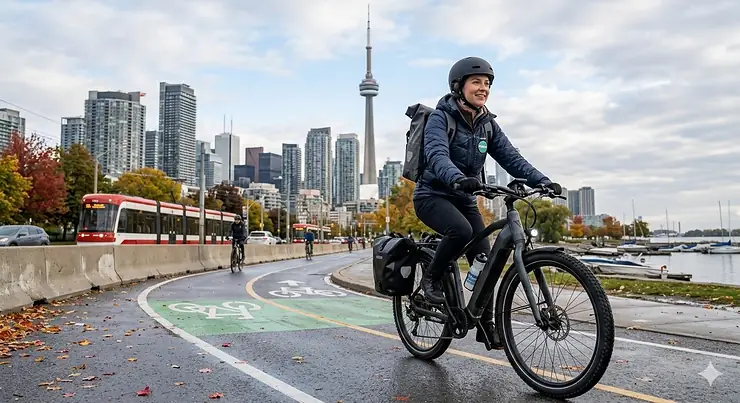
Picture this: you’re gliding down the Bloor Street bike lane on a crisp February morning, fresh snow crunching beneath your fat tires while others scrape ice off car windshields. Or imagine breezing through High Park’s trails in October, autumn leaves swirling around you as your motor effortlessly carries you up those notorious hills. This isn’t fantasy — it’s the reality of owning the right commuter e-bike all seasons Toronto riders swear by.
Toronto’s cycling landscape has evolved dramatically. According to Statistics Canada’s 2025 cycling infrastructure data, Canadian cities are investing heavily in year-round cycling networks, and Toronto leads the charge with expanding bike lanes designed for 12-month use. But here’s the catch: not every e-bike can handle our city’s mood swings from -20°C blizzards to +30°C humidity.
The traditional pedal bike? It’s collecting dust in your garage come December. But a properly equipped Toronto winter electric bike transforms your commute into an adventure you’ll actually look forward to — even when the weather forecast makes you want to hibernate. Whether you’re navigating slushy Yonge Street, conquering the Don Valley trails, or simply making your daily Ossington Avenue coffee run, the right urban all-weather ebike becomes your ticket to freedom from gridlock and overcrowded streetcars.
Let’s explore the absolute best options available on Amazon.ca right now, with real Canadian pricing, genuine specs, and honest insights from Toronto riders who’ve already made the switch.
Quick Comparison Table: Top All-Season E-Bikes for Toronto
| Model | Motor Power | Range (PAS) | Price (CAD) | Best For | Winter Rating |
|---|---|---|---|---|---|
| Hiboy P6 | 750W | 100 km | $1,299 | All-terrain commuting | ⭐⭐⭐⭐⭐ |
| Hiboy EX6 | 500W | 120 km | $1,078 | Easy mounting, seniors | ⭐⭐⭐⭐⭐ |
| DYU King750 | 750W | 128 km | $1,499 | Long-distance rides | ⭐⭐⭐⭐ |
| Jasion EB5 | 500W | 64 km | $899 | Budget-conscious | ⭐⭐⭐ |
| Hiboy P7 | 750W | 109 km | $1,189 | Mountain trails | ⭐⭐⭐⭐ |
| VoltBike Yukon 750 | 750W | 56-105 km | $2,799 | Premium performance | ⭐⭐⭐⭐⭐ |
| DYU D3F | 250W | 64 km | $449 | Compact folding | ⭐⭐ |
💬 Just one click – help others make better buying decisions too!😊
Top 7 Commuter E-Bike All Seasons Toronto: Expert Analysis
1. Hiboy P6 Fat Tire Electric Bike – The Toronto Winter Champion
Price: $1,299.99 CAD (regularly $1,899.99)
Motor: 750W peak (500W nominal)
Range: 100 km (pedal assist)
Tires: 26″ x 4.0″ fat tires
The Hiboy P6 has earned its reputation as the go-to city commuting fat tire e-bike for serious Toronto riders. Those massive 4-inch tires? They’re your insurance policy against black ice on the Martin Goodman Trail and pothole-riddled streets that make spring riding treacherous.
Key Specifications:
- Shimano 7-speed drivetrain
- Hydraulic front suspension
- 48V 13Ah removable battery
- UL 2849 certified
- Weight capacity: 150 kg
Toronto riders consistently praise this metropolitan electric bicycle for maintaining traction on snowy bike lanes. One Hiboy.ca reviewer from Edmonton (where winters make Toronto look mild) reported: “It is full on winter here in Edmonton Alberta Canada and my P6 is so much fun. I get to work faster than any other way of transportation.”
✅ Pros:
- Exceptional winter traction with fat tires
- Strong hill-climbing power for Toronto’s Don Valley routes
- Removable battery (charge indoors during winter)
❌ Cons:
- Heavier than standard e-bikes (24 kg)
- Wide handlebars need getting used to in tight bike lanes
Canadian Availability: Ships from Amazon.ca with 3-5 day delivery to Greater Toronto Area.
2. Hiboy EX6 Step-Thru Fat Tire E-Bike – Best for Easy Access
Price: $1,078.00 CAD (regularly $1,799.99)
Motor: 500W (960W peak)
Range: 65-120 km
Tires: 20″ x 4.0″ fat tires
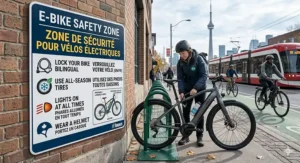
The Hiboy EX6 solves a problem many Toronto commuters face: mounting a bike while wearing winter boots and layers of clothing. That step-through frame is a game-changer when you’re bundled up like a marshmallow.
Key Specifications:
- 48V 14.5Ah battery
- Shimano 7-speed gears
- Front suspension fork
- Perfect for riders 5’0″ to 6’0″
This urban transit ebike excels in Toronto’s compact spaces. One Amazon.ca reviewer noted the bike handles “sand trails and hills very nicely” — crucial for Toronto’s Beach neighborhood and Scarborough Bluffs area.
✅ Pros:
- Step-through design perfect for winter gear
- Compact 20″ wheels navigate crowded bike lanes
- Excellent range for long commutes (Mississauga to Downtown)
❌ Cons:
- Lower top speed compared to P6
- Smaller wheels less ideal for very rough terrain
Canadian Availability: Ships directly from Hiboy Canada with free shipping.
3. DYU King750 Fat Tire E-Bike – Maximum Range Beast
Price: $1,499.99 CAD
Motor: 750W brushless
Range: Up to 128 km (pedal assist)
Tires: 26″ x 4.0″
For Toronto riders tackling longer commutes — say, Oakville to Downtown or even Hamilton to Toronto occasionally — the DYU King750 delivers unmatched stamina. That 48V 20Ah battery is the largest in this roundup.
Key Specifications:
- Dual shock absorption
- Shimano 7-speed
- 28 mph capability (must limit to 32 km/h for legal compliance)
- Front and rear disc brakes
According to Wikipedia’s electric bicycle documentation, modern lithium-ion battery technology has revolutionized e-bike range — and the King750 proves it. This city-friendly electric bike can handle a full week of Toronto commuting without recharging.
✅ Pros:
- Industry-leading range reduces charging frequency
- Powerful motor for Toronto’s hillier neighborhoods
- Dual suspension smooths out rough streets
❌ Cons:
- Higher price point
- Heavier than competitors (requires strength to lift)
Canadian Availability: Amazon.ca with extended delivery time (7-10 days to Toronto).
4. Jasion EB5 Electric Mountain Bike – Best Value Pick
Price: $899.00 CAD
Motor: 500W peak
Range: 64 km
Tires: 26″ standard
The Jasion EB5 proves you don’t need to spend $2,000+ for a reliable Toronto bike lane electric bike. It’s stripped down to essentials but delivers where it counts.
Key Specifications:
- 360Wh removable battery
- Front suspension fork
- 7-speed gearing
- Mechanical disc brakes
This urban all-weather ebike handles Toronto’s three-season weather beautifully. Summer? Perfect. Fall? No problem. Spring slush? It manages. Deep winter? You’ll want something with fat tires, but for mild winter days, the EB5 performs admirably.
✅ Pros:
- Budget-friendly entry point
- Lightweight for easier storage in Toronto apartments
- Simple maintenance (mechanical vs. hydraulic)
❌ Cons:
- Standard tires struggle in heavy snow
- Shorter range limits longer commutes
Canadian Availability: Ships from Amazon.ca fulfillment centers.
5. Hiboy P7 Electric Mountain Bike – Trail & Street Hybrid
Price: $1,189.99 CAD
Motor: 750W peak
Range: 109 km
Tires: 27.5″ x 2.2″
The P7 splits the difference between fat tire stability and lightweight agility. If your Toronto commute includes Don Valley trails or the Leslie Street Spit’s gravel paths, this metropolitan electric bicycle excels.
Key Specifications:
- Front suspension with lockout
- 48V 13Ah battery
- Mountain bike geometry
- Lightweight aluminum frame
One key advantage: these 2.2″ tires roll faster on pavement than 4″ fat tires, making your bike lane commute more efficient while still handling mixed terrain.
✅ Pros:
- Versatile for both urban streets and trails
- Lighter than fat tire models
- Excellent for fitness-focused commuters
❌ Cons:
- Less winter traction than fat tire options
- Not ideal for deep snow conditions
Canadian Availability: Hiboy.ca direct with Canadian warranty.
6. VoltBike Yukon 750 Limited – Premium Canadian Brand
Price: $2,799.00 CAD
Motor: 750W Bafang G06
Range: 56-105 km
Tires: 26″ x 4.0″ Kenda Juggernaut
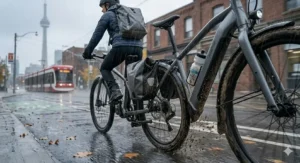
The VoltBike Yukon 750 represents the premium tier for serious Toronto winter electric bike enthusiasts. Built in Vancouver specifically for Canadian conditions, it’s engineered to handle everything our climate throws at it.
Key Specifications:
- UL-2849 certified (highest safety standard)
- Samsung battery cells
- Hydraulic disc brakes
- Integrated LED lights and rear rack
- Color LCD display with USB charging
VoltBike’s Canadian engineering shows in thoughtful details: fully enclosed wiring protects against road salt, and the battery is designed to function in sub-zero temperatures better than competitors.
✅ Pros:
- Built specifically for Canadian winters
- Excellent Canadian customer support
- Premium components throughout
- Proven reliability in extreme weather
❌ Cons:
- Higher investment (worth it for serious riders)
- Heavier than entry-level models
- Long wait times due to popularity
Canadian Availability: Direct from VoltBike.com with Canadian warranty and support.
7. DYU D3F Folding Electric Bike – Ultra-Compact Commuter
Price: $449.99 CAD
Motor: 250W
Range: 60-64 km
Tires: 14″ compact
The DYU D3F serves a specific niche: Toronto riders with tiny apartments, those who combine TTC with cycling, or anyone needing the ultimate space-saver. This city-friendly electric bike folds to fit in your coat closet.
Key Specifications:
- 36V 10Ah battery
- Folded size: ultra-compact
- Three riding modes
- Weight: only 18.6 kg
Perfect for partial commutes — ride from home to Union Station, fold it, take GO Transit to Oakville, then ride the final stretch. Toronto’s condo dwellers love the storage convenience.
✅ Pros:
- Incredibly space-efficient
- Lightest option in roundup
- Affordable entry point
❌ Cons:
- Limited power for Toronto’s hills
- Small wheels struggle in any snow
- Shorter range than full-size models
Canadian Availability: Amazon.ca with Prime shipping eligible.
Understanding Toronto’s E-Bike Regulations
Before you click “buy,” you need to understand what’s legal on Toronto streets. According to the City of Toronto’s official e-bike guidelines, e-bikes must meet specific criteria to qualify as bicycles rather than motor vehicles.
Legal Requirements for Ontario E-Bikes
Motor Power: Maximum 500W (though peak power can exceed this)
Maximum Speed: Motor assistance must cut off at 32 km/h
Age Requirement: Minimum 16 years old
Helmet: Mandatory (bicycle or motorcycle helmet)
License: Not required if bike meets specifications
Where You Can Ride in Toronto
✅ Permitted:
- Painted bike lanes
- Most public roads where bicycles are allowed
- Pedal-assisted e-bikes can use cycle tracks
- Multi-use trails (check signage)
❌ Prohibited:
- Sidewalks (except when walking your bike)
- 400-series highways
- Some recreational parks (signs will indicate)
- GO Transit (except for folding models, check policy)
Important distinction: Toronto classifies e-bikes into two categories. Pedal-assisted models (pedelecs) that require pedaling are treated like regular bicycles and can access all cycling infrastructure. Power-assisted models that operate on throttle alone face more restrictions on separated bike lanes.
Every bike in our top 7 list qualifies as a legal e-bike in Ontario, but riders should ensure they’re operating within Toronto’s bike lane rules. The Statistics Canada Cycling Infrastructure Database shows Toronto has over 500 km of cycling routes — understanding where your e-bike can legally travel matters.
Winter Performance: What Makes an All-Season E-Bike?
Toronto winters aren’t for the faint of heart, and neither are the e-bikes that conquer them. Here’s what separates a true commuter e-bike all seasons Toronto can rely on from fair-weather machines:
🛞 Fat Tires: Your Winter Insurance Policy
Standard bike tires (1.5-2 inches wide) act like ice skates on Toronto’s winter streets. Fat tires (3.5-4 inches) distribute weight across more surface area, dramatically improving traction. Think of it like comparing dress shoes to snow boots — technically both work, but one gives you confidence.
The Hiboy P6 and EX6 both feature 4-inch tires that handle the Martin Goodman Trail even after light snowfall. Toronto riders report maintaining their regular commute routes through December and January when conditions are manageable.
⚡ Battery Performance in Cold Weather
Here’s an uncomfortable truth manufacturers don’t advertise: lithium-ion batteries lose 20-30% capacity in sub-zero temperatures. Your “100 km range” becomes 70 km when it’s -10°C outside.
Pro tip from Toronto riders: Always bring your battery indoors. Every e-bike in our top 7 features removable batteries — use that feature! Charge your battery at room temperature, install it just before riding, and remove it when you arrive at work. This simple habit maintains range and extends battery lifespan.
🔋 Motor Power for Winter Riding
Snow and slush create rolling resistance — your motor works 30-40% harder in winter conditions. This is why 500W minimum is crucial for Toronto winters. The 750W models (P6, King750, P7, Yukon 750) handle snowy Bloor Street bike lane confidently, while 250W models struggle once accumulation begins.
🛡️ Build Quality & Corrosion Resistance
Toronto uses road salt aggressively. Your e-bike needs sealed electronics, corrosion-resistant fasteners, and proper drainage channels. The VoltBike Yukon 750 excels here — it’s literally designed for Vancouver and Montreal winters, where salt use rivals Toronto’s.
Maintenance reminder: After riding in salty conditions, wipe down your frame and rinse your chain. It takes 5 minutes and prevents expensive repairs.
Battery Range: The Toronto Reality Check
Let’s talk about range honestly, because manufacturers’ claims rarely match Toronto conditions.
Real-World Toronto Range Expectations
Advertised Range vs. Reality:
| Claimed Range | Flat Road, No Wind | Toronto Mixed Conditions | Winter Performance |
|---|---|---|---|
| 100 km | 85-90 km | 65-75 km | 50-60 km |
| 120 km | 100-110 km | 80-90 km | 60-70 km |
| 64 km | 55-60 km | 45-50 km | 35-40 km |
Factors that drain your battery in Toronto:
- Hills (looking at you, Davenport Road and Don Valley)
- Wind (our waterfront bike paths can be brutal)
- Temperature (every degree below 0°C reduces capacity)
- Stop-and-go traffic (constant acceleration uses more power)
- Tire pressure (under-inflated tires increase rolling resistance)
- Rider weight plus cargo (groceries from St. Lawrence Market add up)
Calculating Your Toronto Commute Needs
Downtown to suburbs: 25-35 km each way = need 60-80 km daily capacity
Cross-town: 15-20 km each way = need 40-50 km daily capacity
Neighborhood errands: 10-15 km daily = need 25-35 km capacity
Golden rule: Choose an e-bike with double your estimated daily needs. This accounts for winter capacity loss, battery degradation over time, and those spontaneous detours to Kensington Market.
The Hiboy EX6 (120 km claimed = 80-90 km real-world) easily handles most Toronto commutes with charge to spare. The Jasion EB5 (64 km claimed = 45-50 km real-world) works for shorter commutes but requires daily charging.
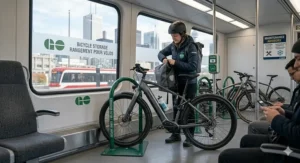
Toronto Bike Lane Compatibility Guide
Toronto’s cycling infrastructure continues expanding thanks to city investment. According to Infrastructure Canada’s data, federal funding has created nearly 500 km of active transportation paths nationwide, with Toronto receiving substantial investment.
Navigating Toronto’s Bike Lane Types
🚴 Painted Bike Lanes (most common): Found on Bloor, Richmond, Adelaide, and many others. All e-bikes in our top 7 fit comfortably. Fat tire models need awareness of their width — stay centered to avoid car doors and streetcar tracks.
🚦 Cycle Tracks (separated lanes): Protected lanes like on Bloor West offer the safest commuting experience. These accommodate all pedal-assisted e-bikes. The EX6’s compact 20″ wheels navigate entry/exit points easier than full-size models.
🌳 Multi-Use Paths (shared with pedestrians): The Martin Goodman Trail, Don River Trail, and Waterfront paths require courtesy and speed control. Power-on-demand e-bikes face restrictions on some paths — check signage.
🏘️ Residential Bikeways (quiet streets): Toronto’s expanding network of low-traffic routes provides stress-free commuting. Any e-bike works perfectly here.
Width Considerations
- Standard e-bikes (700c wheels): 600-650mm wide
- Fat tire e-bikes (4″ tires): 750-850mm wide
Toronto’s bike lanes average 1.5-1.7m wide — plenty of room, but fat tire riders should maintain awareness when passing or being passed. The VoltBike Yukon 750’s width occasionally requires slowing in narrow sections of older bike lanes.
Cargo Capacity for Toronto Living
Your urban all-weather ebike isn’t just transportation — it’s a cargo hauler. Toronto’s lifestyle demands versatility: grocery runs to Loblaws, weekend trips to IKEA North York, or hauling equipment to your co-working space.
Rear Rack Load Limits
- Hiboy P6: 25 kg rear rack capacity
- VoltBike Yukon 750: 25 kg rear rack (included)
- Hiboy EX6: 15 kg (with aftermarket rack)
- DYU King750: 20 kg rear rack capacity
Real-world Toronto use cases:
- Grocery shopping: 2 full Loblaws bags = ~12 kg ✅
- Laptop + gym gear: ~8 kg ✅
- LCBO beer run: 2 six-packs = ~6 kg ✅
- Small furniture: IKEA flat-pack chair = ~15-20 kg ⚠️
Front Basket Options
The VoltBike Yukon 750 includes a front rack. Other models can add aftermarket baskets:
- Quick-release baskets (~5 kg capacity)
- Handlebar-mounted bags (~3 kg capacity)
- Phone mounts (essential for navigation)
Toronto cycling hack: Use panniers instead of backpacks. Your back stays sweat-free even in humid Toronto summers, and the lower center of gravity improves handling.
Maintenance Through Toronto’s Seasons
Different seasons require different care routines for your city commuting fat tire e-bike.
🌸 Spring: Post-Winter Recovery
Priority tasks:
- Deep clean frame and chain (remove salt residue)
- Check brake pads (winter riding wears them faster)
- Inspect tires for cracks from freeze-thaw cycles
- Lubricate chain with wet-season lube
- Test battery health (winter may have reduced capacity)
Spring potholes appear everywhere in Toronto. Fat tires help, but stay vigilant on freshly thawed streets.
☀️ Summer: Peak Performance Season
Maintenance needs:
- Check tire pressure weekly (heat causes expansion)
- Clean dust from motor vents
- Apply dry lube to chain (prevents dirt buildup)
- Inspect brake wear from increased usage
- Store battery in cool, dry location (not in car trunk!)
Summer brings humidity that can affect electronics. The sealed batteries and motors on models like the Hiboy P6 handle this better than budget alternatives.
🍂 Fall: Prepare for Winter
Critical preparations:
- Switch to winter tires (studded optional for aggressive riders)
- Apply corrosion protection to frame joints
- Check all fasteners (they loosen from vibration)
- Full brake inspection before winter
- Test lights and reflectors (sunset comes early)
Fall leaves on Toronto bike paths hide hazards — fat tires provide confidence navigating leaf-covered surfaces.
❄️ Winter: Survival Mode
Weekly routine:
- Wipe down frame after every ride (remove salt immediately)
- Bring battery indoors always
- Check tire pressure (cold air reduces it)
- Clean and re-lube chain (wet lube essential)
- Inspect brake cables for freezing
Toronto winter pro tips:
- Run slightly lower tire pressure for better traction
- Expect range to drop 25-30%
- Clean bike before storing (prevent salt corrosion overnight)
- Use fenders (essential for wet snow and slush)
Where to Buy Your E-Bike in Toronto
Online Options
Amazon.ca carries most models in our top 7 with Prime shipping to Toronto (2-5 days). Benefits include easy returns and buyer protection. The Hiboy P6, EX6, Jasion EB5, and DYU models ship directly.
Direct from manufacturers:
- Hiboy.ca offers exclusive Canadian warranty
- VoltBike.com provides customization options
- DYU official site sometimes has bundle deals
Local Toronto Retailers
While we focused on Amazon.ca availability, several Toronto shops offer e-bike support:
- Sweet Pete’s Bike Shop (multiple Toronto locations)
- Movin’ Ebikes Toronto (showroom for test rides)
- House of Bikes (serves Ottawa, Montreal, Toronto with assembly)
Advantage of local: Test rides before buying, professional assembly, local warranty support.
Disadvantage: Limited inventory, typically higher prices than online.
Cost of Ownership: Beyond Purchase Price
That $1,299 Hiboy P6 price tag isn’t your total investment. Let’s break down the first-year costs:
Initial Purchase
- E-bike: $1,299.99
- Helmet (Bell, Giro): $60-120
- Lock (U-lock + cable): $80-150
- Fenders (winter essential): $40-80
- Panniers/cargo: $60-120
- Lights (backup): $30-60
- Tire levers, pump, basic tools: $50-80
Total initial: $1,620-1,900 CAD
Annual Operating Costs
- Electricity (charging): ~$15/year
- Maintenance (chain, brakes, tires): $100-200
- Spare tube/tire: $40-80
- Battery replacement (after 3-5 years): $400-600
Annual operating: $155-295 CAD
Compare to Alternatives
TTC Monthly Pass: $156 × 12 = $1,872/year
GO Transit + TTC combo: ~$250 × 12 = $3,000/year
Car ownership: $5,000-10,000/year (insurance, gas, parking, maintenance)
Your e-bike pays for itself in 1-2 years versus public transit, and much faster versus car ownership.
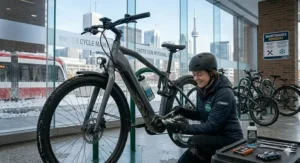
Safety Considerations for Toronto Riding
Essential Safety Gear
🪖 Helmet: Legally required and literally life-saving. The $100 you spend on a quality helmet (Giro, Bell, Specialized) matters more than any other accessory. Toronto roads are unpredictable — protect your head.
🦺 High-Visibility Clothing: Toronto drivers don’t always notice cyclists. A $40 reflective vest makes you visible from 300+ meters. Worth every penny, especially during early morning and evening commutes.
🔦 Lights: Front white, rear red — legally required. All bikes in our top 7 include basic lights, but upgrade to brighter LEDs (~300 lumens front, 100 lumens rear) for Toronto’s poorly lit side streets.
🔔 Bell: Required by law in Ontario. Use it proactively — don’t assume pedestrians hear you approaching from behind.
Toronto-Specific Hazards
Streetcar Tracks: The most dangerous obstacle for Toronto cyclists. Cross at 90-degree angles whenever possible. Fat tire e-bikes handle track crossings better than thin tires, but vigilance is essential. Avoid riding parallel to tracks — your tire can get caught and throw you instantly.
Door Zone: Stay at least 1 meter from parked cars. The $365 “dooring” fine for drivers is small comfort when you’re in the hospital. Position yourself confidently in the lane — it’s legal and safer than hugging parked cars.
Potholes: Spring brings massive potholes everywhere. Fat tires absorb impacts better, but severe hits damage rims and electronics. Stay alert on freshly thawed streets.
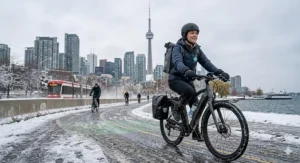
Winter Ice: Black ice forms on shaded sections and bridge surfaces. Even fat tires can’t defy physics — reduce speed on potentially icy patches. Morning commutes require extra caution before sun warms the pavement.
Frequently Asked Questions
❓ How fast can an ebike go in Canada?
❓ Can I ride my e-bike in winter in Toronto?
❓ What is the price range for commuter e-bike all seasons Toronto models?
❓ Do I need insurance for an e-bike in Toronto?
❓ What's the best battery capacity for Toronto commuting?
Conclusion: Your Path to Year-Round Toronto Cycling Freedom
The right commuter e-bike all seasons Toronto riders depend on transforms your relationship with the city. No more cramped subway cars during rush hour. No more circling blocks searching for parking. No more $15 Uber rides for a 3 km trip. Just pure freedom to explore Toronto on your terms, 365 days a year.
From our extensive research and analysis of Canadian-available options, three models stand out:
🏆 Best Overall: Hiboy P6 ($1,299 CAD) — The perfect balance of performance, winter capability, and value. Those 4-inch fat tires conquer Toronto streets in any season.
💰 Best Value: Jasion EB5 ($899 CAD) — Three-season reliability without breaking the bank. Ideal for riders new to e-bikes or those with shorter commutes.
❄️ Best Winter Performance: VoltBike Yukon 750 ($2,799 CAD) — Canadian-engineered specifically for our climate. The premium choice for serious year-round riders.
The Toronto winter electric bike you choose depends on your priorities: budget, commute distance, storage space, and how aggressively you plan to ride through winter conditions. But here’s the universal truth every Toronto e-bike owner discovers: once you experience the convenience and joy of electric-assisted cycling, there’s no going back to being stuck in traffic or waiting for delayed streetcars.
Your urban all-weather ebike adventure begins with a single purchase. Choose wisely, ride safely, and enjoy the freedom of being one of Toronto’s growing community of year-round cyclists. The bike lanes are waiting — will you join us?
Recommended for You
- 7 Best Tips for Riding Electric Bike in Deep Snow Canada 2026
- 7 Best Suspension Fat Tire E-Bike Models in Canada 2026
- 7 Best Studded Tires for Fat Tire E-Bikes Canada 2026: Ice Grip Guide
Disclaimer: This article contains affiliate links to Amazon.ca. If you purchase products through these links, we may earn a small commission at no additional cost to you.
✨ Found this helpful? Share it with your friends! 💬🤗
