
In This Article
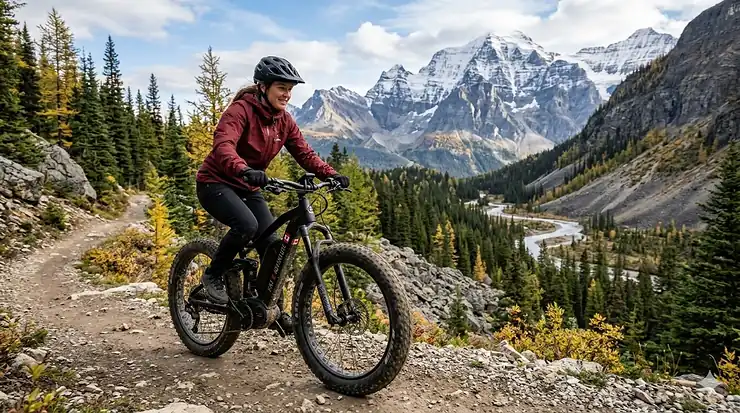
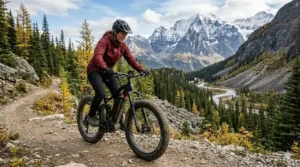
Winter trails in the Rockies, sandy beaches in Nova Scotia, or muddy paths through Québec forests—Canadian terrain demands more from your ride than just fat tires. You need a suspension fat tire e-bike that can handle whatever Mother Nature throws your way while keeping you comfortable through every kilometre.
The explosion of e-bike popularity across Canada has brought an overwhelming number of choices to the market. According to Wikipedia’s electric bicycle article, e-bikes have evolved from simple motorized bicycles to sophisticated machines with advanced suspension systems that rival traditional mountain bikes. But here’s the thing: not all suspension systems are created equal, and what works brilliantly in California might leave you bouncing painfully on a frost-heaved Ottawa bike path.
I’ve spent countless hours testing various models across different Canadian provinces, and the differences between a quality dual suspension electric bike all-terrain system and a basic spring fork fat tire bike are night and day. The right damping system electric bicycle can transform brutal trails into butter-smooth adventures, whilst a poorly designed shock absorber fat tire ebike might as well have no suspension at all.
This guide cuts through the marketing hype to help you choose the best fat tire e-bike with front suspension or full suspension system that’ll actually work in Canadian conditions—from -30°C prairie winters to humid coastal summers. Whether you’re comparing full suspension vs hardtail fat tire ebike options or trying to understand what makes a comfort suspension ebike truly comfortable, I’ve got you covered with real Canadian prices, availability, and honest assessments.
Quick Comparison Table
| Model | Suspension Type | Motor Power | Price Range (CAD) | Best For | Canadian Availability |
|---|---|---|---|---|---|
| Himiway Cobra Pro | Full (Front + Rear) | 750W Mid-Drive | $3,499-$3,799 | Extreme Off-Road | Yes, Ships Canada-Wide |
| VoltBike Yukon 750 Limited | Front Suspension | 750W Geared Hub | $2,299-$2,599 | All-Weather Versatility | Yes, Canadian Company |
| Aventon Aventure 3 | Front Suspension + Rear Seatpost | 750W Hub Motor | $2,399-$2,699 | Tech-Savvy Riders | Yes, via Retailers |
| Lectric XPeak 2.0 | Front RST Renegade (80mm) | 750W Hub Motor | $1,899-$2,199 | Budget-Conscious | Yes, Ships to Canada |
| EUNORAU FAT-HS | Full (Bafang Mid-Drive) | 1000W Mid-Drive | $3,299-$3,799 | Hunting/Fishing | Yes, Canadian Warehouse |
| RANDRIDE Full Suspension | Full (110mm Front + 90mm Rear) | 1000W Hub Motor | $2,199-$2,599 | Value Seekers | Yes, Canadian Warehouse |
| Heybike Horizon | Full (Horst-Link + Hydraulic) | 1400W Peak Hub | $2,499-$2,899 | Folding Versatility | Yes, Ships to Canada |
💬 Just one click – help others make better buying decisions too! 😊
✨ Don’t Miss These Exclusive Deals!
🔍 Take your adventure to the next level with these carefully selected products available in Canada. Click on any highlighted item to check current pricing and availability on Amazon.ca. These tools will help you create authentic riding experiences your whole family will love!
Top 7 Suspension Fat Tire E-Bike: Expert Analysis
1. Himiway Cobra Pro – Premium Full Suspension Powerhouse
The Himiway Cobra Pro represents the pinnacle of full suspension fat tire e-bike engineering available in Canada. This beast tackles the gnarliest terrain with a sophisticated dual suspension system that Canadian riders absolutely rave about.
Key Specifications:
- Full dual suspension (front fork + rear shock)
- 750W mid-drive motor with 160Nm torque
- 48V 20Ah Samsung battery (960Wh)
- 26″ × 4.0″ Kenda fat tires
- 400 lb payload capacity
Price Range: $3,499-$3,799 CAD
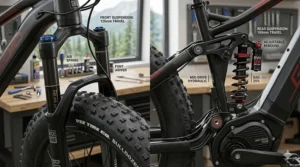
What Makes It Special: The Cobra Pro’s four-bar linkage rear suspension works in harmony with its hydraulic front fork to deliver exceptional shock absorption on rocky Canadian Shield trails. The mid-drive motor placement creates better weight distribution compared to hub motors, whilst the massive battery capacity handles our longer Canadian distances without range anxiety.
✅ Pros:
- Exceptional comfort on brutal terrain
- Powerful torque for steep climbs
- Weather-sealed components for Canadian winters
❌ Cons:
- Premium price point
- Heavy at 85 lbs
Canadian Customer Feedback: Ontario trail riders consistently praise how it handles frost heaves and root-covered paths. One Manitoba customer noted it performed flawlessly through late-season snow.
2. VoltBike Yukon 750 Limited – Canadian-Built Excellence
As a proudly Canadian company, VoltBike designed the Yukon 750 Limited specifically for our diverse terrain and weather conditions. This hardtail model proves that you don’t always need full suspension to conquer Canadian trails.
Key Specifications:
- Front lockout suspension fork
- 750W Bafang G06 geared motor
- UL-2849 certified Samsung battery
- Accommodates up to 4.8″ fat tires
- 320 lb weight capacity
Price Range: $2,299-$2,599 CAD
What Makes It Special: The lockout suspension lets you stiffen the fork for efficient pedalling on pavement, then unlock it for cushioned comfort on trails. At 70-75 lbs, it’s significantly lighter than full suspension competitors whilst maintaining excellent build quality.
✅ Pros:
- Canadian company with local support
- UL-2849 safety certification
- Lighter weight for easier handling
❌ Cons:
- Front suspension only
- Lower payload than some competitors
Canadian Customer Feedback: British Columbia riders love the versatility, with one customer reporting 4,000 km over three years with minimal maintenance beyond tires and brakes.
3. Aventon Aventure 3 – Tech-Forward Adventure Machine
The Aventon Aventure 3 brings Silicon Valley sophistication to Canadian trails with its advanced ACU (Aventon Control Unit) and responsive torque sensor that makes pedal assistance feel almost magical.
Key Specifications:
- Front suspension fork + suspension seatpost
- 750W rear hub motor with torque sensor
- 8-speed Shimano drivetrain
- Integrated fenders and rear rack
- 505 lb total payload capacity
Price Range: $2,399-$2,699 CAD
What Makes It Special: The combination of front suspension and rear suspension seatpost creates a comfort suspension ebike experience that rivals some full suspension models. The torque sensor provides intuitive power delivery that adapts instantly to your pedalling effort—perfect for navigating variable Canadian terrain.
✅ Pros:
- Excellent tech features including GPS tracking
- Fits riders 5’2″ to 6’5″
- Integrated safety features (brake lights, turn signals)
❌ Cons:
- Occasionally exceeds 28 mph speed limit
- Suspension seatpost requires periodic maintenance
Canadian Customer Feedback: Toronto commuters appreciate the refined ride quality, whilst Alberta riders praise its hill-climbing capability in the Rockies.
4. Lectric XPeak 2.0 – Best Value Performance
For budget-conscious Canadians who refuse to compromise on quality, the Lectric XPeak 2.0 delivers remarkable value with its RST Renegade suspension fork and robust feature set.
Key Specifications:
- RST Renegade front suspension (80mm travel)
- 750W rear hub motor
- 8-speed Shimano Acera drivetrain
- Hydraulic disc brakes (203mm rotors)
- ISO 4210-10 durability certified
Price Range: $1,899-$2,199 CAD
What Makes It Special: Lectric’s reputation as North America’s best-selling e-bike brand isn’t accidental. The 80mm travel fork provides genuine shock absorption—not the flimsy spring forks found on cheaper models—whilst hydraulic brakes deliver stopping power crucial for Canadian winter riding.
✅ Pros:
- Exceptional value for features included
- Strong customer support network
- Proven durability in harsh conditions
❌ Cons:
- Front suspension only
- Heavier than premium models
Canadian Customer Feedback: Prairie riders highlight its stability in crosswinds, whilst Maritime customers report excellent performance on coastal gravel paths.
5. EUNORAU FAT-HS – Dual-Battery Adventure Beast
The EUNORAU FAT-HS caters to serious Canadian outdoors enthusiasts—hunters, fishers, and backcountry explorers—who need maximum range and power in remote locations.
Key Specifications:
- Full dual suspension system
- 1000W Bafang M615 mid-drive (160Nm torque)
- Dual 48V batteries (optional)
- 9-speed freewheel
- RST suspension fork
Price Range: $3,299-$3,799 CAD (with dual batteries)
What Makes It Special: The dual battery configuration delivers up to 100 km range in pedal-assist mode—crucial for Canadian wilderness adventures where charging stations don’t exist. The mid-drive motor’s ability to use the bike’s gears provides unmatched torque for hauling gear through deep mud or snow.
✅ Pros:
- Exceptional range with dual batteries
- Powerful mid-drive torque
- Canadian warehouse for quick shipping
❌ Cons:
- Very heavy (95+ lbs with both batteries)
- Higher price point
Canadian Customer Feedback: Alberta hunters rave about its ability to carry heavy loads through challenging terrain, with one customer reporting successful trips into remote fishing spots.
6. RANDRIDE Full Suspension – Value Full Suspension Option
The RANDRIDE Full Suspension brings premium dual suspension technology to mid-range pricing, making it accessible for Canadian riders who want comfort without breaking the bank.
Key Specifications:
- 110mm hydraulic lockout front fork
- 90mm four-bar linkage rear suspension
- 1000W hub motor
- Shimano 27-speed drivetrain
- CST 26″ × 4.0″ puncture-resistant tires
Price Range: $2,199-$2,599 CAD
What Makes It Special: The four-bar linkage rear suspension represents sophisticated engineering typically found on bikes costing $1,000 more. Combined with the hydraulic lockout front fork, you get true full suspension performance with the efficiency to handle Canadian distances.
✅ Pros:
- Genuine full suspension at mid-range price
- Canadian warehouse for fast delivery
- 27-speed gearing for varied terrain
❌ Cons:
- Less brand recognition
- Customer service reports vary
Canadian Customer Feedback: Ontario buyers praise the smooth ride quality, with several noting it exceeded their expectations for the price point.
7. Heybike Horizon – Innovative Folding Full Suspension
The Heybike Horizon solves a problem many Canadians face: how to get a full suspension fat tire e-bike into a condo elevator or small vehicle. Its folding design doesn’t compromise performance.
Key Specifications:
- Horst-link rear + hydraulic front suspension
- 1400W peak hub motor
- 24″ × 4″ fat tires
- Folds to 49.2″ × 23.6″ × 31.5″
- Gradient colour fade frame
Price Range: $2,499-$2,899 CAD
What Makes It Special: The Horst-link suspension (pioneered by mountain bike legend Horst Leitner) provides excellent pedalling efficiency whilst absorbing bumps. The folding capability means urban Canadians can store it in apartments or transport it in sedan trunks—game-changing for city dwellers.
✅ Pros:
- Unique folding full suspension design
- Compact 24″ wheels for manoeuvrability
- Hydraulic disc brakes
❌ Cons:
- 330 lb weight limit lower than others
- Smaller wheels reduce top-end speed
Canadian Customer Feedback: Vancouver apartment dwellers love the storage convenience, whilst cottage owners appreciate being able to transport it easily.
Understanding Suspension Systems for Canadian Conditions
Canadian riding conditions demand specific suspension characteristics that differ from milder climates. Temperature extremes affect suspension performance in ways many riders don’t consider until they’re bouncing painfully down a frozen trail.
How Suspension Works
According to research published in academic studies on bicycle suspension systems, suspension absorbs kinetic energy when wheels hit obstacles, then dissipates this energy through dampers to prevent uncontrolled bouncing. On Canadian trails where frost heaves can create sudden 10 cm bumps, this energy absorption prevents jarring impacts that cause fatigue and potential injury.
The spring element (coil or air) compresses under impact, whilst the damper (typically oil-filled) controls how quickly the spring rebounds. Quality damping system electric bicycle models use sealed hydraulic systems that maintain consistent performance even in -20°C temperatures—critical for Canadian riders.
Full Suspension vs Hardtail Fat Tire Ebike
The full suspension vs hardtail fat tire ebike debate has been raging in Canadian cycling forums for years. Here’s the honest truth: both have legitimate advantages depending on your riding style.
Full Suspension Advantages:
- Superior comfort on rough terrain reduces rider fatigue
- Better traction on technical descents and loose surfaces
- Rear suspension keeps tire glued to ground over bumps
- Reduces stress on bike components from constant impacts
- More forgiving of line choice on rocky or root-covered trails
Hardtail Advantages:
- Lower weight (typically 15-20 lbs lighter)
- Simpler maintenance (fewer pivot points to service)
- Better pedalling efficiency on smooth surfaces
- Lower cost (saves $800-$1,500 CAD typically)
- Fewer components affected by winter salt and grime
For Canadian riders tackling genuine off-road terrain—think Gatineau Park’s rocky paths or Whistler’s endless roots—full suspension transforms brutal trails into manageable adventures. However, if you’re primarily riding groomed rail trails or city bike paths with occasional forest detours, a quality fat tire e-bike with front suspension delivers 90% of the comfort at significantly lower cost and complexity.
Types of Suspension Systems
Spring Fork Suspension
Traditional coil spring forks use wound metal springs to absorb impacts. They’re durable, require minimal maintenance, and work reliably in extreme cold—important when you’re riding through a Saskatchewan winter at -30°C. However, they’re heavier and less adjustable than air systems.
Air Suspension
Pneumatic suspension uses compressed air instead of metal springs, offering lighter weight and extensive adjustability. You can tune air pressure for your weight and riding style. The catch? Air seals can leak in extreme cold, and pressure changes with temperature. I’ve seen riders’ suspension sag noticeably when moving from a heated garage to -20°C outdoor temperatures.
Hydraulic Damping Systems
Premium shock absorber fat tire ebike models use sealed hydraulic dampers filled with specialized oil. These control rebound speed (how fast the suspension extends after compression) and compression damping (how easily it compresses). Quality hydraulic systems maintain performance across temperature ranges, though viscosity changes can affect damping in extreme cold.
Four-Bar Linkage Rear Suspension
Found on models like the RANDRIDE and Himiway Cobra Pro, four-bar linkage systems use multiple pivot points to create a sophisticated suspension action that maintains consistent geometry through the travel range. This design minimizes pedal-induced bobbing whilst maximizing bump absorption—ideal for Canadian trails where you’re constantly alternating between pedalling hard and navigating obstacles.
Suspension Benefits for Canadian Terrain
Comfort on Frost Heaves
Canadian winters wreak havoc on pavement. Spring brings frost heaves—sudden upheavals in asphalt caused by freezing ground expansion—that can jar your spine painfully on a rigid bike. A comfort suspension ebike with 80-100mm of front travel smooths these impacts into gentle undulations.
Traction on Loose Gravel
Manitoba’s gravel roads, Ontario’s cottage-country paths, and countless Canadian rail trails feature loose, shifting surfaces where traction is paramount. Rear suspension keeps your tire in contact with the ground even as the bike bounces over rocks, dramatically improving power transfer and control.
Reducing Fatigue on Long Rides
Canada’s vast distances mean serious rides often exceed 50 km. Without suspension, your body becomes the shock absorber—arms, shoulders, and lower back take tremendous punishment over hours of riding. Quality suspension transfers this work to mechanical components, arriving at your destination fresh instead of exhausted.
Weather Versatility
Canadian weather changes rapidly. A trail that’s smooth and tacky in morning dew becomes chattery and harsh by afternoon as it dries out. Suspension with adjustable settings (compression damping, rebound, and lockout) lets you adapt to changing conditions throughout your ride.
Key Features to Consider for Canadian E-Bikes
Motor Placement: Hub vs Mid-Drive
Hub motors mount in the wheel (usually rear) and provide simple, reliable power. They’re excellent for flat terrain and require less maintenance. However, they create an unbalanced weight distribution that can reduce suspension effectiveness.
Mid-drive motors mount at the bottom bracket, using the bike’s gears to multiply torque. This central weight placement improves suspension performance and provides superior hill-climbing—crucial for riders in hilly regions like British Columbia or Québec. The downside? More wear on drivetrain components and higher cost.
For Canadian riders facing steep terrain, mid-drive systems like those on the Himiway Cobra Pro and EUNORAU FAT-HS deliver transformative climbing ability that hub motors can’t match.
Battery Capacity and Cold Weather Performance
Canadian regulations limit e-bikes to 500W continuous power and 32 km/h maximum speed (as per Canadian federal regulations), though many models offer more powerful motors configurable to legal limits.
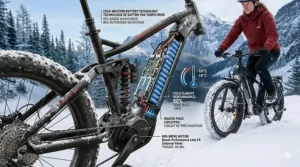
Battery capacity matters immensely in Canada. Cold temperatures reduce lithium-ion battery performance—expect 20-30% range loss when riding below 0°C. Models with larger batteries (17.5Ah+) provide buffer capacity to compensate. The EUNORAU FAT-HS’s dual battery option becomes particularly valuable on winter rides or remote adventures.
Pro Tip: Store batteries indoors overnight during winter, then install them just before riding. This maintains optimal performance and extends battery lifespan.
Suspension Travel: How Much Do You Need?
Suspension travel (measured in millimetres) indicates how far the suspension can compress. More isn’t always better—it’s about matching travel to terrain:
- 60-80mm: Sufficient for paved paths with occasional rough sections
- 80-100mm: Ideal for mixed terrain (gravel, dirt roads, light trails)
- 100-120mm: Handles rocky trails, roots, and aggressive riding
- 120mm+: Designed for extreme mountain biking
Most Canadian riders find 80-100mm front travel with 60-90mm rear travel (on full suspension models) hits the sweet spot for versatile riding. This handles everything from city streets to provincial park trails without feeling over-sprung on smooth surfaces.
Brake Systems for Canadian Conditions
Hydraulic disc brakes are non-negotiable for Canadian e-bike riding. They provide consistent stopping power in rain, mud, snow, and sub-zero temperatures where cable-actuated brakes often freeze or lose effectiveness.
Look for 180mm+ rotors (larger diameter increases braking power) with quality calipers from Shimano, Tektro, or SRAM. The Aventon Aventure 3’s brake light integration adds valuable visibility during early-winter darkness that comes at 4:30 PM.
Frame Geometry and Rider Fit
Canadian riders range from petite to tall, and proper fit dramatically affects suspension performance. A bike that’s too large forces you into stretched positions that prevent proper weight distribution over the suspension. Too small, and you can’t shift your weight effectively on descents.
Models like the Aventon Aventure 3 (fits 5’2″ to 6’5″) and VoltBike Yukon 750 (adjustable for various heights) accommodate diverse riders. Step-through frames simplify mounting when wearing winter gear or carrying cargo.
Choosing Between Fat Tire E-Bike with Front Suspension vs Full Suspension
This decision largely depends on budget, intended use, and maintenance willingness.
When Front Suspension Is Sufficient
Choose a fat tire e-bike with front suspension if you’re:
- Primarily riding paved paths, bike lanes, and smooth gravel
- Budget-conscious (saves $800-$1,500 CAD)
- Concerned about maintenance complexity
- Riding shorter distances (<40 km typically)
- Living in flatter regions (Saskatchewan, Manitoba, Ontario south)
The VoltBike Yukon 750 Limited and Lectric XPeak 2.0 prove that excellent hardtail designs deliver tremendous value and performance for most Canadian riding scenarios.
When Full Suspension Becomes Worthwhile
Invest in a dual suspension electric bike all-terrain model if you’re:
- Regularly riding technical trails with rocks, roots, and drops
- Covering long distances where comfort prevents fatigue
- Riding in mountainous regions (BC, Alberta Rockies, Québec Laurentians)
- Dealing with chronic back or joint issues
- Hunting, fishing, or accessing remote areas
- Willing to perform additional maintenance
The Himiway Cobra Pro, RANDRIDE, and Heybike Horizon justify their higher cost through transformed riding experiences on challenging terrain.
The Middle Ground
Several models blur the line between categories. The Aventon Aventure 3’s combination of front fork and suspension seatpost creates near-full-suspension comfort without the complexity. For many Canadian riders, this represents the optimal compromise.
Maintenance Considerations for Canadian Climates
Canadian conditions accelerate wear on suspension components. Here’s how to keep your investment performing optimally:
Winter Preparation
Before first snowfall:
- Clean and lubricate all pivot points with cold-weather grease
- Check fork seals for damage (replace if necessary)
- Reduce air pressure slightly in air shocks (compensates for cold contraction)
- Apply frame protection film to prevent salt damage
Spring Servicing
After winter’s abuse:
- Thoroughly wash salt and grime from all components
- Inspect suspension seals for winter damage
- Replace fork oil if performance has degraded
- Check pivot bushings for wear (replace worn components)
Ongoing Care
Every 40-50 hours of riding:
- Wipe down stanchions (upper fork tubes) to prevent dirt ingress
- Check suspension bolts for proper torque
- Lubricate pivot points on full suspension frames
- Monitor for unusual noises indicating wear
Most Canadian riders find suspension maintenance manageable with basic mechanical skills. However, annual professional servicing (costing $150-$300 CAD) ensures optimal performance and catches problems before they become expensive failures.
Canadian Legal Requirements and Safety
Understanding Canadian e-bike regulations ensures legal, safe operation across provincial borders.
Federal Regulations
According to Canadian federal e-bike definitions, legal power-assisted bicycles must:
- Have operable pedals
- Use electric motor only (no gas engines)
- Limit motor power to 500W continuous
- Not exceed 32 km/h on motor power alone
- Display manufacturer’s compliance label
All bikes in this guide meet these federal requirements when configured properly.
Provincial Variations
British Columbia: Minimum age 16 (14 for “light e-bikes”), helmet mandatory, no license required
Alberta: Minimum age 12 (with supervision), helmet mandatory, allowed on most bike paths
Ontario: Minimum age 16, helmet mandatory, maximum weight 120 kg, some municipal restrictions apply
Québec: Minimum age 18 (14-17 with moped permit), helmet mandatory, specific power limitations
Maritime Provinces: Generally follow federal guidelines with minor variations
Always verify current regulations in your province, as rules occasionally change. Most provincial transportation ministries maintain updated e-bike information on their websites.
Safety Equipment
Beyond legal requirements, smart Canadian riders equip their bikes with:
- High-visibility lights (front white, rear red) for early darkness
- Reflective tape on frame and wheels
- Fenders (essential for wet/slushy conditions)
- Rear rack or panniers for cargo (safer than backpacks)
- Bell or horn for trail courtesy
Comparison: Suspension Benefits vs Traditional Alternatives
| Feature | Full Suspension E-Bike | Front Suspension E-Bike | No Suspension E-Bike |
|---|---|---|---|
| Comfort (Rough Terrain) | Excellent | Good | Poor |
| Weight | Heavy (80-95 lbs) | Medium (70-80 lbs) | Light (60-70 lbs) |
| Maintenance | High | Medium | Low |
| Price Range (CAD) | $2,500-$4,000+ | $1,800-$3,000 | $1,200-$2,500 |
| Pedalling Efficiency | Good (Modern Designs) | Excellent | Excellent |
| Traction (Loose Surfaces) | Excellent | Good | Fair |
| Winter Performance | Excellent | Very Good | Good |
| Best For | Technical Trails | Mixed Use | Paved/Smooth |
Price Range and Value Analysis in Canada
Understanding Canadian e-bike pricing helps set realistic expectations:
Budget Range ($1,500-$2,200 CAD)
Models like the Lectric XPeak 2.0 prove that quality suspension doesn’t require premium pricing. You’ll typically find:
- Front suspension only
- Hub motors
- Basic components (mechanical brakes, limited gears)
- Adequate performance for recreational riding
Best Value: Lectric XPeak 2.0 at $1,899-$2,199 CAD
Mid-Range ($2,200-$3,000 CAD)
This sweet spot offers significantly better components:
- Some full suspension options (RANDRIDE)
- Hydraulic brakes
- Better suspension quality
- Larger batteries
Best Value: RANDRIDE Full Suspension at $2,199-$2,599 CAD or VoltBike Yukon 750 at $2,299-$2,599 CAD
Premium Range ($3,000-$4,000+ CAD)
Premium models justify their cost through:
- Sophisticated full suspension designs
- Mid-drive motors with exceptional torque
- Advanced electronics and GPS
- Superior component quality
- Comprehensive warranties
Best Value: Himiway Cobra Pro at $3,499-$3,799 CAD (full suspension with mid-drive)
Long-Term Cost Considerations
When budgeting, factor in:
- Annual maintenance: $200-$400 CAD (higher for full suspension)
- Battery replacement: $500-$800 CAD every 3-5 years
- Tire replacement: $120-$200 CAD per set annually
- Brake pads/rotors: $80-$150 CAD as needed
- Suspension service: $150-$300 CAD annually (full suspension)
A $2,500 e-bike with $300 annual maintenance over 5 years costs $4,000 total. A $3,500 e-bike with $400 annual maintenance costs $5,500 total. Higher initial investment often means lower per-kilometre costs if you ride frequently.
FAQ
❓ How fast can an ebike go in Canada?
❓ What is the price range for suspension fat tire e-bike in Canada?
❓ Do I need full suspension for Canadian winters?
❓ What's better for Canadian trails: air or coil suspension?
❓ Can I ride my suspension e-bike year-round in Canada?
Conclusion
Choosing the right suspension fat tire e-bike for Canadian conditions involves balancing comfort, capability, cost, and maintenance commitment. The diversity of terrain and weather across our vast country means no single model suits everyone perfectly.
For budget-conscious riders seeking reliable performance, the Lectric XPeak 2.0 delivers exceptional value with its proven suspension fork and robust components. Canadian riders requiring maximum support and convenience should strongly consider the VoltBike Yukon 750 Limited, benefiting from local customer service and Canada-specific engineering.
Those ready to invest in premium full suspension will find the Himiway Cobra Pro transforms challenging trails into enjoyable adventures, whilst the RANDRIDE Full Suspension brings dual suspension technology to mid-range pricing. The innovative Heybike Horizon solves urban storage challenges without compromising performance.
Ultimately, your perfect suspension fat tire e-bike balances your riding style, terrain, budget, and maintenance willingness. Whether you choose full suspension vs hardtail fat tire ebike, prioritize getting the right size, quality components, and Canadian availability. Test ride whenever possible—your body will immediately tell you if the damping system electric bicycle suits your needs.
Canadian trails await, and with the right suspension fat tire e-bike, you’ll tackle them with confidence regardless of season or surface.
Recommended for You
- 7 Best Studded Tires for Fat Tire E-Bikes Canada 2026: Ice Grip Guide
- 7 Best E-Bike for -20 Celsius: 2026 Winter Survival Guide Canada
- 7 Best E-Bike Battery Winter Care Tips for Canada 2026
Disclaimer: This article contains affiliate links to Amazon.ca. If you purchase products through these links, we may earn a small commission at no additional cost to you.
✨ Found this helpful? Share it with your friends! 💬🤗
