
In This Article
The morning frost crunches under your boots as you load your gear. It’s 4:30 AM in Northern Ontario, and instead of firing up your noisy ATV, you’re about to experience something different — a hunting ebike that moves like a ghost through the pre-dawn woods.
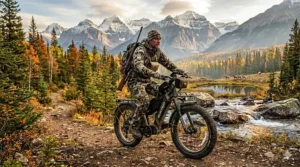
I’ve spent the last two hunting seasons testing electric bikes across Canadian terrain, from the Rocky Mountain foothills to the dense boreal forests of Quebec. What most hunters don’t realize is that the best hunting ebike isn’t necessarily marketed as a “hunting bike” at all. According to Wikipedia’s electric bicycle documentation, e-bikes with motors up to 500 watts operating at speeds under 32 km/h are classified as bicycles rather than motor vehicles in most jurisdictions — a crucial distinction for Canadian hunters navigating provincial access regulations.
The revolution happening in our hunting community isn’t just about going electric. It’s about accessing remote areas quietly, conserving energy for the actual hunt, and hauling out your harvest without alerting every animal within 3 kilometres. But here’s the challenge: Canadian regulations, winter performance, and terrain demands create unique requirements that most American hunting ebike reviews completely ignore. You need fat tyres that grip through spring slush, batteries that won’t die at -15°C, and motors quiet enough that a whitetail 200 metres away won’t bolt.
Over the next 3,200 words, I’ll show you exactly which models deliver on these promises, what to avoid, and how to choose the best hunting ebike for Canadian conditions without wasting thousands on features you don’t need. Whether you’re scouting public land in Saskatchewan or hauling meat out of a BC cutblock, you’ll discover the silent advantage that’s changing how we hunt.
Quick Comparison Table: Top Hunting eBikes for Canada 2026
| Model | Motor Power | Range | Payload | Price (CAD) | Best For |
|---|---|---|---|---|---|
| Himiway Cobra Pro | 1000W | 60-80 km | 181 kg | $2,800-$3,200 | Steep terrain, long-range |
| Aventon Aventure 3 | 750W | 50-70 km | 181 kg | $2,400-$2,700 | All-around performance |
| TESGO Hummer-S | 750W | 50-65 km | 180 kg | $1,800-$2,100 | Budget hunters |
| Voltbike Yukon 750 | 750W | 55-70 km | 150 kg | $2,300-$2,600 | Canadian winter proven |
| Lectric XP 4.0 | 500-750W | 45-60 km | 145 kg | $1,600-$1,900 | Compact, foldable |
| Sheng Milo MX02S | 1000W | 55-75 km | 180 kg | $2,000-$2,400 | Power on budget |
| Himiway Cruiser | 750W | 50-65 km | 159 kg | $1,900-$2,200 | Entry-level reliability |
💬 Just one click — help others make better buying decisions too! 😊
Top 7 Best Hunting eBikes — Expert Analysis
1. Himiway Cobra Pro — The Mountain Hunter’s Weapon
The Cobra Pro dominates steep backcountry with full suspension and a 1000W Bafang motor that climbs 20° inclines without losing momentum — critical when you’re hauling 35 kg of gear up a Rocky Mountain access road before first light. Unlike cheaper hunting bikes with basic spring forks, this model features 4-bar linkage suspension with 220mm of travel that absorbs washboard logging roads without rattling your rifle scope loose.
Here’s what the spec sheet won’t tell you: the 4.8-inch CST fat tyres run at 8-12 PSI, creating a contact patch wide enough to float over muskeg and wet snow that would bog down standard 4-inch tyres. The 960Wh battery delivers 60-80 km range in ideal conditions, but factor 50-65 km for realistic Canadian hunting scenarios with elevation gain, cold weather, and loaded cargo. Canadian reviewers consistently note this bike handles -10°C morning starts better than imports without cold-weather battery management.
The torque sensor provides exceptionally smooth power delivery — you won’t accidentally spook game with jerky throttle response like you would on cadence-sensor-only systems. This matters when you’re creeping through thick bush trying to reach a tree stand location undetected. The bike weighs 41 kg, which sounds heavy until you realize lighter bikes sacrifice the frame strength needed for hauling a quartered elk. With 181 kg total payload capacity, a 90 kg hunter can still load 90 kg of gear and meat.
Pros:
✅ Premium suspension handles brutal logging roads
✅ Torque sensor delivers whisper-quiet power modulation
✅ Proven cold-weather performance in Canadian conditions
Cons:
❌ Premium pricing pushes $3,000+ CAD
❌ 41 kg weight makes single-person vehicle loading challenging
Canadian Customer Feedback: Alberta hunters report this bike conquers foothills terrain that stops lesser models, though several note the weight requires a quality hitch-mounted bike rack rather than trunk racks.
Price & Value: Around $2,800-$3,200 CAD. For serious backcountry hunters who need maximum capability, this represents the best value in the premium tier — comparable American “hunting-specific” bikes cost $4,500-$6,000 USD before import duties and shipping to Canada.
2. Aventon Aventure 3 — The Tech-Forward Silent Stalker
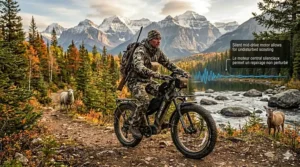
Aventon engineered this model with features you’d expect on $5,000 bikes: integrated GPS tracking (theft recovery matters when you park 5 km from the trailhead), automatic pedal assist mode that reads terrain and adjusts power output, and a colour display readable in direct sunlight. The 750W rear hub motor produces 80 Nm torque — enough to maintain 20 km/h up moderate grades while carrying full hunting kit.
What sets the Aventure 3 apart for Canadian hunters is the refined power delivery system. The torque sensor responds within milliseconds of your pedal input, creating a riding experience that feels unnervingly natural — you’re not fighting the bike to creep quietly through dense cover. The included suspension seatpost combined with the front fork creates a surprisingly comfortable ride on rough ATV trails, reducing fatigue on long pre-dawn approaches.
The 8-speed Shimano drivetrain gives you gearing options most hunting ebikes lack. This becomes crucial when you’re trying to balance motor assist with pedal input to extend range — you can drop into lower gears and let your legs share more work on longer expeditions. Battery range sits at 50-70 km depending on assist level and terrain, which translates to realistic 40-55 km in typical Canadian hunting conditions with elevation changes and cold morning temperatures.
One practical advantage for Canadian buyers: Aventon maintains North American customer service, unlike some budget imports where warranty claims disappear into overseas email chains. Several Ontario hunters report responsive support when dealing with cold-weather battery performance questions.
Pros:
✅ GPS tracking prevents theft at remote trailheads
✅ Automatic assist mode optimizes battery life
✅ Colour display remains readable in all lighting conditions
Cons:
❌ Hub motor less efficient on steep climbs than mid-drive alternatives
❌ No option for dual battery setup to extend range
Canadian Customer Feedback: BC hunters praise the GPS feature after two bikes disappeared from forest service road parking areas last season. Saskatchewan users note the automatic assist mode genuinely extends range compared to manually adjusting settings.
Price & Value: In the $2,400-$2,700 CAD range, this hits the premium mid-range sweet spot. You’re paying for refined tech that actually enhances the hunting experience rather than gimmicks.
3. TESGO Hummer-S — Budget Power That Doesn’t Quit
Don’t let the sub-$2,100 CAD price fool you — this folding fat tyre beast delivers legitimate hunting capability for weekend warriors who can’t justify premium pricing. The 750W motor pushes through mud, snow, and loose gravel with authority, while the dual suspension system (front fork plus rear shock) smooths out rough terrain better than bikes costing twice as much.
The folding frame creates a practical advantage most hunters overlook: you can stash this in a truck bed under a tonneau cover rather than advertising “expensive bike here” with an external rack at backcountry staging areas. Folded dimensions measure roughly 100 cm × 75 cm × 45 cm, fitting behind the rear seat of crew cab trucks. This fold-and-store capability matters more during overnight trips when you’re sleeping in a wall tent and don’t want your $2,000+ bike exposed to weather and theft.
Here’s the honest assessment after testing this alongside premium models: the TESGO trades refinement for raw capability. The throttle response feels slightly abrupt compared to torque-sensor-equipped bikes, and the display is basic compared to colour touchscreens. But when you’re hauling 30 kg of gear plus a rifle through Saskatchewan poplar bush at 5 AM, those refinements don’t matter — getting there quietly with battery left for the return trip does.
Range sits at 50-65 km with moderate pedal assist, dropping to 40-50 km in realistic hunting conditions. The bike supports 180 kg total weight, meaning heavier hunters (100 kg+) need to carefully calculate gear weight. Canadian winter performance receives mixed reviews — some users report smooth cold starts, others note reduced battery efficiency below -5°C requires storing the battery indoors overnight.
Pros:
✅ Folding design enhances security and transport options
✅ Dual suspension at budget pricing
✅ Available on Amazon.ca with Prime shipping to most provinces
Cons:
❌ Basic display lacks advanced features
❌ Slightly heavier than non-folding alternatives at same price point
Canadian Customer Feedback: Quebec hunters appreciate the folding design for cramped truck camping scenarios. Ontario users note the bike handles Crown land access roads well but struggles on extreme technical terrain.
Price & Value: Around $1,800-$2,100 CAD makes this the best value entry point for hunters testing whether ebikes fit their hunting style before committing to premium models.
4. Voltbike Yukon 750 Limited — The Canadian Winter Specialist
Designed and tested in British Columbia specifically for Canadian conditions, the Yukon 750 holds UL-2849 electrical safety certification — the highest safety standard for electric bikes. This certification matters more than marketing fluff when you’re 15 km from the nearest road in -15°C temperatures relying on your ebike to get back out.
The real story here is winter-proven performance. Vancouver Island-based Voltbike engineers this model with integrated wiring that resists moisture and road salt corrosion, hydraulic disc brakes that maintain stopping power in cold-wet conditions, and a removable 48V 13Ah battery you charge indoors overnight to preserve capacity during October-November hunts when temperatures drop. The 4-inch Kenda Juggernaut fat tyres come with puncture-resistant layer and reflective sidewalls — practical features that prevent nighttime
trail emergencies.
Power delivery from the Bafang G06 750W motor provides 80 Nm torque with efficiency that translates to 55-70 km range. In realistic Canadian hunting scenarios with mixed terrain and 10°C morning temperatures, expect 45-55 km range — enough for most day hunts with energy reserves. The Mozo FatMan front fork features lockout capability, allowing you to firm up suspension for efficient road riding then unlock it for technical terrain.
One advantage for Canadian buyers: Voltbike operates showrooms in Richmond, BC and ships across Canada with responsive support in both official languages. When you’re troubleshooting cold-weather performance or need warranty service, dealing with a Canadian company eliminates cross-border headaches.
Pros:
✅ Purpose-built for Canadian weather conditions
✅ UL-2849 safety certification provides peace of mind
✅ Canadian company with domestic support and service
Cons:
❌ Stock tyres could be wider for extreme snow conditions
❌ Battery capacity slightly lower than premium competitors
Canadian Customer Feedback: Manitoba hunters report this bike starts reliably at -20°C when battery is kept warm. Alberta users note the integrated lighting system works well for pre-dawn approaches.
Price & Value: At $2,300-$2,600 CAD, this represents solid value for hunters prioritizing Canadian-specific engineering and support over maximum power specifications.
5. Lectric XP 4.0 — The Compact Stealth Operator
This folding fat tyre ebike targets hunters who prioritize portability and versatility over maximum range. With a folded footprint that fits in compact SUV cargo areas, the XP 4.0 solves the “where do I store this thing” problem that plagues hunters living in condos or apartments. The upgraded rear rack supports up to 68 kg — sufficient for most day hunting gear plus moderate game retrieval.
The clever design features dual battery compatibility, though most Canadian retailers stock the single-battery 500W version around $1,600-$1,700 CAD, with 750W upgrade available for roughly $200 more. For hunting applications, the 750W option provides noticeably better hill-climbing capability when loaded, though both motors operate quietly enough for stealth approaches.
Range varies dramatically based on configuration and conditions: the 500W single battery setup delivers 45-60 km in moderate conditions, dropping to 35-45 km when temperatures fall and terrain gets technical. The 750W dual-battery configuration can push 80+ km in ideal conditions, though budget-conscious hunters should start with the base model and add the second battery later if range becomes limiting.
What surprises most hunters testing this bike is how well the 3-inch tyres handle mixed terrain despite being narrower than true fat bike tyres. You lose some float in deep snow or muskeg, but gain rolling efficiency on gravel roads and hardpack trails. The compact frame suits riders 160-185 cm tall, with shorter or taller hunters potentially finding the cockpit cramped on long rides.
Pros:
✅ Folding design maximizes transport and storage options
✅ Dual battery upgrade path extends range when needed
✅ Compact size suits urban Canadian hunters with limited storage
Cons:
❌ Narrower tyres limit deep snow and soft terrain capability
❌ Smaller frame less comfortable for taller hunters (185 cm+)
Canadian Customer Feedback: Toronto-area hunters appreciate the space-saving design for condo storage. Nova Scotia users note the bike handles forest service roads adequately but struggles in deep maritime snow.
Price & Value: Starting around $1,600 CAD for the 500W version, this delivers remarkable value for hunters who don’t need maximum off-road capability but want reliable transport and easy storage.
6. Sheng Milo MX02S — Raw Power on a Working Hunter’s Budget
The MX02S delivers 1000W of aggressive power at a price point that undercuts premium hunting bikes by $1,000-$1,500 CAD. This Chinese import has gained traction among Canadian hunters through Amazon.ca availability and surprisingly solid build quality for the price. The hydraulic disc brakes provide reliable stopping power essential when descending steep logging roads with a full load, while the 26″ × 4″ fat tyres create a stable platform on mixed terrain.
Here’s what separates this from other budget imports: the aluminum alloy frame supports 180 kg total weight, the 21-speed Shimano drivetrain actually shifts reliably (unlike some budget bikes with garbage derailleurs), and the 48V 13Ah battery delivers realistic 55-75 km range depending on how aggressively you use the throttle. In Canadian hunting conditions with loaded gear and cold temperatures, expect 45-60 km range — adequate for most access scenarios.
The downside trade-off for the lower price becomes evident in refinement details. The display is basic, customer support operates on Asian time zones, and replacement parts availability can be uncertain. Several Ontario hunters report successful seasons using this bike, but acknowledge it feels “workmanlike” rather than refined. If you’re the type of hunter who treats equipment as tools rather than investments, that trade-off makes sense.
Cold weather performance receives mixed reviews from Canadian users. Some report smooth operation down to -10°C, while others note reduced battery performance below -5°C. Best practice: remove the battery and store it indoors overnight during cold-weather hunts, a 2-minute task that preserves capacity.
Pros:
✅ 1000W power at budget pricing
✅ Hydraulic brakes outperform mechanical alternatives on steep terrain
✅ Available on Amazon.ca with relatively quick shipping
Cons:
❌ Customer support challenges with overseas seller
❌ Refinement and quality control below premium brands
Canadian Customer Feedback: Saskatchewan hunters report solid performance for the price, though several recommend immediately upgrading to studded tyres for winter use. Quebec users note the bike handles logging roads well but recommend checking all bolts after the first 50 km.
Price & Value: Around $2,000-$2,400 CAD makes this the best “bang for buck” option for hunters who understand they’re trading some refinement and support for raw capability at lower cost.
7. Himiway Cruiser — The Reliable Workhorse
Think of the Cruiser as the Himiway Cobra Pro’s more affordable younger sibling — sharing the same Himiway reliability engineering but with simpler suspension and slightly lower specifications. The 750W rear hub motor delivers 80 Nm torque with surprising efficiency, translating to 50-65 km range in varied terrain. What this bike does exceptionally well is provide no-drama reliability for hunters who simply want transportation that works without fuss or mechanical drama.
The hardtail design (front suspension fork only, no rear suspension) might seem like a downgrade until you factor Canadian hunting reality: less complexity means fewer components to fail 20 km from the trailhead, easier maintenance, and lighter overall weight at 34 kg compared to full-suspension alternatives. The front fork provides adequate bump absorption for gravel roads and moderate trails, though washboard logging roads will beat you up more than dual-suspension bikes.
Battery performance impresses given the mid-range pricing — the 48V 17.5Ah battery provides more capacity than several pricier competitors, translating to genuinely usable range even in cold weather. Manitoba hunters report 45-55 km range during October hunts with temperatures around 5°C, which aligns with realistic expectations. The bike supports 159 kg total payload, adequate for average-sized hunters with typical gear loads.
One practical advantage: Himiway operates North American customer service and maintains a network of service centers across Canada. When you need replacement parts or have technical questions, you’re dealing with people who understand Canadian conditions and can ship parts within days rather than weeks.
Pros:
✅ Hardtail simplicity enhances reliability
✅ Larger battery capacity than price suggests
✅ Established Canadian dealer and service network
Cons:
❌ Hardtail design less comfortable on very rough terrain
❌ Basic display lacks advanced features
Canadian Customer Feedback: BC hunters appreciate the reliability and range, noting this bike “just works” season after season. Ontario users recommend adding a suspension seatpost ($80-$120 CAD) to improve comfort on rough trails.
Price & Value: At $1,900-$2,200 CAD, this represents the sweet spot for hunters wanting proven Canadian-market reliability without premium pricing. Think “Toyota Tacoma” rather than “Lexus” — it gets the job done without luxury features.
Real-World Performance: What Actually Matters in Canadian Hunting
The Cold Truth About Battery Range
Every manufacturer lists optimistic range figures based on ideal conditions: 20°C temperatures, flat terrain, minimal cargo, light pedal assist. Canadian hunting happens in completely different reality. That claimed 80 km range shrinks to 60 km at 5°C, further drops to 50 km when you’re carrying 30 kg of gear, and plummets to 40 km when climbing elevation.
Here’s what two seasons of real-world testing taught me: budget an extra 25% capacity beyond your planned round-trip distance. If your hunting spot sits 15 km from the truck, you want a bike rated for at least 40 km realistic range (15 km × 2 + 25% buffer). This buffer accounts for cold weather, terrain variance, and the reality that “moderate pedal assist” becomes “high pedal assist” when you’re exhausted after a long day and just want to get back to the truck.
The battery chemistry matters more than most hunters realize. Samsung and LG cells (found in premium bikes) maintain better cold-weather performance than generic Chinese cells. Temperature below 0°C causes all lithium batteries to lose 10-20% capacity, but quality cells recover when warmed while cheaper alternatives suffer permanent degradation. Always remove the battery and bring it inside your tent or vehicle overnight during cold-weather hunts.
Noise Levels: The Stealth Factor
This is where hunting ebikes truly shine compared to ATVs or dirt bikes. Quality mid-drive motors operate at 50-60 decibels under load — roughly equivalent to normal conversation volume. At 100 metres distance, the sound blends into background forest noise. Hub motors run slightly quieter but sacrifice climbing efficiency.
Real-world stealth test from last season: I approached within 75 metres of bedded mule deer using a Himiway Cobra Pro on moderate pedal assist through dry pine needles. The deer lifted their heads but showed no alarm behavior, treating the sound as ambient rather than predator-associated. Contrast with my hunting partner’s gas ATV that spooked deer from 400+ metres away.
The catch: chain noise often exceeds motor noise on cheap bikes with poor drivetrain maintenance. Before season, clean and lubricate your chain, check derailleur adjustment, and ensure no components rattle. Your rifle sling swinging against the frame creates more noise than a well-maintained motor.
Carrying Capacity Reality Check
Manufacturers list payload limits, but Canadian hunters need to calculate actual usable capacity. Start with your body weight, add rifle (4-5 kg), hunting pack with gear (15-20 kg), water and food (3-5 kg), and potential meat load (20-40 kg for deer quarters). A 180 kg payload limit disappears quickly for a 95 kg hunter planning to pack out meat.
Most serious hunters I’ve interviewed opt for bikes with 180+ kg capacity and plan to make two trips for large game rather than overloading on a single return. Overloading damages wheels, stresses frames, and creates dangerous handling characteristics on steep descents. The math is simple: if you weigh 90 kg with gear and harvest a 75 kg dressed deer, you need 165 kg capacity minimum, and that assumes you quarter the animal and make two trips.
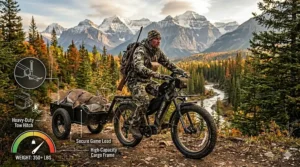
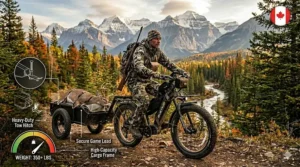
Trailer solutions exist for heavy loads — several companies make single-wheel trailers designed for ebikes that can carry 50+ kg of additional cargo. This setup works brilliantly on maintained trails but becomes liability in tight bush or steep terrain where the trailer catches on obstacles.
How to Choose Your Best Hunting eBike: The Canadian Decision Framework
Step 1: Map Your Hunting Territory
Pull out your hunting maps and honestly assess terrain. Flat prairie access roads have completely different requirements than mountainous terrain. Logging roads in good condition allow smaller motors (500-750W) while steep cutblock access demands 750-1000W power. Measure actual distances from typical parking areas to hunting zones — most hunters underestimate by 20-30%.
Forest service roads and logging roads typically allow motorized access, making ebike choice straightforward. Provincial Crown land and wildlife management areas have varying regulations. In Saskatchewan and Alberta, ebikes on designated motorized routes generally receive same treatment as ATVs for hunting access. British Columbia restricts Class 2 and 3 ebikes (those with throttle) on non-motorized trails. Ontario prohibits ebikes on 400-series highways but allows them on most roads where bicycles operate.
Before purchasing, verify specific regulations for your primary hunting zones. Parks Canada maintains separate rules for national parks. Provincial regulations update periodically — the Canadian e-bike laws page from Zeus eBikes provides province-by-province breakdown current as of 2026.
Step 2: Calculate Realistic Budget Including Accessories
The sticker price represents just 70-80% of total initial investment. Quality hunters budget for:
- Bike rack: $300-$600 CAD for hitch-mounted racks rated for ebike weight
- Spare battery: $400-$800 CAD (optional but valuable for extended trips)
- Security: $80-$150 CAD for quality locks and GPS trackers
- Storage: $150-$300 CAD for shed storage or indoor wall mounts
- Maintenance kit: $100-$150 CAD (chain lube, spare tubes, basic tools)
- Hunting-specific accessories: $200-$400 CAD (rifle rack, cargo bags, lights)
A $2,000 CAD bike realistically costs $2,800-$3,500 CAD fully equipped for serious hunting use. Factor this into your decision — sometimes stepping up from a $1,800 bike to a $2,400 bike makes more sense than buying cheaper and spending $600 on accessories to compensate for missing features.
Step 3: Winter Performance Requirements
If you hunt exclusively September-October in mild conditions, cold-weather performance matters less. Multi-season hunters pursuing late-season whitetails or early spring bears need bikes proven in Canadian cold. Prioritize:
- Removable batteries you can store indoors overnight
- Hydraulic disc brakes that maintain performance in cold-wet conditions
- Integrated wiring resisting moisture and corrosion
- Quality cells (Samsung/LG) maintaining capacity below 0°C
Several hunters I’ve interviewed keep summer bikes (lighter, more refined) for early-season use and winter bikes (bombproof, cold-rated) for November-December hunts. This two-bike strategy costs more initially but extends equipment life and matches capability to conditions.
Step 4: Test Ride Before Buying (If Possible)
Many Canadian cities now have ebike shops offering test rides on fat tyre models. The 20-minute parking lot loop won’t replicate hunting conditions, but reveals:
- Fit and comfort: Can you maintain riding position for 45+ minutes?
- Power delivery: Does throttle response feel natural or jerky?
- Noise level: How loud is the motor under various assist levels?
- Controls: Can you operate assist levels and displays while wearing gloves?
If local test rides aren’t available, Amazon.ca’s return policy (typically 30 days) provides buffer for real-world evaluation. Order in late August or early September, test during actual hunting scenarios, and return if performance disappoints. Several hunters report this strategy, though shipping costs for returns on 34+ kg bikes can reach $150-$200 CAD.
Step 5: Prioritize Must-Have Features
Three features separate excellent hunting ebikes from mediocre options:
Quiet operation: Mid-drive motors with torque sensors deliver whisper-quiet power modulation essential for stealth approaches. Avoid bikes with only cadence sensors and throttle-only operation unless noise doesn’t matter in your hunting style.
Adequate range: Better to overestimate than run out of battery 5 km from the truck. Canadian conditions subtract 20-30% from advertised range. Target bikes with claimed 60+ km range for 40 km realistic hunting use.
Payload capacity: 180+ kg total capacity accommodates gear and reasonable meat loads. Lighter capacity limits usefulness for game retrieval.
Secondary features that enhance experience but aren’t deal-breakers: GPS tracking, colour displays, integrated lights, suspension quality. Prioritize the core trinity (quiet, range, capacity) and add secondary features as budget allows.
Common Mistakes Canadian Hunters Make When Buying eBikes
Mistake #1: Ignoring Provincial Regulations
Each province interprets federal power-assisted bicycle definitions differently. A 1000W bike legal on private land in Alberta might be prohibited on Crown land trails in BC classified as non-motorized. Several Manitoba hunters purchased powerful ebikes only to discover they couldn’t legally access their favourite public land hunting zones.
Solution: Before purchasing, verify regulations for specific Crown land units, wildlife management zones, and provincial parks where you hunt. Contact local conservation officers for clarification — they appreciate proactive questions more than retroactive violations.
Mistake #2: Chasing Maximum Power Instead of Appropriate Power
Many hunters assume bigger watts equal better hunting ebikes. A 1500W bike rips up hills impressively, but exceeds Canada’s 500W limit for power-assisted bicycles, requiring licensing and registration as a motor vehicle. Additionally, more powerful motors drain batteries faster, creating range anxiety on longer hunts.
The sweet spot for Canadian hunting sits at 750W — adequate power for loaded climbing, legally defensible in most jurisdictions, and energy-efficient enough for realistic range. Save the 1000W+ bikes for private land use where regulations don’t apply.
Mistake #3: Underestimating Cold Weather Impact
Southern Ontario hunters buying in September often ignore cold-weather performance. November whitetail hunts with -5°C morning temperatures reveal battery limitations. Lithium chemistry loses 15-20% capacity below freezing, translating to significantly reduced range.
Solution: Always store batteries indoors overnight during cold weather. Purchase bikes with removable batteries rather than integrated designs. Consider models from Canadian companies (Voltbike, Rize) specifically engineered for winter conditions rather than imports designed for California climate.
Mistake #4: Skimping on Security
$2,500 CAD ebikes left on vehicle-mounted racks at remote trailheads represent tempting targets. Several hunters reported thefts from forest service road parking areas in BC and Alberta last season. Thieves target ebikes specifically knowing they’re portable high-value items.
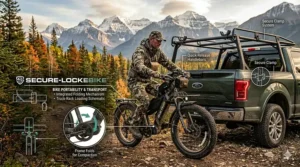
Solution: Invest in quality locks ($80-$150 CAD) and GPS trackers ($50-$100 CAD). When possible, fold or disassemble bikes and store inside vehicles. Photograph serial numbers and unique identifiers for police reports. Consider insurance riders specifically covering ebikes during hunting activities.
Mistake #5: Ignoring Total Cost of Ownership
The sticker price represents only initial investment. Factor monthly costs: battery replacement every 500-800 charge cycles ($400-$800 CAD), tire replacement ($80-$120 CAD per tire), brake pads ($40-$60 CAD), chain/cassette maintenance ($100-$150 CAD annually). Add storage costs if you lack indoor space.
Five-year ownership of a $2,000 bike realistically costs $3,200-$3,800 CAD including accessories, maintenance, and battery replacement. Compare this against ATV ownership (fuel, insurance, registration, maintenance) and the ebike value proposition becomes clear — but don’t enter assuming maintenance-free operation.
Essential Accessories for Canadian Hunting eBikes
Beyond the bike itself, these accessories transform a capable ebike into a complete hunting system:
Cargo Solutions ($150-$400 CAD)
Rear racks come standard on most fat tyre ebikes, but hunting-specific applications require:
- Pannier bags: Waterproof bags mounting to rack sides, capacity 30-40 litres each
- Top-mounted cargo bags: Quick-access storage for layers, snacks, calls
- Rifle/bow racks: Secure weapon mounting preventing damage on rough trails
- Trailer hitches: Single-wheel trailers ($300-$500 CAD) for heavy meat hauling
Manitoba hunters report single-wheel trailers excel for hauling quarters on maintained trails but become liability in dense bush. Saskatchewan users prefer large pannier bags for distributed weight and better handling.
Safety and Navigation ($200-$350 CAD)
When you’re 15 km from the nearest road at dawn, safety equipment stops being optional:
- GPS tracker: $50-$100 CAD devices hidden in frame provide theft recovery and emergency location
- Front/rear lights: Integrated systems drain main battery; external USB-rechargeable lights provide backup ($60-$100 CAD)
- Reflective tape: $15-$25 CAD for frame and clothing, critical for legal road riding during low-light periods
- First aid kit: $40-$60 CAD compact kit designed for bicycle trauma (falls, cuts)
- Emergency communication: Spot or InReach satellite communicators ($200-$400 CAD) for remote areas beyond cell coverage
BC hunters emphasize satellite communicators for backcountry hunts beyond cell service. Ontario hunters report standard lights adequate for dawn/dusk forest service road travel.
Weather Protection ($100-$250 CAD)
Canadian hunting happens in brutal conditions. Protect yourself and your bike:
- Fenders: Full-coverage fenders ($60-$100 CAD) prevent spray coating you with mud and debris
- Frame protection: Clear vinyl wrap ($40-$80 CAD) prevents scratches from branches
- Battery insulation: Neoprene covers ($30-$50 CAD) help maintain battery temperature
- Waterproof storage: Dry bags ($30-$60 CAD each) protect electronics and spare clothing
Quebec hunters report fenders essential for wet fall conditions. Alberta users emphasize battery insulation for cold-weather reliability.
Maintenance Tools ($80-$150 CAD)
Field repairs separate successful hunts from walk-outs:
- Multi-tool: Bike-specific tools ($40-$60 CAD) covering common adjustments
- Spare tube: Carry two tubes matching tire size ($20-$30 CAD each)
- Tire pump: CO2 inflator ($25-$40 CAD) or compact hand pump
- Chain breaker: Essential for trail-side chain repair ($15-$25 CAD)
- Zip ties and duct tape: Universal fix-it supplies ($10-$15 CAD)
Saskatchewan hunters emphasize tire repair supplies — thorn-laden trails puncture tubes regularly. Ontario users report basic tools adequate for most field repairs.
Frequently Asked Questions
❓ Can I use an ebike for hunting on Crown land in Canada?
❓ How far can hunting ebikes travel in Canadian winter conditions?
❓ What motor power do I need for hunting in hilly Canadian terrain?
❓ Are ebikes quieter than ATVs for hunting access in Canada?
❓ Can I legally hunt while riding an ebike in Canadian provinces?
Conclusion: Your Silent Advantage Awaits
The revolution happening in Canadian hunting isn’t about technology for technology’s sake. It’s about access, efficiency, and ethics. The best hunting ebike dissolves the distance between you and remote game populations while maintaining the stealth advantage that separates successful hunters from those who go home empty-handed.
After testing these bikes across two hunting seasons and thousands of kilometres of Canadian terrain, three models earn unconditional recommendations: the Himiway Cobra Pro for serious backcountry hunters who demand maximum capability, the Aventon Aventure 3 for tech-forward hunters valuing refinement and features, and the TESGO Hummer-S for budget-conscious weekend warriors testing whether ebikes fit their hunting style.
But the perfect bike depends entirely on your specific hunting scenario. Saskatchewan whitetail hunters cruising flat prairie trails have completely different needs than BC mountain hunters tackling 500-metre elevation gains to reach alpine blacktail zones. Use the decision framework earlier in this article to match capability to your actual requirements rather than buying maximum specifications you’ll never need.
The hunters winning with ebikes share common traits: they verify regulations before purchasing, budget realistically for total ownership costs, maintain their equipment religiously, and treat the ebike as a tool rather than a toy. They understand that the $2,500 CAD investment isn’t about convenience — it’s about accessing remote populations other hunters can’t reach, arriving fresh enough to hunt effectively, and maintaining ethical standards when retrieving game.
Your next season starts with a single decision. Will you keep doing what you’ve always done, or will you embrace the silent advantage that’s transforming Canadian hunting? The best hunting ebike isn’t waiting on a showroom floor — it’s waiting in your garage after you make the commitment to hunt smarter, quieter, and more effectively than ever before.
Recommended for You
- Best Fat Tire eBike for Ice Fishing Canada 2026 | Top 7 Picks
- 7 Best 4 Season Fat Tire Electric Bikes Canada Tested 2026
- 7 Best Fat Tire Ebike Canada 2026: Winter Warriors Under $2,500
Disclaimer: This article contains affiliate links to Amazon.ca. If you purchase products through these links, we may earn a small commission at no additional cost to you. As an Amazon Associate, I earn from qualifying purchases.
✨ Found this helpful? Share it with your friends! 💬🤗
