
In This Article
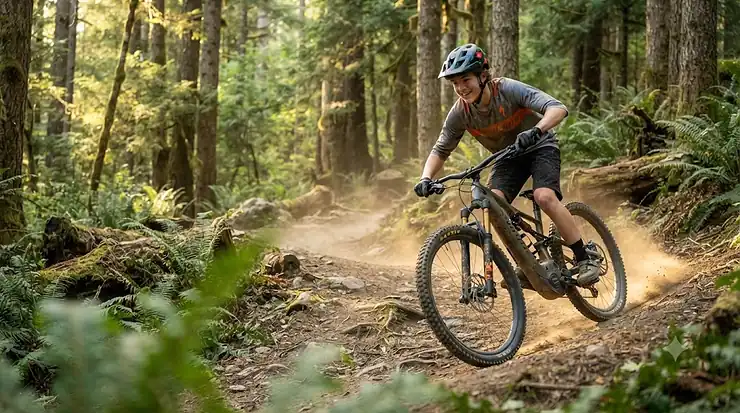
Somewhere between “can I get a ride to the trailhead” and “I’m going out, back by dinner,” there’s a bike-shaped answer that most Canadian parents haven’t fully clocked yet. An electric mountain bike for teenagers isn’t a toy and it isn’t a moped in disguise — it’s a pedal-assist bicycle that flattens hills, extends range, and turns a reluctant rider into someone who actually asks to go out again tomorrow. That distinction matters, because Transport Canada’s power-assisted bicycle rules are specific about it: a legal power-assisted bicycle must have fully functional pedals, a motor capped at 500 watts, and assistance that cuts out at 32 km/h, which is the entire reason we steered away from throttle-only “electric dirt bikes” in this guide.
What is an electric mountain bike for teenagers? It’s a pedal-assist bicycle, sized for a growing rider, built with mountain bike geometry (suspension fork, wide tires, disc brakes) and a small-to-mid-power motor that boosts pedaling effort on climbs and long rides without eliminating the exercise. Think of it less as “cheating” and more as a gear ratio you can turn on.
We went looking for real models sold in Canada or readily importable here, at every price tier, and dug into actual specs, aggregated review sentiment, and provincial rules — because a youth mountain electric bike that’s illegal to ride in Ontario is not a good recommendation no matter how shiny it looks in a product photo. What follows is the honest version: seven real bikes, what they cost (in ranges, never exact figures, since prices shift constantly), who each one actually suits, and the practical stuff — geometry, safety, maintenance — that most spec sheets skip entirely.
Quick Comparison Table
Before the deep dive, here’s the shape of the market. These seven bikes span roughly C$1,400 to C$5,600, from a lightweight commuter-style entry point to a purpose-built kids’ trail machine with a genuine mid-drive motor.
| Bike | Motor Type | Best For | Price Range (CAD) |
|---|---|---|---|
| Commencal Meta HT 24 Power | Bosch mid-drive | Younger teens, serious singletrack | C$5,000–C$5,600 |
| Trek Marlin+ | Bosch mid-drive | Best all-round teen eMTB | C$3,700–C$4,800 |
| Aventon Ramblas | Aventon mid-drive | Budget-conscious value seekers | C$3,700–C$4,100 |
| woom UP 6 | Fazua mid-drive | Smaller/lighter teen riders | C$4,300–C$4,800 |
| Cannondale Trail Neo 1 | Bosch mid-drive | Long climbs, big range | C$4,100–C$5,100 |
| Giant Talon E+ | Giant SyncDrive mid-drive | Lightest handling, first eMTB | C$4,250–C$4,550 |
| Lectric XP Lite 2.0 | Hub motor | Absolute beginners, tightest budget | C$1,400–C$1,700 |
A quick read of that table tells you most of what you need to know before you even open your wallet: mid-drive motors dominate the true mountain bike category, because they place weight low and central and deliver power in proportion to how hard the rider is pedaling, which just feels more like a bike and less like a machine doing the work for you. The Lectric XP Lite 2.0 is the outlier here — a hub-motor, throttle-assisted commuter that’s genuinely useful as a low-cost starting point for gravel and light trail, but it won’t climb technical singletrack the way the mid-drive bikes will. Budget shoppers should treat that gap as the real dividing line, not just the price tag.
💬 Just one click — help others make better buying decisions too!😊
Top 7 Electric Mountain Bikes for Teenagers: Expert Analysis
Coverage below spans budget, mid-range, and premium options, plus size variants, because “teenager” covers a genuinely huge range — a 12-year-old who’s 4’8″ and a 17-year-old who’s 6’1″ need almost nothing in common except two wheels and a battery.
1. Commencal Meta HT 24 Power — dedicated trail eMTB built for young riders
The standout feature here is that this isn’t a shrunk-down adult bike with training wheels energy — it’s a purpose-engineered kids’ trail machine, and it rides like one. The 2026 Meta HT 24 Power runs a Bosch Performance Line SX motor putting out 55 Nm of torque and up to 600 W peak power from a 400 Wh battery, mated to a 120 mm-travel fork and geometry sized for riders roughly 4’5″ to 4’11” — the younger end of the teen and tween range. What most buyers overlook about this model is that it’s genuinely engineered for kid-specific biomechanics: shorter cranks, kid-sized grips, and a low standover height, not just a smaller frame bolted onto adult parts.
Based on the spec comparison against other kids’ eMTBs, this is one of the very few dedicated youth trail bikes still on the market after Specialized quietly discontinued its own kids’ eMTB line. Reviewers consistently note that the Bosch system’s smooth, torque-sensing power delivery makes it far less jerky and unpredictable than cheaper hub-motor alternatives, which matters enormously when a young rider is still learning to modulate speed on technical terrain.
Pros:
- ✅ True mid-drive Bosch motor with proportional, predictable power
- ✅ Purpose-built kid geometry and shorter cranks, not a scaled-down adult frame
- ✅ Low standover height builds confidence on technical trails
Cons:
- ❌ Narrow size range limits it to younger or smaller teens
- ❌ Premium price for a bike your kid will outgrow in a few years
At the time of research, pricing lands around C$5,000–C$5,600, which is steep, but for a family that mountain bikes together regularly, it’s arguably the best-built option on this list for the 4’5″–4’11” bracket.
2. Trek Marlin+ — best all-round pick for teens ready for real trails
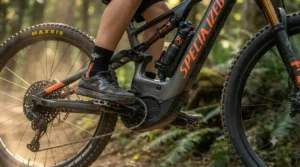
The Trek Marlin+ took the brand’s most popular hardtail platform and wired in a Bosch Active Line Plus mid-drive, and the standout feature is just how unassuming it looks doing it — this doesn’t scream “e-bike” the way bulkier fat-tire models do. The 50 Nm motor is Bosch’s entry-level tune, paired with a 400 Wh CompactTube battery, a 120 mm air fork, and frame sizes running from extra-small (27.5″ wheels) up through larger builds on 29″ wheels, meaning it genuinely scales from a 5’0″ young teen to a 6-foot-plus older one.
What the spec sheet won’t tell you, but reviewers note, is that this bike’s Auto Mode — which adjusts assist automatically based on pedaling effort — removes a lot of the fiddly button-mashing that trips up first-time e-bike riders, teens included. Electric Bike Report singled the Marlin+ out as its pick for best electric mountain bike for teens, largely because the small-frame options and Bosch reliability combine into something a young rider can genuinely grow with rather than outgrow in a season.
Pros:
- ✅ Small and extra-small frames genuinely fit smaller teen riders
- ✅ Bosch Auto Mode simplifies assist for first-time e-bike users
- ✅ Wide dealer network for warranty service and parts
Cons:
- ❌ 50 Nm torque is modest next to premium Performance Line CX bikes
- ❌ Rowdy, aggressive descents are outside its comfort zone
Expect a price in the C$3,700–C$4,800 range depending on the 6 or 8 build spec, making it one of the more attainable Bosch-powered options on the market.
3. Aventon Ramblas — best value true eMTB for budget-conscious families
Aventon built its name on commuter bikes, so the standout feature of the Ramblas is that it’s a legitimate first swing at a purpose-built mountain bike — and by most independent testing, it’s the least expensive electric mountain bike reviewers have gotten their hands on that still holds up on real trails. The mid-drive motor delivers roughly 100 Nm of torque from a 36V system, matched to a RockShox 35 fork, Maxxis tires, and a SRAM 12-speed drivetrain — component choices that punch well above the price point.
Here’s what to weigh: the original Ramblas offered a small frame with 27.5″ wheels specifically for shorter riders, which made it a strong pick for a teen in the 5’2″–5’6″ range. The newer Ramblas ADV update improved the fork and added tubeless-ready rims, but reviewers note the small frame size was dropped in that revision, so buyers hunting for a compact fit should specifically confirm current frame-size availability before ordering. Aggregated review sentiment across outlets like Electric Bike Report and OutdoorGearLab is consistently positive on value, with the flimsy battery-cover latch flagged repeatedly as the one recurring gripe.
Pros:
- ✅ Powerful 100 Nm mid-drive motor at an entry-level price
- ✅ Name-brand components (RockShox, Maxxis, SRAM) rarely seen this cheap
- ✅ Doubles comfortably as a commuter for school runs
Cons:
- ❌ Small frame size availability varies by current model year
- ❌ Battery cover latch is a known weak point
At around C$3,700–C$4,100, the Ramblas is the strongest dollar-for-component-quality argument on this list.
4. woom UP 6 — lightest-in-class pick for smaller or lighter teen riders
Weight is the whole story with the woom UP 6, and the standout feature is a claimed frame-plus-motor weight in the 36–37 lb range — noticeably lighter than most e-bikes in its category, kids’ or adult. Built around a Fazua Evation mid-drive delivering 55 Nm of torque from a 250 Wh battery, with assist cutting out around 12 mph (20 km/h) rather than the full 32 km/h ceiling, this is a bike engineered specifically to be manageable rather than maximally powerful.
Based on the spec comparison, that lower assist cutoff is a deliberate design choice, not a limitation — woom builds bikes exclusively for young riders and clearly prioritized control over top speed. Reviewers consistently praise the child-specific geometry, invertible “flip-flop” stem for growth adjustment, and kid-proportioned brake levers, all details a scaled-down adult bike simply won’t have. The tradeoff is a smaller 250 Wh battery, which means shorter range than the Bosch-powered options on this list, and a few owner reviews have flagged inconsistent parts availability for warranty repairs.
Pros:
- ✅ Genuinely lightest eMTB in this roundup at roughly 36–37 lb
- ✅ Child-specific ergonomics down to brake lever reach
- ✅ Removable motor lets it convert to a standard analog mountain bike
Cons:
- ❌ Smaller 250 Wh battery limits range versus Bosch/mid-power rivals
- ❌ Some owners report slow parts availability for repairs
Pricing sits around C$4,300–C$4,800, positioning it as a premium pick specifically for lighter-framed or younger teen riders who’ll benefit most from the reduced weight.
5. Cannondale Trail Neo 1 — best for long climbs and big-mileage days
The Cannondale Trail Neo 1’s standout feature is raw range: Bosch’s Performance Line CX motor delivers 85 Nm of torque from a substantial 750 Wh PowerTube battery, with a claimed range up to 175 km depending on assist level and terrain. For a teen who wants to ride real distances — bikepacking-adjacent trips, multi-hour weekend rides with the family — that battery capacity is the difference between turning around at hour two and still having charge left at hour four.
What most buyers overlook about this model is the small-size frame runs 27.5″ wheels while larger sizes bump up to 29″, a deliberate proportional choice that keeps handling nimble for shorter riders rather than just shrinking the frame around oversized wheels. Reviewers consistently highlight the low, central battery and motor placement as delivering genuinely stable, “regular mountain bike” handling rather than the top-heavy feel some e-bikes suffer from. The eBike Flow app adds ride tracking and over-the-air motor tuning, a nice-to-have rather than a necessity.
Pros:
- ✅ 750 Wh battery gives serious all-day range for long rides
- ✅ Small-frame 27.5-inch wheel option genuinely suits shorter teens
- ✅ 85 Nm Performance Line CX motor handles steep, sustained climbs
Cons:
- ❌ Heavier overall package due to the large battery
- ❌ Among the pricier options here
At roughly C$4,100–C$5,100, it’s a strong pick for families whose teen rides long, hilly routes regularly rather than short local laps.
6. Giant Talon E+ — best lightweight first eMTB for trail newcomers
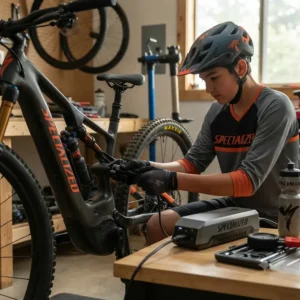
Giant redesigned the Talon E+ for 2026 around a lighter ALUXX SL frame and a compact SyncDrive Sport 2 motor, and the standout feature is how ordinary it feels to ride — reviewers repeatedly describe it as handling “more like a regular hardtail” than a typical e-bike, which is exactly what you want for a teen transitioning from an acoustic mountain bike. At roughly 21.7 kg (about 48 lb) for a medium frame with a 430 Wh battery and 75 Nm of torque, it splits the difference between the ultralight woom and the heavier, longer-range Cannondale.
Here’s what to weigh: the SmartAssist system reads pedal input, cadence, speed, and slope through six sensors to modulate power automatically, which reviewers note removes a layer of complexity that can overwhelm a first-time e-bike rider fumbling with manual assist-mode switches mid-climb. Giant sells the Talon E+ directly through its Canadian site, which simplifies warranty support. The tradeoff, per Cycling Electric’s review, is a fairly basic coil-sprung fork and no dropper post at this build level, both of which serious trail riders will eventually want to upgrade.
Pros:
- ✅ Rides and handles like a standard hardtail, easing the e-bike transition
- ✅ Six-sensor SmartAssist simplifies power delivery for beginners
- ✅ Officially sold and supported in Canada
Cons:
- ❌ Basic coil fork limits performance on rougher descents
- ❌ No dropper post included at this spec level
Expect around C$4,250–C$4,550, putting it squarely in the mid-range tier alongside the Marlin+ and Ramblas.
7. Lectric XP Lite 2.0 — best budget entry point for beginner trail exploration
Not every teen needs — or can afford — a true mid-drive eMTB right out of the gate, and that’s exactly the gap the Lectric XP Lite 2.0 fills. The standout feature is the price: this is a Class 2 hub-motor e-bike, foldable and street-legal, running a quieter motor and color LCD in its 2026 update. Honest framing matters here — this is not a suspension-forked trail bike, and it won’t tackle technical singletrack the way the other six picks will. What it does deliver is a low-cost, durable way for a budget-conscious or hesitant teen to try pedal-assist riding on gravel paths, fire roads, and light trail before a family commits thousands of dollars to a dedicated eMTB.
Based on the spec comparison, the appeal is almost entirely about accessibility: a lighter, foldable frame that fits in a car trunk, simple controls, and a price point that doesn’t require financing. Reviewers frequently position bikes like this as the practical “starter” tier before stepping up to true trail-capable eMTBs, and that’s a reasonable way to frame it for a family testing the waters.
Pros:
- ✅ Dramatically lower price than every other bike on this list
- ✅ Foldable frame is easy to store and transport
- ✅ Simple controls make it approachable for first-time riders
Cons:
- ❌ Hub motor and lack of suspension aren’t built for real singletrack
- ❌ Narrower tires struggle on loose or technical terrain
At around C$1,400–C$1,700, it’s less a mountain bike and more a gateway — a genuinely honest budget option for gravel and light trail use, not aggressive off-roading.
Practical Usage Guide: Setting Up a Teen eMTB Right
Getting the bike home is step one; getting it dialed in is what actually determines whether your teen rides it twice a week or once and never again. Start with fit, not features: seat height should allow a slight bend in the knee at full pedal extension, and standover clearance needs at least an inch of daylight for safety when stopping suddenly. Most of the bikes above ship with a default assist mode active — walk your teen through the difference between eco, trail/tour, and turbo/boost modes before the first ride, because starting in the highest power setting on a driveway is a classic way to end up in the neighbour’s hedge.
Battery care matters more than most first-time owners expect. Li-ion packs prefer partial charges over constant full-drains; topping up after most rides rather than always running to empty extends usable battery life significantly over a few seasons. Store the bike (and especially the battery, if removable) somewhere temperature-stable — a hot garage in July or a freezing one in January both accelerate degradation.
In the first 30 days, the most common mistake is skipping the initial bolt-torque check after the first few rides; vibration loosens things that were fine in the box. A quick monthly once-over — tire pressure, brake pad wear, chain lube, and a battery-contact wipe-down — keeps a teen eMTB running reliably and catches small issues before they become expensive ones. If your local shop offers a 30-day post-purchase tune-up, take it; cable stretch on a new bike is normal and a free adjustment now saves a shifting headache later.
Real-World Scenarios: Matching the Bike to the Rider
The 13-year-old just starting out, budget under C$2,000, riding mostly paved trails and the local conservation area: the Lectric XP Lite 2.0 makes the most sense here. It’s forgiving, foldable for easy transport to a trailhead, and doesn’t demand the mechanical maintenance or the price commitment of a true eMTB before you know if the interest sticks.
The 15-year-old who already rides an acoustic mountain bike weekly and wants to keep up with faster friends on longer rides: either the Trek Marlin+ or Giant Talon E+ fits well. Both ride close enough to a standard hardtail that the transition feels natural, and both scale with frame-size options as this rider likely still has some growing to do.
The 17-year-old, already an experienced trail rider, tackling real singletrack most weekends and wanting range for bigger days: the Cannondale Trail Neo 1 or Aventon Ramblas are the stronger picks. The Cannondale’s 750 Wh battery suits long, hilly loops; the Ramblas suits a rider who wants serious mid-drive power without the premium price tag.
The smaller-framed 11- or 12-year-old whose parents mountain bike regularly and want a kid who can genuinely keep pace on real trails: the Commencal Meta HT 24 Power or woom UP 6 are purpose-built for exactly this — kid-specific geometry, proportioned components, and motors tuned for control rather than raw speed.
How to Choose an Electric Mountain Bike for Teenagers
- Start with height and inseam, not age. Seat height ranges vary enormously between brands; a 13-year-old and a 15-year-old can need the same frame size, or wildly different ones.
- Match motor type to terrain. Mid-drive motors (Bosch, Fazua, Aventon’s in-house unit) suit real trail riding; hub motors suit pavement, gravel, and light trail.
- Check your province’s e-bike age and helmet rules before you buy, not after. A bike that’s perfect on paper is useless if your teen legally can’t ride it solo yet.
- Weigh battery capacity against realistic ride length. A 250 Wh battery is plenty for a 45-minute local loop; a 750 Wh pack suits multi-hour days.
- Consider total weight, especially for smaller riders. A 55 lb e-bike is genuinely hard for a 100 lb teen to maneuver at a stop or lift onto a rack.
- Confirm local dealer support. Mid-drive systems occasionally need warranty service; a brand with Canadian retail presence saves shipping headaches.
- Budget for accessories up front. A properly fitted CSA-certified helmet, lights, and a floor pump are not optional extras — build them into the total cost.
Common Mistakes When Buying a Youth Mountain Electric Bike
The single most common mistake is buying by age bracket alone. Marketing copy loves to say “ages 10–14,” but a tall 10-year-old and a compact 14-year-old can need completely different frame sizes — always check seat height range and standover clearance against your specific kid, not the age label on the box.
The second mistake is under-shopping the motor. Parents drawn to a lower price often end up with a throttle-only hub-motor bike marketed loosely as a “mountain bike” when it can’t actually handle a rooty singletrack climb. That’s fine if the intended use is pavement and gravel — it’s a mismatch if the goal is real trail riding.
Third, buyers frequently skip provincial regulation entirely, assuming “it’s just a bike.” As covered below, several provinces have specific minimum ages and helmet requirements for e-bikes that differ from ordinary bicycle rules — worth five minutes of research before, not after, purchase. Finally, many families underestimate ongoing costs: budgeting only for the sticker price and skipping a helmet upgrade, a home charger setup, or a first-service tune-up is a recipe for an underused bike within a season.
Electric Mountain Bike vs Traditional Mountain Bike for Teens
The honest comparison isn’t “which is better” — it’s which matches the rider and the terrain. A traditional mountain bike is lighter, cheaper up front, requires zero battery management, and builds raw fitness in a way an assisted bike partially offsets. For a teen with strong cardio already, or one riding mellow, flat local trails, a good acoustic hardtail is often the smarter buy, and a quality one can be had well under C$1,000.
Where the electric mountain bike for teenagers pulls ahead is range, hill-climbing, and — candidly — retention. A teen who gets discouraged grinding up a long fire road on a regular bike may simply stop riding; the same climb on an e-assist bike becomes manageable, and manageable rides get repeated. Reviewers and family-testing accounts consistently describe the same pattern: kids who ride e-bikes tend to ride farther, longer, and more often than they would on an acoustic bike, largely because the frustration threshold drops. The tradeoff is weight (most eMTBs run 35–55 lb versus 25–30 lb for a comparable acoustic bike), price, and the ongoing responsibility of battery care. For families debating between the two, a practical rule of thumb: if the local terrain includes real elevation gain and the goal is building long-term riding habit and confidence, the e-assist option often wins; if it’s flat urban trails and budget is tight, a good traditional mountain bike remains the simpler, cheaper answer.
| Factor | Traditional MTB | Electric MTB |
|---|---|---|
| Typical weight | 25–30 lb | 35–55 lb |
| Upfront cost | Lower | Higher |
| Hill-climbing | Rider-dependent | Motor-assisted |
| Ongoing maintenance | Simple | Battery + motor care |
| Best For | Flat/rolling terrain, fitness focus | Hilly terrain, longer rides, motivation |
Reading across that table, the deciding factor for most Canadian families ends up being terrain: hilly regions like parts of B.C. or the Laurentians tend to favour the assisted option, while flatter prairie or urban riders often do just fine without one.
What to Expect: Real-World Performance on the Trail
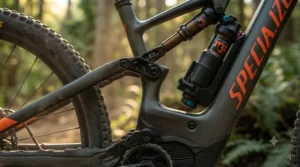
Specs on paper rarely translate directly to what a teen actually feels on a Saturday ride. In practice, a mid-drive motor in the 50–85 Nm torque range translates to noticeably easier climbing on grades up to roughly 10–15% — the kind of hill that would otherwise force most teens off the pedals and onto a walk. Above that, even the strongest motors here still require real effort; nobody is floating up a 20% grade for free.
Range numbers from manufacturers are typically best-case, measured in the lowest assist mode on flat ground. Realistic expectations should be roughly half the claimed maximum on hilly singletrack in a higher assist mode — so a bike claiming 175 km should be budgeted for more like 60–90 km of mixed trail riding. Braking feel is another underrated factor: the added weight of a motor and battery means hydraulic disc brakes aren’t optional at this category, they’re essential, and every bike on this list includes them for good reason.
Teen Size Mountain eBike: Getting the Frame Geometry Right
Frame geometry is where most online bike shopping goes wrong, because a listed wheel size tells you almost nothing about actual fit. A teen size mountain ebike needs to be evaluated on standover height, reach, and seat-post range, not just the marketed age bracket. As a general guide: riders under about 5’0″ typically need small or extra-small frames with 24″–27.5″ wheels; riders 5’0″–5’6″ usually fit small-to-medium frames on 27.5″ wheels; and riders over 5’6″ generally move comfortably into adult medium frames on 29″ wheels, at which point mainstream adult eMTBs in a small size — like the Cannondale or Giant options above — become viable even for a 16- or 17-year-old.
Reach matters as much as standover. A frame that’s technically tall enough but has too long a reach forces a stretched-out riding position that’s uncomfortable and reduces control on technical terrain — a common issue when parents size up “for growing room” on a mountain bike, which is far less forgiving of oversizing than a commuter bike. When in doubt, an in-person fitting at a local shop beats guessing from a size chart every time, especially for the first eMTB purchase.
Youth eMTB for Beginner Trail Riding: Where to Start
Dropping a first-timer straight onto black-diamond singletrack is a fast way to end enthusiasm before it starts. For beginner teen trail riding, wide, flowy gravel paths or green-rated trail systems are the right starting point — terrain where a rider can practice modulating pedal-assist power without also managing roots, drops, and tight switchbacks simultaneously. Most of the bikes above include an eco or tour mode specifically suited to this: enough boost to make climbs manageable, not so much that speed outpaces skill.
A sensible progression looks like: two to four rides on flat, wide paths in the lowest assist setting to build handling confidence; then moving to gently rolling green trails with the motor in a mid setting; only then introducing blue-rated technical features once braking and cornering feel automatic rather than deliberate. Local mountain bike associations in many Canadian cities run youth skills clinics specifically for this stage — worth searching out, since a couple of hours with an instructor accelerates the learning curve far faster than solo trial and error.
Safety, Regulations & Compliance Guide for Teen eMTB Riders
This is the section families skip and shouldn’t. Federally, Transport Canada defines a legal power-assisted bicycle as capped at 500 W motor output and 32 km/h assisted speed, with fully operable pedals — every bike featured in this guide meets that definition, which is precisely why throttle-only “electric dirt bikes” were excluded from consideration entirely. Provincial rules layer on top of that federal baseline and vary meaningfully: Ontario and British Columbia both set a minimum age of 16 for standard e-bikes (B.C. allows 14+ on its newer “light e-bike” class), while some other provinces set the bar lower — always check your specific province’s current e-bike requirements before assuming your teen is old enough to ride solo.
Helmet rules matter just as much as age rules. In Ontario, a certified helmet is mandatory for any cyclist under 18, e-bike or not, and the added speed and weight of an eMTB makes proper helmet fit non-negotiable everywhere else too — Canadian pediatric health guidance on selecting a properly fitted, certified helmet is worth a five-minute read before the first ride, not after an incident. Beyond the helmet, look for CSA, CPSC, or ASTM certification markings, and replace any helmet older than five years or one that’s been in a crash — the foam degrades in ways that aren’t visible from the outside.
✨ Ready to gear up safely?
🔍 Pair any of the bikes above with a properly certified helmet and a pre-ride safety check — the right setup turns a good bike into a genuinely safe adventure your teen will want to repeat all season.
Long-Term Cost & Maintenance: What Ownership Actually Costs
The sticker price is the beginning of the budget conversation, not the end of it. Beyond the bike itself, realistic annual costs include a seasonal tune-up (typically C$80–C$150 at a local shop), brake pad replacement roughly once or twice a season depending on riding frequency (C$20–C$50 per set), and eventual battery replacement, which for most mid-drive systems runs several hundred dollars but typically isn’t needed for 500+ charge cycles, or several years of normal teen use.
| Cost Category | Typical Annual Range (CAD) |
|---|---|
| Seasonal tune-up | C$80–C$150 |
| Brake pads/consumables | C$20–C$50 |
| Tire replacement (as needed) | C$60–C$120 |
| Helmet/safety gear refresh | C$40–C$100 |
Looking at the numbers above, budgeting roughly C$200–C$400 per year beyond the purchase price is a realistic planning figure for most families, before factoring in an eventual multi-year-out battery replacement. The value calculation genuinely favours mid-drive systems from established brands like Bosch or Fazua, since parts availability and shop familiarity tend to be far better than with lesser-known hub-motor imports, which can leave families waiting weeks for a replacement part on a bike that’s otherwise perfectly rideable.
Features That Actually Matter (And Those That Don’t)
Marketing copy loves to lead with top speed and peak wattage, and reviewers consistently note those numbers matter far less in practice than torque, battery capacity, and brake quality. A motor’s torque figure (measured in Nm) predicts real-world hill-climbing ability much better than its peak wattage does — the Aventon Ramblas’s 100 Nm, for instance, out-climbs several higher-wattage-marketed competitors because torque, not raw power, is what fights gravity.
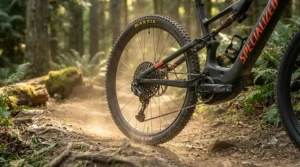
Hydraulic disc brakes are non-negotiable at this weight class; mechanical (cable) disc brakes simply don’t modulate as well under the extra 15–20 lb an e-bike carries versus an acoustic one. A suspension fork with actual adjustability (compression, rebound, lockout) is worth paying for if real trail riding is the goal — a bargain fork with no adjustment will feel harsh on small bumps and mushy on big ones. On the other hand, flashy extras like app-based ride tracking, customizable LED displays, and Bluetooth connectivity are genuinely nice-to-haves that add little to actual riding performance — fun for a teen who likes gadgets, irrelevant to how the bike handles a rocky descent.
Frequently Asked Questions
❓ How fast can an electric mountain bike for teenagers legally go in Canada?
❓ What age can a teen legally ride an eMTB in Canada?
❓ Do teens need a licence to ride an electric mountain bike in Canada?
❓ Is a mid-drive or hub motor better for a teen mountain bike?
❓ How much does a good electric mountain bike for teenagers cost in Canada?
Conclusion
There’s no single “best” electric mountain bike for teenagers, and honestly, any guide that tells you otherwise is skipping the part where your specific kid, budget, and local trails actually matter. What the research does make clear is this: mid-drive motors from established brands like Bosch, Fazua, and Aventon’s in-house unit consistently outperform cheaper hub-motor alternatives on real trails, frame geometry matters more than the age bracket printed on the box, and Canadian provincial rules genuinely vary enough that a five-minute check before buying beats an awkward conversation with a bylaw officer afterward.
If budget allows and the goal is real singletrack, the Trek Marlin+ and Giant Talon E+ are the most balanced, widely supported picks for a growing teen. Families with a serious young trail rider already in the family should look hard at the Commencal Meta HT 24 Power or woom UP 6 for their purpose-built kid geometry. And for a family just testing whether the interest sticks before committing thousands of dollars, the Lectric XP Lite 2.0 remains an honest, low-risk starting point. Whichever direction you go, the Canadian Paediatric Society’s cycling safety guidance is a genuinely useful five-minute read before that first ride — because the best bike on this list is only as good as the safety habits built around it.
✨ Ready to find the right ride?
💬 Check current pricing and availability on the models above, and get your teen out on the trail this season!
Recommended for You
- Best Electric Bike for Teenagers in Canada 2026: Top 7 Picks
- 7 Best Affordable Kids Electric Bikes in Canada 2026 (Ranked)
- Best Electric Bike for Kids Canada 2026: 7 Safe Picks for Ages 8–12 S
Disclaimer: This article contains affiliate links. As an Amazon Associate, I earn from qualifying purchases. If you purchase products through these links, we may earn a small commission at no additional cost to you.
✨ Found this helpful? Share it with your friends! 💬🤗
