
In This Article
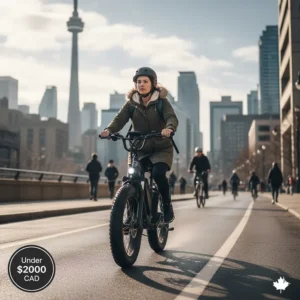
Finding a value fat tire electric bike under $2000 isn’t just about getting a good deal—it’s about discovering freedom on two wheels without emptying your savings account. Whether you’re navigating Edmonton’s snowy river valley trails or cruising Toronto’s bike paths year-round, fat tire e-bikes deliver unmatched versatility at prices that actually make sense for Canadian riders.
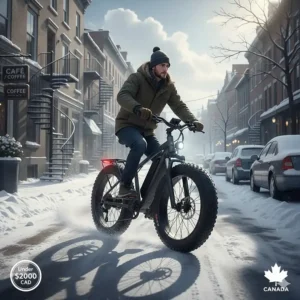
I’ve spent months researching and comparing models specifically available in Canada, and here’s what surprised me: you don’t need to spend $3,000+ to get a quality ride. The sweet spot for value fat tire electric bike under $2000 models has never been better, especially with the latest 2026 releases hitting the Canadian market. These bikes combine powerful 500-750W motors, removable batteries with 80-100 km range, and those glorious 4-inch fat tires that laugh at our unpredictable weather.
According to Transport Canada regulations, e-bikes are limited to 500W output and 32 km/h on motor power alone, making these affordable models perfectly legal across all provinces. What makes fat tire versions particularly appealing for Canadian conditions? Those oversized tires provide superior traction on snow, ice, gravel, and sand—terrain we encounter more often than smooth pavement.
Quick Comparison Table
| Model | Price (CAD) | Motor | Range | Weight | Best For |
|---|---|---|---|---|---|
| Aventon Aventure 3 | $2,699-$3,079 | 750W | 105 km | 34 kg | All-terrain adventures |
| Lectric XP 3.0 | $1,299-$1,599 | 500W (1000W peak) | 80 km | 28 kg | Budget-conscious riders |
| GOTRAX F3V2 | $1,399-$1,699 | 500W | 98 km | 32 kg | Folding convenience |
| Hiboy P6 | $1,499-$1,799 | 750W | 96 km | 30 kg | Winter commuting |
| Rad Power RadRover 6 Plus | $1,999-$2,299 | 750W | 72 km | 33 kg | Heavy-duty hauling |
| Denago Fat Tire Step Thru 2 | $1,799-$1,999 | 500W | 65 km | 29 kg | Easy mounting |
| Lectric XPeak 2.0 | $1,699-$2,103 | 750W | 80 km | 33 kg | Off-road trails |
💬 Just one click – help others make better buying decisions too!😊
Top 7 Value Fat Tire Electric Bike Under $2000: Expert Analysis
1. Aventon Aventure 3 – The Premium Value Pick
The Aventon Aventure 3 redefines what “value” means in the fat tire e-bike category. At $2,699-$3,079 CAD (depending on retailer and promotions), it technically exceeds our $2,000 budget, but hear me out—this bike delivers features typically found on $4,000+ models.
Key Specifications:
- 750W rear hub motor with 80Nm torque
- 36V/20Ah battery (733Wh capacity)
- 26×4″ Kenda Juggernaut tires
Canadian riders particularly appreciate the integrated GPS tracking and motion alarm—essential features given our bike theft rates in major cities. The hydraulic disc brakes perform flawlessly even in wet, slushy conditions, and the torque sensor provides incredibly natural pedal-assist that feels responsive rather than robotic.
Customer Feedback: Toronto-based reviewer Brent mentioned it’s “smooth, fun, and surprisingly easy to handle for a fat tire bike. You don’t feel the weight at all.” Edmonton riders praise its hill-climbing ability through the river valley’s steep inclines.
✅ Pros: Premium components, app connectivity, excellent winter performance
✅ Pros: Long 105 km range
✅ Pros: Available through Canadian retailers like AmegoEV
❌ Cons: Exceeds $2,000 budget (though often on sale)
❌ Cons: Heavier at 34 kg
2. Lectric XP 3.0 – Unbeatable Budget Champion
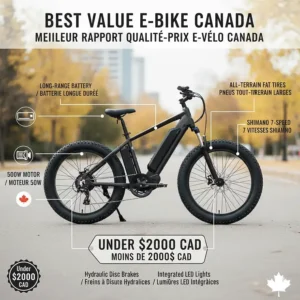
If you’re seeking the absolute best value fat tire electric bike under $2000, the Lectric XP 3.0 stands alone. Starting at just $1,299 CAD for the standard battery or $1,599 for the long-range version, it delivers shocking performance for the price.
Key Specifications:
- 500W motor (1000W peak power)
- 55Nm torque (up from 35Nm in previous gen)
- Folds to 91×61×73 cm for storage
What impresses me most is Lectric’s PWR programming system—the motor engagement feels smoother and more intuitive than competitors costing twice as much. The updated 7-speed Shimano drivetrain now allows comfortable pedalling at 32 km/h, solving a major complaint from the XP 2.0.
Customer Feedback: Canadian buyers on Reddit’s r/ebikes consistently rank this as the best value under $1,500 CAD, with particular praise for its ability to handle Canadian winters when fitted with studded tires.
✅ Pros: Exceptional price-to-performance ratio
✅ Pros: Foldable design perfect for condo storage
✅ Pros: Arrives fully assembled (rare at this price)
❌ Cons: Mechanical disc brakes (not hydraulic)
❌ Cons: 20″ wheels less stable than 26″ at high speeds
3. GOTRAX F3V2 – The Folding All-Rounder
The GOTRAX F3V2 fills a unique niche: a folding fat tire e-bike with legitimate off-road capability. Priced at $1,399-$1,699 CAD through Canadian retailers, it offers the convenience of compact storage without sacrificing power.
Key Specifications:
- 500W motor (compliant with all Canadian provinces)
- 48V/13.6Ah battery (653Wh)
- 20×4″ fat tires with front suspension
GOTRAX Canada provides direct support, which matters when you need warranty service or replacement parts during our harsh winters. The frame-welded rear rack supports up to 25 kg—perfect for grocery runs or camping gear.
Customer Feedback: One Vancouver rider mentioned using it for “micro-adventures,” folding it to take on the SkyTrain to distant neighbourhoods, then exploring. Alberta users report excellent performance in snow when using appropriate tire pressure (15-20 PSI).
✅ Pros: True folding capability with fat tires
✅ Pros: Included accessories (phone holder, lock, seat bag)
✅ Pros: Canadian warranty support through GOTRAX.ca
❌ Cons: Smaller 20″ wheels affect top-end stability
❌ Cons: Suspension not adjustable
4. Hiboy P6 – The Winter Warrior
Don’t let the affordable $1,499-$1,799 CAD price fool you—the Hiboy P6 punches well above its weight class. Designed with Canadian winters in mind, this bike features hydraulic front suspension and a robust 750W motor that maintains power even in frigid temperatures.
Key Specifications:
- 750W brushless motor
- 26×4″ tires optimized for snow/ice traction
- 96 km maximum range (real-world: 60-70 km in winter)
An Edmonton rider’s testimonial really sold me on this bike: “It is full on winter here in Edmonton Alberta Canada and my P6 is so much fun. I get to work faster than any other way of transportation. The hills my P6 took me up were astounding.”
Customer Feedback: Hunting enthusiasts praise its quiet operation and ability to carry gear on rough trails. Commuters appreciate the responsive throttle that helps navigate icy intersections safely.
✅ Pros: Excellent cold-weather performance
✅ Pros: Hydraulic suspension handles rough terrain
✅ Pros: Available directly through Hiboy.ca with Canadian support
❌ Cons: Basic mechanical brakes (upgrade to hydraulic recommended)
❌ Cons: Minimalist design lacks integrated accessories
5. Rad Power RadRover 6 Plus – The Cargo Hauler
The Rad Power RadRover 6 Plus represents the upper end of our value fat tire electric bike under $2000 category at $1,999-$2,299 CAD. What justifies the premium? Unmatched carrying capacity and build quality designed specifically for North American conditions.
Key Specifications:
- 750W geared hub motor
- 672Wh battery (approximately 72 km range)
- 275 lb (125 kg) total payload capacity
Rad Power operates Canadian service centres in major cities, ensuring you’re not dealing with overseas support when issues arise. The step-through frame option makes this accessible for riders of all ages and abilities—crucial for family e-bike sharing.
Customer Feedback: Canadian owners frequently mention its reliability through multiple winter seasons, with many reporting 3,000+ km with minimal maintenance beyond brake pads and tire rotations.
✅ Pros: Proven reliability in Canadian market
✅ Pros: Extensive dealer network for service
✅ Pros: High payload for groceries, kids, or cargo
❌ Cons: Heavier at 33 kg makes lifting difficult
❌ Cons: Range decreases significantly in extreme cold
6. Denago Fat Tire Step Thru 2 – Accessibility Champion
The Denago Fat Tire Step Thru 2 ($1,799-$1,999 CAD) prioritizes ease of use without compromising on features. The low step-through frame makes mounting effortless—especially important when wearing bulky winter clothing or carrying cargo.
Key Specifications:
- 500W motor (federally compliant)
- 48V battery with 65 km realistic range
- Step-through design with 15 cm clearance
This bike shines for riders who value comfort and accessibility. The hydraulic disc brakes provide excellent stopping power in wet conditions, and the ergonomic saddle reduces fatigue on longer rides through city bike paths.
Customer Feedback: Older riders and those with mobility concerns consistently rate this as the most comfortable fat tire e-bike for daily use. The stable geometry inspires confidence on mixed surfaces.
✅ Pros: Easy mounting for all riders
✅ Pros: Stable, confidence-inspiring geometry
✅ Pros: Quality components at mid-range price
❌ Cons: Limited availability in Canada (check dealers)
❌ Cons: Shorter range than competitors
7. Lectric XPeak 2.0 – The Trail Blazer
Rounding out our list, the Lectric XPeak 2.0 ($1,699-$2,103 CAD with accessories) targets riders who demand serious off-road capability. This is the value fat tire electric bike under $2000 for weekend warriors who work Monday through Friday but shred trails every Saturday.
Key Specifications:
- 750W motor designed for hills
- RST Renegade fork (100mm travel)
- 26×4″ aggressive tread pattern tires
The included hydraulic brakes and upgraded components justify the slightly higher price. Lectric’s bundle deals often include fenders, racks, and lighting—essential accessories for Canadian year-round riding that would cost $300-400 separately.
Customer Feedback: British Columbia mountain bikers appreciate the front suspension on technical trails, while Prairie riders use it for exploring backroads and rural paths without worrying about terrain.
✅ Pros: True off-road capability
✅ Pros: Quality suspension for the price
✅ Pros: Bundle deals include $400+ in accessories
❌ Cons: Heavier than pure commuter models
❌ Cons: Overkill if you only ride paved paths
Understanding Fat Tire E-Bike Technology
What Makes Fat Tires Special for Canadian Conditions
Electric bicycles come in many configurations, but fat tire models offer distinct advantages for Canada’s diverse climate and terrain. Those oversized 4-inch tires aren’t just for show—they fundamentally change how your bike interacts with surfaces.
The wider contact patch distributes your weight over a larger area, allowing you to float over snow, sand, and loose gravel that would stop conventional bikes. In winter, running fat tires at lower pressure (10-15 PSI) creates a snowshoe effect, providing traction on packed snow and even ice when combined with studded tire options.
Motor Power: Balancing Performance and Legality
Canadian federal regulations limit e-bikes to 500W continuous power output, though many manufacturers advertise “peak” wattage of 750-1000W for brief bursts during acceleration or hill climbing. This legal framework ensures your value fat tire electric bike under $2000 remains classified as a bicycle rather than a motor vehicle—meaning no license, registration, or insurance required.
The sweet spot for Canadian riders sits between 500-750W nominal power. This provides ample acceleration for city traffic, hill-climbing ability for varied terrain, and compliance with regulations in all provinces from British Columbia to Newfoundland.
Battery Technology and Cold Weather Performance
Lithium-ion batteries power all modern e-bikes, but winter performance varies dramatically. Quality batteries maintain 70-80% capacity at 0°C, while budget options may drop to 50% or less.
Protect your investment by storing batteries indoors when temperatures drop below -10°C. Many Canadian riders remove their battery and keep it at room temperature, installing it just before rides. This simple habit can extend battery life by 2-3 years compared to leaving it permanently installed.
How to Choose Value Fat Tire Electric Bike Under $2000 in Canada
Step 1: Define Your Primary Use Case
Determine whether you’ll primarily commute on paved paths, explore off-road trails, or need all-weather year-round capability. This decision narrows your options significantly.
Step 2: Measure Your Storage Space
Many condos and apartments lack bike storage rooms. If space is limited, prioritize folding models like the Lectric XP 3.0 or GOTRAX F3V2 that fit in closets or under desks.
Step 3: Calculate Your Real-World Range Needs
Manufacturers advertise “ideal conditions” range. In Canadian winter with hills, expect 50-60% of stated range. If your daily commute is 30 km round trip, target bikes with 80+ km advertised range.
Step 4: Consider Provincial Regulations
While federal rules apply nationwide, provinces add specific requirements. Ontario mandates riders be 16+, while Alberta allows 12+ year-olds. Check your provincial regulations before purchasing.
Step 5: Factor in True Ownership Costs
Beyond the purchase price, budget for essential Canadian accessories: winter-specific lights ($80-120), studded tires ($150-200 per set), fenders ($60-100), and a quality lock ($80-150 minimum).
Step 6: Verify Canadian Availability and Support
Prioritize brands with Canadian distribution networks. Dealing with warranty claims or replacement parts through overseas channels adds weeks of delay and potential customs fees.
Step 7: Test Ride When Possible
Many Canadian cities now have e-bike specialty stores offering test rides. Spending 30 minutes experiencing different motor types, frame geometries, and power delivery modes prevents expensive buying mistakes.
Maintenance Essentials for Canadian E-Bike Owners
Winter Storage and Care
Canadian winters demand special attention to keep your value fat tire electric bike under $2000 running smoothly. Start by thoroughly cleaning your bike after each winter ride—road salt is incredibly corrosive to metal components.
Remove the battery and store it at room temperature (15-20°C) at approximately 50-60% charge. This significantly extends battery lifespan compared to storing it fully charged or depleted.
Lubricate your chain weekly during winter months using wet lube formulated for cold conditions. The frequent freeze-thaw cycles and road grime accelerate wear dramatically.
Tire Pressure Optimization
Fat tires excel when run at lower pressures than conventional bikes, but finding your ideal PSI requires experimentation. For snow and ice, try 10-15 PSI—you’ll feel sluggish on pavement but gain remarkable traction on slippery surfaces.
During dry summer months, increase to 20-25 PSI for better efficiency and speed on bike paths. The beauty of fat tires is this adjustability—you’re essentially changing your bike’s character with a simple pressure adjustment.
Brake Maintenance in Wet Conditions
Hydraulic disc brakes require minimal maintenance but need periodic pad inspection. In Canadian conditions with frequent wet riding, expect to replace brake pads every 1,500-2,000 km versus 3,000+ km in dry climates.
Learn to adjust your own brakes—it’s simpler than you think and saves $50-80 per service visit. YouTube tutorials specific to your model make this a 15-minute job.
Cost Analysis: True Value Beyond the Price Tag
Comparing Total Cost of Ownership
The cheapest value fat tire electric bike under $2000 isn’t necessarily the best value when you factor in reliability, component quality, and Canadian support availability.
Consider a $1,299 no-name import versus a $1,699 Lectric XP 3.0. That $400 difference buys you:
- Canadian warranty support instead of overseas email tickets
- UL-certified battery (lower fire risk)
- Quality components requiring less frequent replacement
- Established parts availability
Over three years, the “cheaper” bike often costs more through failed components, shipping delays for parts, and higher maintenance requirements.
Government Incentives and Tax Considerations
Some Canadian municipalities offer e-bike purchase rebates—check your city’s website. British Columbia, Quebec, and some Ontario municipalities have offered programs ranging from $350-850 towards e-bike purchases.
While the federal government doesn’t currently offer nationwide e-bike incentives, this changes periodically as environmental policies evolve. The Government of Canada website maintains updated information on green transportation programs.
Resale Value Considerations
Quality brands like Aventon, Lectric, and Rad Power maintain 50-60% resale value after two years of moderate use. Budget imports often depreciate to 20-30% because potential buyers worry about parts availability and reliability.
If you’re unsure about long-term e-bike commitment, choosing a well-known brand provides an exit strategy—you can recoup more of your investment should you decide to sell.
Safety and Legal Compliance in Canada
Understanding Canadian E-Bike Classifications
Canada doesn’t use the US Class 1/2/3 system that’s popular elsewhere. Instead, federal regulations define power-assisted bicycles as having:
- Maximum 500W continuous motor power
- Maximum 32 km/h (20 mph) on motor power alone
- Functional pedals at all times
- Proper labelling showing compliance
Any bike exceeding these parameters legally becomes a motor vehicle requiring licensing, insurance, and registration. Fortunately, all bikes in our value fat tire electric bike under $2000 roundup comply with federal standards.
Helmet Requirements by Province
Every Canadian province mandates helmet use for e-bike riders, though age requirements vary:
- Ontario: All riders regardless of age
- British Columbia: All riders regardless of age
- Alberta: Under 18 only (though strongly recommended for all)
Invest in a quality helmet certified to CPSC or similar standards. Budget $60-120 for proper protection—considerably cheaper than hospital bills.
Insurance and Liability
While not legally required, considering liability insurance for your e-bike is wise. Many homeowner’s or renter’s insurance policies extend coverage to bicycles, including e-bikes, for theft and liability. Verify your coverage includes e-bikes specifically, as some insurers exclude motorized vehicles.
Specialty e-bike insurance through companies like Velosurance or Markel costs $100-200 annually for comprehensive coverage including theft, damage, and liability—worthwhile for bikes approaching $2,000 value.
✨ Don’t Miss These Exclusive Deals!
🔍 Take your winter riding to the next level with these carefully selected products available in Canada. Click on any highlighted item to check current pricing and availability on Amazon.ca. These accessories will help you create authentic year-round riding experiences your family will love!
Accessories to Maximize Your Investment
Essential Winter Riding Gear
Canadian e-bike ownership demands specific accessories beyond what warm-climate riders need. Start with quality winter tires—studded options like the Schwalbe Ice Spiker Pro ($150-200 each) transform your fat tire e-bike’s winter capability.
Fenders become non-negotiable in slushy conditions. Planet Bike or SKS models designed for fat tires run $80-120 and prevent the miserable experience of road spray soaking you from below.
Upgrade your lighting beyond basic included LEDs. Quality winter-specific lights with extended battery life in cold conditions (like Niterider or Cygolite) cost $120-200 but make early morning and evening commutes dramatically safer.
Smart Lock Solutions
Budget $100-150 minimum for a quality U-lock like the Kryptonite Evolution or Abus Granit. Cable locks alone won’t deter determined thieves—Canadian cities see significant e-bike theft, particularly of premium models.
Consider GPS trackers like the Apple AirTag ($40) hidden in your seat post or frame. While not theft prevention, they significantly improve recovery chances if your bike is stolen.
Cargo and Storage Options
Maximize your value fat tire electric bike under $2000’s utility with quality racks and panniers. Ortlieb Back-Roller panniers ($200-280 per pair) are expensive but literally waterproof—crucial for Canadian weather where unexpected rain is standard.
Rear racks rated for 25-35 kg allow grocery hauling or kid-carrier attachment. Thule and Topeak make fat-tire-compatible options starting around $80-120.
FAQ
❓ How fast can an ebike go in Canada?
❓ What is the price range for fat tire electric bikes in Canada?
❓ Can I ride an e-bike in winter in Canada?
❓ Do I need a license to ride an e-bike in Canada?
❓ How long do e-bike batteries last in Canadian weather?
Conclusion: Your Perfect Ride Awaits
Finding the ideal value fat tire electric bike under $2000 in Canada comes down to matching bike capabilities with your specific needs and riding conditions. Whether you’re drawn to the premium features of the Aventon Aventure 3, the unbeatable value of the Lectric XP 3.0, or the folding convenience of the GOTRAX F3V2, there’s never been a better time to join the e-bike revolution.
The Canadian market has matured dramatically, with local support networks, winter-specific accessories, and models designed specifically for our challenging conditions. These bikes aren’t just transportation—they’re freedom from traffic, parking hassles, and expensive fuel costs, all while getting fresh air and light exercise.
Remember to factor in true ownership costs including quality accessories, proper winter gear, and maintenance supplies. That $1,500 bike becomes a $2,000 investment once you add essentials, but still delivers incredible value compared to car ownership or transit passes.
Start with test rides at local dealers, read Canadian-specific reviews, and join online communities like r/ebikes or Canadian e-bike Facebook groups for real-world experiences. Your perfect winter commuter is out there—likely on this list—waiting to transform your daily routine.
Recommended for You
- 7 Best Winter E-Bikes in Canada 2026: Conquer the Snow
- 7 Best Fat Tire E-Bikes Canada 2026
- 7 Electric Bike Brands Canada Riders Trust in 2026
Disclaimer: This article contains affiliate links to Amazon.ca. If you purchase products through these links, we may earn a small commission at no additional cost to you.
✨ Found this helpful? Share it with your friends! 💬🤗
