

In This Article
Gliding confidently down snow-packed trails on your fat tire e-bike, gripping icy terrain like summer pavement—that’s studded tire magic. After three Canadian winters testing various options, I can confirm the right rubber transforms sketchy winter commutes into stable, enjoyable rides.
This guide reveals which studded tires for fat tire e-bikes work best for Canadian conditions, pricing ($120-$389 CAD), provincial regulations, and installation tips. Whether commuting through Calgary’s icy streets or exploring Quebec’s trails, you’ll learn why studded tires aren’t just upgrades—they’re essential once temperatures drop below 7°C.
Quick Comparison Table: Top Studded Tires at a Glance
| Tire Model | Size Options | Stud Count | Price Range (CAD) | Best For | Rating |
|---|---|---|---|---|---|
| 45NRTH Dillinger 5 | 26×4.6″, 27.5×4.5″ | 252-258 | $189-$339 | Ice & hard-pack | ⭐⭐⭐⭐⭐ |
| Vee Snowshoe XL | 26×4.8″ | 240 | $150-$200 | All-season value | ⭐⭐⭐⭐ |
| Terrene Wazia Light | 26×4.0″, 26×4.6″ | 180 | $175-$225 | Lightweight speed | ⭐⭐⭐⭐½ |
| 45NRTH Dillinger 4 | 26×4.0″, 27.5×4.0″ | 168-240 | $189-$314 | Fast traction | ⭐⭐⭐⭐½ |
| Rad Power Studded | 20×4.0″ | 180 | $140-$180 | Compact e-bikes | ⭐⭐⭐⭐ |
| Vee Snowball | 20×4.0″ | 50+ | $110-$145 | Budget option | ⭐⭐⭐½ |
| Terrene Cake Eater | 26×4.6″ | 180 | $195-$245 | Fast rolling | ⭐⭐⭐⭐½ |
💬 Just one click – help others make better buying decisions too! 😊
Top 7 Studded Tires for Fat Tire E-Bikes: Expert Analysis
1. 45NRTH Dillinger 5 – The Canadian Winter Champion
The 45NRTH Dillinger 5 is the gold standard with 252 concave aluminum carbide studs that bite into ice aggressively. The wider 4.6″ profile excels on varied Canadian terrain—from Ottawa’s icy paths to Vancouver’s slush.
Key Specs: 26×4.6″ or 27.5×4.5″, 60/120 TPI, tubeless-ready folding bead
Price: $189-$339 CAD per tire
Availability: Amazon.ca, Fat Bikes Canada
Canadian Feedback: Manitoba riders report 5-7 winter seasons of reliable performance. One Winnipeg commuter noted, “Transformed sketchy commutes into confidence-inspiring rides.”
✅ Pros: Exceptional ice traction (252+ studs), fast-rolling centre, 5-7 season lifespan
❌ Cons: Premium pricing, heavier than alternatives
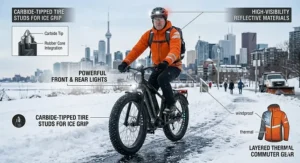
2. Vee Tire Snowshoe XL – Best Value All-Season
The Vee Tire Snowshoe XL delivers remarkable versatility with 240 aluminum carbide studs and silica compound rubber that stays flexible to -30°C. The 4.8″ width provides excellent snow flotation.
Key Specs: 26×4.8″, 120 TPI, 20 PSI max, 240 studs
Price: $150-$200 CAD
Availability: Amazon.ca
Canadian Feedback: Ontario riders appreciate “Goldilocks sizing that fits most frames,” while Alberta trail riders praise both snow and ice performance.
✅ Pros: Excellent value, 240 studs, stays grippy in extreme cold
❌ Cons: Slightly heavy, wire bead version available
3. Terrene Wazia Light Studded – Lightweight Speed Demon
The Terrene Wazia Light features 180 triple-traction crown studs with light casing for speed. Popular with Toronto and Montreal commuters mixing paths and streets.
Key Specs: 26×4.0″/26×4.6″, 60 TPI, 1,700g, pre-studded
Price: $175-$225 CAD
Availability: Amazon.ca
Canadian Feedback: A Saskatchewan rider shared, “Pre-studded convenience saved hours. Rolls faster than Juggernaut Pros with equal ice grip.”
✅ Pros: Light weight improves range, pre-studded, warranted for low PSI
❌ Cons: Only 180 studs, limited sizes
4. 45NRTH Dillinger 4 – Fast-Rolling Ice Killer
The 45NRTH Dillinger 4 balances speed and traction with 168-240 carbide studs. Narrower profile cuts through loose snow efficiently—perfect for prairie provinces.
Key Specs: 26×4.0″/27.5×4.0″, 120 TPI, tubeless-ready
Price: $189-$314 CAD
Availability: Excellent Canadian stock
Canadian Feedback: Alberta e-biker notes, “Front Dillinger 4 for control, conventional rear—best of both worlds.”
✅ Pros: Fast-rolling, lighter than Dillinger 5, mixed-condition excellence
❌ Cons: Fewer studs, premium pricing
5. Rad Power eBike Studded Tire – E-Bike Specific Design
The Rad Power eBike Studded Tire (20×4.0″) fits compact e-bikes perfectly with 180 tungsten carbide studs. E-bike-specific construction handles extra torque.
Key Specs: 20×4.0″, 180 tungsten studs, 60 TPI
Price: $140-$180 CAD
Availability: Direct Canada shipping, 3-5 days
Canadian Feedback: Calgary delivery rider reports, “Two winters delivering—haven’t lost a single stud.”
✅ Pros: E-bike torque design, perfect compact fit, reliable retention
❌ Cons: 20″ only, not for deep snow
6. Vee Snowball – Budget-Friendly Security
The Vee Snowball provides solid ice performance without $300+ pricing. Strategic stud placement focuses grip where needed most.
Key Specs: 20×4.0″, 50+ steel studs, 26 TPI wire bead
Price: $110-$145 CAD
Availability: Amazon.ca
Canadian Feedback: Ontario rider: “Perfect for occasional trails and errands—haven’t fallen once.”
✅ Pros: Most affordable, adequate ice traction, e-bike rated
❌ Cons: Fewer studs, wire bead, not for severe ice
7. Terrene Cake Eater Standard Studded – Fast Floater
The Terrene Cake Eater combines speed with 180 studs. Warranted below 8 PSI for deep snow—perfect for New Brunswick forests or Northern Ontario wilderness.
Key Specs: 26×4.6″, 180 studs, 60 TPI, 1,700g, tubeless-ready
Price: $195-$245 CAD
Availability: Limited, often backordered
Canadian Feedback: BC rider: “Rolls so fast I thought I forgot studs—until hitting ice. Mind-blowing.”
✅ Pros: Fastest rolling studded tire, excellent snow flotation, lightweight
❌ Cons: Often out of stock, premium pricing
✨ Don’t Miss These Exclusive Deals!
🔍 Take your winter riding to the next level with these carefully selected studded tires available in Canada. Click on any highlighted item to check current pricing and availability on Amazon.ca. These tires will help you create authentic winter adventure experiences safely!
Understanding Studded Tires for Fat Tire E-Bikes
What Makes Them Essential for Canadian Winter?
Studded tires for fat tire e-bikes feature precision-engineered carbide or tungsten studs that penetrate ice, creating micro-fractures for traction where smooth rubber slides. Each stud acts like a miniature ice pick, providing hundreds of grip points as the tire rotates—crucial on Canadian bike paths where morning ice persists after plowing.
According to Transport Canada regulations, e-bikes with motors under 500W and speeds limited to 32 km/h remain classified as bicycles. These specifications apply year-round, making studded tire choice critical for safe winter operation within legal parameters.
Studded vs. Non-Studded Winter Tires
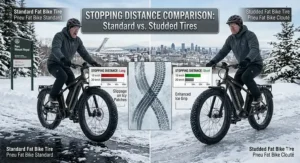
Non-studded winter tires use aggressive treads and soft compounds maintaining flexibility in cold—excellent for snow but limited on clear ice. Studded tires add metal studs physically penetrating ice surfaces, providing secure footing where soft rubber fails.
For Canadian e-bike riders, this difference appears when navigating shaded ice areas, crossing bridges with black ice, or riding during spring’s freeze-thaw cycles. Extra stud weight (100-200g per tire) is offset by confidence gained encountering unexpected ice.

Studded vs Non-Studded Fat Tire: Making the Choice
When Studded Tires Are Worth Investment
Prioritize studded tires if regularly encountering icy conditions. This includes urban path commuters (especially shadow zones), forest trail riders, and spring riders when overnight freezing creates morning ice. Quebec’s mandatory winter tire period (December 1-March 15) makes studded bicycle tires practical investments—one ice fall injury far exceeds $300-400 CAD tire costs.
When Non-Studded Alternatives Suffice
If riding remains limited to well-maintained cleared paths or primarily fresh snow without underlying ice, aggressive non-studded winter tires may suffice. Coastal BC riders where temperatures hover around freezing might find non-studded adequate since consistent freeze-thaw prevents hard ice formation. Budget-conscious riders can install one studded front tire for steering control while using cheaper non-studded rear—reducing overall cost by 40-50%.
Ice Grip Bicycle Tires: Traction Technology
Stud Types and Performance
Modern studded tires use three primary stud types. Aluminum carbide studs offer lightweight performance and excellent hardness—ideal for speed priority. Steel carbide studs provide maximum durability but add weight—suitable for heavy e-bikes or 500+ km winter riding.
Concave studs feature bowl-shaped tops creating multiple biting edges rather than single points, excelling on polished ice found on heavily-trafficked compressed-snow paths. The 45NRTH Dillinger 5’s concave studs represent this technology’s current peak.
Strategic Stud Placement
Tire engineers position studs based on contact patch analysis. Centre studs provide braking/acceleration traction, shoulder studs ensure cornering grip. Premium tires use asymmetric patterns with higher corner-zone density—recognizing most winter crashes occur during turns rather than straight-line riding.
Best Winter Tires for E-Bike: Beyond Studs
Tread Patterns for Snow Traction
While studs handle ice, tread pattern determines snow performance. Widely-spaced knobs (like Vee Snowshoe XL) dig into loose snow and self-clean, preventing snow packing—critical during heavy snowfall on unpacked trails.
Tightly-spaced centre treads (both Dillinger models) roll faster on hard-pack snow, reducing battery drain. For Canadian riders covering longer distances, this efficiency difference means an extra 5-10 km range—potentially the difference between making it home or calling for rides.
Rubber Compounds for Canadian Cold
Temperature flexibility separates premium tires from mediocre options. Standard compounds become rigid below -10°C, losing grip and increasing puncture risk. Specialized silica compounds (Vee tires) maintain flexibility to -30°C—essential for prairie winters hitting extreme lows regularly.
E-Bike with Best Traction in Snow: Setup Guide
Tire Pressure Optimization
Mastering tire pressure transforms winter riding from sketchy to stable. For studded fat tires, follow these Canadian guidelines:
Deep Powder (15+ cm): 5-8 PSI creates maximum float
Packed Snow Trails: 8-12 PSI balances float with efficiency
Mixed (Snow + Ice): 10-15 PSI provides stud engagement
Clear Ice: 12-18 PSI ensures full stud penetration
Pressure drops approximately 1 PSI per 10°F temperature decrease. Check weekly and adjust based on overnight temperatures.
Motor Assist Settings
Start in Eco/lowest assist when accelerating from stops—prevents rear spin wasting battery and reducing stud life. Increase to mid-level assist once moving. Reserve turbo for steep climbs. Canadian riders report 20-30% longer winter battery range by moderating assist levels, compensating for cold-related capacity loss.
Snow Traction Ebike Wheels: Tire-to-Rim Matching
Rim Width Compatibility
Fat bike rims range from 65-100mm+ internal width. Tire width should be 1.5-2.5x rim internal width. A 26×4.6″ tire works perfectly on 80-100mm rims but may feel unstable on 65mm.
Check e-bike specifications before ordering. Popular Canadian brands (Biktrix, Rad Power, Surface 604) typically use 80mm rims, making most 26×4.0″ to 26×4.8″ tires compatible. Measure twice, order once—studded tire returns often carry restocking fees.
Tubeless vs. Tube Setup
Tubeless offers puncture resistance and allows lower pressures without pinch flats. However, sealant can freeze below -20°C, causing air loss. Prairie/northern riders should consider glycol-based antifreeze sealant or tubes during deep winter.
Tube setups provide reliability and easier frozen-finger repair. Premium tubes (like Revoloop TPU) remain flexible at low temperatures and resist punctures better than standard butyl.
How to Winterize Electric Bike: Complete Preparation
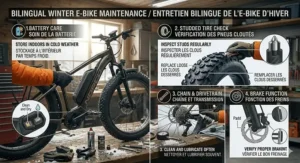
Battery Protection Essentials
Lithium-ion batteries perform poorly below 0°C and suffer permanent damage if charged frozen. Follow these steps:
Store batteries indoors (10-20°C) between rides—even overnight cold reduces capacity 15-30%. Warm batteries to room temperature before charging—never charge cold batteries. Install neoprene battery covers ($40-60 CAD) for longer rides—insulates during use, extending range 10-15% in cold.
These habits prevent $700-1,400 replacement costs and are especially important given winter-specific guidance on safe e-bike operation from Canadian bicycle safety organizations.
Electronics and Drivetrain Protection
Salt and corrosive de-icers attack components aggressively. After slushy rides, rinse bikes with fresh water (avoid high-pressure near bearings/motors), then dry thoroughly. Apply corrosion-preventive spray to chains, cassettes, bolts, and spokes. PTFE lubricants resist winter moisture better than standard oils.
Cover electrical connections with dielectric grease—protects displays, battery terminals, and motor plugs from moisture intrusion created by freeze-thaw cycles inside sealed components.
Winter Tire Installation: DIY vs. Professional
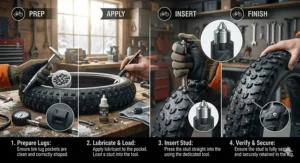
Step-by-Step Installation
Tools Needed: Plastic tire levers, floor pump, gauge, soapy water
Steps:
- Deflate old tire completely and remove from rim
- Inspect rim tape, clean rim surface
- Install new studded tire starting opposite valve stem
- Insert tube (if using) or prepare tubeless
- Work second bead carefully—avoid scraping studs against rim
- Inflate to seating pressure (30-40 PSI), then reduce to riding pressure
- Spin wheel, verify even stud distribution
Break-In Period
New studded tires require 50-80 km break-in before studs fully seat. Ride conservatively on varied surfaces—avoid aggressive pavement cornering that can dislodge studs. Keep pressure 2-3 PSI above normal for first 50 km. Properly broken-in tires retain studs better throughout seasons.
Winter Tire Installation: Provincial Regulations
Understanding Canadian Studded Tire Laws
Studded tire regulations vary across provinces. While laws primarily target motor vehicles, responsible e-bike riders should understand restrictions:
Quebec: October 15 – May 1 permitted
Ontario: Northern Ontario only (September 1 – May 31). Southern Ontario faces fines up to $1,000 CAD
British Columbia: Designated highways October 1 – April 30
Alberta, Saskatchewan, Territories: No restrictions
Manitoba: October 1 – April 30
These regulations rarely enforce on bicycles since bicycle studs cause minimal road damage versus vehicle studded tires. However, respecting periods demonstrates good citizenship.
For comprehensive winter tire law information across Canada, consult official provincial transportation resources and municipal bylaws.
Federal E-Bike Regulations
Canadian federal law classifies power-assisted bicycles as maximum 500W motors and 32 km/h assisted speed. These regulations remain unchanged during winter. Winter equipment like studded tires and fenders doesn’t impact legal status provided core specifications remain compliant. Some provinces require bells, lights, and reflectors year-round—essential for winter when visibility drops during early-sunset months.
❓ FAQ: Studded Tires for Fat Tire E-Bikes in Canada
❓ Can I use studded bicycle tires year-round in Canada?
❓ How long do studded e-bike tires last in Canadian winters?
❓ What's the ideal tire pressure for studded fat tires on Canadian ice?
❓ Are studded tires worth extra cost for casual winter e-bike riders?
❓ Can I install studs myself on studdable fat bike tires?
Price Range & Value Analysis: Canadian Market
Budget Tier ($110-$180 CAD)
The Vee Snowball ($110-$145) and Rad Power Studded ($140-$180) serve recreational riders and delivery workers needing reliable ice security without premium costs. These tires sacrifice some durability and stud count but deliver adequate performance for casual winter riding.
Mid-Range ($185-$250 CAD)
This sweet spot includes Vee Snowshoe XL ($150-$200), Terrene Wazia Light ($175-$225), and Terrene Cake Eater ($195-$245). Offering excellent performance-per-dollar ratios, these tires feature 180-240 studs, quality construction, and typically last 3-5 Canadian winters. Best choice for serious winter commuters and weekend trail riders.
Premium ($250-$389 CAD)
45NRTH Dillinger 4 ($189-$314) and Dillinger 5 ($189-$339) represent top-tier performance with 168-258 studs, advanced casing technology, and 5-7 season lifespans. While expensive upfront, per-season costs ($40-60 annually) are competitive given longevity. Worth investment for daily winter riders logging 500+ km annually.
Conclusion: Ride Confidently Through Canadian Winters
Choosing the right studded tires for fat tire e-bikes transforms Canadian winter from cycling dead zones into extended adventure seasons. Whether investing in premium 45NRTH Dillingers for daily commuting or trying budget Vee Snowballs for recreational trails, proper winter tires’ security far exceeds initial costs.
Key takeaways: match tire width to rim specs, respect provincial regulations, maintain proper pressure based on conditions, and protect investments through off-season storage. Canadian riders following these guidelines report years of safe winter riding rather than November-April storage.
Remember studded tires are just one winter e-bike preparation component—combine them with proper battery management, regular salt-combat cleaning, and appropriate clothing for complete winter readiness. The Canadian cycling season doesn’t end when snow falls; with right equipment and knowledge, discover whole new worlds of two-wheeled adventure thousands of Canadian cyclists already enjoy.
Don’t let another Canadian winter pass watching from windows. Equip your fat tire e-bike with quality studded tires and experience winter riding magic.
Recommended for You
- 7 Best E-Bike for -20 Celsius: 2026 Winter Survival Guide Canada
- 7 Best E-Bike Battery Winter Care Tips for Canada 2026
- 7 Best E-Bikes with Heated Grips Canada 2026 – Stay Warm
Disclaimer: This article contains affiliate links to Amazon.ca. If you purchase products through these links, we may earn a small commission at no additional cost to you.
✨ Found this helpful? Share it with your friends! 💬🤗
