
In This Article
Your lower back knows the truth before your brain catches up. Ten minutes into a rattly commute on a stiff, poorly-fitted bike, and you’re already shifting your weight, wincing at every pothole, wondering why “getting exercise” has to feel like a punishment. That’s the entire reason the search for the most comfortable commuter e-bike exists in the first place — comfort isn’t a luxury add-on, it’s the difference between an e-bike you ride every single weekday and one that quietly gathers dust in the garage by November.
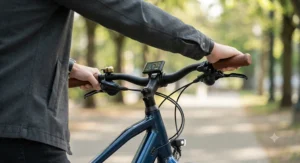
What is a most comfortable commuter e-bike? In practical terms, it’s an electric bicycle built around an upright ergonomic commuter ebike posture, a cushioned electric bike seat with real padding, front (and sometimes rear) suspension, and a frame geometry that keeps wrists, knees, and spine happy over daily rides of 20 to 40 minutes on Canadian streets, potholes and all.
Demand backs this up too — commuter shops across the country have reported a steady rise in e-bike commuting popularity as more Canadians look for a comfortable, gas-free way to beat traffic and parking costs.
This guide digs into seven real, currently-sold models — from a C$700 folding cruiser to a C$5,000 Dutch-style all-rounder — and breaks down exactly what makes each one comfortable (or not) based on real specs and genuine aggregated reviewer sentiment, not marketing copy. We’ll cover suspension seat posts, saddle padding materials, and what a smooth ride ebike Canada commuter should actually expect once winter potholes show up.
Quick Comparison Table
| Rank | Product | Comfort Highlight | Price Range (CAD) | Best For |
|---|---|---|---|---|
| 1 | Velotric Discover 2 | 80mm hydraulic suspension fork + wide saddle | C$2,500–C$2,800 | All-around comfort commuting |
| 2 | Aventon Level.2 | 65mm coil suspension fork, torque sensor | C$2,000–C$2,400 | Best value comfort commuter |
| 3 | Rad Power RadCity 5 Plus Step-Thru | Ergonomic grips, upright frame geometry | C$2,200–C$2,700 | Upright riding posture |
| 4 | Gazelle Arroyo C8+ HMB Elite | Gel saddle, suspension seat post, leather grips | C$4,500 and up | Premium plush ride |
| 5 | Lectric XP Trike2 | Cloud 50 front suspension, three-wheel stability | C$2,000–C$2,700 | Nervous or balance-limited riders |
| 6 | ENGWE Engine Pro | Front and rear suspension, fat tires | C$1,900–C$2,200 | Budget dual-suspension comfort |
| 7 | Swagtron EB-5 | Adjustable seat, air-filled tires, lightweight | C$650–C$950 | Ultra-budget portable comfort |
Looking at this table, a clear pattern emerges: comfort scales with price, but not in a straight line. The Aventon Level.2 delivers roughly 80% of the plushness of the pricier Velotric Discover 2 for several hundred dollars less, which is exactly the kind of value gap worth exploiting if your commute is under 15 km each way. Meanwhile, the Gazelle Arroyo C8+ HMB Elite sits in its own category entirely — you’re paying for Bosch engineering and a gel saddle that genuinely rivals a recumbent, not just a badge. If stability rather than plushness is your main worry (say, you’re returning to cycling after years off, or balance is a concern), the Lectric XP Trike2 solves a completely different comfort problem that no two-wheeler on this list can touch.
Just one click — help others make better buying decisions too! 😊
Top 7 Most Comfortable Commuter E-Bikes: Expert Analysis
1. Velotric Discover 2 — literally built and marketed as the most comfortable commuter
Velotric doesn’t bury the lede here — the company markets the Discover 2 with the tagline “our most comfortable commuter,” and the spec sheet backs it up. The step-through aluminum frame pairs with an 80mm-travel hydraulic suspension fork (with lockout), a wide Kenda 27.5 x 2.4-inch tire, and a torque-and-cadence “SensorSwap” system that Velotric says reads pedal effort more naturally than cheaper cadence-only sensors.
What most buyers overlook about the Discover 2 is that its comfort advantage isn’t just the fork — it’s the whole package working together. The 705.6Wh battery is rated for up to 75 miles (121 km) of pedal-assist range, and the 750W continuous motor (1,100W peak) with 75Nm of torque means you’re rarely mashing pedals hard enough to strain your knees on hills, which matters just as much for comfort as the suspension does. Based on the spec comparison against the rest of this list, the Discover 2 has the most complete comfort engineering of any step-through here short of the Gazelle.
This bike is for the commuter who wants zero compromises and is willing to pay mid-to-premium pricing for it — beginners, taller riders who need the Large frame option (5’6″–6’4″), and anyone whose commute includes rough pavement or unmaintained bike lanes. Reviewers consistently note the ride quality and the accessibility of the step-through frame as standout strengths, alongside strong battery range; a recurring niggle in aggregated review sentiment is that the display can be hard to read through polarized sunglasses, and the bike is on the heavier side at roughly 70 lb (31.75 kg), which matters if you need to carry it up stairs.
Pros:
- ✅ 80mm hydraulic suspension fork smooths rough pavement and cracked bike lanes
- ✅ Torque/cadence sensor delivers noticeably natural pedal assist
- ✅ Up to 75 miles (121 km) of range reduces range-anxiety-related fatigue
Cons:
- ❌ Heavier than most on this list at around 70 lb (31.75 kg)
- ❌ Display visibility drops noticeably with polarized sunglasses
Expect the Velotric Discover 2 in the C$2,500–C$2,800 range at the time of research; given the suspension fork, torque sensor, and included fenders and rack, it’s a strong value verdict for riders who plan to keep the bike five-plus years.
2. Aventon Level.2 — best value comfort commuter with a torque sensor
The Aventon Level.2 (available in both standard and step-through frames) was Aventon’s first e-bike engineered with a torque sensor rather than a simple cadence sensor, and that single component upgrade does more for ride comfort than almost any other spec on this list. A cadence sensor just detects that you’re pedalling and dumps in assist; a torque sensor measures how hard you’re pushing and scales assist proportionally, which produces a noticeably smoother, less jerky ride — especially at low speeds in stop-and-go traffic.
The 65mm coil-spring suspension fork with lockout, paired with 27.5 x 2.1-inch hybrid tires and Ergonomic Comfort grips, rounds out a frame that Aventon specifically ships with pre-installed fenders and a rear rack, so you’re not retrofitting comfort accessories after the fact. What the spec sheet won’t tell you, but reviewers note, is that the hydraulic disc brakes (180mm rotors) feel notably more controlled and less fatiguing on long descents than the mechanical disc brakes found on cheaper competitors — less hand-clenching over a 20-minute commute adds up.
This is the pick for budget-conscious riders who still want genuine suspension and a torque sensor rather than compromising on both. Aggregated reviewer sentiment consistently praises the Level.2 as “nearly 100% ready for commuting use” out of the box, with the 8-speed drivetrain and 60-mile (97 km) range cited as strong value for the price point; a common complaint is that the stock saddle, while adequate, isn’t plush enough for rides over 45 minutes and many owners upgrade it within the first few months.
Pros:
- ✅ Torque sensor produces smoother, more natural pedal assist than cadence-only systems
- ✅ 65mm coil suspension fork with lockout absorbs urban road chatter
- ✅ Pre-installed fenders and rear rack save on accessory costs
Cons:
- ❌ Stock saddle often needs upgrading for rides longer than 45 minutes
- ❌ Standard frame’s minimum saddle height may not suit shorter riders
At around C$2,000–C$2,400, the Aventon Level.2 is arguably the best dollar-for-dollar comfort commuter here, particularly for riders under 15 km one-way.
3. Rad Power RadCity 5 Plus Step-Thru — best for an upright ergonomic commuter posture
If your priority is an upright ergonomic commuter ebike position rather than outright suspension travel, the RadCity 5 Plus Step-Thru earns its spot. The frame geometry positions the rider more like a Dutch city bike than a road bike — hands relaxed on swept-back ergonomic grips, spine close to vertical, weight distributed evenly rather than pitched forward onto the wrists. That posture alone eliminates a huge share of the neck and wrist strain that makes long commutes miserable on drop-bar or flat-bar road-style e-bikes.
The 750W custom geared-hub motor (with a claimed 80Nm-class torque) is paired with a 672Wh semi-integrated battery rated for 28–50 miles (45–80 km) depending on assist level, and Rad Power upgraded this generation to hydraulic disc brakes with ceramic pads, a real step up in stopping-power consistency versus the mechanical brakes on the previous RadCity generation. Here’s what to weigh: the step-thru frame accommodates riders from 4’8″ to 6’0″, which is one of the widest fit ranges of any bike on this list, making it a strong pick for households where more than one person will ride the same bike.
Reviewers consistently cite the “comfortable ride for long commutes” with a well-designed saddle and mostly-upright position as the defining strength of this generation, alongside praise for the easy-to-read dual display. A recurring critique in aggregated feedback is that the 20 mph (32 km/h) pedal-assist top speed feels conservative to riders coming from faster Class 3 bikes, and the bike’s curb weight (around 65 lb / 29.5 kg) makes it awkward to lift onto car-mounted bike racks.
Pros:
- ✅ Upright Dutch-style geometry reduces wrist and neck strain significantly
- ✅ Hydraulic disc brakes with ceramic pads improve braking comfort and control
- ✅ Wide 4’8″–6’0″ rider height range suits multiple household members
Cons:
- ❌ 20 mph (32 km/h) pedal-assist cap feels slow to Class 3 riders
- ❌ Heavy at roughly 65 lb (29.5 kg), awkward on car racks
Expect the Rad Power RadCity 5 Plus Step-Thru around C$2,200–C$2,700; for households wanting one bike that fits multiple riders comfortably, it’s tough to beat.
4. Gazelle Arroyo C8+ HMB Elite — best premium plush ride with a true gel saddle
The Gazelle Arroyo C8+ HMB Elite is where “comfortable” stops being a marketing checkbox and becomes genuine Dutch bicycle engineering. This is a low-step, Bosch-powered city bike built by a company with over 130 years in the saddle-and-frame business, and it shows in details competitors simply don’t include: a gel-cushioned Selle Royal saddle, a sprung (suspension) seat post as standard equipment, leather-wrapped ergonomic grips, and an aluminum suspension fork with 30mm of travel integrated into the headset rather than bolted on as an afterthought.
Based on the spec comparison, what separates this bike from everything else on the list is the Bosch Active Line Plus mid-drive motor, which delivers up to 50Nm of torque through a mid-mounted position that keeps the bike’s centre of gravity low — this translates directly into a calmer, less top-heavy feel at low speeds, which is exactly when most comfort complaints (wobbling, tipping, overcorrecting) happen. The 500Wh integrated battery is rated for a genuinely wide 40–90 mile (64–145 km) range depending on assist mode, and the Shimano Nexus 8-speed internal hub means shifting even while stopped at a red light, with zero derailleur maintenance.
This is the pick for riders who’ve tried a budget e-bike, found the saddle and suspension lacking, and are ready to pay for the difference. One real owner testimonial captured by Gazelle describes riding 34 miles without any seat, hand, or back soreness — the kind of outcome a cheap suspension fork alone cannot deliver. The trade-off is obvious: this is the most expensive bike on this list by a wide margin, and its 8-speed internal hub, while low-maintenance, has a narrower gear range than a derailleur setup, which matters on steeper Canadian hills.
Pros:
- ✅ Gel Selle Royal saddle plus sprung seat post is genuinely plush, not marketing spin
- ✅ Bosch mid-drive motor and low centre of gravity reduce low-speed wobble
- ✅ Internal 8-speed hub allows shifting at a complete stop, zero derailleur fuss
Cons:
- ❌ Premium price puts it out of reach for many first-time e-bike buyers
- ❌ Internal hub’s gear range is narrower than a derailleur on steep hills
At C$4,500 and up depending on configuration, the Gazelle Arroyo C8+ HMB Elite is a genuine premium investment — but for riders logging 15+ km daily, the long-term comfort payoff is real.
5. Lectric XP Trike2 — best stability-first comfort for nervous or balance-limited riders
Comfort isn’t only about padding and suspension — it’s also about confidence, and nothing on two wheels can match the psychological comfort of a stable, tip-proof platform. The Lectric XP Trike2 solves an entirely different comfort problem than the rest of this list: it’s an electric tricycle with the lowest standover height in Lectric’s lineup, an adjusted stem angle for a more natural upright riding posture, and a Cloud 50 front suspension fork that Lectric specifically tuned to smooth out the jolts a three-wheeled platform otherwise transmits more directly than a two-wheeler.
What the spec sheet won’t tell you, but user reports suggest, is that trikes eliminate the balance-related tension that makes many nervous or returning riders grip the handlebars white-knuckle tight — and that grip tension is itself a major source of hand and wrist fatigue on a “regular” comfort e-bike. Riders can also add an aftermarket suspension seat post (widely available and compatible with the XP platform) for a further comfort boost, something owners frequently do within the first season.
The base 500W motor paired with a 13Ah battery is rated for up to 50 miles (80 km), with a 750W/17.5Ah long-range option extending that to roughly 70 miles (113 km). This bike is for the buyer who needs stability first and speed a distant second: seniors, riders with inner-ear or balance conditions, or anyone hauling groceries or light cargo who values a platform that won’t tip at a stoplight. Reviewers consistently frame the Trike2 as “opening up bicycling to a wide variety of riders” who couldn’t comfortably ride a standard two-wheeled e-bike, though the trade-off is reduced manoeuvrability in tight bike lanes and a wider turning radius than any other bike here.
Pros:
- ✅ Three-wheel platform removes balance-related grip tension and anxiety
- ✅ Cloud 50 front suspension smooths bumps that trikes otherwise transmit directly
- ✅ Lowest standover height in the lineup, easy on and off for less mobile riders
Cons:
- ❌ Wider turning radius makes tight urban bike lanes trickier to navigate
- ❌ Heavier overall platform reduces manoeuvrability versus two-wheel options
Priced around C$2,000–C$2,700 depending on the motor/battery configuration, the Lectric XP Trike2 is a category of one on this list — and for the right rider, worth every cent.
6. ENGWE Engine Pro — best budget dual-suspension comfort commuter
Front-and-rear suspension is usually a premium-tier feature, which is what makes the ENGWE Engine Pro stand out in the budget segment. The folding magnesium-and-aluminum alloy frame pairs front suspension with a rear shock, a combination one long-term reviewer who rode the bike as a daily commuter through six weeks of winter conditions described as “cushy enough to absorb impact and vibration on gravel paths and pothole-laden city streets” — exactly the language you want to hear about a bike aimed at rough Canadian pavement.
Here’s what to weigh: the rear hub motor is rated at up to 1,000W peak (750W continuous in most listings), fed by a 48V battery in the 15–16Ah range, giving a claimed range around 60–68 miles (97–109 km) depending on configuration and terrain. Hydraulic disc brakes and wide fat tires (typically 20 x 4.0 inches) add further cushioning against road imperfections, and the fold-down design means the Engine Pro fits in a small hatchback trunk or a condo storage locker — genuinely useful for apartment-dwelling commuters without garage space.
This is the pick for buyers who want dual suspension and fat-tire cushioning without paying premium-tier prices, particularly anyone commuting over broken pavement, gravel shortcuts, or unplowed winter shoulders. Reviewers consistently flag the bike’s heavy weight — around 83 lb (37.6 kg) — as the main trade-off for that suspension and fat-tire comfort, and note the build quality, while solid for the price, doesn’t match boutique brands’ fit and finish.
Pros:
- ✅ Rare front-and-rear suspension combo at a budget-tier price point
- ✅ Fat tires add extra cushioning on gravel and rough winter shoulders
- ✅ Foldable frame suits apartment or condo storage without a garage
Cons:
- ❌ Heaviest bike on this list at roughly 83 lb (37.6 kg)
- ❌ Build quality is solid but doesn’t match premium boutique brands
Expect the ENGWE Engine Pro in the C$1,900–C$2,200 range; for dual suspension at this price, the value verdict is strong provided you’re not carrying it up stairs daily.
7. Swagtron EB-5 — best ultra-budget portable comfort commuter
Not everyone needs (or can afford) suspension forks and torque sensors, and the Swagtron EB-5 exists for exactly that buyer: someone who wants a genuinely comfortable short-hop commuter at a fraction of the price of anything else on this list. The folding aluminum-alloy frame uses an adjustable-height twin-rail seat system compatible with universal saddles, meaning riders of noticeably different heights can share the same bike without a wrench, and 14-inch air-filled tires provide real pneumatic cushioning — a meaningful step up from the solid rubber tires found on some ultra-budget folders.
The 250W hub motor and 36V lithium-ion battery are modest by this list’s standards, rated for roughly 15.5 miles (25 km) of range and a 15.5 mph (25 km/h) throttle top speed, which places this firmly in “light ebike” territory under most provincial e-bike classification rules — worth checking your specific province’s requirements, since some classify sub-500W bikes differently for age and helmet rules. What most buyers overlook is that the EB-5’s true comfort advantage is portability-driven: at 37.5 lb (17 kg) folded, it’s light enough to carry up an apartment stairwell or tuck under a desk, removing an entirely different category of “commute friction” that has nothing to do with saddle padding.
This bike suits short urban hops — think 5 km each way to a transit station — rather than long commutes, and budget-conscious buyers making their first e-bike purchase. Aggregated reviewer sentiment consistently praises the air-filled tires for a smoother ride than expected at this price, and the pre-assembled, ready-to-ride-out-of-the-box setup; a recurring complaint is limited range and a motor that feels underpowered on any meaningful incline.
Pros:
- ✅ Air-filled 14-inch tires give real pneumatic cushioning at a budget price
- ✅ Adjustable twin-rail seat system fits riders of different heights easily
- ✅ Folds to 37.5 lb (17 kg), light enough for apartment or transit portability
Cons:
- ❌ Modest 15.5-mile (25 km) range limits it to short commutes
- ❌ 250W motor struggles on any meaningful hill or incline
At around C$650–C$950, the Swagtron EB-5 is the entry point for comfort-focused e-bike commuting — not a long-haul solution, but a genuinely smooth-riding short-commute option.
Setting Up Your Comfort E-Bike: Saddle Height, Suspension & First 30 Days
Getting a comfortable commuter e-bike home is only half the job — the first 30 days of setup determine whether it stays comfortable. Start with saddle height: your leg should have a slight bend (roughly 25–30 degrees) at the bottom of the pedal stroke with your heel on the pedal. Too low, and you’re grinding your knees; too high, and you’re rocking your hips side to side with every stroke, which is a fast track to lower back irritation.
Next, dial in suspension fork preload and lockout. Most forks on this list (the Aventon Level.2’s coil spring, the Velotric Discover 2’s hydraulic unit, the Gazelle’s headset-integrated fork) ship with a default setting tuned for an average rider weight — if you’re notably lighter or heavier, adjust preload before your first real commute, not after three weeks of unnecessary bouncing or bottoming-out. Lock the fork out entirely on smooth pavement stretches to conserve a small amount of pedal efficiency, and unlock it the moment you hit rougher surfaces.
Finally, budget an hour in the first week to fine-tune contact points: brake lever reach, handlebar angle, and grip position. A common mistake in the first 30 days is riders tolerating slightly-wrong ergonomics because “it’ll loosen up” — it won’t. Suspension seat posts and cushioned electric bike seat upgrades (covered in detail later in this guide) are worth installing during this initial setup window rather than after weeks of low-grade discomfort you’ve already gotten used to tolerating.
Real Canadian Commutes: Which Comfort E-Bike Fits Your Ride
Picture three different Canadian commuters. First, a downtown Toronto condo-dweller with no garage, riding 4 km to the subway station on mostly-smooth streets — for her, the Swagtron EB-5‘s portability and fold-down size solve the actual comfort problem, which is storage and carrying, not suspension travel. Second, a Calgary suburban commuter riding 18 km each way on a mix of paved multi-use pathways and gravel shortcuts through river parks — the ENGWE Engine Pro‘s dual suspension and fat tires are built precisely for that terrain, and the folding frame still fits in a condo storage locker on weekends.
Third, consider a Halifax retiree easing back into cycling after a hip replacement, prioritizing stability above all else on a 6 km ride to the farmers’ market — the Lectric XP Trike2 removes the balance anxiety that would otherwise make any two-wheeled option, however plush the saddle, feel stressful rather than comfortable. None of these three riders has the same “most comfortable” answer, because comfort is inseparable from your specific commute’s surface, distance, and your own physical starting point — which is exactly why this guide covers seven distinct models rather than crowning one universal winner.
Fixing Common Comfort Complaints: Numb Hands, Sore Seat, Stiff Back
Numb hands after 15 minutes of riding almost always trace back to one of two causes: too much weight pitched forward onto the wrists, or grips that are too narrow or too hard. The fix is usually a combination of raising the handlebar stem slightly (most of the bikes on this list, like the Aventon Level.2 and Rad Power RadCity 5 Plus, ship with adjustable-rise stems) and swapping to wider, gel-padded ergonomic grips, which cost under C$40 and take fifteen minutes to install.
A sore seat after week one is the single most common complaint across aggregated e-bike reviews, and it’s rarely about the saddle being “bad” — it’s about sit-bone width mismatch. Every rider’s sit bones sit a different distance apart, and a saddle that’s too narrow concentrates your full weight onto soft tissue rather than the sit bones designed to carry it. Measuring your sit-bone width (many bike shops do this in under five minutes with a simple gel pad) and matching it to a cushioned electric bike seat built for that width solves this faster than simply adding more foam, which can actually increase pressure in the wrong places.
A stiff back after a longer ride usually signals either saddle height slightly too low (rounding your spine to compensate) or a frame geometry that’s too aggressive for your flexibility. Riders on this list who prioritize an upright ergonomic commuter ebike posture, like the Rad Power RadCity 5 Plus or the Gazelle Arroyo, sidestep this problem structurally rather than requiring a fix after the fact — which is worth factoring in at purchase time if back stiffness has been a recurring issue on previous bikes.
Your Comfort E-Bike Decision Framework
If your commute is under 8 km on mostly smooth pavement and budget matters most, choose the Swagtron EB-5 because its portability and pneumatic tires solve your actual comfort constraints without overpaying for suspension travel you won’t fully use. If your commute crosses 10–20 km of mixed surfaces including gravel or poorly maintained shoulders, choose the ENGWE Engine Pro or Velotric Discover 2 because dual or hydraulic front suspension meaningfully reduces cumulative fatigue over that distance.
If you’re sharing one bike across household members of different heights, choose the Rad Power RadCity 5 Plus Step-Thru because its 4’8″–6’0″ fit range and upright geometry accommodate the widest range of bodies without individual adjustment headaches. If balance, confidence, or a physical limitation is your primary comfort barrier rather than pavement roughness, choose the Lectric XP Trike2 because three-wheel stability solves a problem suspension travel cannot touch. And if budget genuinely isn’t the constraint and you want the plushest possible daily ride for years of ownership, choose the Gazelle Arroyo C8+ HMB Elite — the gel saddle and Bosch mid-drive represent the ceiling of what “comfortable commuter e-bike” currently means in this market.
How to Choose the Most Comfortable Commuter E-Bike
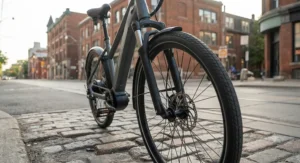
What makes an e-bike genuinely comfortable rather than just marketed as comfortable comes down to seven checkable factors, in rough order of impact:
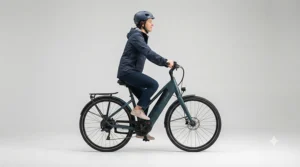
- Frame geometry and riding posture. An upright ergonomic commuter ebike position — spine near-vertical, hands relaxed rather than weight-bearing — reduces strain more than any single component upgrade.
- Suspension fork travel. Even 60–80mm of front travel meaningfully smooths urban road chatter; dual (front and rear) suspension adds further cushioning on gravel or broken pavement.
- Saddle padding materials and width. Gel or dual-density foam matched to your actual sit-bone width outperforms “more padding” every time — thin, correctly-shaped padding often beats thick, generic padding.
- Suspension seat posts. A sprung or elastomer seat post absorbs vertical shock independently of the fork, and is one of the highest-value C$60–C$150 upgrades on any bike that doesn’t already include one.
- Tire width and pressure range. Wider tires (2.1 inches and up) run at lower PSI absorb far more road vibration than narrow, high-pressure tires, at a small efficiency cost.
- Motor sensor type. Torque sensors deliver smoother, less jerky assist than cadence-only sensors, which directly affects how relaxed your ride feels in stop-and-go traffic.
- Total bike weight relative to your storage situation. A “comfortable” bike you can’t comfortably carry up three flights of stairs stops being comfortable the moment you have to lift it.
✨ Don’t Miss These Exclusive Deals! 🔍
Take your commute to the next level with these carefully selected comfort e-bikes. Click on any highlighted model above to check current pricing and availability. The right choice here will pay off in years of smoother, pain-free rides!
Common Mistakes When Buying a Comfort-Focused Commuter E-Bike
The most common mistake is buying based on motor wattage or top speed alone, ignoring geometry and suspension entirely — a 750W motor doesn’t make a harsh, poorly-fitted frame comfortable, it just gets you to your sore back faster. A second frequent error is skipping the sit-bone measurement step and assuming “the stock saddle will break in eventually.” Saddles break in marginally at best; a genuinely mismatched saddle stays mismatched.
A third mistake, particularly relevant to Canadian buyers, is underestimating how much winter road conditions change the comfort calculus — a bike that felt smooth on a dry September test ride can feel jarring over frost-heaved pavement and unfilled potholes in March, which is exactly when wider tires and real suspension travel earn their keep. Finally, many first-time buyers skip test-sitting different frame styles (step-through versus high-step, upright versus sport-tilted) entirely, ordering online based on specs alone, when 10 minutes on a local shop floor model would reveal an obvious fit mismatch before money changes hands.
Comfort Commuter E-Bikes vs Traditional Bicycles: What Actually Changes
| Factor | Comfort Commuter E-Bike | Traditional Bicycle |
|---|---|---|
| Riding posture | Upright, weight-supported by frame geometry | Often more forward-leaning, especially on hybrids/road bikes |
| Effort on hills | Motor assist reduces cardiovascular and joint strain | Full muscular effort required, higher fatigue |
| Suspension | Increasingly standard on comfort-focused models | Usually absent below mid-range mountain bikes |
| Arrival condition | Less sweat, more consistent effort via pedal assist | Can arrive overheated, especially on hot Canadian summer days |
| Best For | Longer commutes, hillier routes, less-fit or returning riders | Very short, flat commutes; riders prioritizing pure exercise |
The table above understates one important nuance: the comfort gap between e-bikes and traditional bicycles widens specifically on hills and into headwinds, where a traditional bike forces you to either stand and grind or drop to a crawl — both uncomfortable outcomes. Pedal assist flattens that variability, which is a meaningfully different kind of comfort than saddle padding alone provides. That said, a well-fitted traditional bicycle with a quality saddle can still out-comfort a poorly-fitted e-bike over a short, flat route, so the “e-bike is automatically more comfortable” assumption doesn’t hold universally — geometry and fit still matter more than the motor.
What to Expect: Real-World Ride Comfort on Canadian Roads
Specs on a page don’t capture what a smooth ride ebike Canada commuter actually feels day to day. On freshly paved bike lanes, differences between the bikes on this list mostly disappear — even the budget Swagtron EB-5 feels reasonably smooth. The gap opens up on the roads most Canadians actually ride: frost-heaved asphalt in spring, gravel-strewn shoulders after winter sand trucks have done their work, and the transition seams where a multi-use path meets a road crossing.
On those surfaces, suspension travel stops being a nice-to-have and becomes the primary comfort variable. Riders moving from a rigid frame to even 65mm of coil suspension (like the Aventon Level.2) consistently report the difference as immediately noticeable rather than subtle — described less as “smoother” and more as “I stopped noticing the road.” Torque-sensor bikes add a second, quieter layer of real-world comfort: because assist scales with effort rather than switching on-and-off with cadence, starts from a dead stop at intersections feel less lurchy, which matters more than it sounds like over dozens of daily stop-and-go moments.
Long-Term Cost & Maintenance: Saddles, Suspension Seat Posts & Upkeep
Comfort components have a maintenance cost most buyers don’t budget for upfront. A suspension fork typically needs a seal service every 12–24 months (roughly C$40–C$80 at a shop) to keep it performing rather than sagging and losing its cushioning benefit over time. A suspension seat post, if not already included (as it is on the Gazelle Arroyo), runs roughly C$70–C$150 as an aftermarket addition and is one of the best comfort-per-dollar upgrades available for any bike on this list that ships without one.
| Comfort Upgrade | Typical Cost Range (CAD) | Comfort Impact |
|---|---|---|
| Suspension seat post | C$70–C$150 | High — isolates seat from bumps independent of fork |
| Gel or dual-density saddle | C$40–C$120 | High — directly addresses sit-bone pressure |
| Ergonomic gel grips | C$25–C$45 | Medium — reduces hand/wrist numbness |
| Suspension fork service | C$40–C$80 (every 12–24 mo.) | Maintains existing comfort, prevents degradation |
| Tire pressure maintenance | Free (5 min., weekly) | High — most-overlooked, zero-cost comfort factor |
Reading this table, the standout insight is that tire pressure maintenance is completely free and takes five minutes, yet is the most-overlooked comfort factor on this entire list — running tires 10 PSI over the recommended range for your weight measurably stiffens the ride on every single bike here, suspension or not. Over a three-year ownership period, budgeting roughly C$150–C$300 total for comfort-focused maintenance and upgrades is realistic for most riders, and delivers a better return on comfort than most buyers expect from such a modest spend.
Safety, Regulations & CSA Compliance for Canadian E-Bike Commuters
Comfort and legality intersect more than most buyers realize. Under federal Motor Vehicle Safety Regulations, a power-assisted bicycle in Canada must be capable of muscular propulsion, carry a motor rated at 500 watts or less of continuous output, and be limited to 32 km/h on motor power alone on level ground — several bikes on this list, including some ENGWE and Lectric configurations, are rated above that federal continuous-power threshold on paper, so it’s worth checking your specific province’s classification rules before purchasing, since provinces like British Columbia apply their own motor-assisted cycle regulations that can differ from the federal baseline.
A CSA-certified bicycle helmet is mandatory in most provinces regardless of e-bike class, and a properly-fitted helmet is itself a comfort factor most riders don’t consider — an ill-fitting helmet causes its own headaches and neck strain over a long commute, the same way a mismatched saddle does. Beyond helmets, look for UL 2849-certified electrical systems (several bikes on this list, including the Velotric Discover 2 and options from GOTRAX, carry this certification) as a baseline safety signal, since a battery fire risk is the one comfort-unrelated issue that can turn a pleasant commute into a genuine emergency.
Frequently Asked Questions
❓ What makes an e-bike comfortable for commuting?
❓ Do suspension seat posts really make a difference on an e-bike?
❓ Is a step-through or high-step frame more comfortable for commuting?
❓ How much does a comfortable commuter e-bike cost in Canada?
❓ What tire width is best for a smooth ride ebike Canada commute?
Conclusion
There’s no single “most comfortable commuter e-bike” that fits every rider, and honestly, any guide that claims otherwise is oversimplifying a genuinely personal decision. What the seven bikes in this guide share is that each one solves comfort through a slightly different mechanism — the Velotric Discover 2 and Gazelle Arroyo through suspension and premium saddle engineering, the Aventon Level.2 through smart torque-sensor tuning at a fair price, the Rad Power RadCity 5 Plus through pure upright geometry, the Lectric XP Trike2 through stability itself, and the ENGWE Engine Pro and Swagtron EB-5 through budget-accessible cushioning and portability, respectively.
The real work now is matching your specific commute — its distance, its surface quality, your own body and riding history — against the decision framework above rather than chasing the single highest-rated option on paper. A C$700 bike that fits your actual 4 km commute perfectly will out-comfort a C$5,000 bike bought for a commute you don’t actually have. Whichever direction you go, prioritize the saddle fit and suspension travel over motor wattage, keep tire pressure in check, and budget a small amount for the seat post or grip upgrades that consistently deliver outsized comfort returns.
Recommended for You
- Fast Charging City Ebike: 7 Top Picks for Canada (2026)
- 7 Best City Electric Bikes for Vancouver Riders (2026 Guide)
- Highest Rated City Electric Bike 2026: 7 Top Canadian Picks
Disclaimer: This article contains affiliate links. As an Amazon Associate, I earn from qualifying purchases. If you purchase products through these links, we may earn a small commission at no additional cost to you.
✨ Found this helpful? Share it with your friends! 💬🤗
