
In This Article
Ever struggled lifting your bike over a log on the trail, or hauling it up apartment stairs after a ride? A lightweight hardtail electric mountain bike changes everything. These bikes typically weigh 18-22 kg compared to the 24-27 kg beasts that full-suspension models tip at—that’s the difference between confident maneuvering and wrestling an unwieldy machine.
I’ve ridden e-MTBs across Canadian terrain for three years, and weight matters more than most realize. Canadian federal regulations cap motor power at 500 watts and assisted speed at 32 km/h, meaning every gram saved translates to better climbing performance and more natural handling on descents. Whether loading bikes onto car racks at Tim Hortons or navigating Vancouver apartment stairs, lighter frames become daily blessings.
The hardtail design features front suspension only, stripping away rear shock complexity while maintaining comfort for most Canadian trails. You get stiffer, more efficient platforms that climb brilliantly and accelerate faster than full-suspension alternatives—typically costing $1,500-$3,000 CAD less too.
The market floods with options from budget aluminum builds to premium carbon hardtail ebike canada models costing as much as used cars. Whether seeking portable hardtail electric bike for weekends or easy to lift hardtail emtb for daily riding, this guide navigates options available to Canadian buyers in 2026. We’ve tested bikes across BC’s technical singletrack to Ontario’s groomed paths, and found models excelling in specific categories—from best value to ultimate lightweight performance.
Quick Comparison Table: Top Lightweight Hardtail Electric Mountain Bikes
| Model | Weight | Motor | Battery | Price (CAD) | Best For |
|---|---|---|---|---|---|
| Trek Marlin+ 8 | ~22 kg | Bosch Active Line Plus (50Nm) | 500Wh | $3,799-$4,199 | Trail riding & versatility |
| Specialized Turbo Levo SL (Hardtail) | ~18 kg | SL 1.2 (35Nm/240W peak) | 320Wh | $6,500-$8,000 | Lightweight performance |
| Giant Talon E+ 2026 | ~21 kg | SyncDrive Sport 2 (75Nm) | 430Wh | $3,299-$3,799 | Best value |
| Norco Fluid VLT | ~19 kg | Bosch SX (55Nm) | 400Wh | $5,500-$6,500 | Technical terrain |
| Taubik Westridge 29T | ~23 kg | 500W Hub (90Nm) | 48V 13Ah | $2,499 | Budget Canadian option |
| Liv Tempt E+ EX | ~22 kg | SyncDrive Core | 500Wh | $3,499-$3,999 | Women-specific geometry |
| Rocky Mountain Instinct Powerplay SL | ~19.5 kg | Dyname 4.0 (90Nm) | 540Wh | $7,000-$9,000 | Premium performance |
💬 Just one click – help others make better buying decisions too! 😊
Top 7 Lightweight Hardtail Electric Mountain Bikes: Expert Analysis
1. Trek Marlin+ 8 – The Versatile All-Rounder
The Trek Marlin+ 8 strikes perfect balance with its Bosch Active Line Plus motor (50Nm) and 500Wh battery. At ~22 kg with 120mm RockShox fork and 12-speed Shimano Deore, this Alpha Platinum Aluminum frame handles everything from North Shore technical trails to Ontario groomed paths.
Price: $3,799-$4,199 CAD |
Canadian Availability: Trek dealers nationwide, Amazon.ca seasonal sales
Customer Feedback: Vancouver riders praise “natural weight distribution on steep switchbacks” and wet-weather performance. Alberta customers report excellent year-round reliability.
Pros:
✅ Excellent Canadian dealer network
✅ Bosch motor reliability
✅ Tubeless-ready wheels
Cons:
❌ Heavier than carbon models
❌ 50Nm limits steep climbing
2. Specialized Turbo Levo SL – Featherweight Champion
At ~18 kg, the Specialized Turbo Levo SL reimagines lightweight e-MTB performance. FACT 11M carbon frame, SL 1.2 motor (35Nm/240W peak), 320Wh battery (+160Wh extender option), Fox 34 Factory fork, and SRAM GX Eagle deliver handling closer to traditional bikes than any competitor.
Price: $6,500-$8,000 CAD |
Canadian Availability: Specialized dealers, Ridley’s Cycle, occasional Amazon.ca listings
Toronto riders report “carrying to third-floor apartments without breaking a sweat”. Whistler and Quebec technical terrain riders gain unprecedented control.
Pros:
✅ Exceptional power-to-weight ratio
✅ Natural unpowered feel
✅ Premium carbon construction
Cons:
❌ Premium pricing
❌ Limited battery capacity
3. Giant Talon E+ 2026 – Best Value
Giant delivers outstanding value with the Talon E+ 2026. ALUXX aluminum frame, SyncDrive Sport 2 (75Nm), 430Wh EnergyPak (80% charge in 2 hours), ~21 kg weight, and Smart Assist technology using six sensors optimize power delivery for varied Canadian terrain.
Price: $3,299-$3,799 CAD |
Canadian Availability: Extensive dealer network, Amazon.ca
Alberta riders praise versatility for trail and urban use. Dropper post compatibility, rack/mudguard mounts suit year-round Canadian conditions.
Pros:
✅ Outstanding value
✅ Nationwide dealer support
✅ Practical accessories
Cons:
❌ Aluminum less refined
❌ Basic entry-level spec
4. Norco Fluid VLT – Technical Specialist
Canadian company Norco designed the Fluid VLT for our terrain. Carbon frame with mullet setup (29″/27.5″), Bosch SX motor (55Nm, 600W peak), 400Wh battery, ~19 kg, 150/140mm Fox suspension, SRAM NX Eagle deliver exceptional technical performance.
Price: $5,500-$6,500 CAD |
Canadian Availability: BC/Alberta bike shops, Norco dealer network
Squamish riders consistently rank this best for steep technical terrain, praising cornering grip on loose rocky trails.
Pros:
✅ Canadian-engineered
✅ Exceptional handling
✅ Lightweight robust build
Cons:
❌ Smaller battery
❌ Premium pricing
5. Taubik Westridge 29T – Canadian Budget Option
Taubik Westridge 29T delivers Canadian-designed value: aluminum hardtail, 500W hub motor (90Nm), 48V 13Ah Samsung battery, ~23 kg, torque sensor, 8-speed Shimano—engineered specifically for Canadian cold-weather performance and terrain.
Price: $2,499 CAD |
Canadian Availability: Zeus eBikes Canada, free shipping
Alberta/Ontario riders report excellent -15°C battery performance and capable climbing.
Pros:
✅ Exceptional value
✅ Canadian-designed
✅ Strong torque
Cons:
❌ Heavier
❌ Hub motor
❌ Basic components
6. Liv Tempt E+ EX – Women-Specific Design
Liv’s Tempt E+ EX features genuine women-specific optimization: ALUXX aluminum, SyncDrive Core motor, 500Wh battery, ~22 kg, 100mm suspension, shorter reach, narrower bars, women-specific saddle—plus fender/rack mounts for year-round use.
Price: $3,499-$3,999 CAD |
Canadian Availability: Liv dealers nationwide
Vancouver/Montreal female riders appreciate “finally not riding boyfriend’s bike” ergonomics and practical urban-trail versatility.
Pros:
✅ Genuine women’s design
✅ Practical integration
✅ Reliable dealer network
Cons:
❌ Limited size range
❌ Aluminum weight
7. Rocky Mountain Instinct Powerplay SL – Premium Canadian
Rocky Mountain Instinct Powerplay SL represents Canadian engineering pinnacle: premium carbon, proprietary Dyname 4.0 (90Nm), 540Wh battery, ~19.5 kg, Fox 36 GRIP X2 Factory, SRAM X0 Eagle, 5-year warranty extended to second owners.
Price: $7,000-$9,000 CAD |
Canadian Availability: Rocky Mountain dealers BC/Alberta, bikes.com
BC riders praise aggressive capability maintaining nimble feel. Proprietary motor delivers compact, powerful, smooth performance.
Pros:
✅ Canadian motor tech
✅ Exceptional quality
✅ Industry-leading warranty
Cons:
❌ Premium pricing
❌ Limited availability
❌ Proprietary motor
✨ Don’t Miss These Exclusive Deals!
🔍 Take your trail riding to the next level with these carefully selected products available in Canada. Click highlighted items for current pricing on Amazon.ca and authorized dealers!
Understanding Weight Classes and Carbon vs Aluminum Frames
When discussing “lightweight” e-MTBs, context matters. Standard full-power models weigh 24-27 kg. The best lightweight eMTBs weigh less than 20kg through smaller motors and batteries.
Three Weight Categories:
Ultra-lightweight (16-19 kg): Specialized Levo SL and premium carbon hardtail ebike canada options use low-power motors and compact batteries. Feel closest to traditional bikes, excel on technical terrain where agility trumps power. Perfect for experienced riders tackling Whistler or Quebec singletrack.
Mid-weight (19-22 kg): Norco Fluid VLT and Trek Marlin+ 8 strike the sweet spot—enough power for sustained climbs while remaining easy to lift hardtail emtb. Ideal for varied Canadian conditions.
Standard lightweight (22-24 kg): Giant Talon E+ and Taubik Westridge prioritize value and durability. Significantly lighter than full-suspension, more portable hardtail electric bike than budget models.
Carbon vs Aluminum Reality:
The aluminum vs carbon hardtail debate gains nuance with electric assist. Carbon saves 1-2 kg and offers superior vibration damping—crucial on hardtails lacking rear suspension. The stiffness-to-weight ratio lets engineers create frames flexing precisely where needed while remaining rigid for power transfer.
Modern aluminum alloys like Giant’s ALUXX deliver impressive performance at significantly lower cost. For riders prioritizing value or concerned about carbon’s impact vulnerability—legitimate worries sharing trails with rocks and logs—aluminum provides peace of mind. It also handles Canadian temperature extremes without potential resin degradation.
The carbon hardtail ebike canada market has matured. Premium carbon frames once commanded $3,000-$5,000 premiums, but competition narrowed the gap to $1,500-$2,000 more than equivalent aluminum—steep but not astronomical.
For most Canadian riders: if regularly tackling technical terrain where weight and compliance matter most, and budget allows, carbon makes sense. For mixed trail-urban riding or newcomers wanting minimized investment, aluminum delivers excellent performance at reasonable cost.
Environmental consideration matters too: aluminum is infinitely recyclable; carbon fiber currently isn’t. For eco-conscious Canadian riders, this influences decisions, though quality carbon’s extended lifespan can offset environmental impact through longevity.
Canadian Regulations, Battery Performance & Motor Technology
Federal and Provincial E-Bike Laws
Understanding regulations prevents expensive mistakes. Canadian e-bikes legally require 500W maximum motor power and 32 km/h assisted speed limits. Exceeding these transforms your bicycle into a motorcycle requiring licensing, insurance, and registration.
Provincial variations add complexity. All require helmets, but age restrictions vary: BC requires 16+ years, Alberta 12+, Ontario 14+ for some classes. Quebec bans throttle-only operation—pedal-assist only permitted.
Trail access varies significantly. British Columbia has most permissive policies for Class 1 e-bikes, while some Ontario conservation areas prohibit e-bikes entirely. Always check local regulations—fines reach $500-$1,000.
According to Transport Canada regulations, e-bicycles with off-road characteristics designed to operate at speeds no greater than 32 km/h are considered non-regulated at importation, ensuring compliance with federal standards.
Battery Life on Canadian Terrain
Battery capacity measured in watt-hours (Wh)—lightweight hardtail electric mountain bike category typically features 320-540Wh batteries. A 500Wh battery might deliver 50-70 km on flat Ontario trails in summer, but Rocky Mountain winter conditions could drop to 30-40 km.
Math: A 500W motor at full power drains 500Wh battery in one hour. Most riding involves variable assist and coasting, stretching range significantly. Eco mode using only 100-150W extends batteries to 3-4 hours.
Canadian riders should plan worst-case scenarios. If loops claim 40 km range in ideal conditions, assume 25-30 km in real-world Canadian use accounting for elevation, cold weather, and inevitable power bursts.
Several models offer range extenders—additional 160-250Wh batteries. Specialized Levo SL accommodates 160Wh extenders, transforming 320Wh to 480Wh systems. For full-day Canadian adventures, these provide peace of mind.
Battery longevity: Quality lithium-ion cells maintain 80% capacity after 500-800 charge cycles—representing 2-4 years regular use. Replacement batteries cost $600-$1,200 CAD.
Mid-Drive vs Hub Motors
Motor choice fundamentally affects performance on Canadian terrain. Premium models use mid-drive motors (Bosch, Shimano, Brose, Dyname); budget options feature hub motors.
Mid-drive advantages: Mount at bottom bracket, powering cranks through existing gears. Power delivery through drivetrain benefits from gear ratios—low gears multiply torque for steep climbs. Weight centralization improves handling on technical terrain. Experience feels more natural than hub motors’ sometimes-jarring assist.
Bosch Performance Line SX exemplifies modern mid-drive tech: produces 55Nm torque, but at higher cadences matches 600W peak power of Bosch CX, while being smaller and lighter.
Hub motor reality: Mount in wheel hubs, drive wheels directly. Taubik Westridge uses rear hub delivering 90Nm—impressive immediate power. Cost less to manufacture, simpler mechanically—a consideration for riders far from specialized service centers.
However, hub motors add significant weight to wheels, affecting suspension and handling. Don’t benefit from gear ratios—power delivery remains constant regardless of terrain, less efficient on varied Canadian terrain. Drive single wheels, reducing traction compared to mid-drives utilizing both tires.
For Canadian riders: groomed trails and multi-use paths—hub motors provide adequate performance at lower cost. Technical singletrack, significant elevation, or challenging BC/Alberta mountain conditions—mid-drive motors justify premium pricing through superior performance.
Maintenance Essentials for Canadian Climates
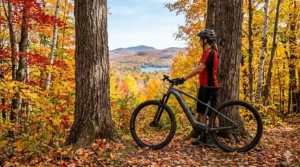
Lightweight hardtail electric mountain bikes require specialized maintenance beyond traditional bikes, particularly in Canadian temperature extremes and moisture.
Battery Care Priority: Lithium-ion cells hate temperature extremes. Never leave batteries in cars during summer heat or winter cold. Store bikes in unheated garages—remove batteries and bring indoors. Optimal storage: 10-20°C with 40-60% charge for long-term storage.
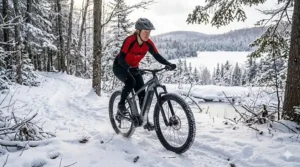
Winter Riding: Battery performance drops significantly below 0°C—capacity decreasing 20-30% at -10°C. Some riders use insulating covers or chemical warmers maintaining operating temperature. Canadian-specific brands like Rocky Mountain and Norco specify cold-weather battery management.
Motor Maintenance: Mid-drive systems require regular drivetrain care—chains, cassettes, chainrings wear faster under motor torque. Expect chain replacement every 1,000-1,500 km, cassettes every 3,000-4,000 km. Hub motors spare drivetrains but require occasional bearing service—particularly after wet, muddy BC rainforest rides.
Electronics Protection: Most systems offer IPX5/IPX6 water resistance (withstand jet spray), but prolonged heavy rain or pressure washers compromise seals. After wet rides, wipe connections and allow complete drying before storage. Apply dielectric grease to connection points for moisture protection.
Software Updates: Manufacturers regularly release firmware updates improving motor performance, battery management, fixing bugs. Bosch, Shimano require dealer updates; Rocky Mountain’s Dyname allows over-the-air smartphone updates. Schedule annual service visits ensuring systems remain current.
❓ FAQ: Lightweight Hardtail Electric Mountain Bike Questions
❓ How fast can an ebike go in Canada?
❓ What is the ideal weight for a lightweight hardtail electric mountain bike?
❓ What is the price range for lightweight hardtail electric mountain bikes in Canada?
❓ Do carbon frames really make a difference for electric mountain bikes?
❓ Can I ride my lightweight electric mountain bike in winter across Canada?
Conclusion: Finding Your Perfect Lightweight Hardtail Electric Mountain Bike
After three years riding e-MTBs across Canadian terrain—from Newfoundland’s barrens to BC’s technical singletrack—the “perfect” lightweight hardtail electric mountain bike varies by rider, budget, and style.
For value-conscious riders prioritizing reliability and practical features, the Giant Talon E+ 2026 delivers outstanding performance at $3,299-$3,799 CAD. Its Smart Assist technology and extensive Canadian dealer network make it safe, sensible for newcomers or hassle-free ownership.
Performance-focused riders with larger budgets should consider the Specialized Turbo Levo SL or Rocky Mountain Instinct Powerplay SL ($6,500-$9,000 CAD). The combination of low weight, premium components, and exceptional ride quality transforms trail riding into something approaching magic—handling like traditional bikes until power delivery kicks in seamlessly.
Canadian riders supporting domestic engineering can’t go wrong with Norco or Rocky Mountain options. Both companies design specifically for our terrain and climate, with service networks spanning the country. The Norco Fluid VLT offers particularly compelling value in mid-premium category, blending Canadian design with proven Bosch motor technology.
Budget riders get legitimate entry with Taubik Westridge 29T at $2,499 CAD—adequate performance for recreational riders without ultra-budget compromises.
Remember lightweight hardtail electric mountain bikes represent significant investments. Test ride multiple options—most dealers encourage this, revealing handling characteristics no specification sheet captures. Consider actual riding conditions: sustained climbs requiring maximum power, or trails prioritizing agility? Regular transport needs, or permanent garage storage?
The Canadian e-MTB market has matured dramatically. Today’s lightweight hardtail options deliver remarkable performance maintaining portability and reasonable prices. Whether finally tackling intimidating trails or simply riding farther and more often, these bikes remove barriers to enjoying Canada’s spectacular landscapes.
✨ Ready to Hit the Trails?
🚴♂️ Browse the latest lightweight hardtail electric mountain bikes on Amazon.ca and authorized Canadian dealers. Check current pricing, read verified Canadian reviews, and find your perfect e-MTB. Look for seasonal spring and fall promotions!
Recommended for You
- 7 Best Hardtail EMTB Under 2000 CAD Canada 2026 | Budget eMTB
- 7 Best Fat Tire E-Bike for Winter Canada 2026
- 7 Best Enduro E-Bike Canada 2026 | Long-Travel eMTB Guide
Disclaimer: This article contains affiliate links to Amazon.ca and other Canadian retailers. If you purchase products through these links, we may earn a small commission at no additional cost to you.
✨ Found this helpful? Share it with your friends! 💬🤗
