
In This Article
The recent evolution of electric bicycle technology has brought sophisticated lithium-ion battery systems, brushless motors, and intelligent power management to three-wheeled platforms. If you’ve watched traditional cycling become increasingly challenging due to balance concerns, joint issues, or simply the relentless Canadian hills, the best electric trike represents a practical solution that doesn’t compromise your independence. Unlike conventional two-wheelers that demand constant balance adjustments, these three-wheel electric bike for adults platforms keep you upright whether you’re stopped at a red light or navigating icy spring sidewalks in Halifax.
The Canadian landscape presents unique challenges that make electric trikes particularly valuable. Our sprawling suburbs, harsh winter storage requirements, and considerable distances between amenities mean that mobility solutions need to be robust, weather-resistant, and powerful enough to handle varied terrain. According to Transport Canada regulations, electric trikes with motors of 500W or less and maximum speeds of 32 km/h qualify as power-assisted bicycles, requiring no licence or insurance in most provinces. This legal framework has opened the door for thousands of Canadians who need stable electric trike options without the bureaucratic barriers of traditional motor vehicles.
What separates a quality electric trike from a disappointing purchase? The rear differential system matters more than most buyers realise—it allows independent rear wheel rotation during turns, preventing the wheel-dragging and instability that plague cheaper models on Canadian curves. Battery capacity directly impacts whether you’ll make it home during winter months when cold temperatures can reduce range by 15-20%. Motor placement affects hill-climbing ability on those notorious British Columbia inclines. In this guide, I’ll walk you through seven proven models available on Amazon.ca, explain what the specifications actually mean in real-world Canadian conditions, and help you avoid the costly mistakes that first-time buyers commonly make.
Quick Comparison: Top Electric Trikes Available in Canada
| Model | Motor Power | Battery Range | Weight Capacity | Best For | Price Range (CAD) |
|---|---|---|---|---|---|
| ADDMOTOR Citytri E-310 | 750W (1400W peak) | Up to 145 km | 127 kg + 36 kg cargo | Folding convenience, UL certified | $1,800-$2,200 |
| Tiniover Creek | 1000W (peak) | 130 km | 250 kg | Modular design, reverse function | $1,600-$1,900 |
| Tiniover Creek Pro | 1200W | 160 km | 250 kg | Premium torque sensor, long range | $1,900-$2,300 |
| Viribus 24″ Electric Trike | 350W (700W peak) | 50 km | 150 kg | Budget-friendly, lighter weight | $800-$1,100 |
| ADDMOTOR Arisetan M-360 II | 750W rear-mounted | 137 km | 172 kg | Semi-recumbent, back support | $2,100-$2,500 |
| MOONCOOL Adult Trike | 500W | 65-95 km | 159 kg | Value option, 7-speed | $900-$1,300 |
| ADDMOTOR Grandtan M-340 | 750W | 137 km | 172 kg | All-terrain fat tires | $2,000-$2,400 |
Looking at this comparison, the value proposition becomes clear when you factor in Canadian winter performance. The Tiniover Creek delivers exceptional range per dollar spent, but the ADDMOTOR models justify their premium with UL 2849 certification—increasingly important as Canadian condo boards require safety documentation before allowing indoor battery charging. Budget buyers should note that the Viribus sacrifices cold-weather range and hill-climbing torque for its lower price point, a trade-off that hits harder if you’re commuting in Calgary or Thunder Bay where winter stretches six months. For riders prioritising back health, only the Arisetan offers genuine semi-recumbent geometry that redistributes spinal load—standard upright seats on other models can aggravate existing lumbar issues during longer Canadian rides.
💬 Just one click — help others make better buying decisions too!😊
Top 7 Best Electric Trike Models: Expert Analysis
1. ADDMOTOR Citytri E-310 — The Folding Solution for Canadian Urban Dwellers
The ADDMOTOR Citytri E-310 stands out in Canada’s crowded electric trike market through its combination of compact foldability and serious power delivery. The 750W rear-mounted motor (1400W peak) produces enough torque to handle Vancouver’s notorious hills without the motor whine that characterises cheaper alternatives. What the spec sheet won’t tell you is how that rear-drive configuration maintains traction on wet autumn leaves—a critical safety consideration for Canadian riders who face six months of challenging surface conditions.
The 48V 20Ah battery promises up to 145 km in pedal-assist mode, though real-world Canadian testing reveals 90-110 km is more realistic when you account for cold-weather efficiency losses and the hilly terrain common in provinces like British Columbia and Quebec. The removable battery design proves invaluable for apartment dwellers who can’t store the entire trike indoors during harsh winters—you simply detach the 9.7 kg battery pack and charge it in your living room whilst the folded trike stays in your parking garage.
The folding mechanism operates smoothly, collapsing to dimensions that fit through standard Canadian doorways and into most SUV cargo areas. For families in Toronto condos or Montreal walk-ups where storage space commands premium prices, this foldability transforms the ownership experience. The low step-through frame (under 36 cm) accommodates riders with limited flexibility, whilst the parking brake system provides crucial security when loading groceries on sloped driveways.
UL 2849 and UL 2271 certifications deliver peace of mind that lesser-known brands can’t match. Canadian insurance providers and building management companies increasingly require these safety credentials before approving indoor storage, making the Citytri E-310 a safer investment than uncertified alternatives that might work initially but create problems when your condo board updates its regulations.
✅ Pros: Genuine folding capability, UL safety certified, powerful hill-climbing motor, removable battery for indoor charging, rear differential for stable cornering
❌ Cons: Heavier than non-folding alternatives (around 57 kg), mechanical disc brakes adequate but not premium, folding/unfolding requires some strength
The Citytri E-310 typically ranges from $1,800-$2,200 CAD on Amazon.ca, positioning it as a premium option that justifies its cost through features that matter in Canadian conditions—foldability for urban storage constraints, certification for building compliance, and power for our challenging terrain.
2. Tiniover Creek — Modular Versatility Meets Canadian Practicality
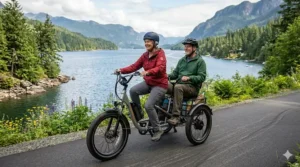
The Tiniover Creek represents a different philosophy in electric trike design: instead of optimising for one specific use case, it offers modular adaptability that lets Canadian families reconfigure the same machine for cargo hauling, passenger transport, or extended-range touring. The 1000W brushless motor delivers 80 N·m of torque—enough to maintain 20 mph speeds even whilst climbing the 8-12% grades common in suburban Canadian developments built around hillsides.
What makes this model particularly relevant for Canadian buyers is the IP65 dust and waterproof rating on critical electrical components. Our spring seasons bring road salt, slush, and temperature swings that corrode cheaper electrical systems within months. The Creek’s sealed components withstand these conditions without the premature failures that plague unprotected alternatives. The 48V 15Ah battery provides 130 km maximum range, though Canadian riders should expect 80-100 km in mixed conditions with moderate hills and occasional throttle use.
The rear differential system operates smoothly enough that you won’t notice it—which is precisely the point. Cheaper trikes without differentials drag the inside rear wheel through turns, creating instability and premature tyre wear. On Canadian roads where spring potholes and winter frost heaves already challenge handling, this differential prevents the unsettling sensation of the rear end wanting to continue straight whilst you’re trying to navigate around obstacles.
The modular design deserves special attention. The rear cargo area accepts either a passenger seat kit (sold separately) or a cargo rack system, allowing families to adapt the trike as needs change. During summer, transport grandchildren to the park; during autumn, haul apple-picking loads; during winter months when the trike is stored, the passenger kit stores separately in minimal space. This flexibility extends the useful life of a significant investment.
Canadian buyers should note that Tiniover offers direct customer service with 12-month warranties on the complete trike—unusual coverage in a market where many Amazon sellers provide minimal support after the 30-day return window closes. The company’s 90% pre-assembly means most Canadian buyers complete setup in under an hour using included tools.
✅ Pros: Modular passenger/cargo adaptability, IP65 weather resistance, strong torque for Canadian hills, competitive price-to-range ratio, reverse function for tight spaces
❌ Cons: Passenger and cargo kits sold separately (adds $200-$400 CAD), heavier at 57 kg, mechanical brakes require periodic adjustment
The Creek typically ranges from $1,600-$1,900 CAD, offering exceptional value when you consider the adaptability and weather-resistant construction that Canadian conditions demand.
3. Tiniover Creek Pro — Premium Performance with Torque-Sensing Intelligence
The Creek Pro elevates the standard Creek platform with a 1200W motor and, crucially, a mid-axis torque sensor that transforms the riding experience from “adequate electric assistance” to “intuitive power delivery that feels like your legs got stronger.” Traditional cadence sensors on budget trikes simply detect pedal rotation and apply fixed assistance—fine for flat terrain but jarring on varied Canadian landscapes. The torque sensor reads how hard you’re pushing and proportionally matches that effort, creating the smooth, predictable power delivery that makes long rides genuinely enjoyable rather than a battle against abrupt motor engagement.
The 48V 20Ah battery (960Wh capacity) pushes maximum range to 160 km in optimal conditions—realistically 110-130 km for Canadian riders dealing with hills, headwinds, and the temperature impacts that reduce battery efficiency. This extended capacity matters less for daily errands than for the confidence it provides: you won’t find yourself rationing battery power during an unexpected detour or underestimating how much energy that “gentle slope” will consume on the return journey.
Hydraulic disc brakes replace the mechanical units on the standard Creek, delivering superior modulation in wet conditions—a meaningful upgrade for Canadian riders who face rain, snow, and ice-melt slush throughout much of the year. The braking force remains consistent regardless of cable stretch or adjustment drift, and the system requires less frequent maintenance than mechanical alternatives. The parking brake function provides secure holding power on sloped driveways, essential when loading groceries or assisting passengers.
The premium torque sensor justifies the Creek Pro’s higher price through a more refined riding experience, but Canadian buyers should honestly assess whether they’ll notice the difference. If your typical rides involve flat suburban paths at consistent speeds, the standard Creek’s cadence sensor performs adequately. If you’re navigating Edmonton river valley trails with constant elevation changes or battling Calgary’s Chinook winds, the torque sensor’s intelligent power modulation prevents the leg fatigue that comes from fighting poorly-timed assistance.
✅ Pros: Torque sensor delivers natural-feeling assistance, hydraulic brakes for superior wet-weather stopping, extended 160 km range capability, 22 mph top speed, same modular adaptability as standard Creek
❌ Cons: Premium pricing requires justifying the upgrades, torque sensor benefits most apparent on varied terrain, still 58 kg weight
The Creek Pro typically ranges from $1,900-$2,300 CAD—a meaningful premium over the standard Creek that Canadian buyers should weigh against their actual riding conditions and frequency.
4. Viribus 24″ Electric Trike — Budget-Friendly Entry Point for Canadian Seniors
The Viribus 24″ Electric Trike represents the most accessible entry point into adult electric tricycle ownership without descending into the unreliable junk that clutters Amazon’s lower price tiers. The 350W front hub motor (700W peak) won’t impress power-hungry riders, but it adequately handles flat-to-moderate terrain that characterises many Canadian suburban neighbourhoods. The 36V 13Ah battery provides 50 km range under ideal conditions—realistically 35-40 km for Canadian riders, which suffices for local errands, grocery runs, and social visits within a 10-15 km radius.
What the Viribus does well is accessibility. The low step-through frame requires minimal leg lift, the 7-speed Shimano derailleur provides familiar shifting for riders transitioning from traditional bicycles, and the spring-cushioned saddle absorbs enough bumps to make shorter rides comfortable. The front-mounted motor keeps costs down but creates less optimal weight distribution for hill climbing compared to rear-drive alternatives—you’ll notice this disadvantage immediately if you’re attempting Vancouver’s slopes or Calgary’s river valley escarpments.
The 150 kg weight capacity accommodates most riders plus light cargo, though the large rear basket can tempt you to exceed safe loading limits. Canadian buyers should be realistic about winter storage—the 36V battery loses efficiency faster in cold temperatures than higher-voltage alternatives, and the trike’s lighter construction (around 37 kg) means less robust components that require more frequent seasonal maintenance. The dual disc brakes provide adequate stopping power for the trike’s lighter overall weight and modest top speed of 25 km/h.
For Canadian seniors on fixed incomes who need basic mobility without investing $2,000+ CAD, the Viribus delivers genuine value. It won’t conquer mountains or survive years of harsh weather abuse, but it provides reliable short-range transportation at a price point that makes electric trike ownership accessible to pensioners who thought the technology was financially out of reach.
✅ Pros: Affordable entry price under $1,100 CAD, lighter 37 kg weight easier to manoeuvre, 7-speed gearing familiar to traditional cyclists, adequate for flat urban terrain
❌ Cons: Limited 50 km range restricts trip planning, front motor struggles on meaningful hills, lighter construction less durable in harsh Canadian weather, smaller battery loses more efficiency in winter
The Viribus typically ranges from $800-$1,100 CAD, making it the most budget-friendly legitimate option for Canadian riders with modest performance requirements and flat local terrain.
5. ADDMOTOR Arisetan M-360 II — Semi-Recumbent Comfort for Canadian Riders with Back Issues
The Arisetan M-360 II addresses a specific need that standard upright trikes ignore: riders with chronic back pain, spinal issues, or recovery needs who find traditional cycling postures unbearable. The semi-recumbent design positions your torso at a relaxed 45-degree angle against a supportive backrest, redistributing body weight across your pelvis and upper back instead of compressing lower lumbar discs. For Canadian seniors or individuals managing arthritis, previous injuries, or post-surgical rehabilitation, this geometry transforms electric triking from “tolerable with breaks” to “genuinely comfortable for extended rides.”
The 750W rear-mounted motor provides confident hill-climbing ability whilst maintaining the traction advantages that rear-drive configurations offer on Canadian roads with varied surface conditions. The 48V 20Ah battery delivers up to 137 km range in pedal-assist mode, though realistic Canadian expectations should centre around 90-110 km depending on terrain and weather. The removable battery allows indoor charging during winter months when below-freezing garage temperatures would otherwise damage the cells.
The low centre of gravity inherent to recumbent designs enhances stability, particularly relevant for riders whose balance concerns motivated the switch to three wheels in the first place. The wider wheelbase provides additional resistance to tipping during emergency manoeuvres or when navigating Canadian spring potholes that appear overnight after frost cycles. The parking brake system proves essential given the recumbent mounting position—engaging the brake before attempting to sit or stand prevents the embarrassing and potentially dangerous situation of the trike rolling whilst you’re half-mounted.
Canadian buyers should understand that semi-recumbent trikes require adaptation. The lower seating position reduces visibility in traffic compared to upright alternatives, and the foot-forward pedalling motion feels unfamiliar for the first few rides. However, riders with genuine back issues consistently report that the adjustment period proves worthwhile—the ability to ride 20-30 km without pain or stiffness opens recreational possibilities that disappeared years ago.
✅ Pros: Semi-recumbent seating dramatically reduces back strain, supportive backrest for extended comfort, rear differential for stable cornering, parking brake for safe mounting/dismounting, UL safety certified
❌ Cons: Lower seating reduces traffic visibility, recumbent position requires adaptation, heavier at 56 kg, premium pricing reflects specialised design
The Arisetan M-360 II typically ranges from $2,100-$2,500 CAD—a premium price justified by the specialised geometry that makes cycling accessible for riders whom standard trikes leave in discomfort.
6. MOONCOOL Adult Electric Tricycle — Value-Focused 7-Speed for Canadian Commuters
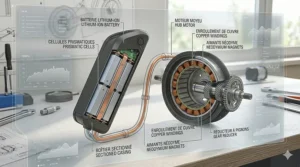
The MOONCOOL Adult Trike occupies the middle ground between budget-entry models and premium power platforms, delivering 500W of motor assistance paired with a 7-speed Shimano derailleur that lets you fine-tune pedalling resistance. The 36V 14.5Ah battery provides 65-95 km range depending on assist level and terrain—Canadian riders should expect the lower end of that range when dealing with hills, headwinds, and cold-weather efficiency losses.
What distinguishes the MOONCOOL from similarly-priced competitors is build quality that doesn’t feel like obvious cost-cutting. The 6061 aluminium frame maintains rigidity without excessive weight (around 41 kg), the front suspension fork absorbs enough impact to smooth out Canadian road imperfections, and the adjustable backrest seat provides comfort that cheaper alternatives sacrifice. The disc brakes deliver reliable stopping power, though hydraulic units would better serve Canadian riders who face frequent wet conditions.
The 159 kg weight capacity accommodates most riders plus groceries or cargo, whilst the large rear basket (rated for 50 kg) handles weekly shopping loads that would challenge two-wheeled alternatives. For Canadian families using the trike for practical transportation rather than recreational riding, this cargo capability transforms daily logistics—no more rationing grocery purchases to fit in backpacks or struggling with handlebar bags that affect steering.
The MOONCOOL represents sensible value for Canadian commuters who need reliable daily transportation without paying for premium features they won’t use. The 500W motor handles moderate hills adequately, the range suffices for most suburban commuting patterns, and the 7-speed gearing lets you contribute meaningful pedal power to extend battery life. It won’t impress power users or conquer mountain passes, but it delivers honest performance at a price point that makes electric trike commuting financially viable for middle-income Canadian households.
✅ Pros: 7-speed gearing for pedalling efficiency, front suspension for comfort, adjustable backrest seat, adequate cargo capacity, competitive mid-range pricing
❌ Cons: Moderate 500W power struggles on steeper Canadian hills, mechanical disc brakes require more maintenance in wet climates, range limits longer trips
The MOONCOOL typically ranges from $900-$1,300 CAD, positioning it as strong value for Canadian riders prioritising practical transportation over maximum performance.
7. ADDMOTOR Grandtan M-340 — All-Terrain Fat Tires for Canadian Seasonal Riding
The Grandtan M-340 addresses a specific Canadian challenge: maintaining trike usability across dramatically different seasonal conditions. The 20×4.0″ fat tyres provide surface contact that distributes weight across mud, sand, gravel, and light snow—expanding where you can ride beyond the paved paths that confine standard-tyre trikes. For Canadian riders in rural areas, near beaches, or who want to extend their riding season into early winter and late autumn, these fat tyres transform capability.
The 750W rear-mounted motor delivers consistent torque even on loose surfaces where narrower tyres would spin uselessly. The 48V 20Ah battery provides up to 137 km range, though realistic Canadian expectations on varied terrain centre around 80-100 km—still sufficient for day-long recreational rides or extended errand circuits. The 50mm front suspension fork absorbs impacts from roots, rocks, and the inevitable debris that Canadian trails accumulate, whilst the rear differential prevents wheel dragging during tight trail turns.
The all-terrain capability comes with trade-offs that Canadian buyers should consider. Fat tyres create more rolling resistance on pavement, reducing efficiency and range compared to narrower alternatives. The additional tyre width increases the trike’s overall dimensions, potentially complicating storage in tight Canadian garages or sheds. The heavier construction (around 56 kg) makes the trike harder to lift onto storage racks or into vehicles.
For Canadian riders who genuinely plan to use trails, beaches, or seasonal conditions, the Grandtan M-340 justifies its premium through capabilities that standard trikes simply cannot match. However, buyers whose riding remains primarily on paved suburban streets should honestly assess whether they’re paying for performance they’ll rarely use—the standard Citytri or Tiniover models deliver better value for pure road use.
✅ Pros: Fat tyres enable trail and seasonal riding, superior traction on loose surfaces, rear differential for stable cornering, parking brake system, UL certified
❌ Cons: Fat tyres reduce paved-road efficiency, wider dimensions complicate storage, heavier weight, premium all-terrain pricing
The Grandtan M-340 typically ranges from $2,000-$2,400 CAD—a specialised price for Canadian riders who need legitimate all-terrain capability rather than purely recreational interest in fat-tyre aesthetics.
Real-World Application: Matching Canadian Riders to Ideal Trikes
Understanding which electric trike suits your Canadian lifestyle requires moving beyond specifications to practical scenarios. Let me walk you through three typical situations:
Scenario 1: Margaret in Toronto’s Beaches
Margaret, 68, lives in a third-floor walk-up near Queen Street East. She needs groceries weekly (3 km round trip), visits her daughter in Leslieville (6 km round trip), and occasionally rides to her book club in the Danforth (10 km round trip). Storage is limited—her building’s bike room is cramped, and she can’t keep batteries charging in common areas overnight.
Ideal match: ADDMOTOR Citytri E-310. The folding design lets Margaret store it in her apartment when needed, the removable battery charges inside her unit, and the range handles all her local trips with reserve capacity. The UL certification satisfies her building management’s insurance requirements. Total weekly riding: under 40 km—the Citytri handles this easily whilst fitting Toronto’s urban constraints.
Scenario 2: Robert in Suburban Calgary
Robert, 71, lives in a bungalow with garage storage. He’s recovering from a mild stroke that affected his balance but maintains reasonable fitness. His physiotherapist encouraged cycling for rehabilitation, but two-wheelers feel unsafe. He wants to ride the neighbourhood river valley paths (8-15 km loops), visit his golf course (11 km round trip), and occasionally accompany grandchildren on family bike rides.
Ideal match: Tiniover Creek with passenger seat kit. The modular design lets Robert configure it for solo riding or grandchild transport. The stable wide base three wheel electric bike for adults provides the confidence his balance issues demand. Calgary’s hills require the Creek’s 1000W motor, and the IP65 weather resistance handles Calgary’s dramatic temperature swings. The reverse function proves invaluable for navigating his garage.
Scenario 3: Linda in Rural Nova Scotia
Linda, 58, lives on a small farm outside Truro. She needs to haul supplies from town (14 km round trip), maintain her property (riding between barn, garden, storage areas), and explore local trails during warmer months. Budget is constrained—she’s on disability income—but she genuinely needs cargo capacity and seasonal durability.
Ideal match: MOONCOOL Adult Trike. The $900-$1,300 CAD price fits Linda’s budget whilst delivering genuine utility. The 7-speed gearing helps her contribute pedal power to extend range, the cargo basket handles farm supplies, and the front suspension absorbs the rough farm lanes and gravel roads common in rural Nova Scotia. She accepts that winter riding isn’t practical, but three-season utility justifies the investment.
These scenarios illustrate that the “best” trike depends entirely on your specific Canadian context—urban storage constraints, suburban family needs, or rural utility demands each point toward different optimal solutions.
How to Choose the Best Electric Trike for Canadian Conditions
Selecting an electric trike in Canada requires evaluating factors that American or European buyers rarely consider. Our unique climate, geography, and regulations create decision points that overseas guides ignore:
Motor Power vs. Provincial Regulations
Most Canadian provinces cap legal e-bikes at 500W motor output and 32 km/h assisted speed to qualify as power-assisted bicycles requiring no licence. However, many Amazon.ca trikes advertise 750W or 1000W motors. The reality: these motors are rated by peak output, not continuous power. A “750W” motor typically delivers 500W continuous operation with 750W burst capability for hill climbing. This keeps you legal whilst providing the power Canadian terrain demands. Always verify that your chosen trike’s specifications explicitly state it meets Canadian power-assisted bicycle standards of 500W maximum continuous output and 32 km/h speed limit.
Battery Capacity and Canadian Winter Reality
Lithium-ion batteries lose 10-20% efficiency when temperatures drop below 10°C—standard Canadian autumn through spring conditions. A trike advertised with “80 km range” will deliver 64-72 km in October, potentially less in January if you’re riding in -5°C weather. Size your battery capacity with this degradation in mind. Additionally, Canadian buyers should prioritise removable batteries that can be brought indoors for charging—leaving batteries in unheated garages during winter risks permanent damage.
Weight Capacity and Canadian Grocery Realities
Canadian suburbs often feature large-format grocery stores located several kilometres from residential areas. A trike with 150 kg capacity might seem adequate until you load $150 worth of groceries (15-20 kg), add winter clothing (5 kg), and account for your own weight. Select trikes rated for at least 25 kg above your loaded weight to maintain safe handling margins—this typically means 180+ kg capacity for practical cargo use.
Differential Systems for Canadian Turn Safety
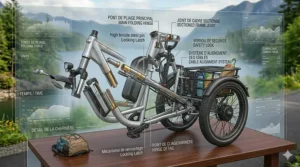
Canadian roads feature tighter residential turns than American suburban sprawl, and our spring freeze-thaw cycles create surface irregularities that challenge handling. A proper rear differential allows each rear wheel to rotate independently during turns, preventing the instability and tyre scrubbing that occurs when both wheels are locked to a single axle. This isn’t luxury—it’s essential for safe handling on Canadian roads with varied surface conditions.
Storage and Seasonal Considerations
Few Canadian buyers use their trikes year-round. Budget for winter storage space and seasonal maintenance: covering the trike, removing and storing the battery indoors, and potentially elevating it to prevent tyre flat-spotting during 4-6 month storage periods. Folding trikes command premiums but potentially justify the cost if your storage space costs $100+ monthly (common in Canadian urban markets).
Common Mistakes When Buying Electric Trikes in Canada
Canadian first-time buyers repeatedly make preventable errors that result in disappointing purchases, premature failures, or discovering their trike doesn’t meet actual needs:
Mistake 1: Prioritising Advertised Range Over Real-World Capacity
Manufacturers test range under optimal conditions: flat terrain, moderate speeds, ideal temperatures, and continuous pedal-assist contribution. Canadian conditions rarely align with these assumptions. Buyers who purchase a “50 km range” trike for a 25 km commute discover they’re limping home on empty batteries after encountering unexpected hills, headwinds, or cold mornings. The solution: divide advertised range by 1.5 to estimate conservative Canadian real-world capacity.
Mistake 2: Ignoring UL Certification Requirements
Many Canadian buyers don’t realise their condo or apartment building requires UL 2849 or equivalent certification before allowing indoor e-bike storage or charging. They purchase an uncertified trike, then face denials from building management—leaving them unable to charge safely or store conveniently. Always verify certification before purchase, particularly if you rent or live in multi-unit housing.
Mistake 3: Underestimating Assembly Difficulty
“90% pre-assembled” sounds reassuring until you’re struggling with brake cable routing, derailleur adjustment, and torque specifications using inadequate included tools. Canadian buyers frequently underestimate the mechanical knowledge required, leading to improperly assembled trikes with safety issues. Unless you’re comfortable with bicycle mechanics, budget $100-$200 CAD for professional assembly at a local bike shop—many shops offer this service and will ensure your trike is safe before first ride.
Mistake 4: Overlooking Canadian Shipping and Return Realities
Returning an 50 kg electric trike from rural Manitoba differs dramatically from returning a book. Many Amazon.ca sellers offer “free returns” but expect you to arrange and pay for return shipping—potentially $200-$400 CAD for oversized freight. Additionally, trikes shipped from US warehouses face customs delays and potential duty charges that increase effective purchase costs. Verify the seller’s Canadian location and return policy details before purchase.
Mistake 5: Choosing Inappropriate Motor Types for Local Terrain
Front hub motors cost less but provide poor hill-climbing traction compared to rear-drive alternatives—the motor attempts to pull you uphill whilst your body weight presses down on the rear wheels, causing front wheel slippage on Canadian inclines. Buyers in flat Prairie provinces can succeed with front motors, but anyone facing British Columbia, Quebec, or Atlantic Canadian topography should prioritise rear-drive configurations even at higher cost.
Electric Trike Regulations Across Canadian Provinces
Canadian e-bike regulations vary significantly by province, creating confusion for buyers who assume national standards. Here’s what Canadian buyers must know:
Alberta, British Columbia, and Ontario require riders to be minimum 12, 16, and 16 years old respectively to operate power-assisted bicycles, whilst Quebec mandates licensing exams for riders aged 14-17. Most provinces require helmets, though enforcement varies dramatically. The federal definition sets maximum parameters (500W motor, 32 km/h speed, functional pedals), but provinces and municipalities layer additional restrictions.
Urban Canadian jurisdictions increasingly prohibit e-bikes on specific paths. Vancouver restricts certain seawall sections, Toronto bans e-bikes from some multi-use trails, and Montreal’s regulations change by arrondissement. Before purchasing, verify that your intended riding locations permit electric-assist tricycles—discovering restrictions after purchase creates expensive storage furniture rather than useful transportation.
Provincial insurance requirements remain minimal for compliant e-bikes, but this may change. Quebec already requires more documentation than other provinces, and several jurisdictions are considering registration systems similar to motor vehicle licensing. Canadian buyers should monitor their provincial transportation authority websites for regulatory updates that could affect ownership costs.
Long-Term Cost of Electric Trike Ownership in Canada
The initial purchase price represents only part of total ownership costs over a trike’s typical 5-7 year Canadian lifespan:
Battery Replacement: Lithium batteries degrade 20-30% after 500-800 charge cycles. Canadian riders averaging 30 km per ride, twice weekly, will need battery replacement after 4-6 years. Replacement batteries cost $400-$800 CAD depending on capacity. Budget approximately $100-$150 CAD annually for battery degradation.
Seasonal Maintenance: Canadian conditions accelerate wear. Spring road salt corrodes components, summer heat strains bearings, autumn moisture penetrates seals, and winter storage requires preparation. Professional seasonal tune-ups cost $75-$125 CAD, or budget $50 CAD if you perform basic maintenance yourself. Annual maintenance: $100-$250 CAD.
Tyre Replacement: Electric trike tyres wear faster than traditional bicycles due to additional weight. Canadian roads with freeze-thaw cycles accelerate degradation further. Budget for tyre replacement every 2-3 years at $100-$200 CAD per set. Annual tyre cost: $35-$65 CAD.
Storage Costs: If you lack home storage, Canadian urban storage facilities charge $50-$150 monthly ($600-$1,800 CAD annually). This dramatically affects ownership economics for renters in expensive markets like Toronto or Vancouver.
Total Annual Costs (excluding storage): $235-$465 CAD for a well-maintained trike. Compare this to car insurance alone ($1,200-$3,000 CAD annually in most Canadian provinces) and the economics favour trikes for local transportation—assuming you have suitable storage.
❓ FAQ: Your Electric Trike Questions Answered
❓ Can electric trikes handle Canadian winter conditions?
❓ Do I need a licence to ride an electric trike in Canada?
❓ How long do electric trike batteries last in Canadian climates?
❓ Can I charge an electric trike battery in my apartment?
❓ What cargo capacity do I realistically need for Canadian grocery shopping?
Conclusion: Finding Your Ideal Electric Trike in Canada
The best electric trike for Canadian conditions balances power, range, and weather resistance with your specific storage constraints, terrain challenges, and budget realities. Urban buyers facing storage limitations should prioritise folding models like the ADDMOTOR Citytri E-310, whilst suburban families needing cargo versatility benefit from the modular Tiniover Creek. Budget-conscious seniors in flat terrain find adequate performance in the Viribus 24″, whilst riders with back issues requiring supportive geometry should invest in the specialised ADDMOTOR Arisetan M-360 II.
Don’t let analysis paralysis prevent action—imperfect mobility beats perfect immobility. A mid-range trike purchased today delivers years of practical transportation whilst you wait for the “perfect” model that may never materialise. Consider starting with your immediate needs: if you’re primarily running errands within 10 km, any trike with 50+ km range suffices. If you’re planning recreational rides or commuting, prioritise comfortable seating and extended range. If cargo hauling drives your decision, focus on weight capacity and basket size over maximum speed.
Canadian electric trike ownership rewards realistic expectations. These machines won’t replace cars for highway travel or conquer deep winter conditions. They will transform your local mobility, reduce your carbon footprint, provide gentle exercise that promotes cardiovascular health, and potentially save thousands annually in vehicle costs. The technology has matured enough that quality models from established brands deliver reliable performance—the remaining decision is which specific features justify their costs for your Canadian lifestyle.
✨ Don’t Miss These Exclusive Deals!
🔍 Take your mobility to the next level with these carefully selected products. Click on any highlighted item to check current pricing and availability on Amazon.ca. These trikes will help you reclaim the freedom and independence you deserve!
Recommended for You
- 7 Best Hybrid Ebike for City and Trails Canada 2026
- Best Hybrid Ebike: 7 Versatile Canadian Models (2026)
- 7 Best Touring eBikes for Canadian Rockies 2026
Disclaimer: This article contains affiliate links. As an Amazon Associate, I earn from qualifying purchases. If you purchase products through these links, we may earn a small commission at no additional cost to you.
✨ Found this helpful? Share it with your friends! 💬🤗
