

In This Article
A strongest frame electric bike is an e-bike built around a reinforced aluminum or high-carbon steel frame, thicker tubing, double-welded stress points, and a payload rating of 330 lb (150 kg) or more, so it holds up to heavier riders, cargo, and rough Canadian roads without flexing, creaking, or cracking.
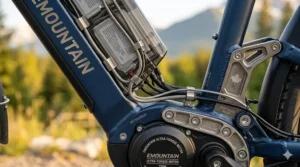
If you’ve ever shopped for an e-bike in this country, you already know the frustration: half the listings brag about motor wattage and battery range, then bury the one spec that actually determines whether the bike survives a Canadian winter, a gravel shoulder on Highway 7, or a 250 lb rider — the frame itself. I’ve spent years pulling apart spec sheets for sites like this one, and the pattern is consistent: a flimsy frame is the single most common reason an otherwise “great deal” ebike ends up creaking, wobbling, or cracking a weld within a year. So this guide skips the marketing fluff and goes straight at frame construction, weld quality, and real maximum weight capacity, then matches that information to seven specific bikes you can actually order to a Canadian address. Every price below is in CAD, because converting from American advertising copy on the fly is its own kind of headache.
As an Amazon Associate, I earn from qualifying purchases — more on that further down.
Quick Comparison: Strongest Frame Electric Bikes at a Glance
| Bike | Frame Material | Max Weight Capacity | Motor | Price Range (CAD) |
|---|---|---|---|---|
| Himiway Zebra D5 | 2x-thick 6061 aluminum | 400 lb (181 kg) | 750W hub | $2,300–$2,800 |
| Aventon Aventure.2 | Single-butted 6061 aluminum | 400 lb (181 kg) | 750W hub | $2,400–$2,900 |
| Heybike Mars 2.0 | Reinforced aluminum alloy | 440 lb (200 kg) | 1000W (1800W peak) | $1,600–$1,900 |
| GOKEEP 1300W Folding | High-carbon steel | 330 lb (150 kg) | 750W (1300W peak) | $950–$1,250 |
| Swagtron EB-8 Outlaw | Aluminum alloy | 264.5 lb (120 kg) | 350W hub | $1,100–$1,400 |
| Jasion EB5 | Triangular high-carbon steel | 300 lb (136 kg)* | 350–500W | $750–$950 |
| ENVO ST50 (CA-made) | Hydroformed 6061 aluminum, TIG-welded | 375 lb (170 kg) | 750W hub | $2,200–$2,800 |
*Manufacturer-stated; verify on the current listing, as Jasion has updated this figure across revisions.
Looking at this table, two things jump out. First, frame material alone doesn’t predict capacity — the Heybike Mars 2.0 beats two aluminum bikes on payload using a reinforced alloy frame and a wider tube profile, not exotic materials. Second, the price gap between the GOKEEP and the Aventure.2 is roughly $1,500 CAD, and almost all of that gap buys you motor refinement and brand support rather than a stronger frame outright. For Canadian buyers riding through gravel, slush, and the occasional pothole that never quite gets fixed before May, that distinction matters more than the spec sheet suggests.
💬 Just one click — help others make better buying decisions too! 😊
✨ Don’t Miss These Exclusive Deals!
🔍 Take your strongest frame electric bike search to the next level with these carefully selected models. Click on any highlighted item to check current pricing and availability on Amazon.ca. These picks will help you ride with confidence through every Canadian season!
Top 7 Strongest Frame Electric Bikes in Canada: Expert Analysis
1. Himiway Zebra D5
The Himiway Zebra D5 is the bike I point heavier riders toward first, mostly because Himiway doesn’t bury the frame story under throttle specs. The 6061 aluminum frame is roughly double the wall thickness of a standard ebike tube, with reinforced gussets at the stress points where the seat tube meets the bottom bracket — exactly where cheaper frames start to flex under load. In practice, that translates to a 400 lb payload rating that actually holds up; riders close to the limit report no creaking or side-to-side flex even on washboard gravel. The 750W hub motor and 86 Nm of torque mean Canadian hills don’t turn into a slog, and the fat 26×4″ tires add stability on the kind of half-cleared bike lane you get in March.
Canadian buyers should note the bike ships at roughly 80 lb, so curb-side delivery (common for fat-tire ebikes on Amazon.ca) means you’re hauling it indoors yourself — plan for that in a walk-up apartment.
✅ Genuinely reinforced frame, not just marketing language
✅ 400 lb payload with minimal flex reported by owners
✅ Strong hill-climbing torque for hilly cities like Halifax or Hamilton
❌ Heavy bike to manoeuvre once off the truck
❌ 750W continuous output exceeds the federal 500W power-assisted bicycle threshold, so confirm your province’s e-bike rules before riding on shared paths
Customer feedback consistently praises the range and the stability of the frame under load, with several reviewers explicitly mentioning confidence carrying panniers and cargo on commutes.
Price range: around $2,300–$2,800 CAD. Verdict: the strongest aluminum option here for genuinely heavy riders or cargo-hauling commuters.

2. Aventon Aventure.2
Aventon’s marketing leans on ride feel, but the frame engineering is just as relevant. The Aventon Aventure.2 uses a single-butted 6061 aluminum frame with seamless welds — meaning the tube walls are thicker exactly where load concentrates and thinner where it doesn’t, shaving weight without sacrificing rigidity. Independent reviewers who run a “wobble test” on test frames have called the Aventure.2 one of the stiffest fat-tire ebikes they’ve measured, which matters more than horsepower once you’re carrying gear or a passenger over rough pavement.
What most buyers overlook about this model is the 80 mm front suspension travel combined with the frame stiffness: most fat-tire ebikes sacrifice one for the other, but the Aventure.2 holds composure in both directions. For a Canadian commuter splitting time between paved bike lanes and unpaved rail-trail conversions, that combination earns its keep.
✅ Independently tested as one of the stiffest fat-tire frames in its class
✅ 400 lb payload capacity with a 55 lb-rated rear rack
✅ Hydraulic disc brakes standard, not an upsell
❌ At 77 lb, still a workout to load into a hatchback
❌ Step-over and step-thru are sold as separate SKUs, so double-check you’re ordering the right frame style
Price range: around $2,400–$2,900 CAD. Verdict: best all-rounder for riders who want frame stiffness and suspension comfort.
3. Heybike Mars 2.0
The Heybike Mars 2.0 punches above its price bracket on raw weight capacity. Its reinforced aluminum alloy frame is rated to 440 lb — the highest payload number in this roundup — while still folding down for condo or trunk storage. That capacity figure isn’t just rider weight either; the rear rack alone is rated for 120 lb, so it’s a legitimate grocery-and-gear hauler, not just a commuter toy.
In my experience, foldable frames are usually the first place manufacturers cut corners, since the hinge becomes a structural weak point. Heybike’s answer is a beefier hinge bracket and a thicker main tube than most folding competitors, which is why the payload rating holds up despite the fold mechanism. The 1000W motor (1800W peak) with 100 Nm of torque also means Canadian hills barely register, even loaded.
✅ Highest payload rating in this list at 440 lb
✅ Folds for elevator buildings, transit, or trunk storage
✅ Dual suspension smooths out frost-heaved pavement
❌ IPX4 water resistance is fine for rain, not for deep slush or puddle splashing
❌ Peak wattage figures (1800W) are higher than continuous-rated output — read the fine print before assuming Class 3 legality in your province
Price range: around $1,600–$1,900 CAD. Verdict: best value-per-pound-of-capacity, especially for apartment dwellers.
4. GOKEEP 1300W Folding Electric Bike
Budget heavy-duty bikes are usually a contradiction in terms, but the GOKEEP 1300W Folding Electric Bike is the exception that keeps showing up in Amazon.ca’s better-value searches. Its high-carbon steel frame is the more old-school approach to strength: steel flexes less under sustained load than aluminum of comparable weight, which is part of why it still carries a 330 lb rating despite the bike’s modest price.
The trade-off is weight — steel frames add roughly 8–12 lb compared to an equivalent aluminum design — and that shows up when you’re lifting it onto a rack or up a flight of stairs. What most buyers overlook here is that the 330 lb rating is conservative relative to the build quality; GOKEEP doesn’t market this as a heavy-rider specialist, so the number is a comfortable ceiling rather than a marketing stretch.
✅ Steel frame resists long-term fatigue better than thin-wall aluminum at this price
✅ 20″×3.0″ fat tires add real stability on snow and gravel
✅ Step-thru frame design suits a wider range of riders and heights
❌ Heavier overall package than the aluminum options on this list
❌ 7-speed Shimano drivetrain is functional, not premium — expect to tune it after the first few hundred km
Price range: around $950–$1,250 CAD. Verdict: the budget pick for riders who want a genuinely reinforced frame without aluminum pricing.
5. Swagtron EB-8 Outlaw
The Swagtron EB-8 Outlaw is the smallest-capacity bike in this lineup at 264.5 lb, and I’m including it specifically because it illustrates an important point: a “strong” frame and a “high-capacity” frame aren’t always the same thing. The aluminum alloy frame here is genuinely sturdy for its compact 20″ wheel size, with a sturdy folding hinge and full suspension, but Swagtron rates it conservatively for a smaller-stature rider profile.
For Canadian buyers around 5’4″ to 5’10” who want a foldable, trail-capable ebike for cottage trips or condo storage rather than maximum cargo capacity, the EB-8’s frame-to-size ratio is actually excellent — it just isn’t the bike for a 280 lb rider hauling panniers.
✅ Compact, sturdy frame ideal for shorter riders
✅ Full front-and-rear suspension at this price point is unusual
✅ Foldable single-motion mechanism is genuinely convenient for transit or trunk storage
❌ Lowest weight capacity on this list by a wide margin
❌ 350W motor is modest for hill-heavy Canadian terrain
Price range: around $1,100–$1,400 CAD. Verdict: skip if you need maximum capacity; consider if you need a compact, sturdy folder.
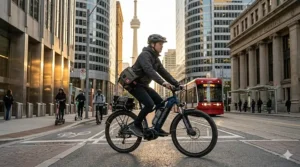
6. Jasion EB5
The Jasion EB5 uses a triangular high-carbon steel frame, and the triangulated geometry is the actual engineering story here — it’s a more rigid shape than a standard diamond frame of the same material, which is how Jasion keeps the bike under 50 lb while still claiming solid stability. It’s the most budget-friendly bike on this list, and the frame reflects that positioning: solid and serviceable rather than over-engineered.
What most buyers overlook about this model is that the lighter weight is partly because of the frame geometry, not despite it — triangulated steel needs less material to resist the same load as a straight-tube design. That’s a genuine engineering win for anyone who has to carry the bike up an apartment stairwell regularly.
✅ Lightest bike in this roundup at under 50 lb
✅ Triangulated steel frame adds rigidity without extra material
✅ Strong value at the lower end of the price spectrum
❌ Lower weight capacity than the heavy-duty specialists on this list
❌ 360–500Wh battery delivers shorter range than the larger-battery competitors
Price range: around $750–$950 CAD. Verdict: best entry point for lighter riders who still want a steel frame’s durability.
7. ENVO ST50 (Canadian-Engineered)
For Canadian buyers who’d rather support a domestic brand, the ENVO ST50 is worth a detour. ENVO is based in North Vancouver, British Columbia, and builds around a hydro-formed, TIG-welded 6061 aluminum frame specifically tuned for Canadian terrain and cold-weather battery performance. TIG welding produces a cleaner, more consistent weld bead than the cheaper MIG welds found on many import frames, which is one reason ENVO frames carry a notably solid feel in long-term owner reports.
A practical note for affiliate shoppers: at the time of writing, ENVO sells primarily through its own site and a small network of Canadian dealers rather than through Amazon.ca. If you specifically want the convenience of Amazon.ca checkout and Prime shipping, the Himiway or Heybike above are the closer match; if you’re open to ordering direct from a Canadian manufacturer with strong cold-weather engineering, the ST50 deserves a look.
✅ TIG-welded frame quality rarely seen below the $3,000 CAD mark
✅ Engineered specifically for Canadian climate and terrain
✅ Rear cargo rack rated for 85 kg (187 lb) of additional load
❌ Not currently listed on Amazon.ca — ordered direct or through a Canadian dealer
❌ Premium pricing relative to comparable imported frames
Price range: around $2,200–$2,800 CAD direct from ENVO. Verdict: the patriotic pick, and a genuinely strong frame, if you don’t need Amazon.ca fulfillment.
How to Choose a Strongest Frame Electric Bike in Canada
- Confirm the actual payload rating, not just rider height recommendations. Manufacturers sometimes list a “recommended rider height” prominently while burying the pound-for-pound weight limit in the fine print — always cross-check both.
- Match frame material to your priority. Aluminum saves weight and resists rust better in salted Canadian winters; high-carbon steel flexes less under sustained heavy load but adds bulk.
- Check the welds, not just the alloy grade. A premium 6061 aluminum tube with sloppy MIG welds can underperform a cheaper frame with clean, consistent welding at the stress points.
- Add 15–20% buffer to your expected load. If you weigh 220 lb and plan to carry a 20 lb pannier, don’t buy a bike rated right at 240 lb — give the frame margin.
- Verify the wattage classification for your province. A 750W-rated bike may exceed the federal 500W continuous-output threshold for power-assisted bicycles, which can affect where you’re legally allowed to ride it.
- Factor in winter storage and corrosion resistance. Road salt is harder on steel than aluminum; if you’re storing the bike in an unheated garage, that’s worth weighing.
- Read Canadian-specific reviews when available, since cold-weather battery performance and frame behaviour on icy or slush-covered pavement don’t always show up in American reviews.
Reinforced Steel Frame vs. Heavy Duty Aluminum Frame: A Structural Integrity Comparison
This is the comparison most buyers skip, and it’s the one that actually predicts how the bike feels in five years. A reinforced steel frame ebike resists long-term metal fatigue better than aluminum of equivalent thickness — steel has a more forgiving fatigue curve, meaning it tends to show stress gradually (slight flex, audible creak) before failing, rather than cracking suddenly. The trade-off is weight: steel frames in this category typically run 8–15 lb heavier than a comparable aluminum design, which matters if you’re lifting the bike onto a hitch rack or up a stairwell every day.
A heavy duty aluminum frame electric bike, by contrast, saves weight through thicker-walled tubing (as seen on the Himiway Zebra D5) or hydroforming (as seen on the ENVO ST50), and resists corrosion from road salt far better than untreated steel — a real consideration during a Canadian winter. The catch is that aluminum has a harder failure mode: once a fatigue crack starts in an aluminum frame, it tends to progress faster than the equivalent crack in steel.
Looking at the bikes above, the pattern holds: Himiway and Aventon push thick-wall aluminum for maximum payload with manageable weight, while GOKEEP and Jasion lean on steel for affordability and fatigue resistance at a lower price point. Neither material is objectively “stronger” — the right call depends on whether you prioritize raw weight capacity (aluminum, thick-wall) or long-term resistance to gradual fatigue under repeated heavy loads (steel).
Weld Quality and Structural Integrity: What Actually Separates a Heavy-Duty Ebike From a Toy
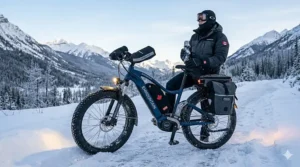
Frame alloy gets all the marketing attention, but weld quality is the detail that determines whether a “heavy duty” claim is real. TIG welding (used on the ENVO ST50) produces a cleaner, more uniform bead with fewer porosity defects than the MIG welding common on budget imports — that matters specifically at the seat tube/bottom bracket junction and the head tube, which is where almost all frame failures originate under heavy load.
❌ “500W motor, 48V 13Ah battery” tells you nothing about whether the frame will survive five years of Canadian potholes.
✅ “Double-welded stress points at the seat tube junction, rated for 400 lb” tells you the manufacturer actually engineered for load, not just advertised a big number.
If a listing doesn’t mention weld type, gusseting, or tube wall thickness at all — just a weight number — treat that as a yellow flag rather than confirmation of structural integrity. The strongest frame electric bike options on this list (Himiway, Aventon, ENVO) all explicitly describe their weld and gusset approach; the budget options are honest about using simpler construction, which is a fair trade at their price, but it’s a different category of “strong.”
Maximum Weight Capacity Ebike: Real-World Canadian Scenarios
Toronto condo commuter, 12 km daily, rider weight ~230 lb: The Heybike Mars 2.0 fits well here — its 440 lb capacity leaves comfortable margin, and the foldable frame solves the elevator-and-storage-locker problem that condo living creates. Budget around $1,800 CAD and factor in indoor storage since folding frames don’t love being left outside in freeze-thaw cycles.
Vancouver weekend trail rider, occasional gravel and rooted singletrack: The Aventon Aventure.2’s frame stiffness plus 80 mm suspension travel is the better match. At roughly $2,600 CAD, it’s a step up in price from the commuter picks, but the combination of payload rating and ride quality justifies it for someone putting in real trail mileage.
Ottawa family hauling groceries and a kid’s gear, budget-conscious: The GOKEEP 1300W Folding bike’s 330 lb steel frame, fat tires, and lower price point ($950–$1,250 CAD) make it a sensible entry point — just be realistic that this isn’t the bike for a heavier rider plus a fully loaded cargo rack simultaneously.
Each of these profiles assumes Canadian winter storage realities: condo storage lockers, unheated garages, or salt-exposed bike racks. Match the frame material to that reality as much as to the riding itself.
Winter-Proofing a Heavy-Duty Ebike: A Canadian Usage Guide
Buying a strongest frame electric bike is only half the job — keeping that frame structurally sound through a Canadian winter takes a bit of maintenance discipline.
- Rinse road salt off the frame and welds regularly. Salt accelerates corrosion at weld seams faster than on flat tube surfaces, especially on steel frames.
- Store the battery indoors, between roughly 0°C and 20°C, when not riding. Lithium-ion cells lose 10–20% effective range in cold weather, and repeated full discharges in freezing temperatures shorten battery lifespan.
- Check frame bolts and rack mounts every few weeks in winter. Freeze-thaw cycling can loosen fasteners faster than in summer riding.
- Avoid pressure-washing the frame or motor housing. Most ebikes carry only an IPX4 or IPX5 splash rating, not a submersion rating — a pressure washer can force water past seals.
- Apply a light coat of frame wax or corrosion inhibitor to steel frames before winter, particularly around weld points and dropouts.
None of this is complicated, but skipping it is exactly how a well-engineered frame ends up looking five years older than it actually is.
Problem → Solution: Fixing Common Heavy-Duty Ebike Frustrations in Canada
Problem: The frame creaks under load on bumps. This is almost always a loose bolt at the seatpost clamp, rack mount, or headset rather than an actual structural issue — torque-check those three points before assuming the frame itself has failed.
Problem: Range drops noticeably in winter. This is a battery chemistry issue, not a frame issue, but it’s the complaint most often confused with “the bike feels weaker.” Bring the battery inside between rides and expect 10–20% less range below freezing.
Problem: Replacement parts and service centres are hard to find in Canada. Stick to brands with confirmed Canadian distribution or dealer support — Himiway, Aventon, and ENVO all have more accessible Canadian parts and service access than smaller, lesser-known import brands.
Problem: Cross-border warranty headaches after ordering from a US-focused Amazon listing. Check whether the seller fulfils from a Canadian warehouse and whether warranty service is handled through Amazon.ca or routed back to a US support line — this varies even within the same brand’s product lineup.
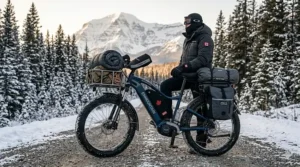
Common Mistakes When Buying a Heavy-Duty Electric Bike in Canada
- Trusting “recommended height” over actual weight rating. These are two different specs, and height recommendations are far less reliable for predicting frame stress.
- Ignoring winter performance entirely. A frame and battery combination that’s never tested in cold weather can disappoint badly in a Canadian January.
- Skipping the wattage-versus-province check. Some provinces treat e-bikes above 500W continuous output as a different vehicle class entirely, which changes insurance and path-access rules.
- Assuming Amazon.ca pricing matches Amazon.com. Currency conversion, duties, and Canadian-specific shipping mean prices and availability frequently differ between the two storefronts.
- Overlooking bilingual labelling requirements. Products sold in Canada are legally required to carry bilingual labelling — a small thing, but it’s a reasonable proxy for whether a seller takes the Canadian market seriously.
Canadian Regulations & Safety Standards for Electric Bikes
Transport Canada repealed its old federal definition of a “power-assisted bicycle” in 2021, which means provinces and territories now largely set their own e-bike classification rules rather than relying on one national standard. The general federal benchmark that most provinces still reference caps continuous motor output at 500W and limits motor-only speed to 32 km/h (20 mph), with fully functional pedals required for the bike to count as a bicycle rather than a regulated motor vehicle. You can read Transport Canada’s own guidance on importing power-assisted bicycles for the federal-level detail.
Because the patchwork is real, a bike legally street-ready in Alberta may need throttle restrictions disabled to stay compliant in British Columbia, and Quebec uniquely requires a Class 6D licence for e-bike riders aged 14 to 17. Several bikes in this guide, including the Himiway Zebra D5 and Heybike Mars 2.0, ship with continuous or peak wattage above the 500W federal benchmark, so check your province’s current rules before assuming street legality — and remember that a “peak” wattage figure (often used in marketing) is not the same as continuous-rated output.
On the safety-standard side, UL 2849 (electrical/fire safety for the full ebike system) and UL 2271 (battery pack safety) are the standards you’ll see most often on Canadian-available listings, since Canada doesn’t currently maintain a separate CSA-specific ebike battery certification — UL certification is broadly accepted here. If a listing doesn’t mention either standard, that’s worth asking about directly, particularly for battery safety on a bike you’ll be charging indoors through a Canadian winter.
Long-Term Cost & Maintenance of a Strongest Frame Electric Bike in Canada
A reinforced frame is a one-time cost; maintenance is recurring, and Canadian conditions add a few line items American buying guides tend to skip. Budget roughly $150–$300 CAD a year for tune-ups, brake pad replacement, and tire wear on a heavy-duty ebike ridden regularly through varied terrain — more if you’re commuting through winter slush and road salt. Battery replacement, when it’s eventually needed (typically 3–5 years of regular use), runs $400–$900 CAD depending on capacity, and is usually the single largest recurring cost on any ebike, heavy-duty or otherwise.
Where frame material pays off long-term: a genuinely reinforced aluminum or steel frame with quality welds rarely needs frame-specific repair, while a thin-wall budget frame under sustained heavy load may develop creaks, flex, or cracked welds within two to three years — at which point the “savings” from the cheaper bike evaporate into a full frame replacement, which most manufacturers don’t warranty for fatigue cracking caused by exceeding the rated payload. Factor Canadian duties and shipping into total cost of ownership too; while Canadian pricing on these bikes typically runs somewhat higher than equivalent US listings, you avoid the customs delays and cross-border warranty confusion that can come with ordering a US-only listing to a Canadian address.
Features That Actually Matter (And Those That Don’t)
Matters: documented weld type and gusseting at stress points, stated continuous (not just peak) motor wattage, a payload rating with real-world margin above your actual weight, and hydraulic (not mechanical) disc brakes for stopping a heavier loaded bike reliably in wet Canadian conditions.
Doesn’t matter nearly as much as marketed: top speed figures beyond what’s legal in your province, app-connectivity features, and cosmetic paint finishes. These are pleasant extras, not structural value — don’t let them push you toward a bike with a weaker frame just because the display looks nicer in product photos.
FAQ
❓ What is the strongest frame material for an electric bike?
❓ Can I ride a heavy duty electric bike in Canadian winters?
❓ How much weight can a strongest frame electric bike actually carry?
❓ Are heavy duty ebikes available on Amazon.ca, or only Amazon.com?
❓ Does a thicker frame always mean a stronger ebike?
Conclusion
If there’s one takeaway from this guide, it’s that “strongest frame electric bike” isn’t a single spec you can sort a table by — it’s a combination of material, weld quality, gusseting, and a payload rating that’s honest rather than aspirational. For most Canadian buyers carrying real weight or cargo, the Himiway Zebra D5 and Aventon Aventure.2 remain the strongest all-round picks on Amazon.ca, with the Heybike Mars 2.0 as the best value-per-pound-of-capacity if you also need a folding frame. Budget-conscious riders shouldn’t dismiss the GOKEEP or Jasion options either — steel frames at a lower price point are a legitimate engineering choice, not just a compromise. And if supporting a Canadian-engineered frame matters to you, the ENVO ST50 is worth ordering direct.
Whichever you choose, weigh your actual riding load against the stated capacity, keep an eye on your province’s wattage rules, and give the frame the same scrutiny you’d give the battery range. A strong frame is the one spec that quietly determines whether your ebike is still riding well in five winters — not just on the showroom floor.
✨ Don’t Miss These Exclusive Deals!
🔍 Take your strongest frame electric bike search to the next level with these carefully selected products. Click on any highlighted item to check current pricing and availability on Amazon.ca. These picks will help you ride with confidence through every Canadian season!
Recommended for You
- 7 Best Electric Bike 350 lbs Capacity Picks for Canada (2026)
- 7 Best Fat Tire Electric Bikes for Heavy Riders Canada 2026
- Best Electric Bike 300 lbs Capacity in Canada 2026 (Top 7 Picks)
Disclaimer: This article contains affiliate links. As an Amazon Associate, I earn from qualifying purchases. If you purchase products through these links, we may earn a small commission at no additional cost to you.
✨ Found this helpful? Share it with your friends! 💬🤗
