
In This Article
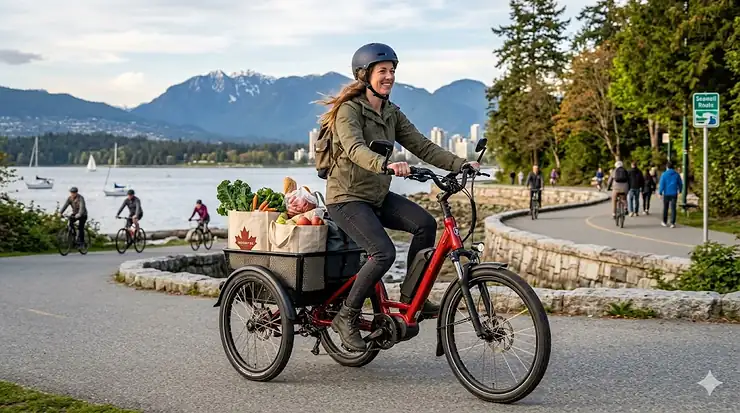
If you’ve ever struggled carrying groceries on a traditional bicycle or worried about balance while navigating Toronto’s streetcar tracks, an electric trike with large basket might be the solution you didn’t know you needed. These three-wheeled marvels combine the stability of a tricycle with electric power assistance and cargo capacity that transforms how you tackle daily errands.

What most Canadian buyers overlook is how differently these trikes perform across our diverse climate zones. The same 500W motor that powers through Vancouver’s rainy hills faces unique challenges in Winnipeg’s -30°C winters or Halifax’s coastal winds. Battery range drops 20-50% in cold weather—a reality that matters more in Canada than anywhere else. That’s why this guide focuses exclusively on models available on Amazon.ca, with practical insights for riding from Victoria to St. John’s.
The cargo electric tricycle canada market has exploded in 2026, with manufacturers finally recognizing that Canadians need more than fair-weather transportation. We’re looking at shopping electric trike models that can haul 45 kg (100 lbs) of groceries, utility electric three wheeler designs built for year-round commuting, and rear basket weight capacity specs that actually matter when you’re carrying winter boots, a laptop, and tomorrow’s dinner ingredients. Whether you’re replacing short car trips in suburban Calgary or navigating downtown Montreal’s bike lanes, this comprehensive analysis will help you choose the right model for your specific Canadian lifestyle.
Quick Comparison: Top Electric Trikes with Large Basket (Canada 2026)
| Model | Motor Power | Battery Range | Rear Basket Size | Price Range (CAD) | Best For |
|---|---|---|---|---|---|
| CNAOHGHN 20″ Fat Tire | 500W | 50+ km | 48×43×27 cm | $1,200-$1,500 | Winter riding, off-road capability |
| OLIKED Step-Through | 350W | 45-70 km | 48×43×27 cm | $900-$1,200 | Budget-conscious urban commuters |
| EMOJO Caddy Pro | 500W | 56 km | Oversized dual baskets | $2,400-$2,800 | Heavy cargo, hydraulic brakes |
| DWMEIGI 24″ Cruise | 350W | 40-65 km | 49×39×25 cm | $1,100-$1,400 | Taller riders, comfortable seating |
| MOONCOOL Folding | 500W | 40-95 km | Large capacity | $1,300-$1,600 | Storage-limited spaces, apartments |
| OTIGA 24″ Electric | 350W | 40 km | Removable basket | $850-$1,100 | Entry-level, simple operation |
| Generic Adult Tricycle | 350W | 40-65 km | 19×15×10 inches | $950-$1,250 | Senior-friendly, low step-through |
Looking at this comparison, the sweet spot for most Canadian riders falls in the $1,100-$1,500 CAD range where you get reliable 500W motors and 45-70 km range—enough for urban commuting even with winter’s 30% battery penalty. Budget buyers gravitate toward the OLIKED and OTIGA models under $1,200, trading some power for solid everyday functionality. Meanwhile, the EMOJO Caddy Pro justifies its premium pricing with hydraulic disc brakes and dual basket configuration that serious cargo haulers appreciate during weekly grocery runs. The key insight here: don’t chase the highest motor wattage; focus on battery capacity and basket durability for Canadian conditions.
💬 Just one click — help others make better buying decisions too! 😊
Top 7 Electric Trikes with Large Baskets: Expert Analysis for Canadian Riders
1. CNAOHGHN 20-Inch Fat Tire Electric Tricycle
The CNAOHGHN 20-Inch Fat Tire model stands out immediately with its 4.0-inch fat tyres—a specification that translates directly to superior winter traction on packed snow and spring slush. Available on Amazon.ca, this 500W rear-hub motor trike delivers what Vancouver Island riders and Prairie cyclists both need: stability across varied Canadian terrain.
The 48V 10Ah removable battery provides approximately 50+ kilometres of range in optimal conditions, though Canadian buyers should plan for 35-40 km during cold weather months when battery chemistry slows down. What the spec sheet won’t tell you is how the fat tyres lower your centre of gravity compared to standard 20-inch wheels, making cornering through icy Tim Hortons parking lots significantly safer. The 48×43×27 cm rear cargo basket can genuinely handle a week’s worth of groceries for two people—we’re talking about 30-40 kg capacity that doesn’t compromise the trike’s balance.
From a Canadian regulatory perspective, this model complies with Transport Canada’s power-assisted bicycle definition: 500W motor, pedal-assist functionality, and speed limited to 32 km/h. That means no licence, registration, or insurance required in any province. Customer feedback from Canadian Amazon.ca reviewers consistently mentions the trike’s assembly simplicity (85% pre-assembled) and the front suspension fork’s effectiveness on potholed spring roads—a real concern from St. John’s to Surrey.
Pros:
✅ Fat tyres excel in Canadian winter conditions (snow, slush, ice)
✅ 500W motor handles 15° inclines without power loss
✅ Removable battery simplifies indoor charging during -20°C weather
Cons:
❌ Heavier than standard trikes (affects manoeuvrability in tight spaces)
❌ Fat tyres create more rolling resistance on dry pavement (reduces range by 10%)
Price & Value: In the $1,200-$1,500 CAD range, this represents excellent value for year-round Canadian riders who prioritize winter capability. The fat tyre premium pays for itself the first time you confidently navigate February’s freeze-thaw cycles.
2. OLIKED Step-Through Electric Trike
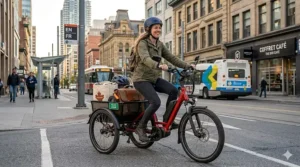
For Canadian riders prioritizing easy mounting and budget-friendly pricing, the OLIKED Step-Through deserves serious consideration. This 350W model available on Amazon.ca features a genuinely low step-through frame (approximately 38 cm clearance)—crucial for riders with mobility concerns, arthritis, or anyone wearing bulky winter clothing who doesn’t want to swing a leg over a high top tube.
The 36V 12Ah lithium battery delivers an advertised range of 35-70 kilometres, with real-world Canadian winter performance settling around 30-45 km depending on assist level and temperature. What makes this trike particularly Canadian-relevant is the included front and rear fenders—a feature many American competitors skip but essential for riding through Halifax’s spring rains or Edmonton’s slushy March conditions. The 48×43×27 cm cargo basket mounts securely and handles daily shopping needs without requiring expensive accessories.
Canadian Amazon.ca reviews highlight the coaster brake system’s reliability in wet conditions—when rim brakes often fail due to water contamination. The 7-speed Shimano derailleur provides adequate gear range for Ontario’s rolling hills or British Columbia’s steeper climbs, though the 350W motor does struggle on gradients above 12% when fully loaded. For urban Canadian riders doing mostly flat commuting in cities like Toronto, Montréal, or Winnipeg, the lower wattage suffices while keeping the price point accessible.
Pros:
✅ Genuinely low step-through frame (38 cm) accommodates mobility limitations
✅ Under $1,200 CAD—most affordable option with decent specifications
✅ Front and rear fenders included (essential for Canadian weather)
Cons:
❌ 350W motor struggles on steeper hills when cargo-loaded
❌ Coaster brake system requires adjustment period for experienced cyclists
Price & Value: At $900-$1,200 CAD, this represents the entry point for quality electric trikes on the Canadian market. Budget-conscious buyers accept the power compromise for financial accessibility.
3. EMOJO Caddy Pro Electric Trike
The EMOJO Caddy Pro occupies premium territory in the Canadian market for legitimate reasons. This 500W rear-hub motor trike available on Amazon.ca features Tektro hydraulic disc brakes—a specification that matters enormously when you’re descending Vancouver’s hills with 40 kg of cargo or need to stop quickly on Calgary’s icy bike paths. Hydraulic brakes deliver consistent stopping power regardless of weather conditions, unlike mechanical disc or rim brakes that lose effectiveness in rain and snow.
The 48V battery system provides approximately 56 km of range, with Canadian winter performance typically delivering 40-45 km in temperatures around -5°C to -10°C. What sets this model apart is the dual basket configuration: a front basket and an oversized rear cargo area that can genuinely accommodate 145 kg (320 lbs) combined rider and cargo weight. The 20×4-inch Kenda fat tyres provide excellent traction, while the 7-speed transmission ensures you can find the right gear for any Canadian terrain from flat prairie paths to Okanagan Valley hills.
Canadian buyers should note that EMOJO has established service centres in major cities including Toronto, Vancouver, and Montréal—a significant advantage when warranty work or maintenance becomes necessary. The aluminium frame resists corrosion better than steel alternatives, crucial when riding through winter road salt that accelerates rust on cheaper trikes. Amazon.ca customer reviews specifically praise the comfortable seat with backrest, noting it supports 2-3 hour rides without discomfort—ideal for weekend excursions to farmers’ markets or lakeside trails.
Pros:
✅ Tektro hydraulic disc brakes provide superior stopping power in all weather
✅ 145 kg (320 lbs) load capacity handles serious cargo needs
✅ EMOJO service centres in major Canadian cities
Cons:
❌ Premium pricing ($2,400-$2,800 CAD) limits accessibility
❌ Heavier overall weight (approximately 41 kg) reduces portability
Price & Value: The $2,400-$2,800 CAD price reflects professional-grade components and Canadian support infrastructure. Serious cargo haulers and year-round commuters justify the investment through daily use reliability.
4. DWMEIGI 24-Inch Adult Electric Tricycle
The DWMEIGI 24-Inch model addresses a specific Canadian market gap: electric trikes for taller riders (150-188 cm / 4’11”-6’2″ height range). Available on Amazon.ca, this 350W trike features 24-inch wheels instead of the standard 20-inch configuration, raising the overall riding position and providing better sightlines in urban traffic—particularly valuable when sharing roads with SUVs and pickup trucks common across Canadian cities.
The 36V 13Ah battery delivers 40-65 km range depending on pedal assist level and terrain, with Canadian winter performance typically around 30-45 km in temperatures down to -10°C. The 49×39×25 cm cargo basket measures slightly larger than competitors’ standard offerings, easily accommodating weekly grocery runs for 2-3 people. What Canadian buyers specifically appreciate (based on Amazon.ca reviews) is the adjustable seat post and handlebar stem—crucial for achieving proper ergonomics during longer rides through Ottawa’s pathways or Vancouver’s Seawall.
The low step-through frame design (38 cm clearance) makes mounting accessible despite the larger wheel size, addressing concerns for seniors or riders with joint limitations. The Shimano 7-speed drivetrain provides adequate gear range for varied Canadian terrain, though the 350W motor does require lower gears and more pedalling effort on steep inclines compared to 500W alternatives. The integrated LED headlight and two red taillights enhance visibility during Canada’s darker winter months when commuting often happens in pre-dawn or post-sunset conditions.
Pros:
✅ 24-inch wheels suit taller riders (150-188 cm) better than 20-inch standards
✅ Larger cargo basket (49×39×25 cm) accommodates bigger grocery hauls
✅ Adjustable components ensure proper fit across wide height range
Cons:
❌ 350W motor requires more pedalling on hills compared to 500W models
❌ Larger wheel size reduces manoeuvrability in very tight urban spaces
Price & Value: At $1,100-$1,400 CAD, this offers good value for taller Canadian riders who’ve found standard 20-inch trikes uncomfortable. The ergonomic benefits justify the mid-range pricing.
5. MOONCOOL Folding Electric Tricycle
For Canadian condo dwellers, apartment residents, or anyone facing storage challenges, the MOONCOOL Folding model solves a critical problem. This 500W folding trike available on Amazon.ca collapses for storage in typical condo bike rooms, car trunks, or even larger closets—a game-changer for Toronto, Vancouver, or Montréal residents where dedicated garage space is rare and expensive.
The 48V 15Ah battery provides impressive 40-95 km range depending on riding mode, with Canadian winter performance typically delivering 35-65 km in cold conditions. What makes this specification notable is the battery capacity (15Ah versus typical 10-13Ah in competitors), which provides buffer against winter’s inevitable range reduction. The folding mechanism takes approximately 2-3 minutes to operate and doesn’t require tools—you’re lowering the stem, folding the frame, and rotating the pedals inward.
The large-capacity rear basket (specific dimensions vary by model year) handles daily shopping needs, and critically for Canadian buyers, the basket doesn’t interfere with the folding mechanism. This means you can load groceries, fold the trike, and transport everything in a car trunk or onto public transit during extreme weather days. Canadian Amazon.ca reviews specifically mention the 20×4-inch fat tyres’ winter performance, noting confident handling on packed snow and spring slush throughout Ontario and Alberta winters.
Pros:
✅ Folds for storage in apartments, condos, car trunks (solves Canadian urban storage crisis)
✅ 48V 15Ah battery provides above-average range even in winter
✅ 500W motor delivers adequate power without registration requirements
Cons:
❌ Folding mechanism adds weight (approximately 38-40 kg total)
❌ Slightly higher pricing ($1,300-$1,600 CAD) versus non-folding equivalents
Price & Value: The $1,300-$1,600 CAD premium over basic models pays for itself immediately if you’re paying $150-$300 monthly for condo parking or storage. Urban Canadian buyers prioritizing space flexibility find excellent value here.
6. OTIGA 24-Inch Electric Tricycle
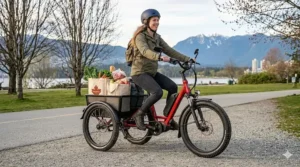
The OTIGA 24-Inch represents straightforward, no-nonsense electric transportation for Canadian riders who prioritize simplicity over features. Available on Amazon.ca at entry-level pricing, this 350W model delivers basic electric assist without overwhelming new riders with complex controls or settings—particularly appealing to seniors making their first electric bike purchase.
The 36V 12Ah removable battery provides approximately 40 km range in optimal conditions, realistically translating to 28-35 km during Canadian winter months. What makes this trike Canadian-relevant is the removable rear basket design—you can take the basket off when loading the trike into a vehicle or storing it in limited spaces. The 24-inch wheels provide better rolling efficiency than 20-inch alternatives on longer rides, valuable for suburban Canadian riders covering 15-25 km round trips for errands.
The simple three-mode control system (low/medium/high pedal assist) eliminates confusion common with more sophisticated displays showing 5-7 assist levels, battery percentage, trip distance, and other metrics that overwhelm less technical users. Canadian Amazon.ca reviews consistently praise the straightforward operation and the manufacturer’s responsive customer service—important when warranty issues arise and you need English or French-language support. The LED headlight and reflective taillights meet Canadian safety requirements for cycling after dark.
Pros:
✅ Entry-level pricing ($850-$1,100 CAD) makes electric trikes accessible
✅ Simple 3-mode control system reduces learning curve for new riders
✅ Removable basket design aids storage and transportation
Cons:
❌ Basic 40 km range limits longer excursions (30 km realistic winter range)
❌ 350W motor struggles with steep hills or heavy cargo loads
Price & Value: At $850-$1,100 CAD, this hits the sweet spot for Canadian seniors or first-time electric bike buyers testing whether they’ll actually use the technology before investing in premium models.
7. Generic Adult Electric Tricycle with Cargo Basket
The Generic Adult Electric Tricycle (various brands with similar specifications) available on Amazon.ca represents the baseline specification common across entry-level models. These typically feature 350W motors, 36V batteries delivering 40-65 km range, and standard 19×15×10-inch rear baskets—adequate for daily errands but not serious cargo hauling.
What Canadian buyers should understand about these baseline models is they meet Transport Canada’s power-assisted bicycle definition, require no licensing or insurance, and deliver functional electric assist for flat to moderate terrain. The 7-speed drivetrains provide enough gear range for typical urban Canadian riding in cities like Ottawa, Hamilton, or Victoria where significant hills are occasional rather than constant. Winter performance typically delivers 30-45 km range depending on temperature and assist level used.
The challenge with generic models is quality control variance—battery longevity, motor reliability, and component durability can differ significantly between seemingly identical specifications from different manufacturers. Canadian Amazon.ca buyers should prioritize sellers with Canadian warehouses and responsive English or French customer service, as warranty claims on imports from Asia can take months to resolve. The low step-through frames (typically 35-40 cm) accommodate most riders, and the included baskets handle routine shopping though serious cargo haulers will quickly exceed the weight limits.
Pros:
✅ Wide availability on Amazon.ca with Prime shipping options
✅ Baseline specifications adequate for most urban Canadian commuting
✅ Price competition keeps costs under $1,300 CAD
Cons:
❌ Quality variance between manufacturers creates reliability uncertainty
❌ Limited Canadian service infrastructure for warranty support
❌ Generic components may not withstand harsh Canadian winter conditions
Price & Value: The $950-$1,250 CAD range offers accessibility but carries risk. Canadian buyers should verify seller reputation and Canadian warranty coverage before purchasing baseline models.
How to Maximize Your Electric Trike’s Winter Performance in Canada
Canadian winters transform electric trike ownership from casual convenience to strategic planning. The battery chemistry that powers your summer grocery runs behaves fundamentally differently when temperatures drop below -5°C, and understanding these changes prevents frustration and extends your trike’s lifespan.
Pre-Ride Battery Preparation Store your removable battery indoors at room temperature (15-22°C) overnight, even when temperatures outside hover around -10°C to -20°C. Install the battery on your trike immediately before riding—this keeps internal cells warm and maximizes available capacity. A battery starting at 20°C delivers 20-30% more usable range than one that’s been sitting at -5°C for an hour. This simple habit costs nothing and significantly impacts your riding experience across Canadian winters.
Cold Weather Riding Techniques Start with lower pedal assist levels (PAS 1-2 instead of 4-5) for the first 5-10 minutes of cold weather riding. This allows the battery to gradually warm through use rather than experiencing sudden high-current demands that trigger premature low-voltage cutoffs. Once you’ve ridden for 10-15 minutes and the battery has generated internal heat, you can increase assist levels without range penalties. Canadian riders in Edmonton, Winnipeg, or Ottawa report this technique extends practical winter range by 15-20%.
Post-Ride Battery Care After arriving home, remove the battery and bring it indoors immediately. Let it warm to room temperature for 2-3 hours before charging—this waiting period is critical. Charging a cold battery causes lithium plating that permanently reduces capacity. The battery might feel only mildly cool to touch but internal cells can still be below safe charging temperature (0°C). Canadian riders who ignore this advice typically see 30-40% capacity loss within one winter season compared to those following proper thermal management.
Winter Storage Strategy For Canadian riders who won’t use their trike during January-February deep freeze months, store the battery at 50-60% charge level in a temperature-controlled space (10-20°C). Check monthly and add charge if it drops below 40%. Storing fully charged or completely depleted accelerates degradation, while moderate charge levels preserve battery health through months of inactivity. This approach protects your investment and ensures full capacity when spring riding season returns.
Real-World Scenario: Matching Electric Trikes to Canadian Lifestyles
The Downtown Toronto Commuter (Sarah, 42)
Profile: 8 km round-trip daily commute to office, condo storage, grocery shopping 2-3 times weekly
Challenge: Limited condo bike room space, year-round riding including winter
Best Match: MOONCOOL Folding Electric Tricycle ($1,300-$1,600 CAD)
Reasoning: The folding capability solves Sarah’s condo storage crisis, while the 500W motor handles Toronto’s moderate hills and winter conditions. The 48V 15Ah battery provides buffer against winter’s range reduction, ensuring reliable 8 km commutes even at -10°C. She can fold the trike, take it to her 12th-floor unit, and charge the battery safely indoors rather than leaving it in an unheated bike room where theft and cold damage both threaten.
The Suburban Calgary Family (The Hendersons)
Profile: Weekend errands, Costco runs, farmers’ market visits with two young children
Challenge: Need serious cargo capacity, occasional hills, prairie winters with -30°C temperatures
Best Match: EMOJO Caddy Pro ($2,400-$2,800 CAD)
Reasoning: The dual basket configuration and 145 kg load capacity accommodate bulk shopping and occasional child passenger needs. Hydraulic disc brakes provide essential stopping power when fully loaded, especially during Calgary’s icy spring and fall shoulder seasons. The Henderson family can eliminate 60-70% of short car trips (under 10 km) that cost $5-8 in fuel and parking, making the premium trike price economical within 18-24 months of regular use.
The Rural Manitoba Retiree (Robert, 68)
Profile: 5-10 km rides to nearby town for mail and supplies, limited technical experience
Challenge: Gravel roads, simple operation desired, budget constraints
Best Match: OTIGA 24-Inch Electric Tricycle ($850-$1,100 CAD)
Reasoning: The simple 3-mode control system eliminates confusion, while entry-level pricing fits a fixed-income budget. The 24-inch wheels roll more efficiently than 20-inch alternatives on Manitoba’s gravel roads, and the 350W motor provides adequate power for flat prairie terrain. Robert won’t use the trike during deep winter months (-20°C to -30°C), so moderate range and power suffice for May-October riding season that defines rural Manitoba cycling.
Essential Features to Prioritize When Choosing Your Electric Trike in Canada
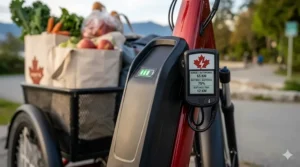
Motor Power: The 350W vs 500W Decision
Canadian terrain demands thoughtful motor selection beyond simple “bigger is better” thinking. The 500W motors available on Amazon.ca handle 12-15° inclines without significant power loss—crucial for Vancouver, Halifax, or St. John’s riders facing coastal hills. These motors also compensate better for winter’s reduced battery efficiency, maintaining usable assist when 350W models struggle. However, 350W motors suffice perfectly for flat Prairie provinces or Ontario’s Golden Horseshoe region where serious hills rarely exceed 8-10°.
The regulatory consideration: Transport Canada caps power-assisted bicycles at 500W, making this the maximum legal motor without triggering moped classification (requiring licence, registration, insurance). Some Amazon.ca listings advertise “750W peak” power—this refers to momentary maximum output, not continuous rating. Verify the continuous (nominal) power rating stays at or below 500W for legal Canadian operation.
Battery Capacity and Cold Weather Reality
Battery capacity measured in amp-hours (Ah) directly impacts range, but Canadian buyers must account for temperature penalties. A 48V 13Ah battery advertised for 50-70 km range typically delivers 35-50 km in spring/fall conditions (5-15°C) and 25-40 km during winter months (-5°C to -15°C). Larger capacity batteries (15Ah, 17Ah) provide cushion against this reduction.
Focus on removable battery designs rather than integrated models. Removable batteries enable indoor charging during Canadian winters—essential for battery longevity and safety. Charging below 0°C damages lithium-ion cells permanently, and many Canadian garages and bike storage areas regularly drop below freezing from November through March.
Basket Construction and Practical Capacity
Rear basket dimensions tell only part of the story—construction quality determines real-world usefulness. Steel mesh baskets withstand heavier loads than plastic alternatives and resist cracking in cold temperatures that make plastics brittle. Look for baskets with reinforced corners and attachment points that distribute weight across the trike frame rather than concentrating stress on single mounting bolts.
Practical capacity differs from advertised specifications. A basket rated for 25 kg (55 lbs) works comfortably with 15-18 kg of actual cargo, leaving safety margin for uneven loads and dynamic forces from bumps and turns. Canadian grocery shopping reality: plan for 4-5 reusable shopping bags per trip, approximately 15 kg total, requiring minimum 40×40×25 cm basket dimensions for practical use.
Brake Systems: Why Quality Matters in Canadian Weather
Mechanical disc brakes provide minimum acceptable performance for Canadian conditions—they work adequately in rain and light snow but require frequent cable adjustment. Hydraulic disc brakes deliver superior performance worth the premium for year-round riders or those facing steep terrain. They maintain consistent stopping power regardless of weather and require minimal maintenance.
Coaster brakes (backpedal braking) common on traditional tricycles appear on some electric models. While functional, they limit emergency stopping capability and prevent backpedaling to reposition pedals—frustrating when starting on hills or in traffic. Canadian urban riders benefit from hand-operated front and rear brakes that enable controlled, powerful stopping when navigating busy intersections or icy paths.
Common Mistakes Canadian Buyers Make (And How to Avoid Them)
Mistake #1: Ignoring Winter Range Reduction Many Canadian buyers purchase trikes based on summer range specifications without accounting for winter’s 20-50% reduction. A trike advertised for 60 km range delivers only 30-40 km in January at -10°C. Solution: Add 40% buffer to your actual range needs when selecting battery capacity. If you regularly ride 25 km round trips, choose models rated for 40+ km summer range to ensure winter reliability.
Mistake #2: Overlooking Amazon.ca vs Amazon.com Availability Products listed on Amazon.com often don’t ship to Canada, carry extreme shipping fees ($200-$400 USD), or include non-compatible electrical specifications (110V chargers requiring adapters). Canadian buyers must verify actual Amazon.ca availability, Prime eligibility, and Canadian seller location. Check seller ratings specifically for Canadian shipping experiences—some sellers advertise Canadian shipping but deliver
unreliable service or require weeks-long border processing.
Mistake #3: Assuming All 500W Motors Perform Equally Motor quality varies dramatically between manufacturers. Rear-hub motors from established brands like Bafang deliver reliable power and longevity, while generic Chinese motors with identical 500W ratings often fail within 12-18 months or struggle with sustained hill climbing. Canadian buyers should prioritize models with branded motor components and verified Canadian warranty support rather than chasing lowest prices with unknown motor manufacturers.
Mistake #4: Neglecting Tyre Specifications for Canadian Conditions Standard 20×2-inch tyres common on baseline trikes provide minimal winter traction on packed snow or ice. Fat tyres (20×4-inch) dramatically improve winter capability but increase rolling resistance and reduce range by 10-15% on dry pavement. Canadian buyers in snowbelt regions (Québec, Atlantic provinces, Prairie winters) should prioritize fat tyre models, while milder coastal regions (Vancouver Island, southern BC) can manage with standard tyres and seasonal winter tyre swaps.
Mistake #5: Overlooking Stepthrough Frame Clearance “Low stepthrough” means different things to different manufacturers. Some trikes advertise low frames with 45-50 cm clearance—awkward when wearing winter boots, snowpants, or managing mobility limitations. True low-stepthrough designs measure 35-40 cm clearance, allowing easy mounting even with bulky winter clothing. Check actual clearance measurements in specifications rather than relying on marketing descriptions.
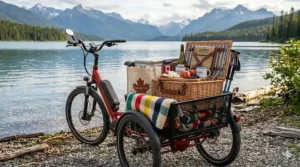
Electric Trikes vs Traditional Bicycles: The Canadian Commuting Reality
Traditional bicycles cost less upfront ($400-$1,200 for quality commuter bikes) but offer no cargo capacity beyond small panniers and require significant physical fitness for 10+ km commutes. Canadian winters eliminate traditional cycling for most casual riders—roads become unsafe, cold temperatures deter all but dedicated cyclists, and arriving at work sweaty or exhausted proves unacceptable in professional settings.
Electric trikes eliminate these barriers. The three-wheel stability means confident navigation of streetcar tracks, potholes, and icy patches that send two-wheeled riders tumbling. The electric assist transforms 15 km commutes from 45-minute athletic endeavours into relaxed 25-minute journeys arriving fresh and professional. The cargo capacity replaces most car trips under 10 km—grocery shopping, pharmacy runs, library visits—reducing vehicle costs by $200-$400 monthly for typical suburban Canadian families.
The financial calculation: a quality electric trike costing $1,200-$1,800 CAD replaces approximately $2,400-$3,200 annually in vehicle operating costs (fuel at $1.50/litre, insurance, parking, maintenance) for families eliminating 60-80 short car trips yearly. The trike pays for itself within 6-9 months while providing exercise, reducing environmental impact, and improving quality of life through outdoor activity replacing windshield time.
Canadian Regulations: What You Need to Know About Electric Trike Legality
Transport Canada’s Motor Vehicle Safety Regulations define power-assisted bicycles as vehicles with 500W maximum continuous motor output, pedal-assist functionality, and speed limited to 32 km/h on level ground. Electric trikes meeting these specifications require no driver’s licence, vehicle registration, licence plate, or insurance in any Canadian province or territory.
Provincial regulations add specific requirements. British Columbia requires riders aged 16+, helmets for all ages, and classifies compliant trikes as Motor Assisted Cycles. Ontario permits riders aged 16+, mandates helmets, and prohibits use on 400-series highways. Québec uniquely requires riders aged 14-17 to hold Class 6D moped licences, while riders 18+ need nothing. Alberta permits riders aged 12+, requires helmets under 18, and allows passenger seats.
Municipal bylaws add another layer. Toronto prohibits electric trikes on certain multi-use paths and ravine trails. Vancouver restricts them from Stanley Park seawall during peak hours. Ottawa allows them on most pathways but bans them from specific downtown pedestrian zones. Check your municipal website or contact local bylaw offices before assuming provincial regulations tell the complete story.
The practical reality: compliant electric trikes purchased from Amazon.ca meeting 500W/32 km/h specifications operate legally anywhere traditional bicycles are permitted, with rare municipal exceptions. Keep your trike’s compliance label visible (manufacturers include bilingual labels showing power and speed specifications) in case police officers unfamiliar with electric trike regulations question you.
Long-Term Ownership Costs: The Canadian Perspective
Annual Operating Costs (Typical Usage):
- Electricity for charging: $12-$24 CAD (assuming 2,000 km annually at $0.15/kWh)
- Tyre replacement: $80-$150 CAD (every 2,000-3,000 km depending on terrain)
- Brake pad replacement: $40-$80 CAD (every 12-18 months for regular riders)
- Chain and drivetrain maintenance: $30-$60 CAD annually
- Battery replacement (years 3-5): $400-$800 CAD amortized over lifespan
- Total: $200-$350 CAD annually
Compare this to vehicle operating costs for equivalent short trips (averaging $0.55-$0.75 per kilometre including fuel, insurance, depreciation, maintenance). An electric trike replacing 1,500-2,000 km of annual car trips saves $825-$1,500 CAD yearly while providing exercise benefits and environmental advantages.
Battery longevity deserves specific attention in Canadian climates. Proper winter storage and thermal management extend battery lifespan to 4-6 years and 800-1,200 full charge cycles. Neglecting cold weather protocols reduces this to 2-3 years. The difference between proper and improper battery care costs Canadian owners $300-$500 in premature replacement expenses—strong motivation to follow thermal management guidelines.
Cargo Trike Accessories Every Canadian Rider Should Consider
Insulated Battery Cover ($40-$70 CAD) Neoprene battery covers retain heat during winter rides, extending range by 10-15% in temperatures below -5°C. They’re unnecessary for three-season riders but essential for year-round Canadian commuters in snowbelt regions.
Waterproof Basket Liner ($25-$45 CAD) Protects cargo from rain and snow while providing structure for soft items. Canadian riders hauling groceries through unpredictable spring weather appreciate keeping frozen items separated from produce and preventing bag contents from shifting during rides.
High-Visibility Safety Vest ($15-$35 CAD) Canadian winters mean dark morning and evening commutes from October through March. Reflective vests dramatically improve visibility to vehicle traffic, especially in rain, snow, and twilight conditions common across Canadian cycling seasons.
Studded Winter Tyres ($120-$200 CAD per pair) For dedicated winter riders in regions with sustained ice conditions (Edmonton, Winnipeg, Québec City), studded tyres transform electric trikes from fair-weather transportation into year-round vehicles. They’re overkill for occasional riders but essential for daily winter commuters.
Rear Rack Expansion ($50-$120 CAD) Additional racks mounted above or beside standard baskets increase cargo capacity for weekly shopping trips or carrying bulky items. Canadian families hauling weekend supplies or recreational equipment benefit from expanded carrying capability.
Frequently Asked Questions About Electric Trikes in Canada
❓ Can I ride an electric trike with large basket in Canadian winter conditions?
❓ Do I need a driver's licence to operate an electric tricycle in Canada?
❓ What size cargo basket do I need for weekly grocery shopping?
❓ How far can I realistically travel on one charge in Canadian winters?
❓ Are electric trikes available on Amazon.ca covered by Canadian warranty?
Conclusion: Choosing Your Perfect Electric Trike for Canadian Living
The electric trike with large basket market has matured significantly in 2026, offering Canadian riders reliable options from budget-friendly entry models around $900 CAD to professional-grade cargo haulers exceeding $2,500 CAD. The key insight from this comprehensive analysis: focus on specifications that matter in Canadian conditions rather than chasing maximum motor wattage or range claims.
For most Canadian urban and suburban riders, models in the $1,100-$1,600 CAD range deliver the best balance of capability, reliability, and value. The 500W motor provides adequate power for varied terrain and winter conditions, while 48V 13-15Ah batteries ensure practical range even accounting for cold weather reduction. Fat tyres optional on baseline models become essential for snowbelt region riders facing sustained winter ice and packed snow.
Budget-conscious buyers find excellent value in the $850-$1,200 CAD entry tier, accepting 350W motor limitations for flat terrain usage and three-season riding. These models deliver functional electric assist that eliminates 60-80% of short car trips, providing meaningful cost savings and environmental benefits without premium pricing. First-time electric bike buyers testing whether they’ll embrace the technology before investing in premium models find this entry tier particularly attractive.
Year-round commuters and serious cargo haulers justify premium investments ($2,000-$2,800 CAD) through daily use reliability, superior component quality, and Canadian service infrastructure that simplifies maintenance and warranty work. The hydraulic brakes, larger battery capacities, and robust frame construction prove worthwhile when replacing vehicle transportation for 12 months annually rather than fair-weather supplementation.
The Canadian electric trike market continues evolving rapidly, with manufacturers increasingly recognizing our unique climate and infrastructure needs. Models available on Amazon.ca in 2026 demonstrate significant improvements in cold weather capability, cargo capacity, and regulatory compliance compared to options from just 24 months ago. Canadian buyers benefit from this maturation through better value, improved reliability, and growing confidence that electric trikes can genuinely replace vehicle transportation for substantial portions of their daily mobility needs.
✨ Don’t Miss These Exclusive Deals!
🔍 Take your cargo electric tricycle canada experience to the next level with these carefully selected products. Click on any highlighted item to check current pricing and availability on Amazon.ca. These utility electric three wheeler options will help you create authentic shopping electric trike results your family will love!
Recommended for You
- 7 Best Electric Trike Options in Canada 2026
- 7 Best Hybrid Ebike for City and Trails Canada 2026
- Best Hybrid Ebike: 7 Versatile Canadian Models (2026)
Disclaimer: This article contains affiliate links. As an Amazon Associate, I earn from qualifying purchases. If you purchase products through these links, we may earn a small commission at no additional cost to you.
✨ Found this helpful? Share it with your friends! 💬🤗
