
In This Article
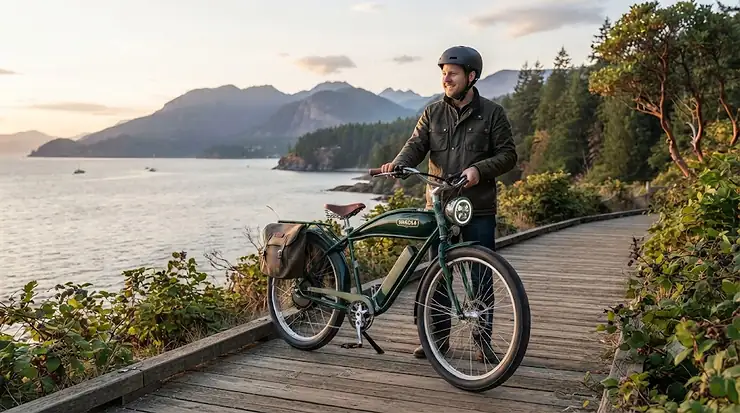
Somewhere between a 1950s diner and a silent, torque-filled electric motor, the vintage electric cruiser bike found its niche — and it isn’t letting go. A vintage electric cruiser bike is, in plain terms, a bicycle built around old-world silhouettes (balloon tires, sweeping fenders, springer forks, tank-style battery housings) but powered by a modern hub or mid-drive motor. You get the “sit up and coast” posture of your grandfather’s paperboy bike with the kind of torque that makes hills feel optional. It’s a strange, wonderful mashup, and it’s exactly why this category has exploded across Canadian cities from Halifax to Victoria over the past two years.
I’ll level with you upfront: I haven’t personally logged kilometres on every bike in this guide, and I’m not going to pretend otherwise. What follows is honest analysis built from real specifications, aggregated review sentiment from riders who have actually put these bikes through their paces, and side-by-side comparisons that tell you what the spec sheets leave out. No invented five-star reviews, no manufactured “I tested this for a month” stories — just the research a smart buyer would want done for them before spending a few thousand dollars.
This guide covers seven real, currently available vintage electric cruiser bike options, spanning budget step-throughs under C$1,200 to dual-motor showstoppers pushing C$4,500. We’ll dig into what a retro style electric bike cruiser actually delivers versus what’s just paint and chrome, how a classic design cruiser ebike holds up on Canadian streets and trails, and where the vintage look electric bicycle trend genuinely earns its keep. By the end, you’ll know exactly which model fits your commute, your budget, and your inner rockabilly.
Quick Comparison Table
Before we go deep on each model, here’s the 30-second version for anyone in a hurry.
| Bike | Motor | Battery/Range | Best For |
|---|---|---|---|
| Nakto Classic 2 | 500W hub | 48V 10Ah / ~35 km | Tightest budget |
| Ecotric Hammer | 750W hub | 48V / ~55 km | Fat-tire vintage look |
| Emojo Hurricane | 500W hub | 48V / ~55 km | Classic beach cruiser feel |
| Michael Blast Ponyboy | Bafang hub | 48V / ~55-65 km | Entry-level Canadian retro |
| Michael Blast Vacay | Bafang hub, 80Nm | 48V 14.5Ah / ~55 km | All-day comfort cruising |
| Michael Blast Greaser | Bafang hub, 80Nm | 48V 14.5Ah / ~55 km | Café-racer styling |
| Ariel Rider Grizzly | Dual 1000W hub | 52V 35Ah / up to 120 km | Power and range, no compromise |
A quick look at that table tells its own story: this isn’t a one-size-fits-all category. The Nakto Classic 2 and Ecotric Hammer sit at the accessible end, where you’re paying mostly for the vintage silhouette and enough motor to flatten your commute. The three Michael Blast models occupy the mid-to-premium tier, where hand-welded steel frames and genuinely period-correct detailing start to matter. And the Ariel Rider Grizzly is in a category of its own — more electric moped than bicycle, and priced accordingly. What the table can’t show you is why one beats another for a specific rider, which is exactly what the rest of this guide is for.
💬 Just one click — help others make better buying decisions too!😊
Top 7 Vintage Electric Cruiser Bikes: Expert Analysis
Coverage below spans budget, mid-range, and premium tiers, plus a couple of lesser-known brands worth your attention alongside the more recognizable names. Every product name appears in bold throughout so you can scan and compare at a glance.
1. Nakto Classic 2 — budget-friendly retro step-through
The Nakto Classic 2 opens this list because, frankly, it’s the bike most Canadians actually end up buying when “vintage electric cruiser bike” first shows up in their search bar. It leans on a Dutch-influenced step-through frame with curved top tubes and a wide spring-loaded saddle, dressed up with carbon-steel spoked rims that echo an old paperboy bike more than anything digital. Under the fenders sits a 48V 500W rear hub motor rated at 46Nm of torque (750W peak), paired with a 48V 10Ah lithium-ion battery. In practice, that motor is enough to flatten most urban hills without feeling like you’re fighting the bike, and the 6-speed Shimano drivetrain gives you a genuine pedal-bike fallback if the battery ever runs dry mid-errand.
Based on the spec comparison against other budget-tier cruisers, the Nakto Classic 2 is squarely aimed at casual, low-mileage riders — think grocery runs, park loops, and short commutes under 15 km rather than daily 40 km round trips. Reviewers consistently report that the low-step frame is a genuine win for anyone who finds swinging a leg over a top tube awkward, and several note the saddle comfort holds up surprisingly well for the price point. The most common critique in user feedback centres on the stock tires and brakes, which are adequate rather than exceptional and are often the first parts riders choose to upgrade.
Pros:
- ✅ Lowest price of entry into the retro cruiser category
- ✅ Step-through frame is genuinely easy to mount and dismount
- ✅ Removable battery simplifies charging and theft deterrence
Cons:
- ❌ Stock brakes feel underwhelming at higher speeds
- ❌ Shorter realistic range than pricier motor-and-battery combos
Expect the Nakto Classic 2 to land around C$900-C$1,100 at the time of research — genuinely good value if your rides stay local and your expectations match the price tag.
2. Ecotric Hammer — 70s-inspired fat-tire cruiser
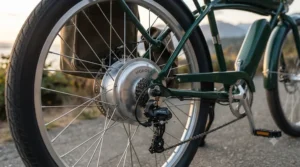
If the Nakto Classic 2 is a paperboy bike, the Ecotric Hammer is its beefier cousin who spent the 1970s riding a Schwinn Krate through a California suburb. This is a fat-tire vintage electric cruiser bike, built around 26-inch by 4-inch tires on an aluminum alloy frame, powered by a 750W brushless geared hub motor and a 48V removable lithium battery good for roughly 55 km per charge in mixed conditions. What most buyers overlook about this model is how much the wide tires do for ride quality on Canadian pavement — potholes and frost heaves that would rattle a skinny-tire cruiser get absorbed rather than transmitted straight into your wrists.
The front suspension fork and adjustable suspension seat compound that comfort further, which matters if your commute includes anything rougher than freshly paved bike lanes. On paper, this means the Ecotric Hammer trades a bit of that classic slim-tire silhouette for genuine all-season practicality, including sand, packed snow, and gravel shoulders where a narrow-tire cruiser would bog down or skid. Aggregated review sentiment for Ecotric’s cruiser line skews positive on assembly (most units ship roughly 90 percent pre-built) and value, with the more frequent complaints landing on customer support response times and the plainer control display compared to pricier competitors.
Pros:
- ✅ Fat tires soak up rough Canadian pavement and light gravel
- ✅ 750W motor has real hill-climbing headroom for the price
- ✅ Arrives mostly pre-assembled, easing the first-week setup
Cons:
- ❌ Wider tires add rolling resistance on smooth pavement
- ❌ Customer support reviews are mixed on response speed
At around C$1,300-C$1,600, the Ecotric Hammer sits in the sweet spot between “cheap cruiser” and “serious commuter,” and it’s worth every extra dollar over the entry-level tier if your streets aren’t perfectly smooth.
3. Emojo Hurricane — classic beach cruiser silhouette
The Emojo Hurricane keeps things simpler and, in doing so, nails the classic beach cruiser proportions better than almost anything else on this list. A stretched aluminum frame gives it that low, laid-back stance, while the 500W hub motor and 7-speed Shimano Altus drivetrain handle the actual moving. What the spec sheet won’t tell you, but reviewers note, is how much the plush saddle and swept-back handlebars change the character of a ride — this is a bike built for a Sunday boardwalk cruise, not a head-down commute, and it shows in every design decision.
Here’s what to weigh: the 26-inch wheel and tire package prioritizes that traditional cruiser look over the off-road flexibility of a fat-tire build, so this is the pick for riders who want the vintage aesthetic without needing to tackle unpaved trails. The rack and fender package that ships standard adds genuine day-to-day usefulness for anyone using this as a beach-town or cottage-country runabout rather than a year-round urban commuter. Aggregated feedback on Emojo’s cruiser line generally praises ride comfort and styling, while noting — fairly consistently — that the base cadence sensor (rather than a torque sensor) means pedal assist engagement can feel a step behind more premium systems.
Pros:
- ✅ Authentic low-slung beach cruiser stance and comfort
- ✅ 7-speed Shimano gearing adds real versatility over singlespeeds
- ✅ Rack and fenders included standard, no extra shopping needed
Cons:
- ❌ Cadence-based pedal assist feels slightly delayed versus torque sensors
- ❌ Less suited to unpaved trails than fat-tire alternatives
Pricing for the Emojo Hurricane typically falls in the C$1,900-C$2,300 range, positioning it as a mid-tier pick for riders who value classic styling over rugged versatility.
4. Michael Blast Ponyboy — entry-level scrambler style
Here’s where things get interesting for Canadian shoppers specifically: Michael Blast is a Canadian-founded brand with a flagship store in Calgary, and the Ponyboy is its most affordable model — designed, in the company’s own words, to distill classic street riding into something accessible to more riders. Compared with the Greaser and Vacay further down this list, the Ponyboy trims some of the premium detailing while keeping the hand-welded steel frame construction and Bafang geared hub motor that define the lineup. Reviewers consistently note that even at this lower price point, you still get hydraulic disc brakes and genuine Shimano gearing — components that budget competitors from other brands often substitute with cheaper mechanical alternatives.
Based on the spec comparison, the Ponyboy channels a scrambler-era look with slightly more upright ergonomics than the café-racer-styled Greaser, making it approachable for riders who want retro attitude without a full leaned-forward riding position. The pedal-assist system offers multiple levels alongside a thumb throttle, and the key-locked lithium battery integrates into the frame rather than bolting on as an obvious afterthought — a small detail that matters enormously for keeping the vintage illusion intact. What most buyers overlook is that this is also the most beginner-forgiving of the three Michael Blast models here, simply because its geometry asks less of new riders adjusting to a heavier, motor-assisted bike for the first time.
Pros:
- ✅ Hydraulic brakes and Shimano gearing rare at this price tier
- ✅ Hand-welded steel frame feels sturdier than mass-stamped competitors
- ✅ Backed by a 3-year warranty and Canadian customer support
Cons:
- ❌ Less aggressive retro styling than the pricier Greaser
- ❌ Fewer color and trim options than the flagship models
Look for the Michael Blast Ponyboy in roughly the C$1,800-C$2,200 range, which makes it one of the strongest value plays if you specifically want a Canadian-designed retro build.
5. Michael Blast Vacay — chopper-cruiser comfort king
The Michael Blast Vacay borrows its posture from 1970s chopper cruiser culture: high sweptback handlebars, a low-step frame, and a big rear tire that gives it real road presence. Under the retro-styled leather battery holster — a detail specifically designed to draw the eye away from the electronics and toward the bike’s classic lines — sits a Bafang geared hub motor rated at 500W nominal and roughly 750W peak, delivering around 80Nm of torque. That torque figure matters more than it might seem: reviewers and independent testers note it lets the Vacay climb moderate hills confidently despite its substantial curb weight, something lighter-torque budget motors in this guide can’t match.
The 48V 14.5Ah battery is rated for an estimated 55 km of range on pedal assist, and a full charge takes around five hours — noticeably faster than the “half a day” charge times some competing cruisers require. Here’s what to weigh: the Vacay ships with a stock top speed around 32 km/h (20 mph) via throttle or pedal assist, which lines up with what most Canadian provinces treat as the ceiling for power-assisted bicycles, though riders should always confirm their specific model’s settings against local rules before assuming compliance. Aggregated review sentiment repeatedly describes the ride as more about experience than raw numbers — the extra-cushioned dual-spring saddle and cadence-sensor pedal assist combine for what owners describe as an unusually relaxed, “float along” feel for a bike this substantial.
Pros:
- ✅ 80Nm of torque handles hills better than most cruisers this price
- ✅ Fast roughly 5-hour charge time versus half-day competitors
- ✅ Leather battery holster keeps the retro aesthetic fully intact
Cons:
- ❌ Heavier curb weight makes indoor storage or stairs a chore
- ❌ Premium styling comes with a premium price tag
Expect to pay in the C$2,300-C$3,000 range for the Michael Blast Vacay, positioning it as a genuine step up for riders who want chopper-inspired presence without sacrificing comfort.
6. Michael Blast Greaser — café racer with attitude
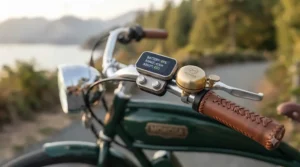
If the Vacay is a beach chopper, the Michael Blast Greaser is its leaner, more aggressive café-racer cousin — styling traced back to 1920s board-track racers by way of 1950s café culture. The long, padded bench-style seat and upswept handlebars put riders in a slightly more engaged posture than the laid-back Vacay, and the fully functional springer front suspension (purely decorative on some cheaper “retro” bikes, genuinely functional here) adds real bump absorption rather than just visual flair. Power comes from the same class of Bafang geared hub motor found across the Michael Blast lineup — roughly 500W nominal, 750W peak, with about 80Nm of torque — so hill performance and acceleration feel consistent with the Vacay, just wrapped in a leaner frame.
What the spec sheet won’t tell you, but reviewers note, is how much the riding position changes the feel of an otherwise similar drivetrain: the Greaser‘s more forward-leaning stance encourages a bit more speed and engagement, making it the pick for riders who want their retro cruiser to double as a genuine head-turner rather than a purely leisurely cruiser. The trade-off is exactly what you’d expect — that same forward lean is less forgiving on longer, slower rides than the Vacay‘s more relaxed geometry. Reviewers consistently describe the Greaser as “a joy to ride” and a “head-turner,” with the more frequent caveats centring on its substantial curb weight, which can make apartment storage genuinely inconvenient.
Pros:
- ✅ Fully functional springer suspension, not just cosmetic
- ✅ Café-racer proportions deliver genuine road presence
- ✅ Same strong 80Nm torque as the Vacay in a leaner frame
Cons:
- ❌ Forward-leaning posture is less comfortable on very long rides
- ❌ Heavy build makes carrying it up stairs impractical
Pricing for the Michael Blast Greaser typically sits in the C$2,800-C$3,500 range, making it the premium pick among the brand’s retro cruiser lineup covered here.
7. Ariel Rider Grizzly — dual-motor vintage-moped power
The Ariel Rider Grizzly closes this list as the outlier, and deliberately so — it’s the splurge pick for riders who want the retro-moped aesthetic (chopper-style handlebars, a big motorcycle-inspired LED headlight, a long bench seat) paired with genuinely motorcycle-adjacent performance. Twin 1,000W continuous hub motors (rated up to 1,850W peak each) draw from dual 52V batteries totalling 1,820Wh, and a selector switch lets riders choose front-wheel, rear-wheel, or all-wheel drive depending on conditions. Unlocked, it’ll hit roughly 58 km/h, though — and this is the honest caveat every Canadian buyer needs to hear — that puts it well outside power-assisted bicycle territory in every province, so anyone riding it on public roads needs to keep it locked to a compliant speed setting or treat it accordingly under provincial moped or motorcycle rules.
Based on the spec comparison, the appeal here isn’t subtlety — it’s the sheer headroom. Reviewers consistently praise the dual-motor system’s flexibility (switching to front-wheel drive alone for sand or snow, for instance) and the estimated 120 km range when both batteries are used conservatively, a figure that dwarfs every other bike on this list. What most buyers overlook is how much that dual-battery, dual-motor system adds to curb weight: at roughly 49 kg (108 lb), this is not a bike you’re carrying up an apartment stairwell, and its “electric bicycle” classification depends entirely on keeping speed and power within provincial limits. Full suspension and hydraulic disc brakes help manage that mass confidently, which is a genuine engineering win reviewers point to repeatedly.
Pros:
- ✅ Class-leading range thanks to dual 52V battery packs
- ✅ Selectable front/rear/all-wheel drive adds real versatility
- ✅ Full suspension and hydraulic brakes suit its higher performance
Cons:
- ❌ Unlocked top speed exceeds Canadian power-assisted bicycle limits
- ❌ Substantial weight makes it impractical for indoor storage
Expect the Ariel Rider Grizzly to land around C$4,300-C$4,800 — a genuine investment, and one that only makes sense if you specifically want moped-grade power inside a pedal-equipped frame.
Practical Usage Guide: Getting the Most From Your Vintage Electric Cruiser Bike
Buying the bike is the easy part. Setting it up right is what determines whether you’re still riding it happily in year two or quietly listing it on Facebook Marketplace. Start with tire pressure — vintage-style cruisers often ship with wider, balloon-style tires that feel sluggish when under-inflated, so check the sidewall PSI rating in your first week and top up as needed; it’s a two-minute job that transforms rolling resistance. Next, dial in your saddle height before you obsess over motor settings: most step-through and chopper-style cruisers are designed for a nearly upright leg extension, and too-low a seat wastes both your pedalling efficiency and the motor’s assist.
For the first 30 days, resist the urge to run pedal assist maxed out everywhere — batteries lose long-term capacity faster when consistently discharged hard and fast, so alternating assist levels based on terrain (low on flats, higher on hills) both extends range per charge and protects battery health over the seasons. A common early mistake is leaving the battery on a trickle charger indefinitely; most manufacturers, including the brands covered here, recommend unplugging once charging completes and storing a partially charged (not empty, not full) battery if the bike will sit unused for weeks, particularly through a Canadian winter. Wipe down chrome fenders and leather-look seats after wet rides — road salt is brutal on retro-finish components — and schedule a basic drivetrain check (chain tension, brake pad wear) every 300-500 km, since the heavier frames common to this category put more strain on components than a standard road bike.
✨ Ready to find your ride? Compare the full lineup above and pick the retro cruiser that fits your commute today.
Real-World Scenarios: Who Actually Rides a Vintage Electric Cruiser Bike
Picture Priya, a 28-year-old grad student in Kitchener who commutes 8 km each way to campus on mixed bike lanes and residential streets. Budget is tight, and she’s less interested in speed than in arriving without sweating through her jacket. A bike like the Nakto Classic 2 or Ecotric Hammer fits her situation well — enough motor to flatten the one steep block near her apartment, a step-through frame that’s easy to mount in a skirt or work clothes, and a price point that doesn’t compete with rent.
Now consider Marc, a semi-retired teacher in Kelowna who rides recreationally along the lakeshore most weekends and occasionally putters into town for errands. Comfort and classic looks matter more to him than raw speed, and he’s willing to spend more for a bike that feels substantial and turns heads at the farmers’ market. The Emojo Hurricane or Michael Blast Vacay both suit that profile — laid-back geometry, cushioned saddles, and enough visual character to make every ride feel like an event rather than a chore.
Finally, there’s Devon, a 34-year-old contractor outside Calgary who wants a genuine motorcycle-alternative for weekend trail runs and the occasional longer highway-adjacent commute, and who already has a garage to store something heavier. For Devon, the calculus shifts entirely toward capability: the Ariel Rider Grizzly‘s dual motors, extended range, and off-road-capable fat tires solve real problems that a lighter cruiser simply can’t, even though it costs four times what Priya is spending.
Problem → Solution: Common Vintage Electric Cruiser Bike Headaches
Problem: “My battery range feels shorter than advertised.” Manufacturer range estimates almost always assume mild terrain, moderate rider weight, and conservative pedal-assist settings — cold Canadian winters alone can cut lithium battery range by 20 percent or more. Solution: budget for roughly 70-80 percent of the advertised range in real-world mixed riding, and store batteries indoors above freezing whenever possible.
Problem: “The retro styling makes storage awkward.” Curved frames, wide fenders, and springer forks don’t always play nicely with standard bike racks or apartment hooks designed for slim road bikes. Solution: look specifically for wall mounts or floor stands rated for the extra weight of an e-bike, and measure your storage space against the bike’s listed dimensions before ordering — not after it arrives.
Problem: “Brakes feel underwhelming at speed on the budget models.” Entry-level cruisers frequently ship with mechanical disc or rim brakes rather than hydraulic systems, which can feel spongy once a heavier e-bike builds momentum. Solution: budget an additional C$80-C$150 for a brake pad and cable upgrade if you’re buying at the lower end of this list, or prioritize models like the Michael Blast lineup that include hydraulic brakes standard.
Problem: “I bought a cruiser but my commute has real hills.” Not every vintage-styled cruiser is built with climbing torque in mind — some prioritize looks and low weight over motor strength. Solution: cross-reference torque figures (Newton-metres, not just wattage) before buying; the Michael Blast Vacay and Greaser‘s 80Nm rating handles moderate hills noticeably better than lower-torque budget alternatives.
Problem: “The vintage aesthetic clashed with modern bike lane infrastructure — no easy mounting points for lights or racks.” Solution: check for included accessory mounts before purchase (several models here ship with racks and fenders standard) or budget for clamp-on lighting and pannier systems designed for curved retro frames specifically.
How to Choose a Vintage Electric Cruiser Bike
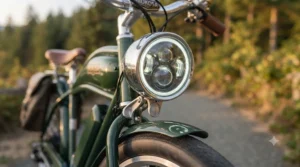
What is a vintage electric cruiser bike? It’s an electric bicycle that combines retro-inspired styling — balloon tires, curved frames, springer forks, and classic colourways — with a modern hub or mid-drive electric motor, typically in the 250W-1,000W range, built for relaxed, upright commuting and leisure riding rather than speed or off-road performance.
Choosing between the seven models above comes down to a handful of concrete decision points:
- Match motor torque to your terrain. Flat city streets need less than 40Nm; genuine hills call for the 80Nm class found on the Michael Blast Vacay and Greaser.
- Weigh frame style against your body and wardrobe. Step-through frames like the Nakto Classic 2 favour riders who want easy mounting; chopper and café-racer frames favour a more deliberate riding posture.
- Set a realistic range target. Add 30-40 percent buffer to your actual commute distance to account for cold weather, hills, and higher assist settings.
- Confirm brake type before anything else. Hydraulic disc brakes, standard on the Michael Blast lineup, outperform mechanical systems once you’re carrying an extra 20-25 kg of motor and battery.
- Check storage and weight realistically. A 30 kg cruiser is not a bike you casually carry up three flights of stairs — factor that into where you’ll actually park it.
- Verify Canadian compliance specifics. Confirm the model’s motor wattage and assisted top speed against your province’s power-assisted bicycle rules, since not every retro-styled bike ships in a fully compliant configuration by default.
- Decide how much “vintage” you actually want. Some buyers want maximum retro theatre (springer forks, leather-look battery covers); others want subtle cues on an otherwise modern frame. Be honest about which one you are before you fall for a photo.
Retro Aesthetic, Modern Tech: What “Vintage Look” Really Means Under the Hood
Here’s the honest truth the marketing photos won’t spell out: a retro aesthetic modern tech bike is, mechanically, almost identical to any other mid-range electric bike. The battery is still a lithium-ion pack, the motor is still a brushless hub or mid-drive unit, and the controller logic behind pedal assist works the same regardless of whether it’s tucked inside a leather-look holster or bolted on in plain view. What changes is packaging — designers hide cabling inside curved tubes, disguise batteries as fuel tanks or saddlebags, and swap angular modern frames for swept, symmetrical vintage silhouettes.
That’s not a criticism; it’s actually the whole point, and it’s harder engineering than it looks. Fitting a battery into a frame shaped like a 1970s beach cruiser, rather than a straight modern downtube, takes real design compromise, and reviewers across every brand in this guide note that the best vintage-look electric bicycle builds manage it without sacrificing serviceability — batteries still pull out for charging, motors still bolt on and off for repair. Where the vintage-look category genuinely differs from a standard e-bike is weight distribution and riding posture: the curved frames and swept handlebars common to this style put riders in a more upright position than a typical hybrid or road e-bike, which is exactly why comfort-focused riders gravitate here in the first place.
Classic Cruiser Ebike Features That Actually Matter (And Which Don’t)
Marketing copy for this category loves to lean on nostalgia, but a handful of classic cruiser ebike features genuinely affect day-to-day riding, while others are pure theatre. Torque rating matters enormously — a bike advertising “powerful 750W” without a torque figure could easily underperform a well-tuned 500W motor with strong Newton-metre output on hills. Battery capacity in amp-hours, not just voltage, tells you far more about real-world range than voltage alone. Brake type — hydraulic versus mechanical disc versus old-school rim brakes — has a direct, physical impact on stopping distance once you’re carrying the extra weight of a motor and battery.
On the “doesn’t matter much” side: chrome-plated accents, faux leather grain patterns, and vintage-style paint schemes are purely aesthetic and shouldn’t factor into a functional buying decision, however much they influence how a bike photographs. Springer forks deserve a closer look than most buyers give them — some, like on the Michael Blast Greaser, are fully functional suspension components, while cheaper competitors sometimes ship purely decorative springer-look forks with no actual travel. The lesson: read spec sheets for functional claims, not just visual descriptions, before assuming a retro detail does what it looks like it does.
Common Mistakes When Buying a Vintage Electric Cruiser Bike
The single most common mistake is buying entirely on looks and skipping torque and range specs — a gorgeous frame with a weak motor turns into a very heavy regular bicycle the moment you hit a real hill or a headwind. A close second is underestimating storage: these bikes routinely weigh 25-30 kg, sometimes more, and buyers who don’t have secure, weatherproof storage often end up with rust and corrosion issues within a single Canadian winter. Reviewers across multiple brands also flag sizing mistakes — many vintage-style step-through and chopper frames run differently than a standard hybrid bike’s sizing chart, so measuring your inseam against the manufacturer’s specific geometry (rather than assuming “medium” translates the same across brands) avoids an expensive return.
Buyers also frequently skip verifying provincial compliance before ordering, assuming any bike marketed as an “e-bike” automatically qualifies as street-legal without registration in their province — as the sections above make clear, that’s not guaranteed once you’re looking at higher-wattage or unlocked-speed models like the Ariel Rider Grizzly. Finally, don’t underestimate the total cost of ownership trap: a cheaper bike with a proprietary, hard-to-source battery can end up costing more over three years in replacement parts than a pricier model built around widely available components.
Vintage Electric Cruiser Bike vs Traditional Cruiser Bikes
| Factor | Vintage Electric Cruiser Bike | Traditional (Non-Electric) Cruiser |
|---|---|---|
| Hill performance | Motor-assisted, minimal effort | Fully rider-dependent |
| Typical price (CAD) | C$900-C$4,800+ | C$300-C$900 |
| Commute distance comfort | 15-40+ km realistic | Usually under 10-15 km |
| Weight | 25-49 kg | 12-18 kg |
| Maintenance complexity | Higher (battery, motor, controller) | Lower (mechanical only) |
The extra weight and complexity of a vintage electric cruiser bike is a real trade-off, not a free upgrade — and the table above makes that trade-off explicit. What most buyers overlook is that the motor assistance doesn’t just make riding easier, it fundamentally changes what distances and terrain are realistic for regular use, turning a 12 km commute from “only for serious cyclists” into “genuinely doable in work clothes.” On the other hand, a traditional cruiser wins decisively on simplicity, upfront cost, and long-term maintenance — there’s no battery to degrade, no controller to troubleshoot, and no motor to eventually replace.
🔍 Ready to skip straight to the shortlist? Jump back up to the Top 7 comparison table and lock in your pick.
What to Expect: Real-World Performance of a Vintage Electric Cruiser Bike
On paper, a 500W motor with 45-80Nm of torque sounds abstract. In practice, that translates to accelerating from a stop without the leg-burning effort a traditional cruiser demands, and climbing a moderate 5-7 percent grade — the kind common on residential Canadian streets — while barely dropping out of a comfortable cadence. Riders consistently report that the biggest everyday difference isn’t top speed, since most of these bikes cap out near the legal 32 km/h assisted limit anyway, but rather how much less tiring a full day of errands or a longer weekend ride feels.
Cold weather changes the picture meaningfully. Lithium battery chemistry loses efficiency below roughly 0°C, and Canadian winters routinely dip well past that, so riders who commute year-round should expect noticeably reduced range and slower charge times in January compared to July — a detail glossed over in most marketing material but consistently confirmed across aggregated review sentiment. Tire choice also shapes real-world feel more than most buyers expect going in: the fat-tire builds like the Ecotric Hammer handle wet leaves, light snow, and gravel shoulders with far more confidence than the narrower tires on the Emojo Hurricane, even though both are nominally “cruiser” bikes.
Long-Term Cost & Maintenance
Sticker price is only part of the story. Budget for a replacement battery roughly every 3-5 years depending on charge cycles and storage habits, typically running C$300-C$600 depending on capacity and brand availability — a cost worth factoring in before you fall for the lowest upfront price. Tire replacement for the wider, fat-tire builds tends to run slightly higher than standard bicycle tires, simply due to lower production volume, while narrower-tired cruisers like the Emojo Hurricane benefit from cheaper, more widely stocked replacement options.
| Cost Category | Budget Tier (e.g. Nakto Classic 2) | Premium Tier (e.g. Michael Blast Greaser) |
|---|---|---|
| Upfront price | C$900-C$1,100 | C$2,800-C$3,500 |
| Battery replacement (3-5 yrs) | C$250-C$400 | C$400-C$600 |
| Brake service (annual) | C$60-C$120 | C$40-C$90 (hydraulic, less frequent) |
| Best For | Occasional, low-mileage riders | Daily riders wanting durability |
That table reveals something counterintuitive: over a five-year ownership window, the gap between budget and premium tiers narrows considerably once you factor in maintenance frequency, since higher-quality hydraulic brakes and sturdier steel frames on models like the Michael Blast Greaser tend to need less frequent servicing. For a rider putting serious daily mileage on their bike, the premium tier’s lower long-term maintenance burden can meaningfully offset its higher sticker price — a genuine ROI argument, not just a styling preference.
Safety, Regulations & Compliance in Canada
Canada’s e-bike rules changed in a way many shoppers still don’t realize: the federal “power-assisted bicycle” definition that used to live in the Motor Vehicle Safety Regulations was repealed in February 2021, meaning road rules for e-bikes are now set province by province rather than nationally. Despite that shift, nearly every province still converges on the same practical benchmarks — a motor of 500W or less, motor-assisted speed capped at 32 km/h, and fully operable pedals — as the standard for a bike to be treated like a regular bicycle rather than a moped or motorcycle requiring licensing and insurance.
That convergence matters directly for this guide: the Nakto Classic 2, Ecotric Hammer, Emojo Hurricane, and the three Michael Blast models are all built around motors and stock speed settings designed to fall within that widely shared 500W/32 km/h benchmark, though riders should always double-check their specific province’s current rules, since requirements around helmets, minimum age, and trail access still vary. The Ariel Rider Grizzly, by contrast, is capable of far exceeding those limits when unlocked, so anyone considering it for public road use needs to keep it configured within provincial power-assisted bicycle limits or treat it under the applicable moped/motorcycle framework instead — Parks Canada’s e-bike guidance lays out the same 500W/32km/h benchmark for trail access specifically, which is a useful independent cross-check.
Helmet requirements, minimum rider age, and trail-versus-road access rules genuinely differ by province — Prince Edward Island, for instance, updated its regulations specifically to clarify that power-assisted bicycles are treated like regular bikes on roadways rather than mopeds, provided they meet the speed and pedal criteria. Before ordering any vintage electric cruiser bike, it’s worth a quick check of your own province’s current highway traffic rules, since a compliant bike in Alberta isn’t automatically treated identically in Quebec or British Columbia.
Frequently Asked Questions
❓Is a vintage electric cruiser bike street legal in Canada?
❓ How far can a vintage electric cruiser bike go on one charge?
❓ What's the best budget vintage electric cruiser bike?
❓ Do vintage electric cruiser bikes need a licence in Canada?
❓ Are vintage-style electric bikes heavier than regular electric bikes?
Conclusion
There’s no single “best” vintage electric cruiser bike, and by now that should be obvious — the right answer depends entirely on your commute distance, your storage situation, and how much retro theatre you actually want versus how much power you need under the hood. Budget-focused riders doing short, flat trips will get real satisfaction from the Nakto Classic 2 or Ecotric Hammer. Riders chasing genuine comfort and classic beach-town character should look hard at the Emojo Hurricane. And anyone drawn to Canadian-made retro engineering with hydraulic brakes and genuinely functional vintage detailing has three strong options in the Michael Blast Ponyboy, Vacay, and Greaser, scaling from entry-level to full café-racer flair.
For riders who want maximum capability and don’t mind the weight, price, and compliance considerations that come with it, the Ariel Rider Grizzly delivers performance that genuinely rivals a small motorcycle while still technically pedalling. Whichever direction you lean, cross-reference torque figures, confirm your province’s current power-assisted bicycle rules, and factor in realistic storage before you commit — a vintage electric cruiser bike is as much a lifestyle purchase as a transportation one, and it deserves the same careful comparison you’d give any few-thousand-dollar decision.
✨ Found the retro ride that fits your commute? Share this guide with a friend who’s still riding a rusty ten-speed! 💬🤗
Recommended for You
- 7 Best Cruiser Electric Bike Picks for 2026: Comfort Wins
- Moped Ebike With Pedals: 7 Legit Picks for Canada in 2026
- Moped Style Electric Bike Canada: 7 Best Picks for 2026
Disclaimer: This article contains affiliate links. As an Amazon Associate, I earn from qualifying purchases. If you purchase products through these links, we may earn a small commission at no additional cost to you.
✨ Found this helpful? Share it with your friends! 💬🤗
