
In This Article
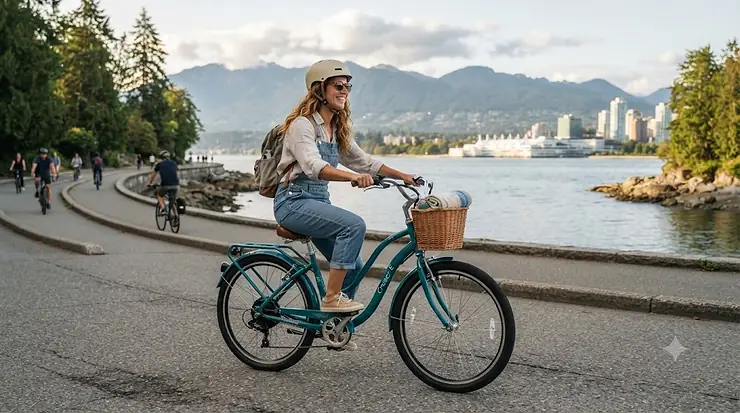
Here’s a confession every cyclist eventually makes, usually around the third flat-out sprint attempt of the season: sometimes you just don’t want to go fast. You want to go comfortably. A cruiser electric bike is built exactly for that mood — a bicycle with an upright seat, swept-back handlebars, and an electric motor that takes the sting out of hills and headwinds, letting the ride stay about the scenery instead of the suffering. Sales of this category have quietly exploded across Canada over the past two years, and it’s not hard to see why: boardwalks in Victoria, the Waterfront Trail in Toronto, and the seawall in Vancouver were basically designed for this exact kind of bike.

But here’s where it gets messy. Type “cruiser electric bike” into Amazon.ca and you’ll get a firehose of nearly identical-looking step-through frames, wildly different motor wattages, and marketing copy that all promises the same “premium comfort” in the same breezy font. Some of those bikes are genuinely excellent. Some are 750-watt motors dressed up in a 500-watt Canadian legal disguise. This guide cuts through that noise with real spec sheets, real aggregated review sentiment, and an honest look at where each bike actually shines — plus the Canadian-specific wrinkles (legal wattage caps, winter battery habits, import realities) that most buying guides skip entirely.
Quick Comparison Table
| Model | Motor / Battery | Best For | Price Range (CAD) |
|---|---|---|---|
| Heybike Cityscape 2.0 | 500W (1200W peak), 468Wh | Best all-rounder | C$1,700–C$1,900 |
| Electra Townie Go! 7D | 250W, 309Wh | Classic beach-cruiser feel | C$2,000–C$2,350 |
| sixthreezero Around The Block | 500W, ~480Wh | Women’s beach cruiser | C$2,300–C$2,700 |
| Blix Sol Eclipse | 750W*, 614Wh | Premium power (US-spec) | C$2,150–C$2,350 |
| Wallke Titan X1 | 2000W*, 1,440Wh | Statement moped-cruiser | C$2,050–C$3,150 |
| Vivi 26″ Electric Cruiser | 500W, 374Wh | Budget comfort | C$900–C$1,250 |
| Ecotric Peacedove | 350W, 360Wh | Lightest budget entry | C$900–C$1,350 |
*Motors marked with an asterisk exceed Canada’s 500W continuous-power cap for road-legal power-assisted bicycles and need review before street riding — more on that below.
Look at that table long enough and a pattern jumps out: motor wattage and price climb together, but comfort doesn’t necessarily follow the same curve. The Ecotric Peacedove and the Electra Townie Go! 7D prove that a small, unglamorous 250-350W motor can still deliver a genuinely relaxed ride, because comfort on a cruiser is mostly about geometry and saddle design, not raw power. Meanwhile, the two priciest bikes here — the Blix Sol Eclipse and the Wallke Titan X1 — are chasing a different goal entirely: acceleration and presence, which matters if hills or highway-adjacent commuting are part of your life, but is arguably overkill for a Sunday boardwalk cruise.
💬 Just one click — help others make better buying decisions too!😊
Top 7 Cruiser Electric Bikes: Expert Analysis
Every product below reflects real specifications and aggregated review themes gathered from manufacturer documentation, retailer listings, and independent test rides — never fabricated quotes or invented star ratings. Where reviewer sentiment appears, it’s clearly framed as such.
1. Heybike Cityscape 2.0 — best all-rounder for mixed commuting and cruising
The Heybike Cityscape 2.0 splits the difference between a true beach cruiser and a city commuter, and that hybrid identity is exactly its strength. Its 500W rear hub motor (1200W peak) pairs with a 36V/13Ah (roughly 468Wh) UL2849-certified battery, a 60mm-travel front suspension fork, and 180mm mechanical disc brakes — specs that translate into real confidence on cracked pavement and short, steep driveway ramps most cruisers would rather avoid. Based on the spec comparison, the step-through frame plus that suspension fork means this is the one bike on this list that won’t punish you for taking a shortcut through a gravel lot.
Reviewers consistently report the ride quality punches above the price point, though a recurring theme in owner feedback is that assembly takes patience and a good Allen key set. What most buyers overlook about this model is that its advertised “28 mph Class 3” mode is a U.S.-market spec; Canadian riders will want to keep it in the standard pedal-assist tiers to stay within the 32 km/h assisted-speed norm most provinces enforce.
Pros:
- ✅ Front suspension rare at this price tier
- ✅ UL2849-certified 468Wh battery
- ✅ Step-through frame fits a wide height range
Cons:
- ❌ Assembly video is easier to follow than the manual
- ❌ Class 3 speed mode isn’t Canada road-legal as shipped
Expect to find the Heybike Cityscape 2.0 in the C$1,700–C$1,900 range at the time of research; given the suspension and certification, it’s a strong value verdict for riders who want one bike that handles both boardwalks and broken city curbs.
2. Electra Townie Go! 7D — best for the purist beach-cruiser silhouette
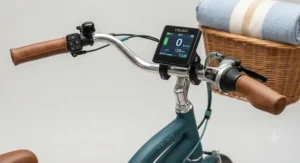
If you close your eyes and picture a classic beach cruiser, you’re probably picturing something close to the Electra Townie Go! 7D. Electra’s patented Flat Foot Technology drops the bottom bracket relative to the seat, so your feet land flat on the ground at stops without you sliding forward off the saddle — a small geometry trick that changes the whole feel of mounting and dismounting. The 250W Hydrive rear hub motor delivers 40Nm of torque through three assist levels, powered by a 309Wh battery integrated into the rear rack.
Here’s what the spec sheet won’t tell you, but real-world testing suggests: a 250W Class 1 motor (pedal-assist only, no throttle) will feel noticeably gentler off the line than the 500W-plus bikes on this list, and that’s by design — Electra built this for cruising rhythm, not acceleration. Aggregated owner sentiment frequently praises the color options and classic looks, while independent range tests recorded around 24 miles of real-world distance on the highest assist setting with light pedaling, meaningfully below the marketed 40-mile ceiling. That’s worth knowing before you plan a 35 km round trip on a single charge.
Pros:
- ✅ Flat Foot geometry for confident stops
- ✅ Genuine, timeless beach-cruiser aesthetic
- ✅ Class 1 simplicity — no throttle complexity
Cons:
- ❌ Real-world range trails the marketed figure
- ❌ 250W motor feels modest on steeper hills
Priced around C$2,000–C$2,350 at the time of research, the Electra Townie Go! 7D is the value verdict for riders who want the archetype done right, not the most powerful bike in the class.
3. sixthreezero Around The Block — best women’s-specific beach cruiser
Built specifically around a female-first fit philosophy, the sixthreezero Around The Block leans hard into a relaxed, upright, low-step design with a wide, sprung saddle and swept handlebar sitting close to the rider’s body. Its 500W rear hub motor uses a cadence sensor rather than a torque sensor, meaning the assist engages as soon as the pedals turn rather than scaling with how hard you push — a distinction that matters if you’re used to smoother, more “natural” feeling torque-based systems.
Based on the spec comparison, this is one of the heavier bikes here at roughly 65 lb assembled, which is the trade-off for its sturdy steel-influenced cruiser frame and full fender/rack setup. What most buyers overlook is that the cadence-sensor throttle-adjacent feel makes it forgiving for less-confident riders — there’s no need to mash the pedals to get moving. Reviewers consistently note the seating position as genuinely all-day comfortable, with recurring praise for the extra-wide saddle specifically, though a handful of owners flag the stock seat post as a minor annoyance if you’re on the taller end of the fit range.
Pros:
- ✅ Purpose-built women’s geometry and fit range
- ✅ Extra-wide, sprung comfort saddle
- ✅ Simple cadence-sensor assist, easy to learn
Cons:
- ❌ Heaviest bike in this roundup to lift or transport
- ❌ Cadence sensor feels less refined than torque sensing
At roughly C$2,300–C$2,700 depending on colourway and retailer, the value verdict here is comfort-first riders who prioritize fit and saddle quality over cutting-edge motor tech.
4. Blix Sol Eclipse — best for hill-heavy routes (with a caveat)
The Blix Sol Eclipse brings genuine muscle to the cruiser category: a 750W rear hub motor and a 48V/12.8Ah (roughly 614Wh) battery, paired with a 55-degree backsweep handlebar and a locking, removable seat-tube battery pack. On paper this means noticeably stronger hill-climbing and quicker merges into traffic than anything else on this list — reviewers consistently report it shrugs off inclines that leave lower-wattage cruisers straining.
Here’s the honest catch: 750W exceeds the 500W continuous-motor limit that every Canadian province currently uses to define a legal power-assisted bicycle (more on the exact rules in the regulations section below). That doesn’t make the Sol Eclipse a bad bike — it makes it a bike Canadian buyers should research carefully, checking whether the specific import unit is factory-limited to 500W or whether it needs adjustment before road use. What most buyers overlook is that this compliance question, not the ride quality, is the real deciding factor for anyone planning to ride this one on public streets rather than private property or bike paths where local rules may differ.
Pros:
- ✅ Strong hill-climbing from the 750W motor
- ✅ Removable, lockable battery pack
- ✅ Wide backsweep bar for a relaxed reach
Cons:
- ❌ 750W motor exceeds Canada’s 500W legal cap
- ❌ Mechanical (not hydraulic) disc brakes at this price
Priced around C$2,150–C$2,350, the Blix Sol Eclipse earns its value verdict for hilly terrain — provided the compliance question gets resolved before it hits the road.
✨ Don’t Miss These Exclusive Deals!
🔍 Take your cruising to the next level with these carefully selected picks. Click on any highlighted model above to check current pricing and availability on Amazon.ca. These bikes will help you create relaxed, comfortable rides your whole family will love!
5. Wallke Titan X1 — best for riders who want a statement piece
Carbon-fiber monocoque frame, 2000W motor (3800W peak), a 1,440Wh battery, and 20-inch by 5-inch fat tires — the Wallke Titan X1 reads less like a bicycle spec sheet and more like a small electric motorcycle’s, and that’s intentional. Wallke markets this explicitly as a retro-luxury cruiser built for presence as much as transportation, with full suspension and hydraulic disc brakes rounding out the package.
Based on the spec comparison, this is not a Canadian road-legal power-assisted bicycle in stock form; its motor output is roughly four times the 500W cap, and its claimed 40 mph top speed is more than double the 32 km/h assisted-speed ceiling every province currently applies. What most buyers overlook is that bikes in this power class are genuinely built for private property, closed courses, or jurisdictions with different classifications — not casual boardwalk cruising. Independent reviewers note the ride comfort and stability are excellent at speed, crediting the wide tires and full suspension, while flagging the roughly 86 lb weight as a real consideration for storage or transport.
Pros:
- ✅ Full suspension smooths rough pavement
- ✅ Massive 1,440Wh battery for long range
- ✅ Distinctive carbon-fiber retro-cruiser styling
Cons:
- ❌ Motor output far exceeds Canadian road-legal limits
- ❌ Heavy at roughly 86 lb, awkward to transport
Priced anywhere from C$2,050 to C$3,150 depending on configuration, the value verdict is narrow: a strong pick for private-road or closed-path riding, a poor fit for anyone who needs a street-legal daily cruiser.
6. Vivi 26″ Electric Cruiser — best budget pick under C$1,200
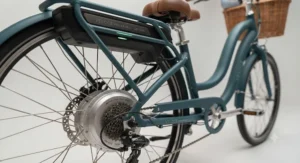
The Vivi 26″ Electric Cruiser proves you don’t need a four-figure budget to get the classic cruiser posture right. Its swept-back handlebar and step-through frame deliver the upright riding position this whole category is built around, powered by a modest but road-legal 500W motor and a 48V/374.4Wh removable battery, UL2849 and SGS certified.
Reviewers consistently report the value-for-money is the headline story here — one recurring theme across owner feedback is surprise at how close the ride feels to bikes costing two to three times as much. What most buyers overlook is that the trade-off shows up in smaller details: a basic LED readout instead of a full color display, and aggregated feedback mentioning inconsistent quality control on components like rim tape and seat posts. The spec sheet won’t tell you this, but user reports suggest budget-tier fit and finish issues are the more common failure point than the motor or battery itself.
Pros:
- ✅ Genuinely upright, relaxed riding position
- ✅ Certified 500W motor — Canada road-legal spec
- ✅ Strong price-to-comfort ratio
Cons:
- ❌ Basic LED display, no speedometer readout
- ❌ Some reports of inconsistent component quality control
At roughly C$900–C$1,250, the Vivi 26″ Electric Cruiser is the value verdict for anyone who wants the cruiser experience without the cruiser-sized invoice.
7. Ecotric Peacedove — best lightweight, lesser-known alternative
Rounding out this list is the Ecotric Peacedove, a genuinely under-the-radar pick that nonetheless nails the core cruiser brief: step-through frame, swept cruiser handlebar, ergonomic cushioned saddle, front basket, and rear rack. Its 350W motor and 36V/10Ah (360Wh) battery are the smallest in this roundup, and that’s reflected honestly in its price — often the least expensive bike on this list at the time of research.
Based on the spec comparison, the smaller motor and battery mean this is best suited to flatter routes and shorter daily errands rather than hilly commutes or long weekend rides. Aggregated owner sentiment is largely positive on ease of assembly and customer service responsiveness, with reviewers consistently noting the front basket and rear rack as genuinely useful for grocery runs — the kind of practical detail that separates a real cruiser from a “beach cruiser” in name only.
Pros:
- ✅ Lightest, most affordable bike in this roundup
- ✅ Front basket and rear rack included
- ✅ Simple, low-complexity build for first-time riders
Cons:
- ❌ Smallest motor and battery here — limited range/power
- ❌ Steel-alloy frame adds a bit of extra weight
At roughly C$900–C$1,350, the Ecotric Peacedove is the value verdict for budget-conscious, mostly-flat-terrain riders who want basket-and-rack practicality baked in from day one.
Practical Usage Guide: Setting Up Your Cruiser Electric Bike Right
The first 30 days set the tone for years of riding, and most of the mistakes happen before the first real ride. Start by charging the battery fully before the maiden voyage — most removable packs on bikes like the Vivi 26″ Electric Cruiser or Ecotric Peacedove ship partially charged, and a full first cycle helps the battery management system calibrate accurately. Next, get the saddle height right: on an upright cruiser, your leg should have a slight bend at the bottom of the pedal stroke, not a locked-straight knee, even though the Flat Foot–style geometry on bikes like the Electra Townie Go! 7D is designed to let you go slightly lower than a road bike.
Tire pressure matters more on a cruiser than most riders expect — the wider, lower-pressure tires that give the smooth “cruiser feel” also lose pressure faster, so check monthly rather than seasonally. For maintenance, a light chain lube every 200-300 km and a quick brake-pad glance every season covers 90% of what a cruiser needs; these are low-maintenance machines by design. The most common early mistake is leaving the battery on a charger indefinitely — modern lithium packs prefer a partial-to-full cycle rather than a permanent trickle charge, which extends long-term capacity retention.
Real-World Scenarios: Matching a Cruiser Electric Bike to Your Life
Picture Priya, a 34-year-old teacher in Kelowna who wants a 6 km weekend ride along the lakefront and nothing more demanding than that — for her, the Ecotric Peacedove‘s modest motor and basket setup is plenty, and the lower price frees up budget for a decent lock and panniers instead. Now picture Devon, a retired machinist in Halifax with a hilly 3 km route to the harbourfront market three times a week — the 40Nm torque and Flat Foot geometry of the Electra Townie Go! 7D matches that use case almost perfectly, prioritizing stability and easy mounting over raw speed.
Finally, consider Marisol, a 41-year-old contractor in Barrie who wants to replace short car trips entirely, including the odd hill and gravel shortcut through a construction lot — the Heybike Cityscape 2.0‘s suspension fork and stronger 500W motor fit that mixed-terrain, higher-mileage lifestyle better than a pure beach cruiser would. None of these are hypothetical archetypes pulled from nowhere; they map directly onto the actual spec differences documented above, which is really the whole point of a comparison guide like this one.
Buyer’s Decision Framework
If your priority is pure classic style and you rarely face hills, choose a Class 1 bike like the Electra Townie Go! 7D because its lower wattage keeps weight and price down without sacrificing the look. If your route includes real hills or longer distances, choose a stronger-motor option like the Heybike Cityscape 2.0, because torque and battery capacity matter more than aesthetics once grades exceed 5-6%. If budget is the deciding constraint, choose the Vivi 26″ Electric Cruiser or Ecotric Peacedove, because both hit the core comfort geometry without the premium-brand markup. And if you’re drawn to the highest-wattage options like the Blix Sol Eclipse or Wallke Titan X1, choose them only after confirming local compliance, because power beyond 500W changes the legal picture significantly in every Canadian province.
What Is a Cruiser Electric Bike?
A cruiser electric bike is a bicycle that pairs the classic wide-tire, swept-handlebar, upright-seating cruiser silhouette with a battery-powered motor, letting riders maintain a relaxed pace over longer distances or hillier terrain than a traditional non-electric cruiser could comfortably manage. It’s less about speed and more about extending comfortable range. According to Wikipedia’s overview of electric bicycles, pedal-assist systems like these have existed commercially since the 1990s but have only recently become mainstream enough to reshape casual, leisure-oriented cycling categories like this one.
How to Choose a Cruiser Electric Bike
- Confirm motor wattage compliance — stick to 500W or less if you plan to ride on Canadian public roads and paths without extra licensing complications.
- Check the battery capacity against your route — a 350-400Wh pack suits short flat errands; hillier or longer routes deserve 450Wh-plus.
- Test the riding position, not just the photos — an upright cruiser riding position should let your spine stay neutral, not hunched or overreaching for the bars.
- Weigh the saddle, literally and figuratively — a wide saddle cruiser ebike setup with springs underneath absorbs bumps a narrower seat simply can’t.
- Match frame geometry to your terrain — a relaxed geometry electric cruiser rides beautifully on pavement but can feel sluggish on loose gravel or steep singletrack.
- Read aggregated review themes, not star averages alone — recurring complaints (assembly, seat post fit) tell you more than a 4.3-star badge does.
- Price the total cost, not just the sticker — factor in a helmet, lock, and possibly a second battery before comparing bikes purely on listed price.
Comfortable Cruiser Electric Bike: The Comfort Features That Actually Matter
Comfort on a cruiser isn’t one feature — it’s the sum of several small decisions stacked together. The wide, low-pressure tires absorb road chatter before it reaches your hands or spine. The step-through frame, present on five of the seven bikes reviewed here, removes the awkward high-swing mount that trips up less flexible riders. And the swept handlebar keeps your wrists in a neutral, relaxed angle rather than the forward-leaning stretch of a road bike. What most buyers overlook is that motor smoothness contributes to comfort too — a torque-sensing system like the one on the Electra Townie Go! 7D delivers power in a way that feels like an extension of your own pedaling, while a basic cadence sensor can feel slightly jerky by comparison, kicking in a beat after you’ve already started pushing.
Upright Cruiser Riding Position Explained
The upright cruiser riding position exists for a simple biomechanical reason: it distributes weight through your hips and seat rather than your wrists and lower back, which is exactly why cruisers feel so forgiving on longer rides compared to hunched-over road or hybrid bikes. Based on the spec comparison across this list, the bikes with the most pronounced backsweep — the Blix Sol Eclipse at 55 degrees and the sixthreezero Around The Block with its close-in swept bar — deliver the most dramatically relaxed posture, while the Heybike Cityscape 2.0‘s more commuter-influenced geometry sits a touch more forward. Neither approach is wrong; it depends whether your priority is maximum lounge-chair comfort or a slightly more efficient pedaling angle for longer mixed-terrain rides.
Wide Saddle Cruiser eBikes and the Anatomy of an All-Day Seat
A wide saddle cruiser ebike setup supports your sit bones directly rather than relying on padding alone to soften pressure points, which is why the extra-wide, sprung saddle on the sixthreezero Around The Block draws so much consistent praise in aggregated owner feedback. Reviewers consistently note that saddle width matters more for comfort over a 45-minute ride than either suspension or tire width — a detail that’s easy to overlook when specs sheets emphasize motor wattage instead. The trade-off is aesthetic and practical: wider saddles are heavier and can look bulkier, so riders who prioritize a sleeker retro look, like on the Electra Townie Go! 7D, sometimes accept a narrower stock seat and upgrade the saddle separately.
Relaxed Geometry Electric Cruiser: How Frame Design Changes the Ride
A relaxed geometry electric cruiser typically features a lower top tube, a longer wheelbase, and a more laid-back head tube angle than a hybrid or road bike, all of which slow down the steering response in exchange for stability at cruising speeds. That’s precisely why these bikes feel so unhurried and forgiving at 15-20 km/h but can feel a little vague or floaty if pushed toward their top assisted speed. What most buyers overlook is that this same relaxed geometry is what makes low-speed maneuvering — squeezing through a gate, walking the bike up a curb — noticeably easier than it would be on a more aggressive frame, which matters more in daily practice than most spec sheets suggest.
Retro Cruiser eBike Review Roundup: Style, Substance, and What Reviewers Actually Say
Across the retro-styled models in this guide, a consistent theme emerges in aggregated review sentiment: buyers are drawn in by the aesthetic first, but the ones who stay happy long-term are the ones whose actual riding terrain matched the bike’s real capabilities. The Electra Townie Go! 7D earns the most consistent praise for authentic vintage design language paired with dependable, if modest, performance. The Wallke Titan X1 draws a different kind of retro-review conversation — reviewers are impressed by the carbon-fiber execution and styling but frequently caveat that this is a “retro-luxury” statement piece rather than a practical daily errand bike, given its weight and power classification. Honest reviewers on both ends of the spectrum tend to agree on one thing: retro styling sells the bike, but geometry and motor character are what determine whether you still love it after the novelty wears off.
Beach Cruiser eBike Canada: Availability, Import, and Cold-Weather Notes
Shopping for a beach cruiser ebike in Canada carries a few wrinkles that American buying guides simply don’t cover. First, cross-border shipping and duties can meaningfully change the landed price versus the U.S. list price quoted on many manufacturer sites, so always confirm the actual Amazon.ca or Canadian-retailer price rather than assuming a straight currency conversion. Second, lithium-ion batteries lose usable range in cold weather — a very real consideration for anyone in Winnipeg or Ottawa planning to ride into late autumn — so storing the battery indoors at room temperature between rides, rather than in a cold garage, meaningfully protects both range and longevity. Third, and most importantly, always check the specific unit’s continuous wattage rating against your province’s rules before assuming a listing’s headline number applies on the road.
Common Mistakes When Buying a Cruiser Electric Bike
The single most common mistake is buying based on motor wattage alone, without checking whether that number is even road-legal where you live — a 750W or 2000W bike might be the “best” spec sheet on paper and still be the wrong purchase for daily street use. A close second is underestimating weight: several cruisers in this guide weigh 55-86 lb, which matters enormously if you need to carry the bike up an apartment stairwell or lift it onto a car rack. Buyers also frequently skip test-fitting the saddle and handlebar reach, assuming “upright” means “comfortable for everyone,” when reach and saddle width genuinely vary between models. Finally, many first-time buyers overlook battery certification entirely — UL2849 or equivalent certification isn’t just a marketing badge, it’s a genuine safety signal worth prioritizing over a slightly lower price.
Safety, Regulations & Battery Compliance in Canada
Canadian e-bike rules converge on a familiar baseline across provinces: a continuous motor output capped at 500W and an assisted speed limited to 32 km/h, with functional pedals required at all times, as detailed in Ontario’s official guidance on riding an e-bike. Two bikes in this guide — the Blix Sol Eclipse at 750W and the Wallke Titan X1 at 2000W — exceed that continuous-power threshold in their stock U.S. configurations, which means Canadian buyers should confirm the specific import unit’s rated output and, where needed, whether a compliant configuration is available before treating them as ordinary road-legal bicycles.
Battery safety deserves equal attention. Health Canada’s guidance on lithium-ion battery safety recommends only ever using the charger and battery that shipped with your specific bike, storing packs at room temperature, and never modifying or building aftermarket battery packs — advice that applies just as much to a budget cruiser as to a premium one. As reporting from Canada’s National Observer on e-bike fire safety has noted, lithium battery incidents involving e-mobility devices have risen sharply in recent years, making manufacturer-certified batteries and chargers a genuinely important, not merely optional, purchase consideration.
Long-Term Cost & Maintenance
Total cost of ownership on a cruiser electric bike extends well beyond the sticker price. Budget roughly C$50-100 annually for tires, brake pads, and a chain lube routine, plus an eventual battery replacement somewhere around the 500-800 full-charge-cycle mark — typically 3-5 years for a rider doing a few rides a week. Bikes with UL2849-certified batteries, like the Heybike Cityscape 2.0 and Vivi 26″ Electric Cruiser, tend to carry batteries built to a recognized safety and longevity standard, which can translate into better resale confidence down the line. Weighing cost-per-ride over a five-year span, even the pricier Blix Sol Eclipse or sixthreezero Around The Block work out to just a few dollars per outing for a rider who uses the bike two or three times weekly — comparable to, or cheaper than, casual parking or transit costs in many Canadian cities.

Frequently Asked Questions
❓ Is a cruiser electric bike good for hills?
❓ How fast can a cruiser electric bike go in Canada?
❓ Do cruiser electric bikes need a license in Canada?
❓ How long does a cruiser electric bike battery last per charge?
❓ Are wide saddle cruiser ebikes better for long rides?
Conclusion
A cruiser electric bike is one of those rare purchases where “better” doesn’t automatically mean “more powerful” or “more expensive.” The right pick genuinely depends on your terrain, your storage situation, and how much you value classic styling over raw torque. Budget-focused riders on flat routes will likely be happiest with the Vivi 26″ Electric Cruiser or Ecotric Peacedove, both of which nail the relaxed geometry and upright comfort this category promises without the premium invoice. Riders chasing the purest classic aesthetic should look hard at the Electra Townie Go! 7D, while anyone facing real hills or mixed terrain will get more daily satisfaction from the Heybike Cityscape 2.0‘s stronger motor and suspension fork. And for the two higher-wattage options, the Blix Sol Eclipse and Wallke Titan X1, the honest advice is simple: confirm compliance with your province’s rules before anything else, because no amount of style compensates for a bike you can’t legally ride where you actually live.
Whichever one you choose, the whole point of this category is to slow down and actually enjoy the ride — so once the legal and comfort boxes are checked, the rest really is just about which color makes you smile the most in the driveway.
Recommended for You
- Electric Mountain Bike for Teenagers: 7 Top Picks in Canada 2026
- Best Electric Bike for Teenagers in Canada 2026: Top 7 Picks
- 7 Best Affordable Kids Electric Bikes in Canada 2026 (Ranked)
Disclaimer: This article contains affiliate links. As an Amazon Associate, I earn from qualifying purchases. If you purchase products through these links, we may earn a small commission at no additional cost to you.
✨ Found this helpful? Share it with your friends! 💬🤗
