
In This Article
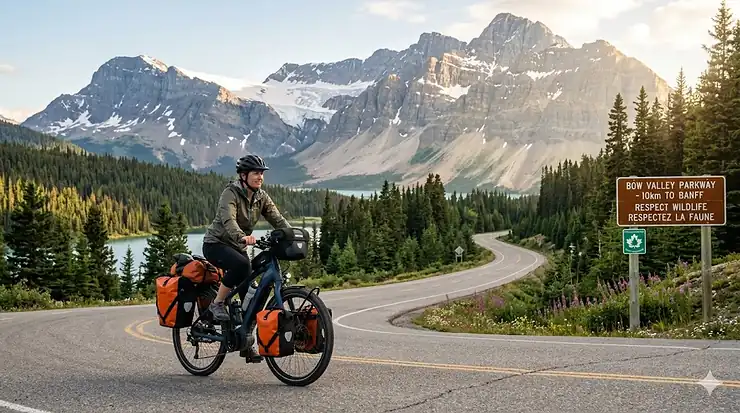
Imagine cycling from Jasper to Banff with 40 kg of camping gear, conquering those relentless Rocky Mountain grades without arriving completely destroyed. Or picture exploring the Cabot Trail’s coastal climbs while still having energy to enjoy those breathtaking Atlantic vistas. This isn’t fantasy—it’s the reality that the best touring ebike models are delivering to Canadian adventurers in 2026.
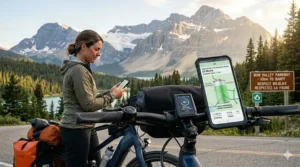
Unlike traditional touring where headwinds across the Prairies or steep Laurentian hills can drain your spirit before lunch, electric touring bikes provide intelligent assistance exactly when you need it most. The Canadian touring landscape has evolved dramatically this year. Manufacturers finally understand that our vast distances, extreme temperature swings (-30°C winters to +35°C summers), and diverse terrain demand specialized equipment. According to research published by the National Institutes of Health, bicycle touring provides measurable improvements in body composition and cardiovascular fitness, making it an excellent choice for Canadians seeking both adventure and health benefits.
What separates the best touring ebike from a standard commuter? It’s the combination of range-extending battery systems, robust cargo capacity for panniers and camping equipment, comfortable geometry for 6-8 hour riding days, and components engineered to handle everything from Maritime fog to Alberta dust storms. This guide examines seven exceptional models available to Canadian buyers, comparing real-world performance in conditions you’ll actually encounter—not laboratory fantasies.
Quick Comparison: Top Touring eBikes at a Glance
| Model | Motor Power | Battery Capacity | Estimated Range | Price Range (CAD) | Best For |
|---|---|---|---|---|---|
| Trek Allant+ 8 | Bosch 85Nm | 625Wh | 65-120 km | $4,200-$4,800 | Urban-to-trail versatility |
| Cube Touring Hybrid ONE 600 | Bosch 75Nm | 600Wh | 80-150 km | $4,000-$4,500 | Budget-conscious tourers |
| Riese & Müller Superdelite | Bosch 85Nm | 1,125Wh dual | 100-200 km | $10,500-$12,500 | Premium long-distance |
| Giant Explore E+ 0 | SyncDrive Pro | 625Wh + extender | 90-200 km | $5,200-$5,800 | Continuously variable gearing |
| Moustache Xroad ES | Bosch 85Nm | 750Wh | 70-130 km | $4,500-$5,200 | Mixed-surface adventures |
| Specialized Turbo Vado | Custom mid-drive | 710Wh | 75-140 km | $4,800-$5,400 | Tech integration |
| RadRover 6 Plus | 750W hub | 672Wh | 65-100 km | $2,400-$2,900 | Value-focused beginners |
Looking at this comparison, the Cube Touring Hybrid ONE 600 delivers exceptional value in the $4,000-$4,500 CAD range for riders prioritizing reliability over premium features. However, if you’re planning multi-week expeditions across the Trans Canada Trail, the Riese & Müller Superdelite’s dual-battery system justifies its premium—eliminating range anxiety on remote sections where charging infrastructure is sparse. Canadian winter riders should note that cold temperatures reduce battery efficiency by 15-25%, meaning the advertised ranges above assume moderate conditions. For year-round touring in places like Manitoba or Saskatchewan, always select one battery tier higher than your summer needs.
💬 Just one click — help others make better buying decisions too!😊
Top 7 Best Touring eBikes: Expert Analysis for Canadian Riders
1. Trek Allant+ 8 – The Premium All-Rounder
The Trek Allant+ 8 represents what happens when a legacy brand applies 50 years of cycling expertise to electric touring. Built around Bosch’s Performance Line CX motor delivering 85Nm of torque, this isn’t just another commuter with a rack bolted on—it’s engineered from the frame up for loaded touring.
The 625Wh PowerTube battery integrates cleanly into the down tube, and here’s what the spec sheet won’t tell you: that capacity translates to roughly 65-75 km of real-world range when loaded with 25 kg of panniers, riding in Tour mode through rolling terrain. In Eco mode on flat Prairie highways, Canadian riders report pushing 110-120 km between charges. The Bosch system’s torque sensor responds proportionally to your pedal pressure, which means smooth power delivery even when grinding up 12% grades near Revelstoke—no jerky surges that upset your balance when you’re carrying camping gear.
Trek’s Removable Integrated Battery (RIB) system deserves special mention for Canadian tourers. When temperatures drop below -10°C (common across most of Canada six months annually), you can remove the battery in seconds without tools and store it indoors overnight. This single feature can extend battery lifespan by 2-3 years in our climate. The bike comes equipped with mounting points for front and rear racks, fenders, and a third bottle cage—practical details that matter on day five of a week-long tour.
Canadian buyers consistently praise the Shimano hydraulic disc brakes’ performance in wet conditions (crucial for BC coastal touring) and the smooth-shifting 10-speed drivetrain. Some note the $4,200-$4,800 CAD price feels steep compared to budget alternatives, but the consensus is clear: this bike earns its cost through refined components that simply work, day after day.
Pros:
✅ Exceptional torque sensor responsiveness for natural-feeling assistance
✅ Removable battery perfect for Canadian temperature extremes
✅ Complete accessory mounting system ready for touring loads
Cons:
❌ Premium pricing puts it beyond some budgets
❌ 27 kg weight makes it challenging to lift onto vehicle racks
Price Verdict: In the $4,200-$4,800 CAD range, you’re paying for Bosch’s proven reliability and Trek’s dealer network across Canada—valuable when you need service in Kenora, not just Vancouver.
2. Cube Touring Hybrid ONE 600 – Best Value for Canadian Conditions
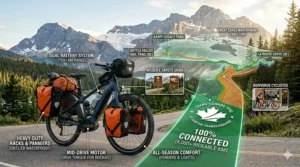
German engineering meets practical pricing in the Cube Touring Hybrid ONE 600, and for budget-conscious Canadian tourers, this represents exceptional value in the $4,000-$4,500 CAD bracket.
The Bosch Performance Line motor (75Nm) provides slightly less torque than premium models, but in real-world touring scenarios, the difference only becomes noticeable on sustained grades above 10%. For most Canadian touring routes—whether the relatively flat Trans Canada Trail sections through Ontario or the rolling hills of Maritime provinces—this motor delivers ample power. The 600Wh battery sits in that sweet spot where capacity meets practicality: enough for full-day rides (80-100 km loaded in mixed terrain) without the weight penalty of larger systems.
What sets this model apart is Cube’s attention to touring-specific details. The included carrier system (ACID SIC 2.0 RILink) is rated for serious loads and integrates seamlessly with the frame. The Schwalbe Motion Big Apple tyres (55-621) are tubeless-ready and optimised for mixed surfaces—important when Canadian touring routes transition from paved rail trails to gravel logging roads without warning. The 100mm suspension fork (Suntour XCR) can be locked out for maximum efficiency on pavement, then opened for comfort on rougher sections.
Canadian riders particularly appreciate the Shimano Cues 9-speed drivetrain with its wide 11-46T cassette range. This gearing excels at loaded touring: the 46T low gear lets you spin comfortably up steep pitches even with full panniers, while the 11T high gear prevents leg-spinning on descents. The adjustable stem (CUBE Comfort Stem Pro) allows fine-tuning of riding position during multi-day tours when comfort becomes critical.
Pros:
✅ Outstanding value proposition in sub-$4,500 CAD category
✅ Tubeless-ready tyres reduce flat-tyre anxiety on remote routes
✅ Wide-range gearing handles Canadian elevation changes efficiently
Cons:
❌ 75Nm torque adequate but not class-leading for extreme grades
❌ Basic suspension fork functional but not plush
Price Verdict: Around $4,000-$4,500 CAD delivers genuine touring capability without premium brand markup—ideal for riders prioritising practicality over prestige.
3. Riese & Müller Superdelite – Ultimate Long-Distance Machine
For serious Canadian expeditions where “maybe I should turn back” isn’t an option, the Riese & Müller Superdelite justifies its $10,500-$12,500 CAD pricing through engineering that eliminates compromise.
The dual-battery system (typically 500Wh + 625Wh = 1,125Wh total) fundamentally changes touring calculus. On the Trans Canada Trail’s remote sections through Northern Ontario—where charging infrastructure might be 150 km apart—this capacity delivers genuine 180-200 km range in Eco mode. Even loaded with camping gear and riding through headwinds across Saskatchewan, Canadian owners report comfortable 130-150 km days without range anxiety. Both batteries are removable, meaning you can charge one while riding on the other, or bring a spare for multi-day backcountry sections.
The Bosch Performance Line CX motor (85Nm) pairs with Rohloff’s internal gear hub—and this combination deserves explanation. Unlike traditional derailleurs that expose delicate components to mud, salt, and road grit (significant concerns in Canadian conditions), the Rohloff hub seals 14 speeds inside an oil-bath. Canadian owners cycling year-round report 10,000+ km between services. For context, a typical derailleur system in Maritime winter conditions might need adjustment every few hundred kilometres.
Full suspension (adjustable front fork and rear shock) transforms comfort on loaded multi-day tours. When you’re six hours into a riding day with 35 kg of gear, that suspension isn’t luxury—it’s the difference between arriving at camp able to explore on foot versus collapsing immediately. The bike accommodates racks, panniers, and even a suspended luggage carrier system that isolates cargo vibration.
Pros:
✅ Dual-battery system eliminates range anxiety on remote Canadian routes
✅ Rohloff hub requires minimal maintenance in harsh conditions
✅ Full suspension delivers exceptional comfort for long-distance loaded touring
Cons:
❌ Premium $10,500-$12,500 CAD pricing limits accessibility
❌ 30 kg weight makes solo vehicle loading challenging
Price Verdict: In the $10,500+ CAD range, you’re buying peace of mind for serious expeditions—this bike won’t be the reason you cut a tour short.
4. Giant Explore E+ 0 – Continuously Variable Gearing Innovation
Giant’s Explore E+ 0 brings a unique feature to Canadian touring: Enviolo continuously variable gearing that shifts smoothly through infinite ratios without discrete “clicks.” For tourers, this innovation solves a specific problem—being caught in the wrong gear when you need to stop suddenly.
Picture this common Canadian touring scenario: you’re cruising at 25 km/h approaching a rural railway crossing. The warning lights activate. With traditional gearing, you’re stuck in a high gear, making the restart awkward and strain-inducing with loaded panniers. The Enviolo system shifts while stationary, meaning you can select your ideal starting gear before the train passes. This sounds minor until you’ve done it 20 times in a day across farm country.
The SyncDrive Pro 2 motor delivers smooth, consistent power, and the 625Wh battery provides solid range (90-120 km loaded in varied terrain). Giant offers a 250Wh range extender that mounts to bottle cage bosses, potentially extending single-charge distance to 180-200 km—crucial for sections of the Trans Canada Trail where services are sparse.
The integrated rear radar system alerts you to approaching traffic via small illuminated dots on the central display, graduating in colour based on vehicle speed. For Canadian touring on rural highways where logging trucks and RVs dominate—and where cyclists aren’t always expected—this adds meaningful safety awareness. The 57mm-wide tubeless-ready tyres handle everything from paved rail trails to gravel logging roads, and the 100mm lockable suspension fork adapts to surface conditions.
Pros:
✅ Continuously variable gearing prevents “wrong gear” scenarios at stops
✅ Rear radar system enhances safety on rural Canadian highways
✅ Range extender option addresses remote touring requirements
Cons:
❌ Enviolo gearing has slight efficiency loss versus traditional systems
❌ $5,200-$5,800 CAD positions it above mid-tier alternatives
Price Verdict: Around $5,200-$5,800 CAD, the Enviolo gearing commands a premium—worthwhile if you value seamless shifting over maximum efficiency.
5. Moustache Xroad ES – Mixed-Surface Adventure Specialist
The Moustache Xroad ES targets Canadian riders whose tours blend pavement, gravel, and light trail riding—think Confederation Trail in PEI transitioning to forest access roads, or Kettle Valley Rail Trail’s varied surfaces in BC.
This French brand’s approach to touring geometry prioritises all-day comfort through relaxed angles and an upright riding position. After 6-8 hours in the saddle with loaded panniers, this matters enormously. The Bosch Performance Line motor (85Nm) provides confident power for steep pitches, and the 750Wh battery capacity sits in the upper-middle range, delivering 100-130 km realistic touring range depending on terrain and assistance level.
What distinguishes the Xroad ES is its attention to mixed-surface capability. The frame clearance accommodates wider tyres (up to 60mm), allowing Canadian riders to run plush 50mm rubber for gravel comfort or narrower 40mm slicks for paved efficiency. The suspension fork features lockout for pavement efficiency and opens for comfort on rougher sections. Multiple mounting points accommodate front and rear racks, fenders, and additional bottle cages.
Canadian buyers appreciate the integrated lighting system (front and rear) powered directly from the main battery—no separate batteries to forget charging. The Shimano hydraulic disc brakes deliver consistent performance in Maritime fog or Prairie dust. Some owners note that Moustache’s Canadian dealer network isn’t as extensive as Trek or Giant, which could complicate warranty service in smaller communities.
Pros:
✅ Geometry optimised for all-day comfort on extended tours
✅ Wide tyre clearance adapts to varying Canadian surface conditions
✅ 750Wh battery capacity provides strong single-charge range
Cons:
❌ Limited dealer network in Canada versus major brands
❌ $4,500-$5,200 CAD pricing competitive but not budget-friendly
Price Verdict: In the $4,500-$5,200 CAD bracket, you’re paying for French design refinement and genuine mixed-surface capability.
6. Specialized Turbo Vado – Tech-Forward Touring Platform
Specialized’s Turbo Vado series approaches touring from a technology-integration perspective, appealing to Canadian riders who value connectivity and data alongside traditional touring capability.
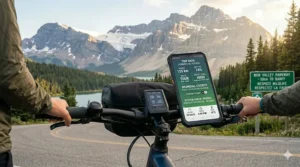
The proprietary mid-drive motor system delivers responsive power calibrated specifically for Specialized’s frame geometry. The 710Wh battery provides solid touring range (75-100 km loaded in varied terrain, extending to 120-140 km in Eco mode on flatter routes). What sets this model apart is the Mission Control app integration, which allows detailed customisation of power delivery characteristics, battery management strategies, and even remote diagnostics.
For Canadian tourers, this tech integration offers practical benefits. The app displays remaining range based on your current riding pattern, terrain ahead (using GPS data), and selected assistance level—helping plan charging stops on remote sections. You can adjust motor characteristics to prioritise range over power when approaching areas with limited charging infrastructure, or dial up assistance when conquering coastal climbs in Cape Breton.
The Future Shock 2.0 suspension system (integrated into the stem/headset area) smooths road vibrations without the weight or maintenance of a full suspension fork. On long touring days across variable pavement quality—common on Canadian rural highways—this reduces upper body fatigue. Rack mounting points, fender compatibility, and multiple bottle cage mounts address touring requirements.
Pros:
✅ Mission Control app provides detailed range management for tour planning
✅ Future Shock suspension reduces fatigue without fork weight penalty
✅ Strong dealer network across major Canadian cities
Cons:
❌ Proprietary motor system limits third-party service options
❌ $4,800-$5,400 CAD pricing reflects brand premium
Price Verdict: Around $4,800-$5,400 CAD buys Specialized’s tech ecosystem—valuable if you appreciate data-driven ride optimization.
7. RadRover 6 Plus – Value Entry for Touring Beginners
The RadRover 6 Plus occupies a unique position: bringing touring capability to the $2,400-$2,900 CAD price point where most alternatives remain purely recreational.
The 750W rear hub motor provides strong power (though note: Canadian regulations limit legal street use to 500W continuous output—the 750W refers to peak power). The fat 4-inch tyres deliver exceptional stability when loaded with touring gear, and they excel on mixed surfaces from paved trails to gravel logging roads. The 672Wh battery capacity is competitive, delivering 65-85 km realistic touring range depending on terrain and load.
What makes this bike work for budget-conscious Canadian tourers is the practical feature set. It includes front and rear racks as standard equipment (many competitors charge $200-400 CAD extra for these), integrated lighting, fenders, and a rear cargo basket. The step-through frame design simplifies mounting/dismounting when wearing loaded panniers—a detail that matters after long riding days when muscles are fatigued.
The trade-offs for this pricing become apparent in component quality. The mechanical disc brakes function adequately but lack the power and modulation of hydraulic systems on premium models—noticeable when descending loaded on steep grades. The hub motor delivers strong power but less refined torque sensing than mid-drive systems, resulting in less natural-feeling assistance. Some Canadian owners report challenges accessing service for this direct-to-consumer brand in smaller communities.
Pros:
✅ Exceptional value proposition at $2,400-$2,900 CAD with included accessories
✅ Fat tyres provide confidence on varied Canadian terrain
✅ Step-through design aids loaded mounting/dismounting
Cons:
❌ Mechanical brakes adequate but not ideal for loaded touring
❌ Hub motor less refined than mid-drive alternatives
❌ Limited brick-and-mortar service network in Canada
Price Verdict: Around $2,400-$2,900 CAD delivers touring capability for budget-focused riders willing to accept component compromises.
Real-World Application: Matching eBikes to Canadian Touring Styles
Not all touring is equal. A weekend bikepacking trip through Gatineau Park demands different equipment than a month-long Trans Canada Trail expedition. Here’s how to match these seven models to specific Canadian touring scenarios:
Urban-to-Trail Weekend Explorer (Toronto to Niagara Falls)
Best Choice: Trek Allant+ 8 or Cube Touring Hybrid ONE 600
This 130 km round trip mixes urban cycling infrastructure with Niagara’s paved trails. You need something comfortable enough for 6-8 hour days but refined enough for city riding. The Trek Allant+ 8’s smooth Bosch torque sensing handles Toronto traffic beautifully, while the Cube’s value proposition makes sense if you’re only touring occasionally. Both offer sufficient range for the round trip on a single charge in Tour mode.
Multi-Week Expedition Tourer (Trans Canada Trail, Calgary to Medicine Hat)
Best Choice: Riese & Müller Superdelite
This 300 km section through remote Prairie terrain requires absolute reliability and range confidence. The Superdelite’s dual-battery system eliminates anxiety about finding charging infrastructure in small towns with limited services. The Rohloff hub means you won’t be searching for a bike shop capable of derailleur adjustment in Brooks or Bassano. Full suspension becomes valuable when riding consecutive 100+ km days on variable pavement quality.
Mixed-Surface Adventure Tourer (Kettle Valley Rail Trail, BC)
Best Choice: Moustache Xroad ES or Giant Explore E+ 0
The KVR alternates between well-maintained gravel sections and rougher mining road surfaces. Both bikes handle this variability well—the Moustache through wide tyre clearance and robust suspension, the Giant through its radar system (valuable on sections sharing logging truck routes) and adaptable gearing. Choose based on whether you prioritize comfort (Moustache) or tech features (Giant).
First-Time Touring Explorer (Confederation Trail, PEI)
Best Choice: RadRover 6 Plus or Cube Touring Hybrid ONE 600
The Confederation Trail’s 435 km of flat, well-maintained surface is ideal for first touring attempts. The RadRover’s budget-friendly pricing and included accessories make sense if you’re testing whether touring appeals to you. If budget allows, the Cube’s more refined components deliver a better experience while maintaining strong value.
How to Choose the Best Touring eBike for Canadian Conditions
Selecting the right touring ebike involves evaluating six key factors through a Canadian lens—not generic manufacturer marketing claims.
Battery Capacity Reality Check
Ignore manufacturer range claims. They’re calculated under ideal conditions (flat terrain, no wind, minimal load, 20°C temperature, lightest assistance mode). Canadian touring reality is different: you’re carrying 15-35 kg of gear, facing headwinds across the Prairies or climbs in the Rockies, and riding in temperatures from -5°C to +30°C.
A practical formula: take the manufacturer’s maximum claimed range, divide by two, then subtract another 20% for cold weather if you tour year-round. A bike claiming “180 km range” realistically delivers 70-75 km when loaded and touring in mixed Canadian conditions. For multi-day tours on remote sections like the Trans Canada Trail through Northern Ontario, you need either a large battery (750Wh+) or dual-battery capability.
Motor Placement Impacts Everything
Mid-drive motors (Bosch, Shimano) multiply torque through your bike’s gears, providing efficient power for steep climbs with loaded panniers. They feel natural because assistance responds to your pedal pressure. However, they increase drivetrain wear—chains and cassettes need replacement roughly 30% sooner than on traditional bikes.
Hub motors (found on budget alternatives like RadRover) deliver strong power and require less drivetrain maintenance, but they can’t leverage your gears for efficiency. On sustained 10% grades common in BC or Quebec’s Laurentians, hub motors either overheat or drain batteries rapidly. For serious Canadian touring involving significant elevation, mid-drive systems prove superior despite higher costs.
Component Quality Versus Budget Constraints
The $2,000 CAD gap between budget models (RadRover at $2,400-$2,900) and premium options (Riese & Müller at $10,500+) primarily reflects component durability under sustained use. Here’s what changes:
Brakes: Mechanical disc brakes ($40 CAD to replace pads) function adequately. Hydraulic systems ($80-120 CAD service) deliver superior power and modulation—critical when descending Rocky Mountain passes with 30 kg of loaded gear. The stopping distance difference can be 2-3 metres—meaningful when wildlife appears around blind corners.
Drivetrains: Basic 9-speed systems handle most touring, requiring adjustment every 500-1000 km in Canadian conditions (road salt, dust, temperature extremes). Premium 10-12 speed systems or internal hubs extend service intervals to 2,000-3,000 km but cost significantly more to repair when they do need attention.
Suspension: Basic forks ($150-250 CAD to service) provide comfort but may need frequent maintenance in harsh conditions. Premium suspension ($400-600 CAD service) maintains performance longer but increases upfront costs substantially.
Geometry Affects Multi-Day Comfort
Touring-specific geometry features relaxed angles and longer wheelbases for stability when loaded. The difference seems subtle on paper—a 72° head tube angle versus 70°—but after six consecutive 100 km days, that slightly more upright position significantly reduces neck and shoulder fatigue.
Test ride with weight if possible. Load panniers with 20-25 kg (camping gear equivalent) and ride for 30-45 minutes. Does the bike feel stable? Can you comfortably look ahead without neck strain? Are your hands going numb? These questions matter more than spec sheet geometry numbers.
Canadian Climate Considerations
Battery chemistry operates optimally between 10°C and 30°C. Below 0°C, capacity drops 15-20%. Below -10°C, it can decrease 25-30%. For year-round Canadian touring, this has implications:
Choose removable battery systems (Trek’s RIB, Bosch PowerTube) that you can store indoors overnight when camping in cold weather. Starting with a warm battery recaptures 10-15 km of range compared to leaving it on the bike in -5°C temperatures. Some Canadian tourers carry insulated battery covers for extreme conditions.
Dealer Network Matters More Than You Think
When your motor develops an error code 150 km from home in Thunder Bay, you need a dealer capable of diagnostic work and parts access. Premium brands (Trek, Giant, Specialized) maintain dealer networks across Canada, including smaller communities. Direct-to-consumer brands offer value but may leave you stranded if technical issues arise mid-tour.
Research dealer locations along your planned routes. A bike requiring proprietary diagnostic tools becomes problematic when the nearest authorized service centre is 300 km away.
Common Mistakes When Buying Touring eBikes
Mistake #1: Ignoring Real-World Canadian Range Requirements
New buyers frequently underestimate range needs for remote Canadian touring. The Trans Canada Trail includes 100+ km sections without services. Relying on a bike with realistic 70 km loaded range means you’re gambling on finding charging infrastructure in small communities with limited businesses.
Solution: Calculate your longest anticipated riding day, add 30% safety margin, then select battery capacity to match. For multi-day tours through remote areas, dual-battery systems or range extenders aren’t luxury—they’re essential.
Mistake #2: Overlooking Winter Performance
Many Canadians purchase touring ebikes in summer, forgetting they’ll encounter -10°C to -20°C temperatures six months annually (more in Prairie and Northern regions). Battery capacity losses in these conditions aren’t minor—they fundamentally alter touring range.
Solution: When evaluating range claims, mentally discount them 20-25% if you plan year-round use. A bike claiming 100 km range delivers 75-80 km in January conditions. Choose accordingly.
Mistake #3: Prioritizing Power Over Practicality
The appeal of “750W MOTOR!” or “2000W PEAK POWER!” marketing claims is understandable, but Canadian regulations limit legal street use to 500W continuous output. More importantly, touring success depends on sustained efficiency, not burst power.
Solution: Focus on torque numbers (75-85Nm range) and system efficiency. A well-tuned Bosch 75Nm mid-drive system delivers better touring performance than a crude 1000W hub motor that drains batteries rapidly on climbs.
Mistake #4: Neglecting Cargo Capacity and Mounting Points
Some “touring” bikes lack proper pannier rack mounting points, forcing you to use seat post-mounted systems that compromise handling when loaded. Others can’t accommodate the 20-35 kg of gear typical for multi-day Canadian touring.
Solution: Verify the bike includes front and rear rack mounting points integrated into the frame. Check maximum load ratings—some lightweight ebikes limit total system weight (rider + bike + cargo) to 120 kg, problematic for larger riders carrying full touring loads.
Mistake #5: Buying Based on Summer Test Rides
Test riding on a sunny 22°C day tells you nothing about how the bike performs during a 95 km touring day when temperatures hit 32°C (battery efficiency drops) or when Prairie headwinds blow at 40 km/h (doubling power consumption).
Solution: Research owner reviews specifically mentioning Canadian conditions, long-distance touring, and loaded performance. Forums like Reddit’s r/ebikes or EMTB Forums include detailed Canadian touring reports worth reading before purchasing.
Touring eBike Regulations Across Canadian Provinces
Understanding provincial regulations prevents expensive surprises mid-tour. While Transport Canada establishes federal standards (500W maximum continuous motor output, 32 km/h assisted speed limit, operable pedals required), provinces add specific requirements.
Federal Baseline (Applies Nationwide)
Power-Assisted Bicycles must meet three criteria: maximum 500W motor output, top assisted speed of 32 km/h, and pedals capable of propelling the bike without motor assistance. Meeting these standards means your ebike isn’t classified as a motor vehicle, avoiding motorcycle safety regulations.
Provincial Variations Affecting Touring
Ontario: Minimum age 16, helmet required for all ages, 120 kg maximum bike weight (significant for loaded touring). Cannot ride on 400-series highways or expressways. Many municipalities have additional trail restrictions—check local bylaws before assuming trail access.
Quebec: Minimum age 14 (riders 14-17 require Class 6D moped license), helmet mandatory, throttle use restricted. Cannot ride on highways (including access/exit ramps). Montreal’s extensive cycling network remains accessible.
British Columbia: Two-tier classification system introduced 2024. “Light eBikes” (pedal-assist only, no throttle) have broader trail access including many provincial parks. “Standard eBikes” (with throttle) face more restrictions. For touring BC’s extensive trail network, verify your bike’s classification.
Alberta: Minimum age 12, helmets required under Traffic Safety Act, no provincial weight limit. Calgary and Edmonton have expanding cycling infrastructure generally welcoming to ebikes.
Prairie Provinces (Saskatchewan, Manitoba): Saskatchewan has no provincial minimum age (local bylaws may apply), no helmet requirement province-wide. Manitoba minimum age 14, helmet required only for riders under 18.
Maritime Provinces: Each has slight variations, but generally follow federal framework closely. Nova Scotia explicitly allows ebikes on highways (unusual among provinces), useful for touring rural areas with limited separated infrastructure.
For detailed provincial regulations updated to 2026, consult Transport Canada’s official Motor Vehicle Safety Regulations or provincial transportation ministry websites.
Long-Term Ownership Costs for Canadian Touring eBikes
The purchase price represents only 60-70% of five-year ownership costs. Understanding ongoing expenses helps budget accurately.
Battery Replacement (Inevitable)
Lithium-ion batteries typically deliver 500-800 full charge cycles before capacity degrades to 70-80% of original. For active Canadian tourers riding 3,000-5,000 km annually, that’s 3-5 years. Replacement costs range dramatically:
- Budget systems (proprietary batteries): $450-650 CAD
- Mid-range (Bosch PowerTube 500/625): $700-900 CAD
- Premium (dual battery systems): $1,200-1,600 CAD
Canadian Reality: Cold weather accelerates degradation. Storing batteries indoors when temperatures drop below -10°C and avoiding charging in freezing conditions can extend lifespan 1-2 years.
Drivetrain Wear (Accelerated on Mid-Drives)
Mid-drive motors increase chain and cassette wear 30-50% versus traditional bikes. In Canadian touring conditions (road salt, dust, rain), expect:
- Chain replacement: Every 2,000-3,000 km ($40-70 CAD)
- Cassette replacement: Every 4,000-6,000 km ($80-150 CAD)
- Chainring replacement: Every 6,000-10,000 km ($60-120 CAD)
Hub motor systems avoid this accelerated wear but may require motor servicing ($200-400 CAD) every 5,000-8,000 km.
Brake Maintenance (Essential for Safety)
Hydraulic disc brakes on touring ebikes carrying significant loads require:
- Pad replacement: Every 1,500-2,500 km ($40-80 CAD per wheel)
- Fluid service: Annually ($60-100 CAD)
- Rotor replacement (if scored): Every 5,000-8,000 km ($50-90 CAD per wheel)
Tyre Replacement (Accelerated by Load and Power)
Touring tyres last 3,000-5,000 km depending on surfaces, load, and power usage. Quality touring tyres cost $60-100 CAD each. Budget $120-200 CAD annually for Canadian touring involving gravel or mixed surfaces.
Professional Service (Recommended Annually)
Comprehensive service including drivetrain cleaning, brake inspection, wheel truing, electrical diagnostic, and general safety check: $150-250 CAD at bike shops, potentially higher at specialized ebike dealers.
Five-Year Cost Estimate (Mid-Tier Touring eBike, 3,500 km annually):
- Initial purchase: $4,500 CAD
- Battery replacement (year 4): $800 CAD
- Drivetrain components: $600 CAD
- Brake components/service: $400 CAD
- Tyres: $600 CAD
- Professional service: $900 CAD
- Miscellaneous (cables, housing, accessories): $300 CAD
Total: $8,100 CAD over five years, averaging $1,620 annually. Compare this to vehicle operating costs ($8,000-12,000 CAD annually including fuel, insurance, maintenance) and the touring ebike represents significant savings for dedicated users.
FAQ: Canadian Touring eBike Questions Answered
❓ Can I use a touring ebike in winter across Canada?
❓ How far can I realistically tour on a single charge in Canadian conditions?
❓ Are touring ebikes allowed on the Trans Canada Trail?
❓ What's the best battery size for multi-day touring in remote Canadian areas?
❓ Do I need a license or insurance for touring ebikes in Canada?
Conclusion: Choosing Your Canadian Touring eBike Adventure
The best touring ebike for Canadian adventures balances range requirements, component durability, and budget realities against your specific touring ambitions. Whether you’re planning weekend escapes to nearby provincial parks or month-long expeditions across the Trans Canada Trail, 2026’s models deliver unprecedented capability for exploring our vast country.
For budget-conscious riders testing touring’s appeal, the Cube Touring Hybrid ONE 600 at $4,000-$4,500 CAD provides exceptional value without significant compromise. Weekend warriors and serious recreational tourers will find the Trek Allant+ 8 or Giant Explore E+ 0 deliver refined performance justifying their $4,200-$5,800 CAD pricing through component quality and long-term reliability. Expedition tourers tackling Canada’s most remote routes should seriously consider the Riese & Müller Superdelite—its $10,500+ CAD cost reflects engineering that eliminates “what if the battery dies” anxiety through dual-battery systems and bombproof component selection.
The transformative potential of electric assistance shouldn’t be underestimated. Touring ebikes democratize long-distance cycling adventures, making multi-day journeys accessible to riders who might otherwise find traditional touring’s physical demands prohibitive. They extend riding years for experienced tourers whose aging knees appreciate assistance on steep climbs. Most importantly, they shift the touring experience from endurance test to genuine exploration—you arrive at breathtaking viewpoints with energy to enjoy them, not just collapse in exhausted satisfaction.
Canadian geography demands equipment respecting our extreme temperature ranges, vast distances between services, and diverse terrain. The seven models examined here have proven themselves in real-world conditions from Newfoundland’s coastal winds to British Columbia’s mountain passes. Your ideal choice depends on budget, touring frequency, and adventure ambitions—but any of these bikes will serve you well on journeys creating memories lasting far beyond the initial investment.
Recommended for You
- 7 Best Gravel E-Bikes Trans Canada Trail 2026
- 7 Best Gravel E-Bikes for Remote Areas Canada 2026
- Best Gravel eBike Canada: 7 Electric Adventure Bikes 2026
Disclaimer: This article contains affiliate links. As an Amazon Associate, I earn from qualifying purchases. If you purchase products through these links, we may earn a small commission at no additional cost to you.
✨ Found this helpful? Share it with your friends! 💬🤗
