
In This Article
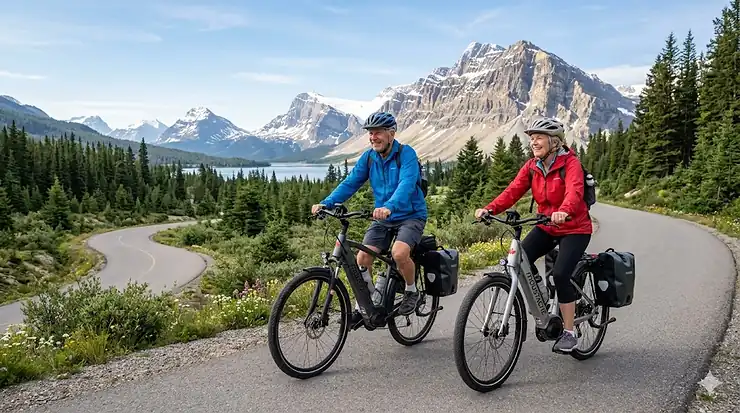
Imagine cruising along the Confederation Trail in PEI or exploring the Trans Canada Trail network without worrying about steep hills or long distances draining your energy. That’s exactly what a touring ebike for senior riders delivers—freedom, adventure, and independence without the physical strain of traditional cycling.
Canadian seniors are rediscovering the joy of two-wheeled exploration thanks to electric touring bikes designed specifically for mature riders. These aren’t your grandchildren’s mountain bikes; they’re sophisticated machines engineered with low step-through frames, comfortable upright seating, and powerful motors that make 50-kilometre rides feel effortless. What most buyers don’t realize is that the motor placement and battery efficiency matter far more than flashy specs—a 500W motor with proper torque distribution will outperform a poorly designed 750W system every single time, especially on the variable Canadian terrain from British Columbia’s coastal routes to Ontario’s lakeside paths.
Transport Canada regulations cap legal e-bikes at 500W continuous power and 32 km/h maximum assisted speed, which perfectly aligns with what seniors actually need for safe, enjoyable touring. The real magic happens when manufacturers combine this legal motor limit with battery capacities of 48V 13-15Ah, delivering 60-80 km of real-world range even during cooler Canadian spring and autumn months when battery performance typically drops 10-15%. For senior riders planning multi-day tours or daily errands around towns like Victoria, Kelowna, or Halifax, this range sweet spot means confidence without range anxiety.
Quick Comparison: Top Touring E-Bikes for Canadian Seniors
| Model | Motor Power | Range (km) | Frame Type | Price Range (CAD) | Best For |
|---|---|---|---|---|---|
| VIVI 26″ Cruiser | 500W (1000W peak) | 40-80 km | Step-through | $800-$1,100 | Budget-conscious tourers |
| Funhang Step-Thru | 500W (1000W peak) | 50-80 km | Step-through | $900-$1,200 | Daily commuters & light touring |
| ESKUTE Folding Trike | 500W (1200W peak) | 70-88 km | Three-wheel | $1,800-$2,300 | Stability-focused riders |
| Windone K2 | 750W peak | 75-100 km | Extended cruiser | $1,200-$1,500 | Off-road capable touring |
| Qlife Cityone 26″ | 750W peak | 60-80 km | Step-through | $1,100-$1,400 | Urban & trail versatility |
| Heybike Tyson | 750W (1500W peak) | 65-95 km | Folding step-through | $1,600-$2,000 | RV travellers |
| Velotric Discover 2 | 500W mid-drive | 80-105 km | Step-through | $1,700-$2,100 | Premium long-distance touring |
Looking at this comparison, the sweet spot for Canadian senior tourers falls in the $1,100-$1,600 CAD range, where you get UL-certified batteries, reliable 500W motors, and 60-80 km real-world range. The budget options under $1,000 sacrifice battery capacity and build quality, while premium models above $2,000 offer marginal improvements that most recreational tourers won’t fully utilize. What’s fascinating is how the three-wheel ESKUTE trike commands its higher price through enhanced stability rather than raw power—a smart trade-off for riders who value confidence over speed.
💬 Just one click — help others make better buying decisions too! 😊
Top 7 Touring E-Bikes for Senior Riders: Expert Analysis
1. VIVI 26″ Electric Cruiser – Best Value for Canadian Budget Tourers
The VIVI 26″ Cruiser stands out as the most accessible entry point for Canadian seniors exploring electric touring without breaking the bank. This step-through beauty combines a 48V 500W motor (peaking at 1000W) with a removable 48V 12Ah battery that Transport Canada would approve of, staying well within the legal 500W continuous limit while delivering enough oomph for Prairie hills or Maritimes coastal routes.
What separates this from cheaper alternatives is its swept-back handlebar geometry that promotes genuinely comfortable upright posture—crucial for seniors with lower back issues who plan 2-3 hour rides. The seven-speed Shimano derailleur pairs beautifully with the five pedal-assist levels, letting you fine-tune effort output whether you’re tackling the Cabot Trail’s elevation changes or cruising flat rail trails around Winnipeg. In real-world Canadian conditions, expect 40-50 km in full electric mode and 65-80 km with moderate pedal assist, though cold weather (below 5°C) will knock 15-20% off those numbers.
Canadian buyers particularly appreciate the removable battery design, which means you can bring it indoors during -20°C January nights to prevent capacity degradation. The mechanical disc brakes provide reliable stopping power even in wet coastal conditions, though they require more frequent adjustment than hydraulic systems. Assembly arrives at 85% complete—most riders report 30-40 minutes to roadworthy status.
Pros:
✅ Exceptional value under $1,100 CAD with free Prime shipping
✅ True step-through design with low standover height (under 40 cm)
✅ Removable battery perfect for Canadian winter storage
Cons:
❌ Mechanical brakes need regular tuning vs. hydraulic
❌ Stock saddle feels firm on rides exceeding 25 km
Current pricing on Amazon.ca sits in the $850-$1,050 range depending on colour selection. For seniors on fixed incomes, this delivers 85% of premium bike performance at 40% of the cost—that’s value.
2. Funhang Electric Step-Thru – Best UL-Certified Safety for Touring Seniors
Safety-conscious Canadian seniors will gravitate toward the Funhang Step-Thru, which earned full UL 2849 certification—a rigorous standard covering electrical system safety, fire risk, and battery protection. This certification matters more than marketing fluff because it means the bike passed third-party testing for the exact failure modes that cause e-bike fires, crucial when storing bikes in condos or attached garages across Canadian cities.
The 500W rear hub motor (1000W peak) delivers smooth, predictable power delivery that won’t spook nervous riders, while the 48V 13Ah battery provides 50-80 km of real-world range. What impresses experienced tourers is the built-in battery integration—not just removable, but actually built into the frame’s downtube with waterproof sealing rated IPX5, meaning you can ride through Vancouver’s notorious spring drizzle without battery anxiety. The seven-speed transmission covers enough range for most Canadian terrain outside serious mountain touring.
Assembly is genuinely simple—pre-installed brakes mean you’re essentially just attaching the front wheel, handlebars, and pedals. Customer service response times average 24-48 hours according to Canadian buyer feedback, which matters when you’re 200 km from home on a multi-day tour and need technical support. The adjustable stem accommodates riders from 155-195 cm tall, making it one of the most size-adaptable options for couples sharing a bike.
Pros:
✅ UL 2849 full certification for peace of mind
✅ Waterproof integrated battery handles Canadian weather
✅ Pre-assembled brakes save setup headaches
Cons:
❌ Slightly heavier at 27 kg vs. lighter touring models
❌ Stock tyres perform adequately but not exceptionally on gravel
Amazon.ca pricing typically runs $900-$1,200 CAD. The UL certification alone adds $150-200 in testing costs, making this competitively priced for the safety features included.
3. ESKUTE Folding Electric Trike – Best Three-Wheel Stability for Cautious Tourers
For seniors who’ve experienced balance issues or simply want absolute confidence on two-day tours, the ESKUTE E Trike eliminates wobble anxiety entirely with its three-wheel platform. The 500W brushless motor (peaking at 1200W) might seem modest on paper, but three-point contact with the ground means you’re not fighting for traction—all that power goes directly into forward motion, not balancing.
The 624Wh battery (48V 14Ah) is genuinely impressive for a trike, delivering 70-88 km of range that accommodates full-day tours like circling Nova Scotia’s Cabot Trail viewpoints or exploring Prince Edward Island’s coastal routes. What most reviews won’t tell you is how the differential rear axle system makes cornering surprisingly natural despite the third wheel—this isn’t the tippy, awkward trike experience of cheaper models. The 18 x 3.0″ fat tyres provide cushioning that smooths out rough Maritime pavement and makes gravel trail exploration genuinely comfortable.
The folding mechanism is the party trick: collapse it in 60 seconds for transport in SUVs or RV storage, then unfold at your destination. Canadian snowbirds who summer in BC and winter in Arizona particularly love this portability. Rear cargo baskets handle 25 kg of groceries or touring gear, and the step-through design accommodates riders with hip or knee mobility restrictions who find traditional bikes challenging.
Pros:
✅ Zero balance anxiety—perfect for confidence-building
✅ Folding design suits RV lifestyle common among Canadian retirees
✅ Large cargo capacity eliminates need for panniers
Cons:
❌ Heavier at 40 kg—two people needed for car loading
❌ Wider turning radius than two-wheel bikes
Amazon.ca pricing ranges $1,800-$2,300 CAD depending on battery configuration. Yes, it’s pricier than two-wheelers, but if balance concerns are keeping you off bikes entirely, that premium buys freedom.
4. Windone K2 All-Terrain – Best for Light Off-Road Touring
The Windone K2 targets adventurous Canadian seniors who want touring capability beyond paved paths—think Newfoundland’s T’Railway gravel sections or Alberta’s prairie back roads. The 750W motor operates at 500W continuous (meeting Transport Canada requirements) but peaks at 750W for 20-second bursts, perfect for punching through sandy sections or steep boat launch ramps when exploring lake regions.
The 20″ x 4.0″ fat tyres are this bike’s secret weapon for Canadian conditions. They float over loose gravel, absorb frost heaves common on rural roads, and provide shocking traction on wet leaves during autumn touring season. The extended two-person saddle isn’t just marketing—it genuinely accommodates a passenger up to 150 kg combined rider weight, making this one of few e-bikes certified for tandem senior touring. Front dual-fork suspension and rear spring suspension create a genuinely comfortable ride even on washboard surfaces.
Battery capacity hits 48V 13Ah (624Wh), delivering 75-100 km depending on terrain and assist level. The UL 2849 certification provides safety assurance, while the cruise control function—rare at this price point—lets you lock in 20 km/h for relaxed scenic touring without constant throttle attention. The electrical terminals are properly insulated and covered, important for Canadian winter storage and spring dampness.
Pros:
✅ Fat tyres excel on variable Canadian surfaces
✅ Tandem-capable for couples touring together
✅ Cruise control perfect for long rail-trail sections
Cons:
❌ Heavier at 39 kg limits maneuverability when stationary
❌ Aggressive off-road styling may not appeal to traditional cruiser enthusiasts
Pricing on Amazon.ca fluctuates between $1,200-$1,500 CAD with free shipping. Prime members often see the lower end of that range.
5. Qlife Cityone 26″ Step-Through – Best Urban-to-Trail Versatility
The Qlife Cityone occupies a smart middle ground for Canadian seniors whose touring mixes city cycling through places like Toronto’s waterfront trail with weekend excursions on Ontario’s Greenbelt Route. The 750W peak motor (500W nominal) provides confident acceleration in urban traffic while the 48V 15Ah battery delivers 60-80 km of mixed riding—enough for a full day exploring plus safety margin.
What sets this apart is the torque sensor integration, not just the cheaper cadence sensor found on budget bikes. This means power delivery matches your pedaling effort naturally rather than lurching on/off, creating a riding experience that feels organic to seniors transitioning from traditional bikes. The hydraulic disc brakes—not mechanical—provide consistent one-finger stopping power even when hauling groceries or touring gear, crucial for riders with reduced hand strength from arthritis.
The smart LCD display pairs with smartphone app connectivity, letting you track rides, adjust assist levels remotely, and even locate your bike if stored outside (handy for condo-dwelling Vancouverites). The 20″ folding capability might seem gimmicky until you’re loading it into a Prius for transport to trailheads—suddenly it’s genius. Full suspension front fork and rear cushioning smooth out potholed urban streets and gravel trail transitions equally well.
Pros:
✅ Torque sensor creates natural, confidence-inspiring power delivery
✅ Hydraulic brakes superior for senior hand strength
✅ Folding design expands transport options
Cons:
❌ App connectivity requires smartphone comfort level
❌ Smaller 20″ wheels less efficient on long straight touring sections
Amazon.ca availability shows pricing around $1,100-$1,400 CAD. The hydraulic brakes alone represent $200+ in component value over mechanical alternatives.
6. Heybike Tyson Magnesium – Best for RV-Touring Seniors
Canadian snowbirds and RV enthusiasts should examine the Heybike Tyson closely—its unibody magnesium frame construction weighs just 35 kg despite full suspension, making it manageable for loading into motorhomes or fifth wheels. The 750W motor (peaking at 1500W) provides serious grunt for escaping campsite gravel or tackling mountain pass approaches when touring through BC’s interior.
The full-suspension design isn’t marketing fluff; this bike legitimately soaks up bumps that would rattle fillings loose on hardtail models. For seniors with degenerative disc issues, the suspension translates to genuinely longer comfortable ride duration—2-3 hours becomes feasible where rigid frames might limit you to 60-90 minutes. The 48V 15Ah battery delivers 65-95 km depending on terrain, and the removable design means charging inside your RV while parked for the night.
What Canadian RVers particularly appreciate is the folding mechanism’s robustness—this isn’t a flimsy folder that develops rattles after 50 folds. The locking mechanisms are spring-loaded and positive, and multiple owners report 200+ fold cycles without issues. The 20 x 4.0″ fat tyres handle everything from Pacific Rim National Park Reserve’s paved paths to Yukon gravel roads with equal capability.
Pros:
✅ Lightweight magnesium frame manageable for seniors
✅ Full suspension enables longer comfortable rides
✅ Robust folding perfect for frequent RV transport
Cons:
❌ Premium pricing at $1,600-$2,000 CAD
❌ 750W motor exceeds Transport Canada continuous rating (operates at 500W nominal)
Amazon.ca Prime shipping applies, and the unique magnesium construction justifies the premium over steel-frame alternatives.
7. Velotric Discover 2 – Best Premium Long-Distance Canadian Touring
For serious senior tourers planning week-long adventures across Canadian provinces, the Velotric Discover 2 represents the pinnacle of comfort and capability. The 500W mid-drive motor placement creates superior weight distribution compared to rear hub motors, improving handling on technical sections of trails like the Kettle Valley Railway or Confederation Trail’s variable surfaces.
The 691Wh battery (48V 14.4Ah) delivers genuine 80-105 km range even in Canadian conditions, with battery management smart enough to preserve capacity during sub-zero storage common across Prairie provinces. What separates mid-drive systems from hub motors is their efficiency—mid-drives leverage your bike’s gears, meaning they work smarter, not harder, extending both range and component lifespan. For seniors planning multi-day tours staying at B&Bs along routes like Nova Scotia’s South Shore, this range means genuine freedom between charges.
The integrated touchscreen display goes beyond basic metrics, offering turn-by-turn navigation synced with your phone—game-changing when exploring unfamiliar regions across Canada’s vast landscape. Build quality reflects the premium positioning: the frame welds are aerospace-grade, cables route internally for weather protection, and even the kickstand is spring-loaded aluminum rather than cheap steel. The comfortable upright geometry accommodates 8-hour saddle days without the lower back fatigue common on cheaper touring bikes.
Pros:
✅ Mid-drive efficiency extends range 20-30% vs. hub motors
✅ Premium build quality designed for 10,000+ km lifespan
✅ Integrated navigation perfect for cross-province touring
Cons:
❌ Premium pricing around $1,700-$2,100 CAD
❌ Mid-drive maintenance more complex than hub motors
Amazon.ca availability varies by season, but authorized dealers across Canada provide consistent pricing and warranty support.
How to Choose Your Perfect Touring E-Bike for Canadian Conditions
Understanding Motor Power in Canadian Context
Transport Canada’s 500W continuous power limit exists for good reason—it keeps e-bikes classified as bicycles rather than motorized vehicles, meaning no license, insurance, or registration required across all provinces. What confuses buyers is the difference between continuous and peak ratings. A motor rated 500W continuous can legally peak at 750W-1000W for short bursts (think: starting from stops, steep hill punches), as long as sustained output stays at 500W. This is why you’ll see bikes advertised as “500W/1000W peak”—they’re fully legal while delivering impressive performance when you need it.
For Canadian touring, 500W continuous provides ample power for loaded touring with panniers or trailers. The real performance factor isn’t raw wattage but torque delivery—look for motors producing 55-80 Nm of torque, which translates to confident hill climbing even when carrying 15 kg of camping gear. Mid-drive motors (like the Velotric) leverage your bike’s gears for better efficiency, while hub motors (most other models) deliver simpler maintenance at the cost of slightly higher battery drain.
Battery Range Reality Check for Canadian Touring
Manufacturer range claims assume perfect conditions: 20°C temperature, 70 kg rider, flat terrain, lowest assist level. Canadian reality means adjusting expectations downward by 25-35%. That “100 km range” bike? Plan for 65-75 km in typical mixed Canadian conditions with moderate hills and variable weather. Cold weather (5-15°C) reduces lithium battery efficiency by 10-20%, and temperatures below freezing can cut capacity by 30-40%—crucial intel for spring and autumn touring seasons.
For genuine touring security, apply the “two-thirds rule”: if your planned route is 60 km, choose a bike claiming 90 km range minimum. This buffers for headwinds on Prairie provinces, unexpected detours, and battery degradation over the bike’s first year. Battery capacity measured in watt-hours (Wh) tells the real story: 500-600Wh suits day touring, 700-800Wh enables multi-day adventures, and anything above 800Wh represents overkill for most recreational senior touring.
Frame Geometry Matters More Than You Think
Step-through frame design isn’t just about easy mounting—it fundamentally changes weight distribution and handling characteristics. A properly designed step-through with low standover height (under 45 cm) allows feet-flat-on-ground confidence at stops, crucial for seniors managing balance concerns or recovering from hip surgeries. The downside? Step-through frames sacrifice some structural rigidity compared to traditional diamond frames, so manufacturers compensate with thicker tubing, adding 1-2 kg of weight.
For Canadian touring, prioritize bikes with relaxed head tube angles (70-72°) and upright seating positions that reduce wrist and lower back strain over 2-3 hour rides. The “pedal-forward” design some manufacturers promote (Electra, Trek) places pedals slightly ahead of traditional positioning, reducing knee stress for seniors with arthritis. Test ride if possible—a bike that feels comfortable for 15 minutes might create pressure points after 45 minutes, revealing itself only through extended riding.
Real-World Touring Scenarios: Matching Bikes to Canadian Riders
The Weekend Rail-Trail Explorer (Southern Ontario Senior)
Meet the typical profile: 68-year-old recently retired, lives in Kitchener-Waterloo area, wants to explore the 135 km Cambridge to Brantford Rail Trail in sections over summer weekends. Budget-conscious ($800-$1,200), values comfort over speed, rides solo 90% of the time. Previous cycling experience limited to recreational riding 20 years ago.
Best match: VIVI 26″ Cruiser or Funhang Step-Thru
Reasoning: Both deliver 60-80 km real-world range, perfect for tackling 40-50 km sections with safety margin. The budget-friendly pricing leaves room for accessories (panniers, mirrors, comfort saddle upgrade). Rail trails’ smooth surfaces don’t require suspension or fat tyres, so these bikes’ standard features suffice. The step-through design accommodates arthritic knees, and simple controls reduce technological overwhelm.
Key accessories: Handlebar bag for phone/snacks ($40-60), rear rack with waterproof panniers ($80-120), upgraded comfort saddle with gel padding ($50-80). Total investment around $1,100-$1,500 CAD creates a capable touring setup.
The RV-Touring Couple (BC Coastal Retirees)
Profile: 71 and 68-year-old couple, own Class A motorhome, tour BC’s Gulf Islands and Vancouver Island May through September. Need bikes that fold for RV storage, handle moderate hills around Victoria and Tofino, prefer riding together. Budget flexible ($2,500-$3,500 for both bikes), prioritize quality and reliability over bargain pricing.
Best match: Two Heybike Tyson models
Reasoning: Folding design fits RV storage compartments, magnesium frames mean less weight strain during loading. The 65-95 km range handles full-day island exploration, while full suspension manages variable coastal road conditions comfortably. Premium build quality justifies investment for serious touring use, and matching bikes simplify spare parts and maintenance.
Key considerations: RV electrical system can charge both bikes overnight (standard 110V outlets), folding mechanisms maintain stability over hundreds of cycles common in RV lifestyle, fat tyres handle Gulf Islands’ gravel sections and beach approaches.
The Prairie Long-Distance Tourer (Saskatchewan Adventurer)
Profile: 66-year-old avid cyclist transitioning from road bike due to endurance concerns, plans 3-5 day tours exploring Saskatchewan and Manitoba rail trails, rides 60-80 km daily. Experienced cyclist comfortable with bike maintenance, wants maximum range and mid-drive efficiency. Budget $1,700-$2,300.
Best match: Velotric Discover 2
Reasoning: Mid-drive motor efficiency critical for multi-day touring where charging opportunities are limited. The 80-105 km genuine range accommodates ambitious daily distances with headroom for Prairie headwinds. Premium build quality handles loaded touring abuse (panniers, camping gear totaling 20+ kg). Navigation integration helps route-finding across Saskatchewan’s vast landscape where cellphone coverage can be spotty.
Touring strategy: Plan routes with B&B or motel stops every 80-100 km for overnight charging, carry 2-amp portable charger for emergency top-ups, use lowest assist level on flat sections to extend range, pack tire repair kit and basic tools for self-sufficiency.
What Most Canadian Seniors Get Wrong About E-Bike Touring
Mistake #1: Choosing Maximum Range Over Realistic Range
Buyers fixate on manufacturer maximum range claims (often 100-120 km) without understanding they’re based on unrealistic conditions. You’ll never actually achieve those numbers while touring Canadian routes with elevation changes, weather variables, and touring load weight. The smarter approach? Identify your typical touring distance (40-60 km for most seniors) and choose a bike claiming double that range, ensuring comfortable performance margins even as batteries age and lose 10-20% capacity over two years.
Mistake #2: Ignoring Canadian Winter Storage Requirements
Lithium batteries degrade rapidly when stored in sub-zero temperatures common across Canadian winters October through April. Yet many seniors leave batteries mounted on bikes in unheated garages or sheds, unknowingly destroying 30-50% of capacity before spring arrives. The correct approach: remove batteries monthly November-March, store indoors at room temperature, charge to 60-70% (not 100%), and cycle once monthly to maintain cell health. This simple discipline extends battery lifespan from 2-3 years to 4-5 years, saving $400-700 in replacement costs.
Mistake #3: Overlooking Provincial Regulation Differences
While Transport Canada sets federal e-bike standards (500W, 32 km/h), provinces add their own rules that catch tourists off-guard. British Columbia’s new “light e-bike” category allows 14-year-olds on 250W bikes but requires 16+ for standard 500W models. Quebec mandates Class 6D licenses for riders under 18. Alberta permits e-bikes on more trails than Ontario. Seniors planning cross-province tours must research destination regulations—what’s legal in your home province might violate rules 500 km away, resulting in $85-200 fines and potential bike impoundment.
Mistake #4: Buying Based on Bike Shop Availability Rather Than Actual Needs
Many seniors purchase whatever their local bike shop stocks rather than researching optimal models for their specific touring style. This results in road-oriented bikes for trail touring, mountain bikes for paved paths, or premium features that go unused. The local shop offers service convenience, yes, but buying the wrong bike means frustration even with great service. Better approach: identify your actual touring patterns (paved/gravel mix, daily distance, terrain), research ideal specifications, then search for bikes meeting those specs whether from local shops or direct-to-consumer brands on Amazon.ca.
Understanding Canadian E-Bike Regulations for Senior Tourers
Federal Transport Canada Requirements
All legal power-assisted bicycles across Canada must meet these criteria: maximum 500W continuous motor output, assisted speed limited to 32 km/h on level ground, functional pedals capable of propelling the bike without motor power, and proper braking systems. Bikes exceeding these limits technically classify as motor vehicles requiring registration, insurance, and licensing—though enforcement varies widely by region.
For seniors, these federal limits align perfectly with safe touring parameters. The 32 km/h assisted speed feels brisk without being dangerous, while 500W provides ample climbing power for loaded touring up mountain passes or prairie river valleys. The pedal requirement ensures some physical activity benefit, important for maintaining cardiovascular health and joint mobility even with electric assistance.
Provincial Variations That Matter for Touring
British Columbia introduced two-tier classification in April 2024: “light e-bikes” (250W, no throttle, 25 km/h max) and “standard e-bikes” (500W, throttle allowed, 32 km/h). Minimum ages are 14 and 16 respectively, with mandatory helmet requirements for all ages. BC’s extensive provincial parks increasingly restrict throttle-based e-bikes to paved surfaces, limiting off-trail exploration compared to pedal-assist-only models.
Ontario requires riders be 16+, prohibits e-bikes on 400-series highways and controlled-access roads, and mandates bicycle helmets. Interestingly, Ontario law bans passengers under 16 on e-bikes even if the bike is designed for two—relevant for grandparents considering tandem touring with grandchildren.
Alberta permits e-bike operation from age 12+, the youngest in Canada, though municipalities like Calgary add local restrictions on pathway use during peak hours. The province’s extensive trail network generally welcomes e-bikes, making Alberta one of Canada’s most e-bike-friendly touring destinations.
Quebec distinguishes itself by requiring riders under 18 to hold a Class 6D moped license, though adults 18+ need no license. The province’s excellent cycling infrastructure includes the Route Verte network (5,300+ km), most of which permits e-bikes within federal power limits.
For detailed federal regulations, consult Transport Canada’s official motor vehicle safety guidelines, and check provincial tourism websites for region-specific trail access rules.
Maintenance Tips for Canadian E-Bike Touring
Seasonal Maintenance for Canadian Climate Extremes
Spring (March-May): After winter storage, inspect brake pads for corrosion, lubricate chain and derailleur components, check tire pressure (cold storage often reduces PSI by 10-15), and perform 2-3 short test rides before long tours. Examine battery contacts for oxidation—coastal humidity and road salt can create resistance that reduces charging efficiency. Clean thoroughly using damp cloth and bike-specific cleaners; avoid pressure washers which force water into electrical connections.
Summer (June-August): Monitor chain stretch from increased riding—tour-grade bikes typically need chain replacement every 3,000-4,000 km. Inspect brake rotor wear, particularly if touring hilly regions like BC’s Gulf Islands or Quebec’s Laurentians. Check spoke tension monthly if carrying touring loads; wheels experience higher stress when loaded with 15-20 kg of gear. Keep battery charged above 20% between rides to prevent voltage drop damage.
Autumn (September-November): Prepare for wet conditions by applying waterproofing spray to electrical connections, checking fender coverage adequacy (wet leaves create spray that soaks drivetrain), and switching to winter-rated chain lubricant that resists washing out in rain. Clean and lubricate brake calipers as fallen leaves and debris accelerate wear.
Winter (December-February): If storing bikes in unheated spaces, remove batteries completely and store indoors at 15-20°C. Charge batteries to 60-70% and cycle monthly to prevent cell degradation. Clean bikes thoroughly before storage, paying special attention to removing road salt residue that causes frame corrosion. Cover bikes with breathable fabric (not plastic tarps which trap moisture).
Extending Battery Lifespan in Canadian Conditions
Lithium batteries are expensive consumables ($400-700 replacement cost), making preservation crucial. Avoid depleting below 20% charge regularly—deep discharge cycles reduce total lifespan. Similarly, don’t store fully charged; 60-80% charge level minimizes cell stress during storage. Temperature extremes accelerate degradation: below -10°C or above 35°C damages cells, while ideal storage temperature is 10-20°C.
For touring across temperature zones (mountain passes to valley floors), allow batteries to warm gradually before charging in cold weather. Plugging in a frozen battery can cause internal damage. Conversely, don’t charge immediately after hard rides in summer heat; let batteries cool 30-60 minutes first. When touring in remote areas, carry a portable 2-amp charger for emergency 30-40% top-ups from vehicle 12V outlets, but prefer standard home charging for regular use.
Frequently Asked Questions
❓ Can I ride a touring ebike for senior riders in Canadian winters?
❓ What's the real-world range difference between 500W and 750W motors for Canadian touring?
❓ Do I need insurance to tour across Canada on an e-bike?
❓ How do I find e-bike-friendly accommodations for multi-day Canadian tours?
❓ Can I take my e-bike on Canadian inter-city buses or trains for touring?
Conclusion: Your Next Canadian E-Bike Touring Adventure Awaits
The touring ebike for senior riders market in Canada has matured beautifully since early awkward designs. Today’s step-through electric touring bikes combine genuine comfort, legal compliance with Transport Canada standards, and range capabilities that make week-long provincial tours genuinely feasible for riders in their 60s, 70s, and beyond. What once required athletic conditioning now simply requires pressing the assist button and pedaling at your comfortable pace.
For budget-conscious Canadian seniors, the VIVI 26″ Cruiser delivers remarkable value under $1,100 CAD, handling rail-trail adventures and urban errands with equal competence. Those prioritizing safety certifications should examine the Funhang Step-Thru and its full UL 2849 compliance. Riders who want absolute stability will find the ESKUTE Folding Trike eliminates balance anxiety entirely, while serious tourers covering 500+ km monthly should invest in the Velotric Discover 2’s premium mid-drive efficiency.
The real beauty of electric touring bikes isn’t just the assisted pedaling—it’s the freedom to explore Canada’s spectacular trail networks from Pacific Rim coastal paths to Atlantic provinces’ heritage routes without the intimidation factor of long distances or challenging elevation. Whether you’re rediscovering cycling after decades away or maintaining lifelong riding habits into your golden years, today’s e-bikes meet you exactly where you are fitness-wise and take you wherever curiosity leads.
Start with shorter 20-30 km routes building confidence and fitness, gradually expanding to full-day 60-80 km adventures as comfort grows. Canada’s summer touring season (May-September) offers ideal conditions, while spring and autumn provide stunning scenery with fewer crowds. Winter storage follows the simple protocol: remove batteries, store indoors, charge to 60%, cycle monthly. Your e-bike will reward proper care with 5-7 years of reliable service covering thousands of kilometres across our magnificent country.
The question isn’t whether a touring ebike for senior riders makes sense for your Canadian adventures—the question is which model matches your specific touring style, budget, and regional terrain. Choose wisely, ride safely, and rediscover the joy of two-wheeled exploration.
✨ Don’t Miss These Exclusive Deals!
🔍 Take your touring adventures to the next level with these carefully selected e-bikes. Click on any highlighted product to check current pricing and availability on Amazon.ca. These bikes will help you explore Canada’s incredible landscapes with confidence and comfort!
Recommended for You
- 7 Best Touring E-Bike Battery Range 200km Canada 2026
- Best Touring eBike Canada 2026: 7 Top Electric Touring Bikes
- 7 Best Gravel E-Bikes Trans Canada Trail 2026
Disclaimer: This article contains affiliate links. As an Amazon Associate, I earn from qualifying purchases. If you purchase products through these links, we may earn a small commission at no additional cost to you.
✨ Found this helpful? Share it with your friends! 💬🤗
