
In This Article
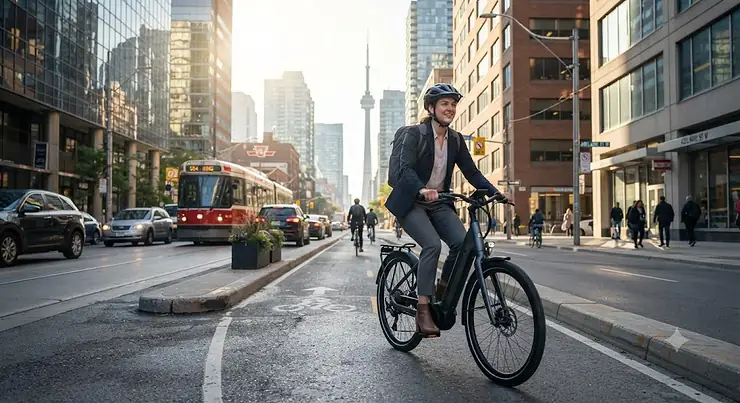
Toronto traffic has a personality, and it isn’t a pleasant one. Gridlock on the Gardiner, streetcars that eat your front wheel if you cross the tracks at the wrong angle, and a TTC system that’s often standing-room-only before you’ve even had your coffee — this city tests every commuter’s patience daily. An ebike for Toronto commuting is, at its simplest, an electric-assist bicycle that helps you pedal through this chaos faster, drier, and with a lot less sweat, using a motor capped under Canadian law at 500 watts and 32 km/h of assisted speed. That’s the textbook answer. The real answer is messier, because “best” depends entirely on whether you’re riding six blocks in the Annex or grinding out 20 km from Scarborough to the financial district twice a day.
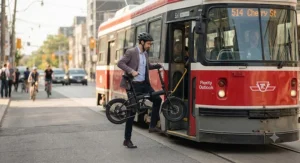
Here’s what nobody tells you upfront: picking an ebike for Toronto commuting isn’t really about horsepower bragging rights. It’s about surviving February slush, dodging streetcar tracks on Queen Street, and finding somewhere legal to lock the thing up without a $30 parks fine finding you first (more on that later — it’s a genuinely weird rule). Ridership data backs up just how mainstream this has become: Toronto’s Bike Share program saw a 40 percent jump in individual riders in 2025 compared to the year before, and the city has been quietly expanding cycling infrastructure even while fighting the province over it in court. This guide walks through seven real, currently available models, how Toronto’s specific rules and geography should shape your choice, and where the marketing glosses over details that actually matter on your commute.
Quick Comparison Table: 7 Ebikes for Toronto Commuting at a Glance
| Ebike | Motor | Battery / Range | Best For |
|---|---|---|---|
| Aventon Level.2 | 500W (750W peak), torque sensor | 672Wh / up to 60 mi claimed | All-around daily commuting |
| Lectric XP 3.0 | 500W (1000W peak) | 500Wh / 45-65 mi claimed | Condo dwellers, best value |
| Rad Power RadCity 5 Plus | 750W hub, cadence | 672Wh / up to 55 mi claimed | Comfort-first upright riding |
| Heybike Ranger S 2.0 | 750W hub (1400W peak) | 692Wh / up to 55 mi claimed | Winter range and folding |
| Aventon Aventure.2 | 750W hub, torque sensor | 720Wh / up to 60 mi claimed | Potholes, snow, streetcar tracks |
| Jasion EB5 | 500W peak, cadence | 360Wh / 25-40 mi claimed | First-time, budget commuters |
| HITWAY BK6M | 750W hub | 672Wh (14Ah) / 35-75 mi claimed | Smallest folded footprint |
Looking at the spread here, the biggest lever isn’t motor wattage at all — every bike on this list already sits at or near Canada’s 500W continuous-power ceiling, so the real differentiator is torque sensing versus cadence sensing, and how each brand packages winter-relevant extras like fenders and lights. If your commute involves genuine hills (hello, parts of Scarborough and the Don Valley approach), the torque-sensor bikes like Aventon Level.2 and Aventon Aventure.2 will feel noticeably smoother than the cadence-based Jasion EB5 or Rad Power RadCity 5 Plus, which tend to deliver power in a blunter on-off fashion. Battery size matters more here than in warmer cities too, since cold weather can cut battery performance by 15 to 25 percent below 5°C, so the 672-720Wh packs have real headroom the smaller 360Wh Jasion doesn’t.
💬 Just one click — help others make better buying decisions too!😊
The Top 7 Ebikes for Toronto Commuting: Expert Analysis
| Ebike | Price Range (CAD) | Weight | Torque or Cadence |
|---|---|---|---|
| Aventon Level.2 | around C$2,600-C$2,900 | 62 lb | Torque sensor |
| Lectric XP 3.0 | in the C$1,400-C$1,900 range | 65 lb | PWR (proprietary) |
| Rad Power RadCity 5 Plus | around C$2,700-C$2,900 | 64 lb | Cadence sensor |
| Heybike Ranger S 2.0 | in the C$2,000-C$2,300 range | 70 lb | Cadence (base) / torque (Pro) |
| Aventon Aventure.2 | around C$2,400-C$2,700 | 73-77 lb | Torque sensor |
| Jasion EB5 | under C$1,300 | 55-60 lb | Cadence sensor |
| HITWAY BK6M | under C$1,150 | 61 lb | Cadence sensor |
The table above tells a value story once you cross-reference it with the spec sheet: Lectric XP 3.0 undercuts nearly every torque-sensor bike on price while still packing hydraulic brakes and a suspension fork, which is exactly why it’s become one of the best-selling folding ebikes in North America. Buyers chasing the smoothest ride, though, should weigh whether the extra few hundred dollars for a torque sensor on Aventon Level.2 or Aventon Aventure.2 is worth it — on stop-and-go Toronto streets with a red light every block, that smoother power delivery is felt constantly, not just occasionally.
1. Aventon Level.2 — smoothest torque-sensor commute in its class
The standout here is simple: pedal a little harder, and the motor responds proportionally instead of just flipping on like a light switch. The Level.2 pairs a 500W-sustained, 750W-peak rear hub motor with a torque sensor and a 672Wh battery rated for up to 60 miles of assisted range. In practice that means a genuinely natural pedaling feel — push harder going up the Bloor Viaduct approach, and the assist scales with you rather than just cutting in and out.
Based on the spec comparison, this is the bike for someone who wants their commute to feel like cycling, not like piloting a moped. It comes with a rear rack, metal fenders, integrated lights, and hydraulic disc brakes standard, which matters when Toronto’s spring potholes and salt-slick winter roads are involved. Reviewers consistently note the torque sensor as the single biggest upgrade over cheaper cadence-based bikes, and praise the fast four-hour charge time. The main complaint that surfaces repeatedly is the 62-pound weight, which is a genuine consideration if your commute ends with three flights of condo stairs.
Pros:
- ✅ Torque sensor gives natural, responsive pedal feel
- ✅ 672Wh battery rated for up to 60 miles per charge
- ✅ Hydraulic brakes, fenders, and lights come standard
Cons:
- ❌ 62 lb weight makes stairs and elevators a genuine chore
- ❌ Premium price for a hub motor rather than mid-drive
At around C$2,600-C$2,900 (check current price for exact figures), this sits mid-pack for a commuter-focused ebike — it’s a fair value if the torque-sensor feel is a priority for you, and a harder sell if you’re commuting flat, short distances where a cheaper cadence bike would do the job just as well.
2. Lectric XP 3.0 — best value folding fat-tire pick
What stands out immediately is the price-to-spec ratio. At roughly $999 USD, the XP 3.0 ships with a 500W motor (1,000W peak), a claimed 45-to-65-mile range, and Class 3 speed unlock — features that competitors routinely charge hundreds more for. On paper, that undercutting is possible because Lectric sells direct-to-consumer with no dealer markup, and that savings gets passed straight to the buyer.
The bike folds compactly and ships with hydraulic disc brakes, front suspension, fenders, and a 150-pound-capacity rear rack — a fully-loaded commuter spec sheet at what most people expect a bare-bones budget bike to cost. What most buyers overlook about this model is that it uses Lectric’s proprietary “PWR” assist system instead of a torque or cadence sensor in the traditional sense, which some riders find slightly less refined than a true torque sensor but still perfectly serviceable for city riding. Aggregated owner sentiment across independent review sites is largely positive, particularly around the fold-and-store convenience for apartment dwellers, though a recurring theme is that the 65-pound weight is no joke to carry up a walk-up.
Pros:
- ✅ Folds down small enough for condo or locker storage
- ✅ Hydraulic disc brakes are rare at this price tier
- ✅ Direct-to-consumer pricing undercuts most rivals significantly
Cons:
- ❌ PWR assist feels less refined than a true torque sensor
- ❌ 65 lb weight is heavy to lift folded up stairs
Priced in the C$1,400-C$1,900 range depending on the package selected, this is the pick if your Toronto apartment doesn’t have secure outdoor storage and you need something you can wheel into a hallway closet.
3. Rad Power RadCity 5 Plus — steadiest all-rounder for daily grinding
The standout feature here is comfort-first engineering. The RadCity 5 Plus runs a 750W hub motor with 58Nm of torque, a 48V 14Ah (672Wh) downtube battery, and 27.5-inch wheels for better rolling resistance than the older 26-inch generation, all wrapped in an upright riding position designed for long sightlines in traffic.
Based on the spec comparison, this is a dependable rather than exciting bike, and that’s precisely its appeal for someone doing the same 15 km round-trip five days a week. Rad Power has built out a fleet of mobile service vans and storefronts across the US and Canada, which genuinely matters in a market where a lot of direct-to-consumer ebike brands vanish or leave you shipping parts internationally when something breaks. Reviewers consistently praise the reliable, steady power delivery and the four mounting points on the headtube for baskets or bags, though the cadence sensor (rather than torque) and a fairly basic spring suspension fork are the two spots where the bike shows its price-conscious engineering.
Pros:
- ✅ Upright geometry gives excellent sightlines in traffic
- ✅ Removable rack and four-point mounts add cargo flexibility
- ✅ Established Canadian service network with mobile repair vans
Cons:
- ❌ Basic spring fork and cadence sensor feel dated
- ❌ Heavier than most rivals in this price bracket
At around C$2,700-C$2,900, the RadCity 5 Plus isn’t the cheapest option here, but the value case is really the after-sale support — for a rider who wants to buy once and not think about it, that’s worth paying for.
4. Heybike Ranger S 2.0 — biggest battery for winter-ready range
The headline number is battery size. The Ranger S 2.0’s 48V 14.4Ah (692Wh) pack reportedly outlasts competitors by 15-plus miles, which is exactly the kind of margin you want once cold-weather range loss of 15 to 25 percent gets factored into a Toronto winter commute. Paired with a 750W hub motor putting out 1,400W peak and roughly 80Nm of torque on the updated version, it has genuine hill-climbing headroom for the University Avenue and Rosedale Valley grades.
Here’s what the spec sheet won’t tell you, but user reports suggest: the folding step-through frame and hydraulic disc brakes make this a genuinely capable all-season bike rather than a fair-weather folder, and the included turn signals plus auto-on headlight are a real safety upgrade for the dark 5 p.m. commutes home in January. Aggregated reviews are enthusiastic about the stability at higher speeds for a folding bike, though it’s worth noting some earlier Ranger S variants used a cadence sensor rather than torque sensing, so it’s worth confirming which drivetrain generation you’re buying.
Pros:
- ✅ 692Wh battery among the largest in its folding class
- ✅ Hydraulic disc brakes plus torque sensor on newer builds
- ✅ Integrated turn signals and auto headlight aid winter visibility
Cons:
- ❌ Base-tier version still relies on a cadence sensor
- ❌ At 70 lb, it’s the heaviest folder on this list
Sitting in the C$2,000-C$2,300 range, this is the pick for anyone who refuses to hang up their commute when the first snow hits and wants real range margin, not a “should be fine” estimate.
5. Aventon Aventure.2 — best for potholes, snow, and streetcar tracks
The standout advantage is tire volume. Riding on 26×4-inch Kenda fat tires with an 80mm-travel front suspension fork and a torque sensor, the Aventure.2 pairs a 750W motor with a 48V 15Ah battery rated for up to 60 miles of range. Those fat tires aren’t a gimmick here — they’re genuinely the safest tire choice for a city where narrow tires and streetcar rail gaps are a well-known cause of crashes.
What most buyers overlook about fat-tire bikes is that the benefit isn’t really off-road capability most Torontonians will never use — it’s the massive increase in comfort and stability riding over frost heaves, sewer grates, and half-cleared bike lanes in March. In testing, riders reported roughly 15-20 percent less range in temperatures below 40°F, a useful data point for winter route planning. Reviewers describe the Aventure.2 as one of the most comfortable fat-tire ebikes on the market, largely due to the plush saddle and low-pressure tire cushioning, though the tradeoff is a hefty 73-to-77-pound curb weight that makes lifting it onto a car rack a two-person job.
Pros:
- ✅ 4-inch Kenda tires shrug off potholes and streetcar tracks
- ✅ Torque sensor plus large battery for genuine 45-60 mile range
- ✅ Front suspension and rear rack ready for cargo runs
Cons:
- ❌ 73-77 lb weight is a lot to lift onto racks
- ❌ Wide tires add rolling resistance versus street-only options
Priced around C$2,400-C$2,700, this is arguably the single best match for Toronto’s rougher pavement and unpredictable winters, provided you have somewhere secure and ground-level to store it.
6. Jasion EB5 — lightest entry point for first-time commuters
The standout here is simply accessibility. The EB5 runs a 500W-rated rear hub motor with a 360-500Wh removable battery, delivering a claimed 25-to-40-mile range, and it’s built around a conventional 26-inch hardtail geometry that looks and rides like a normal bicycle rather than an obvious ebike. That familiarity matters for anyone nervous about their first powered two-wheeler.
On paper this means you’re getting a genuinely capable commuter for meaningfully less than the torque-sensor bikes above it. Aggregated Amazon review data shows thousands of ratings averaging around 4.1 stars, making it one of the most heavily validated budget ebikes on the platform — useful, since it means the sentiment isn’t based on a handful of cherry-picked reviews. The spec sheet won’t tell you this, but owner reports suggest the cadence-sensor assist and modest motor genuinely do strain on sustained grades over roughly 5 percent, so riders tackling the climb out of the Don Valley or up from the waterfront should expect to contribute real pedaling effort rather than coasting on motor power alone.
Pros:
- ✅ One of the lowest entry prices for a UL-certified ebike
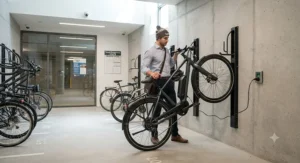
- ✅ Removable battery is easy to bring inside for charging
- ✅ 7-speed Shimano drivetrain is serviceable at any local shop
Cons:
- ❌ Cadence sensor feels on-off rather than smoothly proportional
- ❌ Modest motor strains on sustained inclines above roughly 5%
At under C$1,300, this is the sensible starter pick for someone testing whether ebike commuting even fits their routine before spending twice as much on a flagship model.
7. HITWAY BK6M — smallest folded footprint for condo living
The standout feature is genuinely compact storage. The BK6M packs a 750W, 48V motor and a 14Ah removable battery into a folding frame with 20×3-inch fat tires, claiming a range of 55-120 km depending on assist mode — a wide spread, but even the conservative end comfortably covers most Toronto commutes.
Here’s what the spec sheet won’t tell you, but a long-term owner review of the sister BK6S model suggests: this brand’s budget positioning doesn’t mean corner-cutting on the fundamentals — one long-term tester reported passing 1,000 km on rough terrain without a single mechanical issue, which is a genuinely reassuring data point for a lesser-known brand. It’s not a household name like Rad Power or Aventon, and its Canadian service footprint is thinner, so factor that into your risk tolerance. Reviewers generally frame it as a capable, no-frills folder for the price, with front and rear disc brakes and a suspension seatpost adding comfort that budget bikes often skip.
Pros:
- ✅ Folds compact enough for a condo locker or small closet
- ✅ 14Ah battery gives generous range for the price point
- ✅ Front/rear disc brakes and suspension seat add real comfort
Cons:
- ❌ Smaller 20-inch wheels take some adjustment for road cyclists
- ❌ Thinner Canadian service and warranty network than bigger brands
At under C$1,150, it’s a legitimate lesser-known alternative worth cross-shopping against the Jasion EB5 before you commit to a bigger brand name at a bigger price.
Practical Usage Guide: Setting Up Your Ebike for Toronto Winters and Wet Commutes
Getting a new ebike home is the easy part — actually dialing it in for year-round Toronto riding takes a bit more thought. First 30 days: check tire pressure weekly (temperature swings affect PSI more than most riders expect), and torque-check every fastener after the first 50 km once components have had a chance to settle. Skipping this step is the single most common first-month mistake, and it’s why a rattling fender or loose rack bolt is usually a maintenance issue, not a manufacturing defect.
For winter specifically, bring the battery indoors overnight rather than leaving it on the bike in an unheated garage — lithium cells lose both range and long-term capacity when repeatedly cold-soaked. A light coat of dry lubricant on the chain after wet rides prevents the rust that road salt practically guarantees otherwise, and it’s worth budgeting for a second, more aggressive winter tire (something like a studded option) if you’re riding through actual ice rather than just cold pavement. On the optimization side, most of these bikes ship in their highest-assist factory setting; dropping to a lower pedal-assist level on flat stretches genuinely extends range and battery lifespan, saving the higher-power modes for hills or headwinds.
Real-World Scenarios: Which Toronto Commuter Are You?
The Condo Dweller (Downtown/Liberty Village, no in-unit storage): A 3-8 km flat commute with limited secure parking calls for something light and fold-friendly. The Lectric XP 3.0 or HITWAY BK6M solve the storage problem directly — both fold small enough for a hallway closet or a shared locker, sidestepping Toronto’s notoriously thin secure bike parking supply in older condo buildings.
The Suburban Grinder (Scarborough or Etobicoke into downtown, 15-25 km): Longer distance and real hills mean battery size and torque-sensor smoothness stop being nice-to-haves. The Aventon Level.2 or Heybike Ranger S 2.0 both carry enough range margin to handle a round trip with winter buffer, without needing a midday charge.
The All-Weather Rider (year-round, any distance, rough pavement tolerance a must): If you’re riding through slush, potholes, and streetcar-track crossings without pause, the Aventon Aventure.2‘s fat tires and suspension fork are purpose-built for exactly this. Budget-conscious riders wanting a similar rough-road buffer without the premium price should look at the Jasion EB5 as a lower-cost, lower-power alternative for the same general use case.
Solving the 5 Most Common Toronto Ebike Commuting Problems
Problem: Range anxiety in winter. Cold cuts capacity by 15-25 percent, so plan around your bike’s realistic cold-weather range, not its advertised summer figure — and lean toward the larger-battery options like the Aventon Aventure.2 or Heybike Ranger S 2.0 if your commute is on the longer end.
Problem: Streetcar tracks and rail crossings. Thin tires can catch in rail gaps at low crossing angles. Cross at as close to a 90-degree angle as the road allows, and consider a fat-tire model like the Aventon Aventure.2 or HITWAY BK6M if your route regularly crosses streetcar corridors on Queen, King, or Spadina.
Problem: Nowhere secure to park. Post-and-ring stands only accept bikes capable of being propelled entirely by pedal power — most pedelec-style ebikes on this list qualify, but always confirm before assuming.
Problem: Getting soaked in spring or fall rain. Every bike reviewed here ships with fenders except in stripped-down configurations — verify fenders are included before buying, since they’re a genuine daily-comfort item, not a cosmetic extra.
Problem: Battery degradation from fast public charging habits. Charging to 100 percent every single night accelerates long-term capacity loss; charging to roughly 80-90 percent for daily use and only topping to full before a longer ride noticeably extends battery lifespan across all seven models here.
How to Choose the Best Ebike for Toronto Commuting
- Measure your real round-trip distance first. Add 50 percent buffer for winter range loss and headwinds before matching a battery size to your route.
- Prioritize torque sensing if your commute has hills. Cadence-based assist works fine on flat routes but feels clunky on sustained climbs.
- Confirm the bike is street-legal in its Canadian configuration. Many US-spec sheets advertise 28 mph unlocked; Ontario caps assisted speed at 32 km/h, so verify the Canadian unit ships compliant.
- Weigh portability against range. Folding bikes solve storage problems but usually trade off some battery capacity and ride comfort versus full-size frames.
- Check for winter-ready extras. Fenders, integrated lights, and hydraulic (not mechanical) disc brakes all matter more in Toronto than in a fair-weather cycling city.
- Factor in the service network, not just the sticker price. A cheaper bike from a brand with no Canadian repair presence can cost more in downtime than a pricier bike backed by local support.
- Test ride if at all possible. Geometry and saddle comfort vary enough between brands that specs alone won’t tell you how a 45-minute daily ride will actually feel.
City Commuting Fat Tire Ebike vs Standard Tire: Which Wins on Toronto Streets
The city commuting fat tire ebike Toronto debate isn’t really about looks — it’s about what’s actually under your wheels most days. Fat tires (typically 4 inches wide, as on the Aventon Aventure.2) run at much lower pressure, which acts as natural suspension over frost heaves, potholes, and the gap where streetcar rails meet pavement. Standard 2-to-2.1-inch tires, found on bikes like the Aventon Level.2, roll noticeably faster and lighter on smooth, well-maintained pavement, but transmit far more road shock and are more prone to catching in rail gaps at shallow crossing angles.
The honest verdict, based on the spec and use-case comparison, is that fat tires earn their rolling-resistance penalty on Toronto’s rougher secondary streets and in snow, while standard tires make more sense for someone sticking almost entirely to newly paved downtown routes and separated cycle tracks. Riders doing a mixed commute — smooth cycle track downtown, rougher residential streets in the neighbourhoods — often find a middle-width tire (2.4-3 inches, as on the Lectric XP 3.0 or HITWAY BK6M) the more practical compromise than either extreme.
Toronto Bike Lane Network: Riding Your Metropolitan Electric Bicycle Safely
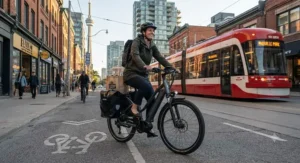
Toronto’s cycling infrastructure has been a genuine political battleground, which matters practically because it affects where you can actually ride your metropolitan electric bicycle without conflict. City council approved more than 20 kilometres of new bike lanes in late 2025, and the expansion plan notably narrowed existing car lanes rather than removing them specifically to sidestep provincial restrictions on bike lane construction. That’s a meaningful signal that Toronto’s cycling network is still expanding, not shrinking, even amid ongoing legal disputes at the provincial level.
Not every route is equally welcoming, though. Compliant ebikes — meaning those capable of being propelled by pedalling alone — are permitted in both painted bike lanes and protected cycle tracks, while ebikes that don’t require pedalling to move are barred from the physically separated cycle tracks. That distinction matters enormously when comparing throttle-heavy bikes against true pedelec-style models. For trip planning, the City of Toronto’s official Cycling Network Plan publishes current and planned bikeway maps, and it’s worth checking before you commit to a specific commuting route, since coverage genuinely varies block by block outside the downtown core.
Downtown Traffic Patterns: Timing and Routing Your Toronto Ebike Commute
Downtown traffic patterns in Toronto follow a predictable rhythm: gridlock from roughly 7:30 to 9:30 a.m. and 4:00 to 6:30 p.m., with the Gardiner, Lake Shore, and the core’s east-west arterials bearing the worst of it. An ebike commuter’s biggest structural advantage here isn’t top speed — it’s that a 500W-assisted bike maintains a consistent 20-25 km/h through stop-and-go zones where a car might be crawling at half that. Timing your ride to shift even 20 minutes earlier than peak often means the difference between a clear cycle track and one clogged with delivery cyclists and pedestrians spilling off crowded sidewalks.
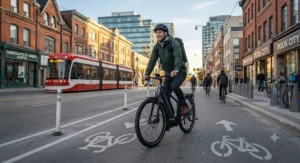
Route choice matters as much as timing. Separated cycle tracks on streets like Richmond, Adelaide, and Bloor offer real physical protection from vehicle traffic, while painted lanes on secondary streets require significantly more vigilance around parked-car doors and right-turning vehicles. Riders new to the city consistently underestimate how aggressively some downtown intersections handle mixed streetcar, cyclist, and pedestrian flow — treating every streetcar stop as a full pedestrian-crossing zone, rather than something to weave around, avoids the single most common downtown cycling collision pattern.
E-Bike Parking Bylaws in Toronto: Where You Can (and Can’t) Lock Up
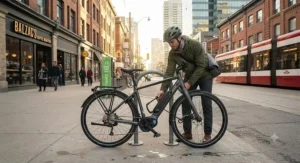
This is one of the more genuinely confusing corners of Toronto ebike ownership, and getting it wrong can mean a real fine. Under Toronto Municipal Code Chapter 950, only bicycles and ebikes capable of being propelled entirely by pedal power may be parked on sidewalks and secured to post-and-ring stands the same way a conventional bicycle would be. Scooter-style or moped-style ebikes that can’t be pedalled don’t meet that Highway Traffic Act definition of a bicycle, and must instead park on-street, similar to a motorcycle.
Practically, every bike featured in this guide qualifies as a pedelec-style ebike capable of pedal-only propulsion, so sidewalk post-and-ring parking is generally fine — but it’s worth double-checking this on any bike you’re considering, since throttle-only configurations can blur the line. For office buildings and larger residential towers, Toronto’s Rules for Rideables page is a useful quick reference on where you legally can and can’t stop or lock a bike, particularly the rule that riders, drivers, and delivery vehicles alike must never block a bike lane while parking. One detail that surprises a lot of new riders: park paths carry their own throttle restrictions and a 20 km/h speed cap, distinct from the on-road rules that apply the rest of your commute.
Long-Term Cost & Maintenance: What a Toronto Ebike Commute Really Costs
Sticker price is only the opening bid. Real ownership costs include a annual tune-up (roughly $80-150 CAD at most shops), brake pad and tire replacement every year or two of heavy use, and a battery that will gradually lose capacity — most manufacturers rate their packs for 500-800 full charge cycles before meaningful degradation, which for a daily commuter typically works out to somewhere in the 2-to-4-year range before a replacement battery purchase becomes worth considering.
| Commute Method | Approx. Cost per 22km Round Trip | Notable Trade-Off |
|---|---|---|
| Ebike | Roughly $0.10-$0.15 in electricity | Weather exposure, winter TTC ban on transit |
| Personal vehicle | $15-$25 (gas, parking, wear) | Guaranteed shelter, but slowest in peak traffic |
| TTC transit | Single-fare cost, no ownership cost | Crowding, no exercise, less route flexibility |
The analysis here is straightforward: even factoring in maintenance, tires, and eventual battery replacement, an ebike commute remains dramatically cheaper per trip than driving downtown, largely because parking alone in the core routinely runs into double digits per day. The honest caveat is the seasonal gap — the TTC bans all ebikes from its vehicles between November 15 and April 15 following a battery fire incident, so anyone without a true winter-capable bike and cold-weather gear needs a backup transit plan for the worst stretches of the year, which is a real cost most ebike calculators conveniently ignore.
✨ Ready to stop paying downtown parking rates? Compare current prices on the seven picks above and find your match today!
Features That Actually Matter (And Those That Don’t) for Toronto Riders
Actually matters: hydraulic disc brakes (mechanical brakes fade fast in wet, salty winter conditions), a removable battery you can charge indoors, integrated lights wired to the main battery rather than separate AA-powered add-ons, and genuine fender coverage rather than token half-fenders. These are the features that show up in your daily experience within the first week of ownership.
Doesn’t matter nearly as much as marketing suggests: peak wattage figures well beyond the 500W legal continuous limit (they’re marketing numbers, not meaningfully usable power under Canadian law), Bluetooth app connectivity for basic ride stats, and flashy full-colour displays that look impressive in product photos but add little to an actual commute. The spec sheet won’t tell you this, but reviewers across nearly every model in this guide converge on the same theme: torque sensing, battery capacity, and brake quality drive the actual day-to-day experience far more than any headline peak-power number does.
Safety, Regulations & Compliance: Ontario and Toronto Ebike Rules Explained
Ontario classifies compliant ebikes as “power-assisted bicycles,” which legally caps continuous motor output at 500W and assisted speed at 32 km/h — worth repeating clearly, because Toronto layers three additional city-specific rules on top of the provincial framework: an absolute sidewalk ban with no exceptions, throttle-use restrictions on certain park paths and multi-use trails, and specific weight and pedal-required limits for cargo ebikes using cycle tracks. Since several of the bikes in this guide are sold across North America with US-spec sheets advertising 28 mph (roughly 45 km/h) unlocked speeds, it’s genuinely worth confirming with the Canadian retailer that the specific unit you’re buying ships firmware-limited to Ontario’s legal cap, rather than assuming the US listing applies unchanged.
Helmets aren’t currently mandatory for adult cyclists in Ontario, though city safety campaigns strongly encourage them, and Toronto Police do enforce ebike-specific rules around sidewalk riding and park path speed limits with real fines attached — riding through a recreational park where ebikes are prohibited carries a minimum $250 fine. For anyone shopping specifically for a compliant, Canada-legal bike, the City of Toronto’s Electric Bicycles page is the most current, authoritative source and is worth a five-minute read before your first ride.
Frequently Asked Questions
❓ What is the best ebike for Toronto commuting in 2026?
❓ How fast can an ebike legally go in Toronto?
❓ Can I ride an ebike in Toronto's bike lanes?
❓ Where can I legally park an ebike in Toronto?
❓ How much does ebike commuting cost compared to driving in Toronto?
Conclusion
Choosing an ebike for Toronto commuting really comes down to being honest about your specific route, your storage situation, and how seriously you plan to ride through a real Canadian winter. The Aventon Level.2 and Rad Power RadCity 5 Plus cover the broad middle ground of daily reliability, the Lectric XP 3.0 and HITWAY BK6M solve the condo-storage problem elegantly, the Aventon Aventure.2 and Heybike Ranger S 2.0 are built for genuinely rough conditions and long range, and the Jasion EB5 remains the sensible low-risk entry point for a first-time buyer.
None of these bikes are magic — they’re tools, and like any tool, the right one is the one that matches the job you’re actually doing every weekday morning. Whichever model you land on, double-check its Canadian-market compliance, budget honestly for winter range loss, and give yourself a proper first month to dial in fit and maintenance before judging the bike on a bad-weather day. Toronto’s cycling infrastructure keeps expanding despite the political fights over it, and a well-matched ebike is one of the few commuting upgrades that consistently pays for itself within a year or two.
Recommended for You
- Most Comfortable Commuter E-Bike: 7 Best Picks For 2026
- Fast Charging City Ebike: 7 Top Picks for Canada (2026)
- 7 Best City Electric Bikes for Vancouver Riders (2026 Guide)
Disclaimer: This article contains affiliate links. As an Amazon Associate, I earn from qualifying purchases. If you purchase products through these links, we may earn a small commission at no additional cost to you.
✨ Found this helpful? Share it with your friends! 💬🤗
