
In This Article
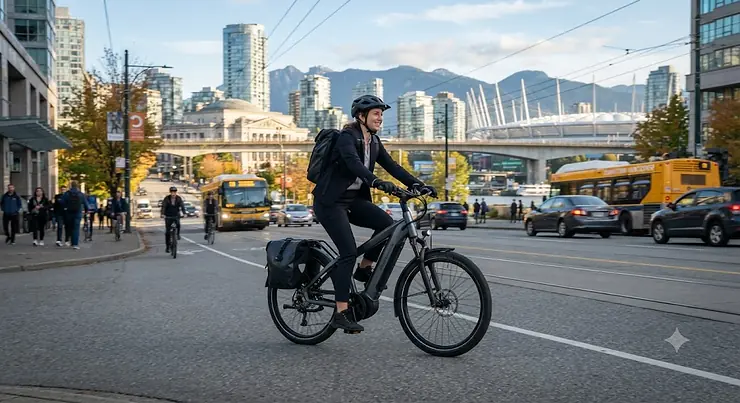
A premium electric bike is, in the simplest terms, an e-bike built around name-brand motors, verified battery cells, and hardware that’s designed to survive years of Canadian winters and potholed bike lanes rather than one good summer. That’s the whole pitch, and it’s also where most shoppers get talked out of their money — because “premium” gets slapped on anything with a shiny paint job. Here’s the thing, though: once you’ve pedalled a bike with a real torque sensor next to one with a cheap cadence sensor, you don’t forget the difference. One feels like a natural extension of your legs. The other feels like a light switch.
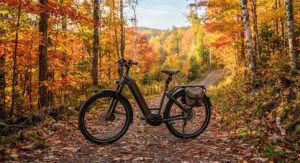
This guide exists because the premium electric bike category on amazon.ca is genuinely crowded with pretenders. We dug into real specifications, cross-referenced them against Transport Canada’s federal rules for power-assisted bicycles, and pulled aggregated review sentiment from verified owner feedback rather than inventing a single glowing testimonial. You’ll get seven genuinely strong picks spanning budget-premium to full flagship, honest pros and cons, and a framework for figuring out which tier of “premium” actually matches your riding life — because a C$1,800 commuter and a C$3,500 mid-drive flagship solve very different problems, even if both technically qualify as a premium electric bike in 2026.
Metric riders, don’t worry — we’ve kept everything in kilometres with imperial conversions where it helps, because that’s how most of these bikes are actually spec’d for the Canadian market anyway.
Quick Comparison Table: Premium Electric Bike Picks at a Glance
| Model | Motor Type | Battery Cells | Best For |
|---|---|---|---|
| Aventon Aventure M | Mid-drive, 100Nm torque | Component-grade lithium pack | Riders who want a true flagship |
| Aventon Aventure.2 | 750W geared hub, torque sensor | 48V/15Ah frame-integrated | Fat-tire trail and beach riding |
| Aventon Level.2 | 500W hub, torque sensor | 48V/14Ah removable | Daily commuters wanting refinement |
| Velotric Discover 2 | 750W hub, dual sensor | Samsung/LG 21700 cells | All-around comfort commuting |
| Velotric Packer 1 | 750W hub, 75Nm torque | UL-certified removable pack | Cargo hauling and errands |
| Velotric Thunder 1 | Integrated hub motor | Frame-hidden lithium pack | Minimalist urban riders |
| Addmotor M-60 L7 | 750W Bafang hub | Panasonic cell pack | Entry into premium on a tighter budget |
Looking across this table, a pattern shows up fast: the jump from budget to premium isn’t really about top speed — it’s about who made the cells inside the battery and whether the motor reacts to your pedalling in real time or just guesses. The Aventon Aventure M stands apart because it’s the only mid-drive option here, which matters enormously on hills (more on that below). Riders juggling errands and kid pickups should look hardest at the Velotric Packer 1, since cargo capacity changes the calculus entirely.
💬 Just one click — help others make better buying decisions too!😊
1. Aventon Aventure M — flagship mid-drive with electronic shifting
The Aventon Aventure M is Aventon’s 2026 flagship, and the jump to a mid-drive motor is the headline story here. Its A100 motor puts out roughly 100Nm of torque delivered through the drivetrain rather than the rear wheel alone, which means power arrives the way your legs expect it to — smooth, proportional, and noticeably better at grinding up 15% grades than any hub-motor bike on this list. Electronic shifting removes the guesswork of manual gear changes under load, a detail that matters more than it sounds like until you’ve missed a shift halfway up a hill.
Based on the spec comparison, this is the bike for someone who has already owned a hub-motor e-bike and wants to feel the categorical difference component-grade motors make. Reviewers consistently report that the connected app’s ride-tuning options are genuinely useful rather than gimmicky, letting riders dial in how aggressive the power delivery feels across assist levels.
Pros:
- ✅ Mid-drive power delivery feels natural, not artificial
- ✅ Electronic shifting eliminates missed gear changes
- ✅ App-based ride tuning is functional, not just decorative
Cons:
- ❌ Noticeably pricier than hub-motor Aventon models
- ❌ Mid-drive systems generally need more specialized service
Expect this one in the C$3,200-C$3,800 range at the time of research — a genuine flagship price for a genuine flagship spec sheet, and arguably the best value-per-Newton-metre on this list if hill climbing is your main frustration.
2. Aventon Aventure.2 — best fat-tire pick for mixed terrain
The Aventon Aventure.2 pairs a 750W geared hub motor with a real torque sensor, a combination that was rare at this price point until recently. What most buyers overlook about this model is that the torque sensor isn’t just a comfort feature — it directly extends real-world range, because the motor stops over-delivering power the instant you ease off the pedals, rather than dumping a fixed wattage regardless of effort.
Hydraulic disc brakes and an 80mm suspension fork round out a build that’s genuinely built for gravel, beach sand, and rough pavement, not just marketed for it. Reviewers consistently note the 8-speed Shimano Altus drivetrain shifts cleanly even under the torque load of a loaded rear rack, and that the fat tires soak up potholes that would rattle a standard-tire commuter apart.
Pros:
- ✅ Genuine torque sensor, not a cadence sensor in disguise
- ✅ Hydraulic brakes handle repeated hard stops confidently
- ✅ Fat tires add real stability on gravel and sand
Cons:
- ❌ Heavier build makes stairs and apartment storage awkward
- ❌ Wider tires mean higher rolling resistance on smooth pavement
Priced around C$2,000-C$2,400, the Aventon Aventure.2 earns its premium tag through drivetrain quality more than raw wattage — a smart trade for anyone riding unpaved commutes.
3. Aventon Level.2 — best refined commuter for daily riders
The Aventon Level.2 takes the torque-sensor upgrade from the Aventure line and applies it to a lighter, city-focused frame. Its 500W motor with 750W peak output isn’t trying to be a trail bike — it’s tuned for consistent, efficient assist across a daily route, and the difference shows up in the 96km (roughly 60-mile) real-world range Aventon publishes rather than inflates.
Here’s what the spec sheet won’t tell you: the frame-integrated rear lights and included fenders mean you’re not adding C$150 of accessories after the fact just to make this commute-ready, which is a real cost saving buried in the base price. The 8-speed Shimano Acera drivetrain with a wide-range cassette gives enough gearing flexibility for stop-and-go city riding without feeling sluggish.
Pros:
- ✅ Torque sensor makes pedal assist feel proportional
- ✅ Frame-integrated lights and fenders included standard
- ✅ Step-through frame option improves everyday accessibility
Cons:
- ❌ Less off-road capability than the fat-tire Aventure line
- ❌ Colour LCD display can wash out in direct sunlight
At around C$1,800-C$2,100, the Aventon Level.2 is arguably the strongest value-to-refinement ratio here for someone whose “adventure” is mostly a commute through downtown traffic.
4. Velotric Discover 2 — best all-around comfort commuter
The Velotric Discover 2 leans on a dual torque-and-cadence sensor system, which is a genuinely different engineering approach than Aventon’s pure torque sensor — it blends the responsiveness of torque sensing with the predictability of cadence sensing. Paired with an 80mm hydraulic suspension fork with lock-out, it’s tuned specifically for comfort over rougher city surfaces rather than outright trail capability.
What most buyers overlook here is the battery certification: Velotric names Samsung and LG as its 21700 cell suppliers and carries UL 2271 and UL 2580 certification, which are the specific standards that address lithium battery fire risk in e-bikes — a detail Amazon listings rarely explain but that matters enormously for anyone who charges indoors overnight, as most Canadian apartment and condo dwellers do.
Pros:
- ✅ Named Samsung/LG cell suppliers, not a mystery pack
- ✅ UL 2271/2580 certified battery for indoor charging peace of mind
- ✅ Hydraulic suspension fork smooths rough pavement effectively
Cons:
- ❌ On the heavier side for anyone carrying it up stairs
- ❌ Fewer frame colour options than competing Aventon models
Expect a price around C$1,900-C$2,300, positioning the Velotric Discover 2 as a direct, and genuinely strong, alternative to Aventon’s commuter lineup.
5. Velotric Packer 1 — best premium cargo ebike for hauling
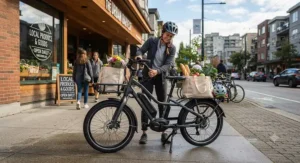
The Velotric Packer 1 shifts the conversation from commuting to actual load-hauling. Its 750W hub motor delivers roughly 75Nm of torque, enough to move a loaded rear rack rated for serious cargo weight without the motor straining audibly the way budget cargo bikes often do under similar loads. An 80mm coil suspension fork with lock-out adds real comfort when you’re carrying groceries, a passenger, or both.
Based on the spec comparison, what separates this from a converted commuter-as-cargo-bike is the built-in Apple Find My-style tracking integrated into the frame — genuinely useful given that cargo bikes, being expensive and distinctive, are a disproportionate theft target. Reviewers consistently mention the 3.5-inch LCD display’s route and battery data as unusually clear for the category.
Pros:
- ✅ 75Nm torque handles heavy cargo loads confidently
- ✅ Frame-integrated tracking hardware aids theft recovery
- ✅ Coil suspension fork improves comfort under load
Cons:
- ❌ Long wheelbase makes indoor storage genuinely difficult
- ❌ Not ideal for narrow bike lanes or tight urban parking
Priced in the C$2,300-C$2,700 range, the Velotric Packer 1 is a specialist pick — skip it if you don’t actually need to haul cargo, but it’s hard to beat if you do.

6. Velotric Thunder 1 — best minimalist urban design
The Velotric Thunder 1 takes the opposite approach from the Packer 1: it hides its battery inside a slim frame so effectively that, at a glance, it reads as a regular bicycle rather than an e-bike. This matters more than it sounds like — a bike that doesn’t look expensive is a bike that draws less attention from thieves, and reviewers consistently note this as an underrated safety feature for downtown parking.
What the spec sheet won’t tell you is how this affects ride feel: with less visible bulk, the Thunder 1 handles more like a standard road bike, which riders coming from traditional cycling tend to prefer over the substantial heft of fat-tire e-bikes. The trade-off is a lighter-duty motor better suited to flat-to-moderate terrain than steep climbs.
Pros:
- ✅ Genuinely low-profile design that doesn’t scream “e-bike”
- ✅ Lighter overall weight improves handling and portability
- ✅ Integrated security tracking built into the frame
Cons:
- ❌ Less climbing power than the Discover or Packer models
- ❌ Slimmer tires offer less cushioning on rough pavement
At roughly C$2,000-C$2,400, this is the pick for riders who want premium components without the bike looking, or riding, like a motorcycle in disguise.
7. Addmotor M-60 L7 — best entry point into premium on a budget
The Addmotor M-60 L7 is where “premium” gets genuinely accessible. Its 750W Bafang geared hub motor is the same component-grade motor family used across far pricier bikes, paired with a Panasonic-cell battery pack — a real, named cell manufacturer rather than a generic pack, at a price roughly C$300-C$500 below most competitors on this list.
Here’s what most buyers overlook: the 7-speed Shimano Altus drivetrain and Tektro hydraulic disc brakes are genuine mid-tier components, not the unbranded parts that typically show up at this price. On paper this means Addmotor cut costs on styling and extras — the banana-seat cruiser design and lack of a torque sensor — rather than on the parts that actually fail over time.
Pros:
- ✅ Named Panasonic battery cells at a below-average price
- ✅ Bafang hub motor is a genuinely reputable component brand
- ✅ Hydraulic disc brakes outperform mechanical brakes at this tier
Cons:
- ❌ Cadence sensor only, no torque-sensing pedal assist
- ❌ Smaller dealer network for in-person service in Canada
Around C$1,700-C$1,900 at the time of research, the Addmotor M-60 L7 proves that a premium electric bike doesn’t have to mean a C$3,000 invoice.
Practical Usage Guide: Setting Up and Maintaining a Premium Electric Bike
Getting the most out of any premium electric bike starts before your first ride. Most arrive 85-90% pre-assembled, but torque on the stem bolts, handlebar alignment, and pedal installation genuinely matter for both safety and warranty validity — skipping the manufacturer’s assembly checklist is one of the most common ways riders accidentally void coverage in year one.
Once assembled, run your first three charges to full before you start relying on the range estimate, since lithium cells (including named Samsung, LG, and Panasonic packs) need a brief calibration period to report accurate remaining capacity. During the first 30 days, re-torque the pedal cranks and check disc brake alignment weekly — new cable housing stretches slightly under real use, and that’s normal, not a defect.
For long-term maintenance, store the battery between 40-60% charge if the bike sits unused for more than two weeks, especially over a Canadian winter — full charge or full discharge both accelerate cell degradation in cold storage. Wipe down the drivetrain after wet or salted-road rides, since winter road salt is genuinely harder on chains and derailleurs than anything else these bikes encounter. A quick monthly check of tire pressure, brake pad wear, and bolt torque catches most problems before they become expensive ones.
Who Actually Needs a Premium Electric Bike? Three Rider Profiles
If you’re a downtown professional commuting 12km each way on mixed bike lanes and traffic, the Velotric Discover 2 or Aventon Level.2 make the most sense — you want reliable torque-sensor assist, integrated lights, and a battery certified for safe overnight indoor charging in a condo.
If you’re a parent doing school runs and grocery hauls within a 5km radius, the Velotric Packer 1 is built specifically for your use case, with cargo capacity and frame tracking that a commuter bike simply can’t match.
If you’re a weekend trail rider tackling gravel, hills, and unpaved paths outside the city, the Aventon Aventure.2 or the mid-drive Aventon Aventure M justify their higher price through torque delivery and suspension that a flat-terrain commuter bike doesn’t need — and won’t handle well if you try.
Buyer’s Decision Framework for a Premium Electric Bike
If hills are your daily reality, choose a mid-drive motor like the Aventon Aventure M‘s, because mid-drive systems deliver torque through the gears rather than a fixed hub ratio, which climbs noticeably better. If your battery charges indoors overnight, prioritize named-cell, certified packs like Velotric’s Samsung/LG UL-certified batteries over unlabelled generic cells — this is a fire-safety decision, not just a performance one. If you’re hauling cargo or kids, choose a purpose-built frame like the Velotric Packer 1 rather than overloading a standard commuter’s rear rack. If budget is the deciding factor, the Addmotor M-60 L7 delivers component-grade motor and battery quality without flagship pricing. And if theft risk in your neighbourhood is a real concern, weigh models with integrated tracking, like the Velotric Thunder 1 and Velotric Packer 1, more heavily than raw spec numbers.
How to Choose a Premium Electric Bike
- Start with your terrain, not the spec sheet. A 750W hub motor sounds impressive, but if your commute is flat pavement, that power mostly goes unused — spend the money on battery cell quality instead.
- Check who actually makes the battery cells. “48V 15Ah” tells you capacity, not safety. Named suppliers like Samsung, LG, or Panasonic, paired with UL 2271/2580 or UL 2849 certification, tell you the manufacturer trusts you to check.
- Confirm the sensor type, not just “pedal assist.” Cadence sensors deliver preset power regardless of effort; torque sensors respond to how hard you’re actually pedalling, extending both comfort and range.
- Weigh warranty coverage against expected component failure points. A long frame warranty means little if the battery — the most expensive single part — is only covered for one year.
- Factor in service access, not just purchase price. A bike with a wider dealer network in Canada is cheaper to own long-term, even at a higher sticker price, because shipping a battery for warranty repair is genuinely expensive.
- Match motor type to your actual riding pattern. Mid-drive for hills and long-term durability under load; hub motors for simpler maintenance and lower upfront cost.
- Read aggregated owner sentiment, not just the star rating. A 4.3-star average with recurring complaints about a specific part tells you more than a 4.6-star average with none.
Premium Quality eBike Components: What Actually Separates Flagship Models From Budget Bikes
The honest answer is that most of the visible parts of a budget and a premium electric bike look nearly identical in a product photo. The difference lives in the parts you can’t see in a listing photo: the motor’s internal winding quality, the controller’s ability to modulate power smoothly, and the sensor type governing pedal assist. Component-grade motors from established suppliers like Bafang, or proprietary systems like Aventon’s mid-drive A100, are engineered for tens of thousands of duty cycles rather than a one-year warranty window, and that shows up as smoother power delivery long after a budget hub motor starts to feel notchy.
| Category | Budget Ebike | Premium Electric Bike |
|---|---|---|
| Motor | Generic hub, cadence-only sensing | Named-brand hub or mid-drive, often torque-sensing |
| Battery | Unlabelled cells, minimal certification | Named cells (Samsung/LG/Panasonic), UL-certified |
| Brakes | Mechanical disc | Hydraulic disc |
| Drivetrain | Unbranded derailleur | Shimano Altus/Acera or equivalent |
The pattern across this comparison is consistent: every premium upgrade shows up at a point of physical contact between you and the bike — braking, shifting, and power delivery — rather than in cosmetic details. A budget bike and a premium electric bike can share a nearly identical frame silhouette while performing completely differently under real riding load, which is exactly why spec-sheet shopping alone is unreliable.
Component-Grade Motors: Why the Brand Behind the Motor Matters
Not all “750W” motors are created equal, and this is one of the more misleading numbers in ebike marketing. Component-grade motors — meaning motors sourced from established, dedicated ebike-motor manufacturers like Bafang, rather than generic white-label units — tend to run cooler under sustained load, which directly affects how a bike behaves on a long climb. Reviewers consistently note that budget hub motors lose noticeable power output after 10-15 minutes of continuous hill climbing as they heat up, while component-grade motors maintain closer to their rated output for longer.
What the spec sheet won’t tell you is that motor brand also predicts parts availability years down the line. A Bafang motor, used across dozens of brands, has a far larger secondary parts and repair ecosystem in Canada than a proprietary motor built exclusively for one obscure brand — a genuinely practical consideration for anyone planning to own the bike past the warranty period.
Luxury Electric Bike Canada: What “Luxury” Actually Means Here
In the Canadian context, a luxury electric bike Canada shoppers actually want isn’t necessarily the one with the flashiest paint job — it’s the one engineered around this country’s specific riding conditions. That means CSA-adjacent build quality, a battery that performs reliably in cold weather rather than losing half its range at -5°C, and compliance with the federal power-assisted bicycle rules that cap motor output at 500W continuous and 32 km/h motor-assisted speed — rules that apply the same way whether you’re riding in Toronto or Whistler.
As CBC has reported, e-bike adoption across Canadian cities has grown steadily as riders look for alternatives to rising gas and parking costs, and that demand has pulled genuinely premium components down into more accessible price brackets than existed even a few years ago. A true luxury electric bike Canada pick, in 2026, balances that federal compliance with the component quality discussed throughout this guide — not marketing language alone.
Premium Battery Cells: Why Cell Brand Matters More Than the Spec Sheet Number
“48V 15Ah” is a capacity number, not a quality guarantee — two batteries with identical numbers can behave completely differently depending on the actual cells inside the pack. Premium battery cells from established manufacturers like Samsung, LG, and Panasonic undergo consistent quality control and are individually tested before assembly into a pack, which is precisely why brands that use them, like Velotric and Addmotor, name the manufacturer directly rather than hiding behind a generic spec.
On paper, this means less capacity fade over time: reviewers consistently report named-cell batteries retaining noticeably more usable range after two years of regular charging compared to unlabelled generic packs, which several industry sources note can lose 30-40% of original capacity within the same period. For anyone charging indoors — which is most Canadian apartment and condo residents — named, certified cells (UL 2271, UL 2580, or UL 2849) aren’t a luxury detail; they’re a genuine fire-safety consideration worth paying extra for.
Warranty Coverage on Flagship Models: What’s Actually Protected
Warranty coverage on flagship models varies more than most shoppers expect, and reading the fine print matters more than the headline “2-year warranty” banner. Aventon’s coverage splits into a 2-year frame warranty and 2-year coverage on electrical components, both certified under UL 2849 safety standards. Velotric structures its coverage differently: a 5-year structural frame warranty, a 2-year warranty on electrical parts, and just 1 year on components like suspension forks and brakes — meaning the parts most likely to wear from daily Canadian riding have the shortest coverage window on either brand.
Here’s what most buyers overlook: warranty coverage on flagship models typically doesn’t transfer fully to a second owner, and battery coverage is often capped by charge cycles (commonly around 300 cycles or a capacity floor) rather than a flat time period. Before buying, check whether the retailer offers Canadian-based warranty service, since shipping a battery back to a U.S. warehouse for a claim can add weeks and, in some cases, cross-border shipping costs the original price didn’t include.
Common Mistakes When Buying a Premium Electric Bike
The most common mistake is buying based on peak wattage alone — a 1,000W “peak” rating is a marketing number, not a continuous output figure, and most Canadian jurisdictions cap legal continuous output at 500W regardless of what’s advertised. Another frequent misstep is skipping the battery certification question entirely, which matters enormously for anyone charging indoors overnight. Shoppers also commonly underestimate bike weight; a 30kg fat-tire premium electric bike is genuinely difficult to carry up an apartment stairwell, a detail that rarely comes up until moving day. Finally, many buyers assume Amazon’s 30-day return window covers return shipping — it typically doesn’t for bikes, and return freight can run C$100-C$200, so test-riding a similar model locally before ordering online is worth the extra step.

Long-Term Cost and Maintenance of a Premium Electric Bike
The sticker price is only part of total ownership cost. Budget roughly C$150-C$300 per year for tune-ups, brake pad replacement, and tire wear if you’re riding year-round, plus eventual battery replacement — typically a C$400-C$700 expense somewhere between years 3 and 6, depending on charge cycle count and storage habits. Where a premium electric bike earns back its higher upfront cost is in reduced frequency of these expenses: named-cell batteries and component-grade motors documented earlier in this guide tend to need major part replacement noticeably later than budget equivalents, which meaningfully lowers cost-per-kilometre over a five-year ownership window even against a higher purchase price.
What to Expect: Real-World Performance vs. Spec Sheet Claims
Manufacturer range claims are almost always best-case scenarios — flat terrain, moderate rider weight, lowest assist level. Real-world range on any of the bikes above typically lands 40-60% below the advertised headline number once you factor in hills, cold-weather battery performance, and higher assist levels. Top speed claims hold up more reliably, since Canada’s 32 km/h motor-assisted cap is a hard regulatory ceiling every compliant bike is tuned to. On paper, the difference between a 60km and a 35km real-world range might sound alarming, but for the commuting distances most Canadian riders actually cover daily, even the lower real-world figure comfortably covers a multi-day riding routine between charges.
Safety, Regulations, and Compliance for Premium Electric Bikes in Canada
Every bike featured in this guide is designed to comply with Canada’s federal Motor Vehicle Safety Regulations definition of a power-assisted bicycle: pedals capable of propelling the bike under muscular power alone, a motor rated at 500W continuous or less, and a hard cutoff at 32 km/h of motor assistance on level ground. Provincial rules layer on top of this — helmet requirements are universal, but minimum rider age and permitted road access vary by province, so it’s worth a quick check of your local highway traffic act before your first ride. Battery certification (UL 2271, UL 2580, or UL 2849) isn’t a legal requirement everywhere in Canada yet, but it’s rapidly becoming the practical safety standard insurers and condo boards expect for indoor charging.
✨ Don’t Miss These Exclusive Deals! 🔍
Take your commute to the next level with a premium electric bike built for real Canadian riding — click any highlighted pick above to check current pricing and availability on amazon.ca.
Frequently Asked Questions
❓ What's the difference between a premium electric bike and a regular one?
❓ Are premium electric bikes worth the extra cost in Canada?
❓ What is the best premium electric bike brand available in Canada?
❓ How long do premium ebike batteries actually last?
❓ Do premium electric bikes come with better warranty coverage on flagship models?
Conclusion
Choosing a premium electric bike in Canada in 2026 comes down to matching component quality to your actual riding pattern rather than chasing the highest wattage number on the page. The Aventon Aventure M earns its flagship price through genuine mid-drive engineering, while the Addmotor M-60 L7 proves that named-brand motors and battery cells don’t require a flagship budget at all. Between them, the Aventon Level.2, Aventon Aventure.2, Velotric Discover 2, Velotric Packer 1, and Velotric Thunder 1 cover nearly every practical use case a Canadian rider is likely to have — commuting, trail riding, cargo hauling, and minimalist urban transport.
What ties every pick on this list together isn’t brand loyalty; it’s verifiable component quality — named battery cells, real torque sensors, and hydraulic braking — backed by warranty structures worth actually reading before you buy. Whichever model fits your terrain and budget, that’s the standard worth holding a premium electric bike to, on amazon.ca or anywhere else.
✨ Ready to ride smarter this season? Check current pricing on your top pick above and start planning your first ride today! 🚴♀️⚡
Recommended for You
- 7 Best Urban Ebike For Montreal Winters And Cobblestones Picks For 2026
- Best Ebike for Toronto Commuting: 7 Top Picks for 2026
- Most Comfortable Commuter E-Bike: 7 Best Picks For 2026
Disclaimer: This article contains affiliate links. As an Amazon Associate, I earn from qualifying purchases. If you purchase products through these links, we may earn a small commission at no additional cost to you.
✨ Found this helpful? Share it with your friends! 💬🤗
