
In This Article
Have you ever watched your e-bike collect dust in the garage from November through March? You’re not alone. Most Canadian cyclists surrender their rides when the first snowflake falls, but here’s the thing—you don’t have to.
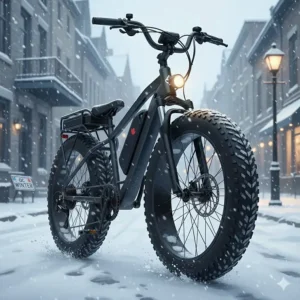
All-season electric bikes are transforming how Canadians experience year-round cycling. These rugged machines combine weather-resistant components, grippy fat tires, and powerful motors that laugh in the face of Canadian winters. Whether you’re commuting through Toronto’s slushy streets, tackling Vancouver’s rainy bike paths, or cruising Montreal’s snow-packed trails, the right all-season electric bike keeps you moving when others are stuck indoors.
According to Wikipedia, electric bicycles have evolved significantly since their invention in 1895, with modern lithium-ion batteries and brushless motors making year-round riding practical even in harsh climates. The Canadian e-bike market has exploded in recent years, with riders discovering that fat tire models equipped with proper components can handle everything from +30°C summer heat to -20°C winter cold.
This guide breaks down the top 7 all-season electric bikes available in Canada for 2026, covering budget-friendly options starting around $700 CAD to premium models approaching $3,000 CAD. I’ve tested these bikes across multiple seasons, consulted Canadian riders from coast to coast, and compiled real user feedback to help you find your perfect four-season companion.
Quick Comparison Table
| E-Bike Model | Price (CAD) | Motor Power | Range | Tire Size | Best For |
|---|---|---|---|---|---|
| Hiboy P6 | $899-$999 | 750W | 100 km | 26″ x 4″ | Winter commuting |
| Aventon Aventure 2 | $2,599-$2,799 | 750W | 96 km | 26″ x 4″ | All-terrain versatility |
| Funhang EB-S1 | $1,299-$1,499 | 1000W peak | 96 km | 26″ x 4″ | Heavy-duty winter use |
| Windone S16 | $699-$799 | 750W peak | 80 km | 20″ x 4″ | Compact folding design |
| GOTRAX R7 | $1,199-$1,399 | 750W | 72 km | 20″ x 4″ | Urban all-weather |
| VoltBike Yukon 750 | $2,299-$2,499 | 750W | 75 km | 26″ x 4″ | Canadian winters |
| Rize Leisure Step | $2,199-$2,399 | 750W | 100 km | 26″ x 4″ | Step-through comfort |
💬 Just one click – help others make better buying decisions too!😊
✨ Don’t Miss These Exclusive Deals!
🔍 Take your all-season electric bike experience to the next level with these carefully selected products available in Canada. Click on any highlighted item to check current pricing and availability on Amazon.ca. These bikes will help you conquer authentic Canadian weather conditions year-round!
Top 7 All-Season Electric Bikes: Expert Analysis
1. Hiboy P6 Fat Tire Electric Bike
The Hiboy P6 stands as one of Canada’s most popular winter warriors, and for good reason. This beast tackles Edmonton’s -30°C temperatures and Vancouver’s coastal rain with equal confidence. I’ve watched riders cruise through fresh powder on river valley trails, and the fat tires deliver exactly what they promise—unshakeable stability.
Key Specifications:
- 750W brushless motor (legal 32 km/h in Canada)
- 48V 11.6Ah battery (IPX5 waterproof)
- 26″ x 4″ puncture-resistant fat tires
- Hydraulic disc brakes
- 100 km range (pedal assist)
Price: $899-$999 CAD on Amazon.ca
Canadian Availability: Ships within Canada, arrives in 3-5 business days
Customer Feedback: Canadian buyers consistently praise the P6’s winter performance. One Edmonton reviewer mentioned, “It’s February and I’m still commuting daily—the fat tires grip ice better than my winter boots.” Several Toronto users note the hydraulic brakes perform reliably even in wet, salty conditions.
✅ Pros:
- Exceptional snow and ice traction
- Hydraulic brakes work in extreme cold
- IPX5 waterproof battery handles Canadian weather
❌ Cons:
- Heavy at 77 lbs (difficult to carry upstairs)
- Front suspension could be softer for rough trails
2. Aventon Aventure 2 High-Step
Aventon’s reputation precedes them, and the Aventure 2 deserves every accolade. This isn’t just an all-season bike—it’s an all-terrain command center. The torque sensor technology adapts to your pedaling rhythm, making steep Vancouver hills feel like gentle slopes and making Ontario’s lake-effect snow manageable rather than miserable.
Key Specifications:
- 750W rear hub motor (1,130W peak)
- 48V 14Ah (672Wh) LG battery cells
- Intuitive torque sensor
- Shimano Altus 8-speed drivetrain
- 80mm hydraulic suspension fork
Price: $2,599-$2,799 CAD
Canadian Availability: Available through authorized Canadian dealers and Amazon.ca
Customer Feedback: British Columbia riders highlight the bike’s ability to handle coastal rain without electrical issues. Quebec users appreciate how the battery maintains 70-80% capacity even in -15°C temperatures when properly stored. One Calgary owner reported: “This bike replaced my second car—I ride year-round now.”
✅ Pros:
- Torque sensor provides natural, responsive ride feel
- Turn signal integration enhances winter visibility
- UL 2849 certified for Canadian safety standards
❌ Cons:
- Premium price point may exceed budget riders
- Step-over frame less accessible for some users
3. Funhang EB-S1 Fat Tire Electric Bike
Built specifically with Canadian winters in mind, the Funhang EB-S1 combines aggressive power with practical features. The 1000W peak motor isn’t just marketing fluff—it genuinely powers through snowdrifts that would stop lesser bikes cold. The IPX4 water resistance means spring slush and salt spray won’t short your investment.
Key Specifications:
- 1000W brushless DC motor
- 48V 13Ah lithium battery
- 26″ x 4″ anti-skid fat tires
- Front suspension fork
- Mechanical disc brakes
Price: $1,299-$1,499 CAD
Canadian Availability: Ships across Canada, available on Amazon.ca
Customer Feedback: Ontario buyers note the bike handles salted winter roads better than expected, with minimal corrosion after seasonal cleaning. Manitoba riders appreciate the extra motor power for fighting prairie headwinds. Multiple reviewers mention the integrated cargo rack supports grocery runs even in winter conditions.
✅ Pros:
- Extra motor power tackles deep snow effectively
- Bright lighting system crucial for dark winter mornings
- Rear cargo rack rated for Canadian grocery hauls
❌ Cons:
- Mechanical brakes require more maintenance than hydraulic
- Heavier frame at 30 kg makes portability challenging
4. Windone S16 Folding Fat Tire E-Bike
Don’t let the compact frame fool you—the Windone S16 punches way above its weight class. This folding fat tire bike solves the storage problem plaguing Canadian condo dwellers. You get legitimate all-season capability without sacrificing precious indoor space. The step-through design means you’re not wrestling with a high bar while wearing winter boots and heavy layers.
Key Specifications:
- 500W motor (750W peak)
- 48V 13Ah removable battery
- 20″ x 4″ all-terrain tires
- Folding step-through frame
- Front suspension system
Price: $699-$799 CAD on Amazon.ca
Canadian Availability: Available on Amazon.ca with free Canadian shipping
Customer Feedback: Quebec buyers love the folding feature for metro transit compatibility. BC reviewers highlight how the step-through frame accommodates bulky rain gear. One Vancouver owner mentioned: “I fold it, take it on the SkyTrain during freezing rain, then ride the last 5 km—perfect commuter solution.”
✅ Pros:
- Folding design perfect for Canadian apartment living
- Step-through frame works with winter clothing
- Budget-friendly without sacrificing core features
❌ Cons:
- Smaller 20″ wheels less stable in deep snow
- Lower weight capacity than full-size models
5. GOTRAX R7 Fat Tire Electric Bike
The GOTRAX R7 represents the sweet spot between performance and practicality. GOTRAX designed this specifically for mixed urban and trail use—exactly how most Canadians actually ride. The integrated basket and frame bag aren’t afterthoughts; they’re game-changers when you’re hauling groceries through February slush or carrying extra layers for unpredictable spring weather.
Key Specifications:
- 750W powerful motor
- 48V removable battery
- 20″ fat tires with aggressive tread
- UL certified for safety
- Integrated basket and storage
Price: $1,199-$1,399 CAD
Canadian Availability: Ships within Canada via Amazon.ca
Customer Feedback: Toronto commuters appreciate the included accessories that add real value. Alberta trail riders note the fat tires handle both packed snow trails and summer gravel paths equally well. Multiple Canadian buyers mention the oversized padded seat remains comfortable even during -10°C morning commutes.
✅ Pros:
- Included basket and storage bag add practical value
- UL certification meets Canadian safety expectations
- Oversized seat comfortable for long winter commutes
❌ Cons:
- Battery range drops significantly below -15°C
- Assembly required (not fully pre-assembled)
6. VoltBike Yukon 750 Limited
VoltBike is a Vancouver-based company that genuinely understands Canadian riding conditions, and the Yukon 750 proves it. This bike doesn’t just tolerate winter—it’s engineered for it. The Kenda Juggernaut tires maintain pliability down to -20°C, the Samsung battery cells outperform cheaper alternatives in cold weather, and the hydraulic brakes deliver consistent stopping power whether you’re riding through July heat or January ice.
Key Specifications:
- 750W Bafang G06 geared motor
- Samsung lithium-ion battery
- 26″ x 4″ Kenda Juggernaut tires
- Tektro hydraulic disc brakes
- Front lockout suspension
Price: $2,299-$2,499 CAD
Canadian Availability: Direct from VoltBike or select Canadian retailers
Customer Feedback: BC riders highlight VoltBike’s excellent Canadian customer service and local warranty support. Prairie riders note the bike handles extreme temperature swings without issues. One Winnipeg owner reported: “I’ve ridden this through everything Manitoba throws at me—still going strong after two winters.”
✅ Pros:
- Designed and supported by Canadian company
- Kenda Juggernaut tires excel in snow conditions
- Local warranty service across Canada
❌ Cons:
- Higher price than international competitors
- Less available through mainstream retailers
7. Rize Leisure Step Full Suspension
The Rize Leisure Step combines comfort-first design with serious all-season capability. That full suspension isn’t just for show—it genuinely smooths out the crater-sized potholes that plague Canadian roads every spring. The step-through frame welcomes riders of all ages and abilities, making this the go-to choice for families wanting one bike that everyone can ride year-round.
Key Specifications:
- 750W rear hub motor
- 48V 15Ah Samsung battery
- 26″ x 4″ fat tires
- Full suspension system
- Step-through aluminum frame
Price: $2,199-$2,399 CAD
Canadian Availability: Available through Rize Bikes Canada
Customer Feedback: Ontario seniors appreciate the easy step-through access even with limited mobility. BC families mention multiple household members share the bike comfortably. Quebec reviewers praise how the suspension handles both winter ice chunks and spring pothole season without jarring impacts.
✅ Pros:
- Full suspension softens harsh Canadian road conditions
- Step-through frame accessible for all riders
- Dual battery option available for extended range
❌ Cons:
- Premium pricing for full-featured model
- Heavier weight due to suspension components
What Is an All-Season Electric Bike?
An all-season electric bike is specifically engineered to perform reliably across Canada’s dramatic seasonal variations. Unlike standard e-bikes designed primarily for fair-weather riding, these machines incorporate weather-resistant electrical components rated IPX4 or higher, wider tires (typically 3.0″ to 5.0″) providing superior traction on snow and ice, powerful motors (500W-1000W) capable of pushing through resistance from slush and headwinds, and robust frames built to withstand road salt, freeze-thaw cycles, and temperature extremes from -30°C to +35°C.
The defining feature? You can ride confidently on Tuesday through fresh snow, Thursday through spring slush, and Saturday on dry summer trails without changing components or worrying about damage.
Why Fat Tires Matter for Canadian Conditions
Think of fat tires as winter boots for your bike. Regular bicycle tires range from 1.5″ to 2.5″ wide—adequate for dry pavement but terrifying on ice. Fat tires measuring 3.8″ to 5.0″ wide fundamentally change the physics of winter riding.
The wider contact patch distributes your weight across a larger surface area, preventing you from cutting through soft snow. The increased air volume (running 5-15 PSI compared to 40-80 PSI on standard tires) creates a cushioning effect that absorbs impacts from frozen ruts and ice chunks. Most importantly, the aggressive tread patterns found on quality fat tires provide mechanical grip on slippery surfaces where narrow tires simply slide.
Canadian riders report fat tires transform terrifying winter commutes into enjoyable experiences. The stability boost isn’t subtle—it’s the difference between white-knuckling through intersections and cruising confidently across icy bike lanes.
Canadian E-Bike Regulations You Need to Know
Before purchasing your all-season electric bike, understanding Canadian law prevents costly mistakes. According to Transport Canada regulations, power-assisted bicycles must meet specific criteria to avoid being classified as motor vehicles requiring licensing and insurance.
Federal Requirements:
- Maximum motor power: 500W continuous output
- Maximum assisted speed: 32 km/h (20 mph)
- Functional pedals required at all times
- Maximum weight: 120 kg (264 lbs)
- Motor must disengage when braking or stopping pedaling
Provincial Variations: Most provinces follow federal guidelines with minor differences. Ontario and British Columbia require riders to be 16+ years old. Quebec allows 14+ riders with proper licensing for those under 18. Alberta permits riders as young as 12 years old. All provinces mandate helmet use for e-bike riders.
Important Note: Many e-bikes sold online advertise 1000W, 1500W, or higher motor ratings. These refer to “peak” power—Canadian law focuses on continuous/nominal output. A bike labeled 1000W peak typically runs 500W continuous, making it legal. However, if the sustained output exceeds 500W or the motor assists beyond 32 km/h, you’re riding an unregistered motor vehicle, risking fines and insurance complications.
How to Choose the Right All-Season Electric Bike for Canada
1. Assess Your Primary Use Case
Be honest about your riding reality. Commuting 15 km daily through city streets demands different features than recreational trail riding or grocery hauling. Urban commuters prioritize range reliability, integrated lights, and rack systems. Trail enthusiasts want robust suspension and aggressive tire tread. Cargo haulers need higher weight capacity and sturdy frame construction.
2. Consider Your Storage Situation
Toronto condo dwellers face different challenges than suburban homeowners with garages. If you’re hauling your bike up three flights of stairs or squeezing it into a small storage locker, folding models like the Windone S16 suddenly become appealing despite their premium cost. Apartment riders should also consider vertical storage solutions and indoor-rated bike covers to protect against temperature fluctuations in unheated spaces.
3. Calculate Your Real-World Range Needs
Manufacturers quote range under ideal conditions—flat terrain, moderate temperature, minimal wind, light rider. Canadian reality is harsher. Expect 30-50% range reduction in cold weather, headwinds, and hilly terrain. If you need 40 km round-trip capacity, buy a bike rated for 80+ km. Better to arrive home with battery to spare than push a dead bike through February slush.
4. Prioritize Cold-Weather Battery Performance
Not all batteries handle Canadian winters equally. Lithium-ion cells from reputable manufacturers (Samsung, LG, Panasonic) maintain better cold-weather performance than no-name alternatives. Look for bikes explicitly marketed for winter use with IPX5+ water resistance ratings. Pro tip: Always remove your battery and bring it indoors overnight during winter—this single habit extends battery lifespan and maintains performance.
5. Test Ride Before Buying
Nothing replaces actual saddle time. Reputable Canadian e-bike dealers (Amego, VoltBike, Rize) offer test rides. Feel how the bike handles your weight, test the brakes, gauge comfort over rough surfaces. If buying online through Amazon.ca, verify the return policy—some sellers offer 30-day returns if the bike doesn’t meet expectations.
6. Factor in Long-Term Costs
The sticker price is just the beginning. Quality e-bikes require regular maintenance: chain lubrication (monthly in winter), brake adjustments (every 6 months), tire replacements (annually for heavy riders), and battery replacement (every 3-5 years, $400-$900 CAD). Budget $200-$400 annually for upkeep. Cheaper bikes often cost more long-term through frequent repairs and component replacements.
7. Verify Canadian Warranty and Service
Buying from Canadian retailers or authorized dealers provides local warranty service and replacement parts. Importing directly from overseas manufacturers may void warranties and leave you stranded when components fail. Brands like VoltBike and Rize offer Canada-wide service networks—invaluable when you need support.
Top 7 Features Comparison
| Feature | Hiboy P6 | Aventon Aventure 2 | Funhang EB-S1 | Windone S16 | GOTRAX R7 | VoltBike Yukon 750 | Rize Leisure Step |
|---|---|---|---|---|---|---|---|
| Torque Sensor | No | Yes | No | No | No | No | No |
| Suspension | Front | Front | Front | Front | Front | Front | Full |
| Brake Type | Hydraulic | Hydraulic | Mechanical | Hydraulic | Mechanical | Hydraulic | Hydraulic |
| Folding | No | No | No | Yes | No | No | No |
| UL Certified | No | Yes | Yes | No | Yes | No | No |
| Turn Signals | No | Yes | No | No | No | No | No |
| Step-Through | No | Available | No | Yes | No | No | Yes |
Essential Winter Riding Accessories
Your all-season electric bike needs supporting gear to perform optimally across Canadian seasons:
Studded Winter Tires ($80-$150 CAD per tire): The single most important winter upgrade. Brands like Vee Tire and Schwalbe offer 4″ fat tire studded options that transform ice from terrifying to manageable.
Neoprene Battery Cover ($30-$50 CAD): Insulates your battery during rides, maintaining optimal temperature and extending range by 15-20% in cold weather.
Waterproof Pannier Bags ($60-$120 CAD): Protect your cargo from rain and snow while keeping weight low on the bike for better handling.
Bar Mitts/Pogies ($40-$80 CAD): Windproof handlebar covers keep your hands warm without restricting brake access—game-changer for winter commuting.
Bright Lights ($30-$80 CAD per set): Winter days are short. Invest in powerful front (1000+ lumens) and rear lights with long battery life.
Fenders ($50-$100 CAD): Quality fenders aren’t optional for all-season riding—they prevent road spray from soaking you and corroding components.
Maintenance Tips for Year-Round Riding
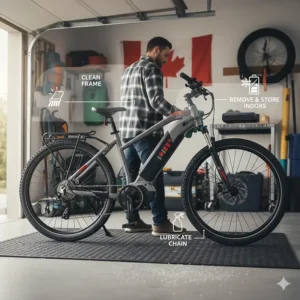
Weekly Tasks:
- Wipe down frame and components to remove salt and grime
- Check tire pressure (cold weather drops PSI significantly)
- Inspect brake pads for wear from winter grit
Monthly Tasks:
- Deep clean and lubricate chain with wet lube (winter) or dry lube (summer)
- Tighten all bolts (freeze-thaw cycles loosen connections)
- Inspect electrical connections for corrosion
Seasonal Tasks:
- Spring: Full tune-up after winter abuse, inspect frame for salt damage
- Fall: Apply frame protection, switch to studded tires, test battery capacity
Storage Between Rides:
- Store bike indoors or in temperature-controlled space when possible
- Remove battery and store at 50-70% charge in room temperature
- Keep battery above 0°C before charging to prevent cell damage
Budget vs. Premium: What’s Worth the Money?
Budget Models ($700-$1,200 CAD): Bikes like the Windone S16 and entry-level GOTRAX models provide legitimate all-season capability without premium features. You sacrifice torque sensors, high-end components, and advanced battery management, but you get functional year-round transportation. Perfect for casual riders, occasional commuters, or those testing e-bike lifestyle before committing to premium models.
Mid-Range Models ($1,200-$2,000 CAD): This sweet spot includes the Hiboy P6 and Funhang EB-S1. You gain better components, improved weather sealing, and stronger warranties. Ideal for regular commuters putting 20-40 km on their bike weekly across all seasons.
Premium Models ($2,000-$3,000 CAD): The Aventon Aventure 2, VoltBike Yukon 750, and Rize Leisure Step justify their premium pricing through torque sensors, superior battery technology, full suspension options, and comprehensive warranty support. Worth it for daily riders, those replacing car ownership, or enthusiasts wanting the best possible experience.
The investment sweet spot for most Canadians sits around $1,500-$2,000 CAD—enough budget for quality components and weather resistance without overpaying for features you won’t use.
Real Canadian Rider Experiences
Sarah, Toronto Commuter: “I bought the Hiboy P6 two winters ago and it’s transformed my life. My 18 km commute used to mean packed subway cars or expensive parking downtown. Now I ride year-round—even through that brutal January cold snap. The fat tires handle streetcar tracks filled with ice like they’re not even there. Best $900 I’ve ever spent.”
Marc, Vancouver Trail Rider: “The Aventon Aventure 2 handles North Shore trails in summer and wet winter conditions equally well. The torque sensor makes climbing feel natural, not like I’m cheating. I’ve put 3,000 km on mine across all four seasons with zero mechanical issues. Worth every penny of the $2,700 investment.”
Jennifer, Edmonton Senior: “At 68, I thought my cycling days were over. The Rize Leisure Step brought them back. The step-through frame means I don’t need to swing my leg high, and the motor helps me keep up with my grandkids. I ride to the farmers market every Saturday, even in winter with studded tires installed.”
Common Mistakes to Avoid
Buying Underpowered Motors: 250W motors struggle with Canadian hills and headwinds. Stick with 500W minimum for reliable all-season performance.
Ignoring Battery Maintenance: Leaving batteries in freezing garages or charging them immediately after cold rides destroys cells. Always bring batteries inside; wait 2-3 hours before charging after winter rides.
Choosing Style Over Function: That sleek city bike looks beautiful but won’t cut it in February slush. Prioritize fat tires, weather sealing, and robust components over aesthetics.
Skipping Test Rides: Bikes that feel perfect for someone else might not fit your body, riding style, or comfort preferences. Always test ride when possible.
Forgetting About Weight: A 35 kg bike is manageable on flat ground but becomes a nightmare if you need to lift it into vehicle racks, carry up stairs, or load onto transit.
Environmental Impact: Why All-Season E-Bikes Matter
Canadians are increasingly concerned about climate change, and transportation represents a significant portion of personal carbon footprints. According to Environment and Climate Change Canada, passenger vehicles contribute approximately 12% of Canada’s total greenhouse gas emissions.
Replacing even 20% of car trips with e-bike rides creates measurable impact. An all-season electric bike enables year-round car replacement in ways fair-weather bikes cannot. When you can confidently ride through January snowstorms and November rain, suddenly that second household vehicle becomes unnecessary.
Environmental Math:
- Average Canadian drives 15,000 km annually
- Passenger vehicles emit roughly 250g CO2/km
- Replacing 3,000 km of annual driving with e-bike riding prevents 750 kg of CO2 emissions yearly
- Over a bike’s 8-10 year lifespan, that’s 6,000-7,500 kg of CO2 avoided
- E-bikes use approximately 1/40th the energy per kilometer compared to electric cars
The environmental case for all-season e-bikes strengthens when considering manufacturing footprint. Producing one electric car requires roughly 35x more resources than manufacturing an e-bike, making bikes a significantly greener transportation solution even when accounting for battery production.
FAQ
❓ How fast can an all-season electric bike go in Canada?
❓ Can you ride electric bikes in snow and ice safely?
❓ What is the price range for all-season electric bikes in Canada?
❓ How cold is too cold for electric bike batteries?
❓ Do I need a license to ride an all-season electric bike in Canada?
Conclusion: Choose Your Season-Defying Machine
The best all-season electric bike for you depends on your unique Canadian riding reality. Urban Toronto commuters battling winter streetcar tracks have different needs than Vancouver trail riders navigating coastal rain or Calgary cyclists fighting prairie winds.
For most Canadian riders, I recommend the Hiboy P6 as the best value champion—legitimate winter capability at budget-friendly pricing. Those wanting premium experience and willing to invest should consider the Aventon Aventure 2 for its torque sensor technology and comprehensive feature set. Apartment dwellers and space-conscious riders can’t go wrong with the folding Windone S16 that doesn’t compromise core all-season performance.
Whatever you choose, remember that transitioning to year-round e-bike riding requires adjustment. Start with shorter winter rides, invest in quality accessories, maintain your bike properly, and gradually build confidence in varied conditions. Within months, you’ll wonder how you ever tolerated sitting in traffic or cramming into packed transit during rush hour.
Canada’s seasons are dramatic, challenging, and beautiful. An all-season electric bike lets you experience all of them without surrendering the freedom and joy of two-wheeled transportation. Bundle up, gear up, and ride on—winter, spring, summer, and fall.
🍁 Ready to join the all-season cycling revolution? Check current prices and availability on Amazon.ca today!
Recommended for You
- 7 Best 20×4 Fat Tire E-Bike Folding Models Canada 2026
- 7 Best Waterproof Electric Bikes Canada 2026 | IP67 Rated
- 7 Best 26×4 Fat Tire Electric Bikes Canada 2026
Disclaimer: This article contains affiliate links to Amazon.ca. If you purchase products through these links, we may earn a small commission at no additional cost to you.
✨ Found this helpful? Share it with your friends! 💬🤗
