
In This Article
If you’ve ever hopped on your e-bike during a frigid Canadian morning only to watch your battery drain faster than water through a sieve, you’re not alone. Winter wreaks havoc on lithium-ion batteries, and across Canada—from the Prairies to the Maritimes—riders face the same frustrating reality: cold temperatures can slash your battery range by up to 40% or more.
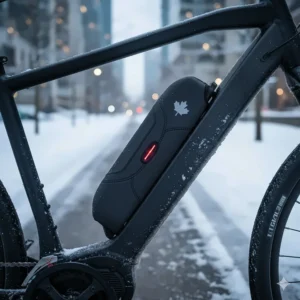
Here’s the thing: e-bike battery winter care isn’t just about keeping your bike functional through December, January, and February. It’s about protecting a $500-$1,200 investment from permanent damage. According to Health Canada, lithium-ion batteries should never be charged below freezing temperatures, as this can cause “lithium plating”—a phenomenon where lithium ions deposit on the anode surface instead of integrating properly, reducing capacity and creating safety risks.
But winter riding doesn’t have to mean shorter range or battery replacement. With proper insulation techniques, smart storage habits, and the right accessories, you can extend your e-bike battery life winter after winter. Whether you’re commuting through Toronto’s slushy streets or tackling Vancouver’s rainy cold snaps, this guide covers everything you need to know about how to protect e-bike battery in cold Canadian conditions.
Quick Comparison Table: Winter Battery Care Methods
| Method | Cost (CAD) | Effectiveness | Difficulty | Best For |
|---|---|---|---|---|
| Neoprene Battery Cover | $15-$35 | High (15-25% range boost) | Easy | Daily commuters |
| Heated Battery Jacket | $120-$180 | Very High (30-40% range boost) | Moderate | Extreme cold (-20°C+) |
| Indoor Storage | Free | High | Easy | All riders |
| Insulated Storage Bag | $25-$60 | Moderate | Easy | Battery transport/storage |
| Battery Monitor | $25-$45 | N/A (monitoring only) | Moderate | Tech-savvy riders |
💬 Just one click – help others make better buying decisions too! 😊
Top 7 E-Bike Battery Winter Care Products: Expert Analysis
1. BiKASE E-Bike Battery Cover – Best Overall Neoprene Protection
The BiKASE E-Bike Battery Cover is Canada’s go-to solution for basic winter battery protection. Made from 4mm neoprene (the same material used in wetsuits), this cover provides excellent insulation without breaking the bank.
Key Specs:
- Material: 4mm neoprene with waterproof coating
- Compatibility: Fits most downtube-mounted batteries (Bosch, Shimano, Yamaha)
- Temperature protection: Effective down to -10°C
Price Range: $18-$28 CAD on Amazon.ca
Canadian riders praise this cover’s simplicity. One Toronto reviewer noted, “Used it all last winter commuting. Battery definitely lasted longer on cold mornings, and the velcro stayed secure even on rough trails.”
✅ Pros:
- Affordable entry point
- Easy slip-on design
- Includes storage pocket
- Scratch protection
❌ Cons:
- No active heating
- Limited effectiveness below -15°C
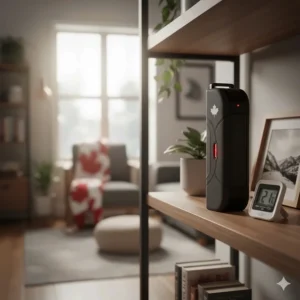
2. Bakcou Thermal Electric Bike Battery Jacket – Best Heated Solution
For serious winter riders facing Prairie or Northern temperatures, the Bakcou Thermal Battery Jacket offers active heating technology that maintains optimal battery temperature (10-24°C) even when mercury plummets.
Key Specs:
- Built-in USB-powered heating element (120W)
- Water-repelling fabric construction
- Automatic temperature regulation via BMS
Price Range: $145-$175 CAD on Amazon.ca
This isn’t just insulation—it’s a complete thermal management system. The heating element draws power from a portable battery bank (sold separately) or your bike’s USB port, warming the battery before you ride.
✅ Pros:
- Active heating for extreme cold
- Maintains 10-24°C battery temperature
- Water-resistant outer shell
❌ Cons:
- Higher price point
- Requires power source for heating
3. TMEOIIPY Neoprene Battery Cover – Best Budget Option
The TMEOIIPY Ebike Battery Cover delivers solid winter protection at an entry-level price. While it lacks advanced features, it gets the fundamentals right: waterproofing, insulation, and dirt resistance.
Key Specs:
- 5mm neoprene construction
- Reflective strips for night visibility
- Universal fit (28-45cm frame circumference)
Price Range: $16-$24 CAD on Amazon.ca
Canadian buyers appreciate the value proposition. As one Calgary rider put it, “Not fancy, but it works. Noticed less range drop on my -5°C commutes.”
✅ Pros:
- Lowest price point
- Good insulation-to-cost ratio
- Reflective safety features
❌ Cons:
- Basic design
- No premium materials
4. CBHCARCAR Reflective E-Bike Battery Cover – Best for Night Commuters
If you ride before dawn or after dusk (which describes most Canadian winter commuters), the CBHCARCAR E Bike Battery Cover adds crucial visibility alongside thermal protection.
Key Specs:
- Reflective coating for 360° visibility
- Thermal neoprene core
- Adjustable velcro straps (11.8-15.8″ circumference)
Price Range: $22-$32 CAD on Amazon.ca
This cover excels in urban winter commuting scenarios where visibility matters as much as battery protection. Montreal riders particularly love the reflective strips during Quebec’s long winter evenings.
✅ Pros:
- Enhanced night visibility
- Quality thermal protection
- Secure velcro system
❌ Cons:
- Slightly narrower fit range
- Not suitable for rack-mounted batteries
5. DROK 48V Battery Monitor – Best Temperature Tracking
Knowledge is power, and the DROK 48v Golf Cart Battery Meter gives you real-time insights into your battery’s temperature and voltage—critical data for winter riding.
Key Specs:
- LCD display with temperature gauge (0-179°F)
- Compatible with 10-100V lithium batteries
- NTC temperature probe included
Price Range: $28-$42 CAD on Amazon.ca
While not a protective product per se, this monitor helps you make informed decisions. One Winnipeg rider explained, “Knowing my battery temp helps me decide whether to warm it up indoors before charging. Probably saved me from ruining a $800 battery.”
✅ Pros:
- Precise temperature monitoring
- Voltage and capacity display
- Programmable alarms
❌ Cons:
- Requires installation
- Doesn’t provide protection
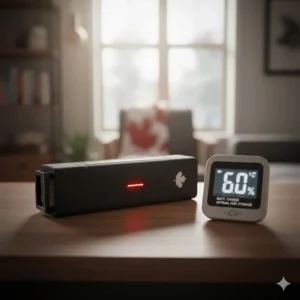
6. FLASLD Fireproof Battery Storage Bag – Best Safe Storage
The FLASLD E-Bike Battery Safe Bag isn’t just for winter—it’s year-round protection. But it shines during Canadian winters when you’re storing batteries indoors at room temperature.
Key Specs:
- Fireproof fabric rated to 1,650°C
- Waterproof and explosion-proof design
- Interior dimensions: 19.3″ x 4.3″ x 7″
Price Range: $32-$48 CAD on Amazon.ca
Canadian safety standards are strict, and this bag provides peace of mind when storing lithium batteries indoors—something Health Canada explicitly recommends for winter charging.
✅ Pros:
- Multi-layer fireproof construction
- Protects during indoor storage
- Comfortable carrying handles
❌ Cons:
- Not for on-bike use
- Bulky for daily transport
7. BiKase EBike Battery Bag – Best Transport Solution
For riders who remove batteries for indoor winter storage, the BiKase EBike Battery Bag offers mountable, weather-resistant protection.
Key Specs:
- Fire-resistant interior lining (FMVSS 302 compliant)
- Mounts to rear rack with straps
- Dimensions: 3.5″ x 3.5″ x 22″
Price Range: $55-$68 CAD (BiKase website + shipping to Canada)
This bag serves double duty: protecting your battery during transport and providing insulated storage at your destination. Vancouver riders love it for keeping batteries warm during office hours.
✅ Pros:
- Rack-mountable design
- Fire and water resistant
- Accommodates most batteries
❌ Cons:
- Higher price for a bag
- Limited Canadian availability
✨ Don’t Miss These Exclusive Deals!
🔍 Take your winter e-bike riding to the next level with these carefully selected products available in Canada. Click on any highlighted item to check current pricing and availability on Amazon.ca. These tools will help you create authentic year-round riding your neighbours will envy!
Understanding Lithium Battery Cold Protection Science
Let’s get nerdy for a moment. Do e-bike batteries work in freezing temperatures? Yes—but not optimally. Lithium-ion batteries rely on chemical reactions to generate power, and cold temperatures slow these reactions dramatically.
Here’s what happens at the molecular level: when temperatures drop below 0°C, the electrolyte inside your battery becomes more viscous (think syrup vs. water). This increased viscosity reduces ionic conductivity, forcing your battery to work harder to deliver the same power. The result? Reduced capacity, slower charging, and accelerated aging.
According to research from battery technology specialists, lithium batteries experience these temperature-related effects:
- 0°C to -10°C: 20-30% capacity reduction
- -10°C to -20°C: 40-50% capacity reduction
- Below -20°C: 60%+ capacity reduction (many batteries shut down)
But here’s the critical distinction: discharging in cold temperatures won’t damage your battery. It’s charging below freezing that causes permanent harm through lithium plating.
The Lithium Plating Problem
When you charge a cold battery, lithium ions should integrate into the anode’s graphite structure. But in freezing conditions, they can’t penetrate effectively. Instead, they form metallic deposits on the anode surface—reducing capacity with every cold charge cycle.
Health Canada’s battery safety guidelines explicitly warn against charging below 0°C for this reason. The solution? Always bring batteries to room temperature (15-20°C) before charging. That’s where proper storage and battery insulation techniques become essential.
How to Protect E-Bike Battery in Cold: 8 Essential Steps
1. Store Your Battery Indoors
This is the golden rule of e-bike battery winter care. Never leave your battery in an unheated garage, shed, or on your bike overnight when temperatures drop below freezing.
Ideal storage conditions:
- Temperature: 15-25°C
- Humidity: 40-60%
- Charge level: 40-60% for long-term storage
Why? Lithium batteries self-discharge slower at moderate temperatures, and you avoid the dangerous temptation to charge a frozen battery.
2. Warm Before Charging
If you ride in cold weather, bring your battery inside 1-2 hours before charging. Room temperature stabilization prevents lithium plating and ensures efficient charging.
Quick test: Touch the battery casing. If it feels cold to the touch, wait longer before plugging in.
3. Invest in Neoprene Insulation
A quality neoprene cover like the BiKASE E-Bike Battery Cover creates a thermal barrier between your battery and frigid Canadian air. Think of it as a winter coat for your power source.
Installation is simple: slip the cover over your battery before winter rides. The insulation traps heat generated during discharge, maintaining better battery temperature throughout your ride.
4. Consider Active Heating for Extreme Cold
If you regularly face temperatures below -15°C (common in Alberta, Saskatchewan, Manitoba, and Northern Ontario), passive insulation isn’t enough. The Bakcou Thermal Battery Jacket‘s active heating maintains optimal temperature even in brutal cold.
Pro tip from a Calgary rider: “I activate the heating element 10 minutes before my commute. Battery starts warm, stays warm, and I get nearly summer-level range even at -20°C.”
5. Monitor Battery Temperature
Install a DROK Battery Monitor to track temperature in real-time. Set alarms for:
- Below 0°C (stop charging immediately)
- Below -10°C (consider ending your ride to prevent over-discharge)
- Above 45°C (overheating risk)
6. Reduce Power Demands in Cold
Your battery works harder in winter. Help it out by:
- Using lower pedal-assist levels
- Pre-planning routes to minimize elevation changes
- Keeping tires properly inflated (underinflation increases resistance)
- Dressing warmly so you rely less on throttle
7. Maintain Optimal Charge Levels
Don’t drain your battery completely in winter. Cold temperatures combined with deep discharge accelerate aging. Try to:
- Keep charge above 20%
- Charge to 80-90% for daily use (not 100%)
- Store at 50-60% for extended periods
8. Use Canadian-Rated Chargers
Your charger should have temperature compensation features and comply with Canadian electrical standards (CSA certification). Original manufacturer chargers typically include these safeguards.
Never use cheap aftermarket chargers in winter—they lack the temperature monitoring circuits needed for safe cold-weather charging.
Battery Maintenance Best Practices for Canadian Winters
Winter battery tips electric bike owners swear by:
Pre-Season Preparation (November):
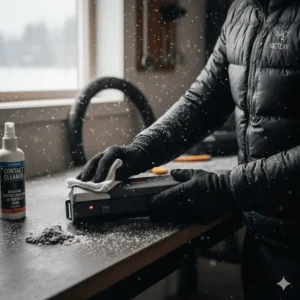
- Clean battery contacts with isopropyl alcohol
- Check for physical damage (cracks, swelling, corrosion)
- Update battery firmware if applicable
- Test full charge/discharge cycle indoors
Weekly Maintenance:
- Wipe down battery exterior to remove salt, moisture
- Inspect neoprene cover for tears or wear
- Verify charging port cap is secure
- Check battery mount bolts for tightness
Post-Ride Routine:
- Immediately remove battery and bring indoors
- Wipe dry if wet from snow/slush
- Allow 1-2 hours warm-up before charging
- Never leave in cold car overnight
Monthly Checks:
- Full capacity test (charge to 100%, measure range)
- Voltage check with multimeter
- Physical inspection for swelling
- Clean charging contacts
Canadian e-bike mechanic tip: “I see more batteries damaged from improper winter storage than actual riding. The 15 minutes you spend on post-ride care saves hundreds in replacements.”
Extend E-Bike Battery Life Winter: Storage Strategies
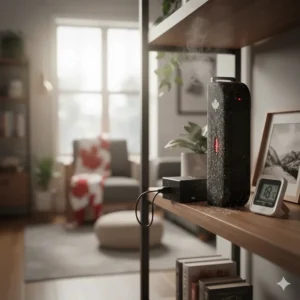
Long-term winter storage (for riders who don’t brave Canadian winters) requires special attention:
For 1-3 Month Storage:
- Charge battery to 50-60%
- Store in climate-controlled space (15-20°C)
- Check voltage monthly
- Recharge if drops below 40%
- Use a FLASLD Fireproof Storage Bag for safety
For 3-6 Month Storage:
- Charge to 60% (slightly higher for longer periods)
- Disconnect all connections
- Store in original packaging if possible
- Check every 6 weeks
- Expect 5-10% capacity loss per month
Never Store:
- ❌ Below 0°C (garage, shed, unheated basement)
- ❌ Above 30°C (near furnace, hot water heater)
- ❌ At 0% or 100% charge
- ❌ In humid environments
- ❌ Near flammable materials
Pro tip from a Halifax rider: “I bought a small thermometer/hygrometer for my storage area. Best $12 investment—I know exactly what my battery experiences.”
Winter Riding Techniques to Maximize Range
Even with perfect battery insulation techniques, riding style impacts winter range significantly:
Start Warm: Begin rides with a pre-warmed battery. Store it indoors overnight, install it on your bike, and ride within 10-15 minutes. Heat from discharge will maintain temperature.
Throttle Management: Sudden power demands strain cold batteries. Use gradual acceleration and maintain steady speeds rather than constant stop-start riding.
Eco Mode Mastery: Switch to lower assist levels (Eco or Tour instead of Sport or Turbo). You’ll pedal harder, but your battery will last 30-40% longer in identical cold conditions.
Route Planning: Cold batteries hate hills. Plan winter routes with gentle grades where possible. Save battery-intensive climbs for warmer days.
Tire Pressure: Check weekly. Cold air contracts, reducing tire pressure. Underinflated tires create rolling resistance, demanding more battery power.
Gear Selection: Use lower gears and higher cadence (pedal RPM). This shares load between you and the motor, reducing battery strain.
One Winnipeg commuter’s data: “Same 15km route, -10°C temperature. Normal riding: 45% battery use. With eco mode + smart throttle: 28% battery use. That’s 60% more range from riding technique alone.”
Do E-Bike Batteries Work in Freezing Temperatures? The Truth
Short answer: Yes, but with significant compromises.
E-bike batteries don’t “freeze” or stop working at 0°C like popular myth suggests. Modern lithium-ion cells function down to -20°C or lower. However, performance degrades progressively:
At 0°C:
- 80-85% of normal capacity
- Slower acceleration
- Reduced regenerative braking efficiency
At -10°C:
- 60-70% of normal capacity
- Noticeably sluggish response
- Risk of BMS shutdown on high demands
At -20°C:
- 40-50% of normal capacity
- Many batteries enter protection mode
- Some systems won’t turn on until warmed
Below -25°C:
- 30% or less capacity
- Most e-bikes unusable
- Risk of permanent damage if discharged deeply
The Battery Management System (BMS) in quality e-bikes monitors temperature constantly. If individual cells vary too much in temperature (common in extreme cold), the BMS may shut down the entire battery to prevent damage.
This is why insulation matters. A neoprene battery cover or heated jacket doesn’t just maintain capacity—it prevents BMS shutdowns that could strand you mid-ride.
According to battery research from Canadian cold-climate testing, properly insulated batteries maintain 15-25% more usable capacity than unprotected ones at -15°C.
Comparing Winter Battery Solutions: What Works Best?
| Solution | Initial Cost (CAD) | Annual Savings | Effectiveness | Maintenance |
|---|---|---|---|---|
| Indoor Storage Only | $0 | $50-$100 | Good | None |
| Neoprene Cover | $15-$35 | $75-$150 | Very Good | Low |
| Heated Jacket | $120-$180 | $150-$300 | Excellent | Moderate |
| Heated Jacket + Monitor | $150-$225 | $200-$400 | Best | Moderate |
ROI Analysis:
A replacement e-bike battery costs $500-$1,200 CAD. If proper winter care extends battery life by even one year, you’ve saved multiples of your investment in protective accessories.
Canadian example: Toronto commuter with a $900 battery:
- Without protection: 600 charge cycles (2-3 years)
- With neoprene cover + proper storage: 900+ cycles (4-5 years)
- Savings: $450-$600 over battery lifespan
- Investment: $25 for cover
- ROI: 1,800-2,400%
Troubleshooting Common Winter Battery Issues
Problem: Battery won’t charge after cold ride
Solution: Battery is too cold. Bring to room temp (2+ hours), then try charging. Never force-charge a cold battery.
Problem: Rapid capacity drop mid-ride
Solution: Battery cooling during ride. Add insulation, reduce power demands, or consider heated jacket for extreme cold.
Problem: BMS shutdown in cold
Solution: Individual cells reached temperature limits. Warm battery, reduce discharge rate, improve insulation.
Problem: Charging takes twice as long
Solution: Normal in cold weather. Cold batteries accept charge slower. Ensure battery is room temperature before starting.
Problem: Range dropped 50% since last winter
Solution: Possible battery degradation from improper cold charging. Test capacity indoors. May need replacement.
Problem: Battery won’t turn on below -15°C
Solution: BMS protection activated. This is normal. Warm battery before use or use heated jacket.
Top Canadian Retailers for Winter E-Bike Accessories
Where to buy winter battery protection in Canada:
Amazon.ca – Widest selection, fast Prime shipping, most products featured in this guide available
Canadian Tire – Seasonal availability, in-person inspection
MEC – Quality outdoor products, some battery accessories
Local E-Bike Shops – Expert advice, installation assistance, support local business
Shipping Considerations:
- Most battery accessories ship free with Amazon Prime
- Expect 3-7 day delivery in major centres
- Rural areas may see 7-14 days
- Winter weather can delay shipping 1-3 days
Warranty Notes:
- Keep receipts for warranty claims
- Some manufacturers void warranty if aftermarket accessories caused damage
- Canadian consumer protection laws apply (check provincial regulations)
FAQ: E-Bike Battery Winter Care in Canada
❓ How cold is too cold to charge an e-bike battery?
❓ Can I leave my e-bike battery in my car overnight during winter?
❓ What's the best temperature to store e-bike batteries in Canada during winter?
❓ How much does a neoprene battery cover really help in Canadian winters?
❓ Do heated battery jackets like Bakcou work in extreme Canadian cold (-30°C)?
Conclusion: Master E-Bike Battery Winter Care This Season
Canadian winters don’t have to mean garage-bound e-bikes. With proper e-bike battery winter care—combining smart storage, quality insulation, and informed riding techniques—you can maintain 70-85% of your summer range even when temperatures plummet.
The investment is minimal compared to battery replacement costs. A $25 neoprene battery cover delivers immediate returns in extended range and battery longevity. For serious cold-weather riders, the Bakcou Thermal Jacket offers active protection worth every dollar.
Remember the core principles:
- Never charge below freezing
- Store batteries indoors at room temperature
- Insulate during rides
- Monitor temperature when possible
- Adjust riding style for conditions
Whether you’re commuting through Toronto’s winter gridlock, exploring Calgary’s pathway system, or tackling Montreal’s snowy streets, these winter battery maintenance strategies keep you rolling. Start with indoor storage and a basic neoprene cover this season—you’ll immediately notice improved performance.
Canadian e-bike riders are tough, resourceful, and prepared. With this guide, you’re equipped to protect your battery investment and ride confidently through our legendary winters. See you on the winter trails! 🚴♂️❄️
Recommended for You
- 7 Best E-Bikes with Heated Grips Canada 2026 – Stay Warm
- 7 Best All-Season Electric Bikes Canada 2026
- 7 Best 20×4 Fat Tire E-Bike Folding Models Canada 2026
Disclaimer: This article contains affiliate links to Amazon.ca. If you purchase products through these links, we may earn a small commission at no additional cost to you.
✨ Found this helpful? Share it with your friends! 💬🤗
