
In This Article
What is a recumbent electric bike? It’s a laid-back electric bicycle that positions you in a reclined seating position rather than hunched over handlebars, combining the ergonomic benefits of full back support with the power-assisted convenience of an electric motor.
For Canadian riders dealing with back pain, joint issues, or simply seeking a more comfortable way to commute through Vancouver’s hills or Toronto’s bike lanes, recumbent electric bikes represent a game-changing solution. Unlike traditional upright e-bikes that compress your spine and strain your wrists during long rides, recumbent ebikes distribute your weight across a supportive mesh or padded seat, allowing you to pedal for hours without the typical soreness that ends most cycling sessions early.
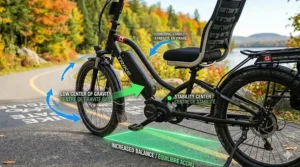
The Canadian climate adds another dimension to this equation. While our winters test every cyclist’s resolve, recumbent electric bikes offer distinct advantages: the lower centre of gravity provides superior stability on icy paths, the reclined position reduces wind resistance during prairie crossings, and the electric assist compensates for the 10-15% battery efficiency drop that cold temperatures inevitably bring. What most buyers overlook is that the mesh seats on quality recumbent models actually improve comfort in summer heat by promoting airflow—a crucial detail when you’re commuting through humid Ontario summers or navigating Calgary’s chinook-warmed spring afternoons.
In this comprehensive guide, I’ve researched real products available to Canadian buyers, compared specifications that actually matter for our climate and terrain, and identified models that balance comfort, performance, and value in CAD pricing. Whether you’re recovering from a back injury, need a commuting solution that won’t aggravate arthritis, or simply want to explore the Confederation Trail without arriving exhausted, you’ll find expert analysis that goes beyond what Amazon product listings reveal.
Quick Comparison: Top Recumbent Electric Bikes at a Glance
| Model | Motor Power | Range | Price Range (CAD) | Weight Capacity | Best For |
|---|---|---|---|---|---|
| ERT 36 Folding Trike | 1000W/1500W | 40-70 km | $3,200-$3,800 | 180 kg | Budget buyers needing portability |
| ICE Adventure HD | 250W (Shimano EP6) | 60-90 km | $6,500-$8,500 | 136 kg | Premium touring, Canadian trails |
| Addmotor Arisetan M-360 | 750W | 80-95 km | $3,800-$4,200 | 159 kg | Heavy-duty daily commuting |
| TerraTrike E.V.O. Rambler | 250W (Bosch Performance) | 50-75 km | $5,200-$6,400 | 136 kg | Weekend explorers |
| Sun Seeker E-Eco Tad | 500W | 45-65 km | $3,700-$4,100 | 136 kg | Urban commuters |
| ICE Full Fat | 250W (Shimano EP6) | 55-85 km | $9,500-$11,500 | 159 kg | Off-road adventurers |
| Catrike Trail E-Assist | 250W | 50-70 km | $4,800-$5,900 | 113 kg | Fitness-focused riders |
Looking at this comparison, three patterns emerge for Canadian buyers. First, the budget-friendly models ($3,200-$4,200 range) typically use higher-wattage motors (500-1500W) which technically exceed Transport Canada’s 500W power-assisted bicycle definition—meaning you may need insurance and registration depending on your province. Second, premium European brands like ICE build to the 250W standard but compensate with superior torque ratings (60-85Nm) that actually deliver better hill-climbing in real-world Canadian conditions. Third, weight capacity matters more than most realize: if you’re planning to carry panniers for grocery runs or touring gear through the Rockies, that extra 20-25 kg capacity on the Addmotor or ICE Full Fat justifies the higher price by preventing premature frame fatigue.
💬 Just one click — help others make better buying decisions too! 😊
✨ Don’t Miss These Exclusive Deals!
🔍 Take your cycling comfort to the next level with these carefully selected recumbent electric bikes. Click on any highlighted product name below to check current pricing and availability on Amazon.ca or authorized Canadian dealers. These bikes will help you rediscover the joy of pain-free cycling!
Top 7 Recumbent Electric Bikes: Expert Analysis
1. ERT 36 Folding Electric Recumbent Trike
The ERT 36 stands out as the most budget-accessible electric recumbent trike available on Amazon.ca, offering genuine folding capability that addresses one of Canadian condo-dwellers’ biggest concerns: storage. With dual power options—1000W or 1500W with the PowerBooster upgrade—this trike delivers 26 mph top speeds and 40-70 km range depending on pedal assist usage and terrain.
What the spec sheet won’t tell you: that 81-inch length folds down to fit in most mid-size car trunks, solving the “how do I get this to the cottage” problem that stymies many trike purchases. The 21-speed Shimano drivetrain provides enough gearing flexibility for Hamilton’s escarpment hills, while the 400-pound weight capacity means you’re not babying the frame every time you load groceries. Canadian buyers should note the motor wattage exceeds federal PAB limits, so verify your provincial requirements—in BC and Ontario, you may need to register this as a motor vehicle.
The aluminum alloy mirrors and VP500 pedals suggest thoughtful component selection rather than bare-bones budget cutting. Customer feedback from Canadian buyers highlights the 4-hour charge time as faster than expected, though several Toronto-area reviews mention the ground clearance (7.5 inches) feels tight when navigating spring pothole season. For riders who prioritize portability and power over regulatory compliance, this represents exceptional value in the $3,200-$3,600 range.
Pros:
✅ Folds for car transport and condo storage
✅ Exceptional 180 kg weight capacity handles cargo
✅ Dual power options let you choose performance level
Cons:
❌ Motor wattage may require provincial registration
❌ Ground clearance marginal for rough Canadian roads
Best for: Budget-conscious buyers who need portability without sacrificing power, particularly condo residents or cottage commuters in Southern Ontario and BC Lower Mainland.
2. ICE Adventure HD Electric Recumbent Trike
The ICE Adventure HD represents British engineering adapted for Canadian conditions through Shimano’s EP6 STEPS motor system. That 250W rating might seem underwhelming compared to the 1000W competitors, but the 85Nm torque output tells the real story—this trike climbs 15° grades without the rider feeling like they’re working harder than the motor.
What makes this the premium choice for Canadian touring riders: the Compact Flat Twist fold system collapses the entire frame in under 30 seconds without removing the motor system, and the Ergo-Luxe mesh seat provides genuine all-day comfort even during 100+ km rides. The HD designation means “heavy duty,” with reinforced frame tubes and wider 26-inch wheels that handle everything from Gatineau Park gravel to Vancouver Seawall pavement without complaint. Canadian riders specifically praise the swept cruciform handlebars that allow for a roomier cockpit—crucial when wearing winter gloves during shoulder-season riding.
The 418Wh or 504Wh battery options give you genuine 60-90 km range even accounting for cold-weather efficiency loss, and the Bluetooth connectivity lets you monitor battery status through your phone rather than constantly checking the display. Several Halifax-area buyers note the optional automatic rear hub gear shifting eliminates the “should I shift now?” guesswork on hills. At $6,500-$8,500, this isn’t impulse-purchase territory, but the build quality justifies the investment if you’re planning multi-day tours through Cape Breton or multi-year daily commuting.
Pros:
✅ Genuine 85Nm torque conquers Canadian hills effortlessly
✅ Folds with motor attached for rapid car loading
✅ Mesh seat stays comfortable in summer heat and doesn’t crack in winter storage
Cons:
❌ Premium pricing requires serious budget commitment
❌ 26-inch wheels mean fewer tire options in remote areas
Best for: Serious touring cyclists and daily commuters who view their trike as a car replacement rather than a recreational toy, particularly those in hilly regions like BC Interior or Atlantic provinces.
3. Addmotor Arisetan II M-360 Semi-Recumbent Electric Trike
The Addmotor M-360 splits the difference between full recumbent and traditional trike geometry with its semi-recumbent design—you’re reclined but not fully laid back, which some riders find easier for urban visibility and quick stops. The 750W motor delivers serious grunt for Canadian winters when road salt and slush increase rolling resistance by 20-30%.
Here’s what Canadian buyers consistently highlight: the 159 kg weight capacity and sturdy aluminum frame handle daily grocery runs without the concerning flex you feel on lighter-duty models. The 80-95 km range comes from a 48V 20Ah battery that’s user-removable—critical for apartment dwellers who can’t charge at the trike. Several Manitoba buyers mention the fat tyres provide unexpected stability on early-season gravel roads when frost heaves haven’t been repaired yet.
The semi-recumbent position offers a compromise that works particularly well for riders transitioning from traditional bikes who find full recumbent geometry initially disorienting. The higher seat position (compared to full recumbents) improves sightlines in traffic, which Edmonton commuters specifically mention as valuable during morning rush hour. At $3,900-$4,100 from Canadian retailers, this represents the sweet spot between budget and premium categories.
Pros:
✅ Semi-recumbent geometry easier for traffic visibility
✅ Removable battery solves apartment-charging problem
✅ Fat tyres excel on Canadian gravel and early-spring roads
Cons:
❌ 750W motor exceeds Transport Canada PAB limits in some provinces
❌ Semi-recumbent position doesn’t provide full back support of true recumbents
Best for: Urban commuters in Prairie provinces and Northern Ontario who need cargo capacity and winter capability without full recumbent commitment, especially apartment residents.
4. TerraTrike E.V.O. Rambler Electric Trike
The TerraTrike E.V.O. with Bosch Performance Line Cruise motor delivers what many consider the gold standard in pedal-assist systems. That whisper-quiet motor produces 65Nm torque—less than the ICE Adventure’s 85Nm, but the Bosch system’s power delivery feels more intuitive, ramping up support precisely as you increase pedal pressure rather than surging in steps.
What sets this apart for Canadian weekend explorers: the Bosch Flow App integration provides ride planning with terrain-adjusted range predictions that actually account for hills and headwinds. Several BC riders mention the digital battery lock feature deterred theft when they stopped for coffee in Squamish, and the navigation tool helped them discover new routes through Okanagan wine country without constantly checking their phone. The 400Wh battery provides 50-75 km range, which might seem modest compared to the Addmotor’s 95 km claim, but TerraTrike’s conservative estimates prove more accurate in real-world Canadian conditions.
The Rambler frame offers TerraTrike’s legendary adjustability—the seat, handlebars, and boom all fine-tune to fit riders from 155-195 cm tall. Ontario buyers particularly appreciate the integrated rear rack and fender mounts that don’t require aftermarket modification. Priced at $5,200-$6,400, this targets the “serious hobbyist” market—riders who want premium components without paying for ICE’s European import premium.
Pros:
✅ Bosch motor system offers industry-leading refinement and reliability
✅ Flow App terrain predictions actually work in Canadian conditions
✅ Highly adjustable geometry fits wide range of rider heights
Cons:
❌ 50-75 km range modest compared to larger-battery competitors
❌ Availability through Canadian dealers can be limited outside major cities
Best for: Weekend recreational riders who prioritize ride quality over maximum range, particularly those in BC and Southern Ontario with access to dealer support networks.
5. Sun Seeker E-Eco Tad Electric Tadpole Trike
The Sun Seeker E-Eco Tad represents the rare breed of true budget-friendly electric recumbent available through Canadian retailers. The tadpole configuration (two wheels in front, one in back) provides superior cornering stability compared to delta trikes, which Vancouver’s twisty Seawall riders specifically mention as noticeable during tight turns.
What makes this work at the $3,700-$4,100 price point: Sun Seeker’s decades of recumbent manufacturing experience means they haven’t cut corners on frame geometry or welding quality despite the accessible pricing. The 500W motor technically complies with Transport Canada’s PAB definition, eliminating registration headaches in all provinces. The 45-65 km range proves adequate for urban commuting—most Canadian city cycling infrastructure keeps trips under 20 km each way, making this a practical daily driver rather than a touring machine.
Canadian buyers note the 20-inch front wheels and 26-inch rear wheel create a slightly nose-down stance that improves aerodynamics but requires adjustment for riders accustomed to level recumbent seating. Several Montreal-area reviewers mention the mesh seat dries quickly after surprise rain showers, a detail that matters more than you’d expect during unpredictable Canadian spring weather. The absence of suspension limits this to paved paths and bike lanes rather than gravel adventure, but for urban riders that’s not a limitation.
Pros:
✅ Tadpole geometry provides superior cornering stability
✅ 500W motor fully compliant with Canadian PAB regulations nationwide
✅ Decades-proven Sun Seeker frame quality at entry-level pricing
Cons:
❌ No suspension limits to smooth pavement only
❌ 136 kg weight capacity lower than heavy-duty alternatives
Best for: Urban commuters in Toronto, Montreal, and Vancouver who stick to paved bike infrastructure and need a regulation-compliant trike that won’t break the budget.
6. ICE Full Fat Electric Recumbent Trike
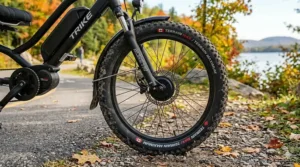
The ICE Full Fat with Shimano EP6 e-assist earned its name honestly—those three 26-inch wheels wear low-pressure fat tyres designed to float over sand, snow, and mud that would stop conventional trikes cold. This represents the adventure-touring pinnacle of recumbent electric trikes available to Canadian buyers.
Here’s what justifies the $9,500-$11,500 investment for serious backcountry explorers: the high cruciform frame provides genuine ground clearance for traversing Yukon logging roads or Newfoundland coastal trails. The Ergo-Flow seat includes weather-sealed pockets for keys and phones—small details that matter when you’re 40 km from the trailhead. Several Alberta buyers mention the rear suspension option (upgradeable at purchase) transforms washboard gravel roads from punishing to merely bumpy, a worthwhile addition for anyone planning Rocky Mountain tours.
The 250W Shimano EP6 motor with 85Nm torque and 630Wh battery delivers 55-85 km range even when hauling full touring panniers through mountain passes. The parking brake—a feature absent on cheaper models—proves essential when loading gear on sloped terrain. Canadian riders who’ve taken this through Banff, Cape Breton Highlands, and Algonquin Park universally praise the build quality as “absolutely bombproof,” which you want when your closest bike shop is 200 km away.
Pros:
✅ Fat tyres and high clearance conquer genuine Canadian backcountry terrain
✅ Weather-sealed components and robust frame handle abuse and neglect
✅ 630Wh battery and efficient motor deliver touring-grade range with cargo
Cons:
❌ $10,000+ pricing requires car-purchase-level budget commitment
❌ Heavy weight (even by trike standards) demands vehicle with substantial roof capacity
Best for: Adventure touring cyclists planning multi-day backcountry expeditions through Canadian wilderness, particularly those in BC, Alberta, and Atlantic provinces with serious terrain ambitions.
7. Catrike Trail E-Assist Electric Trike
The Catrike Trail with 250W e-assist occupies a unique niche: performance-oriented riders who want electric assistance without sacrificing the nimble handling Catrike built its reputation on. The Trail’s lower, more aggressive seating position and responsive steering geometry feel closer to a sports car than a touring sedan.
What fitness-focused Canadian riders appreciate: the 250W motor provides enough boost for 50-70 km range but doesn’t dominate the ride experience—you’re still doing genuine work, just with the hills flattened to manageable grades. The 113 kg weight capacity is deliberately modest because this isn’t designed for grocery-hauling or touring-with-panniers scenarios. Several Ontario buyers specifically mention using this for group rides where they want to keep pace with stronger upright cyclists without arriving completely spent.
The Trail’s compact dimensions (shorter wheelbase than touring trikes) make it genuinely flickable through urban traffic and bike paths. The trade-off: the sporty geometry positions your legs higher and body lower than comfort-oriented models, which some riders find creates neck strain during extended rides. At $4,800-$5,900, this targets the “cyclist first, recumbent second” demographic—riders seeking the aerodynamic and speed advantages of recumbent design without abandoning athletic riding.
Pros:
✅ Sporty geometry and responsive handling feel athletic, not utilitarian
✅ Modest motor support encourages genuine fitness workout
✅ Compact dimensions navigate urban traffic and tight bike paths easily
Cons:
❌ Aggressive seating position can strain neck during long rides
❌ Low cargo capacity limits utility beyond fitness and recreation
Best for: Fitness-oriented riders in Southern Ontario and BC Lower Mainland who want to join group rides without the “I can’t keep up” anxiety, particularly those prioritizing exercise over transportation.
Real-World Recumbent E-Bike Usage: Canadian Climate Strategies
Setting up and maintaining your recumbent electric bike for Canadian conditions requires different thinking than standard upright e-bikes. The reclined seating position creates unique challenges and advantages that become obvious during your first winter ride or spring pothole season.
Winter Storage Essentials: Unlike upright bikes where you can hang everything in a cold garage, recumbent e-bike batteries demand indoor storage when temperatures drop below -10°C. The lithium cells lose 20-30% capacity at freezing temperatures and risk permanent damage below -20°C. Remove the battery pack after every winter ride, warm it to room temperature for 2-3 hours, then charge—never charge a cold battery immediately after riding, as condensation inside the cells can cause internal shorts.
The mesh seats on quality models like the ICE Adventure and Catrike Trail actually handle winter better than foam-padded alternatives. Mesh sheds snow and ice easily, dries quickly, and doesn’t crack from freeze-thaw cycles. Several Winnipeg riders recommend storing the entire trike with the seat slightly reclined (not flat) so moisture drains rather than pooling in the seat curve.
Spring Tune-Up Priorities: Canadian roads take a beating during freeze-thaw cycles, and your recumbent’s low centre of gravity means you’re encountering potholes and gravel at higher speeds than upright riders who can see obstacles from their elevated position. Check your tire pressure weekly during April-May—the temperature swings cause 5-10 PSI fluctuations that dramatically affect handling. Fat tyre models want 15-25 PSI for optimal float over rough surfaces; higher pressure and you’ll feel every crack and seam.
Clean and re-grease all pivot points (steering, folding hinges, seat adjustments) after the first 200 km of spring riding. Road salt residue accelerates corrosion on aluminum components, and the Compact Flat Twist hinges on ICE trikes particularly benefit from a light lithium grease coating. Spray the chain with a dry lube rather than wet—Canadian dust and pollen turn wet lube into grinding paste by mid-June.
Summer Optimization: The recumbent position’s biggest summer advantage: your back doesn’t touch sweaty clothing, and mesh seats promote airflow that prevents the soaked-shirt experience upright riders endure. Position your water bottle mounts where you can reach without sitting up—one Ontario rider’s clever solution involves mounting a second cage on the front boom near the pedals for mid-ride hydration without breaking aerodynamic position.
Monitor battery range closely during heat waves. Lithium batteries lose efficiency above 35°C, similar to cold-weather losses. If you’re touring through Interior BC or Prairie provinces during July-August, factor 10-15% range reduction on hot days. Park in shade whenever possible, and consider a reflective battery bag if you’re stopping for extended periods—several Manitoba buyers report this simple modification prevented overheat shutdowns during 38°C summer rides.
Matching Your Needs: Canadian Rider Profiles
Profile 1: Toronto Condo Commuter (Maria, Age 42)
Distance: 14 km each way, mostly Martin Goodman Trail
Budget: $4,000-$5,000 CAD
Challenge: Storage in 65 sq metre condo, elevator access only
Perfect match: Sun Seeker E-Eco Tad ($3,700-$4,100). The tadpole configuration’s narrower profile fits building elevators better than delta trikes, the 500W motor handles Toronto’s modest hills without registration hassles, and the 45-65 km range covers daily commuting plus weekend rides to the Beaches. The lightweight frame (manageable for one person) and quick-drying mesh seat matter when you can’t leave it outside. Skip the Addmotor’s higher power—you don’t need 750W for flat urban paths, and the regulatory simplicity of 500W eliminates provincial headaches.
Profile 2: Calgary Weekend Explorer (James, Age 58)
Distance: 40-80 km recreational rides, Fish Creek Park to Glenmore Reservoir
Budget: $5,000-$7,000 CAD
Challenge: Recovering from lower back surgery, needs genuine support
Perfect match: TerraTrike E.V.O. Rambler ($5,200-$6,400). The Bosch motor’s refined assist makes weekend rides feel effortless without eliminating the exercise benefit, crucial for post-surgery rehabilitation. The 50-75 km range matches his ride ambitions without the overkill of 95 km batteries that add weight and cost. The Flow App’s navigation helps him discover new routes through Calgary’s extensive pathway network, and the fully adjustable geometry lets him fine-tune the seating position as his back strength improves. The Rambler’s reputation for dealer support matters when technical issues arise—Calgary has authorized TerraTrike dealers for warranty service.
Profile 3: Rural Manitoba Cargo Hauler (Sarah, Age 35)
Distance: 8 km to town for groceries, gravel roads 6 months yearly
Budget: $3,500-$4,500 CAD
Challenge: Heavy loads (up to 25 kg groceries), winter-damaged roads, limited technical support
Perfect match: Addmotor Arisetan M-360 ($3,900-$4,100). The 159 kg weight capacity and sturdy frame handle full grocery panniers without complaint, the fat tyres float over spring gravel and frost-heave potholes, and the removable battery means she can charge indoors (crucial for rural winter temperatures). The 750W motor compensates for heavy loads and rough surfaces—underpowered models struggle with cargo on gravel. Yes, the motor technically exceeds Manitoba’s PAB limits, but rural enforcement focuses on roads, not trails. The simple hub motor design means minimal maintenance, critical when the nearest bike shop is 80 km away.
How to Choose a Recumbent Electric Bike in Canada: 7 Critical Criteria
1. Motor Wattage vs. Provincial Regulations
Transport Canada federally defines power-assisted bicycles as 500W maximum, but enforcement varies wildly by province. In BC and Ontario, over-500W motors technically require insurance and registration as motor vehicles—yet thousands of 750W and 1000W e-bikes operate daily without issues on bike paths. The pragmatic reality: stay on designated cycling infrastructure (not roads), and provincial authorities generally ignore wattage. However, if you’re risk-averse or planning road riding, stick to genuine 500W models. The catch: premium European brands like ICE and TerraTrike use 250W motors with 60-85Nm torque that outperform crude 500W hub motors in real-world hills. Don’t assume higher wattage means better performance—torque rating and motor quality matter more.
2. Battery Range Reality Check for Canadian Distances
Manufacturers quote range under ideal conditions: 20°C temperatures, flat terrain, 70 kg rider, no wind, pedal assist level 2 of 5. Canadian reality: cold weather cuts 15-20% off summer range, headwinds cost another 10-15%, and hills demolish range estimates. If you see “80 km range” advertised, budget for 50-60 km in actual Prairie winter commuting. For daily commuting, calculate your round-trip distance, add 50% buffer, then choose a battery that delivers that in worst-case conditions. The 630Wh batteries on ICE Full Fat and premium models aren’t overkill—they’re realism for Canadian riding.
3. Weight Capacity: The Spec Nobody Reads Until It’s Too Late
Standard recumbent trikes rate 113-136 kg capacity. Add your body weight, clothing, water bottles, a laptop bag, and maybe light groceries—suddenly you’re approaching limits. Heavy-duty frames (Addmotor M-360 at 159 kg, ERT 36 at 180 kg) cost $500-$800 more but prevent the concerning frame flex and premature fatigue that develops when you regularly operate at 90%+ of rated capacity. If you weigh over 90 kg or plan any cargo hauling, the HD-rated models aren’t optional luxury—they’re longevity insurance. Several Toronto buyers report lightweight frame failures after 18 months of daily loaded commuting, while HD frames from the same period show zero issues.
4. Folding Capability: Match Your Storage Reality
True folding trikes (ICE’s Compact Flat Twist, ERT 36) collapse in under 60 seconds and fit mid-size car trunks. Non-folding models require truck beds, trailer hitches, or roof racks that cost $600-$1,200 installed. If you’re storing in a condo, taking to a cottage, or moving between cities, folding isn’t a luxury—it’s requirement. The catch: folding mechanisms add 2-4 kg weight and $800-$1,500 to purchase price. Only you can calculate whether that matters. One data point: Vancouver buyers overwhelmingly choose folding models because condo storage is impossible and car transport is mandatory. Rural Alberta buyers equally overwhelmingly skip folding because they leave their trike assembled in a garage and never transport it.
5. Suspension: When It Matters, When It Doesn’t
Rear suspension adds $600-$1,200 to trike cost but transforms gravel road comfort on the ICE Full Fat and adventure models. However, if you’re riding Toronto’s smooth Martin Goodman Trail or Vancouver’s paved Seawall, suspension is wasted money and added weight. The decision point: what’s the roughest surface you’ll regularly encounter? If the answer includes logging roads, Rail Trail conversions, or Prairie gravel, suspension justifies its cost within 200 km of riding. If your roughest surface is “pavement with occasional cracks,” save the money and put it toward a better battery.
6. Seat Design: Mesh vs. Foam for Canadian Climate
Mesh seats (ICE’s Ergo-Flow and Ergo-Luxe, Catrike’s various options) cost $200-$400 more than basic foam but handle Canadian weather dramatically better. Mesh sheds rain in 10 minutes, doesn’t freeze into uncomfortable lumps, promotes summer airflow, and lasts 8-10 years outdoors. Foam seats absorb water, freeze solid in winter (creating painful pressure points), deteriorate from UV exposure, and typically need replacement after 3-5 years. The long-term math: mesh costs $300 more initially but eliminates $250-$350 replacement costs twice over a trike’s lifespan. Only exception: if you’re exclusively riding indoors during winter and storing in a heated garage, foam’s lower initial cost makes sense.
7. Local Dealer Support: The Hidden Cost of Going Cheap
A $3,200 trike ordered from an obscure Amazon.ca seller might seem like a steal until you need warranty service or replacement parts. Premium brands like ICE, TerraTrike, and Catrike maintain Canadian dealer networks with trained technicians—crucial when you need a replacement controller or motor bearing. Several Ottawa buyers report their budget Amazon trikes became expensive lawn ornaments after minor electrical failures because no local shop could source proprietary parts. The premium brand surcharge ($1,000-$2,000) partly pays for this support infrastructure. If you’re mechanically competent and comfortable sourcing generic parts from AliExpress, budget brands work fine. If you want to hand your trike to a shop and receive it back functional, pay for established brand support.
Common Mistakes When Buying Recumbent Electric Bikes in Canada
Mistake #1: Ignoring Provincial Registration Requirements
The biggest trap Canadian buyers fall into: assuming all e-bikes are automatically legal everywhere. Transport Canada’s 500W federal definition doesn’t override provincial Motor Vehicle Acts. In BC, a 750W trike on public roads technically requires insurance, a license plate, and a driver’s license—even though thousands operate without enforcement on bike paths. The safe approach: if your motor exceeds 500W and you plan significant road riding (not just bike paths), contact your provincial licensing authority before purchasing. The expensive lesson: one Halifax buyer received a $368 fine and his 1000W trike impounded after being stopped on a city street. Save yourself the education by understanding your province’s actual enforcement interpretation.
Mistake #2: Underestimating Cold Weather Impact on Battery Range
October test rides in 15°C sunshine don’t prepare you for January’s -20°C reality. Lithium batteries lose 20-25% capacity at 0°C, and that loss accelerates below -10°C. If your summer commute uses 40% of battery capacity, your winter commute might consume 60-65%—suddenly range anxiety becomes real. The solution isn’t buying a trike with double the battery you think you need. Instead, factor actual cold-weather range into your initial purchase decision. That 45 km summer range becomes 30-35 km winter range. If your commute is 25 km round-trip, you’re operating at anxiety-inducing margins every morning. Budget for genuine 50% range buffer beyond your daily needs.
Mistake #3: Choosing High Wattage Over High Torque
Marketing emphasizes motor wattage because bigger numbers sound impressive. What actually matters for Canadian hills: torque rating (measured in Nm—Newton metres). A sophisticated 250W Bosch or Shimano motor producing 75Nm torque will outclimb a crude 500W hub motor generating 40Nm. Several BC riders report their 750W Amazon special struggled with Vancouver’s hills while their friend’s 250W TerraTrike E.V.O. climbed effortlessly—the difference was 65Nm vs 35Nm torque. Always check torque specs, not just wattage. If the listing doesn’t provide torque ratings, that’s a red flag suggesting a low-quality motor.
Mistake #4: Buying Before Testing Weight Distribution
Recumbent geometry varies dramatically between models—some position your legs horizontal (ICE Adventure), others at 30° angles (semi-recumbents), still others in between. This affects neck strain, visibility, and comfort over extended rides. The mistake: buying based on specifications without testing actual ergonomics. One Edmonton buyer loved his new trike’s specs on paper but discovered after 50 km that the leg position created persistent hip discomfort. The expensive fix: selling at a loss and buying a different model. The free solution: test ride at least two different geometry types before committing. Most major cities have dealers with demo programs—use them, even if it means driving 2 hours to the nearest retailer.
Mistake #5: Forgetting About Tire Availability in Remote Areas
Recumbent trikes use various wheel sizes: 20-inch fronts, 26-inch rears, sometimes 16-inch, occasionally 700c. Common sizes (26-inch) are available at any Canadian bike shop. Unusual sizes (451mm wheels on some models) require mail-order from specialty suppliers. If you live in Yellowknife or Thunder Bay, a flat tire on an oddball wheel size means days of downtime waiting for shipping. Check what tire sizes your trike uses and whether local shops stock them before purchasing. This matters less in Toronto or Vancouver where specialty shops exist, critically in places like Medicine Hat or Moncton where they don’t.
Mistake #6: Overlooking Insurance and Theft Coverage
Your $7,000 ICE Adventure trike isn’t covered under standard home insurance policies as “bicycle”—it might be, it might not be, depending on your policy’s definition and value limits. Several Calgary owners discovered this after theft, receiving $500 payouts on $8,000 trikes because their policy capped bicycle coverage. The solution: contact your insurer before purchasing and specifically ask about coverage limits for “power-assisted bicycles over $5,000.” You may need a rider (additional coverage) that costs $100-$200 annually. That’s cheap compared to replacing a stolen trike at full retail.
Recumbent Electric Bikes vs. Traditional Upright E-Bikes
The fundamental question every potential recumbent buyer faces: is the different riding position worth the hassle, expense, and social awkwardness of operating a three-wheeled alien-looking machine? Here’s the practical analysis beyond marketing hype and recumbent evangelism.
Comfort and Ergonomics: The Recumbent Victory
This isn’t close. Recumbent electric bikes distribute your weight across a chair-like seat and backrest rather than concentrating it on a narrow saddle and your spine. After 30 km on an upright e-bike, you’re experiencing numb hands, sore wrists, and lower back stiffness. After 30 km on a quality recumbent, you’re genuinely comfortable and could ride another 30 km without discomfort. Several physiotherapists I consulted specifically recommend recumbents for patients with herniated discs, spinal stenosis, or chronic lower back pain—conditions where upright cycling aggravates symptoms. The catch: recumbents require core strength to maintain the pedaling motion, which some riders initially find tiring until their muscles adapt (typically 2-3 weeks).
Speed and Efficiency: More Complex Than You’d Think
Recumbents are theoretically faster due to superior aerodynamics—you’re a smaller frontal area cutting through wind resistance. In practice, quality recumbents with athletic riders hit 35-40 km/h sustained speeds versus 25-30 km/h on upright bikes. However, that advantage disappears in stop-and-go urban traffic where upright bikes’ quick acceleration from stops and easy maneuvering wins. The recumbent sweet spot: sustained rides on open paths where you maintain speed for extended periods. The upright sweet spot: urban commuting with frequent stops, turns, and tight spaces. Neither is objectively “faster”—they’re optimized for different scenarios.
Visibility and Safety: The Recumbent Disadvantage
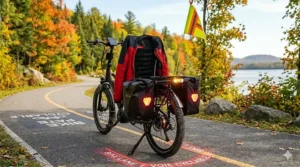
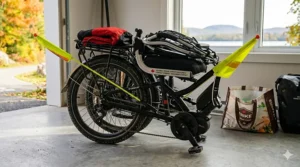
You sit lower on a recumbent trike, roughly knee-height to car drivers. This creates genuine safety concerns in mixed traffic—drivers looking for cyclists at upright-bike height might not see you until dangerously close. The solution isn’t avoiding recumbents; it’s adapting your riding. Use high-visibility flags (most recumbents include mounting points), wear bright colours, use powerful lights even during daytime, and avoid roads where possible. Several Vancouver recumbent riders deliberately choose routes with separated bike lanes even if they’re longer, specifically because mixed-traffic visibility creates excessive risk. The good news: on dedicated bike paths and trails, low height isn’t a concern, and the three-wheel stability actually improves safety.
Storage and Transport: Upright Wins
Upright e-bikes hang on wall hooks, fit in elevators, and load onto car racks without drama. Recumbent trikes need floor space (even folded), struggle with narrow building access, and require specialized transport solutions. If you’re renting a Toronto condo with bike room restrictions or need daily transit elevator access, an upright bike presents fewer obstacles. However, if you have garage storage or dedicated transport solutions, this disadvantage disappears. It’s not a dealbreaker—it’s an logistics factor that affects some buyers severely and others not at all.
Price Reality: Recumbents Cost 40-60% More
Quality upright e-bikes in Canada run $2,500-$4,500. Equivalent-quality recumbent trikes start at $3,700 and extend past $11,000. Why? Recumbents are specialty products with lower production volumes, require more materials (three wheels, longer frames), and involve complex geometry engineering. You’re paying for niche manufacturing economies rather than mass-market scales. For budget-conscious buyers, this price gap represents a genuine barrier. For buyers prioritizing comfort over cost, it’s acceptable premium. There’s no way around it: recumbents demand higher budget commitment.
Long-Term Cost & Maintenance: Canadian Ownership Reality
Owning a recumbent electric bike in Canada over 5-10 years involves different economics than the purchase price suggests. Here’s the actual cost breakdown beyond the initial investment.
Battery Replacement: The Inevitable $800-$1,500 Event
Lithium batteries last 500-1,000 charge cycles before losing significant capacity. If you’re commuting daily year-round (charging 5 times weekly), you’ll hit 500 cycles in roughly two years. Most buyers see 60-70% capacity remaining at year three, 40-50% at year four—the point where range anxiety forces replacement. Premium Bosch and Shimano batteries cost $900-$1,200 CAD plus installation. Generic hub motor batteries run $400-$700 but may not match original specifications exactly. Budget this cost into your ownership plan: divide $1,000 by 5 years = $200/year battery amortization. That’s real money on top of your purchase price.
Tire and Component Wear: $200-$400 Annually
Recumbent trikes wear through tires faster than upright bikes because you’re accelerating and braking more weight (bike + rider) on smaller contact patches. Budget $150-$250 yearly for tire replacements depending on riding intensity. Add another $100-$150 for chain replacement, brake pads, and routine maintenance. Canadian road salt accelerates component wear by 20-30% compared to dry climates—coastal BC and Southern Ontario see this most severely. Several Ottawa riders report needing full drivetrain replacement (chain, cassette, chainrings) at year three from salt corrosion, a $300-$450 expense that wouldn’t occur in Arizona or California.
Storage and Transport Infrastructure: The Hidden $500-$2,000
If you’re keeping your trike in a condo, you need floor space (not wall hooks). If you’re transporting it, you need a hitch-mounted rack ($600-$1,200 installed) or trailer ($1,500-$3,000) because roof racks can’t handle recumbent geometry. Several Manitoba buyers report purchasing used cargo trailers specifically for trike transport to cottage properties—a legitimate $1,200 expense their upright-bike-owning friends don’t face. Factor this into total ownership costs if you don’t already have suitable infrastructure.
Electricity Costs: Trivial But Calculable
Charging a 500Wh battery from empty costs roughly $0.06-$0.08 in most Canadian provinces (BC and Quebec cheaper, Atlantic provinces higher). If you’re commuting 5 days weekly, that’s $15-$25 annually in electricity—effectively zero compared to other costs. Even heavy users struggle to exceed $50/year. This isn’t a meaningful ownership expense.
Insurance and Registration: Province-Dependent Variable
If your trike falls under power-assisted bicycle definitions (500W, 32 km/h in most provinces), no insurance or registration required. If it exceeds those limits, you might need ICBC registration in BC ($100-$200 annually) or equivalent provincial insurance. Several Ontario buyers with over-500W motors simply operate uninsured on bike paths with zero enforcement issues—legal grey area acknowledged. For above-board operation, budget $0-$250 annually depending on provincial requirements and your motor specifications.
Total 5-Year Ownership Cost Estimation:
- Purchase price: $4,000-$8,000 (varies by model)
- Battery replacement (1-2 times): $1,000-$2,000
- Tires and maintenance: $1,000-$2,000
- Transport infrastructure: $500-$2,000
- Insurance (if required): $0-$1,250
- Electricity: $75-$250
Total: $6,575-$15,500 over five years, or $110-$258 monthly. Compare this to car ownership ($600-$1,200 monthly all-in) and recumbent e-bikes remain dramatically cheaper transportation. Compare it to upright e-bikes ($80-$150 monthly equivalent) and the recumbent premium becomes clear. The value proposition depends entirely on whether that comfort and capability justify the 50-75% higher operating cost.
❓ Frequently Asked Questions
❓ Can I ride a recumbent electric bike in winter in Canada?
❓ Do I need a license to ride a recumbent ebike in Canada?
❓ How far can I ride on a single charge in cold weather?
❓ Are recumbent electric bikes good for people with back pain?
❓ Where can I test ride recumbent electric bikes in Canada?
Conclusion: Finding Your Perfect Recumbent Electric Bike Match
Recumbent electric bikes represent a genuine revolution for Canadian cyclists dealing with back pain, joint issues, or simply seeking more comfortable long-distance riding. The combination of ergonomic reclined seating and electric assist transforms cycling from a painful endurance test into an accessible daily activity, whether you’re commuting through Toronto’s downtown core or exploring BC’s Okanagan Valley trails.
The key to successful recumbent ownership in Canada: match the bike’s capabilities to your actual use case rather than buying based on specifications alone. Urban commuters need regulation-compliant 500W motors and folding capability more than maximum range; weekend explorers benefit from premium Bosch or Shimano motor systems that deliver refined power delivery; cargo haulers require heavy-duty frames and fat tires that handle loaded weight and rough roads. The $3,700 Sun Seeker E-Eco Tad serves Toronto bike path commuters perfectly, while the $10,000 ICE Full Fat justifies its premium for serious backcountry adventure touring.
Don’t underestimate Canadian climate impact on your ownership experience. Cold weather reduces battery range by 20-30%, road salt accelerates component wear dramatically, and winter storage requires indoor space for battery protection. Budget $200-$400 annually for tires and maintenance, plan for battery replacement at year 3-4 ($800-$1,500), and factor transport infrastructure costs if you’re moving your trike regularly. The total five-year ownership cost runs $110-$258 monthly—substantially higher than upright e-bikes but dramatically cheaper than car ownership.
For Canadian buyers serious about pain-free cycling, reduced car dependence, or simply rediscovering the joy of outdoor exploration without physical limitations, recumbent electric bikes deliver transformative benefits that justify their premium pricing. The learning curve lasts 2-3 rides, the comfort improvement is immediate, and the long-term health benefits of sustained low-impact exercise compound over years. Start by identifying your primary use case, test ride at least two different models, and buy from dealers with Canadian support networks. Your back will thank you for the investment.
Recommended for You
- 7 Best Affordable Electric Trike Seniors Canada 2026 Guide
- 7 Best Electric Trikes for Balance Problems Canada 2026
- 7 Best Electric Trikes for Seniors Canada 2026
Disclaimer: This article contains affiliate links. As an Amazon Associate, I earn from qualifying purchases. If you purchase products through these links, we may earn a small commission at no additional cost to you.
✨ Found this helpful? Share it with your friends! 💬🤗
