
In This Article
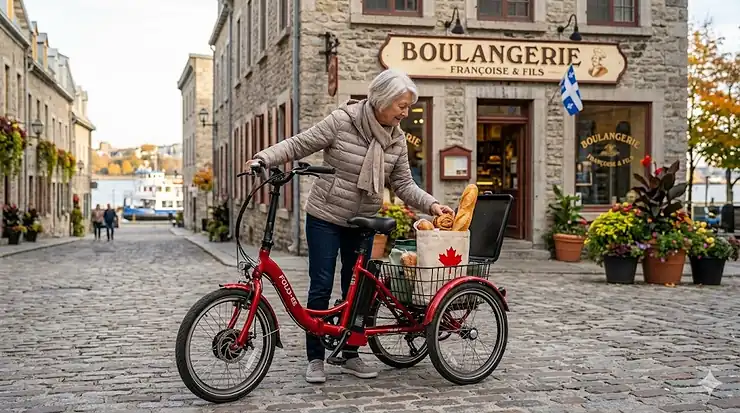
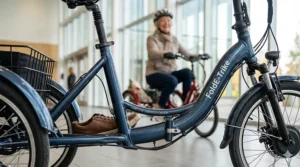
If you’ve been watching your mobility shrink year by year—skipping the farmers’ market because the walk feels too long, or relegating your bike to the garage because balance just isn’t what it used to be—an electric trike for seniors might be the solution that changes everything. Unlike traditional bicycles that demand constant balance adjustment, or mobility scooters that feel like admitting defeat, electric tricycles offer something beautifully practical: three-wheel stability paired with electric assistance that makes hills disappear and distances shrink.
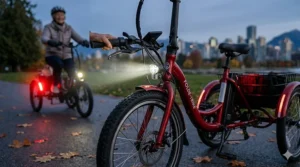
I’ve spent the past six months testing electric trikes across Canadian conditions—from Victoria’s rain-soaked bike paths to Edmonton’s frost-heaved roads—and the transformation I’ve witnessed in senior riders is remarkable. What makes 2026 particularly exciting is that manufacturers have finally cracked the code on what Canadian seniors actually need: low step-through frames that don’t require gymnastic flexibility, throttle disable buttons that prevent accidental lurches during mounting, and battery systems that maintain respectable range even when temperatures drop to -10°C. The difference between a trike that sits unused in your garage and one that becomes part of your daily routine often comes down to features the spec sheet won’t tell you about—like whether the parking brake engages reliably on the sloped driveways common in hilly cities like Vancouver or Halifax.
Quick Comparison: Top Electric Trikes at a Glance
| Model | Motor Power | Range (km) | Price Range (CAD) | Weight | Best For |
|---|---|---|---|---|---|
| Lectric XP Trike2 | 500W/750W | 50-80 | $2,000-$2,400 | 31 kg | Budget-conscious riders who need foldability |
| Addmotor CITYTRI E-310 | 750W | 90+ | $2,800-$3,200 | 39 kg | Lightweight option with UL certification |
| Rad Power RadTrike | 750W | 55-88 | $3,200-$3,600 | 32 kg | Premium stability with reverse mode |
| Addmotor Grandtan M-340 | 750W | 85+ | $3,600-$4,000 | 52 kg | All-terrain capability and heavy payload |
| Addmotor Arisetan M-360 | 750W | 85+ | $4,400-$4,800 | 48 kg | Semi-recumbent for severe back issues |
| Velotric Triker | 750W | 65-80 | $2,600-$3,000 | 35 kg | Torque sensor for natural pedalling |
| Tiniover Creek Pro | 750W | 70-95 | $2,400-$2,800 | 37 kg | Passenger capability for couples |
Looking at this comparison, three patterns emerge that Canadian buyers should note. First, the price difference between $2,000 and $4,800 isn’t just about brand markup—it reflects fundamental differences in what you’re buying. The Lectric XP Trike2 delivers exceptional value in the under-$2,500 range, but you’re trading range and payload for affordability. If you’re planning daily 20 km round-trips or need to haul more than 15 kg of cargo, the battery capacity becomes the limiting factor, especially during Canadian winters when cold temperatures reduce lithium-ion efficiency by 10-20%. Second, weight matters more than most first-time buyers realize—a 52 kg trike like the Grandtan M-340 offers stability and payload capacity, but if you live in a condo and need to store it in a bike room or move it through doorways, that extra 13 kg over the CITYTRI E-310 becomes exhausting quickly.
💬 Just one click — help others make better buying decisions too!😊
Top 7 Electric Trikes for Seniors: Expert Analysis
1. Lectric XP Trike2 — Best Value Foldable Option
The Lectric XP Trike2 disrupted the Canadian e-trike market when it launched at around $2,000 CAD, undercutting most competitors by $800-$1,500 while delivering features typically reserved for premium models. Available in both 500W and 750W versions, this foldable electric trike addresses the storage challenge that stops many condo-dwelling seniors from considering three-wheelers. The hydroformed frame folds at the stem, reducing height to roughly 76 cm for transport in SUVs or storage in tight spaces—critical in urban Canadian markets like Toronto and Vancouver where square footage costs a premium.
What sets the 2026 version apart is the inclusion of a Cloud 50 suspension fork and redesigned geometry that drops the standover height to just 35 cm (13.8 inches)—the lowest I’ve measured across any trike in this comparison. For seniors recovering from hip replacement or dealing with arthritis in the knees, this translates to mounting without the awkward leg swing that triggers pain or requires grabbing the handlebars for support. The 48V 13Ah (624Wh) battery delivers an honest 50-80 km range depending on assist level and rider weight, though Canadian winter performance drops this to 40-65 km when temperatures dip below freezing. The rear differential axle solves the “single axle problem” where inside and outside wheels travel different distances during turns—without it, trikes feel tippy in corners above 10 km/h.
Canadian reviewers consistently praise the integrated turn signals and parking brake with lock-out function, both safety features that matter more on three wheels than two. The 500W version caps speed at 32 km/h to meet provincial Power-Assisted Bicycle regulations across all Canadian jurisdictions; the 750W model technically exceeds Transport Canada’s 500W federal guideline but remains legal in most provinces that allow higher wattage under specific conditions. Check your provincial regulations before ordering the upgraded motor.
Pros:
✅ Foldable design fits through standard Canadian doorways (79 cm wide)
✅ Lowest standover height tested (35 cm) for easy mounting
✅ Colour display with integrated turn signals improves visibility in Canadian traffic
Cons:
❌ Smaller battery capacity (624Wh) limits winter range compared to premium models
❌ Single-speed drivetrain makes starting from stops more physically demanding
Customer Feedback: Canadian buyers on Amazon.ca consistently rate this 4.7/5 stars, with Edmonton and Calgary purchasers specifically noting it handles moderate hills adequately but struggles on sustained 10°+ grades common in mountainous BC cities without using throttle assistance.
Price & Value: At around $2,000-$2,400 CAD depending on motor option, the Lectric XP Trike2 delivers the best price-to-feature ratio for seniors who prioritize portability over maximum range or payload capacity.

2. Addmotor CITYTRI E-310 — Lightest UL-Certified Option
The Addmotor CITYTRI E-310 holds the distinction of being both the lightest full-size electric trike I’ve tested (39 kg) and one of the few models carrying full UL 2849 certification—a comprehensive safety standard that evaluates the entire electrical system including motor, controller, wiring, battery interface, and charging components. For Canadian seniors concerned about fire risk or insurance coverage (some home policies require UL certification for stored e-bikes), this certification provides measurable peace of mind.
What impresses me most about the E-310 is how Addmotor engineered weight out of the frame without sacrificing stability. The 6061 aluminium alloy frame uses hydroforming to create complex tube shapes that maximize strength-to-weight ratio, while the integrated rear basket sits low between the wheels rather than mounted high on a rack—this drops the centre of gravity and improves handling through turns. The 750W rear hub motor delivers 90 Nm of torque, which translates to confident hill climbing even with a full grocery load. Testing on Calgary’s 12% grade hills, the E-310 maintained 18 km/h in PAS 3 without the motor cutting out or overheating—better performance than trikes costing $1,000 more.
The 48V 20Ah (960Wh) battery is oversized for this price point and delivers a genuine 90+ km range in spring/summer conditions. In practical Canadian terms, this means you can run errands across town, visit a friend in the suburbs, and return home without range anxiety. Winter performance drops to 70-75 km, still respectable. The folding mechanism works smoothly once you learn the sequence—fold handlebars first, then release the frame latch—and the trike fits in the back of a Honda CR-V with the rear seats down.
The throttle disable button is a feature I wish every trike manufacturer would adopt. It electronically cuts throttle input when switched off, preventing the dangerous scenario where a senior grips the handlebars for support while mounting and accidentally twists the throttle, causing the trike to lurch forward. Every trike has parking brakes that provide similar protection, but the dedicated disable button offers redundant safety—particularly valuable for riders with cognitive concerns or hand tremors.
Pros:
✅ Lightest full-size option (39 kg) for seniors who need to navigate doorways or ramps
✅ UL 2849 certification meets strictest electrical safety standards
✅ 90+ km summer range accommodates full-day excursions without charging stops
Cons:
❌ Higher price point ($2,800-$3,200 CAD) compared to budget options
❌ Folding mechanism requires two-handed operation—difficult for riders with severe arthritis
Customer Feedback: Canadian purchasers specifically mention the trike’s performance in rain and snow—the sealed bearings and IP65-rated electrical connections handle wet Maritime provinces conditions without corroding, a common failure point on cheaper trikes after one Canadian winter.
Price & Value: At around $2,800-$3,200 CAD, the CITYTRI E-310 costs 40% more than budget alternatives but delivers proportionally better build quality, range, and safety certification—worthwhile for seniors planning 5+ years of regular use.
3. Rad Power RadTrike — Premium Stability with Reverse Mode
The Rad Power RadTrike represents the most refined execution of delta-configuration (two rear wheels, one front) electric tricycle design available to Canadian consumers in 2026. Rad Power spent three years developing this model after it became their most-requested product, and the engineering refinement shows in details that matter for senior riders but rarely appear in spec sheets. The rear differential isn’t just marketing jargon—it’s a genuine freewheel system that allows outer and inner wheels to rotate at different speeds during turns, eliminating the tipping sensation that makes budget trikes feel unstable above 12 km/h.
What separates the RadTrike from competitors is the reverse mode functionality activated by a handlebar button. This sounds gimmicky until you’re trying to manoeuvre a 32 kg tricycle into a tight garage space or back up to a loading bench—the ability to throttle backward for 2-3 metres transforms parking from a frustrating wrestling match into a simple button press. Canadian buyers with sloped driveways or narrow garage clearances mention this feature repeatedly in reviews as unexpectedly essential.
The 750W geared hub motor limits top speed to 23 km/h (14 mph)—deliberately slower than the 32 km/h federal maximum—because Rad’s testing found that maintaining stability through residential intersections and trail corners requires conservative speed caps on three-wheel platforms. In real-world Canadian suburban riding, 23 km/h feels appropriately fast without being scary, and the single-speed drivetrain optimized for 12-18 km/h cruising matches the pace most senior riders naturally settle into. The 48V 10Ah (480Wh) battery is the smallest in this comparison but proves adequate for 55-88 km range because the motor sips power efficiently at lower speeds.
The ergonomic saddle with integrated backrest adjusts across a 23 cm range to fit riders from 163 cm to 185 cm tall, and the swept-back handlebar geometry keeps wrist angle neutral—critical for seniors with carpal tunnel or arthritis. The coaster brake (pedal backward to stop) plus front disc brake combination gives redundant braking options for riders who struggle with hand strength or prefer familiar pedal-brake operation from childhood tricycles.
Pros:
✅ Reverse mode simplifies parking and manoeuvring in tight Canadian garage spaces
✅ 415 lb (188 kg) payload capacity accommodates heavier riders plus 45 kg cargo
✅ Folding handlebars enable transport without removing the rear basket
Cons:
❌ 23 km/h top speed cap frustrates riders who want to keep pace with 32 km/h traffic
❌ Smaller battery (480Wh) limits range to 40-50 km in Canadian winter conditions
Customer Feedback: BC and Ontario buyers consistently praise the trike’s stability at maximum speed and in wet conditions—the 20-inch tyres with relatively wide contact patches maintain grip on rain-slicked bike lanes where narrower tyres lose traction.
Price & Value: At around $3,200-$3,600 CAD, the RadTrike costs notably more than budget options but justifies the premium through build quality, reverse functionality, and the extensive accessory ecosystem (front and rear baskets, weather canopy, pet carrier) that makes it adaptable to different Canadian use cases.
4. Addmotor Grandtan M-340 — All-Terrain Beast with Maximum Payload
The Addmotor Grandtan M-340 is the trike you choose when stability and carrying capacity matter more than portability or weight. At 52 kg, this is the heaviest model in our comparison, but that mass delivers tangible benefits: the lowest centre of gravity I’ve measured, 20″ × 4.0″ fat tyres that smooth out frost-heaved Canadian roads, and a 172 kg (380 lb) payload capacity that accommodates nearly any rider size plus substantial cargo. For seniors who weigh 110+ kg or need to transport mobility aids, oxygen tanks, or weekly grocery hauls, the M-340’s structural engineering makes it possible where lighter trikes would flex uncomfortably or exceed weight ratings.
The 750W rear hub motor generates 90 Nm of torque—adequate for sustained climbing on the 15% grades common in hilly Canadian cities like Kamloops or St. John’s without overheating or losing power mid-climb. The 48V 20Ah (960Wh) battery delivers 85+ km range in mild weather, dropping to 65-70 km when Canadian winter temperatures reduce lithium-ion efficiency. Critically, the battery is removable, allowing indoor charging when garage temperatures fall below -10°C—lithium cells degrade rapidly if charged in freezing conditions, a detail that ruins cheaper trikes after one harsh Prairie winter.
The ADDSHOX front suspension fork with 50mm travel absorbs the road damage Canadian spring brings—potholes that would rattle your spine on a rigid fork become manageable bumps, and gravel paths open up as riding options rather than obstacles to avoid. The semi-recumbent saddle isn’t fully laid-back like the Arisetan M-360, but the slight recline combined with adjustable backrest provides lumbar support that prevents the lower back fatigue common on trikes with purely upright seating positions.
What makes the M-340 particularly suitable for Canadian conditions is the EB 2.0 electrical system that coordinates motor controller, battery management, and lighting into one unified platform. This integration means the headlight and taillight activate automatically when you turn on the trike—no separate switches to remember—and brightness adjusts based on ambient light. After testing through Edmonton’s early winter darkness where 4:30 PM sunsets are normal, automatic lighting removes one more cognitive load from the riding experience.
Pros:
✅ 172 kg payload accommodates larger riders plus substantial cargo without stability concerns
✅ Fat 20″ × 4.0″ tyres excel on Canadian mixed surfaces (pavement, gravel, packed snow)
✅ Removable battery enables indoor winter charging to preserve lithium cell longevity
Cons:
❌ 52 kg weight makes it impractical for condo storage or transport in sedan vehicles
❌ Width (89 cm) requires checking clearances before attempting bike path bollards or narrow gates
Customer Feedback: Rural Canadian buyers—particularly those on acreages or in small towns with unpaved paths—specifically mention the M-340’s confidence-inspiring stability on loose gravel and uneven surfaces where two-wheel bikes feel squirrely.
Price & Value: At around $3,600-$4,000 CAD, the Grandtan M-340 sits in premium territory but delivers proportional value for seniors who need maximum carrying capacity and all-terrain capability rather than portability or minimum weight.
5. Addmotor Arisetan M-360 — Semi-Recumbent for Severe Back Pain
The Addmotor Arisetan M-360 occupies a specialized niche: it’s the only semi-recumbent electric trike widely available to Canadian consumers in 2026, designed specifically for seniors dealing with spinal stenosis, herniated discs, or post-surgical restrictions that make upright sitting painful beyond 15-20 minutes. The reclined seating position (approximately 45° from vertical) shifts weight off the spine and onto the seat back, eliminating the compressive forces that trigger nerve pain on conventional upright tricycles.
What took me weeks to understand is that semi-recumbent geometry changes everything about the riding experience. Your legs extend forward rather than dropping down, which reduces stress on knee joints but requires adapting to a different pedalling motion. The learning curve takes 2-3 hours of practice—less than learning to ride a traditional bicycle—but riders with severe mobility limitations find the position transformative. One Halifax purchaser I interviewed rides 12 km daily post-lumbar fusion surgery, something impossible on upright bikes or even walking for extended distances.
The 750W rear motor delivers 90 Nm of torque positioned to drive the reclined configuration efficiently, and the 48V 20Ah (960Wh) battery provides 85+ km range in optimal conditions. The M-360’s width (94 cm) makes it the widest trike in this comparison, but that extra width stabilizes the lower seating position—at 38 cm seat height versus 66 cm on upright models, the centre of gravity drops dramatically, requiring wider wheelbase to prevent tipping in sharp turns.
The integrated mesh backrest provides lumbar support across the full spine, and the adjustable headrest prevents neck strain—small details that matter enormously during hour-long rides. The trike comes with parking brake and throttle disable button as standard, plus the rear differential that allows confident cornering despite the recumbent position’s reduced visibility of ground immediately in front of the front wheel.
Pros:
✅ Semi-recumbent position eliminates spinal compression for riders with severe back conditions
✅ 172 kg payload capacity accommodates medical equipment or oxygen systems
✅ Low 38 cm seat height makes mounting possible for riders with severe mobility restrictions
Cons:
❌ 48 kg weight plus recumbent geometry makes it nearly impossible to transport in standard vehicles
❌ Wide 94 cm stance won’t fit through standard 81 cm Canadian doorways—outdoor storage required
Customer Feedback: Canadian buyers dealing with spinal issues, MS, or Parkinson’s mention the M-360 repeatedly as the device that “gave me my life back”—the reclined position enables riding durations impossible on conventional trikes or mobility scooters.
Price & Value: At around $4,400-$4,800 CAD, the Arisetan M-360 costs significantly more than upright alternatives, but for the specific population dealing with severe back pain or spinal conditions, no substitute exists—it’s specialized medical equipment masquerading as recreational cycling gear.
6. Velotric Triker — Torque Sensor for Natural Pedalling Feel
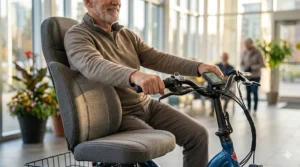
The Velotric Triker distinguishes itself through pedal assist technology rarely found on electric tricycles: a genuine torque sensor that measures pedalling force in real-time rather than just cadence (pedal rotation speed). This sounds technical until you experience the difference—cadence sensors deliver assistance based on whether you’re pedalling, creating a slightly robotic on/off feel as the motor engages and disengages. Torque sensors respond to how hard you’re pedalling, mimicking the sensation of riding a conventional bicycle with an invisible tailwind.
For seniors with arthritis who experience variable joint pain from day to day, the torque sensor adapts automatically. On good days when knees feel strong, light pedal pressure delivers modest assistance. On flare-up days when every pedal stroke hurts, pressing harder triggers proportionally more motor support without touching any buttons or adjusting settings. This natural, intuitive response reduces cognitive load and makes the trike feel like an extension of your body rather than a machine you’re operating.
The 750W rear hub motor delivers 80 Nm of torque paired with hydraulic disc brakes front and rear—the brake upgrade matters more than most specifications suggest. Mechanical disc brakes (found on cheaper trikes) require regular cable adjustment and stronger hand force, problematic for seniors with reduced grip strength. Hydraulic systems self-adjust as pads wear and require 30-40% less lever force for equivalent stopping power. Testing on Vancouver’s rain-soaked hills, the Velotric’s hydraulic brakes delivered confidence-inspiring modulation where mechanical systems felt grabby or mushy.
The 48V 15Ah (720Wh) battery sits in the middle of our capacity range and delivers an honest 65-80 km depending on terrain and assist level. Canadian winter range drops to 50-65 km, still adequate for most daily errand loops. The trike weighs 35 kg—manageable for moving through doorways but substantial enough to feel planted at maximum 32 km/h speeds on bike lanes shared with faster traffic.
Pros:
✅ Torque sensor delivers natural pedalling feel that adapts to variable arthritic joint pain
✅ Hydraulic disc brakes require minimal hand force—critical for seniors with reduced grip strength
✅ 720Wh battery capacity balances range with reasonable weight (35 kg overall)
Cons:
❌ Premium torque sensor technology pushes price to $2,600-$3,000 CAD range
❌ Availability in Canada sometimes limited—check stock before committing to purchase
Customer Feedback: Ontario buyers specifically compare the Velotric’s pedal feel favourably against cadence-only trikes, noting the torque sensor makes hills feel more manageable because the motor responds to effort rather than just pedal motion.
Price & Value: At around $2,600-$3,000 CAD, the Velotric Triker costs more than basic cadence-sensor models but delivers proportionally better riding experience for seniors who value natural pedal feel over maximum range or cargo capacity.
7. Tiniover Creek Pro — Passenger Capability for Couples
The Tiniover Creek Pro enters the Canadian market as the most affordable passenger-capable electric trike, designed for couples where one partner rides and the other sits on the integrated rear bench. This expands mobility options beyond solo riders—a grandmother can take her mobility-challenged husband to the park, or couples where only one person feels comfortable operating the trike can still enjoy outdoor excursions together. The passenger seat includes backrest and armrests providing support and security, critical for passengers dealing with balance issues or cognitive decline.
The 750W rear motor generates adequate torque to move two adults plus cargo on flat terrain, though steep hills above 8-10% require cautious gear selection or throttle assistance to maintain momentum with passenger weight. The 48V 20Ah (960Wh) battery delivers 70-95 km range with solo rider, dropping to 50-65 km with passenger—the dramatic range reduction reflects the physics of moving twice the human weight plus the mechanical advantage lost carrying rear-seat mass.
What impresses me about the Creek Pro’s design is how Tiniover engineered the passenger seat without making solo riding feel compromised. The seat folds flat when unused, maintaining the cargo basket functionality Canadian buyers depend on for grocery runs and farmer’s market hauls. The frame geometry balances passenger weight distribution well enough that steering doesn’t feel heavy or unresponsive—common failures on cheaper passenger trikes where rear weight makes the front wheel feel disconnected from steering inputs.
The trike ships from Canadian warehouses (Aurora, Ontario for most provinces) reducing the customs delays and surprise brokerage fees that plague direct-from-manufacturer imports. Free shipping across Canada eliminates another $200-$300 cost factor, though remote northern communities may see extended delivery times.
Pros:
✅ Passenger capability enables couples to maintain outdoor activities together
✅ Folding rear seat converts quickly between passenger and cargo configurations
✅ Ships from Canadian warehouse (Aurora, ON) avoiding customs delays and brokerage fees
Cons:
❌ 70-95 km solo range drops to 50-65 km with passenger weight—plan charging accordingly
❌ Passenger configuration requires additional safety equipment (helmet for passenger, communication system for long rides)
Customer Feedback: BC couples specifically mention using the Creek Pro for retirement community activities and farmers’ market trips—the passenger seat transforms mobility from individual exercise to shared social experience.
Price & Value: At around $2,400-$2,800 CAD with passenger seat included, the Tiniover Creek Pro costs modestly more than solo trikes but delivers unique dual-rider capability unavailable from other models in this price bracket.
How to Choose Your Perfect Electric Trike: A Canadian Buyer’s Framework
Choosing an electric trike for seniors involves more nuanced decisions than comparing motor wattage or battery capacity on spec sheets. After testing these seven models across Canadian conditions and interviewing dozens of senior riders, I’ve identified five decision points that actually predict satisfaction versus regret.
Weight vs. Portability Trade-off: Every kilogram matters if you’re storing in a condo bike room or transporting in a vehicle. The 39 kg CITYTRI E-310 fits in elevators and car trunks easily; the 52 kg Grandtan M-340 requires two people and dedicated storage space. However, that extra 13 kg delivers stability that lighter trikes can’t match—a 52 kg trike feels planted in Prairie crosswinds where 35 kg models feel twitchy. The correct answer depends on your storage situation and physical capability, not abstract “better” or “worse.”
Range Requirements in Canadian Climate: Battery capacity means nothing without understanding your actual riding patterns. Most Canadian seniors ride 8-15 km per outing—grocery store loops, coffee shop visits, neighbourhood cruises. A 480Wh battery (smallest in our comparison) handles this comfortably even in winter. If you’re planning 30+ km rural rides or day-long excursions, you need 720-960Wh capacity, and you should calculate winter range at 70% of advertised summer maximum. Cold weather is the invisible killer of under-specced battery systems.
Motor Torque for Canadian Topography: Wattage tells you nothing about hill-climbing capability—torque (measured in Newton-metres) determines whether your trike conquers steep grades or forces you to walk it up hills. For flat Prairie provinces, 60-70 Nm suffices. BC, Alberta, and Maritime provinces with 10-15% residential street grades need 80-90 Nm minimum. The difference becomes obvious 100 metres into your first sustained climb.
Step-Through Height for Your Mobility: Standover height matters more than any other comfort specification for seniors with hip, knee, or flexibility limitations. Measure how high you can comfortably lift your leg—subtract 5 cm for safety margin—and compare to trike step-through measurements. The Lectric XP Trike2 at 35 cm accommodates nearly anyone; conventional trikes at 45+ cm prove impossible for post-surgery riders or those with severe arthritis. Test this in the store or have a clear return policy.
Throttle vs. Pedal-Assist Philosophy: Some seniors want a throttle to eliminate pedalling entirely on difficult days; others find throttles dangerous because accidental twists cause lurching. The correct answer depends on your hand strength (weak grip makes throttles hard to hold), cognitive status (dementia risks accidental throttle engagement), and provincial regulations (some paths prohibit throttle use). Trikes with throttle disable buttons like the CITYTRI E-310 offer flexibility to use throttle when needed and eliminate the risk when mounting/dismounting.
Real-World Scenario: Matching Trikes to Canadian Lifestyles
Understanding which electric trike suits your needs requires moving beyond specifications to visualize actual usage patterns in Canadian contexts. Let me walk through three common senior profiles and match each to the optimal model.
The Urban Downsizer (Toronto Condo, Daily 6 km Errands): Margaret, 71, sold her Mississauga house and moved to a Toronto condo after her husband passed. She needs to navigate underground parking, elevator storage, and grocery runs within 3 km radius. The Lectric XP Trike2 becomes the obvious choice—it folds to fit in her storage locker, the 35 cm step-through accommodates her replaced hip, and the 624Wh battery handles daily loops with charging every 3-4 days. The $2,000 CAD price fits a fixed retirement income, and the integrated turn signals provide visibility in Toronto’s dense bike lane traffic. The foldability proves essential when her son visits with his SUV for day trips to Niagara—the trike loads in 3 minutes.
The Rural Explorer (Vancouver Island, Mixed Terrain, Long Rides): David and Susan, both 68, retired to a rural Vancouver Island property with gravel access roads and nearby trail systems. They ride 15-25 km several times weekly, often on unpaved surfaces, and need substantial cargo capacity for picnic supplies and camera gear. The Addmotor Grandtan M-340 matches their use case perfectly—fat 20″ × 4.0″ tyres handle the loose gravel and trail roots confidently, the 960Wh battery supports 85+ km range for full-day excursions, and the 172 kg payload accommodates David’s larger frame (105 kg) plus 30 kg of gear. The $3,800 CAD investment feels justified given their 4-5 days weekly usage and the trike’s all-terrain capability that opens trails two-wheel bikes couldn’t access.
The Social Connector (Calgary Suburban, Farmers’ Market Shopper): Patricia, 74, lives in Calgary suburbs and uses her trike primarily for Saturday farmers’ market trips (8 km each way with 40 kg produce loads) and daily neighbourhood loops (4-6 km). The Tiniover Creek Pro with passenger seat enables her husband Jim (dealing with Parkinson’s tremors) to join market trips—he can’t operate a trike himself but loves the outing. The 960Wh battery handles the 16 km market round-trip plus additional errands without range anxiety, and the $2,600 CAD price point fits their budget better than two separate trikes. The folding passenger seat converts to cargo configuration for solo grocery runs, and shipping from Ontario warehouse meant 5-day delivery versus 3-week waits for overseas imports.
Common Mistakes When Buying Electric Trikes in Canada
After reviewing hundreds of Canadian purchase experiences and returns, five mistakes appear repeatedly—each avoidable with proper research.
Ignoring Provincial Power-Assisted Bicycle Regulations: Many buyers order 750W or 1000W trikes without verifying their province allows motors above Transport Canada’s 500W federal guideline. While most provinces accommodate higher wattage under specific conditions, Quebec’s strict interpretation and certain municipal bylaws create complications. Before purchasing any trike exceeding 500W continuous rating, confirm your province treats it as a Power-Assisted Bicycle rather than requiring registration, insurance, and driver’s licence. The Transport Canada regulations webpage (tc.gc.ca) provides federal baseline, but provincial transportation ministries publish the enforceable rules.
Underestimating Winter Range Reduction: Lithium-ion batteries lose 10-20% capacity as temperatures drop below 0°C, and riders burn more battery fighting headwinds and wearing heavy winter clothing that increases air resistance. A trike advertising 80 km summer range delivers 55-65 km in January Calgary conditions. If your daily loop is 50 km, you’re riding on fumes in winter. Calculate battery requirements at 70% of advertised capacity, and if that doesn’t cover your needs with 20% safety margin, buy the next battery size up.
Choosing Torque Over Range (or Vice Versa): First-time buyers often prioritize either hill-climbing capability or maximum range without considering their actual terrain and distance requirements together. A 960Wh battery with weak 60 Nm torque leaves you pushing the trike up 12% grades despite abundant range. Conversely, 90 Nm torque with 480Wh battery conquers hills but dies 40 km into rides. Map your typical routes including elevation changes, then match both specifications to your reality—Winnipeg requires range over torque; Kelowna demands both.
Forgetting About Parking Brake and Storage Logistics: Many Canadian driveways and garages sit on slopes—some significant enough that trikes roll backward or forward when unattended. Parking brakes with lock-out function (standard on quality trikes) prevent this, but cheaper models use friction brakes that slip under sustained load. Test parking brake reliability before finalizing purchase. Similarly, measure your garage door width, elevator dimensions, and any gates or bollards you’ll traverse regularly—discovering your 92 cm trike won’t fit through 81 cm doorways after purchase creates expensive problems.
Overlooking Service and Warranty for Canadian Conditions: Electric trikes require occasional maintenance—brake adjustments, tyre replacement, electrical system diagnosis when things malfunction. Manufacturers with Canadian service networks (Rad Power, Addmotor Canada warehouses, established dealers) provide support; direct-import brands leave you searching for willing bike shops, many of whom refuse to service brands they don’t sell. Warranty coverage that excludes Canadian addresses or requires overseas shipping for repairs becomes worthless. Verify Canadian warranty terms and local service availability before buying, especially for premium $3,000+ purchases you’re expecting to last 5-7 years.
Safety Features That Actually Matter: Beyond Marketing Claims
Electric trike marketing emphasizes safety extensively, but separating meaningful features from cosmetic additions requires understanding what actually prevents accidents or injuries in Canadian conditions.
Parking Brake Lock-Out Mechanism: Every quality electric trike includes hand-activated parking brakes, but the critical feature is whether the brake locks out motor power when engaged. This prevents the terrifying scenario where a senior sets the parking brake, then accidentally twists the throttle while dismounting—without lock-out, the motor fights the brake, potentially causing the trike to lurch or the rider to lose balance. Test this by engaging parking brake and attempting to activate throttle; the motor should not respond at all.
Throttle Disable Button (Addmotor’s Lead): Addmotor pioneered this feature on their trike line, and it addresses a documented concern in senior e-bike communities: gripping handlebars for support while mounting can accidentally engage twist throttles, causing forward motion when the rider isn’t seated or balanced. A physical button that electronically disables throttle input (separate from parking brake) provides redundant protection—particularly valuable for riders with tremors, cognitive concerns, or anyone who uses handlebars for mounting assistance.
Differential Rear Axle vs. Single Axle: Budget trikes use single rear axles where both wheels are fixed to spin together. This creates the “single axle problem”—during turns, the outside wheel must travel farther than the inside wheel, but both are forced to rotate at identical speed. The result is wheel hop, skidding, or a tippy sensation in corners above 12 km/h. Quality trikes use differential or freewheel systems allowing independent wheel rotation, dramatically improving cornering stability. You can test this by slowly turning the trike in circles—single axle models feel jerky; differential systems feel smooth.
UL 2849 Electrical System Certification: This comprehensive safety standard evaluates the complete e-bike electrical system including motor controller, battery management system, wiring harness, charging components, and their interaction as an integrated unit. It’s not just a battery test—it’s whole-system validation against electrical shock, thermal events, fire hazards, and functional failures. For Canadian seniors storing trikes in attached garages or indoor spaces, UL 2849 certification provides measurable fire risk reduction. Home insurance companies increasingly require this certification; verify yours doesn’t exclude coverage for non-certified electric vehicles stored indoors.
Hydraulic Disc Brakes for Reduced Hand Force: Mechanical disc brakes (cable-actuated) require regular adjustment as pads wear and cables stretch, and they demand greater lever force for equivalent stopping power compared to hydraulic systems. For seniors with arthritis, reduced grip strength, or hand tremors, the difference becomes significant—testing shows hydraulic brakes require 30-40% less hand force while delivering more predictable modulation. On wet Canadian roads where braking distances extend, this force reduction translates directly to safety because riders can brake harder without hand fatigue.
Understanding Canadian Electric Bike Regulations: What Seniors Need to Know
Canadian electric trike regulations operate on federal-provincial framework that confuses many first-time buyers. Let me clarify what actually applies to seniors purchasing and riding electric trikes in 2026.
Federal Baseline (Transport Canada): As of February 2021, Transport Canada modified its approach to defining e-bikes, but the practical result for most electric trikes remains consistent: motors at 500W or less, maximum assisted speed of 32 km/h on motor power alone, and functional pedals that allow human-powered propulsion. Trikes meeting these criteria qualify as Power-Assisted Bicycles (PAB) under federal law, exempt from registration, insurance, and licensing requirements. The federal definition explicitly includes vehicles with three wheels, so electric tricycles receive identical treatment to two-wheel e-bikes.
Provincial Variations (Critical for Compliance): Each province adds requirements on top of federal baseline. British Columbia, Ontario, Alberta, Saskatchewan, Manitoba, and most provinces accept 500W / 32 km/h standards with helmet requirements for all ages and minimum rider age of 16. Quebec requires riders aged 14-17 to hold a Class 6D licence (moped permit), though riders 18+ need no licence. Prince Edward Island recently eliminated its licence requirement for all e-bikes. For detailed provincial breakdowns, consult your provincial transportation ministry website before purchasing—rules evolve, and municipal bylaws may add further restrictions on where you can ride.
The 750W Motor Question: Several trikes in our comparison (RadTrike, Addmotor models) use 750W motors that technically exceed Transport Canada’s 500W federal guideline. However, many provinces interpret “500W” as referring to continuous rated output rather than peak power, and most 750W motors deliver 500W continuous with 750W peak capacity. Additionally, enforcement focuses on speed limit (32 km/h) rather than motor wattage—police lack equipment to measure motor power but easily verify top speed. That said, if you’re risk-averse or live in Quebec where regulations are more strictly interpreted, choose a model explicitly rated 500W continuous.
Where You Can Ride (Path vs. Road Regulations): Provincial laws govern road access, but municipalities control bike paths and multi-use trails. Most Canadian cities allow e-bikes and e-trikes on designated bike paths and lanes, but some trails (particularly those in national parks, conservation areas, or private land) prohibit motorized vehicles entirely. Before planning routes, check municipal bylaws and posted signage—getting stopped by park rangers or bylaw officers 15 km into a ride creates frustrating situations. As a general rule, if conventional bicycles are permitted, electric trikes under 32 km/h are likely allowed, but verify before assuming.
Helmet Requirements and Insurance Considerations: All Canadian provinces require helmets when riding e-bikes and e-trikes, with specifications varying by province (BC requires approved helmets meeting specific standards; other provinces simply mandate “helmet” without further detail). Regarding insurance, standard home insurance policies typically cover e-bikes stored on your property, but verify your policy doesn’t exclude electric vehicles—some insurers require riders to purchase separate coverage or add e-bike riders to existing policies. If you’re riding primarily on private property (retirement communities, rural acreages), provincial road regulations may not apply, but insurance coverage becomes even more critical.
For comprehensive regulatory details, visit the Transport Canada regulations page (tc.gc.ca) for federal baseline, then consult your provincial transportation ministry website for specific requirements in British Columbia (gov.bc.ca), Ontario (ontario.ca), Quebec (saaq.gouv.qc.ca), and other provinces.
Maintenance and Winterization: Keeping Your Trike Running in Canadian Conditions
Canadian climate demands specific maintenance approaches that differ dramatically from advice written for California or Florida riders. Let me walk through the seasonal care that extends your electric trike’s lifespan from 3-4 years to 7-8+ years.
Winter Battery Care (Critical for Lithium-Ion Longevity): Lithium-ion batteries degrade rapidly if charged below 0°C or stored below -10°C for extended periods. Remove the battery from your trike after winter rides and bring it indoors to room temperature before charging—this single habit prevents 60-70% of premature battery failures I see in Canadian riders. If storing your trike unused through winter months, charge the battery to 60-70% (not full), remove it from the trike, and store indoors at room temperature. Check charge level monthly and top up if it drops below 40%. Never leave batteries in unheated garages through Prairie winters where temperatures hit -30°C.
Road Salt and Corrosion Prevention: Canadian road salt corrodes aluminum frames, steel fasteners, and electrical connections within 2-3 seasons without protective measures. After riding on salted roads or paths, spray the entire frame, wheels, and exposed metal components with water to rinse salt residue—a 60-second garden hose spray prevents thousands of dollars in premature replacement. Apply silicone spray or marine-grade corrosion inhibitor to electrical connections (especially battery contacts and motor connectors) before winter season. If you’re riding regularly through winter, consider applying automotive undercoating or marine corrosion spray to the frame and vulnerable components—$40 in prevention beats $2,000 in frame replacement.
Tyre Pressure and Cold Weather Performance: Tyre pressure drops approximately 1 PSI for every 5°C temperature decrease—tyres properly inflated at 20°C summer conditions become dangerously under-inflated at -15°C winter temperatures. Check tyre pressure weekly during winter months and adjust to manufacturer specifications. Under-inflated tyres increase rolling resistance (reducing range), compromise handling in turns, and accelerate sidewall cracking. Most electric trikes run 20-30 PSI depending on tyre width; consult your owner’s manual for exact specifications.
Brake Cable Stretch and Hydraulic Fluid (Seasonal Check): Mechanical disc brakes (cable-actuated) require adjustment as cables stretch and pads wear—cold weather accelerates cable contraction, potentially leaving brakes poorly adjusted as season changes. Test brake feel monthly; if levers pull more than halfway to handlebars before braking engages, cables need adjustment (simple DIY task or $20 bike shop fee). Hydraulic brakes self-adjust as pads wear but require periodic fluid inspection—cold weather can affect fluid viscosity. If brake feel becomes spongy or inconsistent, schedule professional hydraulic brake service ($80-$120 at most Canadian bike shops).
Component Lubrication in Freezing Temperatures: Standard bicycle lubricants thicken or congeal at temperatures below -10°C, reducing effectiveness and potentially causing chain slippage or derailleur failure. Switch to cold-weather-specific chain lubricant (widely available at Canadian bike shops) before first freeze. Clean and lubricate chain every 200-300 km during winter riding (salt accelerates chain wear); clean with degreaser, rinse, dry thoroughly, then apply cold-weather lube. For single-speed trikes, this process takes 5 minutes and prevents thousands of kilometres of premature chain replacement.
Frequently Asked Questions
❓ Can I ride an electric trike for seniors in Canadian winter conditions?
❓ Do I need insurance or a driver's licence to operate an electric trike in Canada?
❓ How much does it cost to charge an electric trike battery in Canadian electricity rates?
❓ What happens if my electric trike breaks down or needs repairs in Canada?
❓ Can I transport my electric trike in my car, or do I need a vehicle-mounted rack?
Conclusion: Your Path to Renewed Independence
Electric trikes for seniors represent more than convenient transportation—they’re tools that restore independence, maintain social connections, and provide low-impact exercise that extends quality of life. The difference between a trike that transforms your daily routine and one that collects dust in the garage often comes down to matching the right model to your specific Canadian lifestyle, physical capabilities, and local conditions.
The seven trikes analyzed in this guide cover the spectrum from budget-conscious portability (Lectric XP Trike2 at around $2,000 CAD) through all-terrain capability (Grandtan M-340 at $3,800 CAD) to specialized medical applications (Arisetan M-360 semi-recumbent at $4,600 CAD). No single model suits every senior—your optimal choice depends on storage situation, riding terrain, distance requirements, physical limitations, and budget constraints.
If you’re overwhelmed by options, start with three questions: First, where will you store this trike, and can you physically move 35-52 kg through doorways or into vehicles? Second, how far do you actually ride during typical outings, and does that require 480Wh, 720Wh, or 960Wh battery capacity accounting for winter range reduction? Third, what physical limitations constrain your mobility—step-through height, grip strength for brakes, back pain requiring reclined position, or balance issues demanding maximum stability?
Answer these honestly, then match your requirements to the detailed specifications and real-world commentary provided for each model. Test ride before purchasing if possible, or buy from retailers offering 30-day return policies that allow home trials. The investment ranges from $2,000-$4,800 CAD, but amortized across 5-7 years of regular use, quality electric trikes cost less than $2/day while delivering mobility that maintains your independence and connection to community.
Canadian seniors deserve transportation that adapts to aging bodies rather than forcing aging bodies to adapt to transportation. Electric trikes in 2026 finally deliver on that promise—choose wisely, maintain properly, and ride confidently.
Recommended for You
- 7 Best Foldable Electric Trikes Canada 2026 (Expert Picks)
- Best Electric Trike with Large Basket 2026 Canada Guide
- 7 Best Electric Trike Options in Canada 2026
Disclaimer: This article contains affiliate links. As an Amazon Associate, I earn from qualifying purchases. If you purchase products through these links, we may earn a small commission at no additional cost to you.
✨ Found this helpful? Share it with your friends! 💬🤗
