
In This Article
If you’re living with balance challenges in Canada—whether from vestibular disorders, Parkinson’s, multiple sclerosis, or age-related mobility changes—you already know the frustration of watching your world shrink. That morning bike ride through your neighbourhood? The quick trip to the corner store? These simple freedoms start feeling impossibly risky when your equilibrium betrays you.
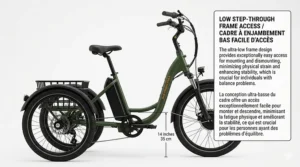
Here’s what most people don’t realize until they try one: an electric trike for balance problems isn’t just a mobility aid. It’s a confidence restorer. The three-wheel design means you can stop at an intersection without worrying about tipping over. The electric assist means conquering Hamilton’s hills or Calgary’s inclines doesn’t leave you exhausted and vulnerable. And the step-through frame means you’re not performing gymnastics just to mount the thing.
In Canada’s 2026 market, electric tricycles have evolved far beyond the clunky therapeutic devices of a decade ago. Modern models pack UL-certified batteries that handle our winter temperature swings, torque sensors that respond naturally to your pedalling effort, and rear differentials that actually let you corner smoothly instead of fighting the steering. But here’s the catch—not every electric trike delivers on these promises, and buying the wrong one means either dangerous instability or a $3,000 CAD paperweight collecting dust in your garage.
This guide cuts through the marketing noise with hands-on analysis of seven electric trikes actually available to Canadian buyers, complete with real-world performance insights for our climate, regulatory context you need to know, and honest assessments of what each model truly delivers for people dealing with balance disorders. Whether you’re in downtown Toronto navigating streetcar tracks, rural Saskatchewan covering long distances, or Vancouver managing constant rain, you’ll find specific guidance matched to your situation.
Quick Comparison: Top Electric Trikes for Balance Issues
| Model | Motor Power | Battery | Price Range (CAD) | Weight Capacity | Best For |
|---|---|---|---|---|---|
| ENVO Flex Trike | 500W (1000W peak) | 48V 15Ah | $2,500-$3,000 | 181 kg (400 lbs) | Canadian climate, UL certified safety |
| Addmotor Grandtan II | 750W | 48V 20Ah | $2,800-$3,400 | 204 kg (450 lbs) | Maximum range, hill climbing |
| Lectric XP Trike 2 (500W) | 500W | 48V 13Ah | $2,000-$2,500 | 188 kg (415 lbs) | Budget-conscious, foldable |
| Lectric XP Trike 2 (750W) | 750W | 48V 17.5Ah | $2,500-$2,900 | 188 kg (415 lbs) | Long range, torque sensor |
| Addmotor M-330F Triketan | 750W | 48V 20Ah | $3,000-$3,600 | 204 kg (450 lbs) | Folding convenience, cargo hauling |
| Velotric Triker | 750W | 48V 19.2Ah | $2,900-$3,500 | 181 kg (400 lbs) | Premium features, customizable |
| VoltBike Trio | 500W | 48V 20Ah | $1,800-$2,200 | 159 kg (350 lbs) | Maximum battery capacity per dollar |
Looking at this comparison, three patterns emerge that matter for Canadian buyers dealing with balance problems. First, the $2,500-$3,000 CAD range represents the sweet spot where you get both safety certifications and features like torque sensors that make riding feel natural rather than jerky—critical when your vestibular system is already compromised. Second, battery capacity matters more in our climate than the spec sheets suggest; that 13Ah battery rated for 80 km in Arizona testing will deliver closer to 65-70 km during a cool Vancouver October, and potentially 50-55 km in January Winnipeg cold. Third, weight capacity isn’t just about your body weight—it includes groceries, winter gear, and the reality that many balance disorder medications cause weight gain. That 181 kg (400 lb) rating gives meaningful daily-use headroom.
💬 Just one click — help others make better buying decisions too!😊
✨ Don’t Miss These Exclusive Deals!
🔍 Take your mobility to the next level with these carefully selected electric trikes. Click on any highlighted item to check current pricing and availability on Amazon.ca. These trikes will help you reclaim the outdoor freedom you thought you’d lost!
Top 7 Electric Trikes for Balance Problems: Expert Analysis
1. ENVO Flex Trike — The Canadian Climate Champion
The ENVO Flex Trike dominates the Canadian market for good reason—it’s literally engineered in Burnaby, BC, which means the designers understand what happens to battery performance at -15°C and why sealed bearing systems matter when you’re riding through spring road salt residue. The 500W rear hub motor (peaking at 1000W) delivers 80Nm of torque, which translates to confidently climbing 15% grades common in neighbourhoods like Vancouver’s West End or Quebec City’s historic district without that panicked feeling of momentum loss that can trigger balance anxiety.
What separates this from cheaper alternatives is the rear differential—both rear wheels power independently, so cornering doesn’t feel like you’re wrestling the steering. When you’re managing vertigo or vestibular dysfunction, that smooth, predictable handling prevents the head movements that trigger symptoms. The 48V 15Ah UL-certified battery (LG or Panasonic cells) delivers 100 km range on PAS level 1, dropping to approximately 70-80 km in real Canadian winter conditions. The torque sensor responds proportionally to your pedal pressure, creating that natural riding feel that cadence-only sensors can’t match—your brain processes this as normal cycling, not as fighting a motor that lurches on and off.
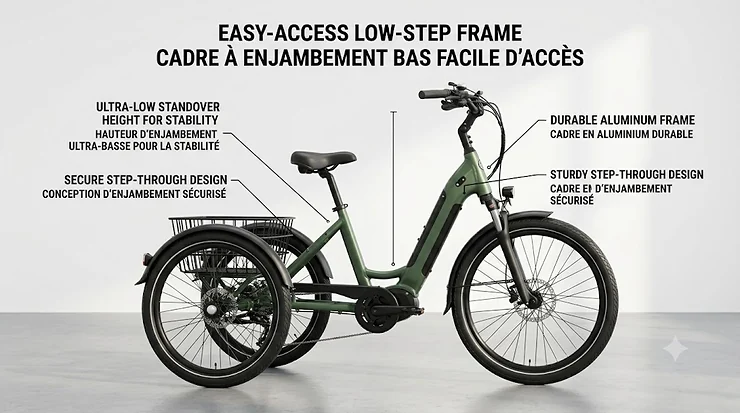
The step-through aluminum frame accommodates riders from 150 cm to 195 cm (4’11” to 6’5″), and the 20-inch fat tires absorb the pavement irregularities that would normally send jolts through your inner ear system. Canadian buyers particularly appreciate the UL 2849 system certification—this matters when you’re seeking condo board approval for indoor storage or applying for provincial disability equipment grants. The hydraulic disc brakes with electric cutoff sensors provide confident stopping power without the hand fatigue that comes from squeezing mechanical brake levers, especially important if you’re dealing with arthritis alongside balance issues.
Customer Feedback: Canadian reviewers consistently praise the winter performance and the confidence-inspiring stability, though several note the premium price reflects the quality components and domestic warranty support.
Pros:
✅ Canadian-engineered for our climate with LG/Panasonic cold-weather battery cells
✅ UL 2849 certified—smooths approval process for grants and condo storage
✅ Rear differential eliminates the tippy feeling during turns that triggers balance anxiety
Cons:
❌ Premium pricing ($2,500-$3,000 CAD range) versus US direct-import brands
❌ 20-inch wheels mean higher seat position than some riders with hip issues prefer
Price Range: Around $2,500-$3,000 CAD depending on battery configuration. At this price point, you’re paying for Canadian warranty support, disclosed premium battery cells, and engineering specifically validated for -20°C to +40°C operation—worth it if you plan to ride year-round or need that documentation for insurance/grant purposes.
2. Addmotor Grandtan II M-340 — Maximum Range for Rural Canadian Riders
When you live outside major urban centres—say, between Kamloops and Kelowna, or anywhere in the Prairies where the next town is 40 km away—range anxiety becomes a legitimate safety concern for riders with balance problems. The Addmotor Grandtan II addresses this with a massive 48V 20Ah battery that delivers advertised 137 km (85 miles) range, translating to realistic 100-120 km in moderate Canadian conditions. That’s enough to ride to your physio appointment, do some errands, and get home without that mid-trip panic about battery depletion forcing you to pedal unassisted (dangerous when your equilibrium is compromised).
The 750W rear hub motor peaks at 1000W, providing enough power to maintain 22-25 km/h on flat terrain while carrying cargo—critical capability if you’re replacing car trips. The rear differential system allows independent rear wheel rotation during cornering, eliminating the single-wheel-drive tug that can destabilize riders with vestibular disorders. The 24-inch front and 20-inch rear fat tires (both 4 inches wide) create a stable footprint that Canadian riders appreciate on gravel shoulders and spring-thaw pavement heaves.
The mid-axis torque sensor deserves specific mention for balance disorder applications. Unlike cadence sensors that deliver binary on-off assistance, this measures your actual pedal force and delivers proportional power. If a sudden dizzy spell hits mid-ride, you instinctively ease pedal pressure—the motor immediately reduces output, giving you more control rather than continuing to accelerate. That automatic response matches your body’s protective reflexes rather than fighting them. The parking brake system locks the rear axle with a handlebar lever, essential for stable dismounts on sloped driveways without the trike rolling unexpectedly.
Customer Feedback: Users consistently praise the build quality and range, though Canadian buyers note the Chinese-to-North American voltage adapter sometimes requires replacement within the first year.
Pros:
✅ Industry-leading 20Ah battery eliminates range anxiety on rural routes
✅ Parking brake system provides stable dismounts on slopes—critical for balance disorders
✅ Mid-axis torque sensor adjusts assistance instinctively when symptoms flare
Cons:
❌ 56 kg (123 lb) weight makes it challenging to lift into pickup trucks without a ramp
❌ US-based warranty means cross-border shipping for major repairs
Price Range: Around $2,800-$3,400 CAD. The premium over smaller-battery models is justified if you’re covering serious distance, but urban riders might find the extra capacity (and weight) unnecessary.
3. Lectric XP Trike 2 (500W) — Budget Entry Point for Balance Support
The Lectric XP Trike 2 in its 500W configuration represents the most affordable route to stable three-wheel electric mobility for Canadian buyers dealing with balance problems. At approximately $2,000-$2,500 CAD after currency conversion, it delivers essentials without the premium-tier features—think of it as choosing a reliable Corolla when others are shopping for Lexus. The 500W Stealth M24 rear hub motor provides enough power for flat-to-moderate terrain riding, though Vancouver’s hills or Charlottetown’s slopes will reveal its limitations compared to 750W alternatives.
The folding frame design solves a specific Canadian problem: condo/apartment storage. If you’re in a typical Toronto or Montreal high-rise where you can’t leave a trike in the lobby and the storage locker is too cramped for a full-size trike, the ability to fold this down to fit through a standard doorway becomes essential rather than a nice-to-have. The hydraulic disc brakes are noteworthy at this price point—most budget trikes still use mechanical discs that require more hand strength and provide less consistent stopping in wet conditions.
The catch is the cadence sensor rather than torque sensing. When you start pedaling, the motor delivers a preset power level based on your selected PAS mode—it doesn’t know if you’re gently coasting or pushing hard up a hill. For riders with balance disorders, this means the assistance feels less natural and requires more conscious attention to manage. If a dizzy spell hits, that steady motor output continues regardless of your reduced pedal pressure. The 48V 13Ah battery delivers advertised 80 km range under ideal conditions; Canadian riders should realistically expect 55-65 km in temperate weather, dropping to 45-50 km when temperatures approach 0°C.
Customer Feedback: Budget-conscious Canadian buyers appreciate the value, though several report the cadence sensor takes 1-2 weeks to learn to manage smoothly after transitioning from a torque-sensor trike.
Pros:
✅ Folding frame fits Canadian urban storage realities (condos, small garages)
✅ Hydraulic brakes at budget price point provide consistent wet-weather stopping
✅ UL 2849 certified despite the affordable pricing
Cons:
❌ Cadence sensor feels less natural than torque sensing—requires more rider attention
❌ 500W motor struggles on 15%+ grades common in coastal BC and Atlantic Canada
Price Range: Around $2,000-$2,500 CAD. This makes sense as a first trike or for riders on fixed incomes, accepting the trade-offs in motor power and sensor sophistication.
4. Lectric XP Trike 2 (750W Long-Range) — The Upgrade That Actually Matters
The 750W Long-Range variant of the Lectric XP Trike 2 transforms the base model from budget option to genuine contender through two critical upgrades: increased motor power and torque sensing. That jump from 500W to 750W means conquering the 20% grade on your street in Halifax’s south end or Ottawa’s Glebe neighbourhood without feeling like you’re about to roll backwards—a legitimate fear trigger for riders with balance disorders. The motor maintains consistent speed on inclines rather than gradually slowing, which prevents that panicked pedaling response that can destabilize your equilibrium.
The torque sensor upgrade is where this model justifies its $500-$700 CAD premium over the base version. When you’re managing Ménière’s disease or vestibular migraines, the ability to modulate motor assistance intuitively through pedal pressure makes the difference between a relaxing therapeutic ride and a stressful mechanical wrestling match. The sensor detects your pedal force 100+ times per second, adjusting power delivery smoothly rather than in the jerky on-off pattern cadence sensors produce. During sudden symptom flares, you instinctively ease pedaling—the motor immediately reduces output, giving you control rather than continuing to accelerate.
The expanded 48V 17.5Ah battery extends range to advertised 113 km (70 miles), translating to realistic 75-85 km in Canadian spring/fall conditions and 60-70 km in winter. That extra capacity matters less for the total distance and more for eliminating the end-of-ride anxiety about running out of power before reaching home—a significant mental burden when your balance is already unreliable. The same folding frame design, hydraulic brakes, and UL 2849 certification carry over from the 500W model.
Customer Feedback: Upgraders consistently mention the torque sensor as the standout improvement, noting it makes riding feel “normal” rather than “electric-assisted.”
Pros:
✅ Torque sensor provides intuitive power control—critical for riders with unpredictable symptoms
✅ 750W motor handles Canadian urban hills confidently without momentum loss
✅ Switchable between torque and cadence sensing accommodates different riding conditions
Cons:
❌ Still ships from Arizona—Canadian warranty claims involve cross-border logistics
❌ At $2,500-$2,900 CAD, approaches price of Canadian-brand alternatives with domestic service
Price Range: Around $2,500-$2,900 CAD. If you’re choosing between the 500W and 750W Lectric models, the torque sensor alone justifies this upgrade for balance disorder applications—it’s not just about power.
5. Addmotor M-330F Triketan — Folding Capability Meets Serious Power
The Addmotor M-330F Triketan solves the perceived incompatibility between folding convenience and serious electric trike capability. Most folding trikes sacrifice power, battery capacity, or structural rigidity to achieve compact storage—this model delivers 750W motor power, 48V 20Ah battery capacity, and UL 2849 certification while still folding down to fit through standard doorways. For Canadian riders splitting time between city condos and cottage properties, or those who need to transport the trike in an SUV for access to flatter riding areas, this flexibility transforms usability.
The 750W rear motor with differential axle provides confident hill climbing and smooth cornering—crucial for riders whose balance disorders make the single-wheel-drive pull feel destabilizing. The fat tire setup (20 inches diameter, 4 inches wide) creates exceptional stability on the gravel shoulders common along Canadian rural routes where paved shoulders often don’t exist. During spring thaw when frost heaves create those ankle-breaking pavement gaps, these tires absorb impacts that would normally send sharp jolts through your vestibular system.
The parking brake system deserves emphasis for balance disorder applications. When you’re dismounting on any sort of incline—say, your sloped driveway after an ice storm—the ability to lock the rear axle before swinging your leg over prevents that terrifying moment where the trike starts rolling while you’re mid-dismount. The 20Ah battery delivers similar range to the Grandtan II (100-120 km realistic Canadian conditions), though the folding frame hinges add approximately 2 kg weight versus non-folding equivalents.
Customer Feedback: Canadian buyers particularly value the ability to store it inside during -30°C winter cold snaps, protecting the battery and electronics from extreme temperature exposure.
Pros:
✅ Genuine folding capability without sacrificing 750W power or 20Ah battery capacity
✅ Parking brake prevents the rolling-during-dismount scenario that spikes balance anxiety
✅ Differential rear axle eliminates the destabilizing pull during turns
Cons:
❌ Folding frame adds 2 kg weight and introduces potential long-term hinge wear points
❌ At $3,000-$3,600 CAD, commands premium pricing for the folding convenience
Price Range: Around $3,000-$3,600 CAD. You’re paying approximately $400-$600 more than non-folding equivalents specifically for the storage flexibility—worth it if that solves a real problem in your living situation.
6. Velotric Triker — Premium Build for Discerning Riders
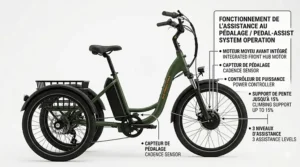
The Velotric Triker enters the Canadian market targeting riders willing to invest in premium materials and thoughtful design refinements beyond what budget brands offer. The hydroformed aluminum frame uses larger-diameter tubing and more sophisticated joints than typical welded trikes, resulting in a structure that absorbs vibration better—important when you’re dealing with balance disorders that make every pavement crack feel like a neurological assault. The 750W rear hub motor with torque sensing delivers smooth, proportional power delivery that riders transitioning from traditional bicycles find intuitive rather than alien.
The switchable sensor system represents clever engineering for Canadian conditions. During summer recreational rides when you want natural, exercise-focused assistance, the torque sensor provides that intuitive response to your pedal effort. When winter ice and wind make roads treacherous and you just need reliable transportation to your medical appointments, switching to cadence mode gives consistent motor output regardless of your varying pedal pressure—you can focus entirely on balance and steering rather than modulating power delivery.
The 48V 19.2Ah battery strikes the sweet spot between capacity and weight, delivering realistic 85-100 km Canadian range without the bulk of 20Ah+ systems. The LCD display includes Bluetooth connectivity to your phone, enabling ride tracking and battery management through an app—useful for documenting your mobility improvement to occupational therapists or when applying for disability tax credits. The hydraulic brakes with 180mm rotors provide confident stopping even when descending the kinds of hills common in Canadian coastal cities.
Customer Feedback: Owners praise the build quality and customer service responsiveness, though some note the premium pricing requires accepting that you’re paying for refinements rather than dramatically different core functionality.
Pros:
✅ Switchable torque/cadence sensors adapt to different riding conditions and symptom severity
✅ Hydroformed frame absorbs vibration better than welded equivalents—gentler on vestibular systems
✅ Bluetooth connectivity enables ride documentation for medical/insurance purposes
Cons:
❌ At $2,900-$3,500 CAD, sits at premium end without Canadian warranty infrastructure
❌ Newer brand means less established parts availability for long-term ownership
Price Range: Around $2,900-$3,500 CAD. This makes sense if you’re treating the trike as a long-term mobility investment and value refined engineering details, but budget-conscious buyers can achieve similar functional outcomes with less expensive alternatives.
7. VoltBike Trio — Ontario-Based Value Option
The VoltBike Trio represents Canada’s budget-friendly domestic alternative, operating from Mississauga, Ontario, which solves several pain points US-brand buyers face. Warranty claims don’t involve cross-border shipping. Delivery typically takes 5-7 business days rather than 2-3 weeks. And if you’re in southern Ontario, you can potentially test ride before committing—invaluable when you’re managing balance disorders and need to verify the trike’s stability characteristics match your specific symptoms.
The standout specification is the 48V 20Ah battery at the $1,800-$2,200 CAD price point—competitors charge $2,800+ for this capacity. That translates to realistic 90-110 km range in moderate Canadian conditions, eliminating the range anxiety that makes riders with balance problems reluctant to venture beyond their immediate neighbourhood. The 500W motor provides adequate power for flat-to-moderate terrain, though expect to work harder on the kinds of sustained grades common in places like Kelowna or St. John’s.
The trade-offs are exactly what you’d expect at this price: cadence sensor rather than torque sensing, mechanical disc brakes rather than hydraulic, and no UL 2849 system certification. For riders whose balance problems are relatively mild and who primarily need stable three-wheel transportation for flat urban environments, these compromises might be perfectly acceptable. The lack of certification can complicate condo approval or insurance claims, but for riders with their own garage storage and no grant applications pending, it’s a non-issue.
Customer Feedback: Eastern Canadian buyers appreciate the local support and reasonable pricing, though several note the mechanical brakes require more frequent adjustment than hydraulic systems.
Pros:
✅ Canadian headquarters means domestic warranty without cross-border hassles
✅ Massive 20Ah battery capacity at budget-tier pricing ($1,800-$2,200 CAD)
✅ Test ride availability for southern Ontario residents eliminates online-buying risk
Cons:
❌ Cadence sensor only—no torque sensing option for more natural power delivery
❌ Mechanical disc brakes require more hand strength and frequent adjustment
Price Range: Around $1,800-$2,200 CAD. This represents genuine value if you’re in Ontario, accept the component compromises, and prioritize battery capacity above all else.
Real-World Application: Matching Canadian Riders to Trikes
Toronto Condo Dweller with Ménière’s Disease
Profile: 62-year-old living in a 27th-floor condo, manages episodic vertigo, needs daily 8 km round trip to grocery store and medical appointments, limited storage (small locker, no ground-level access).
Trike Match: Lectric XP Trike 2 (750W) — The folding frame fits through standard doorways and condo elevators, the torque sensor accommodates symptom flares with intuitive power control, and the 750W motor handles the Summerhill area’s grades confidently. The $2,500-$2,900 CAD price point balances quality components with budget reality for someone on a fixed pension. The UL 2849 certification smooths the condo board approval process.
Alternative: ENVO Flex Trike if budget allows—adds Canadian warranty and slightly better cold-weather battery performance for winter TTC alternative trips.
Rural Saskatchewan Rider with Parkinson’s
Profile: 58-year-old living 35 km from nearest town, early-stage Parkinson’s affecting balance and fine motor control, needs reliable 60+ km range for town trips including groceries/medical appointments, highway shoulder riding required.
Trike Match: Addmotor Grandtan II — The 20Ah battery delivers 100-120 km realistic range, eliminating one-way-trip anxiety. The fat tires handle gravel shoulders confidently, the parking brake system compensates for diminished hand steadiness during dismounts, and the torque sensor adapts to varying symptom severity throughout the day. The $2,800-$3,400 CAD investment makes sense when this is your primary transportation replacing risky driving.
Alternative: VoltBike Trio if budget is tight—accepts range/power compromises for $1,000+ CAD savings, still delivers adequate capability for flat Prairie riding.
Vancouver Island Couple Sharing a Trike
Profile: 67 and 72 years old, both experiencing age-related balance decline, want to resume recreational coastal trail riding, need trike that accommodates both riders (height difference: 163 cm vs 185 cm), budget flexible for quality.
Trike Match: ENVO Flex Trike — The adjustable frame accommodates riders from 150-195 cm without tools, the Canadian engineering means validated performance in coastal moisture and temperature swings, and the UL 2849 certification provides peace of mind about safety. The torque sensor makes transition from traditional cycling feel natural for both riders. The $2,500-$3,000 CAD price reflects lifetime-warranty components and disclosed premium battery cells.
Alternative: Velotric Triker if they want switchable sensor modes—accommodates different riding styles and symptom-severity days between two users.
How to Choose an Electric Trike for Balance Problems in Canada
Selecting the right electric trike when you’re managing balance disorders involves different priorities than typical recreational cycling decisions. Your primary concerns—stability, intuitive control, and confidence-inspiring reliability—intersect with Canadian-specific factors that US-based reviews often overlook. Here’s the framework for making an informed choice that matches your specific situation.
Motor Power Matters More for Terrain Than Speed The 500W versus 750W debate isn’t really about whether you ride 20 km/h or 25 km/h—it’s about maintaining consistent momentum on grades without the panicked pedaling that destabilizes riders with vestibular dysfunction. If you live anywhere in coastal BC, Atlantic Canada, or even those deceptive “flat” Prairie cities like Regina that actually have significant river valley grades, 750W becomes essential for confidence rather than luxury. That steady uphill power prevents the momentum loss that triggers the instinct to pedal harder, which shifts your weight forward, which activates your compromised balance system’s panic response. Budget the extra $300-$500 CAD for 750W if your regular routes include sustained grades over 10%.
Torque Sensors Versus Cadence Sensors: Not Just a Spec Sheet Detail This represents the single most impactful choice for riders with balance problems, yet it’s buried in technical specifications most people skim past. A cadence sensor detects pedaling motion and delivers a preset power level—you’re basically pressing a throttle switch with your pedal rotation. A torque sensor measures actual pedal pressure and delivers proportional assistance—the motor becomes an extension of your effort rather than a separate system you’re managing. When you’re dealing with episodic symptoms like vertigo attacks or sudden weakness, torque sensing means you can intuitively modulate power by easing pedal pressure rather than consciously remembering to downshift PAS modes while simultaneously managing balance. Models like the Lectric XP Trike 2 (750W), ENVO Flex, and Addmotor Grandtan II include torque sensors—budget an extra $400-$600 CAD versus cadence-only alternatives, accepting this as fundamental rather than optional.
Battery Capacity in Canadian Climate Reality Those advertised range figures assume 20°C ambient temperature, 75 kg rider weight, minimal wind, and flat terrain. Canadian riders should automatically discount advertised range by 20-30% for realistic conditions. A 13Ah battery rated for 80 km becomes 55-65 km in real use; 20Ah rated for 130 km becomes 90-110 km. The practical implication for balance disorder riders: you need enough capacity that end-of-ride anxiety about power depletion never enters your consciousness. If your realistic maximum ride is 40 km, you want rated capacity of at least 60-65 km—meaning minimum 15Ah battery in Canadian conditions. Budget-conscious riders can accept smaller batteries if they rigorously limit ride length; rural riders or those building confidence for longer trips need 17.5-20Ah minimum.
Folding Versus Non-Folding: A Specific Canadian Problem The folding capability question intersects with our unique housing and climate reality. If you’re in a Toronto/Montreal/Vancouver condo without ground-level storage, or a Winnipeg/Edmonton apartment where -30°C winters mean you absolutely cannot leave the trike outdoors, folding becomes mandatory rather than convenient. The trade-offs—approximately 2 kg extra weight, potential hinge wear, and $300-$600 CAD price premium—become irrelevant compared to the alternative of not being able to use the trike at all. Conversely, riders with garage or shed storage gain nothing from folding capability and should redirect that budget toward better components. Ask yourself: “Do I have climate-controlled indoor storage accessible without stairs/elevators?” If no, accept folding as a requirement; if yes, skip it.
UL 2849 Certification Beyond Marketing Claims This certification verifies the entire electrical system—battery, controller, motor, wiring—meets specific safety standards. For Canadian riders, this matters in three concrete ways: (1) many condo/apartment buildings require it for indoor storage approval, (2) provincial disability equipment grants often list it as a funding criterion, and (3) it provides evidence of fire safety if you’re making insurance claims or modifications. Models like ENVO Flex, Lectric XP Trike 2, and Addmotor Grandtan II carry certification; budget alternatives skip this testing to hit lower price points. If you’re navigating building storage policies, insurance requirements, or grant applications, treat certification as mandatory and build your shortlist accordingly.
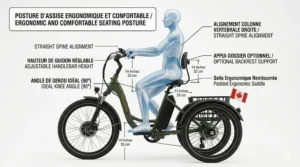
Understanding Balance Disorders and Three-Wheel Stability
Canadian statistics indicate approximately 2.3 million adults experience chronic balance problems, with prevalence increasing significantly after age 65. The underlying causes span a wide spectrum—vestibular disorders like Ménière’s disease and labyrinthitis, neurological conditions including Parkinson’s and multiple sclerosis, medication side effects, and age-related decline affecting multiple systems simultaneously. What unites these diverse conditions is the common challenge: maintaining stability while moving through space becomes unpredictable and mentally exhausting.
Traditional two-wheel cycling requires constant micro-adjustments to maintain upright balance, even at speeds above 15 km/h where gyroscopic stability helps. Your inner ear, visual system, and proprioception (body position sense) must work together seamlessly. When any component malfunctions—whether from vestibular areflexia, visual processing delays, or peripheral neuropathy affecting foot sensation—that seamless cooperation breaks down. The cognitive load of consciously managing balance while also navigating, watching for obstacles, and operating controls becomes overwhelming.
Electric trikes eliminate the balance-maintenance requirement entirely. Three contact points mean you can stop at an intersection without putting a foot down, ride at 5 km/h without wobbling, and carry groceries without weight-distribution concerns. The psychological impact extends beyond the mechanical stability—riders report regaining the mental space to actually enjoy their surroundings rather than maintaining constant hyper-vigilance about falling. The electric assist further reduces physical demand, which matters because fatigue significantly worsens balance symptoms for most conditions.
The Canadian Climate Factor Our environmental conditions create specific challenges that balance-disorder riders must consider. Winter ice patches trigger protective posture changes—you unconsciously tense muscles and lean back—that destabilize cycling but barely register on a stable trike. Spring pothole season, which typically stretches from March through May in most provinces, would normally require constant visual scanning and avoidance maneuvers that overload a compromised vestibular system. Fat tires on electric trikes absorb these impacts rather than transmitting jarring shocks through your inner ear structure.
The seasonal mental health component deserves acknowledgment: many Canadians with balance disorders restrict outdoor activity from November through March, leading to documented declines in physical fitness, social connection, and mood. An electric trike with appropriate winter tires can safely navigate plowed bike paths and sidewalks when a traditional bicycle would be impossibly risky, breaking that isolation cycle.
For comprehensive information about vestibular disorders and balance problems, Balance & Dizziness Canada provides extensive resources specific to Canadian patients, including provincial support groups and specialists across the country.
Canadian Regulatory Context for Electric Trikes
Understanding where electric tricycles fit in Canada’s transportation regulations matters for legal compliance, insurance implications, and knowing where you can actually ride. Unlike the United States’ state-by-state patchwork, Canadian provinces maintain more consistency, though meaningful differences still exist.
Federal Power-Assisted Bicycle Definition At the federal level, Transport Canada defines power-assisted bicycles (e-bikes) as devices with pedals, electric motors not exceeding 500W output, and maximum assisted speed of 32 km/h. Electric trikes meeting these criteria are generally treated as bicycles rather than motor vehicles—no license, registration, or insurance required. Models like the ENVO Flex Trike, VoltBike Trio, and Lectric XP Trike 2 (500W) clearly qualify. The 750W models occupy a regulatory grey area where provincial rules determine legality.
Provincial Variations That Actually Matter British Columbia allows e-bikes up to 500W without restriction but requires riders to be 16+ and wear helmets. The 750W models technically exceed this limit, though enforcement targets primarily e-scooters and high-powered modified bikes. Ontario permits e-bikes meeting federal standards and allows municipal governments to impose additional restrictions—Toronto, for instance, prohibits e-bike use on some multi-use trails. Quebec requires riders to be 18+ (versus 16+ in most provinces) and has stricter definition enforcement.
For most electric trike buyers managing balance problems, these nuances matter less than the practical reality: the typical three-wheel configuration, pedals, and moderate speed clearly position these devices as bicycles rather than motor vehicles. The legal risk comes from modified/high-powered models or reckless riding, not from simply using a standard electric trike for transportation and recreation.
Insurance and Liability Considerations Canadian homeowner and tenant insurance policies typically extend liability coverage to bicycles, including electric-assist varieties meeting federal definitions. However, many insurers are reassessing e-bike coverage in 2026 following several high-profile battery fires. When purchasing an electric trike, explicitly confirming your policy covers e-bikes prevents unpleasant surprises. UL 2849 certification significantly helps this conversation—insurers increasingly require it for coverage.
The Canadian Transportation Agency provides guidance on mobility aids and assistive devices, though electric trikes occupy an interesting middle ground between mobility aids and transportation devices.
Safety Modifications for Balance-Disorder Riders
Standard electric trikes provide baseline stability, but riders managing specific balance conditions often benefit from targeted modifications that enhance safety and confidence. These adjustments address the intersection between your particular symptoms and Canadian riding conditions.
Mirror Systems Become Essential Most electric trikes include a single handlebar mirror; balance-disorder riders should immediately add a second mirror to eliminate the need for head-turning during traffic checks. That shoulder-check maneuver—standard practice for bicycle safety—triggers symptoms in riders with vestibular dysfunction or cervical vertigo. Dual mirrors positioned for comprehensive rear visibility mean you can assess traffic through peripheral vision shifts rather than head rotation. Budget $30-$50 CAD for quality convex mirrors with vibration-dampening mounts.
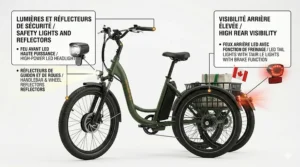
Lighting Beyond Legal Minimums Canadian regulations require white front light and red rear reflector; balance-disorder riders should substantially exceed this. Add spoke lights or reflective wheel strips (approximately $40 CAD) to increase side visibility—drivers often don’t register three-wheel configurations as quickly as two-wheel bikes. Consider a helmet-mounted rear flasher ($25-$35 CAD) to provide redundant rear visibility if your main light fails mid-ride. During Canadian winters with 4:30 PM sunsets, this isn’t paranoia—it’s acknowledging that your reduced ability to make evasive maneuvers means you need higher visibility margins.
Parking Brake Upgrades and Alternatives Some electric trikes include parking brakes; others don’t. Aftermarket handlebar-mounted parking brake kits ($60-$80 CAD) provide stable dismounting on any grade. For riders whose balance problems involve hand tremors or reduced grip strength, foot-activated parking brakes offer better control than handlebar levers. Test your trike’s parking mechanism on a 10% grade—if it doesn’t hold confidently, address this before venturing onto actual roads.
Canadian Winter Adaptations Studded tires transform electric trikes from fair-weather recreation into year-round transportation. Models with 20-inch wheels use standard studded options ($80-$120 CAD per tire); ensure your rim width accommodates the tire you’re considering. Alternatively, tire chains ($40-$60 CAD per wheel) provide adequate traction for occasional snow riding without permanent stud installation. Pogies (handlebar covers) maintain hand warmth and dexterity without the grip limitations of bulky winter gloves—approximately $50-$70 CAD for quality options.
Long-Term Cost of Ownership in Canada
The sticker price represents just the starting point for understanding electric trike economics. Canadian buyers face specific cost factors that emerge over typical 5-7 year ownership periods, creating meaningful differences between seemingly comparable models.
Battery Replacement Reality Check Lithium-ion batteries decline approximately 20% capacity after 500-800 full charge cycles, depending on cell quality and temperature exposure. Canadian temperature swings—summer heat and winter cold storage—accelerate this degradation compared to moderate climates. A 13Ah battery might deliver only 10-10.5Ah effective capacity after three years, translating to proportionally reduced range. Replacement costs vary significantly: ENVO Flex batteries (disclosed LG/Panasonic cells) run $600-$750 CAD; generic replacements for budget trikes cost $400-$500 CAD but often use lower-grade cells that fail sooner. Over 5-7 years, expect to replace the battery at least once, potentially twice if you’re a frequent rider.
Brake System Maintenance Costs Hydraulic disc brakes require minimal adjustment (annual bleed/fluid replacement, approximately $60-$80 CAD if professionally done) but provide consistent performance. Mechanical disc brakes need frequent cable adjustment as cables stretch (DIY possible, or $25-$35 CAD per adjustment professionally). Over 5 years, hydraulic systems cost less despite higher initial component expense. Pad replacement occurs every 1,500-3,000 km depending on terrain and brake use; hydraulic pads run $40-$50 CAD per set, mechanical pads $25-$35 CAD.
Winter Storage and Component Longevity Canadian winters introduce costs riders in temperate climates never encounter. Indoor storage protects batteries and electronics but requires space many urban dwellers lack; heated storage locker rental runs $100-$200 CAD monthly in major cities. Outdoor storage even under tarps exposes electrical components to moisture infiltration, potentially causing controller or display failures ($200-$400 CAD repair). Road salt corrosion aggressively attacks exposed aluminum and steel; annual deep cleaning and protective coating application ($80-$120 CAD professionally, less DIY) substantially extends frame life.
Total Cost of Ownership Example Consider a $2,500 CAD electric trike over 6 years:
- Initial purchase: $2,500
- One battery replacement (year 4): $650
- Brake maintenance (annual): $360 total
- Tire replacements (2 sets): $240
- Winter storage protection: $600
- Miscellaneous parts/repairs: $300 Total: $4,650 CAD, or approximately $775 annually
Compare this to automobile costs (insurance $1,800+ annually plus depreciation, maintenance, fuel) and electric trikes deliver dramatic transportation savings despite the upfront investment.
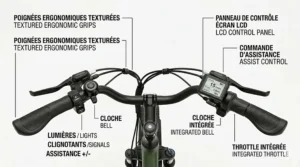
What to Expect: Real-World Performance in Canadian Conditions
The gap between manufacturer specifications and actual Canadian riding conditions creates common disappointments that informed buyers can avoid through realistic expectation-setting. Here’s what changes when you move from the testing lab to actual multi-season Canadian use.
Range Drop: The 20-30% Rule Manufacturers test range at approximately 20°C ambient temperature, 75 kg rider on flat terrain with minimal wind. Canadian reality introduces multiple compounding factors: cold weather (10-20% capacity loss below 10°C, 25-30% below 0°C), wind resistance on open Prairie or coastal routes (5-10% reduction), rider weight plus cargo (subtract 1% per 5 kg above 75 kg), and hilly terrain (10-15% reduction in places like Calgary or Halifax). These factors multiply rather than add, so that claimed 80 km range becomes realistic 55-65 km in temperate conditions, dropping to 45-50 km in winter. Budget your battery capacity with this compression in mind—if you need reliable 50 km range, choose models rated for 70+ km.
Motor Power and Temperature Controllers limit power output in cold conditions to protect batteries, meaning your 750W motor might deliver only 600W effective power at -10°C. This manifests as slower hill climbing and reduced acceleration rather than complete failure, but riders accustomed to summer performance find winter reduction frustrating. The practical solution: shift to lower gears earlier on grades and accept slightly reduced maximum speed in exchange for maintaining consistent momentum.
Brake Performance in Rain and Snow Hydraulic disc brakes maintain relatively consistent stopping power across conditions; mechanical disc brakes show significant variance. In rain, expect stopping distances to increase 15-20% for mechanical systems versus 5-10% for hydraulic. In snow/slush conditions, mechanical systems can increase stopping distance 30-40% as water infiltrates cable housings and freezes, creating friction. This matters significantly for balance-disorder riders who lack the quick reflexes to compensate for unexpected brake performance changes.
Battery Charging in Canadian Homes Lithium batteries charge efficiently at 15-25°C but poorly below 5°C. Bringing a frozen battery directly into your warm house and immediately plugging in creates internal temperature gradients that damage cells. The correct protocol: bring the battery indoors, wait 1-2 hours for gradual warming, then charge. In practice, this means overnight charging often works fine (the battery warms naturally), but that “quick charge before your afternoon appointment” becomes impossible after winter riding. Plan accordingly.
Common Mistakes When Buying Electric Trikes in Canada
Watching hundreds of Canadian buyers navigate this purchase over the past several years reveals recurring mistakes that waste money, create safety issues, or result in expensive do-overs. Avoid these traps.
Prioritizing Price Over Sensor Type The most expensive mistake: buying a $2,000 CAD cadence-sensor trike, discovering the jerky power delivery exacerbates balance symptoms, then spending $2,800 CAD on a torque-sensor model six months later. The $800 premium for torque sensing represents genuine functional value for balance-disorder riders—it’s not a luxury feature, it’s the difference between sustainable comfortable riding and constant vigilance about power modulation. Budget for torque sensing first, then see what other compromises fit your price ceiling.
Ignoring Test Ride Opportunities Canadian retailers including EbikeBC, some ENVO dealers, and scattered Lectric retail locations offer test rides. Riders who purchase strictly online based on reviews miss critical fit/feel issues that emerge immediately during actual riding. Your specific balance disorder creates unique sensitivities—maybe you need the seat slightly higher than “standard” for your height, maybe the handlebar sweep angle affects your symptom management, maybe the throttle position triggers hand cramping. A 15-minute test ride reveals problems that $2,500 worth of online research cannot predict.
Underestimating Storage Requirements A non-folding electric trike measures approximately 180 cm long × 75 cm wide. Canadian urban garages, storage lockers, and condo spaces frequently can’t accommodate these dimensions, or can only fit them by blocking access to other stored items. Buyers discover this after purchase, then face expensive folding-model exchange or selling at loss. Before committing to any non-folding trike, physically measure your intended storage space with a tape measure and masking tape to mark actual trike footprint.
Assuming US Warranty Support Equals Canadian Service Cross-border warranty claims involve customs forms, currency conversion, and 2-4 week shipping delays each direction. A simple controller replacement that would take 5 business days domestically becomes 6-8 weeks internationally. For mobility equipment you’re depending on for medical appointments and grocery shopping, this creates genuine hardship. Canadian brands (ENVO, VoltBike, Demon Electric) charge $200-$400 CAD more than US equivalents largely because they maintain Canadian parts inventory and service networks—that premium represents logistics insurance, not pure markup.
Winter Storage Neglect Leaving batteries in unheated sheds through -25°C cold snaps dramatically shortens cell life. Storing trikes outdoors under tarps allows road salt mist to infiltrate electrical connections and corrode aluminum frames. The $100-$150 CAD annual investment in either indoor storage rental or proper protective measures prevents $400-$600 CAD in premature component failures. Calculate this as mandatory operating cost rather than optional maintenance.
Electric Trikes for Specific Canadian Audiences
Urban Commuters in Major Cities
Toronto, Montreal, Vancouver, Calgary, and Ottawa present similar challenges: multi-use path congestion, streetcar/light rail track crossings, frequent stops at intersections, and winter ice patches on bike lanes. The ideal urban electric trike balances compact dimensions for navigating tight spaces with enough power for quick gap-crossing in traffic.
Key Priorities: Folding capability for condo/apartment storage, UL 2849 certification for building approval, torque sensor for smooth power in stop-and-go traffic, hydraulic brakes for confident wet-weather stopping.
Recommended Models: Lectric XP Trike 2 (750W) for budget-conscious buyers; ENVO Flex Trike for those valuing Canadian warranty and premium components.
Rural and Small-Town Riders
Outside major urban centres, Canadian distances expand significantly. The ride to your medical appointments, grocery store, or community centre might be 30-50 km round trip, often along highways with minimal shoulders. Battery capacity and range anxiety become primary concerns.
Key Priorities: Maximum battery capacity (17.5-20Ah minimum), 750W motor for sustained highway speeds, fat tires for gravel shoulder riding, parking brake for sloped driveways common in hilly small-town geography.
Recommended Models: Addmotor Grandtan II for maximum range; VoltBike Trio for budget-conscious rural riders accepting cadence-sensor trade-offs.
Seniors Transitioning from Traditional Cycling
Riders in their late 60s through 80s who maintained active cycling through earlier decades but now face balance challenges from age-related vestibular decline, medication side effects, or conditions like Parkinson’s often resist electric trikes as “giving up.” They need models that feel like enhanced versions of traditional bikes rather than alien electric vehicles.
Key Priorities: Torque sensor for natural pedaling feel, geometry similar to traditional upright cycling, sufficient power to maintain fitness-level effort on flat terrain while assisting on grades, quality components familiar from traditional cycling.
Recommended Models: ENVO Flex Trike for those prioritizing cycling heritage; Velotric Triker for riders valuing premium components and refinement.
Provincial Considerations for Canadian Buyers
While federal regulations create baseline consistency, provincial variations affect where and how you can use electric trikes. Understanding your province’s specific context prevents legal complications and maximizes usability.
Ontario’s Municipal Patchwork Ontario delegates significant e-bike authority to municipal governments, creating local variation within the province. Toronto restricts e-bikes from specific multi-use trails; Ottawa prohibits them on Colonel By Drive during summer weekends; smaller municipalities often lack specific regulations, defaulting to treating e-bikes as regular bicycles. Before purchasing, research your specific municipality’s bylaws—the provincial rules allow e-bikes, but your city council might limit where you can ride.
Quebec’s Age and Power Restrictions Quebec requires e-bike riders to be 18+ (versus 16+ in most provinces), creating implications for young adults managing balance disorders from early-onset conditions. The province also strictly enforces the 500W motor limit—that grey-area 750W motor legal in BC might generate tickets in Quebec. If you’re purchasing a 750W model while residing in Quebec, understand you’re accepting regulatory risk.
British Columbia’s Helmet Requirements BC mandates helmets for all e-bike riders regardless of age—the only province with blanket helmet requirements. While this seems straightforward, it creates complications for riders whose balance disorders involve head injury history or vestibular migraines triggered by helmet pressure. Medical exemptions exist but require documentation. Additionally, BC requires riders to be 16+ and restricts speeds to 32 km/h—most electric trikes naturally comply, but riders considering aftermarket modifications should understand the legal limits.
Prairie Provinces’ Practical Realities Manitoba, Saskatchewan, and Alberta maintain relatively permissive e-bike regulations with minimal enforcement outside major cities. The practical challenge becomes geography—vast distances, limited infrastructure, and harsh winters. Riders in these provinces should prioritize battery capacity and cold-weather performance over regulatory fine-tuning.
Frequently Asked Questions
❓ Can I use an electric trike in winter in Canada?
❓ Do I need a licence or insurance for an electric trike in Canada?
❓ What's the real-world range I can expect in Canadian conditions?
❓ Can I get government funding or tax credits for an electric trike in Canada?
❓ How do I choose between 500W and 750W motor for balance problems?
Conclusion: Making Your Choice with Confidence
The decision to purchase an electric trike when you’re managing balance problems represents more than a transportation choice—it’s reclaiming independence and quality of life that balance disorders systematically erode. The seven models analyzed here each serve distinct Canadian buyer profiles, from budget-conscious urban commuters to rural riders covering serious distance to seniors valuing premium refinement.
For most Canadian buyers prioritizing safety, reliability, and climate-appropriate engineering, the ENVO Flex Trike emerges as the strongest choice. The Canadian design, disclosed premium battery cells, UL 2849 certification, and torque sensor combine to deliver confident performance across our extreme seasonal conditions. The $2,500-$3,000 CAD investment buys domestic warranty support and components validated for -20°C to +40°C operation—worth it if you’re planning year-round riding or need documentation for insurance/grant applications.
Budget-conscious buyers should consider the Lectric XP Trike 2 (750W) at $2,500-$2,900 CAD. The torque sensor and 750W motor deliver the essential performance characteristics for balance disorder applications, while the folding frame solves Canadian urban storage realities. Accept the cross-border warranty limitations as the trade-off for $400-$600 CAD savings versus Canadian alternatives.
Rural riders covering 40+ km trips need the Addmotor Grandtan II‘s massive 20Ah battery. That 100-120 km realistic range eliminates the end-of-ride anxiety that makes riders with balance problems hesitant to venture beyond their immediate neighbourhood. The $2,800-$3,400 CAD price reflects serious transportation capability replacing car trips.
Remember that your electric trike choice intersects with broader balance disorder management—it’s one tool among many including vestibular rehabilitation, medication adjustment, and home modifications. Consult your occupational therapist or physiotherapist about how electric trike integration fits your overall treatment plan. For riders transitioning from walking aids or giving up driving, occupational therapy can provide specific training for safe mounting/dismounting and navigating Canadian traffic conditions.
The investment—whether $2,000 or $3,500 CAD—represents a meaningful commitment. But compare it to the alternative: increasingly restricted mobility, declining physical fitness, social isolation, and the loss of simple freedoms like grocery shopping independently. For Canadians managing balance disorders, the right electric trike doesn’t just provide transportation. It restores the possibility of normal life.
✨ Don’t Miss These Exclusive Deals!
🔍 Take your mobility recovery to the next level with these carefully selected electric trikes. Click on any highlighted item to check current pricing and availability on Amazon.ca. These trikes will help you reclaim the outdoor independence you deserve!
Recommended for You
- 7 Best Electric Trikes for Seniors Canada 2026
- 7 Best Foldable Electric Trikes Canada 2026 (Expert Picks)
- Best Electric Trike with Large Basket 2026 Canada Guide
Disclaimer: This article contains affiliate links. As an Amazon Associate, I earn from qualifying purchases. If you purchase products through these links, we may earn a small commission at no additional cost to you.
✨ Found this helpful? Share it with your friends! 💬🤗
